
Reviewed · HISTORICAL TOURS
Beijing: Bell and Drum Towers Entry Ticket—Historic Landmark
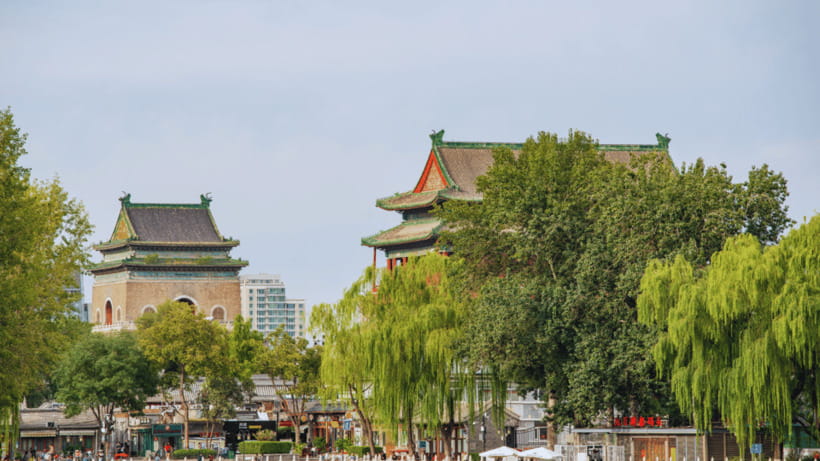
Beijing’s Bell and Drum Towers turn the old city’s clock into a real place. At the northern end of the central axis, you can climb the Drum Tower, look across the historic center, and see the enormous instruments that once set the city’s daily rhythm. The five-minute drum performance is the liveliest moment, but its time can change, so check the schedule when you arrive.
I like the way this ticket covers both towers without forcing you into a group schedule. I also like the English PDF guidebook, which gives you useful context while you move through the buildings. The main consideration is simple: this is a self-guided visit, not a full tour with a live guide, and the experience can feel brief if you are not especially interested in architecture, old customs, or imperial Beijing.
Key points to know before you go

- Two historic towers in one visit: Enter both the Bell Tower and Drum Tower, built originally in the Yuan Dynasty and rebuilt or altered across later imperial periods.
- A 63-ton bell: See the Ming Dynasty Yongle-era bell, known as the King of Ancient Bells.
- Twenty-five drums upstairs: The Drum Tower’s collection gives the daily performance its force and connects the building to its old timekeeping role.
- A chance to see live drumming: A five-minute performance may take place each day, but the exact time depends on the onsite schedule.
- Flexible four-hour visit: You can explore at your own pace rather than follow a guide through a fixed route.
- Useful for independent visitors: The ticket includes an English PDF guidebook, but no live guide or audio guide.
Why these towers matter in Beijing
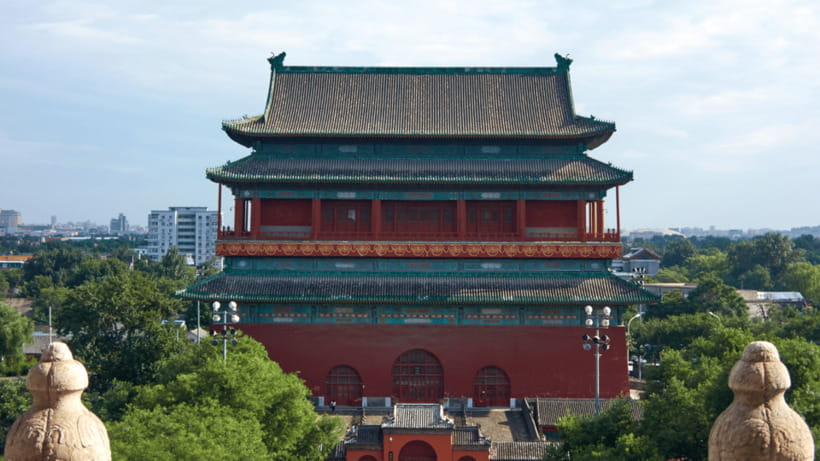
The Bell and Drum Towers are not just two old buildings placed near one another. They formed the public timekeeping system for imperial Beijing, helping regulate the city long before watches and mobile phones became part of daily life.
The original towers date to the Yuan Dynasty, when Beijing was the capital under Kublai Khan’s rule. Later dynasties kept the basic idea alive. At dusk, the drums announced the end of the working day. At dawn, the bell signaled the start of a new one. The old phrase was a dusk drum and a morning bell, a neat reminder that time in the imperial city arrived by sound.
I find that detail gives the visit its purpose. Without it, you are looking at a large bell and a set of drums. With it, you can picture the city’s gates closing, officials beginning their work, and ordinary life being guided by a sound carried over the rooftops.
The towers also occupy an important place on Beijing’s north-south central axis. Their position helps explain the old city’s careful layout. You are not simply visiting an isolated monument. You are seeing part of the plan that shaped imperial Beijing.
A few more Beijing trips to weigh up
- Beijing Historical Tour II including Summer Palace, Lama Temple & Panda Garden
★ 4.0 · 187 reviews - Beijing Historical Tour I – Forbidden City, Tiananmen Square & Temple of Heaven
★ 4.0 · 120 reviews - Beijing Historic City Guided Walking Tour + Calligraphy Creation
★ 5.0 · 59 reviews
Entering the Drum Tower and its 25 drums
The Drum Tower is usually the more active half of the visit. You climb to the upper level, where the historic drums are displayed. The collection includes 25 drums, each tied to the building’s former role as a citywide clock.
The scale matters. These are not small decorative drums tucked into a museum corner. They were built to make sound, and the room helps you understand how powerful that sound must have been. If a performance is scheduled during your visit, the short display brings the building’s purpose back to life.
The performance lasts about five minutes. That is short enough to fit into most visits, but long enough to give you a clear sense of the rhythm and force involved. Several people rate this part as the highlight, and I can understand why. A static display explains the past, while the drumming lets you hear it.
Do not build your entire day around an exact performance time. The schedule can vary onsite. Check the posted information as soon as you enter, then decide how long you want to spend on the upper level and nearby displays.
The climb is part of the experience, but you should plan for stairs. The provided information specifically encourages visitors to reach the top for the performance and views, so the upper level is the main target rather than an optional side room. If you prefer a slow visit, use the available four-hour window instead of rushing straight through.
The Bell Tower and the 63-ton Yongle bell
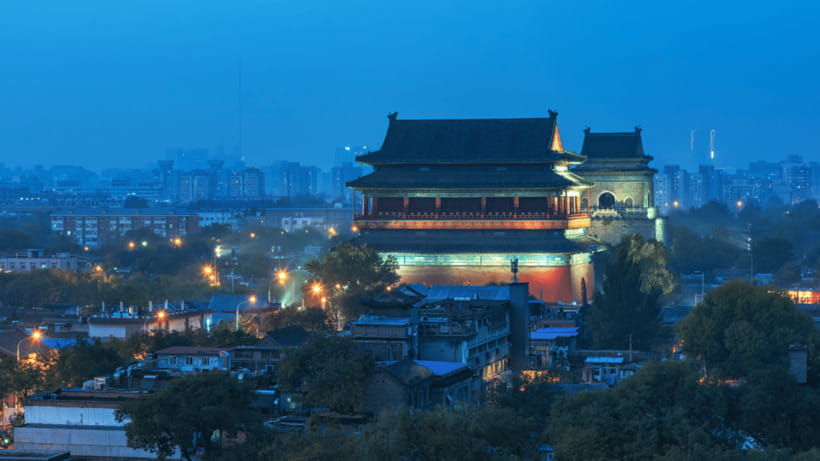
The Bell Tower offers a different mood. Its main object is the enormous Ming Dynasty bell commissioned during the Yongle era. At about 63 tons, it is known as the King of Ancient Bells, and its size gives the room an almost industrial sense of weight and power.
I like seeing the two buildings together because they make the old time system easy to understand. The Drum Tower gives you a room filled with instruments and the possibility of a live performance. The Bell Tower focuses attention on one huge object, made for a sound that could carry across the city.
The bell also shows the level of imperial craftsmanship behind what might seem like a simple public service. Telling time required a major building, specialized instruments, trained performers, and a system understood by the whole city. The bell is the clearest physical reminder of that effort.
Take your time here. The Bell Tower may not have the same brief burst of action as the drum performance, but it rewards close looking. Notice the scale of the bell compared with the surrounding structure. The contrast between the massive instrument and the orderly architecture helps explain why the complex is protected as an important historic site.
Architecture on Beijing’s central axis
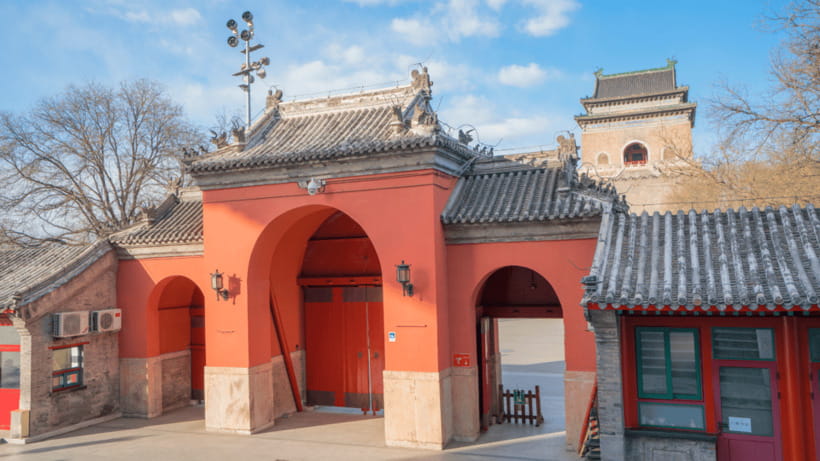
The towers cover a protected area of 12,597 square meters, giving you more than two single-room exhibits. Their north-south arrangement and traditional design are part of what makes the complex unusual among old Chinese bell towers.
You can use the visit to look beyond individual objects. Pay attention to the way the towers are positioned, the height of the platforms, and the sense of order in the layout. The buildings were meant to work as public instruments, not merely to look attractive. Their shape, location, and height all helped sound travel and helped the towers function as landmarks.
From the Drum Tower top, you may also get views across central Beijing. The available information does not promise a particular panorama, so keep expectations sensible. Still, the elevated position gives you a useful way to understand the area around the complex and to appreciate the old city’s broad planning.
For photographers, the towers offer several kinds of pictures: large architectural forms, close details of the bell and drums, and views from the upper level. The strongest images will come from giving yourself time to notice proportions and textures rather than treating the visit as a quick photo stop.
Same country, a completely different kind of day:
- From Beijing: Mutianyu Great Wall Tours with Options
★ 4.9 · 9,216 reviews - Beijing: Forbidden City Tour(Group/Private)-Tickets Included
★ 4.8 · 7,974 reviews - Beijing: T-Square & Forbidden City Group or Private Tour
★ 4.8 · 4,446 reviews - Beijing: Mutianyu Great Wall Daily Tour with Ticket & Lunch
★ 5.0 · 3,056 reviews
How to use the four-hour visit
The ticket allows up to four hours, but that does not mean you need to spend every minute inside. For most people, the sensible approach is to begin with the Drum Tower, check the performance schedule, then visit the Bell Tower while keeping the drumming time in mind.
A practical order looks like this:
- Enter and confirm the day’s drum performance time.
- Visit the upper level of the Drum Tower and see the drums.
- Return for the five-minute performance if the timing works.
- Move to the Bell Tower and spend time with the Yongle-era bell.
- Use the English PDF guidebook to read about the buildings and old timekeeping system.
- Leave extra time for photographs and the surrounding architecture.
This is not a guided walking route with a tour leader moving you from stop to stop. You set the pace. That makes the ticket a good match for a day when you want one focused cultural stop between other plans in central Beijing.
The four-hour allowance is also useful if you want to avoid rushing up the stairs, wait for the performance, or read the guidebook carefully. If you are mainly interested in seeing the bell and taking a few photographs, you may finish sooner.
What the ticket includes, and what it does not

At about $13 per person, the ticket is reasonably priced for access to both towers and a central Beijing landmark. Its value depends on your interests. You are paying for entry to a significant historic complex, not for transport, a meal, or an escorted sightseeing program.
The English PDF guidebook improves the value for independent visitors. It gives you background as you move through the site, which is helpful because the buildings themselves may not explain every detail in English.
You should also know what is missing. There is no live tour guide and no audio guide. If you want detailed explanations in person, this product will not provide them. On the other hand, many people prefer the freedom of reading only what interests them and moving on when they are ready.
Communication around the ticket has been described as easy through WhatsApp, which can be useful if you need help before arrival. English support may not cover every onsite conversation, so keeping your ticket details and identification ready will make the visit simpler.
Who will get the most from this visit

I would recommend the towers most strongly to people who enjoy history, traditional architecture, photography, and small cultural experiences with a clear local purpose. The site is especially useful if you want to understand how imperial Beijing worked, rather than simply collect another famous building.
Families with older children may find the giant bell and powerful drums more memorable than a long museum display. The performance gives younger visitors something concrete to watch, while the old timekeeping system provides an easy story to follow.
The complex also suits independent visitors who dislike fixed tours. You can arrive, read the PDF guidebook, wait for the performance, and leave when you have seen what matters to you.
I would be more cautious if your Beijing schedule is already packed with major sights and you are not interested in historic buildings. One Spanish visitor rated the experience as acceptable but limited after seeing much of the city, which is a fair warning. The towers are worthwhile, but they are a focused stop, not an all-day attraction.
Useful planning details

Bring your passport or ID card. This is specifically required information for the visit, so do not leave identification at your hotel.
The experience is listed as lasting four hours, and you need to check availability for starting times. The ticket offers skip-the-ticket-line access, which can make the entry process more convenient, though you still need to follow the site’s identification and admission procedures.
The booking terms are flexible. You can cancel up to 24 hours before the activity for a full refund, and a reserve-now, pay-later option is available. Those features matter if your Beijing schedule is still moving around.
The price is listed in US dollars at $13 per person. That is a modest cost for access to both towers, particularly if you catch the drum performance and use the English guidebook. It is less compelling if you only want a quick exterior photograph and do not plan to enter.
Allow room for the performance schedule rather than assuming it will run at the exact time you prefer. The demonstration is a major reason to visit, but the information provided does not guarantee a particular start time.
My verdict: book it for the drums, bell, and old city setting
I would book this ticket if you want a convenient, self-guided look at Beijing’s old timekeeping system. The 63-ton bell, 25 drums, central location, and chance of a short live performance give the visit enough substance for a culture-focused afternoon.
I would skip it if you need a live expert guide or if you are choosing between this and a major Beijing sight that better matches your interests. The towers are not a broad city tour. They are a concentrated look at one practical part of imperial life.
For the best value, arrive with enough time to see both buildings, check the drum schedule immediately, and use the PDF guidebook instead of treating the towers as a fast photo stop. At $13, it is a sensible add-on for history lovers who want to hear, see, and understand how old Beijing kept time.
FAQ
Where are the Bell and Drum Towers located?
They are at the northern end of Beijing’s central axis in central Beijing.
How much does the ticket cost?
The listed price is $13 per person.
How long does the experience last?
The duration is listed as four hours. You can explore the towers at your own pace during that period.
Does the ticket include entry to both towers?
Yes. It includes admission to the Bell Tower and the Drum Tower.
Is a guide included?
An English PDF guidebook is included. A live tour guide and an audio guide are not included.
Can I see a drum performance?
You may see a daily drum performance at the Drum Tower. The performance lasts about five minutes, but the exact time can vary according to the onsite schedule.
How many drums are in the Drum Tower?
The Drum Tower housed 25 drums.
How heavy is the ancient bell?
The Ming Dynasty Yongle-era bell weighs about 63 tons.
What identification should I bring?
Bring your passport or ID card.
Can I cancel the booking?
Yes. You can cancel up to 24 hours in advance for a full refund. A reserve-now, pay-later option is also available.
Just added around Beijing
- Private Transfer to Mutianyu Great Wall with professional driver★ 5.0 · 19 reviews
- camp on the Great Wall overnight with sunrise and sunset on the wall★ 5.0 · 11 reviews
- One day tour to downtown Tianjin from Beijing by high speed train★ 5.0 · 3 reviews
- BusDa:Ancient Great Wall &Badaling Great Wall Full-day Bus Tour★ 4.5 · 6 reviews
- ZANBUS: Trip to the Jinshanling Great Wall Departing at 7:30 AM★ 5.0 · 5 reviews
- Yuxiandu Chinese Royal Cuisine Museum with Show and Royal Banquet★ 5.0 · 4 reviews
- Private Wild Great Wall Hiking tour at Simatai (Challenging)★ 5.0 · 16 reviews
- Wild Great Wall Huanghuacheng Half Day Tour★ 5.0 · 15 reviews
Historical Tours, compared.

Between Capitalism & Communism: Hong Kong History Tip Based Tour
Read our review →
Beijing Historical Tour II including Summer Palace, Lama Temple & Panda Garden
Read our review →
Beijing Historical Tour I – Forbidden City, Tiananmen Square & Temple of Heaven
Read our review →
Tour of Jewish Shanghai led by a Jewish History Expert
Read our review →
Beijing Historic City Guided Walking Tour + Calligraphy Creation
Read our review →
Beijing Culture: Tea Ceremony, Heritage Instrument & Calligraphy
Read our review →
2-Hour Beijing Private Forbidden City Tour: History & Highlights
Read our review →
Xi’an Full Day Sightseeing Tour – Shaanxi History Museum, Big Wild Goose Pagoda, Ancient City Wall
Read our review →Browse the lists this tour appears in