
Reviewed · HISTORICAL TOURS
Tour of Jewish Shanghai led by a Jewish History Expert
Shanghai’s Jewish story is not confined to a museum case. It begins at the Bund, where the former Cathay Hotel recalls Baghdadi Jewish influence, then moves to Hongkou, the district where thousands of European Jewish refugees found shelter during World War II. The tour connects grand Shanghai history with ordinary streets and homes.
I like the mix of major sites and quieter details, especially the visit to a Chinese home where Jewish refugees once lived. I also like the guide-led storytelling. Dvir is especially noted for his dry humor, energy, and command of the subject. The main consideration is simple: this is a history tour first. If you want nonstop sightseeing, four hours may feel talk-heavy.
Key points
- A Bund starting point: Begin near the Peace Hotel, once the Cathay Hotel, and learn about Sir Victor Sassoon and Shanghai’s Baghdadi Jewish community.
- A former synagogue: Visit the Jewish Refugees Museum, housed in the restored Ohel Moishe Synagogue.
- Hongkou beyond the headline: See the Huoshan Park memorial, back lanes, and a Chinese residence linked to Jewish refugee life.
- Expert-led context: Guides including Dvir, Andy, and Anfisa bring together Jewish immigration, wartime Shanghai, and the city’s wider story.
- Small-group feel: The maximum group size is 22, though some departures have been much smaller.
- Morning is best: The operator recommends the morning departure because of tour length and daylight.
Why Jewish Shanghai matters
Shanghai offered something rare during the darkest years of European history: entry without an immigration visa. Jewish people fleeing Nazi persecution arrived in a city already shaped by several waves of Jewish settlement, including Baghdadi Jewish merchants and real estate developers, Russian Jewish immigrants, and later refugees from war-torn Europe.
That background matters because the tour does not treat the wartime refugee story as an isolated episode. You learn how Jewish communities formed in Shanghai before World War II, how the city’s foreign concessions worked, and why Shanghai became a place of refuge when many other doors were closed.
The subject is serious, but the tour also brings in the people who shared this part of the city: Jewish refugees, Chinese migrant workers, business owners, and the Baghdadi Jewish families who helped shape modern Shanghai. I find that human scale more useful than a string of dates.
A few more Shanghai trips to weigh up
- Between Capitalism & Communism: Hong Kong History Tip Based Tour
★ 5.0 · 234 reviews - Beijing Historical Tour II including Summer Palace, Lama Temple & Panda Garden
★ 4.0 · 187 reviews - Beijing Historical Tour I – Forbidden City, Tiananmen Square & Temple of Heaven
★ 4.0 · 120 reviews
Starting at the Peace Hotel on the Bund
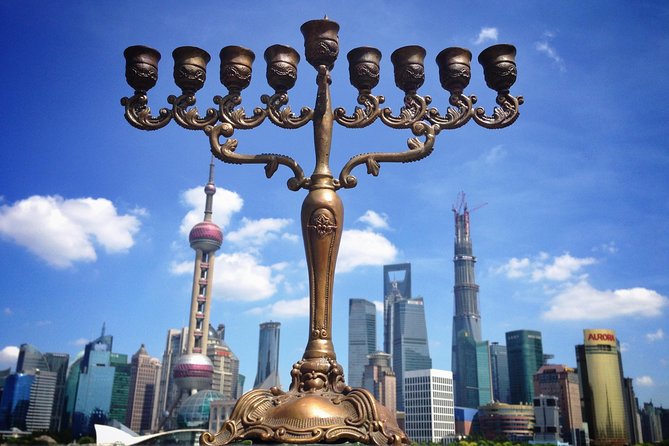
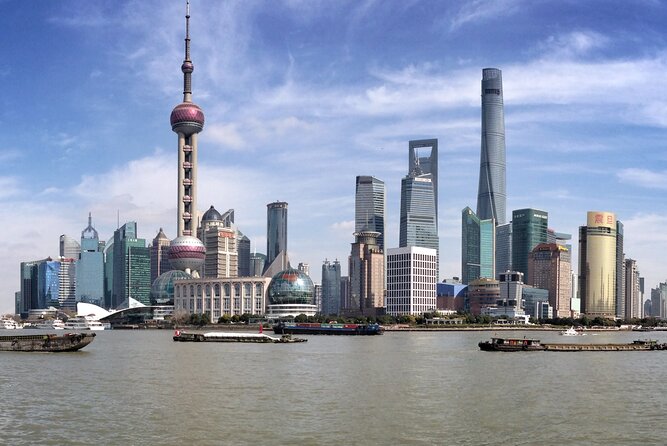
The meeting point is near Nanjing Road East, at the Peace Hotel on the Bund. The building was formerly the Cathay Hotel, built by Sir Victor Sassoon, a Baghdadi Jewish real estate developer whose name is closely tied to Shanghai’s early twentieth-century growth.
This is a smart place to begin. You get the famous riverfront views, but the focus turns quickly to the Jewish people who helped build commercial and social life in the city. As you look across the Bund, you are not simply ticking off Shanghai’s best-known waterfront. You are placing Jewish history inside the city’s larger story of foreign concessions, finance, trade, and migration.
Expect a talk at the beginning rather than an immediate walk through a museum. Guides such as Dvir are praised for giving a long, clear introduction before the group heads to Hongkou. That opening can feel dense if you prefer to start with objects and buildings, but it helps explain why later stops matter.
The exact transport arrangement is part of the tour. Private transportation and an air-conditioned vehicle are included, so you are not required to make the full journey between the Bund and Hongkou on foot. That is useful in Shanghai’s heat, rain, or winter chill.
Entering Hongkou, the former Shanghai Ghetto
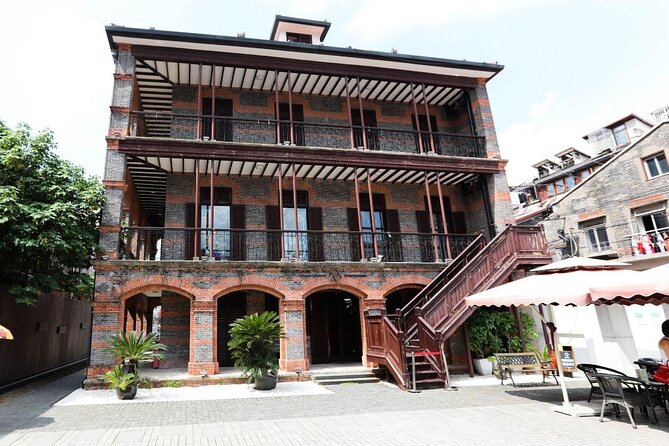
Hongkou is the central setting for the tour. During World War II, thousands of Jewish refugees lived in this part of Shanghai, often under difficult and crowded conditions. The district is not presented as a preserved historic quarter. It remains a living urban area, with present-day Chinese homes, streets, and back lanes.
That distinction is important. You will not find a perfectly reconstructed wartime village waiting behind a gate. Instead, the guide helps you read an ordinary-looking neighborhood through the events that took place there. A lane, residence, or park can carry meaning that is easy to miss without someone explaining its connection to refugee life.
The walking portions are useful because they place history at street level. You may pass modern housing and local streets while hearing how Jewish refugees shared space with Chinese residents and migrant workers. The contrast can be striking, and it also keeps the tour honest. This is not a theme park version of the past.
One three-star assessment objected that there is little to see beyond the history lesson. That is a fair warning. The appeal lies in interpretation, memory, and place, not in grand architecture at every stop. If you need a long list of intact historic buildings, this may not be your ideal Shanghai outing.
The Jewish Refugees Museum and Ohel Moishe Synagogue
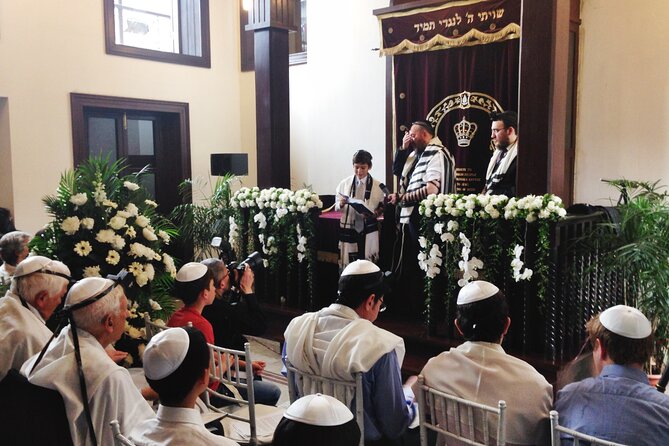
The Jewish Refugees Museum is housed in the former Ohel Moishe Synagogue. This is the tour’s main museum stop and one of its most important physical links to Jewish life in wartime Hongkou.
The former synagogue gives the visit weight. You are not only viewing photographs and documents in a modern gallery. You are entering a building connected to the Jewish community itself. The museum helps explain how refugees arrived, lived, worshipped, and tried to build some form of normal life in Shanghai.
Your guide accompanies you and adds context to the exhibits. That makes a difference, since the tour’s strongest feature is the way it joins individual stories to wider events. The museum can tell you what happened, but the guide helps connect it to Shanghai’s politics, the earlier Jewish communities, and the experience of people forced to begin again in a distant city.
Allow time to listen. This is not a quick photo stop. The tour is designed around explanation, and guides may point out details that you would otherwise pass without notice. Past departures have included discussion of tombstones and where some were found, a reminder that even small physical traces can open a larger story.
The museum admission is included. Food and drinks are not, so plan to eat before or after the four-hour experience rather than expecting a meal break as part of the program.
Same country, a completely different kind of day:
- Authentic Local Food Tour in Central Shanghai
★ 5.0 · 1,382 reviews - Zhujiajiao Water Town and Shanghai City Private Day Tour
★ 5.0 · 1,016 reviews - Private Shanghai Full Day City Tour with Old and New Highlights
★ 5.0 · 995 reviews - Shanghai: Hop-on Hop-off Bus Ticket and Optional Attractions
★ 3.4 · 692 reviews
Huoshan Park and the refugee memorial
Huoshan Park contains a monument to the Jewish refugees of World War II. It is a modest stop, but its value comes from location and memory. In a large city full of monumental sights, a smaller memorial can be easier to overlook and more powerful once you understand what it marks.
The guide explains the connection between the park, Hongkou, and the refugee community. This is where the tour’s focus on names, places, and personal stories comes together. You are not simply told that refugees lived in Shanghai. You are shown a place that helps anchor that fact.
Do not expect a vast memorial complex. Huoshan Park is one part of a neighborhood tour, not a full museum visit. Its impact depends on the explanation around it. If you arrive expecting a major architectural attraction, you may find the stop understated. If you value historical context, it earns its place.
Back lanes and a former refugee home
The walk through Hongkou’s back lanes adds a useful layer. The tour includes a visit to a Chinese home where Jewish refugees once lived. That detail moves the story away from institutions and public memorials and toward daily life.
A residence can help you think about the practical side of refuge: where people slept, how communities shared limited space, and how Jewish families lived alongside local Chinese residents. The available information does not promise a fully furnished reconstruction, so you should approach this as a place-based explanation rather than a staged historical display.
This may be the most authentic part of the experience for you. The streets are not arranged for sightseeing, and the district is not frozen in the past. You see the surroundings as they exist now while learning how they functioned during the war.
The walking is balanced with vehicle transport and periodic sitting. One particularly positive account noted that the guide arranged regular places to sit, which matters if you have limited stamina or simply prefer not to stand through a four-hour lecture. Still, wear comfortable shoes and prepare for changing weather. The tour operates in all conditions.
The guides and the quality of the storytelling
The guide can make or break a history tour, and this experience depends heavily on that person. Dvir is repeatedly praised for his encyclopedic command of Jewish Shanghai, his dry sense of humor, and his ability to connect the subject with the wider history of China and the city. Andy and Anfisa are also named as guides who offer clear, engaging explanations.
The strongest reports describe a guide who is passionate without becoming theatrical. That tone suits the subject. Jewish refugee history calls for care, but a little humor and human warmth can keep four hours from becoming a solemn lecture.
You should expect a strong narrative, not a simple route from one attraction to another. Guides explain different waves of Jewish immigration and bring in stories involving a Baghdadi Jewish developer, Chinese workers, and European refugees. They also discuss Shanghai before, during, and after World War II.
Group size can reach 22 people. That is still manageable, though the experience will feel different with a full group than with a handful of participants. Small departures have included groups of around 10, and one especially small group made it easy to hear every word. If hearing the guide clearly matters to you, ask for the morning or afternoon preference when booking, and arrive on time.
Four hours and the question of value
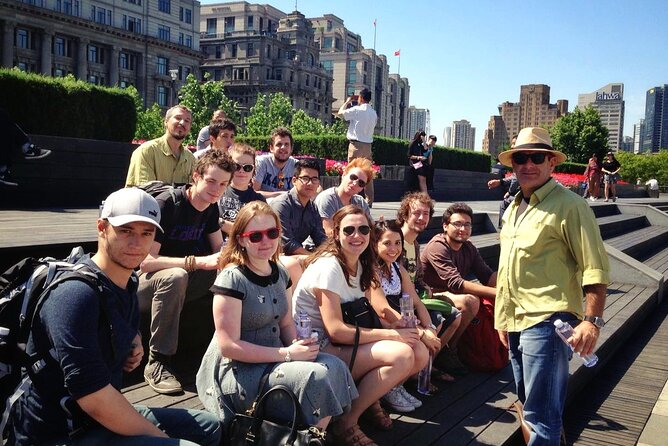
The price is $96 per person for about four hours. That is not a bargain-basement walking tour, but it includes private transportation, an air-conditioned vehicle, an expert history guide, and admission to the Jewish Refugees Museum.
I think the value is strongest for visitors who would otherwise miss this part of Shanghai. The tour covers a subject that is not obvious from the Bund, Nanjing Road, or the city’s major skyscrapers. You are paying for access to several locations and for the interpretation that ties them together.
The value is weaker if you mainly want transport or a quick photo circuit. Much of the time is spent listening, walking through ordinary streets, and discussing events. The tour earns its price through the guide’s preparation and storytelling, not through expensive attractions.
A four-hour block also has a planning benefit. You can set aside one morning and come away with a clear framework for Jewish life in Shanghai across roughly a century. The start time is 9:30 a.m., and the operator recommends the morning because daylight makes the neighborhood walking more practical.
The tour ends back at the meeting point. Hotel pickup and drop-off are not included, so you need to arrange your own way to and from the Peace Hotel area.
Who should book this Shanghai history tour
I would choose this tour if you have a personal or academic interest in Jewish history, World War II, migration, or the history of Shanghai’s foreign communities. It also suits anyone who wants to see a side of the city beyond its polished riverfront.
It is a good choice for a return visit, too. One repeat participant had taken the tour years earlier and came back for it again, which says something about the depth of the material. The route gives you a different way to understand Shanghai, even if you have already seen the major sights.
Families with older children may find it worthwhile if they can handle a serious historical subject and several hours of explanation. The activity information says most people can participate, but it does not provide a detailed accessibility breakdown. Ask ahead if you need specific mobility arrangements.
I would skip it if your priority is food, shopping, architecture, or fast-paced sightseeing. You may also want to avoid scheduling it on the same day as another demanding guided tour. The pace is considered moderate, but the amount of information is substantial.
Practical advice before you go
Choose the morning departure if possible. You will have better daylight for the Hongkou streets, and the tour operator specifically recommends it because of the four-hour duration and daylight limits.
Wear shoes suitable for walking and bring clothing for the forecast. The tour runs in all weather, and part of its value comes from seeing the district on foot. The air-conditioned vehicle offers relief between locations, but it does not replace outdoor walking.
Book ahead if your Shanghai dates are fixed. This experience is often reserved well in advance, with an average lead time of about 82 days. Confirmation is sent within 48 hours, subject to availability.
You can cancel for a full refund up to 24 hours before the start time. A cancellation or change made inside that window is not refunded, and the activity requires a minimum number of participants. If the minimum is not reached, you are offered another date or experience, or a full refund.
Should you book it?
Book this tour if you want a serious, personal account of how Jewish communities shaped and experienced Shanghai. The Peace Hotel, Ohel Moishe Synagogue, Huoshan Park, and Hongkou lanes form a strong route, but the real reason to go is the guide’s ability to make those places speak.
Go in expecting history, not spectacle. At $96, the tour is worth it for the expert explanation, included transport, and museum visit, especially if this subject matters to you. If you want the most from it, take the morning departure, keep your schedule open for the full four hours, and come ready to listen.
FAQ
How long is the Tour of Jewish Shanghai?
The tour lasts approximately four hours.
Where does the tour begin?
It begins near Nanjing Road East, at the Peace Hotel on the Bund. The hotel was formerly the Cathay Hotel, built by Sir Victor Sassoon.
Where does the tour end?
The tour ends back at the meeting point.
What time does the tour start?
The stated start time is 9:30 a.m. Morning and afternoon departures operate, but the morning option is recommended because of the tour length and daylight.
What places are visited?
The tour includes the Peace Hotel and Bund area, Hongkou, the Jewish Refugees Museum in the former Ohel Moishe Synagogue, Huoshan Park, back lanes in the former Shanghai Ghetto, and a Chinese home where Jewish refugees once lived.
Is museum admission included?
Yes. Admission to the Jewish Refugees Museum is included.
Is transportation included?
Yes. Private transportation in an air-conditioned vehicle is included. Hotel pickup and drop-off are not included.
How many people can join the tour?
The maximum group size is 22 people.
Can I cancel for a refund?
Yes. You can cancel at least 24 hours before the start time for a full refund. Cancellations or changes made less than 24 hours before the start time are not refunded.
Just added around Shanghai
- Suzhou Private Guided Day Trip from Shanghai by Bullet Train★ 5.0 · 46 reviews
- Suzhou and Zhujiajiao Private Guided Day Trip from Shanghai★ 5.0 · 27 reviews
- Shanghai:Old Town, Yu Garden, Zhujiajiao Water Town Bus Tour★ 4.7 · 16 reviews
- Shanghai: Zhujiajiao Water Town with Calligraphy Experience★ 5.0 · 17 reviews
- Shanghai: Yu Garden with Entry Tickets(optional)★ 4.5 · 28 reviews
- Shanghai: Yuyuan, City God Temple Old City Tour-Tip Based★ 5.0 · 10 reviews
- Shanghai: Wild Animal Park Ticket★ 4.9 · 43 reviews
- Shanghai: Yu Garden Entry Ticket with PDF Guidebook★ 4.1 · 45 reviews
Historical Tours, compared.
Between Capitalism & Communism: Hong Kong History Tip Based Tour
Read our review →
Beijing Historical Tour II including Summer Palace, Lama Temple & Panda Garden
Read our review →
Beijing Historical Tour I – Forbidden City, Tiananmen Square & Temple of Heaven
Read our review →
Beijing Historic City Guided Walking Tour + Calligraphy Creation
Read our review →
Beijing Culture: Tea Ceremony, Heritage Instrument & Calligraphy
Read our review →
2-Hour Beijing Private Forbidden City Tour: History & Highlights
Read our review →
Xi’an Full Day Sightseeing Tour – Shaanxi History Museum, Big Wild Goose Pagoda, Ancient City Wall
Read our review →
Private Historical Tour: Guangzhou City Sightseeing Including Lunch
Read our review →Browse the lists this tour appears in