
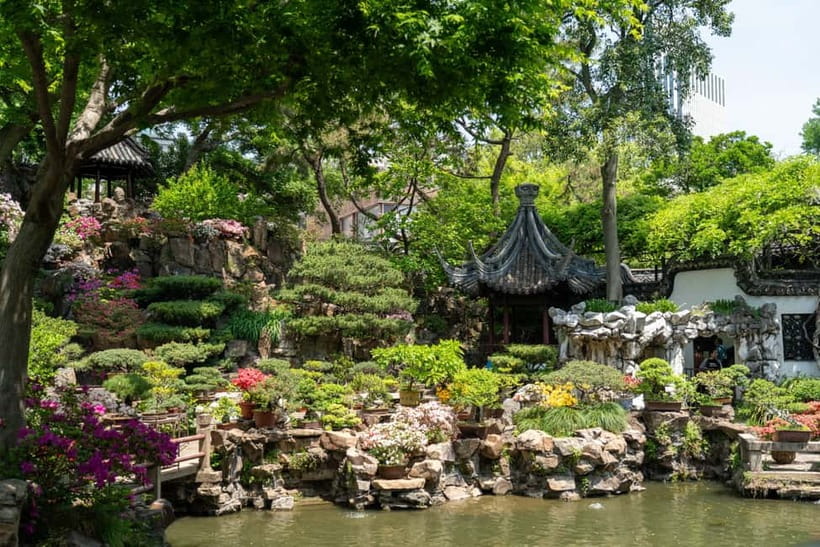
Reviewed · CITY TOURS
Shanghai: Yuyuan, City God Temple Old City Tour-Tip Based
Shanghai’s old city is more than a backdrop for photos. In two hours, you move from old residential lanes to the City God Temple, where Taoist customs, folk religion, zodiac animals, wishes, and festival traditions still shape the visit. Along the way, you see how Shanghai’s living spaces changed over time, then finish in a quiet park.
I like the tour’s mix of subjects. You get practical culture, not just architecture, with a look at medicinal herbs, Chinese zodiac signs, temple customs, and local crafts. I also like the small-group format, limited to 10 people, and the personal travel tips from guides such as Jie, whose clear English and warm style earned repeated praise.
The main catch is the pace. Two hours goes quickly, especially with several stops, and this is a walking tour through busy old-city areas. You should also know that the route is not suitable for people with mobility impairments, and the meeting information lists both Exit 1 and Exit 3 in different places, so confirm the exact exit when booking.
Key points to know before you book
- City God Temple culture: Learn how Taoism, folk beliefs, gods, wishes, and celebrations fit into everyday Chinese life.
- A useful two-hour route: The walk links Yuyuan Old Street, a medicine shop, temple grounds, tea house scenery, small shops, and Ancient City Park.
- Personal guidance: Guides including Jie explain customs in clear English and offer individual Shanghai suggestions.
- Small group size: The tour is limited to 10 participants, which makes questions and group photos easier.
- A taste of traditional medicine: You can sample the king of herbs while learning about Chinese medicinal traditions.
- Tip-based pricing: At $2.36 per person, the advertised cost is unusually low, but you should budget for a tip if the guide gives you a useful, personal tour.
Starting at Yuyuan Garden Metro Station
The meeting point is at Yuyuan Garden Metro Station Exit 1, written in Chinese as 豫园站1号口. The station is served by Metro Lines 10 and 14. Look for the guide holding a red umbrella, a simple marker that matters in a crowded part of Shanghai.
The supplied route also lists 豫园站3号口 as a starting location, while the meeting instructions clearly direct you to Exit 1. I would not leave this to chance. Check the latest booking message and use the Chinese address, 豫园(1号出口) 上海市黄浦区, if you need to show a taxi driver.
Wear comfortable shoes. The route includes old streets, temple areas, gardens, and market lanes, so you should expect steady walking rather than a sit-down sightseeing session. Keep your belongings secure, and remember that smoking is not allowed.
The group limit of 10 is a good fit for this setting. The old city can feel crowded, and a very large group would make it harder to hear explanations or stay together. In a small group, you can ask about your own zodiac animal, customs, food-area suggestions, or places to visit later.
A few more Shanghai trips to weigh up
- Zhujiajiao Water Town and Shanghai City Private Day Tour
★ 5.0 · 1,016 reviews - Private Shanghai Full Day City Tour with Old and New Highlights
★ 5.0 · 995 reviews - 4-Hour Flexible Private Shanghai City Tour
★ 5.0 · 235 reviews
Yuyuan Old Street and Shanghai’s changing homes
The first substantial stop is Yuyuan Old Street, with about 30 minutes of guided time. This is where the tour begins to explain Shanghai’s ancient city through its people, not only through its decorated buildings.
You learn to notice how residents’ living spaces changed over time. That detail gives the old city a human scale. Instead of treating the area as an old-style shopping district, the guide helps you think about how people lived, worked, and adapted as Shanghai grew.
The street also introduces local shops and traditional design. You may find the area busy, with plenty of visual distractions, so stay close to the guide if you want to catch the historical explanations. This stop is best for getting your bearings and learning how the old city fits into modern Shanghai.
The tour also introduces the Chinese 12 Zodiac animals, each shown in distinctive costumes. This is a light and memorable way to begin learning about a belief system that many visitors encounter across China. If you know your birth-year animal, ask the guide about it. The zodiac section gives you an easy personal link to the wider culture.
Tonghan Chuntang and the king of herbs
About 20 minutes is set aside for Tonghan Chuntang, a traditional Chinese medicine shop. This is a short stop, but it adds something different from the temple and garden scenery.
You can see examples of Chinese medicinal herbs and sample the king of herbs. The supplied information does not identify the herb by name, so the value here is the introduction itself rather than a promise of a full medical consultation or treatment.
I would approach this part with curiosity, not as health advice. The guide can explain the cultural role of traditional medicine and help you understand why herbal shops remain part of the city’s commercial life. If you have allergies or dietary concerns, ask what you are being offered before sampling anything.
This stop works well in a short tour because it gives you a direct sensory experience. You are not only looking at carved roofs and temple decorations. You are also seeing one of the old city’s everyday traditions.
City God Temple and the meaning behind the rituals
The 40-minute visit to the City God Temple is the heart of the walk. It is the longest stop, and rightly so. The guide explains Taoism and Chinese folk religion, including common gods, beliefs, rituals, wishes, and celebrations.
For many visitors, this is the point where the old city becomes easier to understand. A temple visit can otherwise seem like a sequence of incense burners, statues, and unfamiliar names. With a guide, you can ask what people are doing, why certain figures matter, and how Taoist ideas connect with local folk customs.
The temple is also a good place to ask about the difference between formal religious practice and popular belief. The tour presents both, helping you see that temple culture can include ritual, family tradition, local stories, and personal hopes.
One useful detail from the tour is the chance to learn about important gods and make a couple of wishes. That small act can make the visit more personal, even if you are not religious. You are taking part in a custom while still observing it respectfully.
This is also where guide quality matters most. Jie is specifically praised for clear English, strong preparation, warmth, and an ability to explain Chinese culture to people from different backgrounds. The tour is offered in English, and the feedback supplied for the experience repeatedly points to engaging explanations, friendly humor, and good answers to questions.
Same country, a completely different kind of day:
- Authentic Local Food Tour in Central Shanghai
★ 5.0 · 1,382 reviews - Shanghai: Hop-on Hop-off Bus Ticket and Optional Attractions
★ 3.4 · 692 reviews - Shanghai Private Tour: Zhujiajiao Water Town and Boat Ride
★ 5.0 · 661 reviews - Eat Like A Local: Shanghai Night Food Tour
★ 5.0 · 616 reviews
The Nine Zig-Zag Bridge and Mid-Lake Pavilion
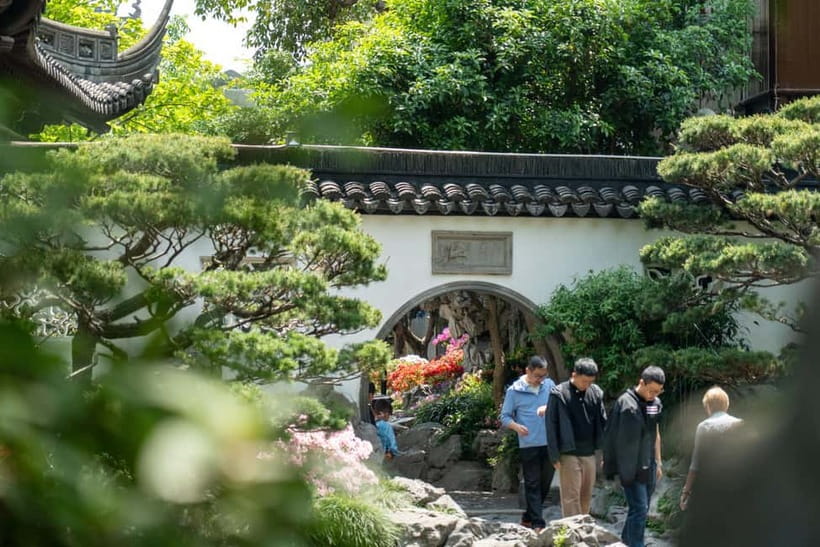
After the temple, the route moves into the scenic section around the Nine Zig-Zag Bridge and the Mid-Lake Pavilion Tea House. About 20 minutes is planned here.
The bridge’s zig-zag form is one of the classic sights around Yuyuan Garden. From the walkway, you can enjoy views across the water toward the pavilion and traditional architectural details. The route gives you time to pause, take group photos, and hear how the garden setting fits into the old city.
The Mid-Lake Pavilion Tea House adds a quiet visual change after the temple and street activity. The tour does not promise a formal tea ceremony or a long tea tasting, so think of this as a guided look at the setting rather than a dedicated tea experience.
This short stop is useful for balance. The old city portion can be crowded and full of shops. The bridge and pavilion give you a slower moment and a chance to take in the garden design. If photography matters to you, have your camera ready, but do not let pictures pull you too far from the group.
Yuyuan Garden smallware and local craft
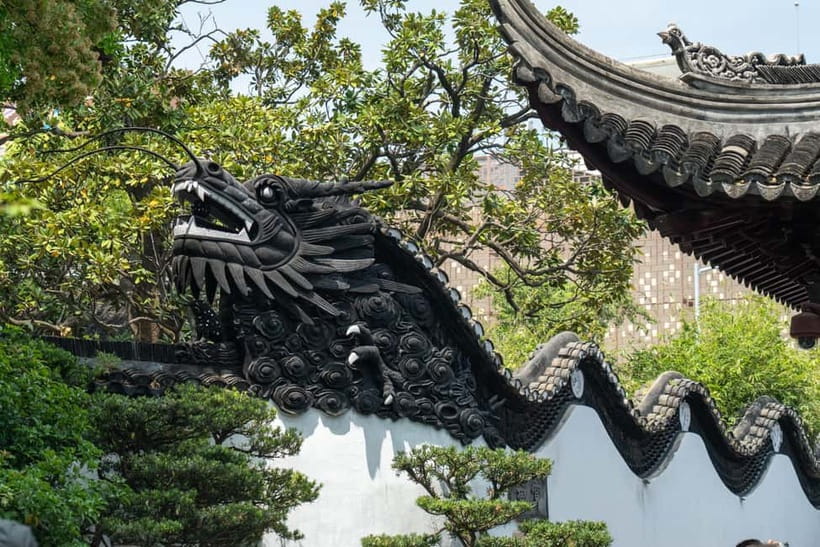
The itinerary then allows about 20 minutes for Yuyuan Garden Smallware, described as a Shanghai small product market. This is a shopping and craft stop, but it is not presented as a long buying session.
You can browse small goods, local crafts, and market stalls while getting a sense of how the area serves both residents and sightseers. The guide can point out details you might otherwise pass without noticing and offer practical suggestions about what is worth seeing nearby.
This part suits you if you enjoy browsing and want a little time to look at local products. It may be less appealing if you prefer a nonstop history walk or dislike shopping areas. Since the tour is tip-based and the smallware stop is part of the route, you should feel free to look without assuming you must buy anything.
The market also gives the tour a more ordinary feel. Temples and gardens show the city’s heritage, while the small shops show how that heritage sits beside daily commerce.
Finishing in Shanghai Ancient City Park
The final stop is Shanghai Ancient City Park, where the tour ends. The park brings the route back to a calmer setting, with ancient relics and open space providing a gentle finish.
Ending here is practical. You are not returned to the metro station, so you should plan your next move before the walk begins. The tour information does not specify onward transport from the park, but the guide offers personalized recommendations, making this a good time to ask about nearby places, food, transport, or other parts of Shanghai.
The park is also a useful pause after two hours of streets, shops, temple grounds, and explanations. If you have an afternoon free, you can continue exploring the old city on your own. If you have had enough walking, the park offers a more relaxed place to stop.
What the two-hour format really gives you
Two hours is enough for a well-shaped introduction, not a full study of Yuyuan Garden or Shanghai’s ancient city. The schedule allocates 30 minutes to Yuyuan Old Street, 20 minutes to Tonghan Chuntang, 40 minutes to the City God Temple, 20 minutes to the tea house area, and 20 minutes to the smallware market.
That adds up to the listed two hours, with the start and finish locations making the walking flow important. You will cover several subjects quickly. The benefit is variety. The drawback is that you may want more time at the temple, garden, or market.
One supplied comment describes a longer experience of roughly three hours, but the official duration for this activity is two hours. I would plan around the two-hour schedule and treat any extra time as uncertain.
The route is best for a first look. It helps you decide what deserves a return visit, such as the garden, temple, traditional medicine, or market area. It is less suitable if you want long periods for shopping, detailed photography, or quiet time at each attraction.
Guide style and group atmosphere
The guides are a major part of the experience. Jie receives especially warm praise for being prepared, personal, and easy to understand in English. Her background traveling across cultures is noted as part of what helps her explain Chinese customs to an international audience.
Other feedback describes a friendly group atmosphere, plenty of laughter, and a guide who answers questions well. That matters on a culture-focused walk. The subject can include unfamiliar religious ideas and customs, so a guide who explains without making the visitor feel awkward is valuable.
The group is limited to 10 participants, and group photos at attractive landmarks are included. You should still expect the tour to depend on the group staying together. Ask questions when you can, especially at the City God Temple, where a short explanation can lead to several useful follow-ups.
The advertised price is $2.36 per person. That is excellent value if you treat the tour as a low-cost introduction and remember that it is tip-based. The price does not mean you should expect private guiding, extensive time at each stop, or a full meal and garden admission package. If the guide gives you thoughtful explanations and useful personal suggestions, a fair tip is part of the spirit of this kind of tour.
Who should book this walk
I would choose this tour if you want a compact introduction to Shanghai’s old city and prefer explanations over simply wandering between photo stops. It is especially suitable if you are curious about Taoism, temple customs, Chinese zodiac traditions, traditional medicine, and local markets.
It also suits first-time visitors who want practical ideas for the rest of a Shanghai stay. The guides provide personalized recommendations, so bring a short list of interests and ask for help shaping your next few hours.
You should think twice if you have mobility impairments, as the experience is specifically marked as unsuitable for people with those needs. You may also want a different format if you dislike crowds, shopping areas, or a quick walking pace.
Should you book the Yuyuan and City God Temple tour?
Book it if you want a friendly, affordable, English-language introduction to one of Shanghai’s most historic areas, with culture explained in plain terms. The strongest reasons are the City God Temple discussion, the traditional medicine stop, the zodiac presentation, and the personal guidance associated with Jie.
Skip it if you need a slow, in-depth visit to Yuyuan Garden, a formal tea experience, or a tour built for limited mobility. Also confirm the meeting exit before you go, since the supplied directions name both Exit 1 and Exit 3.
For most able walkers with two hours to spare, this is a sensible first step into Shanghai’s old city. It gives you enough context to make the surrounding streets, temples, gardens, and shops more meaningful on your own.
FAQ
How long does the Yuyuan and City God Temple tour last?
The listed duration is two hours.
What language is the tour offered in?
The live tour guide speaks English.
Where is the meeting point?
The meeting instructions direct you to Yuyuan Garden Metro Station Exit 1, written as 豫园站1号口, in Huangpu District, Shanghai.
How do I find the guide?
Look for a guide holding a red umbrella at the meeting point.
Which metro lines reach the meeting point?
Yuyuan Garden Metro Station is served by Metro Lines 10 and 14.
How large is the group?
The activity is a small-group tour limited to 10 participants.
What places are included along the route?
The route includes Yuyuan Old Street, Tonghan Chuntang, the City God Temple of Shanghai, the Lake Pavilion Tea House area, Yuyuan Garden Smallware, and Shanghai Ancient City Park.
Can I sample traditional Chinese medicine?
Yes. The tour includes a sampling of the king of herbs at a traditional Chinese medicine shop. The supplied information does not identify the herb by name.
Is the tour suitable for people with mobility impairments?
No. The activity is specifically marked as unsuitable for people with mobility impairments.
What should I bring or wear?
Wear comfortable walking shoes and keep your personal belongings secure. Smoking is not allowed during the activity.
Just added around Shanghai
- Suzhou Private Guided Day Trip from Shanghai by Bullet Train★ 5.0 · 46 reviews
- Suzhou and Zhujiajiao Private Guided Day Trip from Shanghai★ 5.0 · 27 reviews
- Shanghai:Old Town, Yu Garden, Zhujiajiao Water Town Bus Tour★ 4.7 · 16 reviews
- Shanghai: Zhujiajiao Water Town with Calligraphy Experience★ 5.0 · 17 reviews
- Shanghai: Yu Garden with Entry Tickets(optional)★ 4.5 · 28 reviews
- Shanghai: Wild Animal Park Ticket★ 4.9 · 43 reviews
- Shanghai: Yu Garden Entry Ticket with PDF Guidebook★ 4.1 · 45 reviews
- Shanghai: Yu/Yuyuan Garden Entry Ticket–E ticket★ 4.4 · 24 reviews
City Tours, compared.

Forbidden City Tour(Group/Private)-Tickets Included
Read our review →
All-Inclusive Tour: Tiananmen Square, Forbidden City, Great Wall
Read our review →
4-Hour Small Group Tour to Forbidden City with Entry Tickets
Read our review →
Mini Group Xian Day Tour to Terracotta Army, City Wall, Pagoda and Muslim Bazaar
Read our review →
Tianmen Square, Forbidden City & Royal Museum Tours
Read our review →
Beijing Forbidden City Ticket Booking (Optional: guide service)
Read our review →
Zhujiajiao Water Town and Shanghai City Private Day Tour
Read our review →
Forbidden City and Tian’anmen Square Waking Tour
Read our review →Browse the lists this tour appears in