
Reviewed · TRAIN EXPERIENCES
One day tour to downtown Tianjin from Beijing by high speed train
Tianjin gives you a quick look at a very different side of northern China: European-style concession streets, riverfront squares, old commercial roads, and the former home of China’s last emperor. The high-speed train makes this a practical second-city outing from Beijing, and guide Cindy Zhang brings a personal touch, with strong knowledge of Tianjin’s streets and buildings.
I especially like the blend of urban history and everyday street life. You move from old banks and consulates to a local food stop, a traditional market street, and a riverside walk. The main drawback is the pace: nine stops in about 11 hours leaves little room for lingering, and the return second-class train ticket costs an additional CN¥118 per person.
Key points to know before booking
- Tianjin in one full day: See the railway station area, former concessions, Five Great Avenues, Italian Style Street, Ancient Culture Street, Jingyuan, and the Haihe River.
- Cindy Zhang as your guide: She is praised for knowing the city’s streets and buildings, explaining its past clearly, and keeping the day friendly and easy.
- Return rail fare is extra: The tour price is $234, but the second-class return train ticket is paid separately at CN¥118 per person.
- Lunch and local transport included: You do not need to arrange Tianjin taxis or admission to Jingyuan yourself.
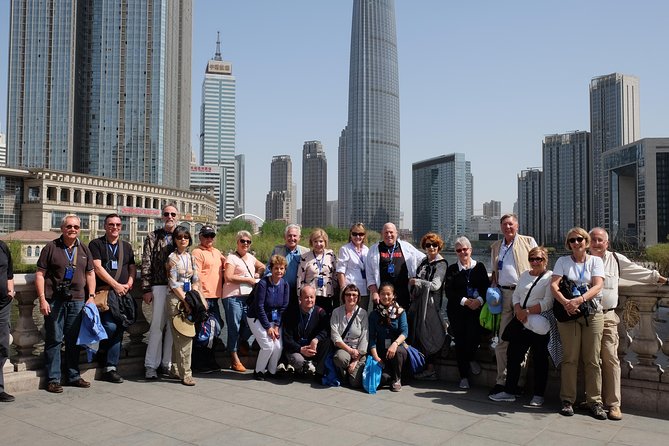
- A small group format: The maximum group size is 20 people, so this is more personal than a large coach outing.
- Moderate walking required: You will move through several historic districts and pedestrian streets, so comfortable shoes matter.
Why Tianjin makes a good day trip from Beijing
Beijing can easily fill a week, but Tianjin changes the rhythm. It was a major treaty-port city with foreign concessions, and its central streets still show that past in a mix of former French, British, and Italian buildings. You are not simply ticking off another Chinese city. You are seeing how trade, foreign influence, imperial politics, and modern local life overlap in one compact center.
The trip lasts about 11 hours, with departure from Beijing South Railway Station around 9:00 in the morning and arrival back at Beijing South around 19:40. That is a long day, but the train helps. You avoid the uncertainty of a road journey and gain more useful time in Tianjin.
The tour includes transportation within Tianjin, a guide, lunch, and admission to Jingyuan. Hotel pickup is offered within a defined area, although transfers outside that area may cost extra. If you are staying elsewhere, confirm the pickup terms before booking.
The $234 price deserves a close look. It is not just a train ride with a guide. It covers local transportation, lunch, some entrance costs, and the work of arranging a packed day across several districts. Still, the return train fare is not included, so add CN¥118 per person for the second-class return ticket. You should also check the exact pickup arrangement, since the stated meeting point is Beijing South Railway Station.
A few more Beijing trips to weigh up
- Beijing to Xi’an See Terracotta Warriors with Bullet Train Round Trip Transfer
★ 5.0 · 238 reviews - Beijing to Datong See YunGang Cave, Hanging Temple (Bullet Train)
★ 5.0 · 39 reviews - Beijing: Xi’an Terracotta Tour by Train-All Tickets Included
★ 5.0 · 27 reviews
Beijing South to Tianjin Railway Station
Your day begins with the high-speed train from Beijing. The exact train arrangements are handled for you, which is useful in China, where station navigation, ticket timing, and passenger procedures can take effort if you are unfamiliar with the system.
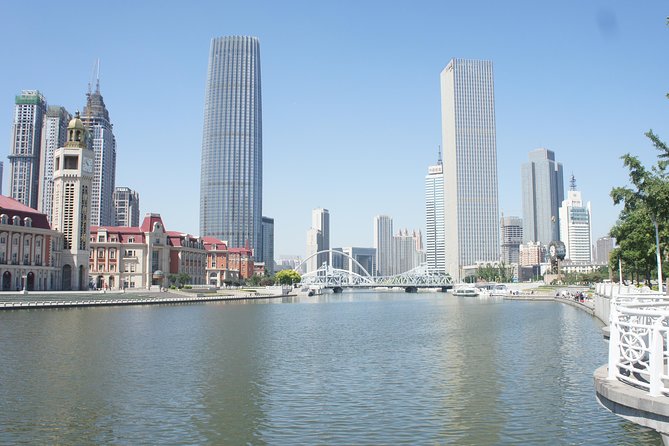
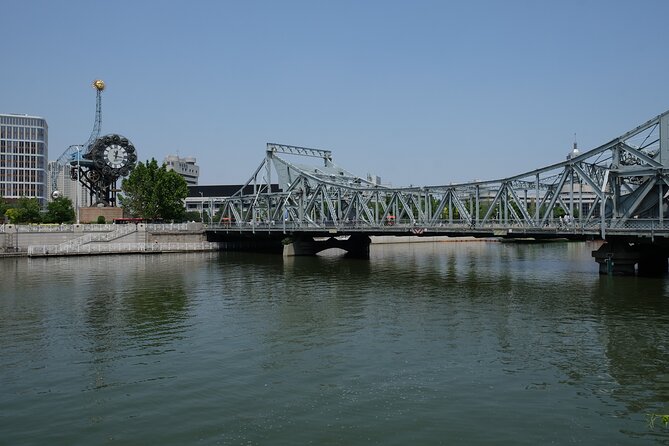
The first Tianjin stop is around the railway station, where the Haihe River meets several recognizable city sights. You will see Jinwan Plaza, Liberation Bridge, and the Century Clock. This is a short orientation stop of about 15 minutes, not a major sightseeing block.
That brief pause makes sense. The point is to get your bearings and take in Tianjin’s riverfront setting before moving into the older central districts. Do not expect time for a long riverside walk here. Save your attention for the broader Haihe visit near the end of the day.
Jiefang North Road and the former concessions
Jiefang North Road is one of the strongest parts of the route for anyone interested in architecture and modern Chinese history. The road runs through former French and British concession areas and is often described as Tianjin’s financial street.
You will see old post office buildings, clubs, barracks, consulates, and foreign company buildings. These are not isolated museum pieces. They line a working part of the city, so the experience comes from reading the street as a whole rather than entering every building.
This is where a guide adds real value. A row of grand façades can blur together without dates, political context, or an explanation of who used each building. Cindy Zhang is particularly useful here because she is described as knowing the streets and buildings well. Her role is not only to point at architecture, but to connect the buildings to Tianjin’s period as an international port.
The scheduled visit lasts about 80 minutes. That gives you time for a proper walk, though the group pace may limit photography or close inspection. If historic streets interest you, stay near the guide during this section and ask about buildings that catch your eye.
Five Great Avenues and Xiaobailou
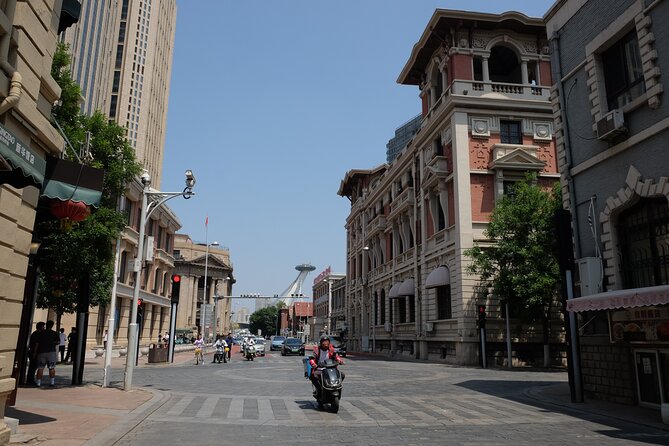
Next comes Xiaobailou, or Little White Building, an area that was among Tianjin’s most prosperous districts a century ago. The Five Great Avenues are made up of five east-west streets lined with traditional residences and foreign-influenced architecture.
The stop lasts about 30 minutes, so think of it as a focused introduction rather than a long neighborhood exploration. You will get a sense of the area’s scale and style, with time to look at the street scenes and hear why this district mattered.
The route also points out Keissling, one of the four western restaurants in China identified in the tour description. That detail helps explain the district’s old international character. It is a small but memorable link between Tianjin’s concession-era architecture and its dining culture.
If you enjoy wandering slowly, this is one of the places where the schedule may feel tight. The advantage is coverage. You see several major districts in one day instead of spending the whole day in a single neighborhood.
Same country, a completely different kind of day:
- From Beijing: Mutianyu Great Wall Tours with Options
★ 4.9 · 9,216 reviews - Beijing: Forbidden City Tour(Group/Private)-Tickets Included
★ 4.8 · 7,974 reviews - Beijing: T-Square & Forbidden City Group or Private Tour
★ 4.8 · 4,446 reviews - Beijing: Mutianyu Great Wall Daily Tour with Ticket & Lunch
★ 5.0 · 3,056 reviews
Lunch and Italian Style Street
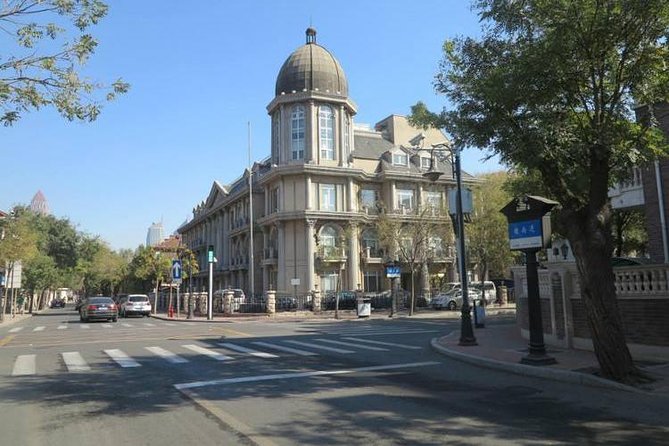
Italian Style Street occupies the former Italian concession and now functions as a shopping, dining, and recreation area. Its buildings and public spaces offer another version of Tianjin’s foreign-influenced past, but the mood here is more commercial than on Jiefang North Road.
This is also the tour’s chance to try a local street food item: Tianjin jianbing, or a Chinese savory crepe. The stop lasts about 50 minutes. Lunch is included, though the supplied details do not specify the exact restaurant or menu, so you should not book this expecting a particular dish.
The Italian district is useful because it gives you a contrast. Jiefang North Road feels tied to finance and consulates; Italian Style Street is more social and recreational. You can look at older buildings, sample local food, and watch how Tianjin uses historic areas in present-day life.
The tradeoff is that renovated historic districts can feel more polished and commercial than authentic residential streets. That does not make the stop unhelpful, but it means you should see it as a lively public quarter, not a perfectly preserved time capsule.
Ancient Culture Street beside Tianhou Palace
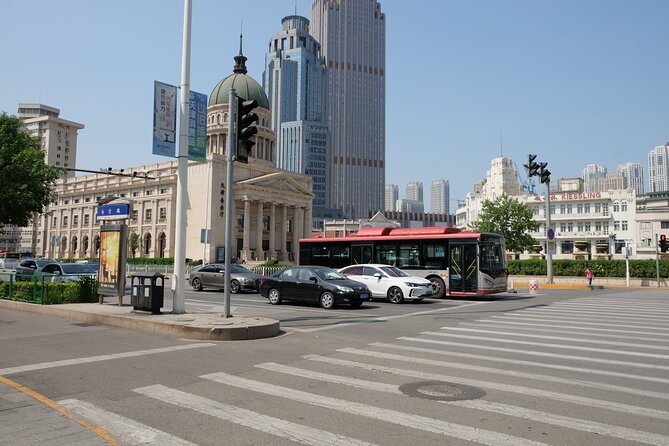
Ancient Culture Street, or Gu Wenhua Jie, shifts the focus from foreign concessions to traditional Tianjin culture. The street is built in a traditional style beside Tianhou Palace, described as Tianjin’s earliest building.
Its location near the confluence of three rivers matters. This area is presented as the birthplace of Tianjin, so the stop gives you a sense of how the city grew around waterways, trade, worship, and commerce.
You have about 50 minutes here. The street is lined with shops and traditional-style buildings, making it a good place to browse, take photographs, and look for local craft items. Admission is included for this stop.
Keep your expectations practical. A traditional-style shopping street is still a shopping street, and some of your time may be spent moving through stores. If you prefer quiet monuments, this may feel busy with commercial activity. If you want an accessible introduction to local customs and city symbols, it works well.
The Tianjin Eye and the river connections
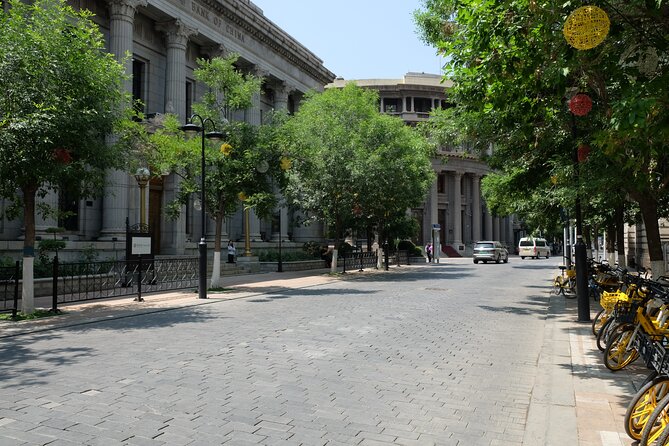
The tour makes a short stop at the Ferris wheel known as the Tianjin Eye. It is built on a bridge over the river and is described as the only Ferris wheel of its kind in the world.
You will not ride it on this itinerary. The stop is about 10 minutes and is meant for a look at the wheel and the surrounding view from a good vantage point. That keeps the schedule moving, but it also means you should not count on a full attraction visit.
The Tianjin Eye fits the wider theme of the day: Tianjin is shaped by water, bridges, and layered city districts. You will see the wheel again as part of the city’s modern identity, after spending the morning among concession-era buildings and traditional streets.
Jingyuan, the former home of Puyi
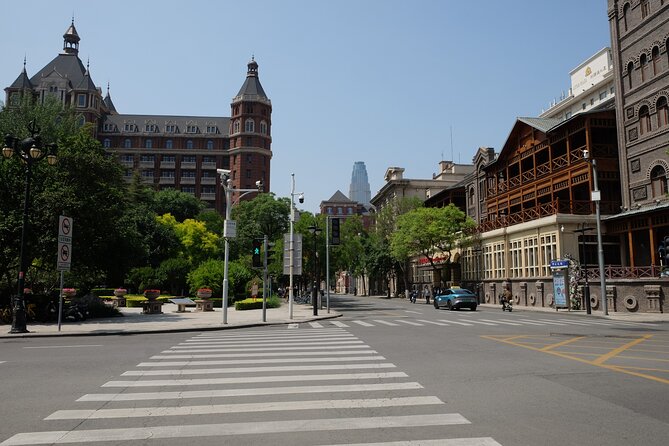
Jingyuan, also called Jing Garden, is the most focused historical admission on the tour. It was the former residence of Puyi, the last emperor of China, who lived there from 1929 to 1931.
The visit lasts about an hour, and admission is included. That makes Jingyuan more than a quick exterior photograph. You have time to walk through the residence and hear about Puyi’s life after the fall of the Qing dynasty.
This stop adds political and personal context to the architecture seen earlier. Tianjin was not only a port shaped by foreign powers. It was also a place where important Chinese figures lived, worked, and tried to find a role in a changing country.
Cindy’s historical explanations are especially valuable here. She is described as friendly, chatty, and able to make people feel at ease, which can help with a subject that is complicated and easy to reduce to a few dates. You should still expect a guided overview rather than an academic lecture. The benefit is a clear framework that lets you understand why the residence matters.
Porcelain House and Heping Road
Later, you will see Porcelain House, a French-style building decorated with porcelain pieces, vases, and ornaments. It is an unusual sight and a sharp contrast to the restrained commercial and diplomatic buildings seen earlier.
The tour does not list an interior admission here. The stop is mainly about seeing the exterior and then walking around Heping Road and Binjiang pedestrian streets. Together, these streets show Tianjin’s retail side and offer a change from formal historic sites.
This 30-minute visit is short, so use it for a quick look and photographs rather than a long shopping session. Porcelain House can be visually overwhelming, especially after a day of seeing more conventional architecture. That is part of its appeal. It gives the itinerary a strange, colorful final landmark before the quiet river walk.
Haihe Cultural Square and the return train
The final major section takes you along the Haihe River at Haihe Cultural Square. You can watch local life beside the water, take in the river views, and enjoy a slower finish after the day’s many stops.
About 40 minutes are scheduled for this section, followed by a return to Tianjin Railway Station. You then wait for the train back to Beijing South, arriving around 19:40.
I like this ending because it gives the day some breathing room. The tour begins with the river at the station, explores the city’s historic streets and residences, and returns to the river before departure. You get a clearer sense of Tianjin as a water-based city rather than a collection of unrelated attractions.
The timing is also the main pressure point. If traffic, group movement, or station procedures take longer than expected, the last stop may feel brief. Keep your final-hour plans in Beijing flexible.
How the group format affects the day
The maximum group size is 20 people. That is small enough for a guide to explain details while walking, but it is not a private tour. You will need to stay aware of the group at busy streets, stations, and shopping areas.
The itinerary includes many short stops. This suits you if you want a broad first look at Tianjin and prefer having transport and timing handled. It is less suitable if you want to sit in one café, spend hours inside a museum, or explore one neighborhood at your own speed.
Plan on moderate physical activity. The day includes railway stations, historic streets, pedestrian shopping areas, and riverside walking. Wear comfortable shoes, keep your belongings secure in crowded areas, and bring enough space in your schedule for a long day on the move.
The guide’s style is an important part of the experience. Cindy Zhang is repeatedly described as responsive, friendly, and well versed in Tianjin’s history. That combination matters on a tour with so many buildings and districts. A quiet guide could make the day feel like a checklist; a chatty guide can help the city feel connected.
Who should book this Tianjin day trip?
I would recommend it to first-time visitors in Beijing who want to see another major northern Chinese city without arranging the rail journey, local transport, lunch, and admissions separately. It is also a good fit if you like architecture, political history, former foreign concessions, and guided city walks.
Families and couples may appreciate the straightforward structure, provided everyone can manage a full day. The small maximum group and hotel transfer option add convenience, especially if you are not comfortable navigating Beijing South Railway Station alone.
I would hesitate if you dislike fixed schedules or already plan to spend several days in Tianjin. In that case, an overnight stay would give you more time in the Five Great Avenues, the Haihe area, and the old commercial streets.
Cancellation is free up to 24 hours before the start time. Changes or cancellations inside that window are not refunded, and poor weather or failure to meet the minimum group size can lead to a new date or a full refund.
Should you book it?
Book this tour if you want a well-organized introduction to Tianjin and value having Cindy Zhang explain the city’s streets, buildings, and imperial connections. The strongest parts are the concession-era walk on Jiefang North Road, Jingyuan, and the contrast between old foreign districts and traditional Ancient Culture Street.
Before paying, budget for the extra CN¥118 return train fare and confirm hotel pickup if you are outside the defined area. If you accept the long day and quick stops, this is a useful, history-focused addition to a Beijing trip. If you want unhurried exploration, choose a longer Tianjin visit instead.
FAQ
How long does the Beijing to Tianjin tour last?
The experience lasts approximately 11 hours. The return train is expected to reach Beijing South Railway Station around 19:40.
Where does the tour start and finish?
The stated meeting point is Beijing South Railway Station. The activity ends back at the same meeting point.
Is the return train ticket included in the price?
No. The second-class return train ticket costs CN¥118 per person and can be paid on the tour day.
What is included in the tour?
The package includes transportation within Tianjin, guide service, lunch, admission to Jingyuan, and hotel transfers within the defined pickup area.
Is hotel pickup available?
Yes, pickup is offered within a defined area. Transfers outside that area may require an additional payment.
How large is the tour group?
The maximum group size is 20 people.
Just added around Beijing
- Private Transfer to Mutianyu Great Wall with professional driver★ 5.0 · 19 reviews
- camp on the Great Wall overnight with sunrise and sunset on the wall★ 5.0 · 11 reviews
- BusDa:Ancient Great Wall &Badaling Great Wall Full-day Bus Tour★ 4.5 · 6 reviews
- ZANBUS: Trip to the Jinshanling Great Wall Departing at 7:30 AM★ 5.0 · 5 reviews
- Yuxiandu Chinese Royal Cuisine Museum with Show and Royal Banquet★ 5.0 · 4 reviews
- Private Wild Great Wall Hiking tour at Simatai (Challenging)★ 5.0 · 16 reviews
- Wild Great Wall Huanghuacheng Half Day Tour★ 5.0 · 15 reviews
- Wild Great Wall Hikes★ 5.0 · 10 reviews
Train Experiences, compared.
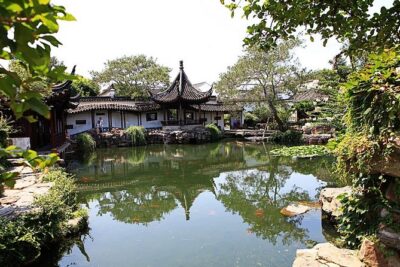
Suzhou Private Day Trip from Shanghai with Bullet Train Option
Read our review →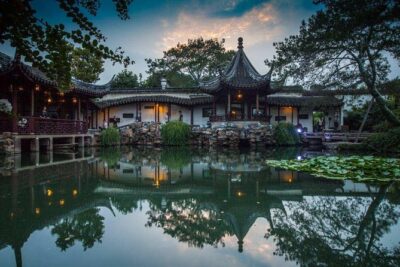
Private Suzhou Day Trip from Shanghai by Bullet Train with All Inclusive Option
Read our review →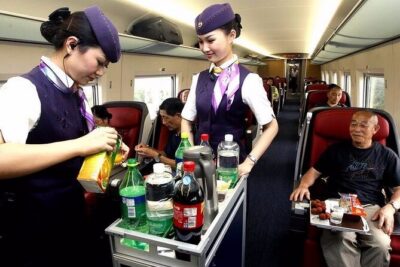
Beijing to Xi’an See Terracotta Warriors with Bullet Train Round Trip Transfer
Read our review →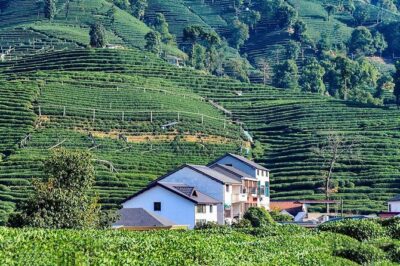
Flexible Hangzhou Private Tour from Shanghai by Bullet Train
Read our review →
Private Guided Tour to Hangzhou by Bullet Train
Read our review →Browse the lists this tour appears in