
Reviewed · WALKING TOURS
Dark Side of Hong Kong – Kowloon Caged Homes Walking Tour
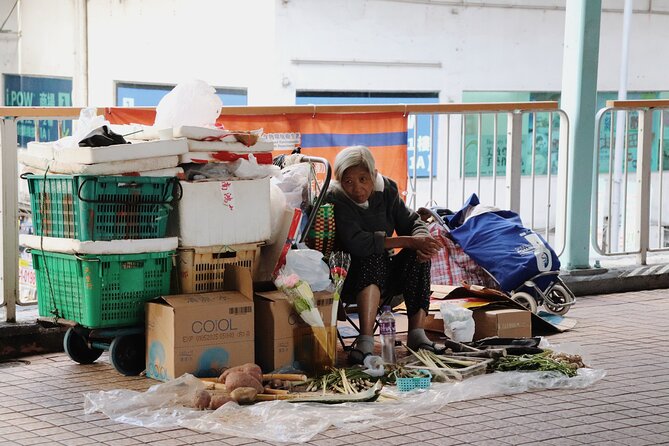
Hong Kong’s glittering towers tell only half the story. This two-hour Kowloon walking tour takes you through Sham Shui Po, where tiny subdivided flats, crowded streets, traditional markets, and rooftop dwellings show how ordinary people cope with one of the world’s toughest housing markets. It is less a sightseeing stroll than a lesson in how the city works.
I like two things especially. First, the guide connects what you see on the street to Hong Kong’s housing policy, land shortage, post-war growth, and low-tax economic model. Second, the route brings you into places most visitors skip, including a rooftop in Sham Shui Po and the SoCO charity office. The main drawback is that the caged-home and subdivided-flat visit uses a staged display, not someone’s actual home.
Key points at a glance
- See a 100-square-foot model flat: Understand how a kitchen, bed, and living area can occupy one cramped room.
- Walk through Sham Shui Po: Visit streets and markets that show daily life beyond Hong Kong’s polished center.
- Compare extreme housing prices: See million-dollar apartments beside dense clusters of subdivided units.
- Climb to a rooftop viewpoint: Look across the low-income neighborhoods and their improvised upper-level dwellings.
- Learn from local guides: Guides including Alice, Isaac, Grace, Summer, Wind, and Michael have led this route in clear English.
- Plan for a serious subject: This is an educational tour about poverty, housing, immigration, and inequality, not a cheerful photo walk.
Kowloon’s housing crisis, seen from street level
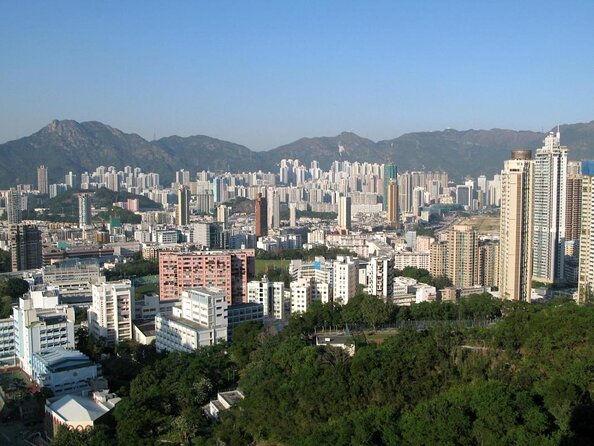
The tour begins at 11:00 a.m. on Nathan Road near Prince Edward. That puts you in a useful starting place: close to Mong Kok’s commercial energy, but only minutes from streets where housing pressure becomes visible in old walk-up buildings, crowded shopfronts, and tightly packed residential blocks.
Your guide sets the frame early. Hong Kong is often described as the world’s least affordable city, and the explanation is not simply that apartments are small. Land is scarce, population growth after the war was rapid, and the city’s economic model has kept taxes low while allowing property prices to climb. The result is a housing system that can leave working families paying heavily for very little space.
That background matters. Without it, a cage-home display can feel like a shocking oddity. With it, you begin to see the connections between land policy, wages, property ownership, and the ordinary choices people make when legal housing is out of reach.
A few more Hong Kong trips to weigh up
- Introduction to Hong Kong: Central Tip Based Walking Tour
★ 5.0 · 202 reviews - Full-Day Private Customized Walking Tour of Hong Kong
★ 5.0 · 106 reviews - Hong Kong: Kowloon Street Market & Food Culture Walking Tour
★ 5.0 · 105 reviews
Cedar Street and the 500-square-foot apartment
At Cedar Street, the guide explains how a typical 500-square-foot apartment can be divided into five units of roughly 100 square feet each. The arithmetic is simple, but the effect is powerful. A space that might already feel small to you can become five separate homes, each with its own occupant or family.
The stop lasts about 15 minutes and is mainly an outdoor explanation. Look closely at the building fronts and the way residential life shares space with shops, signs, utility equipment, and narrow side streets. This is not a grand architectural stop. Its value comes from learning how common buildings can be altered to meet demand.
The guide also explains why the city’s housing shortage is not limited to people without work. Low-income families, immigrants, and people earning minimum wages can all be caught in the squeeze. That distinction is important, and it keeps the tour from reducing the issue to a simple story about unemployment.
Ki Lung Street and the causes behind the crisis
Ki Lung Street provides a short but useful pause for the larger economic picture. Here, you hear how post-war population growth, limited land, and Hong Kong’s low-tax capitalist system combined to create intense pressure on housing.
I appreciate this part because the guide is not just pointing at old buildings and asking you to feel sorry for the people inside. The better guides, including Alice, Isaac, Michael, and Grace, are praised for answering questions about economics and politics in a balanced way. You can ask how housing prices reached this level, what options lower-income residents have, and how the city might respond.
This stop may feel brief if you want a long lecture. It lasts about 10 minutes, and much of the tour works this way: a short explanation, a change of scene, then another piece of the story. The pacing keeps the walk moving, but people who want a detailed policy seminar may find the time limited.
The staged subdivided flat on Cedar Street
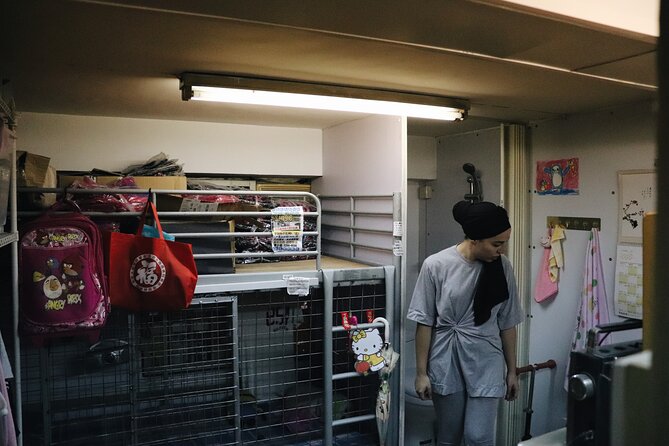
The most direct visual lesson comes when you enter a 100-square-foot display unit. It is arranged to show how a family might fit a bed, kitchen area, and living space into one tiny room. The tour also shows a caged-home design intended for a single resident.
Be clear about what this means before you book. You do not visit an occupied cage home, and you are not entering a private family’s residence. The display is staged. That may disappoint you if you expect an unfiltered look inside a real apartment, but it also avoids turning someone’s home into a spectacle.
The display works best when you use it as a measuring tool. Stand in the room and consider how little separation exists between cooking, sleeping, eating, and storage. The space gives physical meaning to statistics that can otherwise seem distant.
Some people may find the stop too short, especially because it lasts about 10 minutes. I would treat it as a visual aid rather than the entire point of the tour. The real strength comes from pairing the display with the surrounding streets and the guide’s explanation of why such units exist.
Same country, a completely different kind of day:
- Hong Kong: Dolphin Cruise, Big Buddha & Lantau Island Tour
★ 4.2 · 1,512 reviews - Ngong Ping 360: Cable Car Return Tickets & Combos
★ 4.6 · 1,431 reviews - Lantau Island Day Trip – Big Buddha & Tai O
★ 4.5 · 1,328 reviews - Big Bus Hong Kong Open Top Hop-On Hop-Off Sightseeing Tour
★ 4.0 · 1,077 reviews
Lui Seng Chun and the guide’s personal perspective
At Lui Seng Chun, the guide shares a personal account of navigating Hong Kong’s housing market. This is one of the more human parts of the walk because it moves the subject away from charts and building measurements.
The guide’s experience can help you understand the practical side of renting and finding a place in Hong Kong. Details about housing are easier to grasp when connected to everyday decisions, not just property prices. Guides such as Alice and Grace have been singled out for their warm, thoughtful responses, while Isaac is noted for pacing information well and taking questions seriously.
The quality of this stop depends more heavily on who leads your group. The company uses different guides, and names associated with this route include Alice, Isaac, Michael, Wind, Grace, Summer, Wing Man, and Simeone Lo. Each will bring a slightly different voice, but the central subject remains the same.
Yee Kuk Street and Sham Shui Po’s backstreets
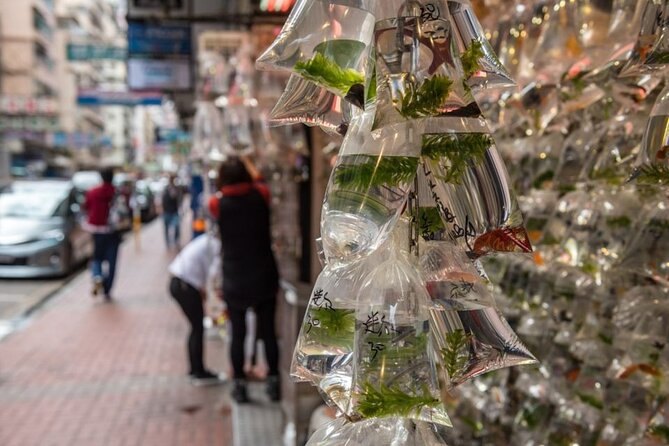
Yee Kuk Street takes you into the backstreets of Sham Shui Po. This is where the walk feels most like a neighborhood tour rather than a classroom with scenery. You see older streets, local businesses, and areas connected to the district’s lower-income population.
The guide also discusses the illicit links between drug and sex trades in the area. This is not presented as entertainment. It is part of the harder social conditions tied to poverty, insecure housing, and marginalization. If you are traveling with teenagers, consider the maturity of your group. One family found the tour appropriate and worthwhile for a 16-year-old, but the subject matter is serious.
You may also stop for tea during the route. Some people will enjoy this small break and the chance to ask questions informally. If you prefer nonstop sightseeing, it may feel like a pause that could have been replaced with another site.
Hai Tan Street and the sharpest visual contrast
Hai Tan Street offers one of the route’s clearest comparisons: new apartments priced around US$1.5 million beside dense blocks containing subdivided flats and caged homes.
You do not need a long explanation to understand the contrast, but the guide gives it context. In many cities, expensive and modest housing exist in the same broad district. In Hong Kong, the vertical density and extreme prices can put these conditions almost face to face.
This is also a good place to think about what the tour is trying to do. It is not claiming that every person in Sham Shui Po lives in a cage home. It is showing how different housing realities can exist within the same urban fabric, sometimes only a short distance apart.
Bring your attention to the details rather than simply taking a quick photograph. The most useful questions concern who can afford the newer buildings, who rents the subdivided units, and how families manage when their wages do not match property prices.
Pei Ho Street and the rooftop view
At Pei Ho Street, the group climbs to a rooftop in central Sham Shui Po. From above, you can see the district’s dense pattern of buildings and the less visible structures that occupy rooftops.
This is one of the tour’s strongest stops because a higher viewpoint changes how you read the neighborhood. From street level, you notice signs, market stalls, old facades, and narrow lanes. From the rooftop, you see how tightly the buildings sit together and how little unused space remains.
The climb is also the clearest reason to take the physical requirements seriously. The tour lasts about two hours, includes regular walking, and requires a moderate level of fitness. Hong Kong can be very hot, and an outdoor walk may feel demanding in humid weather, even though several stops are indoors or under cover.
Wear comfortable shoes and carry water. The meeting point is near public transportation, and the tour ends near Sham Shui Po MTR Station, so you can continue exploring the district or return by train without arranging a private transfer.
Kweilin Street and SoCO’s work
The final stop is at SoCO on Kweilin Street, a charity with 50 years of work advocating for marginalized people. This gives the tour a needed turn toward responses and possible solutions.
Without this stop, the walk could leave you with little more than shock and discomfort. SoCO helps place the housing crisis in the context of community action and policy debate. You can discuss what the city might do next and how advocacy groups support people who are pushed to the edges of the housing system.
The tour ends in Sham Shui Po, rather than returning you to Prince Edward. That is practical if you want to eat, shop, photograph the streets, or continue exploring local markets. It is less convenient if you need to return immediately to a hotel on Hong Kong Island, though the nearby MTR station makes onward travel straightforward.
What the guide adds to the experience
The guide is central here. The walk is not built around famous monuments, so the explanations give the route its purpose.
Alice is described as genuine, smart, and clear. Isaac, also written as Isac in one account, is praised for engaging with questions and presenting economic and political information in a balanced way. Grace is noted for her thoughtful answers and close attention to street details, which is useful if you enjoy photography.
Summer has been praised for being friendly and passionate, while Wind and Michael have also led well-received walks. Simeone Lo and Wing Man are among the other guides connected with the experience. Since the exact guide is not guaranteed, book this for the subject and route rather than for one particular person.
The best approach is to arrive ready to ask questions. You will get more from the walk if you want to understand how Hong Kong functions, rather than simply collect unusual photographs.
Is $32.82 a fair price?
At $32.82 per person, the tour is not the cheapest way to spend two hours in Kowloon. You could walk around Sham Shui Po on your own for little money, visit the markets, and see many of the same streets.
The price pays for interpretation. You are paying for a local guide who connects the streets to housing policy, social inequality, and urban planning. That can be good value if you want context and would otherwise miss the meaning behind what you see.
The value is weaker if you expect a long list of major attractions, entry into real occupied homes, or a highly active itinerary. The tour includes free-admission stops and a local guide, but not hotel pickup or drop-off. It is best judged as a small educational experience, not a conventional attraction tour.
The maximum group size is 30 people. That is large enough to make the walk feel less personal, especially on narrow streets or at the rooftop stop. Still, the guide-led format gives you a chance to ask questions that a solo walk cannot easily answer.
Who should book this Kowloon walk?
I would choose this tour if you want to understand Hong Kong beyond Victoria Harbour, shopping malls, and skyscraper views. It suits curious adults, students, photographers, and families with older children who can handle a serious discussion about poverty and housing.
It is also a good choice if you like economics, politics, urban planning, or social history. You do not need specialist knowledge. The guides explain the main ideas as you move through the district.
I would skip it if you want a light, upbeat morning or a tour built around temples, food tastings, and famous sights. The mood can be sobering, and the content is intentionally hard-edged. It asks you to look at lives that are easy to miss when Hong Kong is presented only as a wealthy global city.
The tour has free cancellation up to 24 hours before the 11:00 a.m. start. Poor weather or failure to meet the minimum group size can lead to a new date or a full refund. Because the route includes outdoor walking and a rooftop stop, check the forecast and wear shoes suited to stairs and pavement.
Should you book it?
Book it if your goal is to understand Hong Kong, not just photograph it. The staged housing display is a limitation, and the walk cannot show you the private reality of an occupied cage home. But the combination of Cedar Street, Sham Shui Po’s markets and backstreets, the rooftop view, the million-dollar apartment contrast, and SoCO’s advocacy work gives you a useful two-hour framework.
I would place it early in a Hong Kong visit. The tour may change how you read the rest of the city, from property advertisements to the size of ordinary apartments. At $32.82, that perspective is worth the cost for a purposeful traveler, but only if you come prepared for a serious lesson rather than a feel-good outing.
FAQ
How long is the Dark Side of Hong Kong tour?
The walking tour lasts approximately two hours.
Where does the tour start?
It starts at 11:00 a.m. on Nathan Road near Prince Edward in Hong Kong.
Where does the tour end?
The tour ends in Sham Shui Po, near Sham Shui Po MTR Station.
Is hotel pickup included?
No. Hotel pickup and drop-off are not included.
Will I enter a real occupied cage home?
No. The tour uses a staged 100-square-foot subdivided-flat display and shows a caged-home design. It does not visit an occupied cage home.
What will I see on the route?
You visit Cedar Street, Ki Lung Street, Lui Seng Chun, Yee Kuk Street, Hai Tan Street, Pei Ho Street, and Kweilin Street. The route includes traditional markets, lower-income areas, a rooftop viewpoint, a housing display, and SoCO.
How physically demanding is the tour?
You need a moderate level of physical fitness. The tour includes walking and a rooftop visit, and Hong Kong weather can make outdoor activity feel strenuous.
Is the tour suitable for children?
The tour deals with poverty, housing insecurity, drug and sex trades, and inequality. One account describes taking a 16-year-old, but you should decide based on your child’s maturity and comfort with serious topics.
What is the cancellation policy?
You can cancel for a full refund at least 24 hours before the start time. Cancellations or changes made less than 24 hours before the tour are not accepted for a refund. Weather or minimum-group cancellations offer a different date or a full refund.
Just added around Hong Kong
- Lantau Island Private Tour to Big Buddha and Tai O Village★ 5.0 · 24 reviews
- Lantau Island Day Trip Big Buddha & Tai O Includes Cable Car★ 5.0 · 44 reviews
- Lantau Peak Sunrise Climb★ 5.0 · 4 reviews
- Small Group Hiking Day Tour to Lai Chi Wo★ 5.0 · 3 reviews
- Three Dragon Gorge River Walking Tour★ 4.5 · 3 reviews
- Hong Kong Lantau Tour with Big Buddha, Tai O Village & Snacks★ 4.0 · 34 reviews
- Introduction to Watchmaking★ 5.0 · 3 reviews
- Hong Kong Layover Tour Private & Personalized with Local Guide★ 5.0 · 5 reviews
Walking Tours, compared.

Beijing Hutong Walking Food and Beer Tour at Hidden Restaurants
Read our review →
Private Beijing Walking Tour of the Forbidden City with 7 Options
Read our review →
Forbidden City Private Walking Tour with Optional Sights
Read our review →
Introduction to Hong Kong: Central Tip Based Walking Tour
Read our review →
Shanghai Highlights Walking Tour With A Real Local
Read our review →
Beijing City Walk: Explore Hutongs Life and Old Beijing
Read our review →Browse the lists this tour appears in