
Reviewed · HONG KONG TOURS
Introduction to Watchmaking
The most interesting part of this Hong Kong experience is that you do not just look at a fine watch, you take its mechanical heart apart and put it back together. At Amplitude on Bonham Strand, an expert guide leads you through a Swiss ETA 6497 pocket-watch movement, one small component at a time.
I like the private format, since your group gets the instructor’s full attention. I also like the practical focus: you handle real watchmaking tools, including screwdrivers and tweezers, while learning what each part does. The main drawback is the price, $236.16 per person, which makes this a special-interest activity rather than a casual stop.
Key points
- A real Swiss ETA 6497 movement: You work on a manual-wind movement rather than a display model.
- Renaud’s guided instruction: The session includes careful help with reassembly and the crucial dos and don’ts of the work.
- A private two-and-a-half-hour workshop: Only your group participates, allowing plenty of attention at the workbench.
- A useful introduction to horology: The course covers watch history, movement mechanics, parts, and functions.
- A central Sheung Wan meeting point: You begin and end at Amplitude, Watch Experience, at 64 Bonham Strand.
- A costly but focused souvenir of Hong Kong: The value comes from learning a technical craft, not from sightseeing or a take-home object.
Taking a Swiss Movement Apart in Sheung Wan
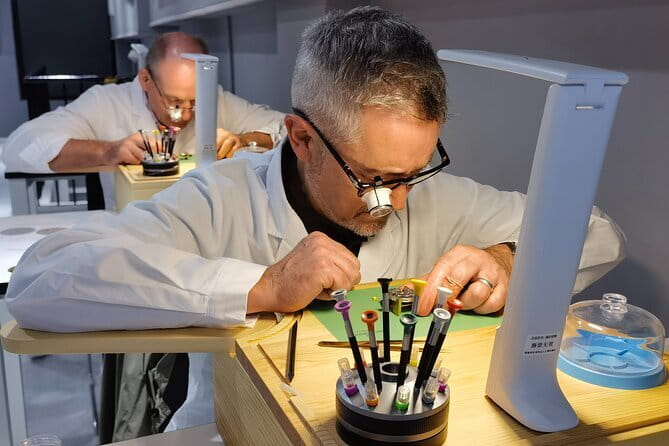
This is a hands-on watchmaking class, not a tour of Hong Kong’s watch shops. You meet at Amplitude, Watch Experience, at 64 Bonham Strand in Sheung Wan, then settle into a private workshop for roughly two hours and 30 minutes.
The lesson begins with the world around the movement. You learn about the history of timepieces and the basic mechanics that allow a mechanical watch to measure time. That opening matters because it gives purpose to the tiny parts you will soon handle. Instead of seeing a movement as a blur of wheels and screws, you begin to understand how those pieces work together.
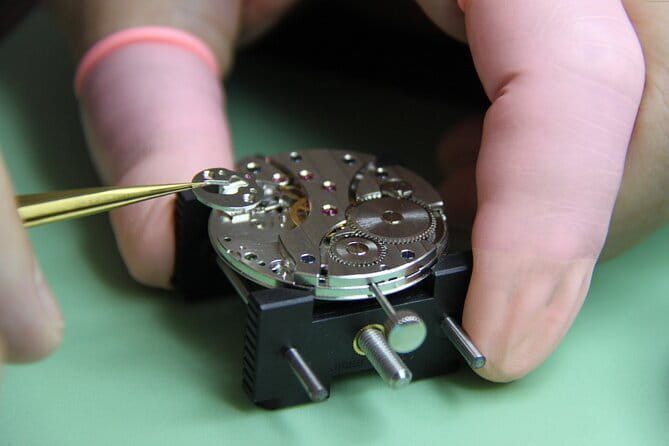
The main project uses a manual-wind ETA 6497 Swiss movement. This is the sort of movement that lets you see mechanical watchmaking clearly. You are not simply pressing a button or watching a demonstration. You work through the process of disassembling and reassembling the components with a set of screwdrivers and tweezers.
That process demands patience. A watch movement is small, and the work depends on controlled movements rather than force. The class gives you a direct sense of why watchmaking requires precision, good habits, and a calm hand.
Other Hong Kong days worth booking alongside this:
- Hong Kong: Dolphin Cruise, Big Buddha & Lantau Island Tour
★ 4.2 · 1,512 reviews - Ngong Ping 360: Cable Car Return Tickets & Combos
★ 4.6 · 1,431 reviews - Lantau Island Day Trip – Big Buddha & Tai O
★ 4.5 · 1,328 reviews
What Renaud Teaches at the Workbench
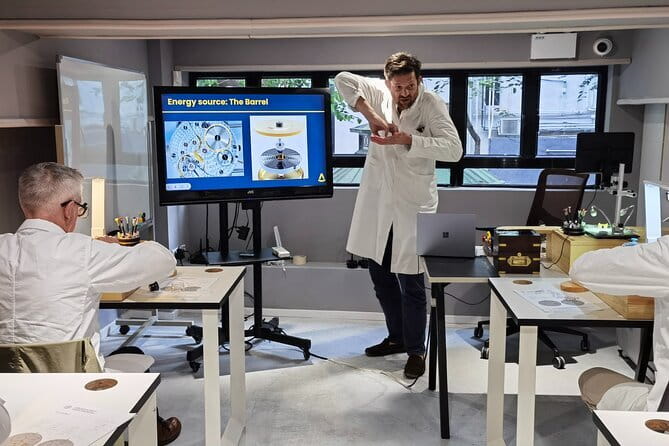
Renaud guides the session and helps you understand both the parts and the risks involved in handling them. One especially useful aspect is his attention to the dos and don’ts of reassembly. That kind of practical warning is hard to pick up from a book or a quick demonstration.
You can expect guidance as you identify the movement’s different components and consider their functions. The aim is not only to finish the exercise. It is to understand what you are doing and why the order and handling of the parts matter.
For a first-time student, this is important. You might arrive knowing the difference between a mechanical and quartz watch, or you might know almost nothing about horology. The course is designed to welcome both levels. Beginners get a structured introduction, while watch enthusiasts have a chance to examine a familiar type of movement more closely.
I appreciate that the experience does not treat watchmaking as a vague luxury subject. The workshop connects the elegant appearance of a watch with the exact mechanical work hidden inside it. After the session, you should have a clearer sense of why a mechanical watch needs winding, how its parts cooperate, and why careless handling can cause trouble.
Why the ETA 6497 Makes a Good Teaching Movement
The ETA 6497 gives the workshop a clear subject. Instead of moving between several watch types, you concentrate on one manual-wind Swiss movement from beginning to end. That focus helps you follow the lesson without getting lost in a parade of unfamiliar examples.
The movement also lets the instructor explain the relationship between individual components and the complete mechanism. You see how a watch is more than its dial, case, and hands. Its function depends on a group of carefully arranged parts, each with a job to perform.
The supplied information does not specify that you take the movement home, and you should not book this activity expecting a finished watch as a souvenir. The real takeaway is practical understanding and the memory of having worked on the mechanism yourself.
That distinction affects the value. At $236.16 per person, this is expensive if you are looking for a cheap craft activity or a general Hong Kong attraction. It makes more sense if you already own mechanical watches, are considering buying one, or want a close look at a traditional technical skill.
A Private Class Instead of a Large Demonstration
Only your group participates, so the experience has a more personal feel than a standard class with many workstations. A private format is useful here because small mechanical parts can be difficult to see and because you may need individual help at several points.
You can ask questions as they come up, rather than waiting for a busy instructor to move through a room. If one part of the reassembly process gives you trouble, Renaud can focus on your work. That is particularly valuable during the return journey, when remembering the correct order and handling technique matters most.
The private arrangement also suits people with different levels of interest. One person in your group may already be a watch fan, while another may simply be curious. You can move at a pace that fits the group instead of trying to match a room full of strangers.
The tradeoff is that the activity is built around your group, not a broad social setting. If you want a lively class with a large mix of participants, this may feel quiet. For technical instruction, though, the quieter format is usually an advantage.
Same country, a completely different kind of day:
- Big Bus Hong Kong Open Top Hop-On Hop-Off Sightseeing Tour
★ 4.0 · 1,077 reviews - Hong Kong Day Tour: City Landmarks & Highlights
★ 4.5 · 798 reviews - Hong Kong International Airport Plaza Premium Lounge Access
★ 3.5 · 787 reviews - Hong Kong Disneyland Park Tickets
★ 4.6 · 522 reviews
Two and a Half Hours of Focused Work

The stated duration is about two hours and 30 minutes. That gives the workshop enough time to cover background information, demonstrate the tools, guide the disassembly, and work through reassembly without turning the subject into a rushed novelty.
You should plan to give the whole session your attention. This is not an activity where you can easily drift in and out while taking photographs or checking your phone. The work involves tiny pieces and careful hand movements, so concentration is part of the experience.
The length also helps explain the price. You are paying for a focused lesson, an expert-led private format, and access to a real Swiss movement and watchmaking tools. The price is still high, but the comparison should be with a specialist workshop rather than with a museum entry ticket.
If you have only a short time in Hong Kong, consider how much you want to devote to an indoor technical class. The workshop lasts a significant part of an afternoon or morning. It offers depth rather than variety, so it will be worthwhile only if the subject interests you.
What You Will Learn About Horology
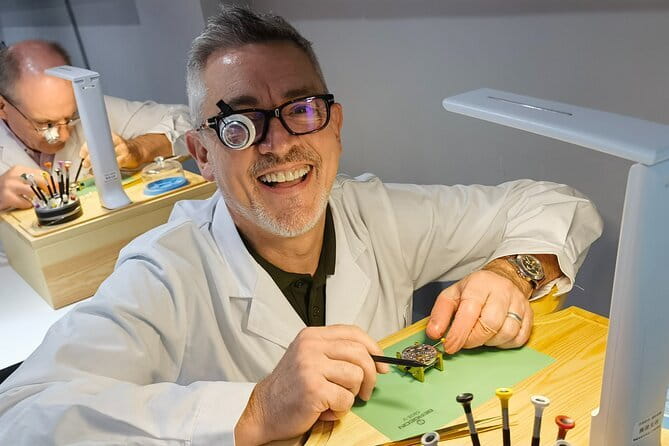
The course introduces horology through three connected ideas: timepiece history, movement mechanics, and the function of individual parts. These topics give you a stronger base for looking at mechanical watches after the class.
The historical section places the craft in context. You get a sense of how timepieces developed as objects that combine usefulness with careful workmanship. The mechanical section then brings that subject down to the workbench, where you can see how the watch operates.
The parts-and-functions discussion is likely to be the most useful for future watch shopping. Watch descriptions can be full of technical terms, and it is easy to admire a mechanical watch without understanding what makes it mechanical. After handling a movement, those descriptions should feel less abstract.
I would not treat this as a professional qualification. The experience is an introduction, with one movement and a limited session length. It is best viewed as a strong first lesson that may sharpen your interest in further study.
Tools, Technique, and the Need for Patience

The workshop provides a set of screwdrivers and tweezers for the work. Those tools may look simple, but using them properly is part of the lesson. You learn that watchmaking is not about speed. It is about placing pressure in the right way and avoiding damage to delicate components.
The reassembly stage is the real test. Taking something apart can feel straightforward when the instructor demonstrates each step. Putting it back together requires you to remember the order, recognize the parts, and handle them with control.
That is where Renaud’s guidance becomes especially useful. His instruction includes specific cautions about what to do and what to avoid. You are not left to guess why a piece should be approached in one way rather than another.
The workshop may appeal to people who enjoy puzzles, restoration, engineering, or fine crafts. It can also be a good fit for a couple or small private group looking for something more unusual than a food tour or standard sightseeing stop.
The Sheung Wan Location and Meeting Point

The class begins and ends at Amplitude, Watch Experience, 64 Bonham Strand in Sheung Wan. Since the activity returns to its meeting point, you do not need to arrange a separate end location or wonder where the session will finish.
The address is near public transportation, which makes it practical to reach within Hong Kong. The information provided does not name a particular station or give step-by-step directions, so check the route from your hotel before setting out and allow time to find the workshop.
Sheung Wan is a fitting area for an experience connected with craft and trade. You will not be touring the neighborhood as part of the class, but the setting gives the activity a more local, working-city context than a resort-style attraction.
Because this is an indoor workshop, you may find it easy to pair with other plans in the area. Still, keep the 2.5-hour duration in mind. Do not schedule a tight connection immediately afterward, especially if you want to leave room for transport delays.
Who Gets the Best Value
I would recommend this experience first to people who already have an interest in watches or mechanical objects. If you have spent time comparing automatic and manual-wind watches, the workshop gives you a useful physical understanding of the mechanism.
It also suits curious beginners. You do not need to arrive with technical training, and the private instruction allows you to ask basic questions without feeling out of place. The activity is not presented as an advanced certification course, so you can approach it as a first step.
The class may work well for a small private celebration or a couple with a shared interest in design and craft. It is less suitable for someone who wants fast entertainment, a broad Hong Kong overview, or a souvenir they can immediately display.
Most participants can take part, and service animals are allowed. The supplied details do not list specific physical requirements beyond participation in the practical workshop, so contact the provider if you need information about a particular accommodation.
Price, Booking Timing, and Cancellation
The listed cost is $236.16 per person. That is a premium price, but the private format and specialist instruction make the comparison different from a group attraction. You are paying for time at the workbench, not just admission.
The experience is booked an average of 27 days ahead. That suggests you should reserve early if the workshop is central to your Hong Kong plans, especially since private activities have fewer places than large group tours.
You receive confirmation when booking, and a mobile ticket is provided. The activity offers free cancellation if you cancel at least 24 hours before the local start time. Changes or cancellations made inside that window are not accepted for a refund.
The stated policy also says the activity requires good weather and a minimum number of participants. If poor weather or insufficient participation causes cancellation, you are offered another date or experience, or a full refund.
Should You Book This Watchmaking Workshop?
Book it if you want to understand how a mechanical watch works by handling the movement yourself. The private instruction with Renaud, the Swiss ETA 6497, and the full disassembly and reassembly process make this far more useful than a quick look through a display case.
Think twice if $236.16 feels high for a two-and-a-half-hour indoor activity, or if you want a finished object to take home. You are buying instruction and access to a specialist setting, not a conventional sightseeing stop.
For a watch enthusiast, this is a focused and memorable Hong Kong experience. For a curious beginner, it is a careful introduction to horology. For everyone else, spend the money elsewhere unless the idea of tiny gears, tweezers, and patient work genuinely appeals to you.
FAQ
Where does the watchmaking experience begin?
It begins at Amplitude, Watch Experience, at 64 Bonham Strand in Sheung Wan, Hong Kong.
Where does the activity end?
The activity ends back at the meeting point at Amplitude.
How long does the workshop last?
The experience lasts approximately two hours and 30 minutes.
How much does the experience cost?
The listed price is $236.16 per person.
How far in advance is it usually booked?
It is booked an average of 27 days in advance.
What movement will I work on?
You will work with a manual-wind ETA 6497 Swiss movement.
What tools are used during the class?
The workshop uses screwdrivers and tweezers to handle the watch components.
Is this a private activity?
Yes. Only your group participates in the activity.
Can I cancel for a full refund?
Yes, if you cancel at least 24 hours before the experience start time. Cancellations or changes made less than 24 hours before the start time are not refunded or accepted.
Just added around Hong Kong
- Lantau Island Private Tour to Big Buddha and Tai O Village★ 5.0 · 24 reviews
- Lantau Island Day Trip Big Buddha & Tai O Includes Cable Car★ 5.0 · 44 reviews
- Lantau Peak Sunrise Climb★ 5.0 · 4 reviews
- Small Group Hiking Day Tour to Lai Chi Wo★ 5.0 · 3 reviews
- Three Dragon Gorge River Walking Tour★ 4.5 · 3 reviews
- Hong Kong Lantau Tour with Big Buddha, Tai O Village & Snacks★ 4.0 · 34 reviews
- Hong Kong Layover Tour Private & Personalized with Local Guide★ 5.0 · 5 reviews
- Hong Kong eSIM (3 – 30 Days. Up To 60GB of data)★ 5.0 · 4 reviews
Hong Kong Tours, compared.

Dolphin Cruise, Big Buddha & Lantau Island Tour
Read our review →
Ngong Ping 360: Cable Car Return Tickets & Combos
Read our review →

Big Bus Hong Kong Open Top Hop-On Hop-Off Sightseeing Tour
Read our review →
Hong Kong Day Tour: City Landmarks & Highlights
Read our review →
Ngong Ping 360 Cable Car Ticket on Lantau Island
Read our review →
Private Hong Kong Tour with a Local, Highlights & Hidden Gems 100% Personalised
Read our review →
Dark Side of Hong Kong – Kowloon Caged Homes Walking Tour
Read our review →Browse the lists this tour appears in