
Reviewed · FOOD & DRINK
Hong Kong: Kowloon Street Market & Food Culture Walking Tour
Hong Kong’s food culture makes the most sense when you see the shops behind the snacks. This small-group walk links Goldfish Street, wet markets, bakeries, seafood stores, and Ladies’ Market into one lively route through Kowloon, with a guide explaining the stories behind what you eat.
I like the way the tour connects food with daily life, from imported fruit and preserved eggs to paper offerings for ancestors. I also like the small maximum of six people, which gives you room to ask questions and makes it easier to follow a guide through busy streets.
The main consideration is pace. The walk is listed at about two hours, but one recent outing lasted two and a half hours, and you may be on your feet most of the time. The tasting portions are snacks, not a full meal, so arrive ready to eat but not ravenous.
Key points about the Kowloon food walk
- Start at Prince Edward Station: The meeting point puts you close to Goldfish Street and the working neighborhoods of northern Kowloon.
- Eight stops with a clear local focus: You visit food shops, markets, a betting branch, and a paper offering store rather than only the usual sightseeing streets.
- Food tastings are included: You do not need to budget extra for the snacks provided during the walk.
- Guides bring different strengths: Stephen, Michael, Alice, Summer, and Isaac have led outings, with a strong focus on stories, traditions, and everyday Hong Kong.
- A very small group: The maximum is six people, useful when asking questions or stopping inside compact shops.
- Finish at Ladies’ Market: The route ends in Mong Kok, near Mong Kok MTR Station, giving you an easy place to continue exploring.
Why this tour works as an introduction to Kowloon
I like food walks that do more than point at a stall and say try this. This one uses ordinary shops to explain how Hong Kong functions: what the city imports, how families preserve food, how people honor ancestors, and how old customs fit into a modern commercial district.
You begin at Prince Edward Station at 3:00 pm. From there, the route heads through Kowloon toward Mong Kok and ends near Ladies’ Market. That direction matters. You are not being shuttled between isolated attractions. You are walking through streets where pet shops, produce sellers, bakeries, betting branches, and apartment buildings share the same tight urban space.
The group size is one of the strongest practical features. With no more than six people, a guide can stop to explain a label, answer a food question, or keep the group together in a crowded market. Guides who have led this experience include Stephen, Michael, Alice, Summer, and Isaac. The emphasis can vary by guide, but the common thread is local food and cultural explanation.
The tour is priced at $32.80 per person. That is a fair price if you want an organized introduction and several included tastings, especially since a private guide is handling the route. It is less useful if you already know Kowloon well and simply want the cheapest possible meal. Think of the fee as paying for access, interpretation, and a planned sequence of stops, not just for the food itself.
A few more Hong Kong trips to weigh up
- Hong Kong’s Tin Hau Hidden Eats Food Tour with 7+ Local Tastings
★ 5.0 · 352 reviews - Small-Group Hong Kong Island Food Tour
★ 5.0 · 343 reviews - Hong Kong Food Tour: Central and Sheung Wan Districts
★ 5.0 · 333 reviews
Goldfish Street and the business of Hong Kong
Goldfish Street, on Tung Choi Street, is an unusual opening stop. Fish hang in clear plastic bags outside shops, turning a short stretch of road into a bright display of pets and water life.
The guide uses the goldfish trade to explain Hong Kong’s economic story. Shop rents are high, and ground-floor space is under pressure. Some businesses respond by moving upward into less visible floors, creating a world of upstairs shops that you might miss without someone pointing it out.
This is a good place to begin because it shows that the tour is not simply a food crawl. You are learning how commerce adapts to limited space, rising costs, and a dense city layout. The stop lasts about 10 minutes and admission is free.
Do not expect a long visit or a formal attraction. Goldfish Street is a street scene, not a museum. Its value comes from the explanation and from noticing how ordinary retail life fits into Hong Kong’s vertical city.
Imported fruit at Kiu Ming Mansion
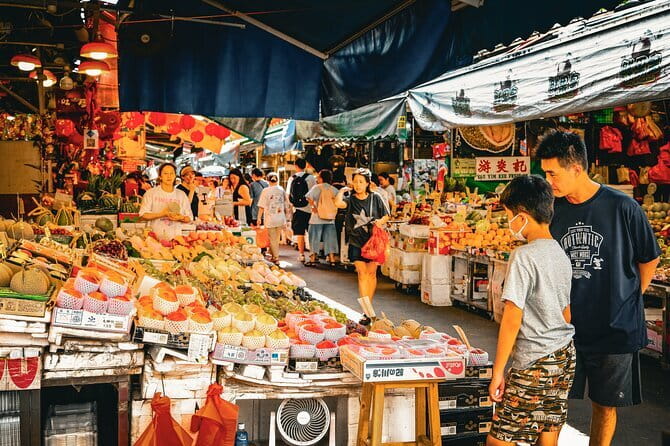
At Kiu Ming Mansion, the subject turns to fruit. Hong Kong has very little farmland, with agriculture making up only about 0.1 percent of the territory. Much of the fruit you see has traveled in from elsewhere, sometimes arriving by air from places such as Japan.
You may taste fruit during this part of the route and learn why strawberries and other produce can reach Hong Kong so quickly. The point is not only freshness. It is the supply chain behind a small market purchase, something easy to ignore when you see a neat pile of fruit in a shop.
I find this kind of stop useful because it changes how you look at food prices and quality. The fruit is not simply local produce waiting on a shelf. It reflects transport, demand, import networks, and the city’s lack of farmland.
Again, allow about 10 minutes. This is a compact stop, so the interest lies in the context rather than in a long tasting session.
Walnut cookies and memory at Ki Tsui Cake Shop
Ki Tsui Cake Shop brings you into the world of traditional Hong Kong bakery goods. You taste walnut cookies and hear how a familiar sweet can preserve family habits and cultural memory.
A bakery stop gives the tour a gentle change of pace. After the visual oddity of Goldfish Street and the supply-chain talk about fruit, you get something plainly edible and easy to understand. The cookie is a small item, but the guide uses it to discuss how Hong Kong’s identity has changed over time while certain flavors remain.
This is also a useful stop for cautious eaters. A walnut cookie is more familiar than preserved eggs or marinated sausage, so it gives you an easy first taste before the route moves into stronger and more unusual foods.
The tasting is included, as are the other snacks provided during the experience. If you have a serious nut allergy, use common sense and ask the operator or guide about ingredients before booking.
Same country, a completely different kind of day:
- Hong Kong: Dolphin Cruise, Big Buddha & Lantau Island Tour
★ 4.2 · 1,512 reviews - Ngong Ping 360: Cable Car Return Tickets & Combos
★ 4.6 · 1,431 reviews - Lantau Island Day Trip – Big Buddha & Tai O
★ 4.5 · 1,328 reviews - Big Bus Hong Kong Open Top Hop-On Hop-Off Sightseeing Tour
★ 4.0 · 1,077 reviews
Pat Chun and post-war food traditions
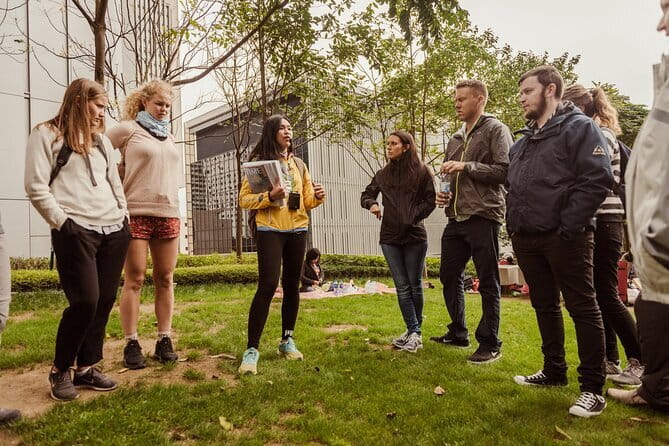
At 136A Fa Yuen Street, the tour visits Pat Chun. The shop is presented as part of Hong Kong’s post-war food story and the baby boom that followed.
You learn how a local brand has held on to traditional production and Hong Kong roots while resisting a shift toward made-in-China manufacturing. The stop includes a taste connected with the shop’s preserved food traditions.
This is where the walk moves from bakery treats to food as a marker of place. A bottle or preserved ingredient can carry a story about local business, changing industry, and the choice to keep production tied to Hong Kong. You do not need to be a food expert to follow the idea. The guide gives a practical reason to care about where a product is made.
The address is specific, but small shops can be easy to pass in a busy street. Stay close to the guide and have your phone ready for the meeting details sent with your mobile ticket.
Mahjong, betting, and the social rules of gambling
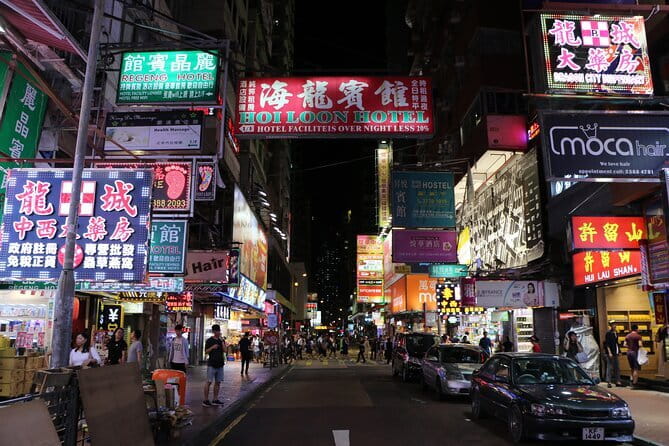
The stop near the Hong Kong Jockey Club off-course betting branch on Argyle Street shifts away from food, but it belongs on this route. Here, the guide explains the relationship between mahjong, betting, colonial law, and local tradition.
The story is about a social compromise. Certain forms of gambling became regulated, and gambling revenue supports public services in Hong Kong. That gives you a sharper look at how law and custom can meet in daily life.
This stop may appeal most to people who enjoy social history and local institutions. If you came strictly for eating, it is a short pause between tastings. Still, it helps explain why a betting branch can sit openly within an ordinary neighborhood and why it has a place in the city’s civic system.
You are not being asked to place a bet. The focus is on the cultural and legal background.
Preserved eggs and sausage on Canton Road
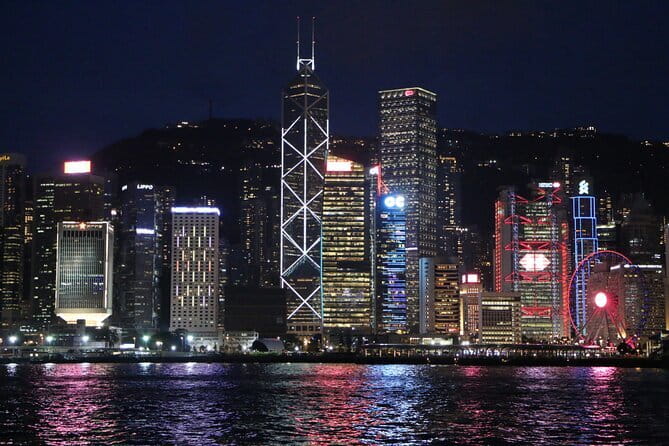
At 1031A Canton Road, a marinated goods shop introduces preserved foods. You may taste preserved eggs and sausages, while the guide explains how Hong Kong cooks have dealt with heat, time, storage, and the need to make food last.
This is likely to be one of the more challenging stops for cautious eaters. Preserved egg has a distinct appearance and flavor, and sausage may be unfamiliar depending on where you live. The tour’s great strength is that you get an explanation before you try it, rather than being handed an unknown item with no context.
I like the way this stop links practical cooking to climate and household habits. Preservation is not treated as a strange food stunt. It is an answer to local conditions and a way of building flavor.
The best approach is to keep an open mind, but you do not need to pretend every taste is for you. A good food tour should help you understand what you are trying, not pressure you to like it.
Seafood at Lok Yuen House

Lok Yuen House provides a look at Hong Kong’s seafood trade. At the seafood store, you learn how shellfish such as Canadian geoduck can reach local stalls within hours.
The lesson here is freshness and simplicity. Hong Kong’s seafood culture depends on access to products from far beyond the city, yet the selling point is often that the ingredient is handled with as little fuss as possible.
This stop shows the city’s connection to global food networks in a very direct way. A seafood shop may look like a neighborhood business, but its stock can reflect international transport and careful timing.
The visit is brief, about 10 minutes, and you should not expect a seafood meal. It is a market observation and tasting stop, designed to show you how ingredients move through the city.
Paper offerings and family traditions
At a paper offering store on Canton Road, the tour takes a turn into Chinese family customs. Shops sell paper replicas of useful goods, which families burn as offerings to ancestors.
The subject became especially notable when Gucci tried to stop shops from using paper versions of its branded products. The guide uses that dispute to show how cultural practice can be stronger than a luxury company’s attempt to control its image.
This stop adds depth to the route. Food is one way families care for one another and remember the past, but so are offerings, rituals, and objects sold in small neighborhood shops. You get a glimpse of a tradition that can be easy to miss if you stay only on major shopping streets.
Because the shop is part of a working commercial area, the experience depends on listening and observing respectfully. This is not a staged performance. It is an explanation of a living custom.
Walking to Ladies’ Market in Mong Kok
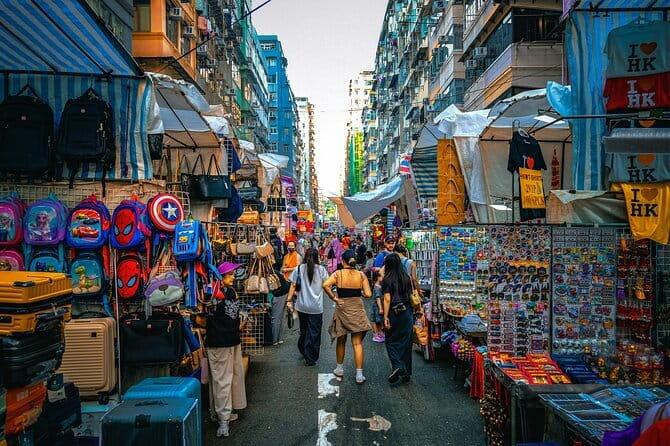
The route ends at Ladies’ Market on Tung Choi Street, near Mong Kok MTR Station. That makes the finish convenient, especially if you want to continue shopping, find dinner, or return to another part of Hong Kong by train.
The final location also gives the tour a satisfying shape. You begin near Prince Edward, move through food and neighborhood businesses, and finish in one of Mong Kok’s best-known market districts. The route shows both the less familiar side streets and the famous retail area.
The walk is listed as approximately two hours, but allow extra time. One outing lasted about two and a half hours, and one participant in their sixties needed a seated break midway. The supplied details do not promise regular seating, so comfortable shoes and a realistic pace matter.
What the included tastings are really worth
The snacks are included, which makes the $32.80 price easier to judge. You are not paying separately at each shop, and you can try foods that you might skip if you had to buy a full portion on your own.
Still, this is a tasting walk, not a three-course lunch. The food is spread across several stops and may include fruit, walnut cookies, Pat Chun products, preserved eggs, sausages, and seafood-related samples. Eat a light meal before you start if you want the tastings to supplement dinner rather than replace it.
The real value is the combination of food and interpretation. A cookie alone is cheap. A cookie explained as part of Hong Kong’s changing identity is more useful, especially on a first visit.
Who should book this Kowloon walk
I would choose this tour if you want a local introduction to Kowloon and do not feel confident navigating small food shops alone. It is also a good fit if language differences make ordering or understanding labels stressful.
The tour suits curious eaters who will try unfamiliar foods, though you do not need an adventurous palate for every stop. People interested in local customs, business, law, and neighborhood life will get more from it than someone seeking only restaurant recommendations.
The small group is helpful for solo visitors, couples, and families with older children who can manage a steady urban walk. Most people can participate, and service animals are allowed. The route is near public transportation, but the supplied details do not promise a fully accessible route or guaranteed seating, so contact the operator if you have specific mobility needs.
Book it early if the small group matters to you. The experience has been booked at least five times in a day, and the maximum is only six people.
Should you book it?
Book this walk if you want to understand Hong Kong through ordinary shops rather than only through major sights. The strongest parts are the small group, included tastings, and guides such as Stephen, Alice, Summer, Isaac, and Michael, who bring personal stories and local explanation to the route.
Skip it if you want a long sit-down meal, a relaxed pace, or a tour centered on famous landmarks. You should also plan around the weather, since the experience may be canceled in poor conditions. Free cancellation is available up to 24 hours before the 3:00 pm start for a full refund, while later cancellations and changes are not accepted.
For most first-time visitors who want a practical, food-based look at Kowloon, this is a good buy. It leaves you at Ladies’ Market with a better sense of what you are seeing, eating, and walking past.
FAQ
Where does the Hong Kong food tour start?
It starts at Prince Edward Station on Prince Edward Road West in Prince Edward, Hong Kong.
Where does the tour finish?
It ends at Ladies’ Market on Tung Choi Street in Mong Kok, near Mong Kok MTR Station.
What time does the tour begin?
The scheduled start time is 3:00 pm.
How long does the tour last?
The tour is listed as approximately two hours. One outing lasted two and a half hours, so allow some extra time.
How many people can join?
The maximum group size is six travelers.
Are food tastings included?
Yes. Snacks and food tastings are included as part of the tour.
Do I need to pay extra for the tastings?
No. The included snacks do not require an additional tasting payment.
Which places does the tour visit?
The route includes Goldfish Street, Kiu Ming Mansion, Ki Tsui Cake Shop, Pat Chun on Fa Yuen Street, a Hong Kong Jockey Club off-course betting branch, a marinated goods shop, a seafood store, and a paper offering store.
Is the tour suitable for most people?
Most people can participate. The experience is near public transportation, and service animals are allowed.
Can I cancel for a full refund?
Yes, if you cancel at least 24 hours before the local start time. Cancellations or changes made less than 24 hours before the experience are not refunded or accepted. If poor weather causes the operator to cancel, you can receive a full refund or choose another date.
More Shopping Tours in Hong Kong
- Half-Day Chengdu Cooking Class with a Local Market Visit
★ 5.0 · 465 reviews - Shanghai Day Tour to Zhujiajiao Water Town, Yu Garden, Bazaar, Bund
★ 5.0 · 162 reviews - Xi’an: Terracotta Army, Lunch, City Wall, Pagoda, Bazaar
★ 5.0 · 72 reviews - Private Shanghai Shopping Tour with Local Shopping Guru
★ 5.0 · 68 reviews
More Markets in Hong Kong
- Organic Chinese Dumpling Class with Market Walk
★ 5.0 · 88 reviews - Organic Xiao Long Bao Soup Dumpling Class & Market Walk
★ 5.0 · 62 reviews - Hong Kong Market Walking Tour & Chinese Cooking Class
★ 5.0 · 24 reviews - Mini Group Xian Day Tour to Terracotta Army, City Wall, Pagoda and Muslim Bazaar
★ 5.0 · 1,320 reviews
Just added around Hong Kong
- Hong Kong Airport to Hong Kong City Private Arrival Transfer★ 4.5 · 3 reviews
- Hong Kong Palace Museum Ticket★ 5.0 · 3 reviews
- Hong Kong Peak Tram and Sky Terrace 428 Tickets (Optional)★ 3.5 · 22 reviews
- Hong Kong Observation Wheel Ticket★ 5.0 · 3 reviews
- Hong Kong Private Walking Tour with a Local★ 5.0 · 6 reviews
- Hong Kong Market Walking Tour & Chinese Cooking Class★ 5.0 · 24 reviews
- Hong Kong : Must-See Attractions Walking Tour With A Guide★ 5.0 · 7 reviews
- Hong Kong: Lantau Island & Tai O Cruise, Skip The Line Cable Car★ 3.5 · 4 reviews
Food & Drink, compared.

Authentic Local Food Tour in Central Shanghai
Read our review →
Beijing Hutong Walking Food and Beer Tour at Hidden Restaurants
Read our review →

Hong Kong’s Tin Hau Hidden Eats Food Tour with 7+ Local Tastings
Read our review →

Hong Kong Food Tour: Central and Sheung Wan Districts
Read our review →Browse the lists this tour appears in