
Reviewed · HISTORICAL TOURS
Beijing Culture: Tea Ceremony, Heritage Instrument & Calligraphy
The most unusual part of this Beijing experience is that you do not simply watch Chinese traditions from a respectful distance. You brew the tea, hold the brush, and place your fingers on the strings of the Guqin, China’s ancient seven-string instrument. The setting is a quiet private venue rather than a busy theater, which gives the two-and-a-half-hour session a calm, personal feel.
I like two things right away. The small group size means no more than eight people, so the teachers can correct your brush grip and guide your hands on the instrument. I also like the mix of activities: tea brings ritual and taste, calligraphy gives you something to take home, and Guqin music adds a rare hands-on encounter with Chinese heritage.
The main consideration is the price, $78.60 per person. That is more than a quick tea tasting or a basic calligraphy class, and transportation is not included. You are paying for several instructors, a bilingual guide, traditional clothing, a private venue, and direct instruction, so the value depends on whether you want participation rather than a short performance.
Key points at a glance
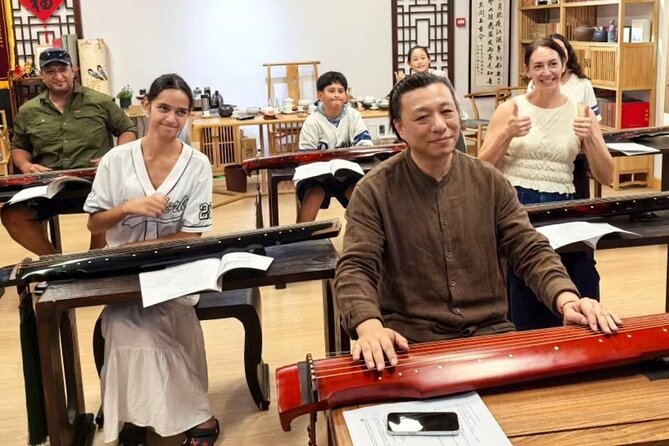
- Play a full Guqin melody: You receive hands-on instruction on one of China’s most respected classical instruments after hearing a live performance by a national-level heritage artist.
- Learn through three connected traditions: Tea, calligraphy, and music show different sides of Chinese thought, patience, rhythm, and self-expression.
- Keep your own calligraphy: The teacher helps you write meaningful Chinese characters, including your Chinese name, and you can take the finished paper with you.
- Enjoy a rare quiet setting: The private, air-conditioned venue in 813 Creative Park offers a break from Beijing’s crowded sightseeing stops.
- Work with a small group: The maximum of eight people makes this more personal than a large cultural show.
- Receive English guidance: A bilingual guide with an M.A. in History and Sociology explains the customs, symbols, and ideas behind each activity.
A quiet beginning in Beijing’s 813 Creative Park
The meeting point is 813 Creative Park in Chaoyang, at VGP3+CCX, Beijing 100124. The activity begins and ends there, and transportation to the venue is your responsibility. Since the experience lasts about two hours and 30 minutes, you should plan your route before setting out and allow extra time to reach the meeting point.
Inside, you enter an air-conditioned cultural space closed to the general public. The atmosphere matters here. This is not a large stage show with rows of seats and a fixed performance schedule. The setting is designed for conversation, practice, and quiet attention.
That difference shapes the whole afternoon or morning. You are not rushing between sights, taking a few photographs, and moving on. You have time to watch a hand position, ask why a ritual is performed, and try the movement yourself. For many people, this pause will be as valuable as the activities.
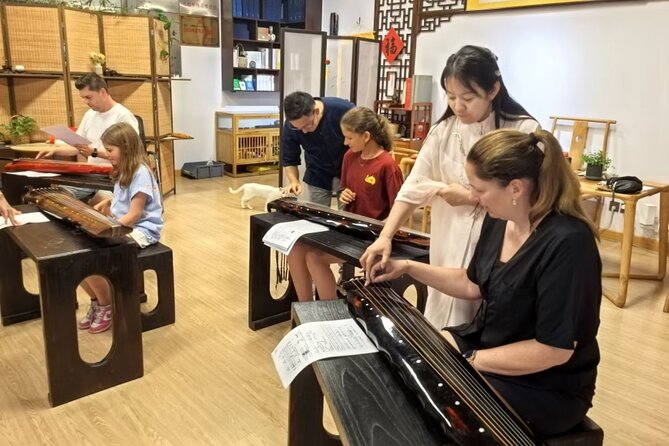
The group limit of eight is one of the strongest practical features. Calligraphy is difficult when you first pick up the brush, and the Guqin is even less familiar to most visitors. A teacher working with a small group can give useful corrections instead of offering only a general demonstration.
A few more Beijing trips to weigh up
- Beijing Historical Tour II including Summer Palace, Lama Temple & Panda Garden
★ 4.0 · 187 reviews - Beijing Historical Tour I – Forbidden City, Tiananmen Square & Temple of Heaven
★ 4.0 · 120 reviews - Beijing Historic City Guided Walking Tour + Calligraphy Creation
★ 5.0 · 59 reviews
Tea ceremony: slow down and pay attention
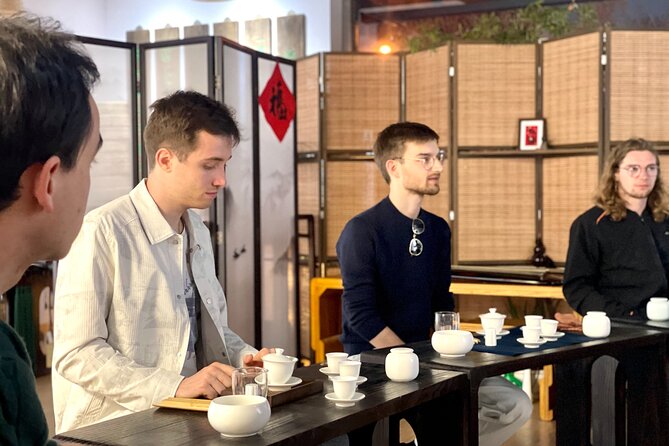
The tea portion introduces one of the most accessible parts of Chinese culture. You take part in a traditional ceremony and taste tea under the guidance of a certified tea master. Tea snacks are provided, but a full meal is not, so do not arrive expecting lunch.
The value is not simply the drink. The ceremony gives you a way to notice sequence, gesture, timing, and hospitality. The guide explains the meaning behind the ritual in English, helping you understand why the steps are carried out with such care.
You will brew and taste the tea yourself rather than only watch the master work. That small distinction makes the activity more memorable. A museum can show you a beautiful tea set. Here, you handle the process and see how easily an ordinary pour can become a measured act of welcome.
The tea session is also a good entry point if you know little about Chinese customs. It requires no musical training and no artistic skill. You simply follow the instructions, taste carefully, and ask questions. The pace is deliberately calm, making this a useful break after crowded temples, shopping streets, or major sights.
Keep in mind that tea preferences are personal. The experience includes tea tasting and snacks, but the supplied information does not specify the exact varieties or amount served. If you have dietary concerns, ask the provider before booking.
Guqin music, from listening to playing
The Guqin is the most distinctive part of the program. It is a traditional Chinese string instrument with a long cultural association and a very quiet, refined sound. You first hear a live performance by a national-level heritage artist, then receive a hands-on lesson.
This two-step format works well. Listening first lets you hear the instrument as it should sound before you try it. Then the teacher breaks the distance between performer and audience by guiding your fingers and helping you play a complete melody.
Do not expect to become a Guqin musician in one session. The point is not technical mastery. It is the sensation of learning how the instrument responds, feeling the strings under your fingers, and understanding why the Guqin has such a respected place in Chinese culture.
The activity can be surprisingly emotional because of its quiet focus. Unlike a loud stage performance, the Guqin asks you to listen closely. A room filled with only soft strings and careful instruction can feel almost meditative, especially after a busy day in Beijing.
You should also be comfortable trying something unfamiliar in front of a small group. The atmosphere is intended to be welcoming, and the instructors guide beginners, but everyone still participates in the same intimate space. If you prefer to sit back and watch, this may not be the best cultural activity for you.
Calligraphy that gives you something to keep
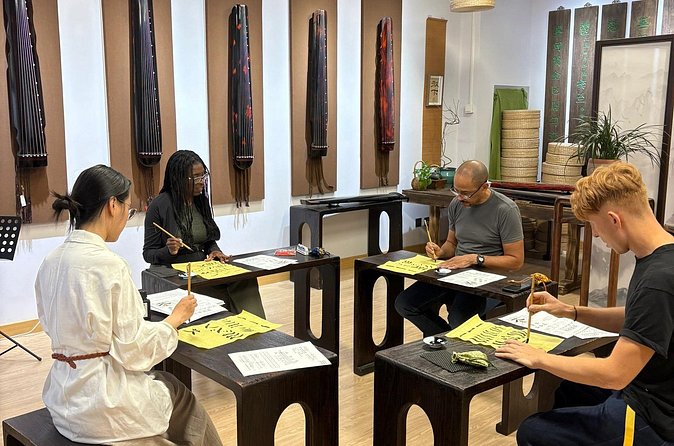
The calligraphy workshop is the most tangible part of the experience. You use a traditional brush, learn how Chinese characters are formed, and receive expert help as you write. The teacher can help you write your Chinese name, and the finished paper can go home with you.
Calligraphy is more than decorative writing. The teacher explains the ancient roots of the characters, so you begin to see them as images with structure and meaning rather than mysterious marks on a sign. Even a simple character becomes more interesting when you understand how its shape developed.
Your first attempt may not look polished. That is part of the fun. Holding the brush correctly, controlling the ink, and making each stroke in the right order takes more care than most visitors expect. The exercise gives you a better feel for the discipline behind Chinese writing.
I especially like this activity for people who want a personal souvenir. A mass-produced ornament may remind you of Beijing, but a sheet of calligraphy that you wrote yourself carries the memory of the lesson. Bring a way to protect the paper if you plan to place it in luggage, though no special packaging is listed as included.
Same country, a completely different kind of day:
- From Beijing: Mutianyu Great Wall Tours with Options
★ 4.9 · 9,216 reviews - Beijing: Forbidden City Tour(Group/Private)-Tickets Included
★ 4.8 · 7,974 reviews - Beijing: T-Square & Forbidden City Group or Private Tour
★ 4.8 · 4,446 reviews - Beijing: Mutianyu Great Wall Daily Tour with Ticket & Lunch
★ 5.0 · 3,056 reviews
Traditional clothing and a more personal photo
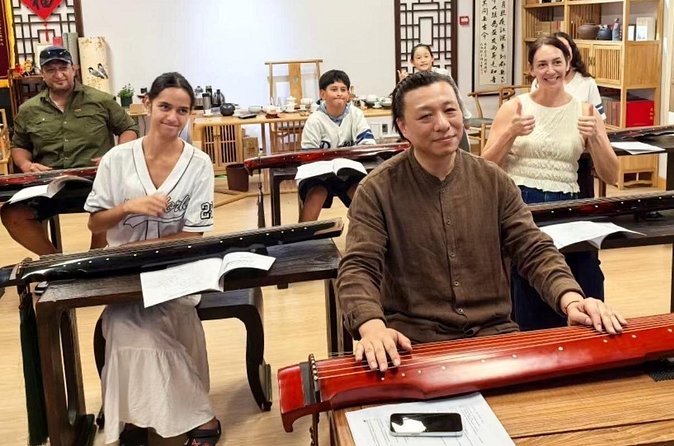
Traditional outfit rental is included, along with time for ritual and photographs. This adds a visual element without turning the whole activity into a costume show. You can see how the clothing changes your posture and sense of occasion while taking part in the tea, calligraphy, or music setting.
The photos are likely to be most meaningful when they record what you learned rather than simply showing a costume. A group picture at the end is part of the experience, and you can use the setting, clothing, brush, and tea ware to create a clear memory of the day.
The information does not specify the exact clothing styles, sizes, or changing arrangements. If those details matter to you, contact Culture Heritage Tour China before booking. The attire is included, but personal expenses and optional tips are not.
The role of the bilingual guide
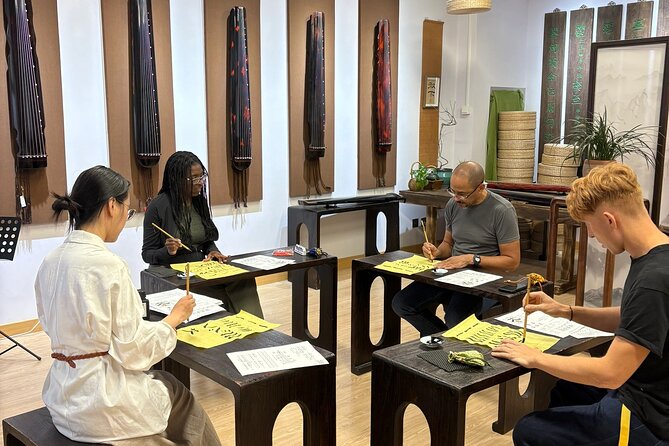
The guide is more than someone who keeps the schedule moving. This experience includes a bilingual guide with an M.A. in History and Sociology, trained to explain Chinese philosophy and history in English. That background is important because the activities can otherwise seem like a series of attractive gestures without much context.
Good interpretation helps connect the parts. Tea teaches attention and hospitality. Calligraphy shows the relationship between form, meaning, and discipline. Guqin music brings restraint, listening, and feeling into the room. You do not need prior knowledge to follow along, but the explanations give the workshop more weight.
The instructors are described as national-level cultural masters and heritage artists rather than general entertainers. That distinction matters if you care about practice and preservation. You are meeting people who work within these traditions, not simply watching a short presentation created for a tourist audience.
At the same time, the exact names of the teachers are not provided, so you should not book expecting a particular named artist. The strength here is access to skilled practitioners and direct instruction, not celebrity.
Is $78.60 a fair price?
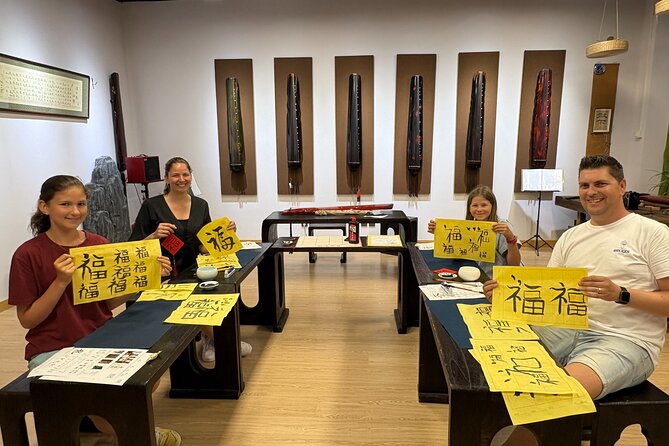
At $78.60 per person, this is a midrange cultural activity rather than a budget stop. The price includes a tea ceremony and tasting, a live Guqin performance, a Guqin lesson, calligraphy instruction, traditional outfit rental, tea snacks, and an English-speaking guide.
If you priced each part as a separate short activity, the total could add up quickly. More important, the workshop combines the parts in one private setting. You avoid spending time finding separate venues and gain a guide who can explain how the traditions relate to one another.
The value is strongest for you if you want a participatory experience and appreciate personal instruction. It is weaker if you mainly want entertainment, a quick photo, or a large-scale performance. You also need to add the cost and time of reaching 813 Creative Park because transportation is not included.
The small group helps justify the price. With a maximum of eight people, you are not lost in a crowd, and the teachers have a realistic chance to help you. The experience is also booked, on average, 51 days in advance, so popular dates may require early planning.
Who should book this experience?
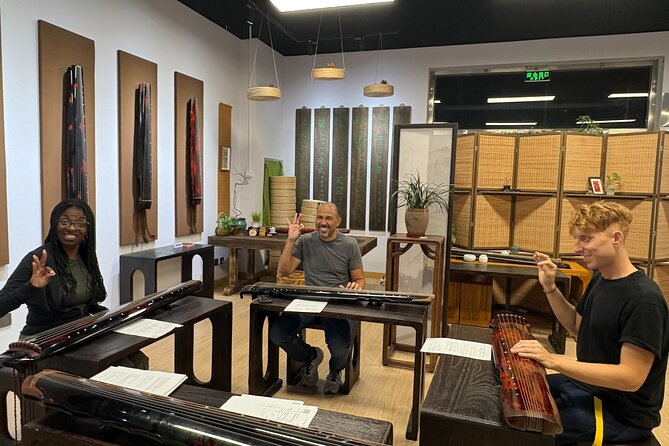
I would recommend it to first-time visitors who want cultural context beyond major monuments. It suits couples, families with older children, solo visitors, and small groups who enjoy trying something new without needing previous skills.
It is particularly good for people who value quiet settings. Beijing can fill your senses with traffic, crowds, tiled courtyards, and constant movement. Two-and-a-half hours spent listening to Guqin strings, handling a brush, and sipping tea gives your itinerary a different rhythm.
Long-term residents of China may also find something worthwhile here. The session is not limited to basic sightseeing facts, and the direct work with practitioners offers a closer look at traditions that are easy to encounter only as decoration or performance.
I would hesitate to recommend it to anyone seeking a full meal, a major historical site, or an activity with no participation. The program is structured around doing. You will be asked to brew, write, listen, and play.
Confirmation is sent within 48 hours of booking, subject to availability. Most people can participate, service animals are allowed, and the venue is near public transportation. The experience may require good weather, and a minimum number of participants is required. If the provider cancels for those reasons, you are offered another date or experience, or a full refund. You can cancel for a full refund up to 24 hours before the start time.
Should you book it?
Book this Beijing culture workshop if you want to leave with more than photographs. The tea ceremony is calm, the calligraphy gives you a handmade keepsake, and the Guqin lesson offers an encounter you are unlikely to find in an ordinary museum visit.
The strongest reason to choose it is the chance to do all three activities in a small group with direct guidance. The main reason to skip it is cost, especially if you want only a quick introduction or if reaching Chaoyang is inconvenient.
For the right visitor, $78.60 buys a thoughtful cultural lesson rather than a standard show. Schedule it when you need a quieter day in Beijing, arrive prepared to participate, and give yourself enough time to reach the meeting point.
FAQ
How long does the Beijing culture experience last?
The activity lasts approximately two hours and 30 minutes.
Where does the activity begin?
It begins at 813 Creative Park, VGP3+CCX, Chaoyang, Beijing, China, 100124.
Where does the activity end?
The activity ends back at the same meeting point.
What activities are included?
You take part in a traditional tea ceremony and tea tasting, a live Guqin performance, a hands-on Guqin lesson, and a Chinese calligraphy workshop.
Is tea included?
Yes. The traditional tea ceremony, tea tasting, and tea snacks are included.
Is a meal included?
No. Meals outside the provided tea snacks are not included.
Is transportation included?
No. Transportation to and from the venue is not included.
How many people can join the activity?
The group has a maximum of eight travelers.
Is the experience offered in English?
Yes. A bilingual guide provides English guidance and has an M.A. in History and Sociology.
Can I cancel for a full refund?
Yes. You can cancel at least 24 hours before the experience start time for a full refund. Cancellations or changes made less than 24 hours before the start time are not accepted for a refund.
Just added around Beijing
- Private Transfer to Mutianyu Great Wall with professional driver★ 5.0 · 19 reviews
- camp on the Great Wall overnight with sunrise and sunset on the wall★ 5.0 · 11 reviews
- One day tour to downtown Tianjin from Beijing by high speed train★ 5.0 · 3 reviews
- BusDa:Ancient Great Wall &Badaling Great Wall Full-day Bus Tour★ 4.5 · 6 reviews
- ZANBUS: Trip to the Jinshanling Great Wall Departing at 7:30 AM★ 5.0 · 5 reviews
- Yuxiandu Chinese Royal Cuisine Museum with Show and Royal Banquet★ 5.0 · 4 reviews
- Private Wild Great Wall Hiking tour at Simatai (Challenging)★ 5.0 · 16 reviews
- Wild Great Wall Huanghuacheng Half Day Tour★ 5.0 · 15 reviews
Historical Tours, compared.
Between Capitalism & Communism: Hong Kong History Tip Based Tour
Read our review →
Beijing Historical Tour II including Summer Palace, Lama Temple & Panda Garden
Read our review →
Beijing Historical Tour I – Forbidden City, Tiananmen Square & Temple of Heaven
Read our review →
Tour of Jewish Shanghai led by a Jewish History Expert
Read our review →
Beijing Historic City Guided Walking Tour + Calligraphy Creation
Read our review →
2-Hour Beijing Private Forbidden City Tour: History & Highlights
Read our review →
Xi’an Full Day Sightseeing Tour – Shaanxi History Museum, Big Wild Goose Pagoda, Ancient City Wall
Read our review →
Private Historical Tour: Guangzhou City Sightseeing Including Lunch
Read our review →Browse the lists this tour appears in