
Reviewed · HISTORICAL TOURS
UNESCO Watchtowers World Heritage Ancient Villages Private Tour
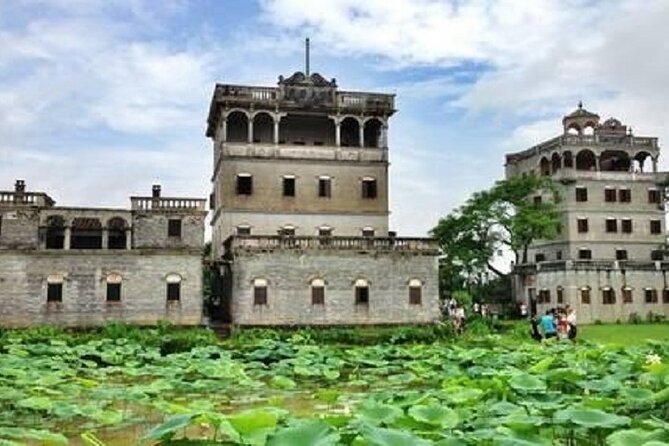
Kaiping’s diaolou watchtowers are the star here: tall fortified homes built in the early 1900s by overseas Chinese families who returned with money, ideas, and architectural influences from abroad. You move through quiet villages, fishponds, farmland, and old streets rather than spending another day among Guangzhou’s towers and traffic.
I like the private car and full-day escort, especially since Kaiping is about two hours from Guangzhou. I also like the mix of places: Zili and Majianglong show the watchtowers in rural settings, while Li Garden and Chikan add gardens and old Cantonese streets.
The main catch is cost. At $255 per person, this is not a budget outing, and admission tickets and lunch are extra. The schedule can also run from about five to 11 hours, so ask for a clear plan before setting out.
Key points at a glance
- UNESCO watchtowers in their village setting: See the diaolou among fields, ponds, paths, and village homes.
- Private transport from Guangzhou: Your group travels by air-conditioned car with a professional driver.
- Six substantial stops: The route includes Zili, Jinjiangli, Li Garden, Majianglong, Kaiping’s watchtower area, and Chikan Movie Town.
- Useful for family-history trips: If your roots are in Kaiping or Taishan, the operator can help arrange a visit to an ancestor’s home.
- A quiet weekday escape: The countryside can feel peaceful, with one reported eight-hour trip offering a calm break from city life.
- Extra costs matter: Entrance tickets and lunch are not included in the $255 price.
Why Kaiping’s watchtowers are worth the long ride
The first surprise is how unusual the diaolou look. These are not simple village homes. They resemble small fortresses, built by overseas Chinese migrant workers in the early 20th century. Their height, heavy construction, and mixed architectural details reflect the wealth and outside influences brought back by families connected to North America and other parts of the world.
That story gives the buildings more weight than a quick photo stop. You are looking at homes shaped by migration, family money, local farming life, and the need for protection. The towers sit beside ordinary rural scenes, so the contrast is part of the appeal.
Kaiping is roughly two hours from Guangzhou by road. That makes this a serious day trip, but the drive also takes you away from the city into a quieter part of Guangdong. Along the route, you can expect farmland, livestock sheds, fishponds, and narrow rural paths.
I would choose this outing if you want history with a strong sense of place. If you only want the quickest possible look at a famous building, the journey may feel long.
A few more Guangzhou trips to weigh up
- Private Historical Tour: Guangzhou City Sightseeing Including Lunch
★ 4.5 · 24 reviews - All Inclusive Kaiping Diaolou Heritage Private Day Trip from Guangzhou
★ 5.0 · 5 reviews - Guangzhou Historical Day Tour By Metro & Boat
★ 5.0 · 4 reviews
Zili Village and the three-part watchtower cluster
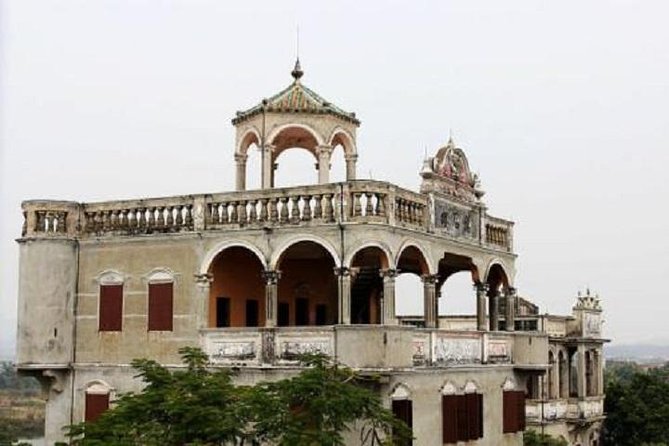
Zili Village is one of the main stops and receives about 90 minutes in the planned schedule. Its watchtower group was founded in the 17th year of the Daoguang reign during the Qing Dynasty, which places its origins in 1837.
The village includes Anheli, He’anli, and Yong’anli, three connected unincorporated villages associated with the Fang surname. That detail matters because the site is not just a collection of abandoned structures. It reflects a family and village network built over generations.
Allow yourself time to look beyond the tallest towers. The surrounding paths and farmland help explain how these buildings functioned as homes within working communities. You will see the watchtowers as part of village life, not as isolated monuments placed in a museum yard.
Admission is not included, so keep that in mind before arrival. The guide can provide context while you walk, but the amount of time available may depend on the day’s traffic and the final route agreed after booking.
Jinjiangli’s rural setting and short visit
Jinjiangli Village receives about 30 minutes, making it the briefest listed stop. It lies in Xian Gang Township and is surrounded by mountains, farmland paths, and a river. Water buffaloes and geese are part of the rural scene described for the area.
This stop is less about a long architectural tour and more about seeing a diaolou cluster in its countryside setting. The paths crossing the fields and the water nearby create a different mood from a formal garden or old commercial street.
Thirty minutes is enough for a quick look and photographs, but not for a slow exploration. If Jinjiangli is especially important to you, ask the operator ahead of time if the timing can be adjusted. This is a private trip, so the schedule has more flexibility than a large group excursion, but changes should be settled before the day begins.
Li Garden, a Chinese garden with overseas influences
Li Garden, also called Kaiping Garden in the supplied route, takes about an hour. It was built in the early 20th century by Xie Weili, a Chinese man based in the United States.
The garden draws on the Grand View Garden described in Dream of the Red Chamber and combines classical Chinese garden features with ideas connected to overseas Chinese life. That makes it a useful counterpoint to the watchtowers. At Zili and Majianglong, you see fortified residences in village surroundings. At Li Garden, the focus shifts to planned garden space and personal ambition.
An hour gives you a reasonable introduction, though it may feel short if you enjoy gardens and want to inspect every detail. Admission is extra, as it is at the other stops.
The value here is variety. A tour made only of watchtowers could begin to feel repetitive. Li Garden changes the pace and shows how returning overseas Chinese families expressed their success through design, gardens, and large residential compounds.
Same country, a completely different kind of day:
- Guided Cycle Tour of Guangzhou
★ 5.0 · 164 reviews - Customised Private Guangzhou City Tour with Flexible Itinerary
★ 5.0 · 107 reviews - Gulong Gorge Skywalk Glass Bridge and Waterfall View Private Tour
★ 5.0 · 103 reviews - Private Guangzhou Full Day City Tour with Old and New Highlights
★ 5.0 · 62 reviews
Majianglong Village and five connected communities
Majianglong, also spelled Ma-Xianglong in the route description, is planned for about an hour. It lies on flat ground east of the Tanjiang River and includes five villages: Yong’an and Nan’an, associated with the Huang family, along with other connected village communities.
The Majianglong watchtower group is one of the UNESCO-related sites included in the trip. Its appeal comes from the relationship between the towers and the rural setting. You are not simply checking off another building. You are seeing how family villages developed around fields, waterways, and shared routes.
The hour should give you time to walk around and compare the buildings with those at Zili. I would pay attention to how the towers sit within the village pattern and how the open farmland changes the feel of the visit.
As with the other heritage stops, the entrance fee is separate. Since there are several paid sites, ask the guide for the total expected admission cost before you leave Guangzhou.
Chikan Movie Town and old Cantonese streets
Chikan Movie Town is scheduled for about two hours, making it the longest stop on the route. Chikan Old Town developed beside the Tan River in the early Qing Dynasty and served surrounding rural villages because of its convenient transport position.
The town is known for Cantonese-style qilou buildings, the covered arcade structures found along many historic southern Chinese streets, as well as Western-influenced buildings. This gives the trip a different visual rhythm after the open villages and solitary towers.
Two hours should allow a more relaxed walk through the old streets. You can look at the building fronts, river setting, and the blend of local Cantonese and Western design. The word Movie Town is part of the attraction, but the important point for this trip is its old urban fabric and connection to the surrounding countryside.
Again, admission is not included. The route description does not specify which attractions inside the area require payment, so confirm what your ticket covers before entering.
What the private format changes
The private arrangement is one of the strongest reasons to consider this tour. Only your group participates, and the package includes hotel pickup and drop-off in downtown Guangzhou, a private air-conditioned car, a professional driver, and a local English-speaking guide who stays with you.
That matters in Kaiping because the sites are spread across a broad rural area. You are not piecing together separate buses, taxis, and entry tickets. You can also ask questions as you go and discuss whether you want more time at a village, garden, or old town.
The operator follows up after booking to firm up the itinerary. Use that contact. Tell the guide what matters most to you, whether that is architecture, photography, family history, or a slower countryside visit.
A guide’s personal name is not provided in the tour information, so do not expect to choose a named guide in advance. The service is described as English-speaking and local, which is important for interpreting the history and handling the rural route.
A useful option for family roots in Kaiping or Taishan
Kaiping and Taishan are hometown areas for many overseas Chinese families. If you are looking for an ancestor’s house, the operator says it can assist and arrange a family-history visit.
This could be the most valuable part of the trip for some people. A standard sightseeing route shows you famous sites, but a search for a family home gives the day a personal purpose. Contact the operator with your family details before the trip so the itinerary can be discussed in advance.
Do not assume an ancestor visit is automatically included. It is an arrangement that needs to be planned, and the basic tour includes the listed heritage sites rather than a guaranteed genealogy service.
Timing, food, and the real price
The advertised duration is approximately five to 11 hours. That is a wide range, but the difference likely depends on the final route, traffic, time spent at each stop, and any family-history arrangements.
One eight-hour example included the drive and was described as a quiet weekday outing. That is a useful target for your planning, but you should not treat eight hours as a fixed promise. Ask for the expected pickup and return times.
The price is $255 per person. For a private vehicle, driver, English-speaking guide, and hotel service from downtown Guangzhou, the cost can make sense for a small group that values convenience. It is harder to justify for a solo visitor or a pair on a tight budget, especially because entrance tickets and lunch are added separately.
Lunch is not supplied for you or the guide. Bring a plan for the meal, or ask during the itinerary discussion where the stop will fall. The information does not specify a restaurant or menu, so do not assume a particular dining experience.
Group discounts are offered, which may improve the value for families or friends booking together. Since this is a private tour, larger groups should confirm the vehicle arrangement and discount details before paying.
Who should book this Kaiping day trip?
I would choose this tour if you want to see several Kaiping sites in one day without managing rural transport yourself. It suits visitors based in Guangzhou who have already seen the main city sights and want architecture, village life, and overseas Chinese history.
It is also a strong fit for people with family connections to Kaiping or Taishan. The possibility of arranging an ancestor-home visit makes the private format much more useful than a fixed sightseeing bus.
You should think twice if you want a low-cost outing, dislike long road transfers, or prefer to spend an entire day at one site. The tour covers a lot of ground, and the short 30-minute visit at Jinjiangli shows that not every stop receives equal attention.
The route also includes several admission fees, so calculate the full cost rather than stopping at the headline price. Ask for the final schedule, expected ticket expenses, lunch plan, and any family-history supplement before confirming.
Should you book it?
Book this Kaiping tour if the diaolou are high on your China wish list and you value a private car, an English-speaking guide, and a route that joins UNESCO villages with Li Garden and Chikan Old Town. The peaceful farmland and old buildings offer a clear change from Guangzhou’s busy streets.
Skip it if $255 per person is already stretching your budget or if you want a short, tightly timed excursion. The non-refundable policy also means you should be certain about your date before booking. For the right visitor, though, this is a practical way to see Kaiping’s watchtowers and the communities that made them meaningful.
FAQ
Where does the tour begin and end?
Pickup and drop-off are provided at hotels in downtown Guangzhou.
How long does the tour last?
The experience lasts approximately five to 11 hours. One reported schedule took about eight hours in total.
How far is Kaiping from Guangzhou?
Kaiping is around two hours by car from Guangzhou.
Is this a private tour?
Yes. Only your group participates in the private activity.
Is an English-speaking guide included?
Yes. A local English-speaking guide provides full escort during the tour.
What transportation is provided?
The tour includes a private air-conditioned car and a professional driver.
Are admission tickets included?
No. Admission fees for the listed stops are not included in the tour price.
Is lunch included?
No. Lunch is not included for you or the guide.
Just added around Guangzhou
- Big Buddha Mountain Martial Art Culture Countryside Private Tour★ 5.0 · 31 reviews
- Hong Kong One Day Private Tour from Guangzhou by Bullet Train★ 5.0 · 3 reviews
- Day Tour learning Kung Fu and Lion Dance in Bruce Lee’s Hometown★ 5.0 · 7 reviews
- Glass Bridge and Water Falls Private Car Service from Guangzou★ 4.5 · 3 reviews
- Seven Star Crag and Dinghu Mountain private day tour from Guangzhou★ 5.0 · 5 reviews
- Seven Star Crags Karst Cave Mirror Lake Bird Islands Private Tour★ 5.0 · 30 reviews
- Private Tour: Guangzhou City Sightseeing Including Yuexiu Park★ 3.5 · 3 reviews
- Private flexible Guangzhou City Sightseeing Tour with Dim-Sum Tasting★ 5.0 · 5 reviews
Historical Tours, compared.
Between Capitalism & Communism: Hong Kong History Tip Based Tour
Read our review →
Beijing Historical Tour II including Summer Palace, Lama Temple & Panda Garden
Read our review →
Beijing Historical Tour I – Forbidden City, Tiananmen Square & Temple of Heaven
Read our review →
Tour of Jewish Shanghai led by a Jewish History Expert
Read our review →
Beijing Historic City Guided Walking Tour + Calligraphy Creation
Read our review →
Beijing Culture: Tea Ceremony, Heritage Instrument & Calligraphy
Read our review →
2-Hour Beijing Private Forbidden City Tour: History & Highlights
Read our review →
Xi’an Full Day Sightseeing Tour – Shaanxi History Museum, Big Wild Goose Pagoda, Ancient City Wall
Read our review →Browse the lists this tour appears in