
Reviewed · FORBIDDEN CITY TOURS
Beijing Wangfujing Calligraphy Class Nearby Forbidden City
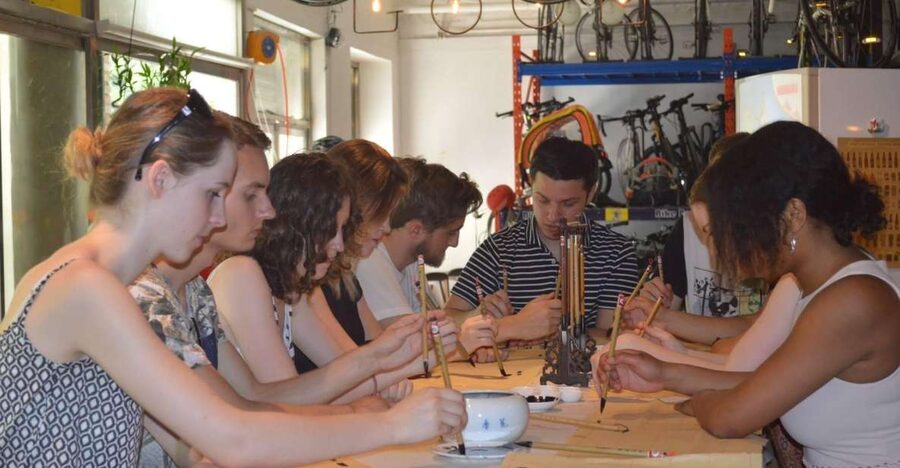
Chinese calligraphy is more than writing a few characters for a souvenir. It is a slow, focused art that asks you to control your brush, sit properly, and pay attention to every stroke. At this Wangfujing class, teachers such as Richard, David, and Master Li guide beginners through the basics before helping you create a finished piece to take home.
I like the calm break from Beijing sightseeing and the fact that you leave with your own artwork instead of just another photograph. I also like the patient teaching style, with time for tea, practice, and questions. The main catch is simple: 45 minutes can feel short, especially if you want to produce a more complex piece, and $35 is not the cheapest activity in mainland China.
Key points at a glance
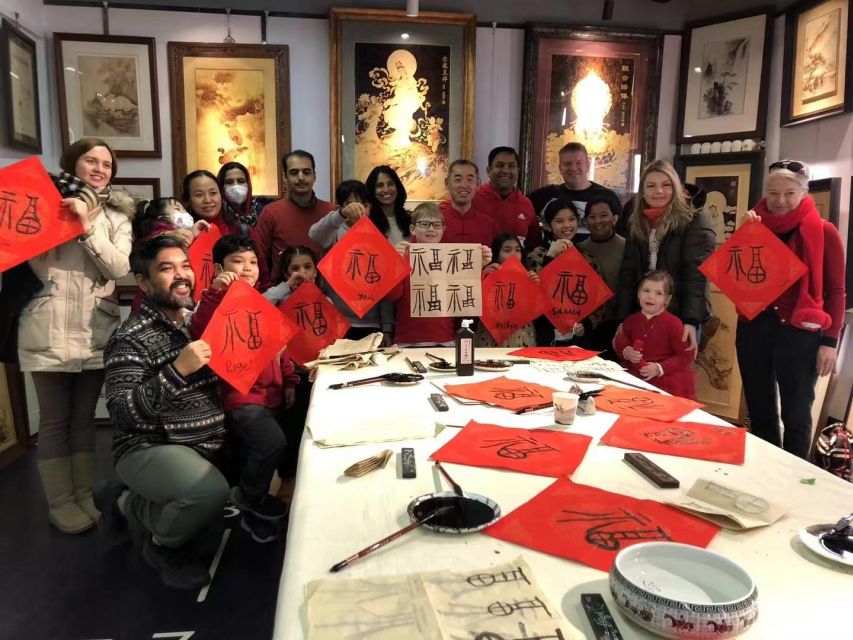
- Practice before the final artwork: You begin with basic strokes and brush control before writing on a red cardboard canvas.
- Several class lengths: Choose 45 minutes, 1 hour, 1.5 hours, or 2 hours.
- Patient English-speaking instruction: Richard, David, and Master Li are named instructors, with Fiona assisting with translation in some sessions.
- Tea and a quiet setting: The class offers a restful change from crowded sights and long lines.
- Useful Wangfujing location: Meet at Sun World Dynasty Hotel, close to the Forbidden City’s east side and Wangfujing shopping area.
Why calligraphy makes a good Beijing activity
Beijing sightseeing can be a full-contact sport. You walk long distances, pass through security checks, wait in lines, and try to absorb imperial buildings while keeping up with your schedule. A calligraphy class gives you permission to sit still for a while.
The value here is not that you will become a master in one afternoon. You will not. Chinese calligraphy takes years of practice, and even simple characters require control. The appeal is that you get a clear introduction to the basic ideas, then make something personal with your own hands.
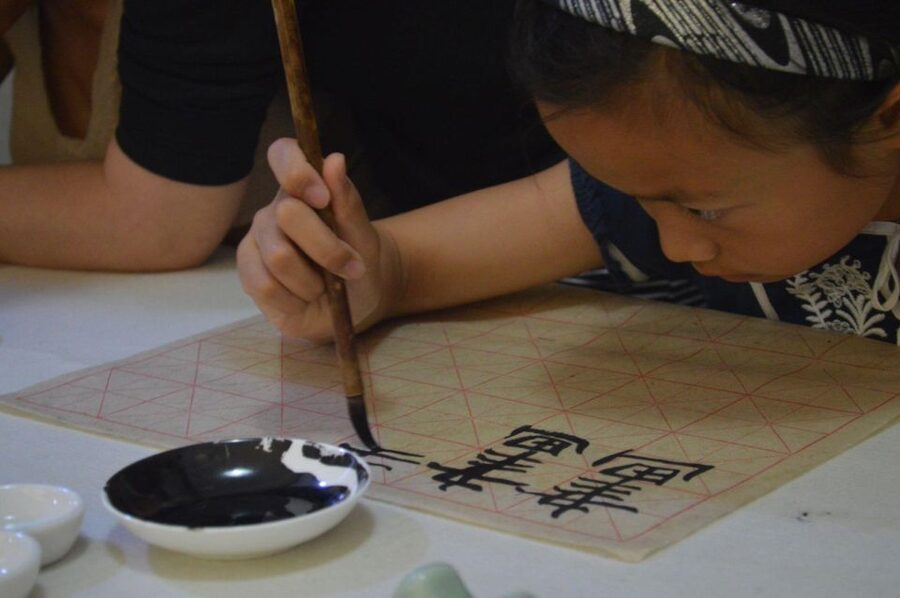
I like the way the class begins with fundamentals rather than rushing you toward a souvenir. You learn how to hold the brush, how to position your body, and how to make the basic strokes. That foundation helps you understand why a finished character has its particular shape.
The cultural side also matters. The class introduces the history and meaning of calligraphy, and some sessions include discussion of Buddhist or Taoist ideas. The exact conversation will depend on your instructor, but this is more than a craft table with Chinese symbols printed on paper.
More Forbidden City Tours in Beijing:
- Beijing: Forbidden City Tour(Group/Private)-Tickets Included
★ 4.8 · 7,974 reviews - Beijing: T-Square & Forbidden City Group or Private Tour
★ 4.8 · 4,446 reviews - All-Inclusive Tour: Tiananmen Square, Forbidden City, Great Wall
★ 5.0 · 2,873 reviews
Meeting your teacher near Wangfujing
Your meeting point is the lobby of Sun World Dynasty Hotel at No. 50 Wangfujing Avenue, in Beijing’s Dongcheng District. The Chinese address is 北京市东城区王府井大街50号. Your calligraphy teacher waits there to meet you.
This is a useful location if you are staying around Wangfujing. You can walk to the hotel from the central shopping area, then continue toward the Forbidden City after class. The setting is also a practical choice for a short activity because you do not need to cross the city for a lesson.
From Dengshikou Station on Subway Line 5, use Exit A. Walk left for about 180 meters, then turn left at the first traffic light and continue west for roughly 480 meters. The walk takes about eight minutes in total. Bring the address in Chinese if you are using a taxi or asking for directions.
The studio is described as being in a high-end shopping center off Wangfujing Pedestrian Street. That may not sound like the traditional hutong setting suggested by the name, so set your expectations accordingly. You are getting a central, comfortable urban venue rather than a guaranteed courtyard tucked down a narrow residential lane.
The first lesson: posture, brush, and basic strokes
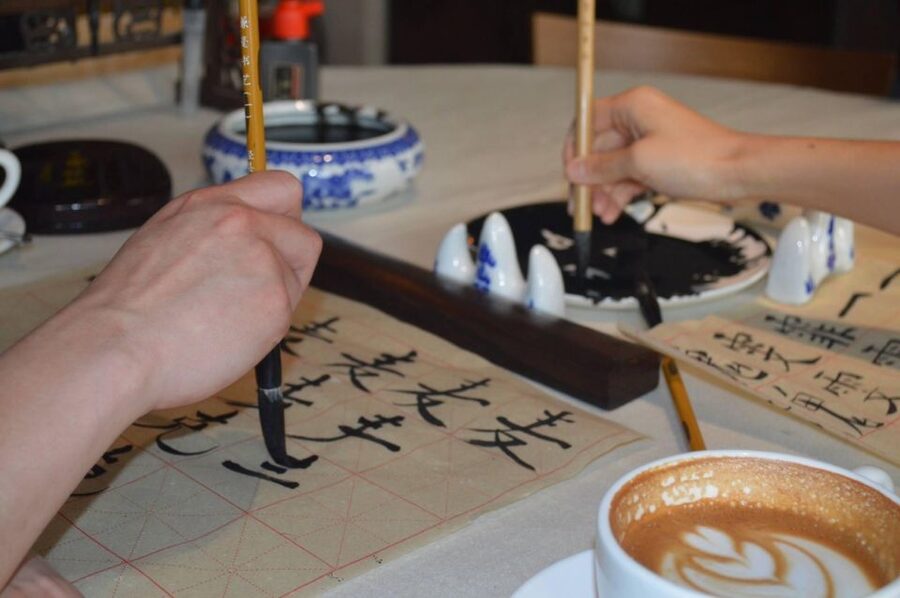
The teacher starts by introducing the brush and showing you how to handle it. You learn proper posture and the basic strokes used to form Chinese characters. This part can look simple when demonstrated, but controlling the pressure and direction of a soft brush takes concentration.
That is why I recommend resisting the urge to rush. Let the teacher correct your hand position and show the movement again. Richard is repeatedly described as calm, friendly, and patient, qualities that matter when you are trying to coordinate a new tool with unfamiliar writing forms.
The early exercises give you small successes. You are not expected to produce perfect calligraphy immediately. Instead, you build confidence through repeated practice, then move toward characters with more shape and structure.
English is the stated teaching language. Fiona has assisted with translation during at least one longer session, which can help when a lesson moves into cultural or philosophical ideas. As with any class taught in a second language, the clearest learning will come from watching demonstrations as well as listening.
Moving from practice sheets to a keepsake canvas
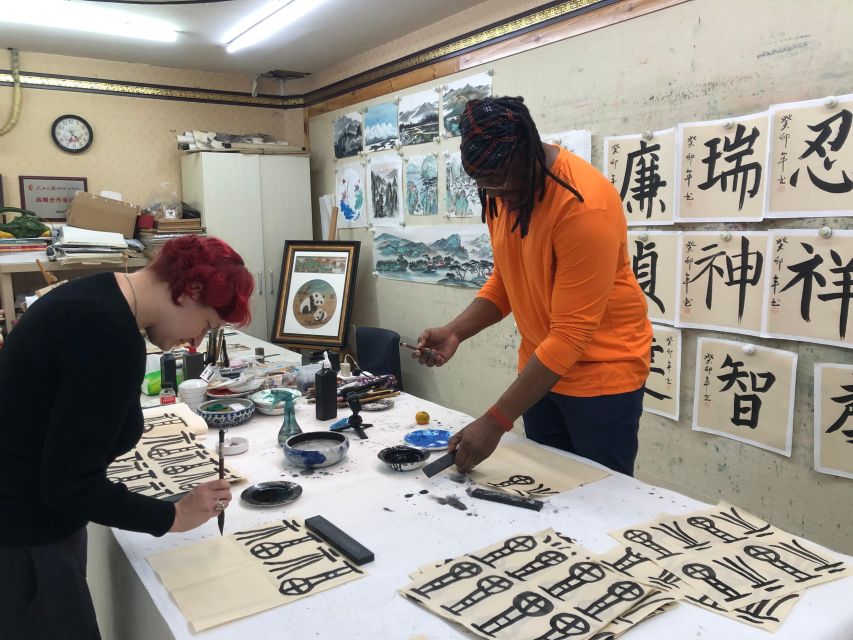
The class gradually moves toward a final piece. After practicing strokes and characters, you write on a red cardboard canvas to take away. Several sessions also included a brush as a gift, although you should treat that as a pleasant extra rather than a guaranteed inclusion unless it is confirmed when you book.
This final step gives the lesson a clear purpose. You are not just filling practice paper and leaving it behind. You get a souvenir that shows the progress from your first uncertain strokes to a completed design.
The artwork will reflect your ability on the day, not professional studio quality. That is part of the charm. A slightly uneven character can remind you of the lesson, the tea, and the quiet time you spent learning something unfamiliar.
Some sessions have also involved painting a fan, according to the experience details provided by participants. Since the included information specifically promises calligraphy supplies and a finished canvas, ask ahead if a fan is important to you.
A few more Beijing trips to weigh up
- Beijing Calligraphy Class
★ 4.9 · 112 reviews - Chinese Calligraphy Class for Small Group
★ 5.0 · 104 reviews - Beijing: Dumpling Making Workshop with Meal and Tea
★ 4.7 · 69 reviews - Online Cooking Class Beijing Dumplings and Cuisine by Sunflowerli Renowned Chef
★ 5.0 · 65 reviews
Tea, conversation, and a slower pace
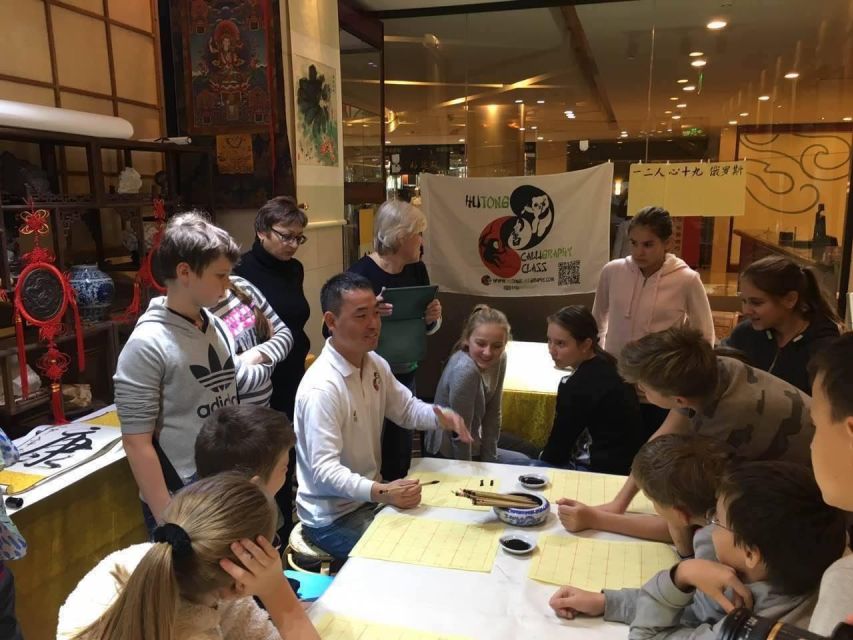
Tea is part of the experience for many sessions. It may be offered before or after the activity, and the studio has been described as a calm place to sit and talk. A coffee shop is also available on the premises if you prefer a cappuccino before returning to sightseeing.
I like this unhurried rhythm. You are not pushed from one demonstration to the next. One particularly useful detail is that Richard sometimes allowed students to continue past the scheduled end when they needed more time. You should not assume an extension will always be available, but the teaching style appears flexible.
This calm mood makes the activity especially useful in the middle of a busy Beijing itinerary. Book it after a morning at the Forbidden City, or place it between major sightseeing blocks. You will still learn something, but you will also get a chance to rest your feet and reset your attention.
Families can enjoy the class too. Children under two are not suitable for the activity, and very young children may struggle with the patience and fine motor control it requires. Older children who enjoy drawing, crafts, or trying new skills should find plenty to keep them interested.
Choosing 45 minutes, 1 hour, 1.5 hours, or 2 hours
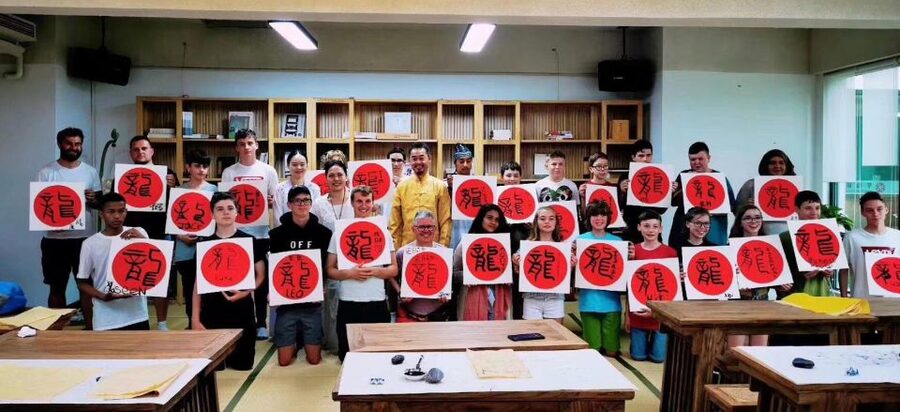
The shortest option is 45 minutes. That is enough to understand the basic idea, try the brush, and create a simple piece. If your schedule is tight, this is a sensible introduction. One hour is also workable, but it may still feel compressed once you include demonstrations, practice, and the final artwork.
If this is a major reason for visiting, I would choose 1.5 or 2 hours. The extra time lets you repeat the strokes, ask questions, and improve before working on the keepsake canvas. It also gives the teacher more room to explain the cultural background instead of treating the class as a quick activity.
The longer options make particular sense for people with prior experience. Beginners can benefit too, since calligraphy looks easier than it feels. You need time to settle your hand and stop pressing the brush too hard.
One practical warning: the class length is not the same as uninterrupted writing time. Some of the session involves instruction, conversation, tea, and preparation. That is part of the experience, but if you want a long period of focused practice, book two hours.
What makes the teaching work for beginners
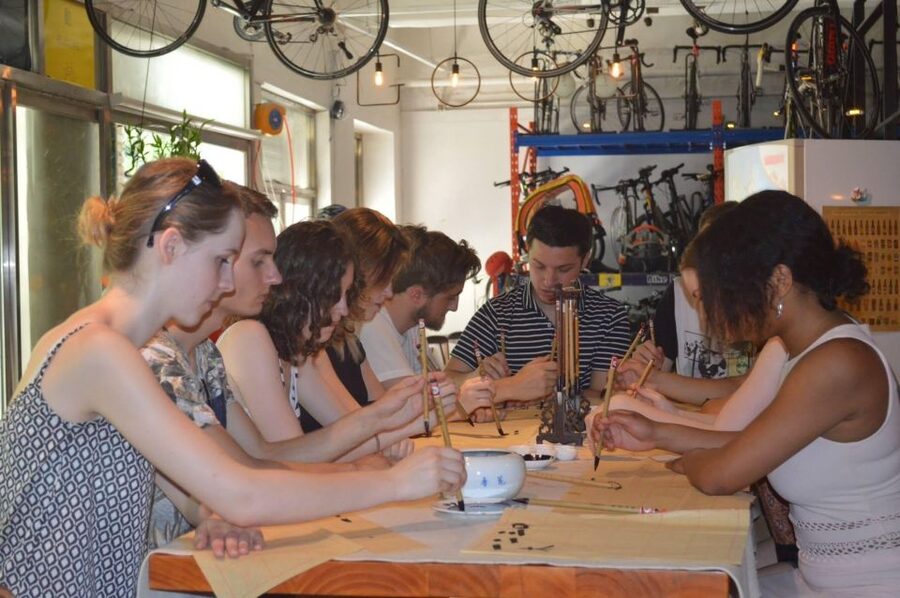
The strongest feature is the teacher’s manner. Richard is often described as gentle, relaxed, funny, and patient. David is also praised for attentive instruction and for making students feel comfortable at different skill levels. Master Li is described as an artist who helped connect calligraphy with Chinese culture and Taoist ideas.
Those details point to an important strength: you do not need previous experience. The lesson is built around baby steps, moving from individual strokes to a more complete character. That approach keeps the activity from becoming intimidating.
You will still need to concentrate. Calligraphy is not a passive demonstration. Your wrist, fingers, and brush pressure all matter, and the first attempts may look nothing like the teacher’s example. That difference is normal, not a sign that the class is failing.
The teacher’s guidance also helps you see calligraphy as visual art. You are not simply copying a translation from a worksheet. You are learning how balance, spacing, line weight, and movement affect the character on the page.
Is the $35 price fair?
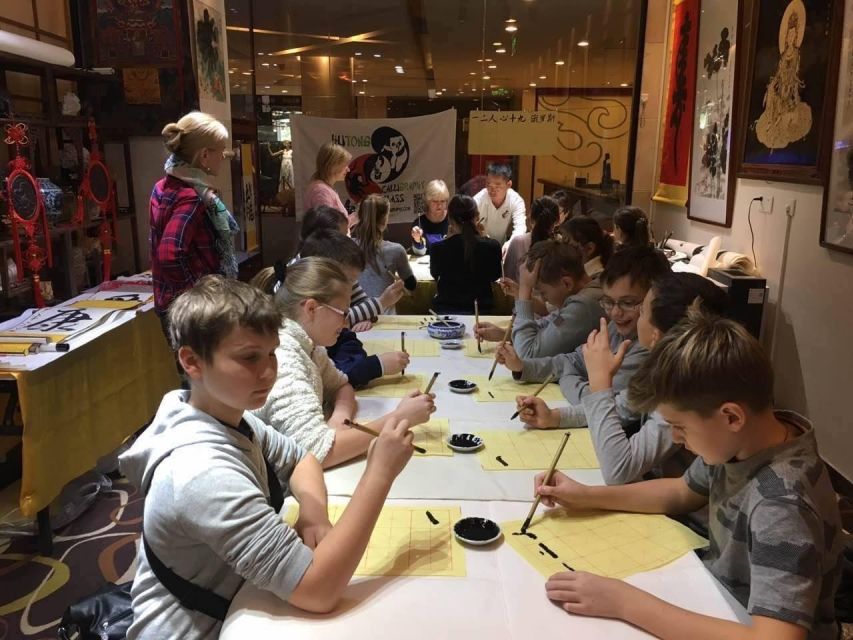
At $35 per person, this class costs more than a simple drop-in craft activity in China. One participant felt the price was high for mainland China, and that is a fair point. If you only want to spend 45 minutes making a basic souvenir, the cost may feel steep.
The price looks better when you use the longer sessions. It includes an English-speaking art teacher, calligraphy supplies, and the selected class length. You also receive a finished piece to take home, and some teachers have given students a brush as a gift.
The real value is the instruction and setting. You are paying for personal guidance, not merely access to ink and paper. If you want to understand the strokes and have a teacher correct your technique, the fee is easier to justify.
I would compare it with what you might otherwise spend on a café break, a small souvenir, or another short paid attraction in central Beijing. For a couple or family that values hands-on cultural activities, the class can earn its place in the budget. For a strict budget, choose 45 minutes and treat it as a compact introduction.
Where to fit it around the Forbidden City
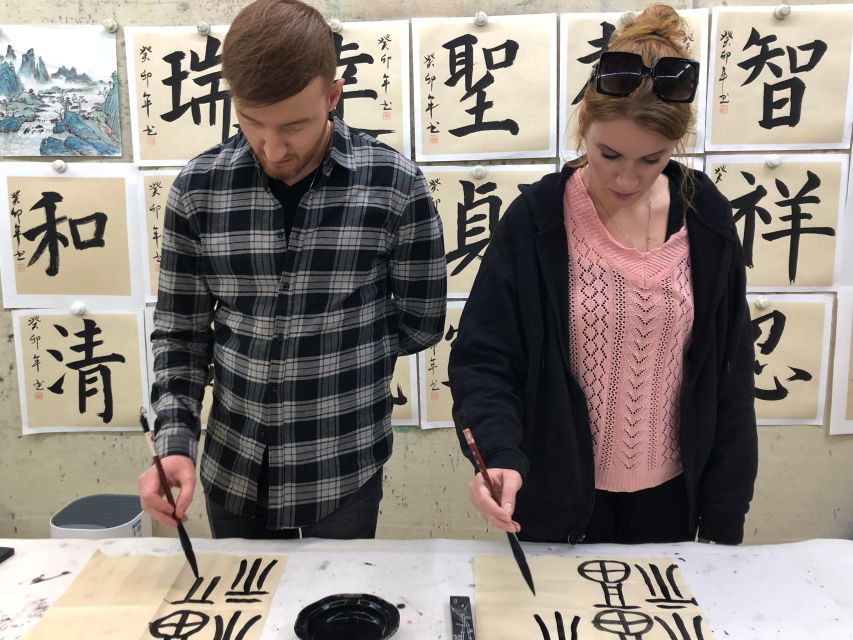
The hotel meeting point works well with a Wangfujing and Forbidden City day. You can attend class first, then walk toward the Forbidden City, or visit the palace complex earlier and use calligraphy as a calmer follow-up.
Check your timing carefully. The class is near the Forbidden City, but it is not a replacement for your timed entry, security procedures, or the hours needed to see the palace grounds. Leave enough time for the class, walking, and any admission arrangements you already have.
Wangfujing also gives you plenty of options for food and shopping before or after the lesson. That makes the activity easy to pair with a larger day plan, especially if you are already staying in the area.
Who should book this class?
I would recommend it to you if you want a cultural activity that is hands-on, quiet, and easy to fit into a central Beijing schedule. It suits first-time visitors, couples, families with older children, and anyone who wants a meaningful souvenir rather than another mass-produced trinket.
It is also a good choice if long sightseeing days leave you tired. The class offers a seated activity without giving up the chance to learn something connected to Chinese culture.
I would be more cautious if you want a traditional hutong tour, a formal museum lesson, or advanced calligraphy training. The studio is centrally located in a modern shopping area, and even two hours only gives you an introduction to a lifelong art.
Book the longest session you can reasonably fit if you care about technique. Choose 45 minutes if you mainly want to try the art, make a simple keepsake, and get back to Wangfujing or the Forbidden City.
Practical details before you book
The experience costs $35 per person, with a choice of 45 minutes, 1 hour, 1.5 hours, or 2 hours. Calligraphy supplies are provided for use during the class, while taxis, subway fares, personal purchases, and other unlisted costs are separate.
The activity is taught in English. Children under two are not suitable. You can cancel up to 24 hours before the start time for a full refund, and the reserve-now, pay-later option allows you to hold a place without paying immediately.
Confirm the selected duration when booking. That one choice will shape the experience more than anything else. A short class is a pleasant introduction, while a longer class gives you a better chance to move beyond copying basic strokes.
Should you book the Wangfujing calligraphy class?
Yes, if you want a relaxed cultural activity close to the Forbidden City and you like the idea of taking home something you made yourself. The patient instruction, tea, central location, and finished artwork give the class a clear purpose.
Choose 45 minutes only when your schedule is tight. For the best balance, I would pick 1.5 hours. You get enough practice to understand the craft without turning a short Beijing activity into a half-day commitment.
The class will not make you a calligrapher in one sitting. It can, however, change the way you look at Chinese characters and give you a quiet memory of Beijing that fits in your luggage.
FAQ
Where does the calligraphy class meet?
Meet your English-speaking calligraphy teacher in the lobby of Sun World Dynasty Hotel at No. 50 Wangfujing Avenue, Dongcheng District, Beijing. The Chinese address is 北京市东城区王府井大街50号.
How do I reach the meeting point by subway?
Take Subway Line 5 to Dengshikou Station and use Exit A. Walk left for about 180 meters, turn left at the first traffic light, then walk west for about 480 meters. The walk takes roughly eight minutes.
How long does the class last?
You can choose a 45-minute, 1-hour, 1.5-hour, or 2-hour class when booking. Check the available starting times and select the duration that suits your schedule.
Is the class taught in English?
Yes. English is the stated teaching language. Fiona has also assisted with translation during some sessions.
Are calligraphy materials included?
Yes. Calligraphy supplies are provided for use during the class. Personal shopping and transport costs are not included.
Can I cancel the activity?
Yes. You can cancel up to 24 hours in advance for a full refund. A reserve-now, pay-later option is also available.
Just added around Beijing
- Private Transfer to Mutianyu Great Wall with professional driver★ 5.0 · 19 reviews
- camp on the Great Wall overnight with sunrise and sunset on the wall★ 5.0 · 11 reviews
- One day tour to downtown Tianjin from Beijing by high speed train★ 5.0 · 3 reviews
- BusDa:Ancient Great Wall &Badaling Great Wall Full-day Bus Tour★ 4.5 · 6 reviews
- ZANBUS: Trip to the Jinshanling Great Wall Departing at 7:30 AM★ 5.0 · 5 reviews
- Yuxiandu Chinese Royal Cuisine Museum with Show and Royal Banquet★ 5.0 · 4 reviews
- Private Wild Great Wall Hiking tour at Simatai (Challenging)★ 5.0 · 16 reviews
- Wild Great Wall Huanghuacheng Half Day Tour★ 5.0 · 15 reviews
Forbidden City Tours, compared.

Forbidden City Tour(Group/Private)-Tickets Included
Read our review →
All-Inclusive Tour: Tiananmen Square, Forbidden City, Great Wall
Read our review →
4-Hour Small Group Tour to Forbidden City with Entry Tickets
Read our review →
Tianmen Square, Forbidden City & Royal Museum Tours
Read our review →
Beijing Forbidden City Ticket Booking (Optional: guide service)
Read our review →
Forbidden City and Tian’anmen Square Waking Tour
Read our review →
The Forbidden City or Tiananmen Square Entry Ticket
Read our review →
Beijing 2-Day Tours: Great Wall, Forbidden City & Top Highlights
Read our review →Browse the lists this tour appears in