
Reviewed · WORKSHOPS
Beijing Calligraphy Class
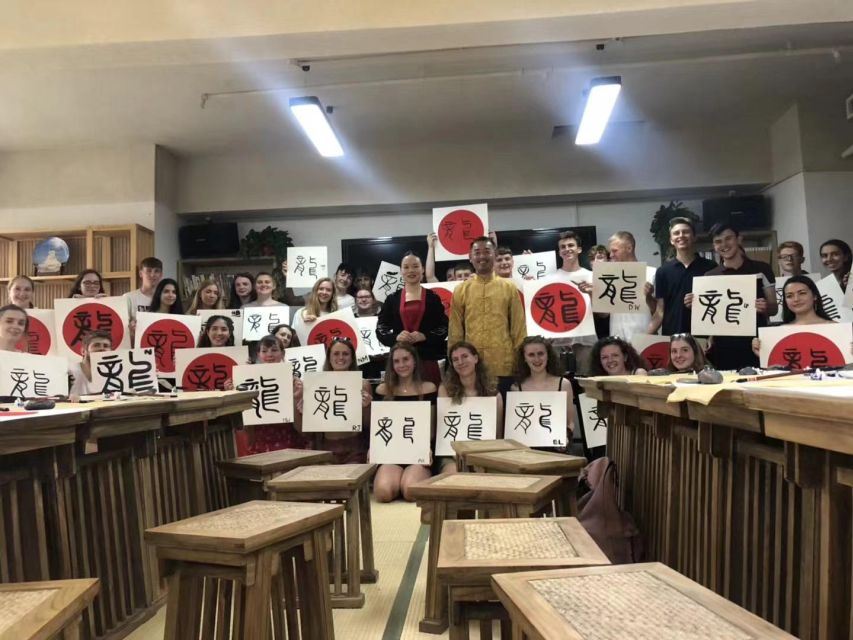
Chinese calligraphy is more than writing a few Chinese characters. It is a slow, careful practice of balance, rhythm, and attention, and this central Beijing class gives you a friendly way into that world. I like the patient teaching from instructors such as Richard and David, and I like that you leave with a personal artwork rather than just a quick demonstration. The main drawback is time: choose the one-hour option if you want enough practice to feel settled with the brush.
I also like the calm setting, with tea and small snacks reported by some participants, plus the chance to learn what your chosen characters mean. It is a good fit for adults, families, and children, though the 30-minute class can feel brief if you want to understand the tools, practice strokes, and finish a polished piece.
Key points at a glance
- Meet in Wangfujing: The class begins at the Sun World Dynasty Hotel lobby, close to central Beijing sights and subway access.
- Choose your pace: A 30-minute introduction is available, but the one-hour class gives your hand time to adjust to the brush.
- Learn the art, not just the strokes: The lesson covers calligraphy styles, tools, character meanings, balance, rhythm, and harmony.
- English instruction: Richard, David, Li, and other English-speaking teachers guide beginners through the process.
- A quiet family activity: Children as young as 11 have enjoyed the meditative repetition, and the class suits adults too.
- Good value at $20: The price includes the teacher and calligraphy supplies, with no need to buy brushes or ink for the lesson.
Meeting your teacher in central Beijing
Your meeting point is the lobby of the Sun World Dynasty Hotel at No. 50 Wangfujing Avenue, in Dongcheng District. The Chinese address is 北京天伦王朝酒店大厅, 北京市东城区王府井大街50号. This is a practical location if you are already staying near Wangfujing or visiting the shopping street and nearby central sights.
From Dengshikou Station on Subway Line 5, use Exit A. Walk left for about two minutes, roughly 180 meters, then turn left at the first traffic light and continue west for about five minutes, around 480 meters. The total walk is listed at about eight minutes. You can also take a taxi, or simply walk from a hotel in the Wangfujing area.
The teacher waits in the hotel lobby, which makes the arrival point easy to identify. Some participants have been met at the hotel and walked across the street to the teaching space, described in one account as a bookstore. Since the class location can involve this short walk, allow a little extra time rather than arriving at the last minute.
The downtown setting is useful for a half-hour activity. You do not need to spend most of your day getting to and from a studio on the edge of Beijing. Pair the lesson with Wangfujing shopping, a meal, or a visit to another central sight.
A few more Beijing trips to weigh up
- Chinese Calligraphy Class for Small Group
★ 5.0 · 104 reviews - Beijing: Dumpling Making Workshop with Meal and Tea
★ 4.7 · 69 reviews - Online Cooking Class Beijing Dumplings and Cuisine by Sunflowerli Renowned Chef
★ 5.0 · 65 reviews
The first strokes: brush, ink, and rice paper
The class begins with an introduction to Chinese calligraphy and its place in Chinese culture. You learn why the written character is treated as an art form, not simply as a way to record language.
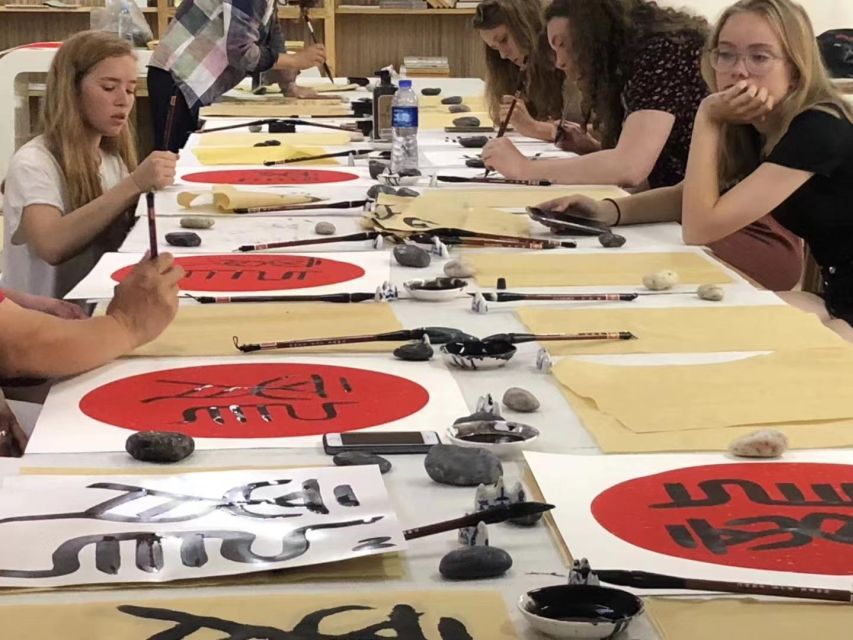
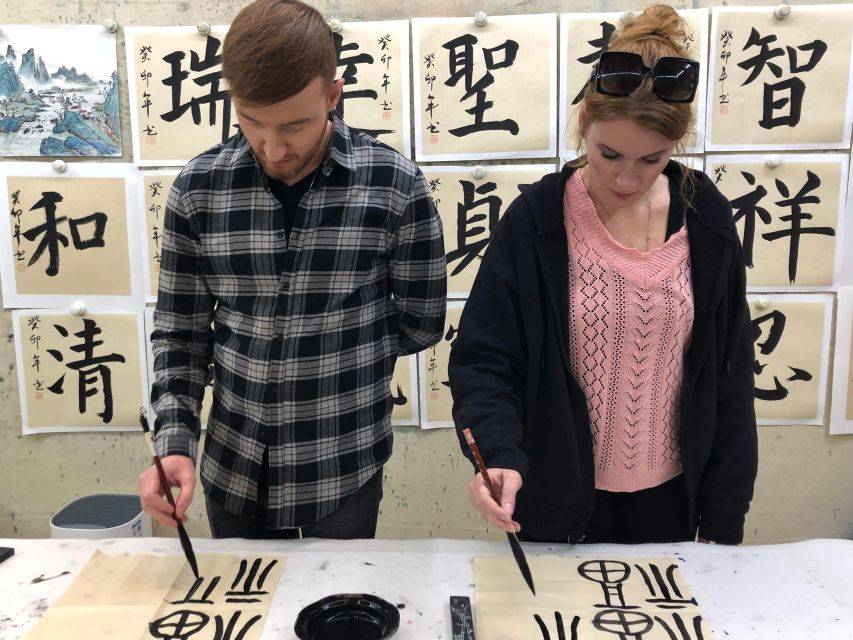
Your instructor then introduces the main tools: brush, ink, ink stone, and rice paper. These are not decorative extras. The brush responds to pressure, angle, and speed, while the absorbent paper records every hesitation. That is why the first simple strokes matter so much.
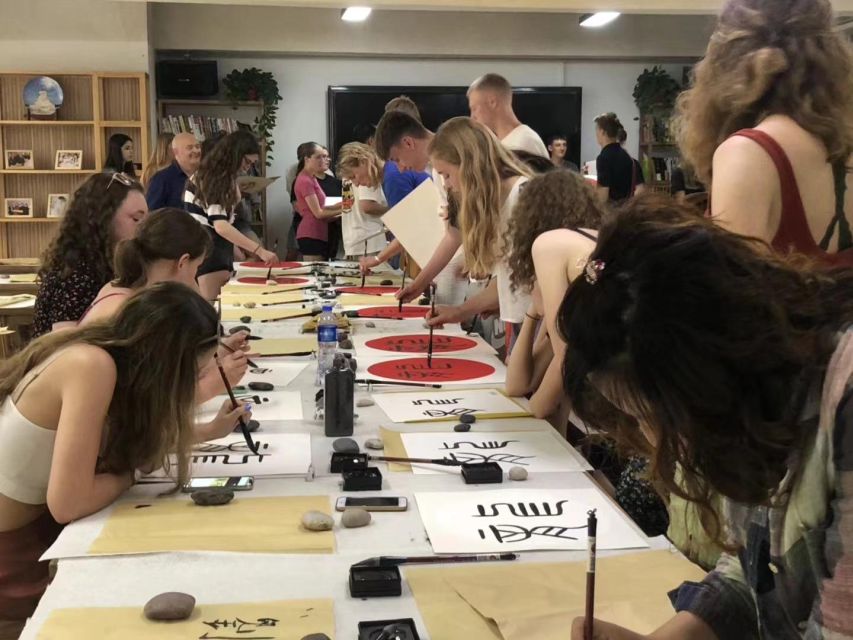
You are shown how to hold the brush and how to prepare your hand with basic exercises. The early practice may look repetitive, but it gives you a feel for the brush before you attempt a full character. Several participants describe this part as calming, especially when the teacher corrects small changes in hand position and stroke direction.
You should not expect to produce professional calligraphy in an hour. You can expect to understand why the strokes look the way they do and to make visible progress from the first attempt. That is a fair goal for a short cultural class.
Four styles and the meaning behind the characters
The lesson introduces different forms of Chinese calligraphy, including regular script, running script, cursive script, and seal script. You may not produce examples in every style during a short session, but seeing the differences helps you understand the range of the art.
Regular script is the clearest starting point for beginners because each character is more structured. Running and cursive styles use faster, more connected movement, while seal script has an older, more formal appearance. The point is not to memorize these labels. The point is to see how the same written language can change in pace, shape, and feeling.
Your teacher also explains the meaning of selected characters. This gives the finished work more weight. You are not merely copying an attractive symbol. You are learning what you are writing and why a particular character can carry an idea such as good fortune, harmony, or a shared human value.
One family created a wall decoration featuring the character fu, associated with good fortune. The teacher also shared the Confucian saying One World One Heart. Details like these help connect the brushwork with Chinese thought and custom.
If you are choosing characters for your final piece, ask for the meaning before you begin. That small step makes the finished artwork personal and helps you avoid taking home a character you cannot explain.
From practice strokes to a finished piece
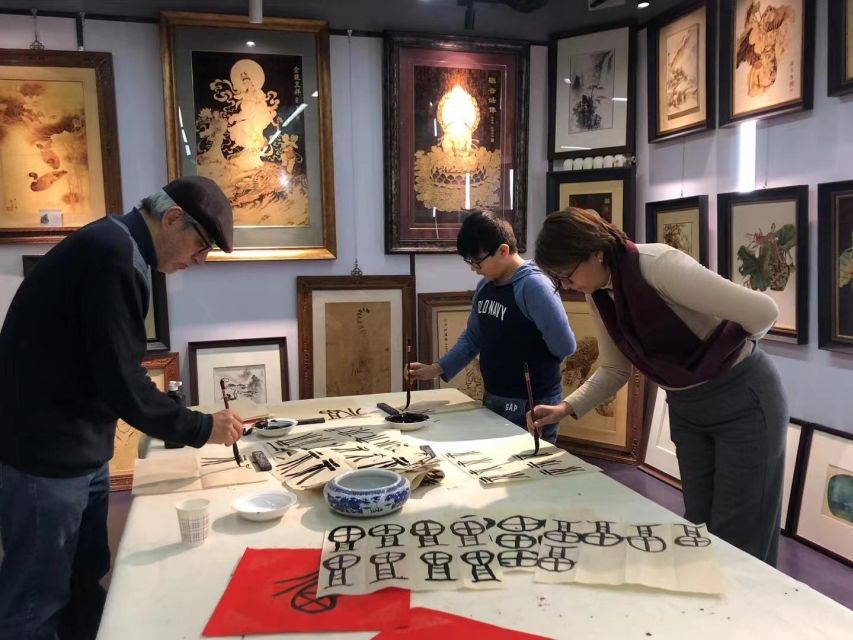
Once you have tried the basic movements, the teacher guides you toward a more complete composition. You work on the shape and spacing of the character, then refine the pressure and rhythm of each stroke.
Balance matters. A character can look crowded if the strokes are pushed too close together, or weak if the lines are too faint. Rhythm matters too. Calligraphy is not made from identical mechanical marks. The brush should move with a controlled sense of flow.
The teacher watches your work and makes adjustments. This personal correction is one of the strongest reasons to choose a class over a self-guided souvenir activity. Beginners often know that something looks wrong but cannot see why. A teacher can point to the angle, pressure, or order of a stroke and let you try again.
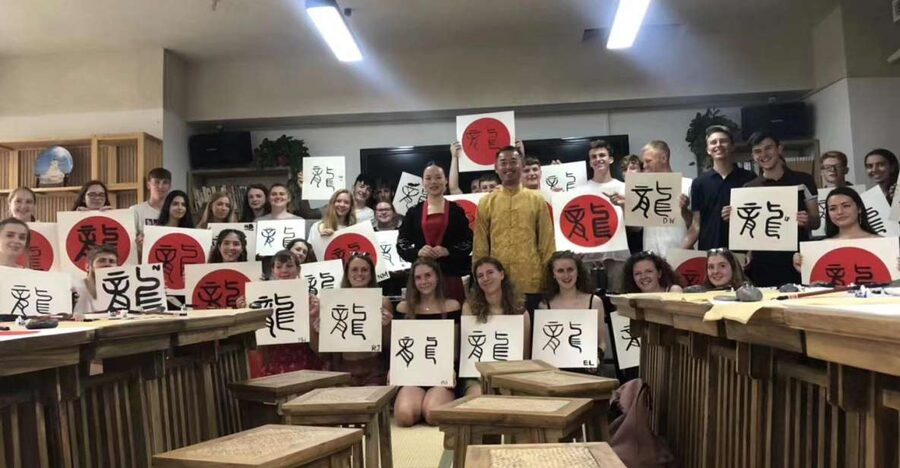
Your final piece may be a simple character or a small composition. Some participants have taken home a wall decoration, and one person also received paintings and pencils. Supplies for use during the lesson are included. The information does not promise a specific souvenir package for every booking, so consider the artwork itself the main take-home result.
The class is not designed as a formal qualification or long course. It is a compact introduction that lets you practice, receive help, and finish something you can keep.
Same country, a completely different kind of day:
- From Beijing: Mutianyu Great Wall Tours with Options
★ 4.9 · 9,216 reviews - Beijing: Forbidden City Tour(Group/Private)-Tickets Included
★ 4.8 · 7,974 reviews - Beijing: T-Square & Forbidden City Group or Private Tour
★ 4.8 · 4,446 reviews - Beijing: Mutianyu Great Wall Daily Tour with Ticket & Lunch
★ 5.0 · 3,056 reviews
Why the quiet pace works
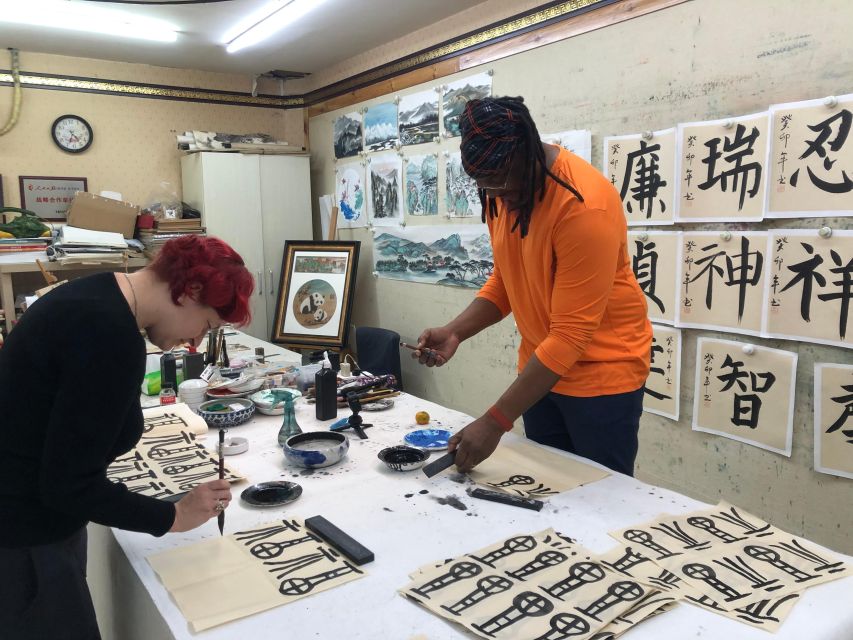
Beijing can be loud, crowded, and fast. Calligraphy asks you to do the opposite. You slow your breathing, repeat a stroke, and pay attention to the tip of the brush.
Several instructors are praised for patience and warmth. Richard is repeatedly singled out as an encouraging teacher, while David is described as kind and clear in his explanations. Li has also led a well-received session. The teacher assigned to your class may vary, but the activity is conducted in English.
Tea and small snacks have been offered in some sessions, adding to the relaxed mood. They are a pleasant touch, but they should not be treated as a guaranteed part of every booking because they are not listed among the formal inclusions.
The meditative side of the class is not just a marketing idea. Repeating strokes really can settle you, especially if you stop worrying about making every mark perfect. An 11-year-old found the activity enjoyable, and adults have described the repetition as peaceful. That makes this a useful break for families who need a slower hour between major sightseeing stops.
Still, this is not a silent meditation session. You will be listening, asking questions, watching demonstrations, and practicing. The calm comes from the focused work.
Thirty minutes or one hour?
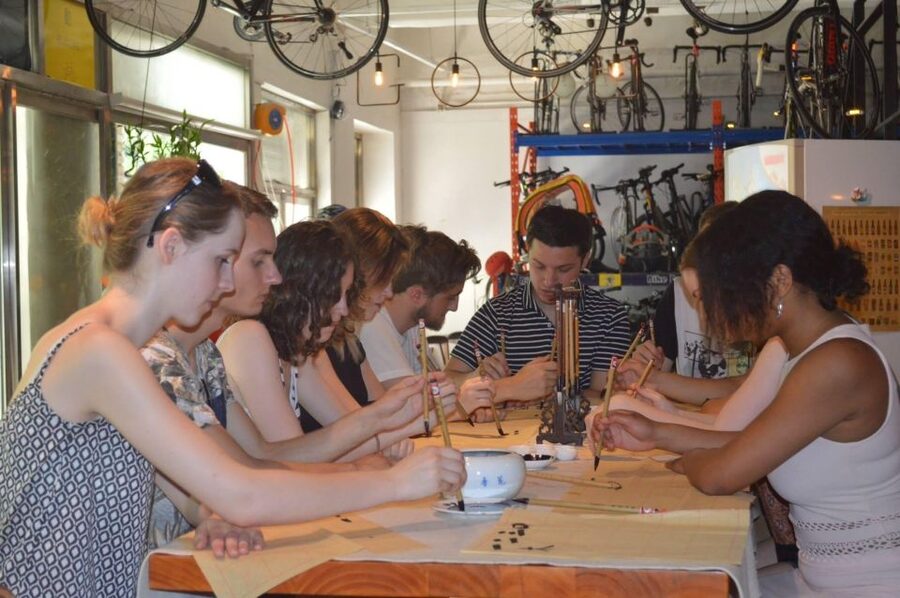
The shorter class works if you want a quick cultural introduction, have a tight schedule, or are fitting the activity around other Wangfujing plans. You can learn the basic brush grip, try several strokes, and gain a first sense of the art.
I would choose the one-hour class for most people. The first part is spent learning the tools and hand movements. Your work improves only after several attempts, and the extra time allows the teacher to correct you before you create the final piece.
One participant specifically advised allowing at least 45 minutes to make the activity worthwhile. That is sensible. The 30-minute option is convenient, but it leaves less room for questions, repeated practice, and a careful finished character.
Families should also consider the child’s attention span. A focused older child may enjoy the full hour, especially with a meaningful character to create. Younger children may prefer the shorter session, though the information does not state a minimum age.
Starting times depend on availability, so check the schedule when booking. You can reserve and pay later, and cancellation is free up to 24 hours before the activity for a full refund.
Is $20 a good value?
At $20 per person, this is a reasonably priced cultural activity in central Beijing. The fee includes an English-speaking art teacher and the calligraphy supplies used during class. You are paying for instruction and a hands-on experience, not simply entry to a room where someone writes for you.
The value improves if you want an activity that explains context. A souvenir shop may sell calligraphy, but it will not necessarily show you how to hold the brush, build a stroke, or understand the character on the page. Here, you get a small lesson in technique and culture together.
The price does not include taxi or subway fares, personal purchases, or other expenses not listed. Since the meeting point is near a subway station and central hotels, transport costs can be kept modest if you use public transit or walk.
At 30 minutes, $20 is best seen as a quick introduction. At one hour, it feels more worthwhile because you have time to practice and produce a considered final piece. If you are already paying for several major Beijing attractions, this gives you a low-cost way to add something personal and hands-on to the day.
Who will enjoy this class most?
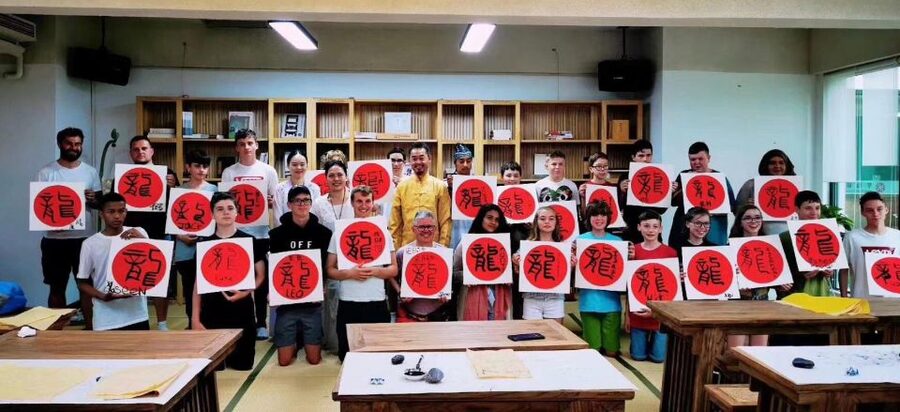
I would recommend it to first-time visitors who want more than photographs of Beijing. It gives you a direct connection with a traditional art and a character whose meaning you can remember after the trip.
It suits couples, solo visitors, families, and small groups. The teaching is aimed at beginners, so you do not need to know Chinese or have prior painting experience. English instruction makes it possible to ask about the characters and the cultural ideas behind them.
It is also a good choice for anyone looking for a break from walking. You sit, listen, practice, and leave with a keepsake. The activity may be especially welcome on a packed city itinerary.
You may want to skip it if you dislike careful repetition or are looking for a long, advanced art workshop. The class introduces the subject rather than training you to master several scripts. Also, the short option can feel rushed if you want a polished result.
Practical tips before you book
Book the one-hour option if your schedule allows. The extra practice is where the class becomes more than a quick demonstration.
Wear clothes you do not mind wearing around ink and keep your belongings manageable during the short walk from the hotel lobby. The supplied information does not state a dress code or a luggage policy, so avoid assuming that large bags or delicate clothing will be convenient.
Save the exact Chinese meeting address on your phone. Sun World Dynasty Hotel is a clear landmark, and the Chinese text can help if you need to confirm the location with a driver.
Arrive with an idea of what you want from the session. You might focus on technique, ask about Chinese philosophy, or choose a character with personal meaning. The teacher can then shape the lesson around your interest, time permitting.
If you are traveling with children, explain that the goal is careful practice rather than instant perfection. The activity rewards patience, and that is part of its appeal.
Should you book the Beijing Calligraphy Class?
Book it if you want an affordable, central, English-language activity that connects you with Chinese culture through your own hands. The strongest reasons are the patient instruction, the meaning behind the characters, and the calm break from ordinary sightseeing.
Choose one hour for the best value, especially if you hope to take home a finished wall decoration or polished character. Choose 30 minutes only when your schedule is tight or you want a simple introduction.
I would not treat this as a full art course. I would treat it as a thoughtful Beijing experience, guided by teachers such as Richard and David, that gives you a new skill, a little quiet, and a personal reminder of China.
FAQ
Where does the Beijing Calligraphy Class meet?
The meeting point is the lobby of the Sun World Dynasty Hotel at No. 50 Wangfujing Avenue, Dongcheng District, Beijing.
How do I reach the meeting point by subway?
Take Subway Line 5 to Dengshikou Station and leave through Exit A. Walk left for about two minutes, turn left at the first traffic light, then walk west for about five minutes.
Is the class close to Wangfujing?
Yes. The meeting point is on Wangfujing Avenue, and you can walk there if you are staying in the downtown Wangfujing area.
How long does the class last?
You can choose either a 30-minute class or a one-hour class when booking.
How much does the class cost?
The price is $20 per person.
Is the instructor able to teach in English?
Yes. English instruction is provided.
What calligraphy styles are introduced?
The class introduces regular script, running script, cursive script, and seal script.
Are calligraphy supplies included?
Yes. The supplies used during the class are included, including tools such as brushes, ink, ink stones, and rice paper.
Is the activity suitable for children?
Yes. The activity is described as suitable for adults and children, and an 11-year-old participant enjoyed the class.
Can I cancel for a full refund?
Yes. You can cancel up to 24 hours in advance for a full refund.
Just added around Beijing
- Private Transfer to Mutianyu Great Wall with professional driver★ 5.0 · 19 reviews
- camp on the Great Wall overnight with sunrise and sunset on the wall★ 5.0 · 11 reviews
- One day tour to downtown Tianjin from Beijing by high speed train★ 5.0 · 3 reviews
- BusDa:Ancient Great Wall &Badaling Great Wall Full-day Bus Tour★ 4.5 · 6 reviews
- ZANBUS: Trip to the Jinshanling Great Wall Departing at 7:30 AM★ 5.0 · 5 reviews
- Yuxiandu Chinese Royal Cuisine Museum with Show and Royal Banquet★ 5.0 · 4 reviews
- Private Wild Great Wall Hiking tour at Simatai (Challenging)★ 5.0 · 16 reviews
- Wild Great Wall Huanghuacheng Half Day Tour★ 5.0 · 15 reviews
Workshops, compared.

Half-Day Chengdu Cooking Class with a Local Market Visit
Read our review →
Organic Chinese Dumpling Class with Market Walk
Read our review →
Online Cooking Class Beijing Dumplings and Cuisine by Sunflowerli Renowned Chef
Read our review →
Organic Xiao Long Bao Soup Dumpling Class & Market Walk
Read our review →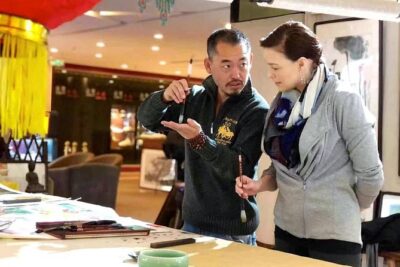
Beijing Wangfujing Calligraphy Class by Forbidden City
Read our review →
Browse the lists this tour appears in