
Reviewed · FOOD & DRINK
Tea Tasting and Pairing Concept Workshop
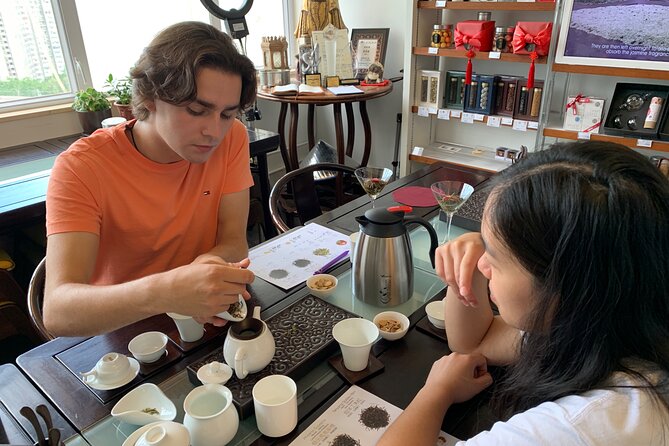
The most interesting part of this 90-minute tea workshop is that you do more than sip tea. At MingCha Tea House, tea master Vivian guides you through four premium Chinese teas, then shows how small changes in brewing and food pairing can alter what you taste. You also get hands-on practice with traditional tea ware, including how to steep and pour tea properly.
I like the clear mix of learning and fun, especially the before-and-after look at tea leaves and the chance to pair tea with dried nuts, chocolate, and flower honey toast. I also like that the session works for families and caps the group at 20 people. The main drawback is the location in Chai Wan, which may feel less convenient than a tea house in central Hong Kong, and the 90-minute format leaves little room for a slow, unhurried tasting.
Key points at a glance
- Four distinct tea styles: Taste green, scented green, red, and oolong teas selected from premium Chinese tea categories.
- Traditional gongfu brewing: Handle tea ware and learn how to steep and pour tea in the gongfu way.
- Food pairings with a purpose: Compare tea with dried nuts, chocolate, and flower honey toast.
- Vivian leads the session: The tea master is known for clear teaching, warmth, humor, and careful attention to each guest.
- A good family option: Children can take part in the tasting and hands-on elements with the family-friendly choice.
- Small enough to stay involved: The maximum group size is 20, with two start times available.
Four teas, five senses, and a better way to taste
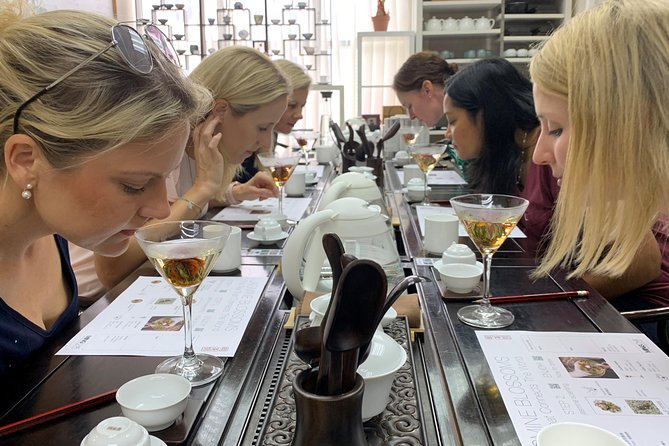
This workshop treats tea as something you can examine, smell, touch, and compare, not just drink. You will work through four types: green, scented green, red, and oolong. That spread gives you a useful first look at different tea categories without turning the session into a long technical lecture.
The tasting uses more than the liquid in your cup. You may examine the tea leaves before and after steeping, notice their changing shape and color, and compare the scent of the dry leaves with the brewed tea. This before-and-after step is one of the more useful details because it helps you see that tea leaves are not decorative ingredients. Their appearance changes as they open and release flavor.
Vivian also explains the character and processing of each tea. That matters if you want to make better choices after the workshop. Instead of simply remembering that you liked one cup, you can start connecting your preference to a tea category, aroma, or preparation style.
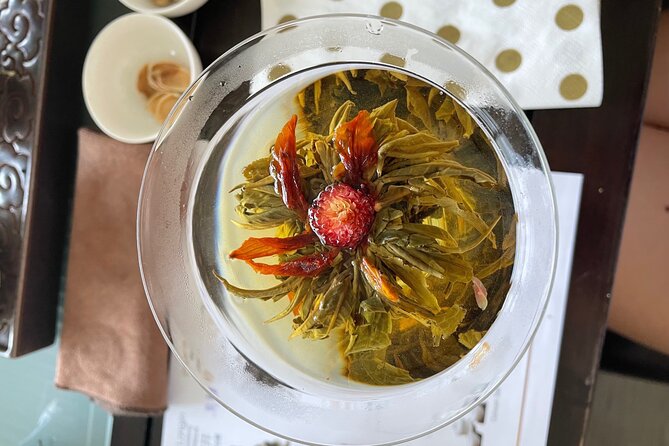
The workshop includes a special presentation of Jasmine Blossoms, which one participant described as particularly beautiful. The tea itself becomes part of the visual experience, not only a drink. If you enjoy floral tea or want a small souvenir from Hong Kong, this is also a good place to ask about taking some home. One participant brought Jasmine Blossoms back to Bangkok to share with friends and colleagues.
A few more Hong Kong trips to weigh up
- Hong Kong’s Tin Hau Hidden Eats Food Tour with 7+ Local Tastings
★ 5.0 · 352 reviews - Small-Group Hong Kong Island Food Tour
★ 5.0 · 343 reviews - Hong Kong Food Tour: Central and Sheung Wan Districts
★ 5.0 · 333 reviews
What happens when you arrive at MingCha Tea House
Your meeting point is MingCha Tea House, at B2, 15/F, Fortune Factory Building Block B, 40 Lee Chung Street in Chai Wan. The activity begins and ends at the tea house. It is near public transportation, but you should allow time to find the building and reach the 15th floor.
This is not a quick stop beside a major sightseeing landmark. Chai Wan is a practical working district, and the address inside a factory building means the arrival can feel more like finding a local business than walking into a polished tourist attraction. That may be a positive if you want an experience away from Hong Kong’s most obvious visitor routes, but it also makes the location less convenient than Central, Tsim Sha Tsui, or Causeway Bay.
Bring your mobile ticket and arrive ready to take part. The confirmation is sent within 48 hours of booking, subject to availability. Since the average booking is made 34 days ahead, it is sensible to reserve early if the workshop is important to your schedule, especially if you need a particular start time.
Two start times are offered. The exact times are not provided here, so check the available options when booking and choose one that fits your plans. At only an hour and a half, the workshop can fit neatly into a morning or afternoon, but the trip to Chai Wan should be counted as part of your planning.
Learning the gongfu way of brewing tea
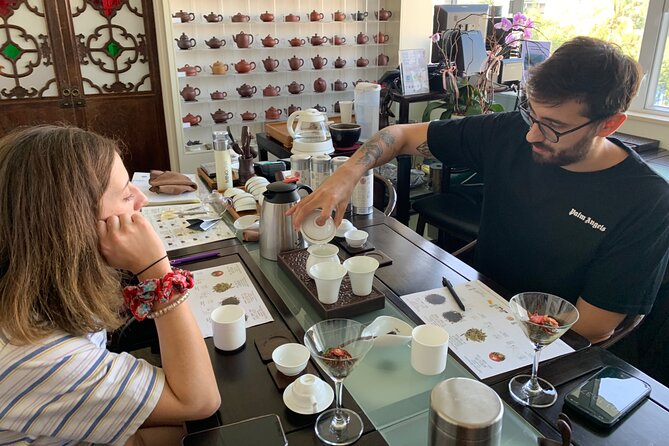
The hands-on brewing section is the practical heart of the experience. You use traditional tea ware and learn the gongfu way of preparing tea. This style pays close attention to the amount of leaf, water, steeping time, and pouring method. You are not simply watching Vivian work from a distance.
You will learn how to steep and pour tea properly, then taste the result. The method gives you a way to make small servings and compare repeated infusions or changing brewing conditions. The supplied details do not specify the exact tea ware or number of infusions, so you should not expect a fixed technical lesson on every gongfu tradition. What you can expect is a direct introduction to the tools and basic handling.
This is particularly useful for people who already drink tea at home but feel unsure about preparation. A good tea can taste flat, bitter, or overly sharp if it is brewed poorly. Learning the basic relationship between leaves, water, and time gives you something you can use long after your Hong Kong visit.
The experience also has a playful side. One participant described experimenting with tea leaves before and after brewing, along with practicing how to steep and pour. That combination helps keep the session lively, particularly for children or for anyone who might lose interest during a purely verbal presentation.
Pairing green, red, and oolong tea with food
The food pairings are dried nuts, chocolate, and flower honey toast. These are not presented as a full meal, so plan to eat beforehand if you need lunch or dinner. Their role is to show how food changes the taste of tea and how tea can soften, sharpen, or echo certain flavors.
Dried nuts give you a savory, earthy comparison. Chocolate brings sweetness and a stronger finish. Flower honey toast adds another sweet element, with a floral note that should be especially interesting beside the scented green tea and Jasmine Blossoms.
The value here is not finding one perfect pairing. It is learning to pay attention to what happens after a bite of food, then taking another sip. A tea that seems light on its own may feel different beside chocolate. An aromatic tea may seem more floral with honey toast. The session gives you a simple way to test those changes rather than relying on a printed pairing chart.
Food is also a helpful bridge for beginners. If you are tasting several unfamiliar teas, pairing gives each cup a clear point of comparison. Families can make a small game of matching the teas to the foods they prefer, while more serious tea drinkers can focus on aroma, finish, and texture.
Do not expect a large afternoon tea spread. The advertised pairings are modest, and the workshop’s main purpose is tea education. The food makes the lesson more enjoyable and memorable, but it is not a substitute for a full meal.
Same country, a completely different kind of day:
- Hong Kong: Dolphin Cruise, Big Buddha & Lantau Island Tour
★ 4.2 · 1,512 reviews - Ngong Ping 360: Cable Car Return Tickets & Combos
★ 4.6 · 1,431 reviews - Lantau Island Day Trip – Big Buddha & Tai O
★ 4.5 · 1,328 reviews - Big Bus Hong Kong Open Top Hop-On Hop-Off Sightseeing Tour
★ 4.0 · 1,077 reviews
Vivian’s teaching style and the group setting
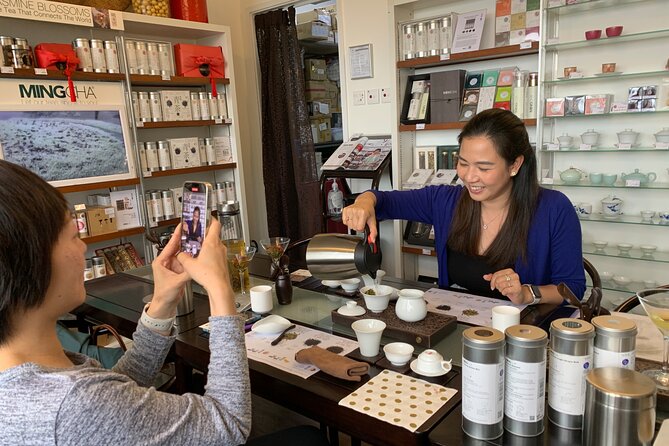
Vivian is the central personality of the workshop. The available comments repeatedly describe her as friendly, funny, passionate, kind, and skilled at explaining tea. One participant also noted that she helped arrange a taxi back to the hotel and waited until it arrived. That is a small but useful sign of personal attention, though you should not book the workshop expecting transport assistance as a standard service.
Her teaching appears to suit different levels. Beginners can learn the basic categories and preparation steps, while experienced tea drinkers can ask about processing and individual tea character. The tone is not described as formal or stiff. Expect interaction, questions, tasting, and demonstration rather than a lecture delivered from start to finish.
The group limit is 20 people. That is not a private class, but it is still manageable for a workshop with hands-on elements. Your experience may depend on how full the session is and how actively you take part. If everyone wants to practice with the tea ware, the busiest sessions could feel less personal than a small private tasting.
The family-friendly option makes this a more flexible choice than many specialist tea sessions. Children may enjoy opening the leaves, smelling the teas, trying the pairings, and copying the pouring technique. The workshop still requires attention, so very young children may not get as much from the educational side. The supplied information confirms that families can take part, but it does not specify a minimum age.
Is $65.60 good value for 90 minutes?
At $65.60 per person, this is not the cheapest way to drink tea in Hong Kong. You are paying for instruction, premium tea samples, traditional preparation, food pairings, and the time and expertise of a tea master. The value is strongest if you want to understand what you are tasting and learn a method you can repeat at home.
The price makes less sense if you only want a quick cup of tea or a large meal. You could spend less at a café or tea shop for a casual drink. This experience is aimed at people who want context and participation, not just refreshment.
I would also factor in the journey to Chai Wan. The tea house’s location may appeal to you if you like visiting working districts and seeing a different side of Hong Kong. If your itinerary is tightly packed around the harbor and central sights, the travel time may reduce the value for you.
The strongest case for booking comes from the combination of four tea categories and hands-on practice. You get a compact lesson that covers tasting, tea leaves, brewing, presentation, and pairing. For a first structured tea experience in Hong Kong, that is a fair amount to cover in 90 minutes.
Who should book this workshop?
I would recommend it to anyone curious about Chinese tea but unsure where to begin. You do not need advanced knowledge to enjoy the session, and the practical demonstrations give you a starting point for exploring tea shops and varieties on your own.
It also suits:
- Families looking for an indoor cultural activity with a clear time limit
- Tea drinkers who want to improve home brewing
- Visitors who prefer a small class over a large sightseeing tour
- People interested in food pairing and sensory tasting
- Repeat Hong Kong visitors who want an experience outside the central districts
You may want to skip it if your main goal is a substantial afternoon tea meal, a private tasting, or a convenient activity near the major harbor sights. The location and fixed 90-minute schedule require more planning than a casual tea stop.
The experience requires good weather, and if it is canceled because of poor weather, you are offered another date or a full refund. That condition is worth noting when you build your itinerary. You can cancel for a full refund up to 24 hours before the start time, but changes or cancellations inside that window are not accepted and are not refunded.
A practical way to fit it into your Hong Kong day
Because the workshop ends where it begins, you can plan another activity after returning to the tea house. Keep the schedule modest. The class itself lasts about 90 minutes, and the journey to and from Chai Wan adds extra time.
I would avoid placing a timed harbor cruise, museum entry, or airport transfer immediately afterward. The exact end time can be affected by the pace of the group, and you will want enough margin to leave the building and reach public transportation.
The best use of the workshop is as a focused half-day addition rather than something squeezed between several major sights. You get more from it if you arrive ready to taste carefully, ask questions, and compare the teas instead of treating it as a quick photo stop.
Final call: book it for learning, not just tea
You should book the Tea Tasting and Pairing Concept Workshop if you want an active introduction to Chinese tea, especially one that includes brewing practice and food comparisons. Vivian’s warm teaching style, the four tea categories, and the Jasmine Blossoms presentation give the session plenty of character.
The decision comes down to priorities. At $65.60, it is good value for a guided, hands-on lesson, but not for anyone seeking only a drink or a full meal. Accept the trip to Chai Wan, allow time for the 15th-floor meeting point, and choose one of the two start times carefully. For families, curious beginners, and serious tea drinkers who want better brewing habits, this is a worthwhile Hong Kong experience.
FAQ
How long does the tea workshop last?
The workshop lasts approximately 1 hour and 30 minutes.
Where does the experience begin and end?
It begins and ends at MingCha Tea House, B2, 15/F, Fortune Factory Building Block B, 40 Lee Chung Street, Chai Wan, Hong Kong.
Which teas will I taste?
You will taste four premium teas from selected categories: green, scented green, red, and oolong.
What food is included with the tea tasting?
The pairings include dried nuts, chocolate, and flower honey toast.
Is the workshop suitable for children?
A family-friendly option is available, allowing families to enjoy the activity with children.
What is the cancellation policy?
You can cancel at least 24 hours before the start time for a full refund. Cancellations or changes made less than 24 hours before the start time are not accepted or refunded. If poor weather causes the activity to be canceled, you will be offered another date or a full refund.
Just added around Hong Kong
- Hong Kong Airport to Hong Kong City Private Arrival Transfer★ 4.5 · 3 reviews
- Hong Kong Observation Wheel Ticket★ 5.0 · 3 reviews
- Hong Kong Palace Museum Ticket★ 5.0 · 3 reviews
- Hong Kong Peak Tram and Sky Terrace 428 Tickets (Optional)★ 3.5 · 22 reviews
- Hong Kong Private Walking Tour with a Local★ 5.0 · 6 reviews
- Hong Kong Market Walking Tour & Chinese Cooking Class★ 5.0 · 24 reviews
- Hong Kong : Must-See Attractions Walking Tour With A Guide★ 5.0 · 7 reviews
- Best Seller: VIP Lantau Tai O Tour Priority Cable Car, Big Buddha★ 4.5 · 28 reviews
Food & Drink, compared.

Authentic Local Food Tour in Central Shanghai
Read our review →
Beijing Hutong Walking Food and Beer Tour at Hidden Restaurants
Read our review →

Hong Kong’s Tin Hau Hidden Eats Food Tour with 7+ Local Tastings
Read our review →

Hong Kong Food Tour: Central and Sheung Wan Districts
Read our review →Browse the lists this tour appears in