
Reviewed · WALKING TOURS
Beijing: Peking University Campus Guided Walking Tour
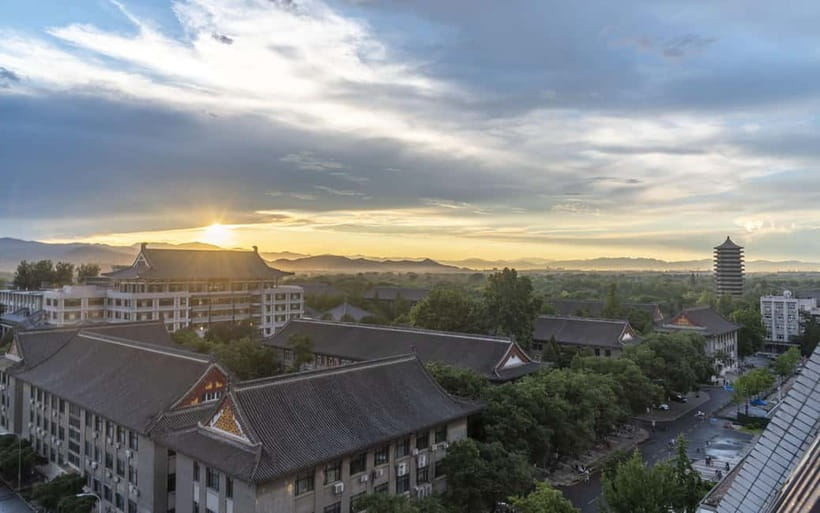
Peking University is more than a collection of old buildings and pretty paths. It is a working university with centuries of Chinese ideas in its gardens, courtyards, symbols, and campus traditions. On this two-hour walk, you see PKU through the eyes of a current student, beginning at the East Gate and ending at the West Gate.
I especially like two things here. First, the tour connects famous sights such as Boya Pagoda and Weiming Lake to the university’s past instead of treating them as photo stops. Second, a student guide can explain daily campus life in a way a standard city tour usually cannot. Henry, the guide named in the strongest recent bookings, is praised for his clear explanations, patience, and friendly manner, including with families and children.
The main drawback is the fixed two-hour limit. One visitor wanted more time to explore the campus, and that is easy to understand: PKU covers a lot of ground, and the tour can only introduce a selection of its important places. You should also expect a walking tour rather than a museum visit, so wear sensible shoes and plan your route to the East Gate.
Key points at a glance
- Walk from PKU’s East Gate to West Gate: The route gives you a clear beginning and end, with no need to find your guide inside the campus.
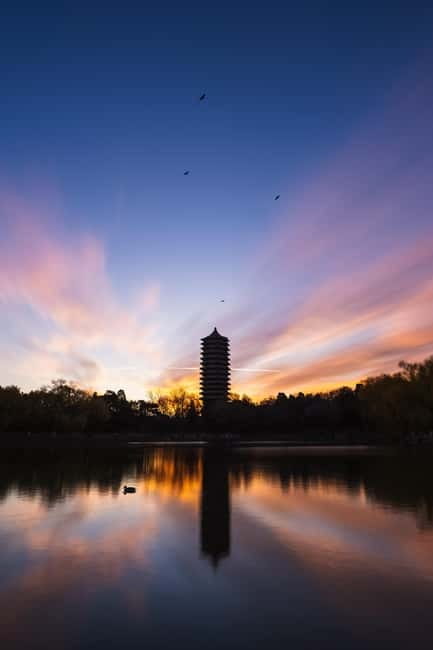
- See Boya Pagoda and Weiming Lake: These are the visual heart of the university and the best-known places for photographs.
- Hear the Yenching University story: The tour explains how PKU developed from earlier academic roots and how the campus connects with Yuanmingyuan.
- Read the campus symbols: Hua Biao pillars, Qilin statues, the Bell Pavilion, and garden layouts each carry a meaning beyond decoration.
- Meet PKU through a student’s eyes: The tour includes academic culture, famous alumni, campus traditions, and student experience.
- Small English-speaking group: With a maximum of 10 participants, you should have a better chance to hear questions and follow the guide.
Starting at the stone lion by the East Gate
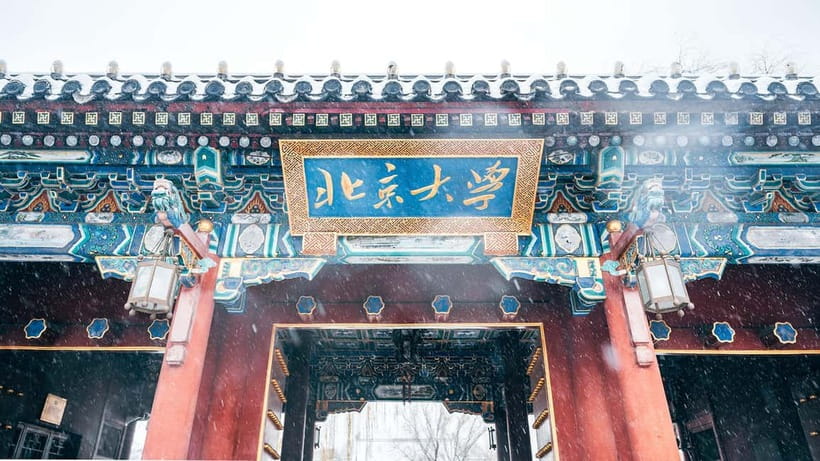
Your meeting point is the Peking University East Gate, at the stone lion on the right side when you face the entrance. This detail matters. Large university entrances can be confusing, so do not simply arrive at the gate and wait anywhere. Find the correct lion and keep your phone available in case you need to contact the guide.
The tour is conducted in English and lasts two hours. Since you finish at the West Gate, think about what comes next before you begin. The end point is useful if you want to continue around the western side of Haidian District, but it may mean a short ride or walk back to your hotel.
The group is limited to 10 people. That is a practical size for a campus walk, especially when the guide is explaining small details on a building, statue, or garden feature. You will not have the privacy of a private tour, but the group should remain small enough for conversation.
A few more Beijing trips to weigh up
- Beijing Hutong Walking Food and Beer Tour at Hidden Restaurants
★ 5.0 · 1,132 reviews - Private Beijing Walking Tour of the Forbidden City with 7 Options
★ 5.0 · 675 reviews - Forbidden City Private Walking Tour with Optional Sights
★ 5.0 · 400 reviews
Boya Pagoda and Weiming Lake: the campus postcard
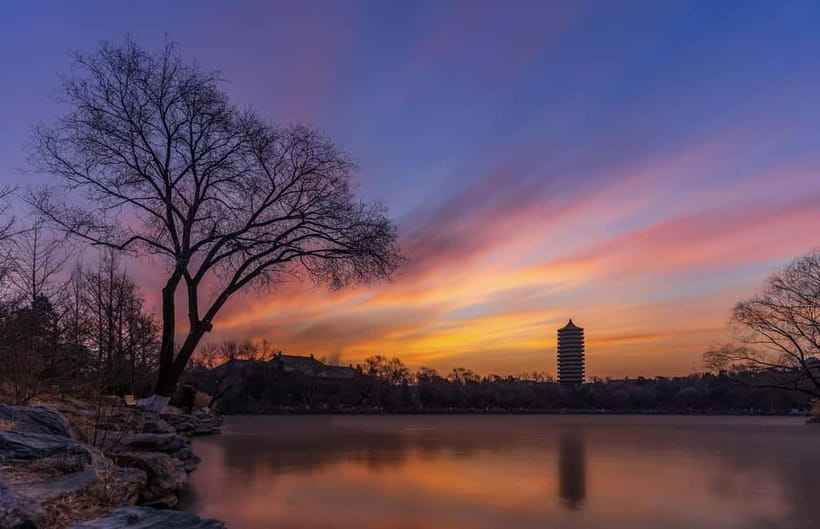
Boya Pagoda is one of PKU’s signature sights. The century-old tower rises beside Weiming Lake, giving the campus a strong visual center and a natural place to pause early in the walk.
The pagoda is not just an attractive tower. It helps you understand how PKU uses traditional Chinese design to shape a sense of place. The lake, paths, trees, and tower form a setting where nature and study belong together, rather than a campus made only of classrooms and offices.
Weiming Lake adds the slower mood. You can expect time for photographs and an explanation of why this area matters to PKU students and the university’s public image. The tour information presents the lake as a key cultural site, so your guide should help you see more than the surface view.
I like this part because it gives the tour a strong visual payoff without losing the academic story. The limitation is that a two-hour schedule cannot promise a long, unhurried stop at every landmark. If photography is your main goal, take your pictures as the group moves rather than waiting for a separate photo session.
The Bell Pavilion and symbols with a message
The ancient Bell Pavilion is another reminder that the university’s identity is expressed through objects and spaces, not only through famous names. Your guide explains the role and meaning of the pavilion as part of the larger campus story.
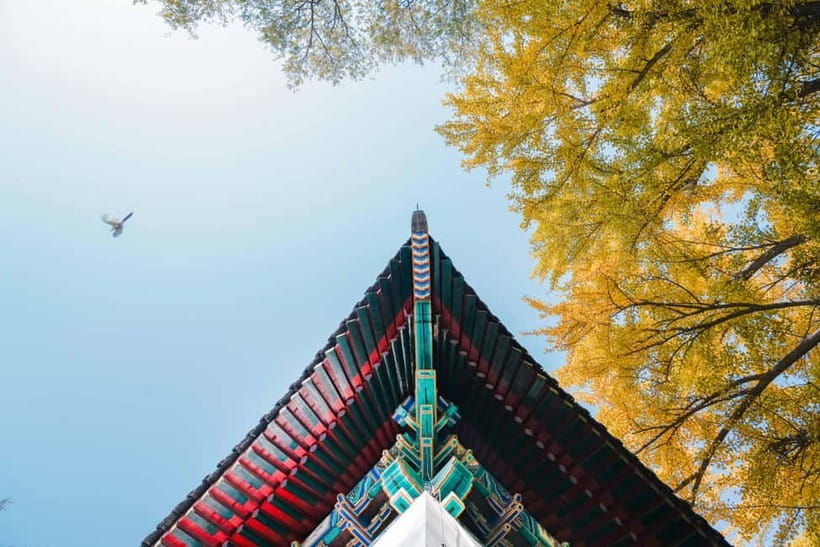
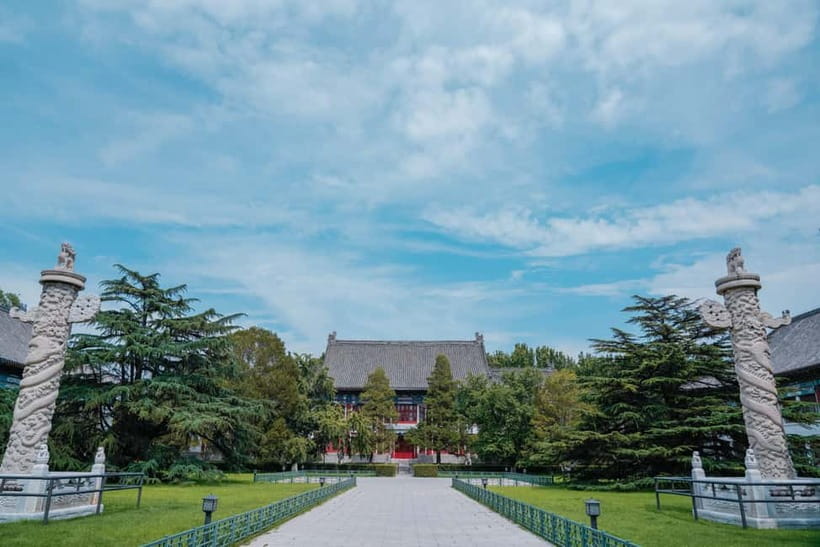
You will also see Hua Biao, or ornamental pillars, and Qilin statues. These features may look like decorative details when you first pass them. The value of having a guide is that you learn to ask why they are there and what they suggest about tradition, learning, protection, and institutional dignity.
This is where a guided walk earns its price. You could visit the campus and take photographs on your own, but the symbols would be easy to miss. The tour turns them into a set of clues about Chinese cultural ideas and PKU’s own identity.
The exact amount of time at each feature can vary. The published route includes several major sites, so you should expect interpretation while walking rather than a long lecture at each pavilion or statue.
The library and Cai Yuanpei’s legacy
Peking University Library represents the university’s academic purpose more directly than the scenic lake. The building is described as grand, and the tour includes an exploration of this important campus landmark.
Do not expect the visit to work like a public library tour with unlimited interior access. The information confirms that the library is part of the route, but it does not promise a special archive visit or extended indoor entry. Think of it as a stop that places the university’s books, research, and intellectual life at the center of the walk.
The Statue of Cai Yuanpei adds a human figure to that story. Cai Yuanpei was a revolutionary former president of PKU, and the stop gives your guide a chance to discuss his role in the university’s development.
I find this pairing useful. The library shows what the university produces, while Cai Yuanpei helps explain the values and leadership behind its academic spirit. It also keeps the tour from becoming only a parade of gardens and old structures.
Same country, a completely different kind of day:
- From Beijing: Mutianyu Great Wall Tours with Options
★ 4.9 · 9,216 reviews - Beijing: Forbidden City Tour(Group/Private)-Tickets Included
★ 4.8 · 7,974 reviews - Beijing: T-Square & Forbidden City Group or Private Tour
★ 4.8 · 4,446 reviews - Beijing: Mutianyu Great Wall Daily Tour with Ticket & Lunch
★ 5.0 · 3,056 reviews
From Yenching University to modern PKU
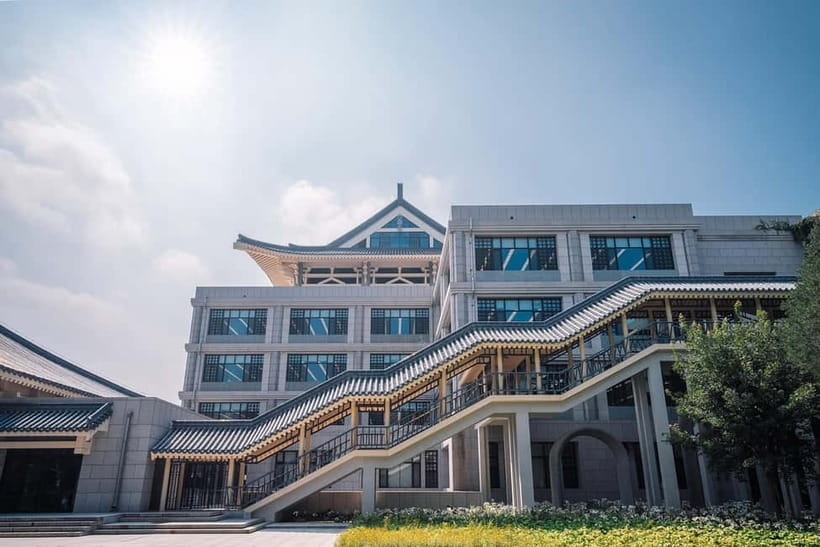
A major strength of the walk is its attention to PKU’s changing identity. You learn about the university’s roots as Yenching University, rather than receiving a simple story that begins and ends with today’s Peking University.
That background helps explain why the campus contains different layers of history and design. Your guide also discusses links with the Old Summer Palace, known as Yuanmingyuan, and the connection with Heshen, the notorious Qing Dynasty official.
These references give the campus a wider setting. PKU is not isolated from Beijing’s imperial and educational past. The tour places the university within the city’s long story of power, scholarship, design, and political change.
This part will suit you if you like context. If you only want scenic views, some of the historical explanation may feel like a lot in a short visit. The guide’s delivery matters, and Henry receives repeated praise for making explanations clear and interesting, with one booking noting that he helped a family see campus life through his eyes.
Traditional gardens designed for study
The gardens and courtyards are not filler between attractions. The tour explains the hidden meanings behind their arrangement and shows how traditional Chinese spaces can bring together nature, balance, and scholarship.
You will hear about building layouts and the way gardens are planned in relation to study. The point is not simply that the campus is attractive. It is that the setting reflects an idea of education shaped by harmony between people, buildings, water, plants, and open space.
This is one of the most rewarding parts for an architecture lover. Instead of asking only which building is oldest, you start looking at the relationship between structures and their surroundings.
I also think families can use this section well. Younger children may not follow every historical detail, but the visual clues give them something to notice: pillars, statues, courtyards, paths, and the position of buildings. One recent booking specifically praised Henry for being patient with four children.
Student life beyond the monuments
The current-student guide is the tour’s main advantage. A student can connect the official story of PKU with the practical feel of studying there, including academic culture, campus traditions, famous alumni, and present-day student experience.
That does not mean you should expect a full look inside student housing, laboratories, or every daily routine. The confirmed route centers on landmarks and cultural sites. Still, the student perspective can make the campus feel less like a formal monument and more like a place where people study, eat, meet, and build their future.
One person who booked with Henry was invited to eat in the school cafeteria after the formal tour. That invitation appears to have been an individual extra rather than a promised part of the package, so do not count on a cafeteria meal being included. Food and drinks are not part of the price.
This distinction is important. You pay for the two-hour guided walk, not lunch or transportation. If you want to eat on campus, ask the guide what is possible, but treat it as separate from the booked activity.
What $39 buys you
The price is $39 per person. For a self-guided campus visit, that may seem high at first, especially if you mainly want to photograph the lake and pagoda. The value comes from the explanation, the student perspective, and the ability to connect small cultural details with the larger story of PKU.
You are paying for a live English guide, two hours of walking, access to a small group of up to 10 people, and a planned route through key landmarks. That is a fairer comparison than measuring the cost against a free stroll.
I would book it if you care about Chinese architecture, university culture, education, or Beijing’s modern intellectual story. It is also useful for a future student who wants a first look at PKU’s atmosphere.
I would skip it if you need a relaxed, photo-only outing or if your budget is very tight. You can see some of the same exterior sights without paying for interpretation, although you will lose the historical links and campus explanations that give the visit its point.
The price also makes more sense when you are visiting Beijing for a short time. Two hours is long enough to give the university shape in your mind without taking up a whole day. Transportation to and from PKU is not included, so add that cost and travel time when planning.
Walking comfort, timing, and group expectations
Wear comfortable shoes. The route covers the campus on foot, and the activity includes enough landmarks that you should not plan to do it in dress shoes or uncomfortable sandals.
Bring a camera, but keep it ready while walking. Boya Pagoda, Weiming Lake, the Bell Pavilion, the Hua Biao pillars, Qilin statues, the library, and Cai Yuanpei’s statue all offer different kinds of photographs.
Starting times vary, so check availability when you choose your date. The tour is in English, and the small group format should help if you want to ask about a building or tradition.
The 5 out of 5 rating is based on nine reviews, with special praise for Henry’s friendliness, clarity, patience, and professional manner. That is encouraging, but you should still remember that guide performance is part of the value of this activity. If Henry is assigned to your group, the feedback gives you a good reason to expect an engaging host, but the experience remains a live tour rather than a fixed audio program.
Free cancellation is available until 24 hours before the activity for a full refund. You can also reserve now and pay later, which helps if your Beijing schedule is still shifting.
Who should book the PKU walk?
I recommend this tour most strongly to history and architecture fans, families curious about education in China, and visitors who want a different side of Beijing beyond imperial palaces and major shopping streets.
It also suits anyone considering PKU as a future school. You will not receive an admissions briefing, but you can see the campus, hear about student life, and ask a current student questions within the scope of the walk.
The tour is less suitable for visitors who cannot comfortably walk for two hours or who want guaranteed indoor access to every building. The listed experience focuses on outdoor landmarks and cultural sites, with the library included as a major stop but without a promise of special interior access.
Should you book this Peking University tour?
Book it if you want the meaning behind PKU’s scenery. Boya Pagoda and Weiming Lake provide the pictures, but the student guide, the Yenching University connection, Cai Yuanpei, traditional garden design, and campus traditions provide the substance.
At $39, the tour is not the cheapest way to see a university. It is a sensible buy when you value a clear English explanation and a small group, especially on a first visit to Beijing.
I would choose it for a curious two-hour window in Haidian District, wear comfortable shoes, meet carefully at the East Gate stone lion, and keep some flexibility after the tour at the West Gate. If you want a personal introduction to China’s academic world rather than another pass by a famous sight, this is a strong choice.
FAQ
How long is the Peking University campus tour?
The guided walking tour lasts two hours.
Where does the tour begin?
It begins at Peking University East Gate. Meet at the stone lion on the right side when facing the gate entrance.
Where does the tour finish?
The walk finishes at Peking University West Gate.
Is the tour conducted in English?
Yes. The tour includes a live English-speaking guide.
What landmarks are included?
The route includes Boya Pagoda, Weiming Lake, the Bell Pavilion, Hua Biao ornamental pillars, Qilin statues, Peking University Library, the Statue of Cai Yuanpei, and other campus sites.
What is included in the $39 price?
The price includes the two-hour guided walk, visits to historical and cultural sites, stories about PKU’s past, and insights into student life. Food, drinks, and transportation to and from the university are not included.
Just added around Beijing
- Private Transfer to Mutianyu Great Wall with professional driver★ 5.0 · 19 reviews
- camp on the Great Wall overnight with sunrise and sunset on the wall★ 5.0 · 11 reviews
- One day tour to downtown Tianjin from Beijing by high speed train★ 5.0 · 3 reviews
- BusDa:Ancient Great Wall &Badaling Great Wall Full-day Bus Tour★ 4.5 · 6 reviews
- ZANBUS: Trip to the Jinshanling Great Wall Departing at 7:30 AM★ 5.0 · 5 reviews
- Yuxiandu Chinese Royal Cuisine Museum with Show and Royal Banquet★ 5.0 · 4 reviews
- Private Wild Great Wall Hiking tour at Simatai (Challenging)★ 5.0 · 16 reviews
- Wild Great Wall Huanghuacheng Half Day Tour★ 5.0 · 15 reviews
Walking Tours, compared.

Beijing Hutong Walking Food and Beer Tour at Hidden Restaurants
Read our review →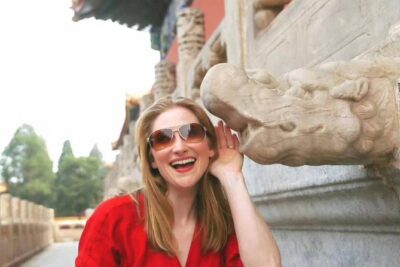
Private Beijing Walking Tour of the Forbidden City with 7 Options
Read our review →
Dark Side of Hong Kong – Kowloon Caged Homes Walking Tour
Read our review →
Forbidden City Private Walking Tour with Optional Sights
Read our review →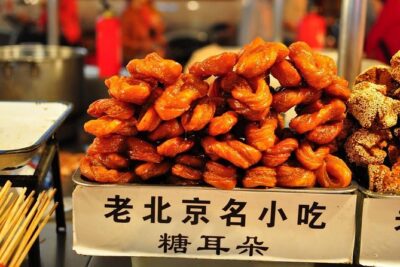
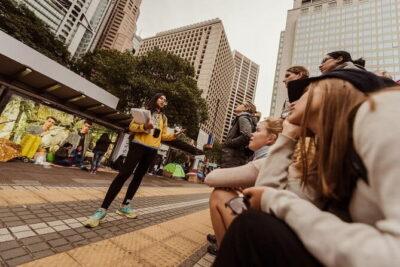
Introduction to Hong Kong: Central Tip Based Walking Tour
Read our review →
Shanghai Highlights Walking Tour With A Real Local
Read our review →Browse the lists this tour appears in