
Reviewed · WORKSHOPS
Beijing Hands-On Culture Tour: Tea, Instrument, Calligraphy
The best part of this Beijing experience is that you do not sit in a chair while somebody else performs Chinese culture at you. You brew tea, pluck the strings of a guqin, hold a real brush, and try on Hanfu. Hands-on time gives the visit more staying power than a quick stage show.
I like the way the activities balance quiet focus with family fun. The tea ritual slows everyone down, while the guqin lesson gives you a clear, memorable task. I also like the small group size, capped at 10, and the English guidance from cultural tutors such as Sylvia, who helped one family find the art center from the metro.
The main consideration is timing. The experience is advertised as three hours, while the core cultural program is described as about 2.5 hours. It is still good value at $15, but allow the full three hours, plus time to reach the venue yourself.
Key points before you book
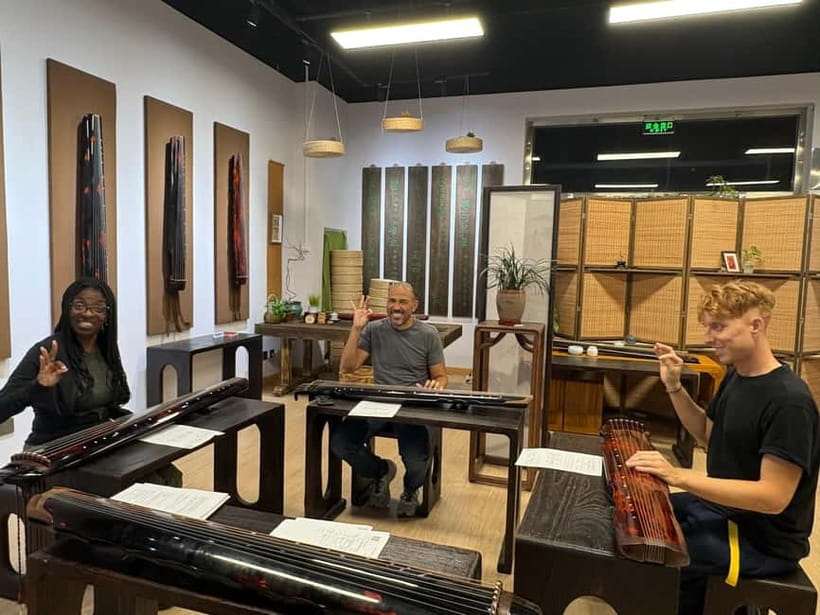
- Play a complete guqin melody: You receive step-by-step instruction rather than only watching a demonstration.
- Taste three Chinese teas: Brew red, green, and floral teas while learning a six-step tea ritual.
- Create your own calligraphy: Use brush and ink to write your name or a word such as peace or blessing.
- Wear Hanfu for photographs: Traditional clothing and a photo session turn the lesson into a personal keepsake.
- Keep the group small: No more than 10 participants makes it easier to ask questions and receive help.
- Pay little for a lot of activity: At $15 per person, tea, classes, Hanfu rental, photos, and souvenirs are included.
Why this small Beijing class works
Beijing has plenty of grand sights, but its cultural traditions can be harder to approach. You can admire temple roofs and palace halls without understanding much about the tea, music, writing, or rituals connected to daily life. This class offers a practical bridge.
You move through several art forms in one visit. The result is not a specialist lesson in any single subject. Instead, you get a compact introduction to how Chinese culture uses taste, sound, movement, clothing, and written symbols to express ideas.
That mix makes the experience useful early in a Beijing stay. You can learn a few cultural reference points before visiting other sites, then recognize the meaning behind tea service, calligraphy, traditional dress, or classical music later in your trip.
The setting also matters. You are inside a certified private art center rather than managing a large public attraction. The air-conditioned room gives you a calm place to concentrate, which is welcome during Beijing’s hot months and useful for anyone who wants a break from crowded streets.
A few more Beijing trips to weigh up
- Beijing Calligraphy Class
★ 4.9 · 112 reviews - Chinese Calligraphy Class for Small Group
★ 5.0 · 104 reviews - Beijing: Dumpling Making Workshop with Meal and Tea
★ 4.7 · 69 reviews
Tea ceremony: three cups and six careful steps
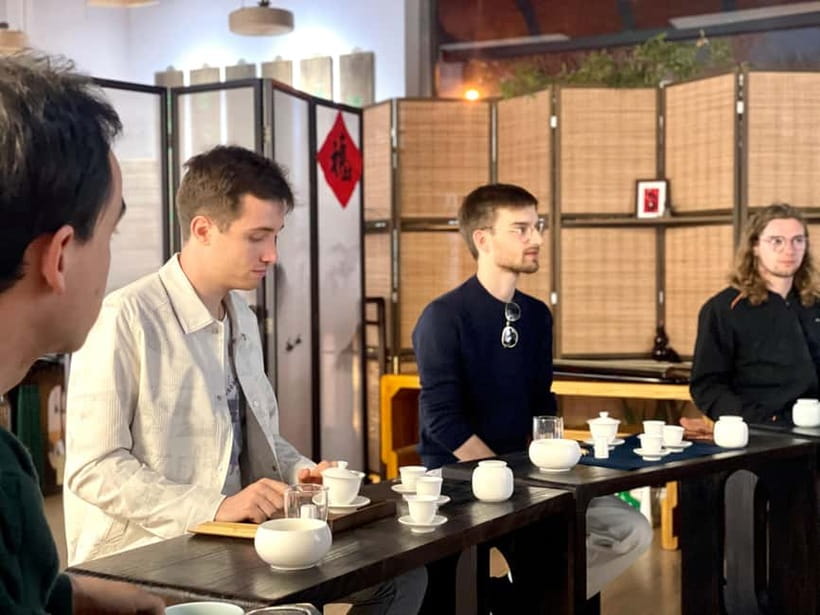
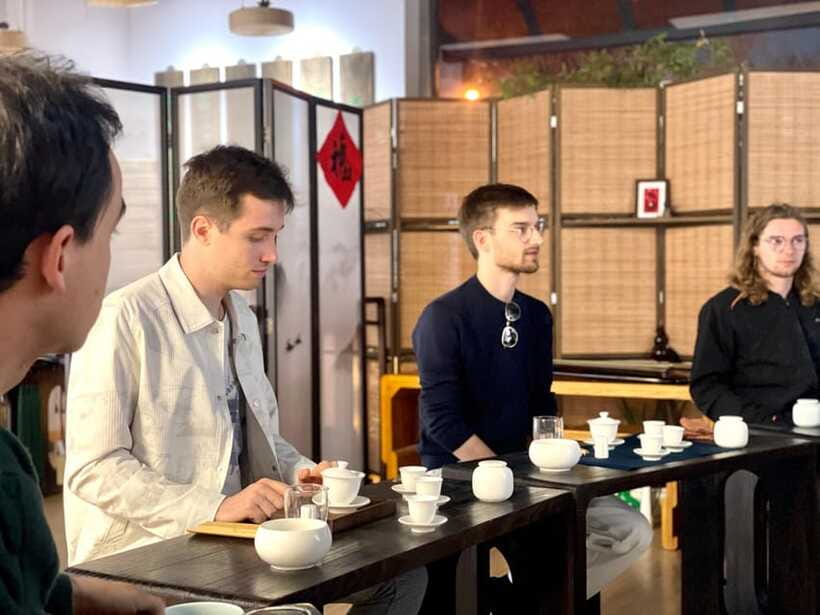
The tea portion begins with guidance from a professional tea master. You learn a six-step ritual, then brew three broad types of Chinese tea: red, green, and floral.
The value here is not simply drinking three cups. You are shown how aroma, taste, and tradition differ from one tea to another. You can pay attention to the scent before tasting, notice how the flavor changes, and see how a formal sequence turns a common drink into a social ritual.
Tea ceremony can look effortless when performed by an expert. It is less simple when you handle the process yourself. That is exactly why the lesson helps. You begin to see that the small gestures are not random decoration. They create order, care, and time around the act of serving tea.
I would especially recommend this part for families. Children can smell and taste the teas, compare favorites, and take part without needing a long attention span. The group’s age range can also work well, since younger participants have something sensory to do while adults listen to the cultural explanation.
Do not expect a full tea education or a tasting menu. The class gives you a clear introduction, not a formal qualification. If you already know Chinese tea well, you may find the basics familiar, but the hands-on ritual still gives you a more direct experience than watching a performance.
Guqin lesson: pluck the oldest sound in the room
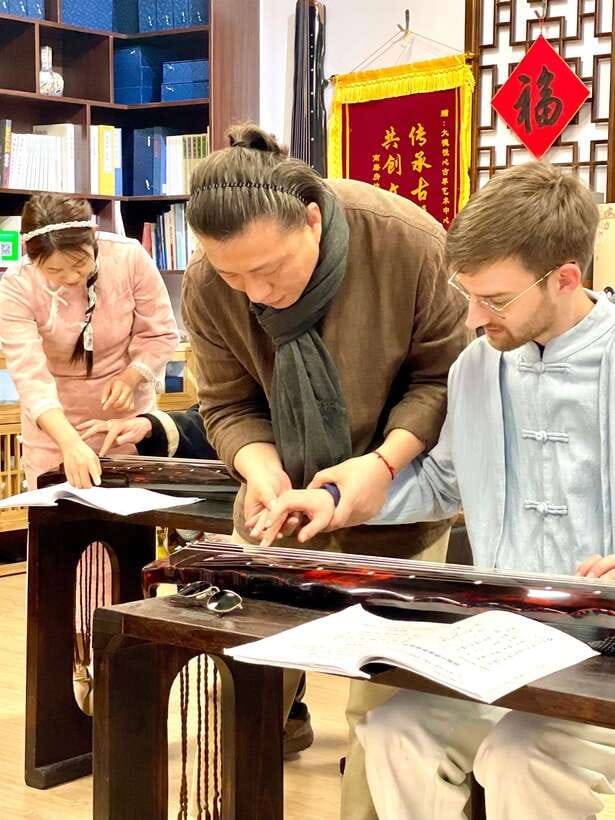
The guqin is a seven-string Chinese zither with a long cultural tradition and a soft, restrained sound. Here, the promise is not just a private concert. You are taught to play a full ancient melody yourself, with a master guiding your fingers and rhythm.
This is likely the most unusual part of the program. Many cultural demonstrations stop at showing you an instrument behind glass or letting you try one note. The guqin lesson asks you to participate. Even a simple melody can give you a feel for the instrument’s spacing, touch, and quiet tone.
The lesson is suitable for beginners because you are not expected to arrive with musical training. The instructor works step by step, and the small group limit should make it easier to follow along. You may not leave ready for a concert hall, but you can leave knowing how it feels to make a short piece of Chinese music.
The guqin’s sound is mellow rather than loud or flashy. That makes this a calm contrast to the more visual Hanfu and photography session. It also gives the class a sense of place. You are not learning a generic craft activity, but trying an instrument that carries a special role in Chinese artistic culture.
Families should note that patience helps here. A child who enjoys trying new things may love the lesson. Someone who wants constant action may prefer the tea and calligraphy portions. The experience works best when you accept that quiet concentration is part of the fun.
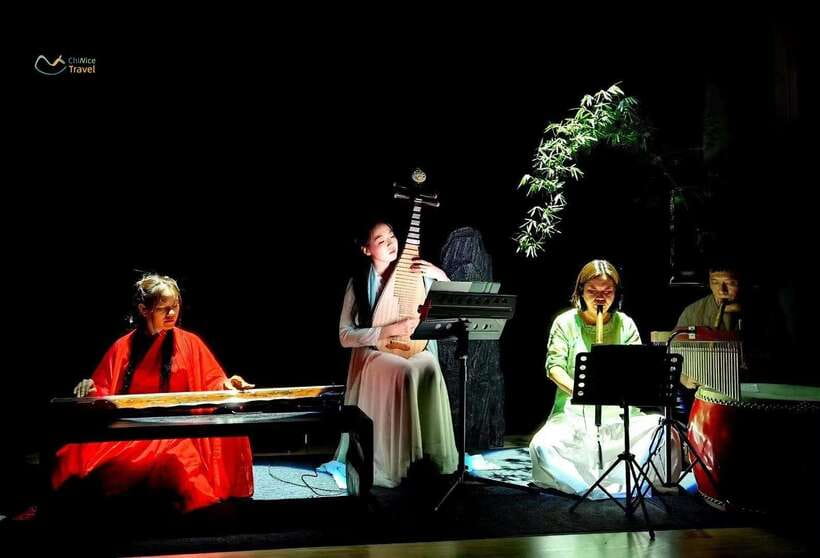
A private guqin performance is also included in the cultural program. You get to hear the instrument in capable hands before attempting it yourself, which makes the difference between expert control and beginner effort easier to appreciate.
Calligraphy with brush, ink, and meaning
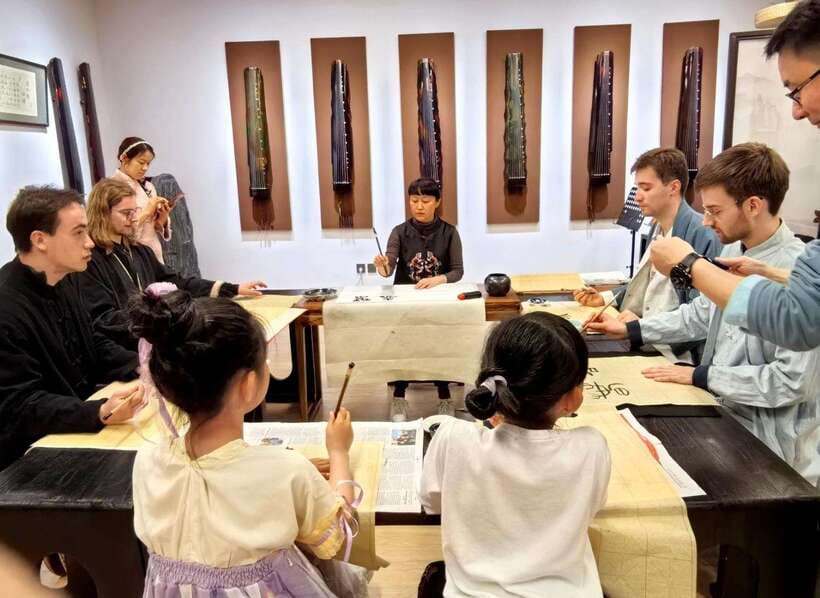
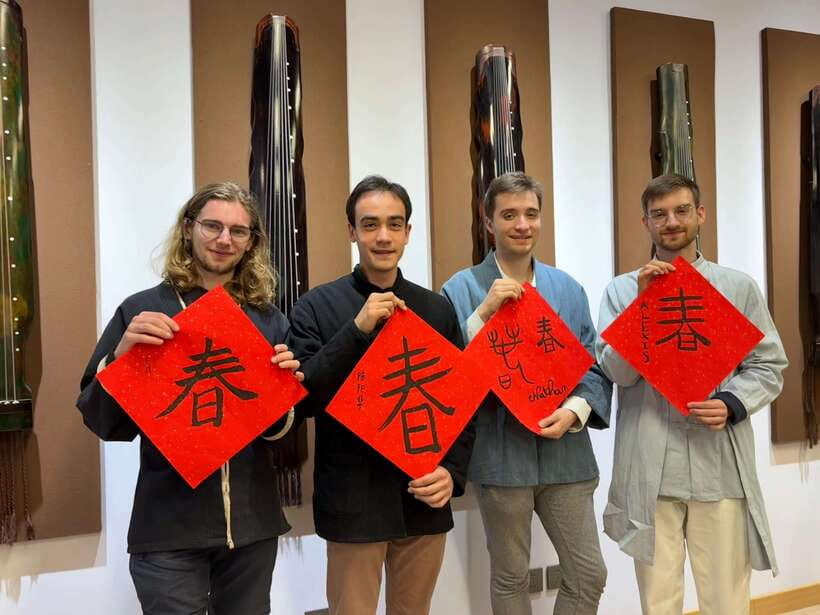
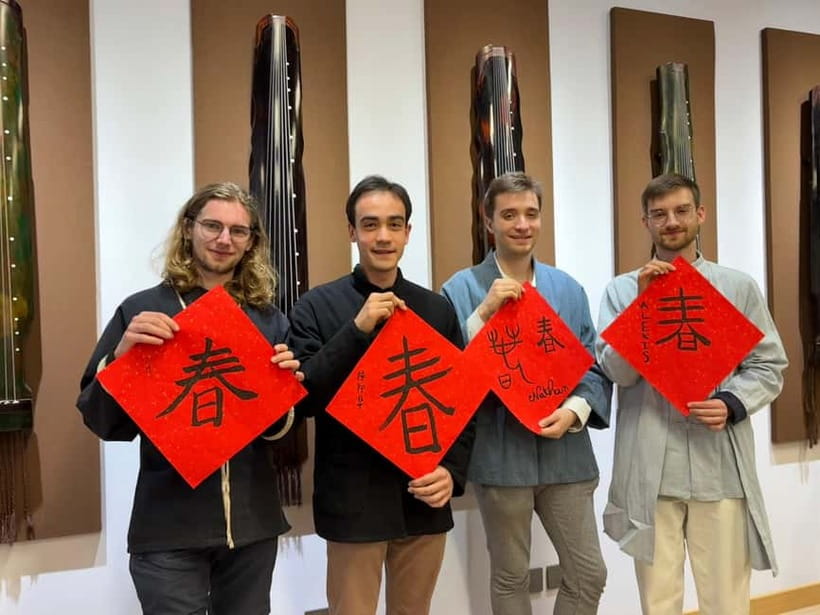
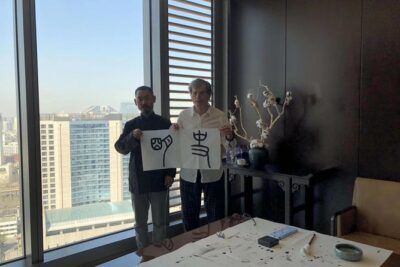
The calligraphy session gives you a brush, ink, and a chance to write your own name or a meaningful Chinese word. Suggested choices include peace and blessing.
This is more than a handwriting souvenir. The guide introduces the development of Chinese writing, then explains how characters carry meaning beyond their sound. You begin with the shape and order of the strokes, but the larger lesson is how writing can function as art.
You should not expect your first character to look like a master’s work. That is part of the appeal. Brush control takes practice, and the result will probably show that you are a beginner. Still, you create something personal rather than receiving a mass-produced trinket.
The activity has a quiet, calming quality. After tea tasting and musical instruction, sitting down with brush and ink changes the pace again. You can focus on the movement of your hand and take home the piece you make.
Writing your name can be especially useful if you are visiting China with children or teenagers. A personal character gives them a direct connection to the language. Adults may prefer a word with symbolic meaning, such as peace or blessing, and the finished work can become a simple reminder of the trip.
The class does not promise fluent reading or a full Chinese-language lesson. Its strength is more modest and more immediate: you understand a little about how characters developed, then experience the physical act of writing them.
Same country, a completely different kind of day:
- From Beijing: Mutianyu Great Wall Tours with Options
★ 4.9 · 9,216 reviews - Beijing: Forbidden City Tour(Group/Private)-Tickets Included
★ 4.8 · 7,974 reviews - Beijing: T-Square & Forbidden City Group or Private Tour
★ 4.8 · 4,446 reviews - Beijing: Mutianyu Great Wall Daily Tour with Ticket & Lunch
★ 5.0 · 3,056 reviews
Hanfu, photographs, and a souvenir with a story
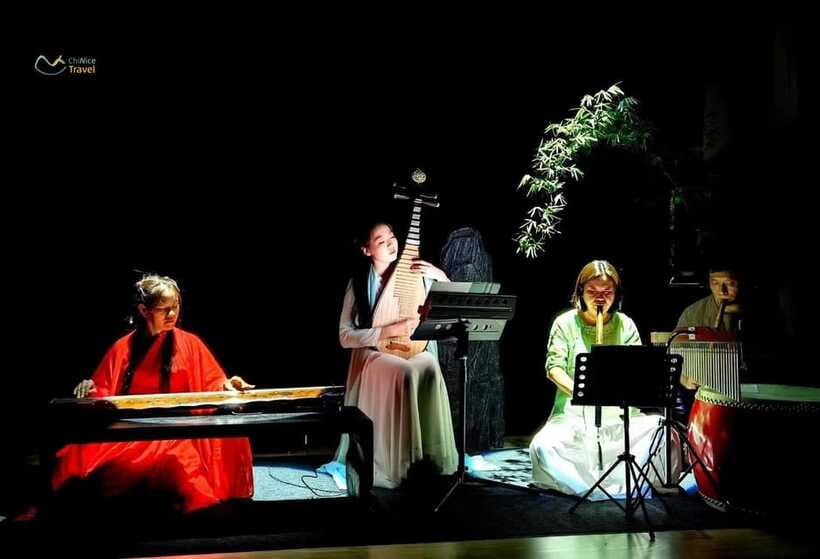
Hanfu rental is included, along with photography. Comfortable clothing is recommended because you will change into traditional dress for part of the session.
The costume element could easily feel like a quick photo prop, but it has more value when paired with the calligraphy and tea lessons. You have already learned that clothing, ritual, and presentation carry meaning, so wearing Hanfu becomes part of the wider cultural picture rather than an isolated dress-up stop.
Bring your own camera as well. The activity includes a photo shoot, and you may want extra pictures beyond the formal session. The photos give families a practical way to remember the day, especially when younger participants take part in several different activities.
Allow some flexibility around changing clothes and posing. The class contains many separate elements, and the three-hour schedule includes preparation time. Arriving 10 minutes early is sensible, particularly if you need help getting ready.
The included original souvenirs add another small personal touch. The information does not specify exactly what every participant receives, so do not book this expecting a particular item. Think of the souvenir as an added memento rather than the main reason to attend.
A welcoming format for families and mixed ages
One of the strongest features is the broad age appeal. A family of five with ages from 11 to 40 found the activities engaging, while another family included children aged nine and 14. Parents, children, and older relatives can all take part at their own level.
That matters because many cultural classes are either too childish for adults or too formal for children. This one shifts between tasting, music, writing, dress, and conversation. If one person is less interested in tea, the guqin or calligraphy may catch their attention.
The class is also useful for first-time visitors to China who want cultural context without committing to a full-day program. You get several activities in one location and do not need to spend hours moving between attractions.
English and Chinese are spoken. The cultural guide is expected to do more than translate instructions, connecting the activities with history, philosophy, and symbolism. Sylvia, also referred to as Sylvi by one participant, helped a family traveling from the Kerry Hotel navigate the train and meet them at the metro entrance. That kind of personal assistance can be helpful, but transportation to the center itself is not included.
The art center is wheelchair accessible. That is an important practical point, though you should still confirm any specific mobility needs when booking.
Getting there and managing the three-hour schedule
Transportation is not included, so you need to make your own way to the venue. One family found the train easy to use after sorting out tickets, with Sylvia meeting them at the metro entrance. This suggests that the center can be reached by public transport, but the supplied information does not give a precise station or travel time.
Arrive 10 minutes early. You may need that time to prepare for the Hanfu session and settle into the room before the first activity begins.
The booking information lists a duration of three hours, while the main description calls the cultural program 2.5 hours. Treat three hours as the safer planning figure. If you schedule a major sightseeing stop immediately afterward, leave extra time for the journey across Beijing.
A small group of no more than 10 is a useful middle ground. You are not alone with the instructor, so the session still has a social feel, but it should not have the packed-room quality of a large tour. Small groups also matter for guqin practice and calligraphy, where you may need individual correction.
The room is air-conditioned, which makes this a sensible midday option. It gives you a planned indoor pause without giving up cultural content.
Is $15 a fair price?
At $15 per person, this is unusually inexpensive for the number of included elements. You receive tea and water, instruction in tea, guqin, and calligraphy, Hanfu rental, photography, a show or performance, professional guidance, and original souvenirs.
The price is strongest if you take part in everything. Someone who only wants a tea tasting could find the session longer than needed, while someone curious about several Chinese art forms gets a good bundle for the money.
You should still account for transport, since it is not included. Meals and other drinks are also separate, and personal purchases cost extra. The class itself is not a meal replacement, nor is it a shopping visit.
The low price does not mean you should expect a long private lesson in each discipline. You are sampling several traditions in one sitting. Its value comes from the range, the chance to try each activity, and the help of an instructor who keeps the schedule moving.
Free cancellation is available up to 24 hours before the activity for a full refund. You can also reserve and pay later, which helps if your Beijing schedule depends on weather, train plans, or other timed attractions.
Who should book this Beijing experience?
I would choose this for families, first-time visitors, and anyone who wants more than sightseeing photos. It is also a good fit if you have a short stay and want several cultural introductions without booking separate classes.
It suits curious adults, too. The guqin and tea sections have enough substance to interest someone who enjoys traditional arts, while calligraphy and Hanfu keep the day relaxed and social.
You may want to skip it if you dislike guided group activities, changing clothes, or trying unfamiliar tasks in front of other people. It is not a silent museum visit. You are expected to taste, play, write, dress, and participate.
The class is also not the right choice if you want advanced instruction. Each subject receives an accessible introduction rather than hours of technical practice. Think of it as a carefully arranged first meeting with several Chinese art forms.
Should you book it?
Book this experience if you want a practical, low-cost way to connect with Chinese culture in Beijing. The guqin lesson and personal calligraphy are the strongest reasons to choose it, since both give you something to do and remember rather than something merely to watch.
The tea ritual, Hanfu photos, and small group format make it especially good for families and mixed-age groups. Plan for the full three hours, arrange your own transport, arrive early, and wear comfortable clothes.
Skip it only if you prefer independent sightseeing or want an advanced single-subject class. For most visitors seeking a welcoming cultural introduction, $15 buys a surprisingly full afternoon.
FAQ
How long does the experience last?
The booking information lists a duration of three hours. The main cultural program is also described as taking about 2.5 hours, so allow the full three hours.
What activities are included?
You learn a Chinese tea ritual, brew three types of tea, receive a guqin lesson, play an ancient melody, practice calligraphy, learn about cultural rituals, rent Hanfu, and take part in a photo session.
Can beginners play the guqin?
Yes. The session includes step-by-step guidance from a guqin master, and you are taught to play a full melody rather than only watching a demonstration.
Which teas will I try?
You brew and taste red, green, and floral Chinese teas during the tea lesson.
Is the experience available in English?
Yes. The instructors and guides speak Chinese and English.
Is transportation included?
No. You need to arrange transportation to and from the venue yourself.
Can I cancel for a refund?
You can cancel up to 24 hours in advance for a full refund. The activity also allows you to reserve now and pay later.
Just added around Beijing
- Private Transfer to Mutianyu Great Wall with professional driver★ 5.0 · 19 reviews
- camp on the Great Wall overnight with sunrise and sunset on the wall★ 5.0 · 11 reviews
- One day tour to downtown Tianjin from Beijing by high speed train★ 5.0 · 3 reviews
- Yuxiandu Chinese Royal Cuisine Museum with Show and Royal Banquet★ 5.0 · 4 reviews
- BusDa:Ancient Great Wall &Badaling Great Wall Full-day Bus Tour★ 4.5 · 6 reviews
- ZANBUS: Trip to the Jinshanling Great Wall Departing at 7:30 AM★ 5.0 · 5 reviews
- Private Wild Great Wall Hiking tour at Simatai (Challenging)★ 5.0 · 16 reviews
- Wild Great Wall Huanghuacheng Half Day Tour★ 5.0 · 15 reviews
Workshops, compared.

Half-Day Chengdu Cooking Class with a Local Market Visit
Read our review →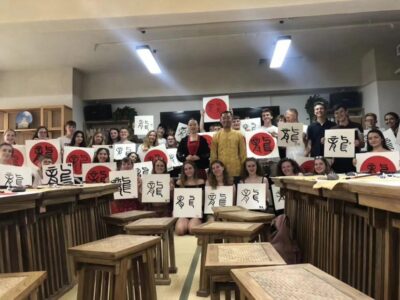
Organic Chinese Dumpling Class with Market Walk
Read our review →
Online Cooking Class Beijing Dumplings and Cuisine by Sunflowerli Renowned Chef
Read our review →
Organic Xiao Long Bao Soup Dumpling Class & Market Walk
Read our review →
Beijing Wangfujing Calligraphy Class by Forbidden City
Read our review →Browse the lists this tour appears in