
Reviewed · MUSEUMS
Beijing: China National Film Museum Entry Reservation
The China National Film Museum gives you a rare look at how Chinese cinema developed across a full century, from early film experiments to the work of major directors and artists. The museum’s 21 exhibition halls make this far more than a quick display of movie posters.
I like the low price and the chance to see both film history and the building’s large cinema facilities, including an IMAX GT hall. I also like the direct QR-code entry, which can save time at the door. The main drawback is clear: much of the exhibition text is in Mandarin, so visitors without Chinese reading skills may need to rely on the English guide and visual displays.
Key points to know before you go
- A full century of Chinese film: The main exhibition follows cinema through different periods and stages of development.
- Twenty-one exhibition halls: The displays cover around 13,000 square meters, so two hours gives you a useful visit but not a slow reading of everything.
- Six movie halls: The museum includes an IMAX GT hall and can seat more than 1,000 people across its cinemas.
- English help is available: An English textual and visual guide is included, although much of the on-site wording may still be in Mandarin.
- Use the correct QR code: The admission code sent by email or WhatsApp is separate from the code shown in the booking app.
- Bring your passport: You need it for entry, and smoking is not allowed inside.
What the China National Film Museum is really like
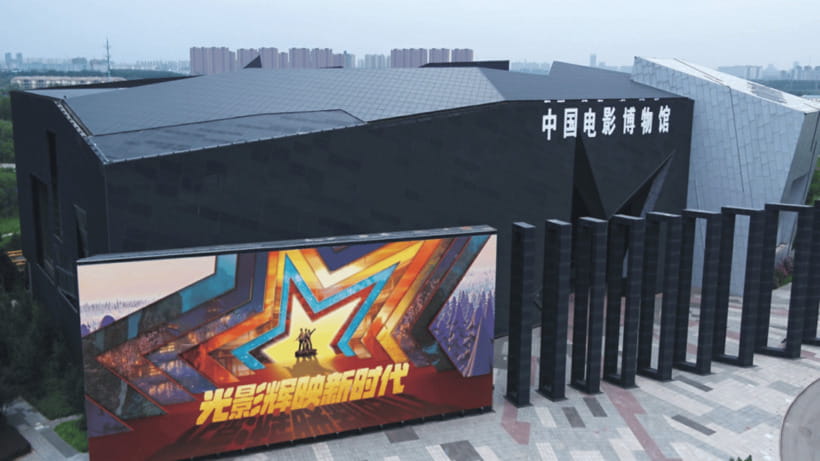
The China National Film Museum is a large public cultural institution in northern Beijing, created to preserve and explain the story of Chinese cinema. It was founded in 2005 and opened to the public in 2007.
The scale is striking. The site covers about 8.7 acres, with nearly 38,000 square meters of architectural space. That helps explain why this is not a small gallery you can squeeze into a spare half hour. You are entering a purpose-built museum with 21 exhibition halls, six movie halls, and a large amount of material spread across several floors.
I would plan on about two hours for a sensible visit. That gives you enough time to see the main displays, understand the broad sequence of Chinese film history, and pause at the more visual sections. If you read Mandarin or have a strong interest in film, you could easily want longer.
The museum is a good choice when you want something different from Beijing’s imperial sights. It connects culture, technology, politics, popular entertainment, and visual art through film. You do not need to be a devoted cinema fan to appreciate the scale of the story, but an interest in movies will make the visit more rewarding.
A few more Beijing trips to weigh up
- Beijing: Tianmen Square, Forbidden City & Royal Museum Tours
★ 4.6 · 1,288 reviews - Beijing:Jingshan Park (Palace Museum Garden) Ticket
★ 4.5 · 185 reviews - Beijing Half Day: National Museum of China In-depth Tour with Subway Transfer
★ 5.0 · 70 reviews
Starting on the first floor with A New Journey of Struggle
The first floor presents an exhibition titled The Theme Exhibition of A New Journey of Struggle. The supplied information does not give a detailed room-by-room description, so I would treat this as an opening section rather than assume it follows the same format as the main century-long display.
This first-floor exhibition helps set the tone for the museum. It places cinema within a wider public and cultural story, rather than presenting movies as isolated entertainment. You may find material that connects film with different periods of national development and public life.
If your time is limited, do not spend your entire visit reading every panel here. Use it to get your bearings, then give the second, third, and fourth floors the most attention. The main historical exhibition is the part most likely to answer the basic question: how did Chinese cinema change over time?
Following 100 years of Chinese film upstairs
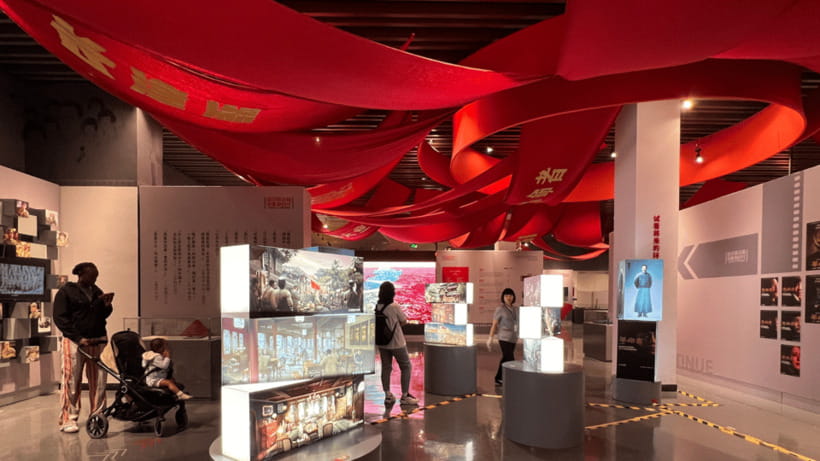
The second, third, and fourth floors hold A Century of History, A Century of Glory. This is the core of the visit. It presents Chinese films through different periods and stages, showing changes in filmmaking and highlighting the artistic achievements of many film-makers.
The value here is the sense of development. Instead of seeing one famous movie or one director in isolation, you can follow the way Chinese cinema changed across generations. The museum also looks at the process behind the finished film, revealing some of the methods and tools used to create movies.
That behind-the-scenes angle is especially useful. Film museums can sometimes become rows of famous names and attractive posters. Here, the stated focus includes the secrets of film making, so you may encounter material that explains how films were produced, shaped, and presented.
The exhibition is also a useful introduction if your knowledge of Chinese cinema is limited. You might not recognize every film-maker or title, but the displays can give you a basic framework for understanding how the industry developed. The visual material helps carry the visit when the language becomes a problem.
The Mandarin language issue and the English guide
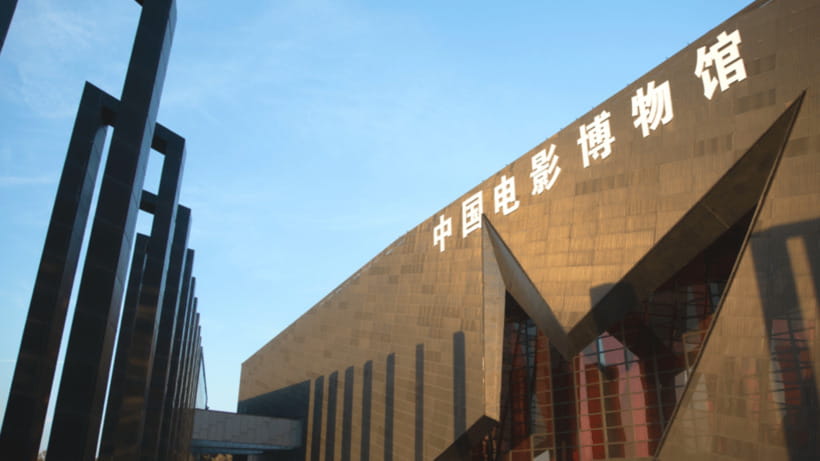
This is the most important practical warning. A recent visit report praised the exhibitions but noted that the information was all in Chinese. Another gave the same criticism, saying the descriptions were only in Mandarin.
At the same time, the admission includes an English textual and visual guide. That should give you useful support, but you should not assume that every wall panel, caption, or object label has a full English translation. The guide may help you understand the main themes while the displays provide the images, objects, and atmosphere.
I would approach the museum as a visual and historical experience, not as a place where you can expect to read every detail in English. If you need extensive written interpretation, this limitation may frustrate you. If you are comfortable taking in exhibitions through photographs, film-related objects, graphics, and a guide, the visit remains worthwhile.
The language issue also affects how long you need. Mandarin readers may want extra time for the text-heavy sections. English-speaking visitors using the supplied guide can focus on the major ideas and move more quickly through material that is difficult to translate on the spot.
Same country, a completely different kind of day:
- From Beijing: Mutianyu Great Wall Tours with Options
★ 4.9 · 9,216 reviews - Beijing: Forbidden City Tour(Group/Private)-Tickets Included
★ 4.8 · 7,974 reviews - Beijing: T-Square & Forbidden City Group or Private Tour
★ 4.8 · 4,446 reviews - Beijing: Mutianyu Great Wall Daily Tour with Ticket & Lunch
★ 5.0 · 3,056 reviews
Seeing film-making as well as film history
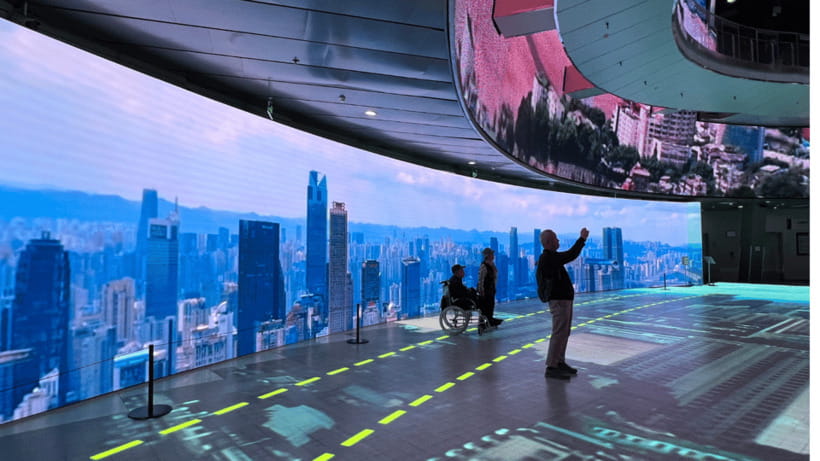
The museum’s subject is not only the finished movie. Its displays also reveal how films are made, which gives the experience a practical edge.
You can expect the exhibition to focus on the development of film across periods and stages, along with the artistic work of numerous film-makers. That combination matters. It lets you consider both the public result, the movie people see, and the creative process behind it.
I like this approach because it gives the museum more purpose than a simple hall of movie memorabilia. The story includes artistic achievement, technical development, and changing methods of production. Even if you do not know the names on display, you can still follow the larger story of how a national cinema takes shape.
The available information does not list individual objects or specific film titles, so I would not arrive expecting a guaranteed display of one particular classic. Think of the museum as a broad survey. It is designed to show the scale and development of Chinese cinema rather than focus on one director or one period alone.
The six movie halls and the IMAX GT screen
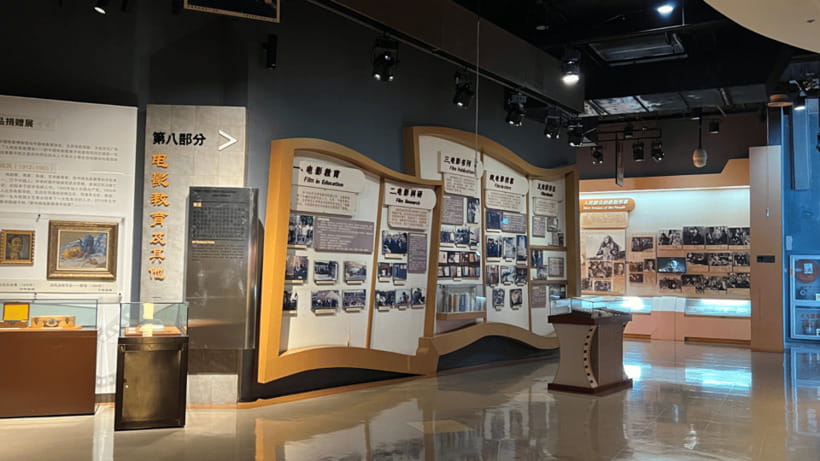
The museum has six movie halls, including an IMAX GT hall. Together, the cinemas can accommodate more than 1,000 people.
This is an important part of the building, but it does not mean a movie screening is included with your museum admission. Paid screenings cost extra, and the reservation described here covers entry to the museum rather than a film ticket.
If you want to add a screening, check the schedule and price separately. The museum visit and the cinema experience are related but different purchases. You can enjoy the exhibition without seeing a movie, or you can treat a screening as an optional extra if the timing suits you.
The IMAX GT hall is a notable feature for film fans, but the information provided does not promise a particular film, screening time, or language option. Do not book this entry expecting an automatic IMAX show. Confirm the separate cinema details first.
A surprising extra: dinosaur displays
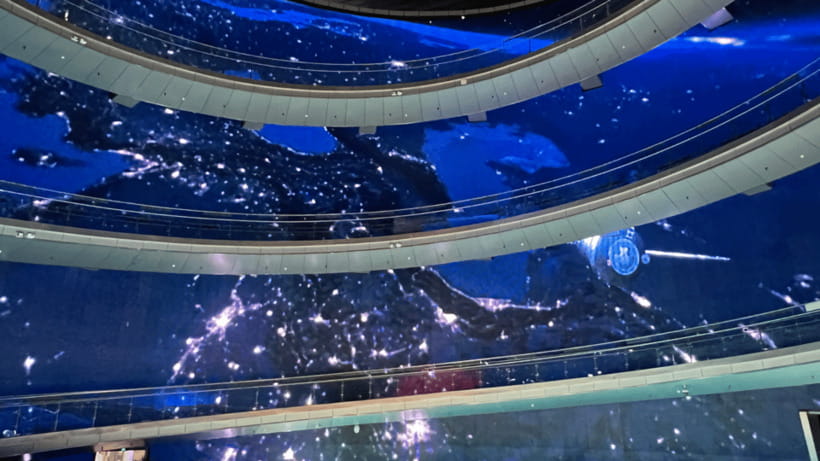
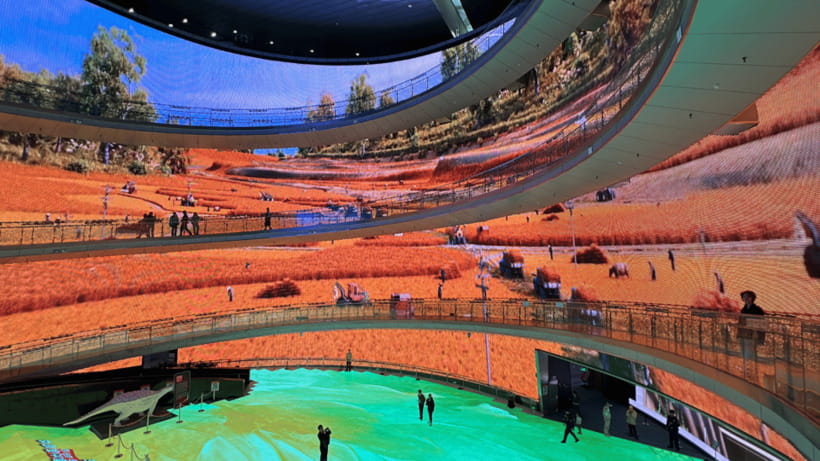
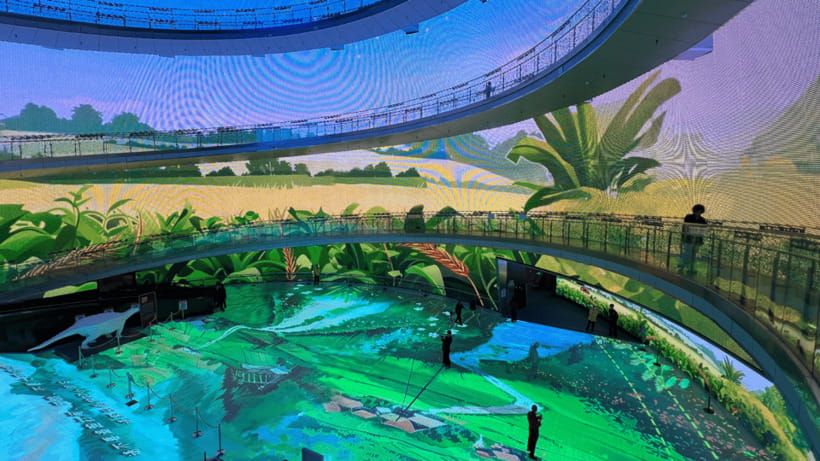
One particularly unusual detail is the mention of exhibition areas with dinosaurs. A visit report praised the entrance to these dinosaur areas as especially enjoyable.
The supplied information does not explain how large the dinosaur displays are or how they fit into the museum’s wider program. I would therefore treat them as an additional feature rather than the main reason to book. Still, they may make the arrival and opening sections more appealing if you are visiting with children or with someone who is less interested in film history.
This also adds variety to a museum that might otherwise feel heavily focused on written historical material. The dinosaur displays can offer a more immediate visual stop before or alongside the film exhibitions.
Planning two hours inside the museum
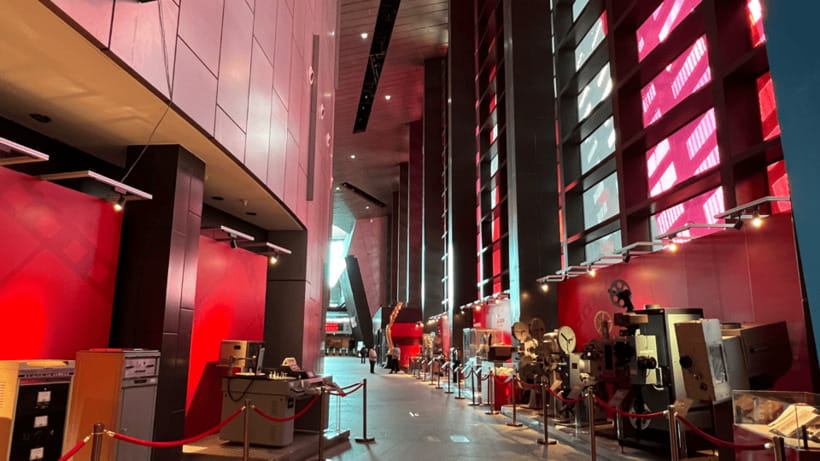
The advertised duration is two hours. That is a sensible first visit, but you should use the time with a little discipline.
I would begin with the first-floor exhibition, then move through the second, third, and fourth floors in order. Spend the most time on displays that explain changes in filmmaking and the work of individual film-makers. Use the English guide to identify the main themes, rather than trying to translate every Mandarin label.
A practical two-hour plan might look like this:
- Allow about 15 to 20 minutes for entry and orientation.
- Give roughly 20 minutes to the first-floor exhibition.
- Spend about 70 minutes on the century-long film history display.
- Keep the final 10 to 15 minutes for favorite sections, the dinosaur areas, or a look at the cinema facilities.
These timings are only a guide. If you read Chinese, you may need much longer. If you are traveling with children, the visual sections and dinosaur displays may deserve more time than the text panels.
The museum is wheelchair accessible, which is useful in a building of this size. You are not dealing with a small, compact exhibition where everything is visible from one room. The large floor area makes comfortable pacing important.
Is the $4.82 price good value?
At about $4.82 per person, this is an inexpensive cultural stop. The price includes the museum entry reservation and the English textual and visual guide. It does not include paid movie screenings, personal expenses, or a live guide.
I consider the admission good value if you are already interested in Chinese cinema, museums, or modern cultural history. You receive access to a large institution with 21 exhibition halls and six movie halls for less than the cost of many major city attractions.
The value is less certain if you need detailed English interpretation at every display. The low price does not remove the language limitation. You are paying for access and a guide, not for a private English tour or full English translation throughout the building.
There is also no live guide included. That gives you freedom to set your own pace, but you will need to make sense of the displays independently. If you prefer a guided explanation with names, dates, and context supplied as you go, this entry reservation may feel basic.
Getting through the door with the right QR code
The entry procedure has one detail you should not miss. After placing your order, you receive an e-ticket by email or WhatsApp. Use the QR code supplied there to enter the museum directly.
The QR code shown in the booking app is not the admission ticket. This distinction matters. Have the separate code ready before you arrive, and keep your passport with you because it is listed as required for entry.
The direct QR-code system is convenient once you have the correct code. It can help you skip the ticket line and avoid a paper-ticket exchange. The only real trap is assuming the app code is enough.
The museum is non-smoking. Wheelchair access is available, so the site can work for visitors who need step-free access, though the information provided does not detail the exact facilities on each floor.
Who will enjoy this museum most?
I would recommend this experience to:
- Film fans who want a broad look at Chinese cinema.
- Visitors seeking a modern cultural attraction rather than another historic monument.
- Families who may enjoy the dinosaur areas and large visual displays.
- Museum visitors comfortable exploring without a live guide.
- People with a spare two hours who want a low-cost indoor activity.
I would be more cautious if you need an English explanation for every exhibit. The included guide helps, but the Mandarin-only descriptions noted by visitors are a real consideration.
The museum also suits repeat visitors to Beijing. If you have already seen the city’s best-known imperial and religious sights, this offers a different view of Chinese culture. It is less about famous buildings and more about the way stories, technology, and artistic work reached a mass audience.
Should you book the China National Film Museum?
Book it if the idea of tracing Chinese cinema across 21 halls appeals to you, especially at a price of about $4.82. The museum gives you a large-scale cultural experience, an English guide, six cinemas, and a chance to see artistic and technical sides of film-making.
Skip it if you want a fully English-language museum or a guided tour with live commentary. The Mandarin-heavy displays may limit your understanding, and the separate cost of movie screenings can change the total price.
For many visitors, the best reason to go is the combination of scale and price. You can see a major national film institution, explore a century of Chinese cinema, and decide for yourself how much time to give the displays. Just bring your passport, use the QR code sent separately by email or WhatsApp, and set realistic expectations about English text.
Free cancellation is available up to 24 hours before the visit, and you can reserve now and pay later, which is useful if your Beijing schedule is still moving around.
FAQ
How long does the China National Film Museum visit take?
The suggested duration is two hours. You may need more time if you want to read the displays carefully or explore the exhibitions at a slow pace.
What does the entry reservation include?
It includes admission to the China National Film Museum and an English textual and visual guide.
Are movie screenings included?
No. Paid movie screenings are not included in the museum entry reservation.
Does the museum have an IMAX screen?
Yes. The museum has six movie halls, including an IMAX GT hall.
Is a live guide included?
No. The reservation does not include a live guide.
Is English information available?
An English textual and visual guide is included. However, descriptions in parts of the museum may be in Mandarin, so you should not expect full English text throughout the exhibitions.
What must I bring for admission?
Bring your passport. You need to use the separate QR code sent by email or WhatsApp for entry.
Can I cancel the reservation?
Yes. You can cancel up to 24 hours in advance for a full refund. You can also reserve now and pay later.
Just added around Beijing
- Private Transfer to Mutianyu Great Wall with professional driver★ 5.0 · 19 reviews
- camp on the Great Wall overnight with sunrise and sunset on the wall★ 5.0 · 11 reviews
- One day tour to downtown Tianjin from Beijing by high speed train★ 5.0 · 3 reviews
- BusDa:Ancient Great Wall &Badaling Great Wall Full-day Bus Tour★ 4.5 · 6 reviews
- ZANBUS: Trip to the Jinshanling Great Wall Departing at 7:30 AM★ 5.0 · 5 reviews
- Yuxiandu Chinese Royal Cuisine Museum with Show and Royal Banquet★ 5.0 · 4 reviews
- Private Wild Great Wall Hiking tour at Simatai (Challenging)★ 5.0 · 16 reviews
- Wild Great Wall Huanghuacheng Half Day Tour★ 5.0 · 15 reviews
Museums, compared.

Tianmen Square, Forbidden City & Royal Museum Tours
Read our review →
Half-Day Mini Group Xian Tour to Terracotta Warriors Museum
Read our review →
Beijing:Jingshan Park (Palace Museum Garden) Ticket
Read our review →
Private Chengdu Day Tour: Giant Pandas and Jinsha Site Museum
Read our review →
Private Xi’an Tour: Terracotta Warriors, Hanyangling Museum, Cave Homes
Read our review →
Beijing Half Day: National Museum of China In-depth Tour with Subway Transfer
Read our review →
Terracotta Warriors Museum Ticket with Professional English-speaking tour guide
Read our review →Browse the lists this tour appears in