
Reviewed · WALKING TOURS
Private Walking Tour in the Former French Concession
Shanghai’s Former French Concession is best understood on foot, one tree-lined street, old apartment block, and tucked-away courtyard at a time. This private tour links grand Art Deco buildings with everyday Shanghai life, then adds the political story of modern China through the former home of Sun Yat-Sen.
I like the private format, which lets your guide adjust the pace and explain details that a large group would pass by. I also like the mix of architecture, local neighborhoods, museums, parks, and street scenes. The main drawback is that three hours is a brisk introduction, and taxi or public transport costs during the outing are paid separately.
Key points to know before you book
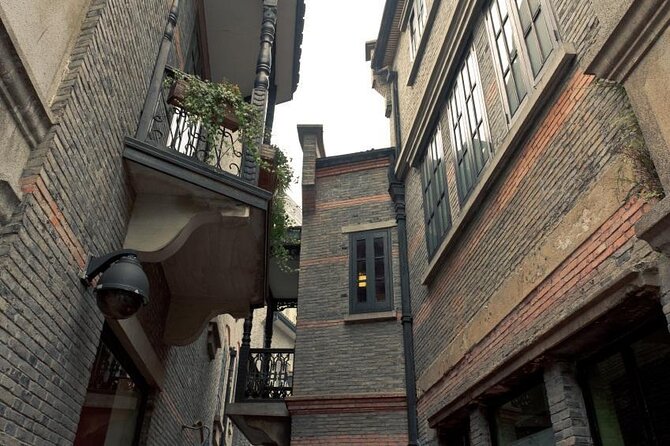
- Art Deco and French-era buildings: See the Okura Garden Hotel, Lanxin Theatre, Cathay Mansion, and King Albert Apartment.
- A history lesson with local context: Connect Shanghai’s foreign concessions, the 1930s, and China’s political changes from 1850 to 1950.
- A genuinely private walk: Your guide can slow down for questions, tailor the route, and focus on your interests.
- Several praised guides: Penny, Maggie, Kelly, and Lily are named in the feedback, with Penny receiving especially warm praise for her history and local knowledge.
- A flexible ending: Finish at Fuxing Park, continue walking independently, or have your guide arrange a taxi back to your hotel.
- A moderate physical outing: Expect at least three hours on foot, so comfortable shoes and weather-ready clothing matter.
Why the Former French Concession deserves a walking tour
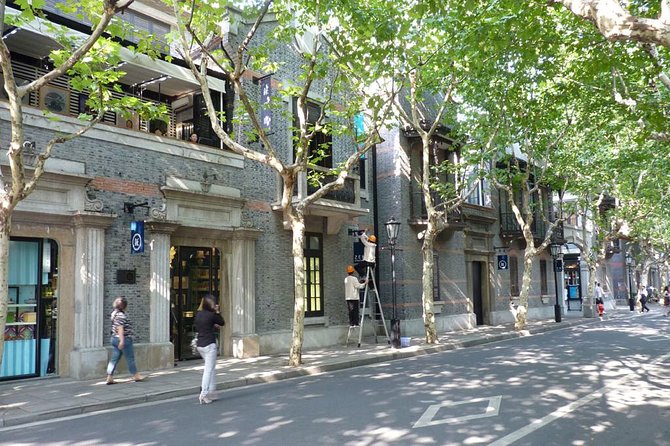
Shanghai’s Former French Concession is not a single monument. It is a large neighborhood where old villas, apartment buildings, churches, parks, shops, narrow lanes, and modern city life sit close together.
That mix is the reason I prefer a walking tour here over a quick drive past the sights. From a car, you may notice a handsome building. On foot, you can see its entrance, its balconies, the shape of the courtyard, and the way residents use the surrounding lanes.
The tour also gives you a useful time frame. Your guide discusses China and Shanghai from roughly 1850 to 1950, with attention to the foreign presence in the city, 1930s Art Deco, the lives of expatriates, the rise of modern China, and the people who shaped the country’s political story.
This is not just an architecture walk. The buildings are the starting point for conversations about who lived in them, how the city changed, and how old foreign influence still appears in Shanghai today.
A few more Shanghai trips to weigh up
- Shanghai Highlights Walking Tour With A Real Local
★ 4.9 · 153 reviews - Shanghai Breakfast Walking Tour of Former French Concession
★ 5.0 · 139 reviews - Private Shanghai Evening Street Food Walking and Cruise Tour
★ 5.0 · 123 reviews
Starting at the Okura Garden Hotel
The tour begins with a look at the Okura Garden Hotel, formerly the French Club. The building’s lobby, especially its eastern section, is presented as a strong example of French classical interior design.
This is a smart first stop because it sets up the contrast you will see throughout the walk. Shanghai’s old concession districts contain both French-inspired classical design and the later Art Deco style associated with the city’s boom years.
I would pay attention here to the interior rather than rushing straight outside. Your guide can point out the design features and explain how the former club fit into the social life of the concession. Since this is now a hotel, the stop also shows how Shanghai has reused older buildings instead of leaving them as frozen museum pieces.
Lanxin Theatre and Shanghai’s western-style stage
Next comes Lanxin Theatre, described as the first western-style theatre in Shanghai. The stop adds a cultural layer to the tour. You are not only looking at residential buildings and former clubs, but also at the places where Shanghai’s international population entertained itself.
The theatre helps explain why the city became such an important meeting point between Chinese and foreign influences. Your guide’s commentary is especially useful here because the building alone cannot tell you how its role connected with Shanghai’s changing society.
Do not expect a long performance or an extended indoor visit. This is a walking tour, so Lanxin Theatre functions mainly as an architectural and historical stop along the route.
Cathay Mansion and the city’s Art Deco character
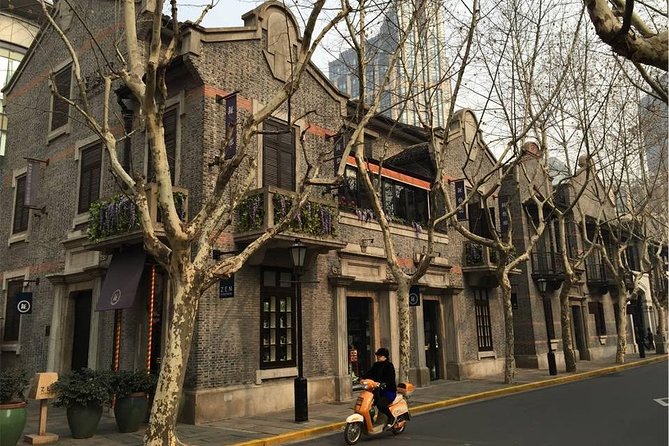
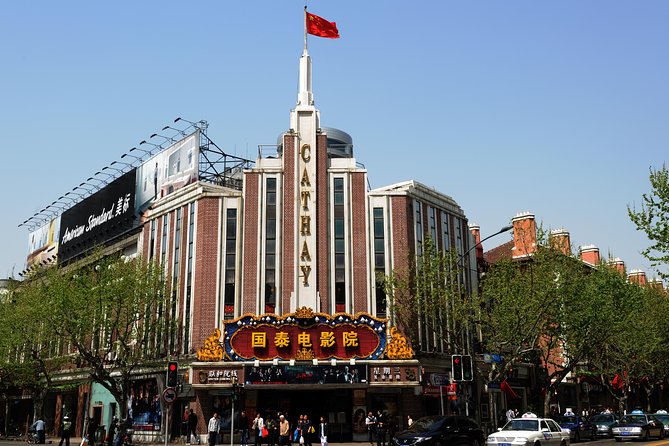
Cathay Mansion is one of the tour’s major architectural highlights. Formerly associated with the Sassoon family, it is known for its distinctive Art Deco design and its connection with prominent international figures.
The building gives you a clear look at the polished side of old Shanghai. Its style reflects the city’s international ambitions during the early 20th century, when Shanghai was developing into a major commercial center.
I like this stop because it helps make the 1930s feel concrete. Instead of hearing only dates and political events, you see the apartment architecture linked with that era. Your guide can also explain how buildings such as this fit into the lives of the people who occupied them.
The limitation is that a street-level visit cannot provide access to every part of a historic building. Still, the exterior and surrounding streets are enough to make the stop worthwhile, especially for anyone interested in architecture or Shanghai’s pre-war past.
Same country, a completely different kind of day:
- Authentic Local Food Tour in Central Shanghai
★ 5.0 · 1,382 reviews - Zhujiajiao Water Town and Shanghai City Private Day Tour
★ 5.0 · 1,016 reviews - Private Shanghai Full Day City Tour with Old and New Highlights
★ 5.0 · 995 reviews - Shanghai: Hop-on Hop-off Bus Ticket and Optional Attractions
★ 3.4 · 692 reviews
King Albert Apartment and a quieter residential Shanghai
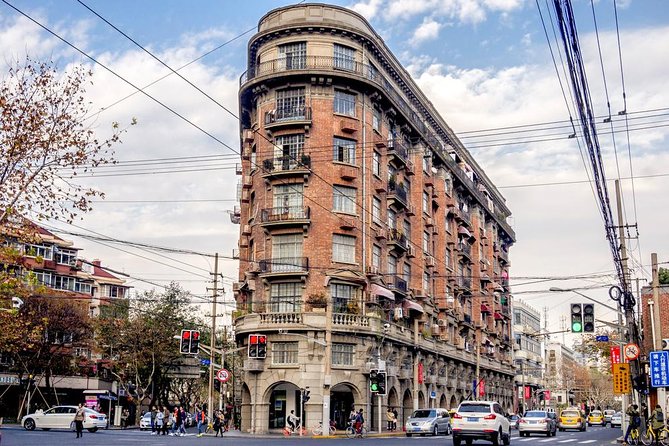
King Albert Apartment, also called Royal Garden, offers a different view of the Former French Concession. The complex was built by the French Catholic Church for expatriates, and it is tucked between two busy, narrow streets.
This is the sort of place that is easy to miss without a guide. You enter a living residential community rather than a grand attraction built for sightseeing. The setting gives you a better feel for the concession as a neighborhood where people lived, worked, and moved through shared spaces.
I would consider this one of the most useful parts of the route for understanding daily life. It shifts the focus from famous facades to courtyards and residential patterns. Your guide can help you notice how the complex relates to the streets around it and why the area feels different from Shanghai’s newer commercial districts.
Because it remains a living community, you should follow your guide’s lead and be respectful of residents. The value here comes from observing the surroundings, not treating the apartment block like a stage set.
Sun Yat-Sen’s former residence and modern China
The former residence of Dr. Sun Yat-Sen is a museum connected with China’s revolutionary history. This stop gives the walk its strongest political focus.
Sun Yat-Sen is central to the story of the Republic of China and the transition into modern Chinese politics. The home provides a more personal setting for that story. Rather than discussing political change only in the abstract, you can connect it with a real residence and the life of a major historical figure.
The entrance fee is included, which makes the museum stop easier to fit into the half-day outing. Your guide’s explanation is the main reason to visit, since the surrounding route places Sun Yat-Sen’s life within the broader history of Shanghai.
One useful feature of a private guide is the ability to ask for more context here. If you already know a great deal about Chinese history, you can ask for clarification and detail. If this is your first visit to China, your guide can provide a simpler outline before adding more information.
St. Nicholas Church and the Russian connection
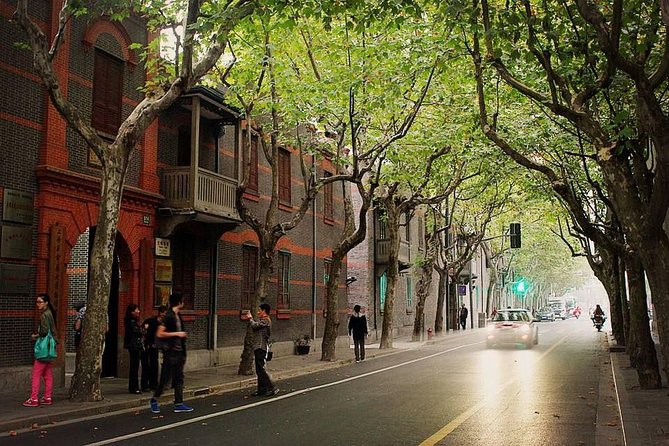
St. Nicholas Church is a small Orthodox church built by Russian expatriates in the 1920s. It is described as delicate rather than monumental, and that is part of its appeal.
This stop reminds you that the Former French Concession was shaped by more than French residents. Shanghai’s international past included Russian communities and many other groups, each leaving traces in the city’s buildings and streets.
The church is a good example of the route’s scale. You are not moving only between the biggest landmarks. Smaller sites help fill in the picture and show how varied the neighborhood’s past was.
The available information does not promise a long interior visit, so treat this as a short architectural and historical stop. Your guide’s explanation is likely to be more important than the amount of time spent inside.
Fuxing Park, from morning exercise to evening entertainment
The walk ends at Fuxing Park, described as the only French-style garden in China. The park has changed greatly over the past century, yet it remains a popular part of local life.
Go slowly here. The park is not just a formal garden to photograph. In the morning, older residents use it for exercise, while later in the day and evening it becomes linked with clubs and karaoke venues. The contrast gives you a direct look at how public spaces serve different parts of Shanghai society.
Several people have enjoyed seeing local activities in the park, including ballroom dancing. That detail matters because it captures the relaxed, social side of the neighborhood after the more formal buildings and museums earlier in the walk.
Fuxing Park is also a practical ending point. You can continue exploring on your own, ask your guide for nearby food or shopping suggestions, or arrange a taxi back to your hotel.
What the private guide adds
The strongest feature of this tour is not simply the number of stops. It is the guide’s ability to connect them.
Penny is repeatedly singled out for her clear English, historical depth, warm manner, and skill at making complex subjects accessible to adults and children. She has been described as a former teacher, which helps explain the structured way she presents Shanghai’s past. She also leads visitors through back lanes, shares local recommendations, and adjusts the route to suit interests.
Maggie is praised for warmth, flexibility, and her ability to understand what a group wants from the day. She has helped visitors continue toward Tianzifang, offered food and shopping suggestions, and adapted the discussion when some members of a family wanted more history.
Kelly has been noted for excellent English and strong knowledge of Shanghai’s architecture and history. She may also help before the tour with questions and booking arrangements. Lily is praised for a well-paced walk and clear stories about Shanghai’s past.
You cannot assume which guide you will receive unless the operator confirms it. If you have a strong preference, you can ask when booking, but availability may determine the assignment.
Pace, transport, and the practical side of the walk
Plan on three to three and a half hours, with a minimum of about three hours walking. One private outing described in the feedback lasted much longer because the guide continued answering questions, but you should not count on extra time.
This is a moderate physical activity. It is not presented as a difficult hike, yet the length, city sidewalks, stops, and possible standing time make comfortable shoes essential. If rain arrives, the route may become less pleasant. The tour operates in all weather, so bring clothing suited to the forecast.
Hotel pickup is offered. Your guide meets you in the hotel lobby and may use a taxi or public transport to reach the attractions. Transportation to the attractions is listed among the inclusions, but the detailed instructions say that taxi or public transport costs are paid by you. I would confirm the exact arrangement before departure so there is no confusion.
Hotel drop-off is not included. At the end, your guide can arrange a taxi, or you can continue exploring independently.
Morning departures are at 10 a.m., and afternoon departures are at 2 p.m. The morning option suits anyone who wants to see Fuxing Park during its exercise period. The afternoon start gives you a slower beginning to the day, though the route may finish after the most active daylight hours depending on pace and season.
The maximum booking size is 10 people, but the experience is private. That combination is useful for families and small groups who want personal attention without being joined by strangers.
Is $95 a person good value?
At $95 per person, this is not the cheapest way to walk around Shanghai. The price makes more sense if you value an English-speaking guide, private attention, included entrance tickets, hotel pickup, and a route that combines several kinds of sights.
You are paying for interpretation as much as access. The Former French Concession is easy to stroll through without a guide, but it is harder to understand why certain buildings matter, how the neighborhoods developed, or how the foreign presence connects with China’s modern political story.
The value is strongest for a first visit, a short stay, or anyone who wants a clear introduction before exploring Shanghai alone. It is also useful for families because the guide can adjust explanations and keep the pace manageable.
The value is weaker if you want a long museum visit, a food tour, or a fully inclusive outing with all transport costs covered. Personal expenses are separate, and you should budget for taxis or public transportation used during the route.
Who should book this walk
I would recommend it to you if you enjoy architecture, urban history, local neighborhoods, and conversations with a guide. It works particularly well for first-time visitors who want the city explained rather than simply photographed.
Families can benefit from the private setup and flexible pace. The feedback includes children enjoying Penny’s accessible explanations, and a senior visitor managing the walk well. Still, you should be comfortable walking for at least three hours.
History students, writers, and repeat visitors may also find plenty to like. One participant researching a novel found the route especially helpful, while another visitor who had already been to Shanghai gained a better understanding of places previously seen without context.
I would choose another activity if you prefer a bus tour, a food-focused experience, or a packed list of indoor attractions. This outing depends on walking, conversation, and looking closely at the city around you.
Final verdict: book it for context, not just sightseeing
Book this tour if you want the Former French Concession to make sense. The route covers major buildings, smaller religious and residential sites, a museum, and a public park, while the private format lets you ask questions and adjust the pace.
Penny appears to be an especially strong choice for travelers seeking detailed history and easy conversation, with Maggie, Kelly, and Lily also receiving warm praise for their English, flexibility, and local insight. Ask about guide availability when you reserve.
Skip it if you want an all-inclusive transport package or a relaxed stroll with very little walking. For most visitors who want an informed, personal introduction to one of Shanghai’s most layered districts, $95 is a fair price for the time and guidance provided.
FAQ
How long does the Private Walking Tour in the Former French Concession last?
The tour lasts approximately three to three and a half hours. Minimum walking time is around three hours.
What time does the tour depart?
You can choose a 10 a.m. morning departure or a 2 p.m. afternoon departure. You should indicate your preferred time when booking.
Is hotel pickup included?
Yes. The guide meets you in your hotel lobby.
Is hotel drop-off included?
No. Hotel drop-off is not included, but the guide can arrange a taxi after the tour, or you can continue exploring independently.
Are entrance fees included?
Yes. Entrance tickets are included, including access to the listed attractions that require admission.
Do I pay for transportation during the tour?
The guide may use a taxi or public transportation to reach attractions. The detailed tour information says these costs are paid by you, so confirm the transport arrangement before the walk.
What should I wear?
Wear comfortable shoes and dress appropriately for the weather. The tour operates in all weather conditions.
How many people can join the booking?
A booking can include a maximum of 10 people. The experience is offered as a private tour.
Can I cancel for a full refund?
Yes, if you cancel at least 24 hours before the experience start time. Cancellations or changes made less than 24 hours before the start time are not accepted for a refund.
Just added around Shanghai
- Suzhou Private Guided Day Trip from Shanghai by Bullet Train★ 5.0 · 46 reviews
- Suzhou and Zhujiajiao Private Guided Day Trip from Shanghai★ 5.0 · 27 reviews
- Shanghai:Old Town, Yu Garden, Zhujiajiao Water Town Bus Tour★ 4.7 · 16 reviews
- Shanghai: Yuyuan, City God Temple Old City Tour-Tip Based★ 5.0 · 10 reviews
- Shanghai: Zhujiajiao Water Town with Calligraphy Experience★ 5.0 · 17 reviews
- Shanghai: Yu Garden with Entry Tickets(optional)★ 4.5 · 28 reviews
- Shanghai: Yu Garden Entry Ticket with PDF Guidebook★ 4.1 · 45 reviews
- Shanghai: Yu/Yuyuan Garden Entry Ticket–E ticket★ 4.4 · 24 reviews
Walking Tours, compared.

Beijing Hutong Walking Food and Beer Tour at Hidden Restaurants
Read our review →
Private Beijing Walking Tour of the Forbidden City with 7 Options
Read our review →
Dark Side of Hong Kong – Kowloon Caged Homes Walking Tour
Read our review →
Forbidden City Private Walking Tour with Optional Sights
Read our review →
Introduction to Hong Kong: Central Tip Based Walking Tour
Read our review →
Shanghai Highlights Walking Tour With A Real Local
Read our review →Browse the lists this tour appears in