
Reviewed · 3-HOUR EXPERIENCES
3-Hour Private Tour to Jewish Ghetto and Shanghai Bund
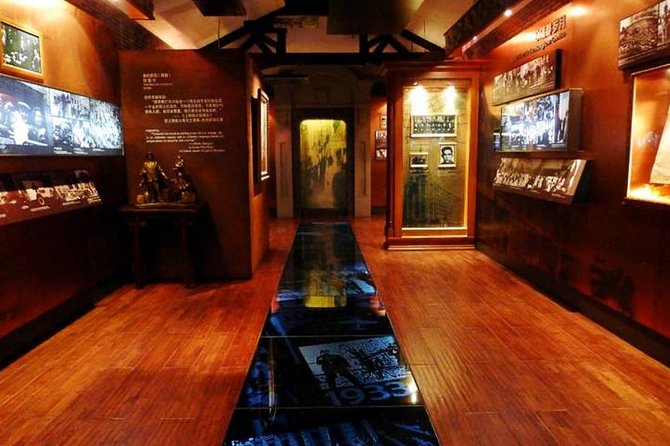
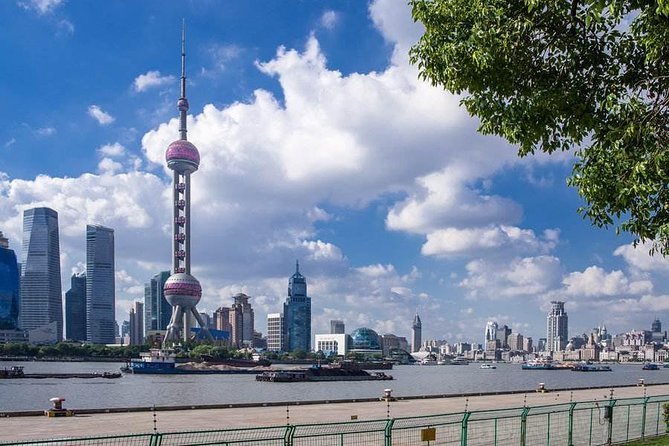
Shanghai’s Jewish story comes into focus at the Jewish Refugees Museum, where photographs, films, and personal belongings show how European Jews found refuge in China during the Second World War. The tour then moves through old stone-gate houses and back streets before shifting to the Bund, where Jewish financiers helped shape Shanghai’s grand Art Deco waterfront.
I like the private format, since guides such as Mason, Sunny, Lea, Annie, and Aron can adjust the pace and explain difficult history in plain English. I also like the transport between the far-flung sites, especially with hotel pickup included for downtown hotels. The main consideration is time: three hours gives you a strong introduction, but not a full study of Shanghai’s Jewish past or every building on the Bund.
Key points at a glance
- The Jewish Refugees Museum anchors the tour: Allow about 80 minutes for its photos, films, artifacts, and former Ohel Moishe Synagogue.
- The old Jewish quarter feels lived-in, not staged: Walk past stone-gate houses, the former Jewish park, and the old JDC center.
- The Bund adds a wider Shanghai story: See the Peace Hotel and learn how British-Jewish Sassoon family investment shaped the waterfront.
- Private guiding makes the history easier to follow: Guides including Lea, Mason, Sunny, Annie, and Aron are praised for clear explanations and flexible pacing.
- Transport saves valuable time: A private vehicle or premium local Uber links the museum, neighborhood, and Bund.
- Downtown pickup matters: Pickup is offered only from central Shanghai hotels, with a meeting point arranged for hotels farther out.
Why Shanghai’s Jewish story deserves three hours
Shanghai is often presented through its skyline, colonial buildings, and shopping streets. This tour shows another side of the city: a place that became a refuge for roughly 20,000 Jewish people fleeing Europe, especially during the 1930s and 1940s.
That story is unusual because it connects European wartime migration with Chinese urban life. You are not only learning about refugees. You are also seeing how Shanghai absorbed new communities, how neighborhoods changed, and how European businesses influenced the city’s architecture.
I like the way the route connects three kinds of evidence. The museum gives you documents and personal objects. The old quarter gives you streets and homes. The Bund shows the wealth and international business networks that helped shape modern Shanghai.
The tour lasts about two and a half to three hours. That is enough time for a focused introduction without turning into an exhausting all-day history lesson. Still, you should arrive ready to walk outdoors, since the Jewish quarter and Bund portions take place on foot.
A few more Shanghai trips to weigh up
- Shanghai: 3-Hour Old Shanghai City Tour
★ 4.9 · 45 reviews - Private 3 hour bike tour with coffee break
★ 4.5 · 38 reviews - 3-Hour Shanghai Street Food Tasting & Old Town Private Tour
★ 5.0 · 4 reviews
Starting at the Jewish Refugees Museum
Your guide meets you in the lobby of your downtown hotel, then takes you to the historic Jewish center by private transport. For a party of one to four, the vehicle is described as a premium local Uber. Larger groups use an air-conditioned minivan.
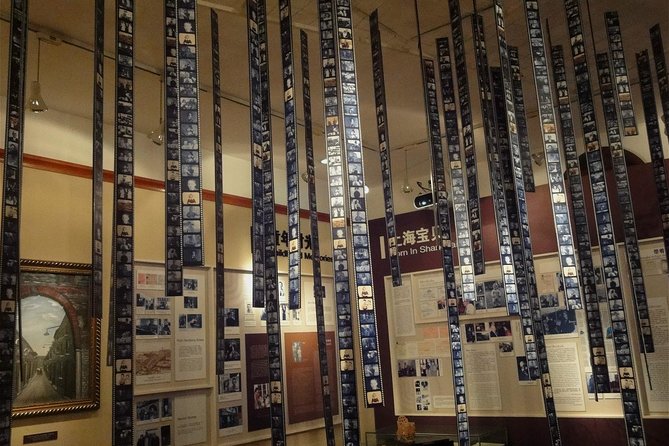
The main stop is the Jewish Refugees Museum, located at the former Ohel Moishe Synagogue. About 80 minutes are set aside here, and admission is included. This is the most important stop on the route, so do not treat it as a quick photo stop.
Inside, you can expect displays of photographs, films, and personal items connected with the Jewish community in Shanghai. These materials help put names and faces to a story that can otherwise feel distant. A photograph of a family, a personal possession, or a record of arrival can make the period much easier to understand than a string of dates.
Guides such as Mason have been praised for knowing the museum well and allowing time to examine the displays at your own pace. That matters here. The museum rewards patience, and rushing past the photographs would weaken the best part of the tour.
Sunny is also singled out for explaining both the wartime refugee movement and the longer history of Jewish migration to China. If your interest is more than architectural sightseeing, ask your guide to connect the museum’s exhibits with the later neighborhood walk.
The former synagogue gives the museum a strong sense of place. You are not studying an abstract subject in a generic gallery. You are visiting a building tied directly to the community being discussed.
A practical point: the tour is conducted in English, though one Spanish-speaking participant noted that the guide worked hard to make the explanations clear. If you need a slower pace or simpler wording, say so at the start. A private tour makes that request easier than a large group outing.
Walking through the old Jewish quarter
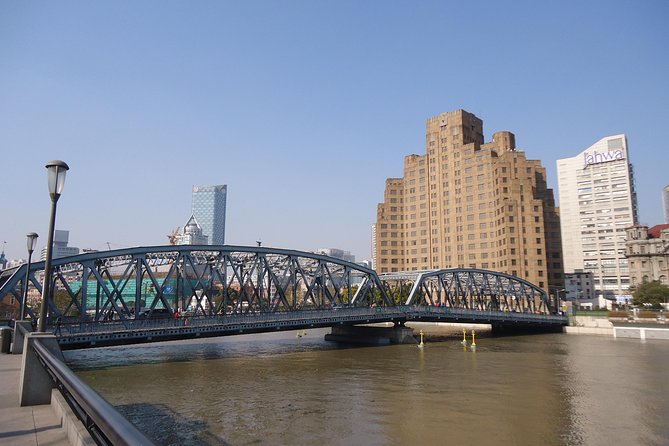
After the museum, the tour spends about an hour around the old Jewish neighborhood. The route includes the former Jewish park, the old JDC center, and local back streets lined with Shanghai stone-gate houses.
These lanes offer something the museum cannot. You see the physical setting where thousands of refugees lived. The architecture also helps you compare this district with Shanghai’s more traditionally Chinese old neighborhoods. The stone-gate homes have a different visual character, reflecting the city’s long contact with European building styles and international residents.
Do not expect a polished open-air museum. The neighborhood is part of the living city, and the buildings are viewed from the streets and lanes. That is a strength if you want an authentic sense of place, but it also means the area can feel less neatly presented than the museum.
One especially revealing part of the walk may be seeing former living quarters that remain connected to a refugee family. A guide described a visit to the home of a former refugee who lived there with his grandparents, with family members still connected to the quarters today. This kind of detail links wartime history with present-day Shanghai in a way that a plaque cannot.
The walk also helps you understand the scale of the community. A museum display can tell you that thousands lived here. Standing among the old houses gives that number a physical meaning. You begin to see the neighborhood as a place of daily routines, crowded homes, schools, aid work, and family life.
Wear comfortable shoes. The walk is not described as difficult, and most people can participate, but the route includes back streets and outdoor areas. The tour operates in all weather, so light rain gear or sun protection is sensible depending on the forecast.
Seeing the Bund through Jewish and British-Jewish history
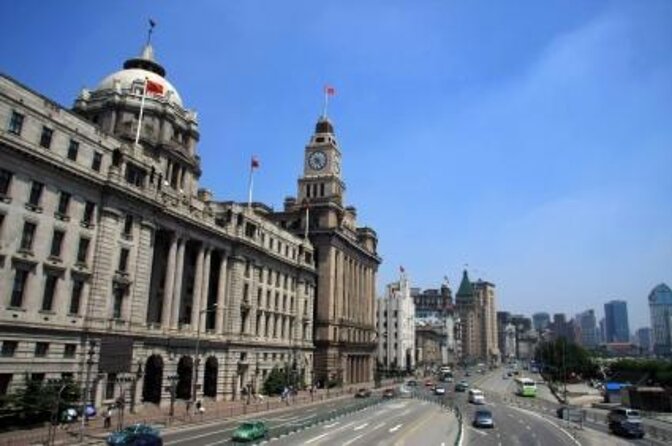
The final stop lasts about 50 minutes and takes you to the Bund, Shanghai’s famous waterfront promenade. Most sightseeing tours present the Bund as a row of grand colonial-era buildings and a skyline view. This tour adds a more specific story through the British-Jewish Sassoon family and the Peace Hotel.
The Peace Hotel represents the high point of Sassoon family influence in Shanghai. Your guide can place the building within the wider financial and commercial history of the Bund, rather than treating it as just another ornate facade.
This part of the tour broadens the subject. The museum and old quarter focus on refugee life and community. The Bund shows another side of Jewish Shanghai: investment, trade, hotels, property, and international finance. Those two stories existed within the same city, but they were not the same experience.
You should expect to admire the Art Deco architecture from the outside and learn about its role in Shanghai’s British-controlled commercial district. The Bund stop is free, but the tour does not promise interior access to every building. Its value comes from the guide’s explanation and the sequence of sites.
I like this ending because it prevents the tour from becoming only a wartime refugee narrative. You see how Jewish history in Shanghai included both people in desperate need of shelter and wealthy families involved in the city’s business life.
The Bund can be crowded and active, especially at popular viewing times. Since the tour is private, your guide may help you focus on the buildings and explain what you are seeing without the fixed pace of a large group. The tour does not include hotel drop-off, so plan your next stop from the Bund.
Same country, a completely different kind of day:
- Authentic Local Food Tour in Central Shanghai
★ 5.0 · 1,382 reviews - Zhujiajiao Water Town and Shanghai City Private Day Tour
★ 5.0 · 1,016 reviews - Private Shanghai Full Day City Tour with Old and New Highlights
★ 5.0 · 995 reviews - Shanghai: Hop-on Hop-off Bus Ticket and Optional Attractions
★ 3.4 · 692 reviews
The value of a private guide and vehicle
The price is $90 per person. For a solo visitor, that is not a bargain in the strictest sense, but the price includes a private guide, local transportation, hotel pickup from a downtown hotel, and admission to the Jewish Refugees Museum and Jewish quarter sites.
For two or more people, the value improves because the private format spreads the cost across your group. Group discounts may also be available, though the exact amount is not provided. Larger groups receive an air-conditioned minivan, while smaller groups use a premium local Uber.
The vehicle is useful because the three areas are separated across Shanghai. You avoid arranging separate taxis or trying to fit the museum, neighborhood, and Bund into a short public-transport schedule. The tour still includes walking, but the transfers reduce wasted time.
Hotel pickup is limited. It covers hotels in downtown Shanghai, not outlying areas such as Jiading, Songjiang, Qingpu, Jinqiao, or Chuansha in Pudong. Airport hotels, Disneyland hotels, and other distant locations do not receive standard pickup and drop-off. If you stay outside the central area, the guide can arrange a downtown meeting point.
That limitation is easy to overlook when booking. Check your hotel location before paying, especially if you are staying near the airport, cruise port, or Disneyland. Pickup and drop-off at Wusongkou cruise port can be arranged for an extra charge.
Which guide style suits you best
The tour company assigns the guide, so you may not receive a specific person. Several names appear in the tour’s feedback, including Lea, Mason, Sunny, Annie, Aron, Robert, and Ruby.
Lea is praised for telling the refugee story in a clear chronological order. That approach suits you if you want to understand what happened from the first arrivals through the later years of the community.
Mason is described as especially familiar with the museum and careful about pacing. He may be a good fit if you prefer time to study photographs and objects rather than being hurried from display to display.
Sunny is praised for combining the history of Jewish migration to China with the Second World War refugee story. Annie is noted for adding cultural context while walking the Bund. Aron is described as especially strong on the details of Jewish history in Shanghai.
The repeated strength is not theatrical performance. It is clear explanation, patience, and the ability to connect the museum with the streets outside. That is exactly what this subject needs.
What the tour does not cover
This is a focused specialty tour, not a general introduction to Shanghai. You will see the Jewish Refugees Museum, the old Jewish quarter, and the Bund, but the route does not promise major attractions elsewhere in the city.
The museum receives the longest visit, while the neighborhood and Bund stops are shorter. If you want to study every exhibit, photograph every building, or spend a long time inside the Peace Hotel, three hours may feel tight.
The old Jewish quarter is also not presented as a fully restored historic district. You will walk through existing streets and see old stone-gate houses among the modern city. That mix may be exactly what you want, but readers seeking a preserved museum village should set their expectations differently.
There is no standard hotel drop-off. You finish at the Bund and make your own way onward. This is not a major problem if you plan to continue sightseeing there, since the waterfront is already one of Shanghai’s main areas, but it is worth remembering if you have luggage or a tight evening schedule.
Who should book this Shanghai tour
I would recommend it most strongly to history buffs, people with a Jewish family connection, architecture fans, and first-time Shanghai visitors who want more than the city’s usual skyline views.
It is also a good choice if you have only a short stay. The route gives you a concentrated look at one important part of Shanghai and uses a private vehicle to link the sites efficiently.
Families can participate, but children must be accompanied by an adult. Young children may find the museum’s subject matter serious, so consider their interest in history before booking.
The private setup works well for couples, families, and small groups who want to ask questions. It also helps if your group has different walking speeds or wants to spend extra time with a particular exhibit.
The tour may be less suitable if you prefer a completely self-guided visit, want a long Bund photography session, or need transportation from an outlying hotel without an extra arrangement.
Booking details worth checking first
Morning and afternoon departures are available, giving you room to fit the tour around other plans. Confirmation is sent within 48 hours, subject to availability, so do not assume the time is final until you receive it.
The tour runs in all weather. Dress for the forecast and choose shoes suitable for the neighborhood walk. It is near public transportation, and most people can participate, but the combination of outdoor walking and old back streets means you should be comfortable on your feet.
Free cancellation is available up to 24 hours before the local start time. Cancellations or changes made less than 24 hours ahead are not refunded or accepted.
Should you book it?
Book this tour if you want Shanghai history told through real places: a former synagogue, old homes, refugee records, and the grand buildings of the Bund. The strongest value comes from the private guide and the way the three stops fit together, not simply from the number of sights.
At $90 per person, it is best for visitors who care about context and convenience. Check the pickup area carefully, remember that drop-off is not included, and allow time for the museum rather than treating it as a brief stop. If those points suit your plans, this is a thoughtful way to see a part of Shanghai that many standard city tours leave out.
FAQ
How long does the private tour last?
The tour lasts approximately two hours and 30 minutes to three hours.
What sites are included?
The route includes the Jewish Refugees Museum at Ohel Moishe Synagogue, the old Jewish quarter, and the Bund, including the Peace Hotel area.
Is admission to the Jewish Refugees Museum included?
Yes. Admission to the Jewish Refugees Museum and the Jewish quarter sites is included.
Is hotel pickup available?
Yes, pickup is offered from hotels located in downtown Shanghai. Hotels in outlying areas may need to meet the guide at a downtown meeting point.
Is hotel drop-off included?
No. Hotel drop-off is not included.
What transportation is used between stops?
Groups of one to four people travel in a premium local Uber. Groups of more than four use an air-conditioned minivan.
Is the tour private?
Yes. Only your group participates in the private activity.
Are morning and afternoon departure times available?
Yes. You can choose from flexible morning or afternoon departures.
Can I cancel for a full refund?
Yes, if you cancel at least 24 hours before the experience start time. Cancellations made less than 24 hours before the start time are not refunded.
Just added around Shanghai
- Suzhou Private Guided Day Trip from Shanghai by Bullet Train★ 5.0 · 46 reviews
- Suzhou and Zhujiajiao Private Guided Day Trip from Shanghai★ 5.0 · 27 reviews
- Shanghai:Old Town, Yu Garden, Zhujiajiao Water Town Bus Tour★ 4.7 · 16 reviews
- Shanghai: Yuyuan, City God Temple Old City Tour-Tip Based★ 5.0 · 10 reviews
- Shanghai: Zhujiajiao Water Town with Calligraphy Experience★ 5.0 · 17 reviews
- Shanghai: Yu Garden with Entry Tickets(optional)★ 4.5 · 28 reviews
- Shanghai: Wild Animal Park Ticket★ 4.9 · 43 reviews
- Shanghai: Yu Garden Entry Ticket with PDF Guidebook★ 4.1 · 45 reviews
3-Hour Experiences, compared.
3-Hour Private Night Tour: Beijing Foodie Experience
Read our review →
3-hour Morning/Afternoon Tea Tasting on Maliandao Street & Dimsum
Read our review →
3-Hour Private Tour: Amazing Beijing City Highlights
Read our review →
Summer Palace 3 Hours Guided Tour with Entry Ticket
Read our review →
3-Hour Shanghai Street Food Tasting & Old Town Private Tour
Read our review →Browse the lists this tour appears in