
Reviewed · FOOD & DRINK
3-hour Morning/Afternoon Tea Tasting on Maliandao Street & Dimsum
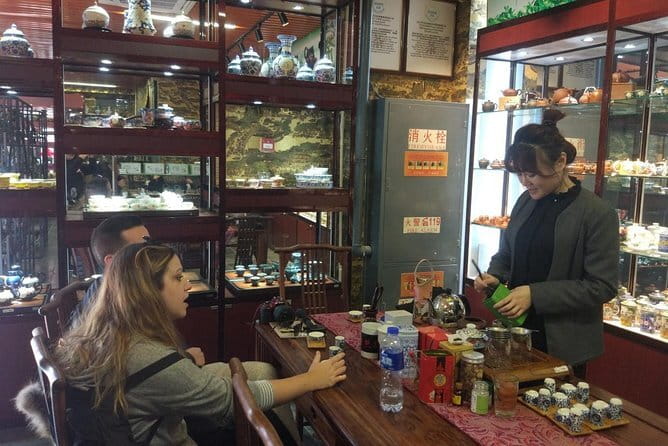
Maliandao is the main event here: a whole Beijing street devoted to tea trading, tea shops, and serious tea drinking. You’ll taste eight kinds of tea, visit two shops, and then sit down for dim sum that includes soup buns, shrimp ravioli, rice noodle rolls, chicken feet, and spring rolls.
I like the mix of tea culture and a full meal, rather than a quick sampling with a biscuit on the side. I also like the easy subway meeting point and the small-group format, which makes it simpler to ask questions and keep the tasting from feeling rushed. The guide named Renny is described as warm, helpful, and friendly.
The main caution is practical: the meeting-point details list both Wanzi Exit C and Exit D, so confirm the exact exit before you set out. The advertised maximum is 15 people, while the route description refers to groups of eight or fewer.
Key points at a glance
- Eight teas in two Maliandao shops: Expect green, oolong, black, pu’er, white, and other Chinese teas.
- A real tea-trading district: You are visiting Beijing’s largest tea market area, not just a tasting room.
- Dim sum is part of the price: The meal can include soup buns, steamed vermicelli rolls, chicken feet, shrimp ravioli, spring rolls, and more.
- Morning or afternoon timing: Choose a 10:00 a.m. or 3:00 p.m. departure, with the meal served as lunch or dinner.
- Small-group setting: The tour is capped at 15 people, and the route description says some departures have eight or fewer.
- Subway-friendly start and finish: Meet near Line 7’s Wanzi Station, then return to the meeting point at the end.
Why Maliandao makes a better tea stop
Beijing has no shortage of food tours, but Maliandao gives this outing a clear sense of place. It is described as the largest tea trading street and market in the city, with tea sellers connected to farms and buyers from around the world.
That matters because the tea is not presented as a token drink between sightseeing stops. The market is the setting, and the tasting is tied to the business of tea. You get to see the kind of district where tea is bought, sold, compared, and discussed.
You should not expect a polished museum display or a quiet hotel lounge. This is a commercial tea area with shops and trade at its center. That can make the visit feel more grounded, though the surroundings may be less tidy or staged than a formal attraction.
The route includes two different tea shops. This gives you some comparison instead of leaving you with one seller’s selection. The shops are chosen for tea associated with real farms, and the tasting covers eight varieties.
A few more Beijing trips to weigh up
- Beijing Hutong Walking Food and Beer Tour at Hidden Restaurants
★ 5.0 · 1,132 reviews - Beijing: Hidden Gems Guided Food Tour with Beer and Tastings
★ 4.9 · 306 reviews - Beijing Private Hutong Food Walking Tour
★ 5.0 · 299 reviews
Eight Chinese teas, not just one cup
The range is one of the tour’s strongest features. You may taste green tea, oolong tea, black tea, pu’er, and white tea, along with other varieties. Eight teas is enough to show how much Chinese tea can differ in color, aroma, texture, and preparation.
If you usually order tea without thinking about its type, this is a useful introduction. Green tea can offer a lighter, fresher style, while oolong sits between green and black tea. Pu’er brings a different character altogether. The point is not to turn you into a tea buyer in three hours. It is to give you a working sense of the categories and help you notice what you like.
The tea ceremony adds structure. You watch tea being prepared in a traditional way rather than simply receiving a cup and moving on. A guide can also help you understand what you are tasting and answer questions that are harder to handle when you visit a shop alone.
There is one limit. The information does not provide the exact eight teas served on every departure. Tea choices can vary by shop or availability, so you should treat the listed categories as a guide rather than a fixed menu.
Walking through Beijing’s tea market
After meeting near Wanzi Station, you walk toward Maliandao Tea Street. The subway connection is a real help in Beijing, where crossing town by car can take much longer than expected. The tour begins and ends at the meeting area, and the guide can help you get a taxi afterward if needed.
The walk is part of the experience, not merely transport between two indoor stops. You see the tea district as a working market and pass through shops that handle different kinds of tea. The route includes time at two shops, where you can taste and compare.
The itinerary wording gives two different meeting exits, C and D. Since both are connected with Wanzi Station on Line 7, this is not a reason to avoid the tour, but it is a reason to check the final instructions carefully. Beijing subway stations can have several exits, and a small mistake can put you on the wrong side of a busy street.
Wear shoes you can walk in comfortably. The tour lasts about three hours, and the market visit requires strolling between the meeting point, shops, and restaurant.
Dim sum that turns tasting into a meal
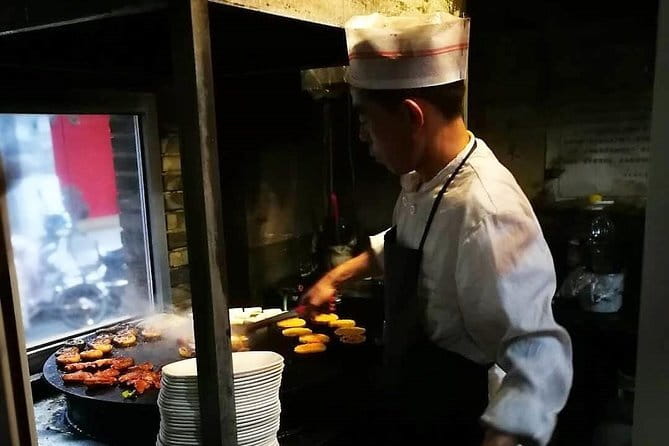
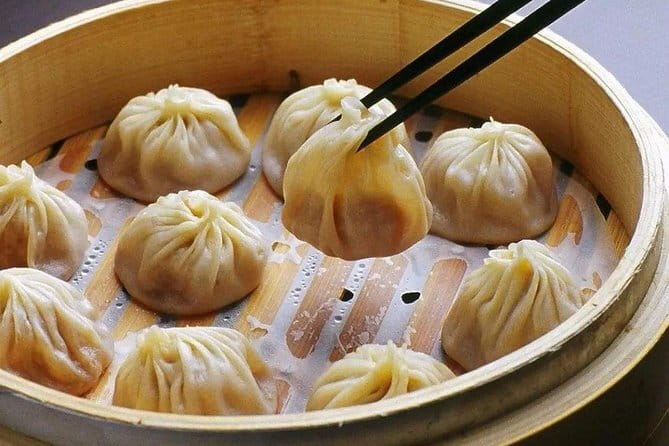
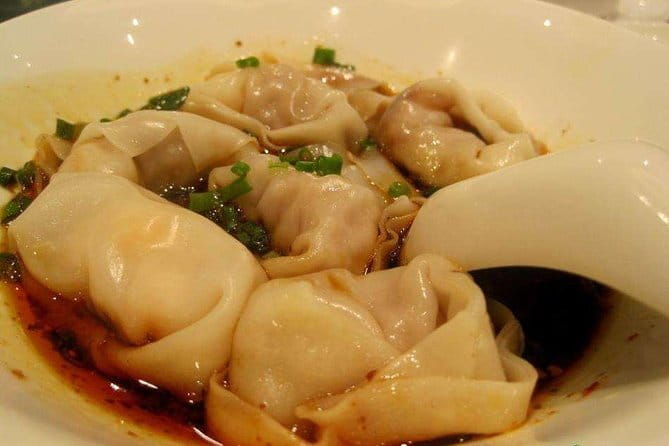
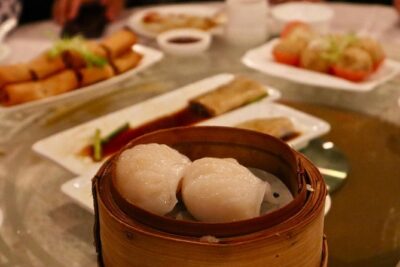
The tea portion is followed by dim sum at a nearby tea restaurant. This is more than a snack stop. Food listed for the meal includes steamed soup buns, steamed vermicelli rolls, chicken feet, shrimp ravioli, spring rolls, and other dim sum dishes.
That variety gives you a broad sample of Cantonese-style small plates. Soup buns bring the pleasure and risk of a hot filling inside delicate dough. Vermicelli rolls have a soft, slippery texture, while shrimp ravioli offer a more familiar dumpling format. Chicken feet are less familiar to many diners, but they are a standard dim sum dish and part of the point of eating beyond the usual spring roll.
The meal has a useful balance for first-time diners. You can try several small dishes instead of committing to one large plate. A previous booking also included pork dumplings and hand-pulled noodles, so the exact spread may change. Plan to leave full, not merely satisfied after a few samples.
Vegetarian food is available if you request it when booking. The supplied details do not list the exact vegetarian dishes, so tell the company in advance rather than waiting until you sit down.
Morning guests should think of the meal as lunch. Afternoon guests receive dinner. The schedule lists departures at 10:00 a.m. and 3:00 p.m., making the choice useful for people fitting the tour around Beijing sightseeing.
Same country, a completely different kind of day:
- From Beijing: Mutianyu Great Wall Tours with Options
★ 4.9 · 9,216 reviews - Beijing: Forbidden City Tour(Group/Private)-Tickets Included
★ 4.8 · 7,974 reviews - Beijing: T-Square & Forbidden City Group or Private Tour
★ 4.8 · 4,446 reviews - Beijing: Mutianyu Great Wall Daily Tour with Ticket & Lunch
★ 5.0 · 3,056 reviews
What the guide adds
A tea market can be confusing if you do not know where to go or how to judge a shop. The guide takes you to two selected tea shops and organizes the tasting, which saves you from making a random choice among many sellers.
The guide also keeps the experience social. With a maximum of 15 people, the group is small enough for questions, though the actual size can vary. The route description refers to groups of eight or fewer, which would make the tasting more personal. I would confirm the expected group size if that matters to you.
Renny is specifically named in the available feedback and is described as warm, friendly, and helpful. That is especially important here because the quality of the afternoon depends on explanation and pacing. Tea can be difficult to appreciate when someone rushes through names and pours. A patient guide makes the differences easier to notice.
At the end, the guide returns you to the subway station or helps you arrange a taxi. That is a small service, but it is useful after a meal, especially if you are still finding your bearings in Beijing.
Is $99 a fair price?

At $99 per person, this is not a bargain if you are only counting food and drinks. You could likely spend less on tea and dim sum by arranging everything yourself. The price makes more sense when you value the guide, the organized tasting, the tea ceremony, the visit to two shops, and the convenience of a planned route.
You are paying for access and context as much as for lunch or dinner. A first-time visitor may not know which Maliandao shops are worth entering, which teas to compare, or how to handle a traditional tasting. The guide removes that uncertainty.
The value also depends on your interest. If tea is a minor curiosity and you mainly want a cheap meal, the price may feel high. If you want a focused introduction to Chinese tea and prefer a local food stop built into the same outing, the combination is more convincing.
Group discounts are listed, though no discount amount is provided. Check the current price for your party before booking. Local taxes and the professional guide are included, while personal purchases and other personal expenses are not.
Who will enjoy this three-hour outing
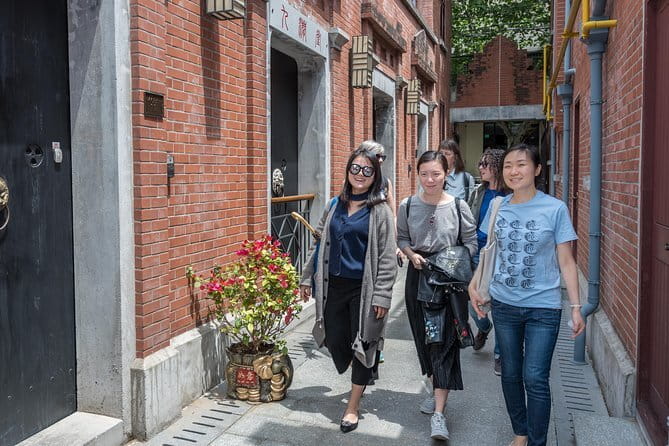
I would recommend this tour to you if you want food and culture in one compact activity. It suits first-time visitors who would rather have a guide explain a complex tea market than wander through it alone.
It also works well for people who enjoy trying unfamiliar dishes. The dim sum list includes chicken feet as well as more approachable items such as spring rolls and shrimp ravioli. You can sample a range without ordering a full dish of every item yourself.
The morning departure is useful if you want tea and lunch before an afternoon of sightseeing. The 3:00 p.m. option works as a late-day activity followed by dinner. Families can join, but the child rate applies only when a child shares with two paying adults.
Most people can participate, and the tour is near public transportation. Still, you should be comfortable with walking between the subway, tea shops, and restaurant. The supplied information does not describe special arrangements for mobility limitations, so ask the operator if you need them.
A few practical points before booking
Confirmation is provided when you book, and mobile tickets are available. Plan to arrive at the correct Wanzi Station exit with enough time to find the guide. Because the information gives both Exit C and Exit D, verify the departure message rather than guessing.
The tour ends back at the meeting point. That makes it easy to continue by subway, but it also means you should not plan a tightly timed attraction immediately afterward. The activity is approximately three hours, and food service or walking pace could affect the exact finish.
Free cancellation is available if you cancel at least 24 hours before the start time. Changes or cancellations made inside that window are not accepted for a refund, and the cut-off follows Beijing local time.
Should you book the Maliandao tea and dim sum tour?
Book it if you want a guided introduction to Chinese tea with a substantial dim sum meal, especially if Maliandao is new to you. The strongest parts are the eight-tea tasting, the tea ceremony, the two-shop comparison, and the chance to eat dishes beyond the standard tourist menu.
Skip it if you want a very cheap, self-guided meal or if you have little interest in tea. At $99, the tour earns its price through guidance and access, not through the food alone.
Before paying, confirm the Wanzi exit and ask about the expected group size. If those details suit your plans, this is a sensible three-hour way to connect Beijing’s tea trade with one of China’s most enjoyable food traditions.
FAQ
How long does the tea and dim sum tour last?
The experience lasts approximately three hours.
Can I choose a morning or afternoon departure?
Yes. The listed departure times are 10:00 a.m. and 3:00 p.m.
Where does the tour meet?
The meeting point is near Wanzi Subway Station on Line 7 in Beijing. The supplied details mention both Exit C and Exit D, so confirm the exact exit before departure.
How many teas will I taste?
You will taste eight different kinds of tea.
What types of tea may be included?
The tasting may include green tea, oolong tea, black tea, pu’er tea, white tea, and other varieties.
Is a tea ceremony included?
Yes. A tea ceremony is included in the experience.
What food is included?
The dim sum meal can include steamed soup buns, steamed vermicelli rolls, chicken feet, shrimp ravioli, spring rolls, and other dishes. Pork dumplings and hand-pulled noodles have also been served.
Is a vegetarian option available?
Yes. You must advise the tour company when booking if you require vegetarian food.
How large is the group?
The activity has a maximum of 15 participants. The route description also refers to groups of eight or fewer, so the size may vary by departure.
What is included in the $99 price?
The price includes the eight-tea tasting, dim sum for lunch or dinner, local taxes, a professional guide, and the tea ceremony. Personal expenses are not included.
Does the tour return to the starting point?
Yes. The activity ends back at the meeting point, and the guide can send you to the subway station or help you get a taxi.
Can children join the tour?
Yes. The child rate applies only when the child shares the tour with two paying adults.
Can I cancel for a full refund?
Yes, if you cancel at least 24 hours before the experience starts. Cancellations or changes made less than 24 hours before the start time are not accepted for a refund.
More 3-Hour Experiences in Beijing
- 3-Hour Private Night Tour: Beijing Foodie Experience
★ 5.0 · 53 reviews - 3-Hour Private Tour: Amazing Beijing City Highlights
★ 5.0 · 5 reviews - 3-Hour Private Beijing Night Tour
★ 5.0 · 4 reviews - Beijing: Summer Palace 3 Hours Guided Tour with Entry Ticket
★ 4.8 · 4 reviews
Just added around Beijing
- Private Transfer to Mutianyu Great Wall with professional driver★ 5.0 · 19 reviews
- camp on the Great Wall overnight with sunrise and sunset on the wall★ 5.0 · 11 reviews
- One day tour to downtown Tianjin from Beijing by high speed train★ 5.0 · 3 reviews
- BusDa:Ancient Great Wall &Badaling Great Wall Full-day Bus Tour★ 4.5 · 6 reviews
- ZANBUS: Trip to the Jinshanling Great Wall Departing at 7:30 AM★ 5.0 · 5 reviews
- Yuxiandu Chinese Royal Cuisine Museum with Show and Royal Banquet★ 5.0 · 4 reviews
- Private Wild Great Wall Hiking tour at Simatai (Challenging)★ 5.0 · 16 reviews
- Wild Great Wall Huanghuacheng Half Day Tour★ 5.0 · 15 reviews
Food & Drink, compared.

Authentic Local Food Tour in Central Shanghai
Read our review →
Beijing Hutong Walking Food and Beer Tour at Hidden Restaurants
Read our review →

Hong Kong’s Tin Hau Hidden Eats Food Tour with 7+ Local Tastings
Read our review →

Hong Kong Food Tour: Central and Sheung Wan Districts
Read our review →Browse the lists this tour appears in