
Reviewed · HISTORICAL TOURS
Coach Tour: Hong Kong Heritage Discovery
Hong Kong’s New Territories reveal a side of the city that skyscraper hunters often miss: walled villages, ancestral halls, study rooms, and market food tied to centuries of local life. This five-hour coach tour links those places without asking you to work out a string of MTR rides, taxis, and rural bus routes.
I like the small maximum group of six and the clear focus on heritage rather than shopping. I also like the local snack stop at Tai Po Market, where you can see vegetables, cured meats, dried seafood, and sweets sold as part of everyday life. The main catch is the limited pickup area, so you may need to reach a designated hotel first.
Key points at a glance
- The Yuen Long Ping Shan Heritage Trail connects several historic Tang clan buildings in one morning.
- Tsui Sing Lau Pagoda, a three-story green-brick monument dating to about 1486, is the oldest pagoda in Hong Kong.
- Sheung Cheung Wai gives you a close look at a traditional Chinese walled village, including its gatehouse and shrines.
- Tai Po Market includes a tasting of traditional local snacks, but lunch is not included.
- Hotel pickup is selective, covering major hotels in Kowloon and on Hong Kong Island, not the airport, cruise terminal, New Territories, or Lantau Island.
- The tour is designed for a very small group, with a maximum of six people, though transfers may begin at a shared departure point.
Why this New Territories route is worth your morning
The best reason to book this tour is the way it brings several pieces of old Hong Kong together. Instead of seeing one isolated historic building, you follow a route connected with the Tang clan, one of the major traditional clans of the New Territories.
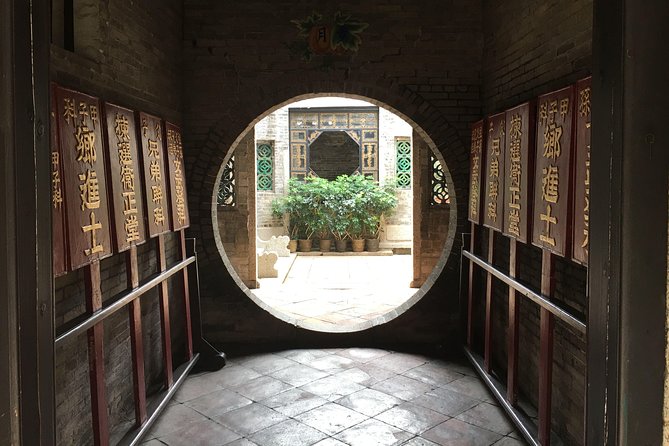
The Yuen Long Ping Shan Heritage Trail is especially useful if you want history with some local texture. You will see religious markers, family buildings, a study hall, and a walled settlement. These are not grand palace sights. Their value lies in the clues they provide about education, family rank, worship, defense, and village life.
The tour also solves a real transport problem. Hong Kong’s public transportation is excellent, but reaching scattered heritage sites in the New Territories can take planning. With transfers between attractions and an English-speaking guide, you can spend your energy looking at the buildings instead of checking routes.
The five-hour length works well for a morning. Pickup is scheduled between about 7:50 and 8:35 a.m., with the exact time confirmed by the local operator. You return to the original departure point after the tour, leaving the rest of the day open for Kowloon, Hong Kong Island, or an independent afternoon in Tai Po if you arrange it properly.
A few more Hong Kong trips to weigh up
- Between Capitalism & Communism: Hong Kong History Tip Based Tour
★ 5.0 · 234 reviews - Beijing Historical Tour II including Summer Palace, Lama Temple & Panda Garden
★ 4.0 · 187 reviews - Beijing Historical Tour I – Forbidden City, Tiananmen Square & Temple of Heaven
★ 4.0 · 120 reviews
Starting early from Kowloon or Hong Kong Island
The tour offers pickup from major centrally located hotels in Kowloon and on Hong Kong Island. That sounds like door-to-door service, but read the conditions carefully. You must give the operator your hotel name or address. Seeing your hotel listed on a booking page does not automatically place you on the pickup schedule.
If your accommodation is not on the pickup list, the operator may assign you a nearby hotel as the meeting point. You need to approve that arrangement. A taxi to the meeting point is your responsibility, so include that cost when judging the total value.
Pickup is not available from the airport, railway station, cruise terminal, New Territories hotels, or Lantau Island. If you arrive in Hong Kong on the same day as the tour, this is a poor fit. The schedule and pickup rules favor people already settled in a central hotel.
For bookings made less than 24 hours before departure, you must telephone the local supplier immediately. Otherwise, the coach may not be sent to your hotel. The final confirmation voucher gives you the pickup time, meeting place, and local phone number.
The early start is practical rather than glamorous. It gets you out toward the New Territories before the day slips away, but you will want breakfast before pickup. No lunch or dinner is included.
Tsui Sing Lau Pagoda and the Ping Shan trail
The first major sight is Tsui Sing Lau Pagoda, believed to date from 1486. This three-story, hexagonal building is made of green brick and rises about 13 meters. It is Hong Kong’s oldest pagoda.
The pagoda’s purpose is more than architectural. The top floor is associated with Fui Shing, the deity linked with success or failure in examinations. Auspicious Chinese sayings appear on each floor, giving the building a direct connection to study and achievement.
You should not expect a huge monument or a long museum visit. The pagoda is compact, and the pleasure comes from noticing its shape, brickwork, inscriptions, and place within the old settlement. Your guide can help explain why examination success mattered so much to educated families and ambitious clans.
The route then moves through historic sites connected with the Tang clan. This is where the tour earns its name. You are not simply ticking off old buildings. You are seeing the institutions that helped organize village life.
Tang Chung Ling Ancestral Hall and the marks of status
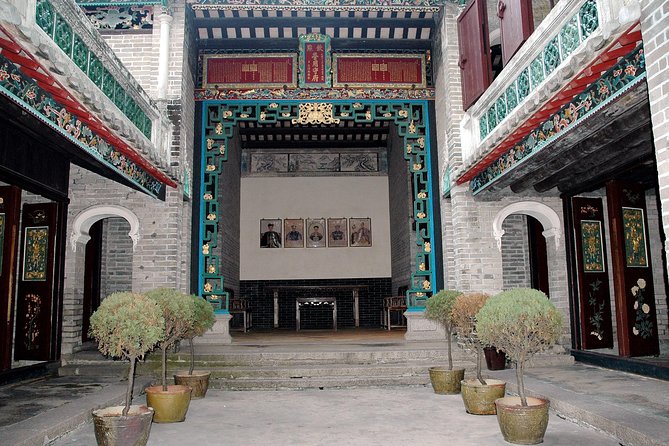
The Tang Chung Ling Ancestral Hall was built in 1273 and is described as a three-hall structure with two internal courtyards. It is one of Hong Kong’s finest examples of a traditional ancestral hall.
Ancestral halls served as places for family ceremonies, worship, and the preservation of clan identity. Look closely at the layout rather than rushing through it. The sequence of halls and courtyards reflects a formal design, not a random collection of rooms.
One small detail is especially useful: the pathway in the courtyard is raised unusually high. This indicates that a member of the Tang clan held a high position in the imperial government. It is a fine example of how architecture can record social rank without needing a written explanation in every corner.
This stop will suit you if you enjoy details about how buildings work. If you prefer dramatic scenery or interactive displays, the visit may feel quiet. The value comes from the guide’s interpretation and from having enough time to look at the structure in context.
Same country, a completely different kind of day:
- Hong Kong: Dolphin Cruise, Big Buddha & Lantau Island Tour
★ 4.2 · 1,512 reviews - Ngong Ping 360: Cable Car Return Tickets & Combos
★ 4.6 · 1,431 reviews - Lantau Island Day Trip – Big Buddha & Tai O
★ 4.5 · 1,328 reviews - Big Bus Hong Kong Open Top Hop-On Hop-Off Sightseeing Tour
★ 4.0 · 1,077 reviews
Kun Ting Study Hall and the story of education
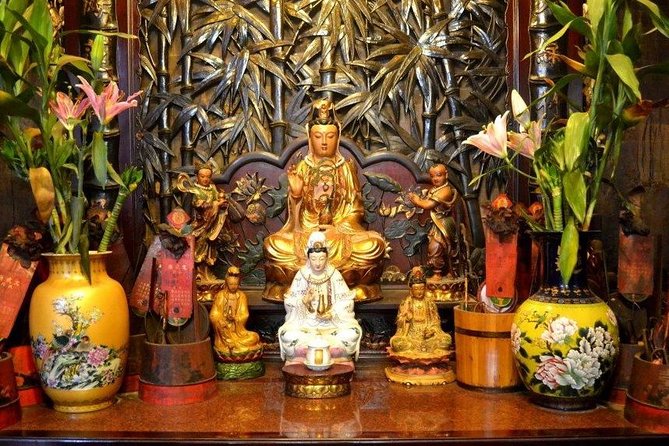
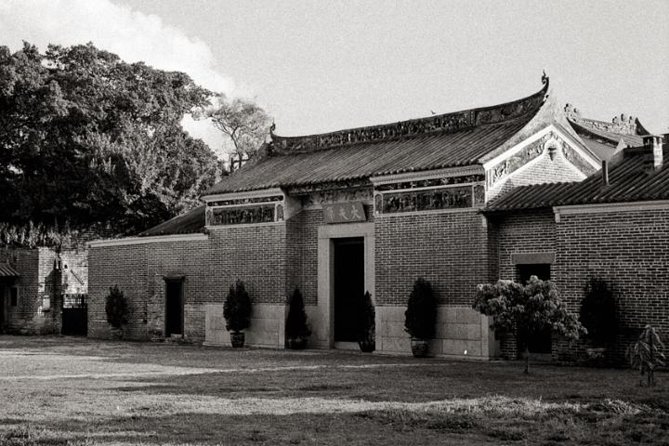
Kun Ting Study Hall dates from the 1870s and served both as an ancestral hall and a place of study. It is a two-hall building with an enclosed courtyard, granite columns, and a granite base along the facade.
The building links education with family tradition. A study hall was not just a classroom. It represented the hope that learning could bring status and influence, much like the examination connection at Tsui Sing Lau Pagoda.
The finely carved granite work gives you something concrete to look at during the explanation. The design inside reflects the skill of the craftsmen who built it, while the courtyard keeps the building from feeling like a simple row of rooms.
This is one of the places where an English-speaking guide matters. Jo-elle, one guide identified in the tour information, was praised for clear English and a good sense of humor. Andy also led one small group. Guide assignments can change, but the tour is designed to keep you accompanied during transfers and sightseeing.
Sheung Cheung Wai, a walled village in miniature
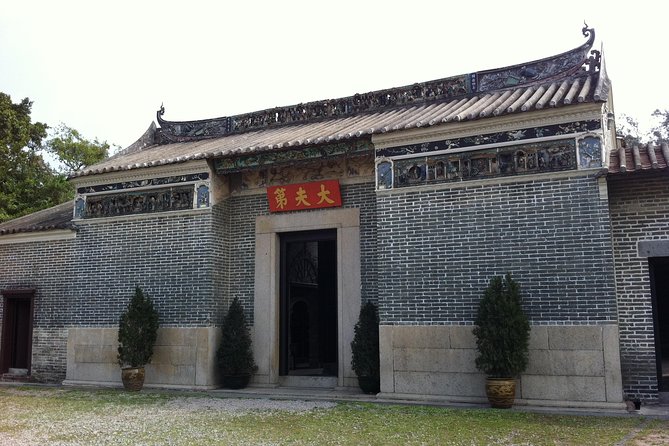
Sheung Cheung Wai is about 200 years old and consists of symmetrical houses enclosed by a green-brick wall. The gatehouse, shrines, and some old homes remain, though parts of the wall are missing.
The village gives you a more immediate sense of traditional settlement design than a single hall can. The wall created a defined community, while the regular rows of houses show how carefully the space was organized.
Do not expect a perfectly preserved movie set. The missing sections are part of the reality here. You are seeing a historic village that has changed over time, not a reconstruction polished for display.
That makes the stop useful for people who want to understand how ordinary communal life fit around the grander clan buildings. Walk slowly if the group allows it, and look at the relationship between the wall, gatehouse, shrines, and houses.
Tai Fu Tai Mansion and the scholar-gentry home
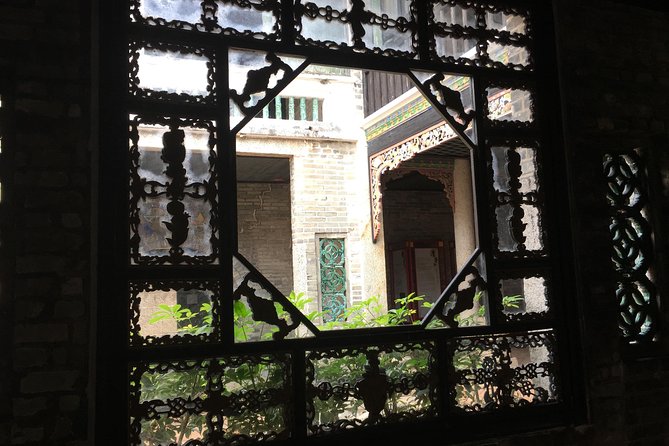
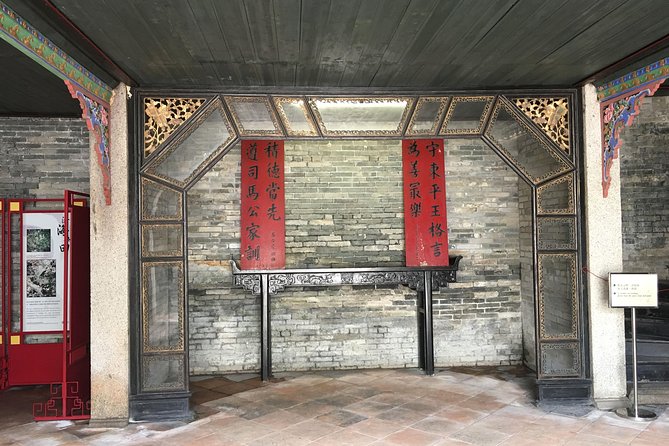
Tai Fu Tai Mansion lies in the New Territories, east of Mai Po, and was probably built in the 1870s by Man Chung-Luen, a successful merchant and philanthropist. It is a traditional Chinese home associated with the scholar-gentry class.
The mansion is described as one of the most elegant historic residences in Hong Kong. It became a gazetted historic building in 1987 and was renovated, with work completed in 1988.
This stop changes the scale of the morning. The ancestral halls and walled village show communal life, while Tai Fu Tai Mansion shows how a wealthy family lived. You can compare the formal family buildings with a private residence built to express education, money, and social position.
The renovation is worth keeping in mind. The house is historic, but what you see today includes conservation work. That does not make it less useful. It simply helps you understand that heritage sites are maintained places, not untouched time capsules.
Tai Po Market, snacks, and free time
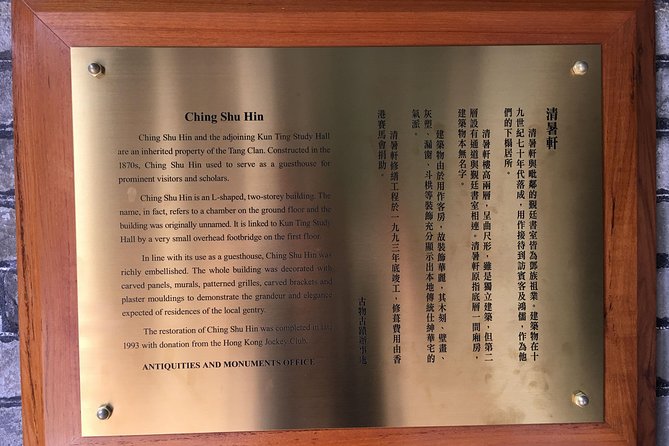
Tai Po Market once served as a trading ground for food and goods from across the New Territories. Today it remains a working food market with vendors selling fresh vegetables, cured meats, dried seafood, and locally made candies.
The tour includes a traditional local snack tasting. This is a modest but welcome part of the itinerary. Historic buildings can tell you how people lived, but food gives you a more direct connection with the present-day culture of the area.
Lunch is not included, so plan on the tasting being a sample rather than a full meal. You may want to buy additional food at the market, but the supplied details do not promise a set lunch or a specific amount of free time for eating.
There is also an option to leave the group at Tai Po Market and spend the rest of the day there, then return to your hotel by MTR. You must ask the guide for approval beforehand and obtain the guide’s cellphone number for urgent contact. This is a useful choice if you want a slower afternoon, but it means giving up the included return transfer and managing your own way back.
The guide, group size, and coach transfers
The tour includes an English-speaking local guide during transfers and sightseeing. That combination matters because the drive between sites is part of the experience, not just dead time. A guide can connect the buildings and explain details that would be easy to miss on a self-guided visit.
The group maximum is six people. That is a strong point for anyone who dislikes large coach excursions. A small group makes it easier to hear explanations, ask questions, and keep the morning moving.
There is one practical wrinkle. One account of the tour describes being picked up from a hotel and then taken to another location where people were sorted onto different tour buses. That group had five people, plus guide Andy and the driver. The exact operating arrangement may vary, so do not assume every pickup goes directly from your hotel to the first heritage stop.
The driver was described as professional and safe, and Jo-elle was praised for her English and humor. Those details suggest the human side of the tour can be a real strength, but guide and driver assignments are not guaranteed.
Is $144.32 a fair price?
At $144.32 per person, this is not a budget sightseeing bus. The price makes more sense if you value time, a very small group, an English-speaking guide, and transport between sites that are spread across the New Territories.
You are paying for access to a carefully linked morning rather than for one major attraction. Pickup, transfers, heritage interpretation, and a snack tasting are included. You still need to cover lunch, any taxi to a designated pickup hotel, and your independent return if you leave at Tai Po Market.
The value is strongest for a first-time visitor who wants a cultural side of Hong Kong without spending hours planning rural connections. It is also appealing if you are comfortable paying more for convenience and a group capped at six.
The value is weaker if you are already confident using Hong Kong’s public transport, want to set your own pace, or are mainly interested in food. Tai Po Market is only one part of the morning, and the historic sites require attention rather than quick photo stops.
Who should book this heritage tour?
I would recommend it to you if you enjoy architecture, family history, traditional village planning, and the quieter side of Hong Kong. It is also a good choice for a short visit when you want to see beyond the usual harbor, shopping, and skyline sights.
Families and older visitors may appreciate the included transfers, though the tour still involves walking between heritage sites. Anyone who needs a fully step-free experience should confirm suitability with the operator before booking, since the supplied details do not describe accessibility conditions.
This is not the right pick if you need airport or cruise-terminal pickup, are staying in the New Territories or on Lantau Island, or want a full food tour. The early morning schedule also requires you to be ready at your confirmed pickup point.
The booking terms are straightforward: you can cancel for a full refund up to 24 hours before the start time. Changes or cancellations inside 24 hours are not refunded, and poor weather may lead to a new date or a full refund.
Final verdict: a smart way to reach old Hong Kong
Book this tour if your idea of a good Hong Kong morning includes old clan buildings, a surviving walled village, and a market snack, not just famous city views. The route has substance, the group size is appealing, and the included transport removes much of the hassle.
Before paying, confirm your hotel pickup in writing, check the early start, and budget for lunch. If those details suit you, this is a practical way to see the New Territories with a guide who can explain why these buildings matter, not merely point at them.
FAQ
How long does the Hong Kong Heritage Discovery tour last?
The tour lasts approximately five hours, including pickup, transfers, sightseeing, the Tai Po Market stop, and the return to the original departure point.
Where does hotel pickup operate?
Pickup is available from major hotels in central Kowloon and on Hong Kong Island. Pickup is not available from the airport, railway station, cruise terminal, New Territories hotels, or Lantau Island.
What if my hotel is not on the pickup list?
The operator may assign you a nearby pickup hotel or meeting point. You must provide your address when booking and approve the proposed arrangement. Any taxi fare to that point is not included.
What time does pickup take place?
Pickup is scheduled between about 7:50 and 8:35 a.m. The exact time and meeting place are provided by the local tour supplier on the final confirmation voucher.
What sights are included?
The route includes Tsui Sing Lau Pagoda, Tang Chung Ling Ancestral Hall, Kun Ting Study Hall, Sheung Cheung Wai walled village, Tai Fu Tai Mansion, and Tai Po Market.
Is food included?
A traditional local snack tasting at Tai Po Market is included. Lunch and dinner are not included.
How many people can join the tour?
The tour has a maximum of six participants. The actual group may be smaller, and one reported departure had five participants, a guide, and the driver.
Can I stay at Tai Po Market after the group leaves?
You may be able to leave the group at Tai Po Market and return to your hotel by MTR, but you must ask the guide for approval in advance. You should also obtain the guide’s cellphone number for urgent contact.
Just added around Hong Kong
- Hong Kong Airport to Hong Kong City Private Arrival Transfer★ 4.5 · 3 reviews
- Hong Kong Observation Wheel Ticket★ 5.0 · 3 reviews
- Hong Kong Palace Museum Ticket★ 5.0 · 3 reviews
- Hong Kong Peak Tram and Sky Terrace 428 Tickets (Optional)★ 3.5 · 22 reviews
- Hong Kong Private Walking Tour with a Local★ 5.0 · 6 reviews
- Hong Kong Market Walking Tour & Chinese Cooking Class★ 5.0 · 24 reviews
- Hong Kong : Must-See Attractions Walking Tour With A Guide★ 5.0 · 7 reviews
- Best Seller: VIP Lantau Tai O Tour Priority Cable Car, Big Buddha★ 4.5 · 28 reviews
Historical Tours, compared.
Between Capitalism & Communism: Hong Kong History Tip Based Tour
Read our review →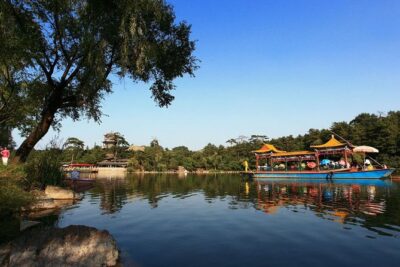
Beijing Historical Tour II including Summer Palace, Lama Temple & Panda Garden
Read our review →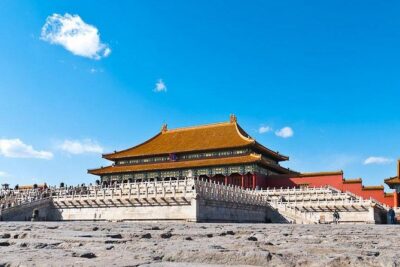
Beijing Historical Tour I – Forbidden City, Tiananmen Square & Temple of Heaven
Read our review →
Tour of Jewish Shanghai led by a Jewish History Expert
Read our review →
Beijing Historic City Guided Walking Tour + Calligraphy Creation
Read our review →
Beijing Culture: Tea Ceremony, Heritage Instrument & Calligraphy
Read our review →
2-Hour Beijing Private Forbidden City Tour: History & Highlights
Read our review →
Xi’an Full Day Sightseeing Tour – Shaanxi History Museum, Big Wild Goose Pagoda, Ancient City Wall
Read our review →Browse the lists this tour appears in