
Reviewed · MARKETS
3-Hour Herbal Wholesale TCM Market and a Local Wet Market Tour
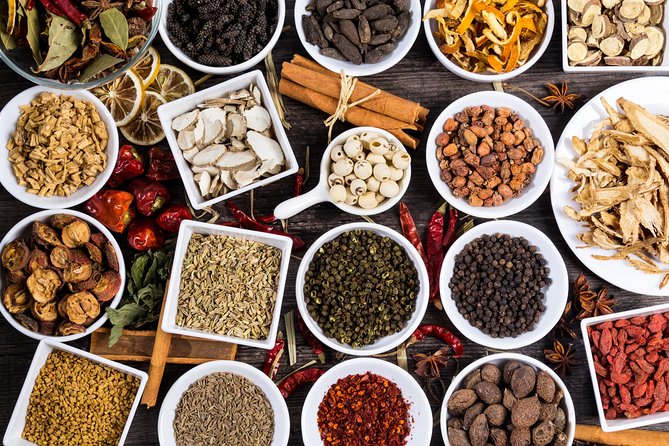
Chengdu’s best food lesson may begin far from a restaurant. This three-hour walk takes you into a wholesale spice market and a local wet market, where sacks of peppers, trays of herbs, and the ingredients of everyday Sichuan cooking fill the scene. Lance and his partner guide the visit, explaining both Chinese medicine and local food customs.
I like the chance to compare more than 10 kinds of chili peppers and huajiao from different places of origin. I also like that this is a private, relaxed tour, so you can ask about Chengdu routines, ingredients, and TCM without being rushed from one stop to the next. The main consideration is that the experience is primarily a walking market visit, not a cooking class or a formal medical consultation.
Key points at a glance
- More than 10 kinds of chili peppers: Compare Sichuan varieties with peppers from other parts of China.
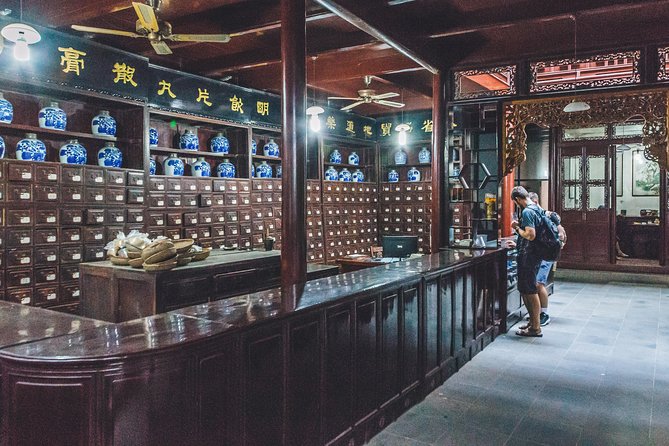
- A serious TCM market: Browse an immense covered wholesale area with more than a thousand types of herbs and plants.
- Two different markets: See the specialized world of Chinese medicine, then visit a local food market.
- Lance and his partner lead the walk: Their role is to explain the ingredients and answer questions about Chengdu life.
- Private three-hour format: Your group participates alone, with time for conversation rather than a fixed crowd schedule.
- Convenient meeting point: The walk starts and finishes at Wenshu Yuan Monastery in central Chengdu.
Why this market walk feels different from a food tour
Most Chengdu food tours focus on what goes into the bowl. This one takes you one step back, to the places where cooks, merchants, and households find the raw materials. That change of viewpoint matters. You see how much variety can hide inside a simple category such as chili pepper, or how many dried plants can be used in TCM.
The spice market is especially useful for understanding Sichuan flavor. You can look for turmeric, several kinds of non-Sichuan peppers, and huajiao, the peppercorn that gives local food its distinctive numbing sensation. The selection includes more than 10 kinds of chili peppers, with ingredients from different areas rather than only the familiar local varieties.
I like this kind of stop because it gives you something concrete to remember. You may not recall every explanation about regional ingredients, but you will likely remember the visual difference between peppers, the scent of the covered market, and the sheer quantity of goods around you.
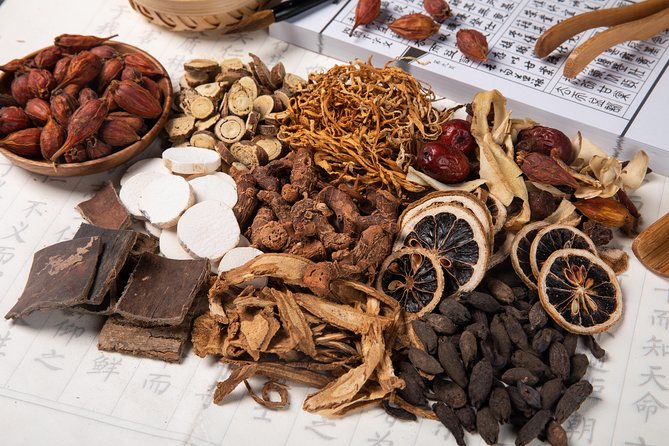
The experience then broadens into TCM. The covered herbal market contains more than a thousand types of herbs and plants. It is not presented as a staged attraction. It is a working wholesale setting, which makes the visit more useful for anyone who wants to see how traditional Chinese medicine remains connected to ordinary commerce.
A few more Chengdu trips to weigh up
- Half-Day Chengdu Cooking Class with a Local Market Visit
★ 5.0 · 465 reviews - Chengdu: Cooking Class with Fresh Market Half Day Experience
★ 5.0 · 42 reviews - Half-Day steamed Buns Cooking Class with a Local Market Visit
★ 5.0 · 26 reviews
Meeting at Wenshu Yuan Monastery
The tour begins at Wenshu Yuan Monastery, at 66 Wen Shu Yuan Jie in Qingyang District. This gives you a clear central meeting point and places the start of the walk near one of Chengdu’s well-known cultural areas. The tour ends back at the same meeting point, so you do not need to arrange a separate pickup after the market visit.
Pickup is listed as offered, but the stated start and finish point is the monastery. I would confirm the pickup arrangement before booking if you do not plan to meet at Wenshu Yuan Monastery. The activity is also near public transportation, which is useful for reaching the start or continuing your day afterward.
Give yourself enough time to find the meeting point. A market tour works best when you arrive ready to walk, listen, and look closely rather than trying to squeeze it between two tightly timed attractions. The total duration is about three hours, long enough to see both market settings without turning the day into an exhausting march.
First stop: Chengdu’s wholesale spice market
The spice portion is the easiest place to connect the market with Chengdu’s famous cuisine. Sichuan cooking is not defined by one pepper alone. This walk introduces you to a wider set of ingredients, including turmeric, different types of chili, and huajiao from more than one place of origin.
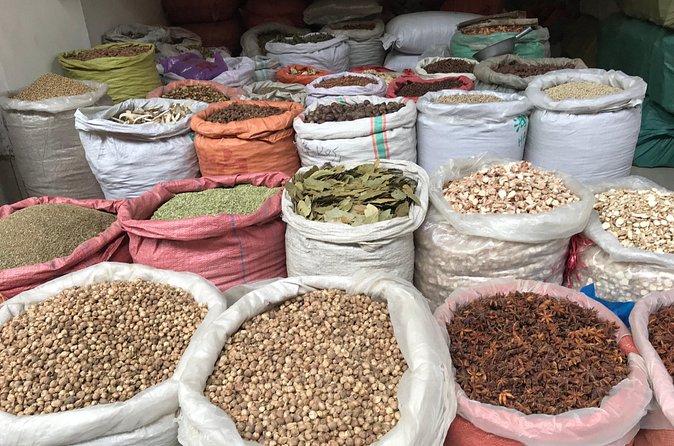
The word wholesale is important. You are not simply browsing a small tourist shop with a few labeled jars. You are entering a commercial market where the range and quantity of ingredients are part of the experience. That can make the surroundings feel less polished, but it also gives you a closer look at how ingredients are traded and selected.
Lance and his partner explain the differences among the peppers and spices as you move through the market. You can ask questions about how an ingredient relates to Sichuan food, where it comes from, and why one pepper may be used differently from another. The private format gives your group room to guide some of that conversation.
This is a strong stop for anyone who cooks, enjoys food photography, or wants more than a list of dishes to try in Chengdu. It can also help you shop with more confidence later. After seeing the real ingredients, you may have a better sense of what you are looking at when you visit a supermarket, specialty shop, or restaurant pantry.
One practical point: the market may be more interesting than comfortable. Covered wholesale areas can be crowded with products and strong smells, and the experience is built around looking and learning rather than sitting down. If you prefer quiet museums and carefully arranged displays, this will feel rough around the edges.
Second stop: the TCM herbal market
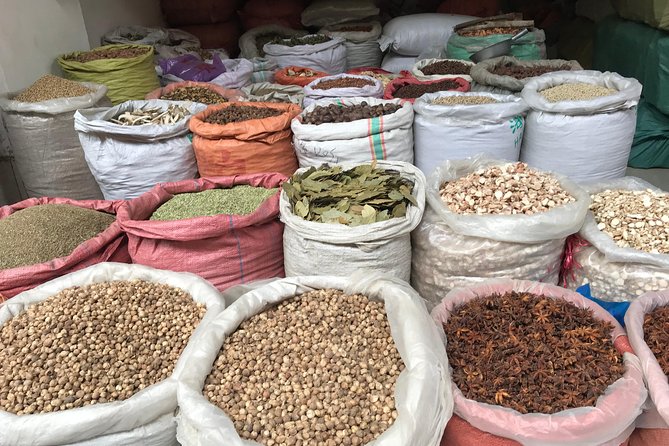
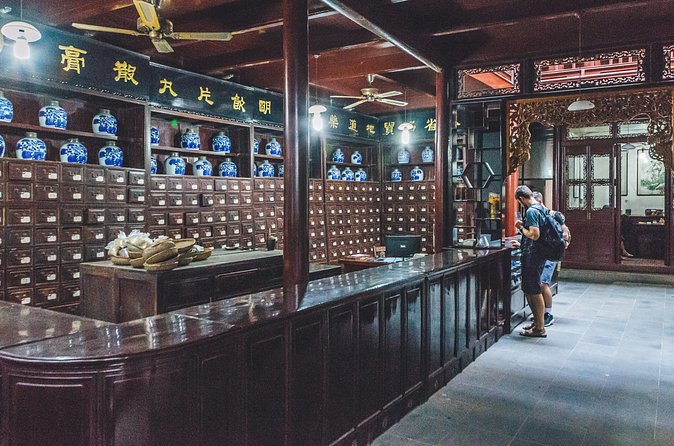
The TCM market gives the tour its most unusual feature. You walk through an extensive covered area filled with herbs and plants used in traditional Chinese medicine. The smell is a major part of the visit, with different dried materials creating an atmosphere that is hard to reproduce in a modern shop or museum.
The scale is what makes this stop valuable. More than a thousand types of herbs and plants are represented in the market. You do not need to memorize them. The point is to see the breadth of a medical tradition that has been part of Chinese culture for thousands of years and to understand why these markets still matter.
Lance’s explanations place the products in a wider cultural setting. The tour describes TCM as an important part of Chinese culture and explains its contribution to Chinese life over many centuries. You should treat this as cultural education, not personal medical advice. The tour does not turn the market into a clinic, and you should not expect a diagnosis or treatment plan.
I would especially recommend this section to anyone interested in the relationship between food, plants, and traditional health practices. It also suits visitors who have already seen Chengdu’s temples and food streets and want a less familiar side of the city.
The market may be visually intense. There are many different materials, unfamiliar names, and competing aromas. That is part of its appeal, but it can also be a lot to take in during one visit. Having Lance and his partner explain what you are seeing keeps the experience from becoming a blur of dried plants and shop counters.
Same country, a completely different kind of day:
- Chengdu: Giant Panda Breeding Research Base Ticket
★ 4.5 · 580 reviews - Tuktuk Food Tour Through Chengdu’s Local Eats
★ 5.0 · 435 reviews - Private Half-Day Chengdu Panda Breeding Center Tour with Optional Volunteer
★ 5.0 · 353 reviews - Chengdu: Sichuan Opera Shu Feng Yan Yun Evening Show Ticket
★ 4.7 · 185 reviews
The local wet market adds everyday Chengdu
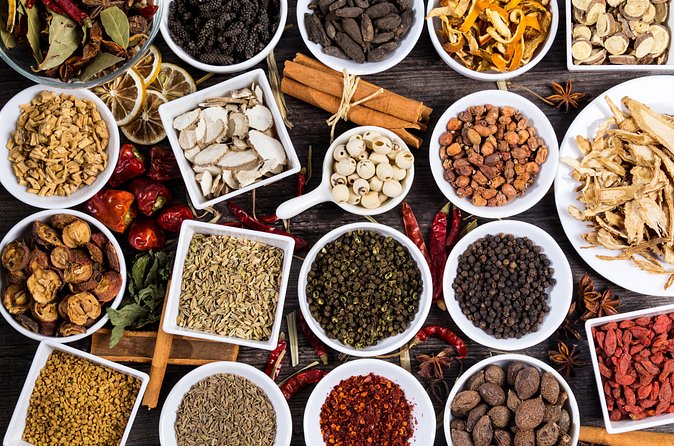
The second market is a local wet market focused on food. It provides a useful contrast with the specialized TCM wholesale area. One market shows a highly specific trade in herbs and spices. The other gives you a look at ingredients and routines connected with daily meals.
This is where the tour feels most connected to ordinary Chengdu life. You are not only learning about famous Sichuan flavors. You are seeing the setting in which local food shopping happens. The colors, people, and goods create a living scene, rather than a display built for sightseeing.
The available details do not promise tastings, a meal, or hands-on cooking. Plan on observing and asking questions instead. If you want a food tour that guarantees dishes at several restaurants, choose something else. If you want to see where local ingredients are sold and to discuss food habits with a local guide, this market fills that role well.
I like the pairing because it stops the tour from becoming too narrowly focused on medicine. You get the cultural background of TCM, then return to the practical business of food. Together, the two markets show how ingredients can belong to both the kitchen and the wider traditions of health and daily life.
What the private format changes
This is a private activity, so only your group participates. That is a meaningful advantage in markets, where the best questions often come from small observations. You can stop to ask about one pepper, one herb, or a local habit without worrying that a large group is waiting.
Lance and his partner are named as the guides. The experience is especially suited to curious visitors who want conversation. You can ask about Chengdu’s local routines as well as spices and Chinese medicine, making the walk broader than a standard ingredient lesson.
The relaxed pace also came through clearly in the available guest feedback. The tour is not built around constant activity or a packed schedule. That is good news if you prefer to take in a place slowly, but it also means you should not expect a dramatic sequence of attractions every few minutes.
A private tour can be more expensive than joining a large group, but here the price is $46.16 per person. For three hours with two guides, access to two market settings, and the ability to ask questions freely, I consider that a reasonable price if TCM and local food culture are priorities. The value is less convincing if you only want a quick market photo stop.
Group discounts are available, so the price may work better for a small party booking together. Since the average booking is made 22 days ahead, reserve early if you have fixed Chengdu dates. That lead time is not a requirement, but it suggests that leaving this until the last day may not be wise.
Who should book this Chengdu experience
I would choose this walk if you enjoy food but want to understand ingredients before eating them. It is also a good match for anyone curious about TCM, especially if you want to see an active market rather than read about the subject in a museum.
The tour suits:
- First-time Chengdu visitors who want a local market experience
- Food-focused visitors interested in peppers, turmeric, and huajiao
- People curious about Chinese medicine and plant-based traditions
- Small groups that prefer a private guide
- Visitors who enjoy asking questions and learning through observation
- Anyone looking for a calm three-hour activity near Wenshu Yuan Monastery
I would be more cautious about booking it if you have limited mobility or dislike walking through covered markets. The information says most participants can take part, but it does not provide a detailed accessibility description. Ask the provider about your specific needs before paying.
It is also not the right choice if your main goal is to buy large amounts of herbs or spices. The tour may help you understand what you are seeing, but the stated focus is education and market exploration, not a shopping guarantee. You should also avoid treating TCM explanations as professional medical advice.
Practical details before you go
The activity lasts about three hours and includes free admission to the described stop. It starts and finishes at Wenshu Yuan Monastery, with public transportation nearby. The mobile ticket makes it easy to keep the booking details on your phone.
Confirmation arrives at booking. The tour requires good weather, and if poor weather causes cancellation, you are offered another date or a full refund. You can cancel free of charge up to 24 hours before the start time. Changes or cancellations inside that 24-hour window are not accepted, and the time cutoff follows Chengdu local time.
Wear something suitable for walking and bring a phone if you want to record the names or appearances of unfamiliar ingredients. The tour description does not state that tastings are included, so eat beforehand if you need a meal rather than assuming the market will provide one.
The market environment is likely to be the main event, not comfort. Expect strong aromas, a great deal to look at, and plenty of unfamiliar products. Keep your schedule afterward flexible enough that you can continue exploring near Wenshu Yuan Monastery without rushing away.
Should you book the market walk?
Book it if you want a close look at the working side of Chengdu’s food and TCM culture. The combination of Sichuan spice variety, a large herbal wholesale market, and a local food market gives you more context than a simple street-food outing. Lance and his partner add value by explaining what you are seeing and leaving room for questions about local life.
Skip it if you want cooking, tastings, shopping assistance, or a grand sightseeing route. This is a focused, easygoing walk through real markets. For the right visitor, that is precisely the point.
FAQ
Where does the tour start?
The tour starts at Wenshu Yuan Monastery, 66 Wen Shu Yuan Jie, Qingyang District, Chengdu, Sichuan, China, 610084.
Where does the tour end?
The activity ends back at the meeting point at Wenshu Yuan Monastery.
How long does the experience last?
The walking tour lasts approximately three hours.
Is this a private tour?
Yes. Only your group participates in the activity.
What markets are included?
The experience includes a wholesale market for Sichuan spices and Chinese medicine herbs, as well as a local wet market focused on food.
Are pickup and public transportation available?
Pickup is offered, and the meeting area is near public transportation. Confirm the exact pickup details when booking, since the stated start point is Wenshu Yuan Monastery.
Can I cancel for a full refund?
Yes. You can cancel at least 24 hours before the experience starts for a full refund. Cancellations or changes made less than 24 hours before the start time are not accepted, and poor-weather cancellations offer a different date or a full refund.
More 3-Hour Experiences in Chengdu
- Three-Hour Private Chengdu Tea Wholesale Market Tour
★ 5.0 · 4 reviews - 3-Hour Private Tour to Jewish Ghetto and Shanghai Bund
★ 5.0 · 69 reviews - 3-Hour Private Night Tour: Beijing Foodie Experience
★ 5.0 · 53 reviews - Shanghai: 3-Hour Old Shanghai City Tour
★ 4.9 · 45 reviews
Just added around Chengdu
- Visiting Chengdu Panda Base in a Half Day★ 5.0 · 4 reviews
- Classsic sichuan Opera at sichuan Provincial Theater★ 5.0 · 4 reviews
- Tea Village in lost Town and Buddha 1 day tour★ 5.0 · 32 reviews
- Sichuan Opera with face-changing at Sichuan opera theater★ 4.5 · 6 reviews
- Sichuan Opera Show with Hotel Pickup★ 5.0 · 3 reviews
- Mini Group: Half-Day Chengdu Pandas Guided Tour★ 5.0 · 3 reviews
- Panda, Leshan, and Emei Mountain 2-day tour★ 5.0 · 4 reviews
- Shu Feng Ya Yun Sichuan Opera Ticket★ 5.0 · 13 reviews
Markets, compared.
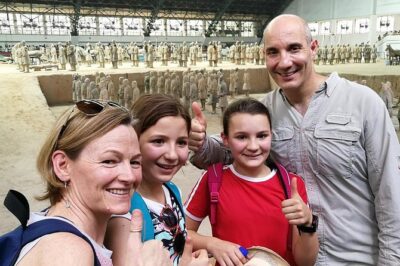
Mini Group Xian Day Tour to Terracotta Army, City Wall, Pagoda and Muslim Bazaar
Read our review →
Half-Day Chengdu Cooking Class with a Local Market Visit
Read our review →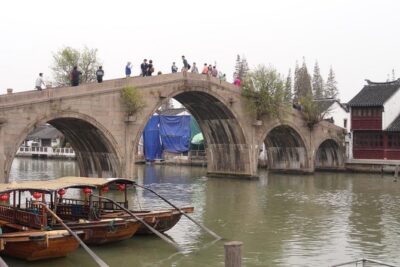
Shanghai Day Tour to Zhujiajiao Water Town, Yu Garden, Bazaar, Bund
Read our review →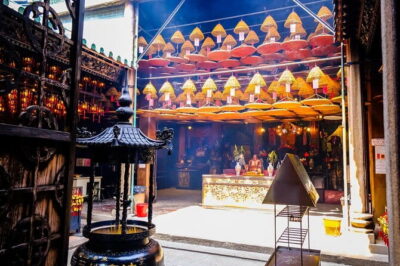
Kowloon Street Market & Food Culture Walking Tour
Read our review →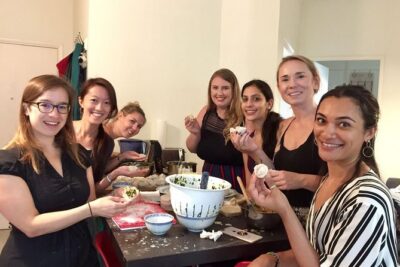
Organic Chinese Dumpling Class with Market Walk
Read our review →
Terracotta Army, Lunch, City Wall, Pagoda, Bazaar
Read our review →
Organic Xiao Long Bao Soup Dumpling Class & Market Walk
Read our review →
Lijiang Naxi Cuisine Cooking Class & Market Visit
Read our review →Browse the lists this tour appears in