
Reviewed · MARKETS
Three-Hour Private Chengdu Tea Wholesale Market Tour
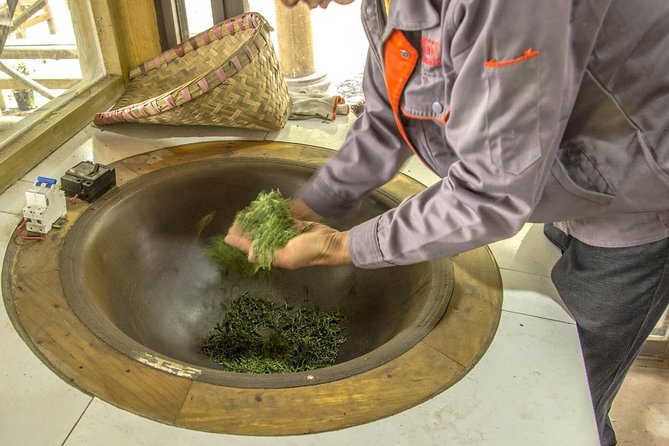
Chengdu’s wholesale tea market is less a polished tea room than a working maze of shops, leaves, tools, and deals. You can watch how tea is dried, processed, and packaged, then sit down to taste different kinds before deciding what to buy.
I like the chance to compare green, black, white, oolong, and Pu-er tea in one place. I also like that an English-speaking guide such as Jerry can help you make sense of the market instead of leaving you to guess at unfamiliar labels. The main drawback is simple: this is a wholesale market, so it may feel overwhelming if you want a quiet, formal tasting rather than a busy shopping stop.
Key points to know before you go
- One of China’s largest tea markets: Expect a huge collection of tea shops rather than a single tasting counter.
- Tea tasting comes before buying: You can sit down, sample what interests you, and then decide if the price and flavor suit you.
- Five main tea styles are covered: Learn the basic differences between green, black, white, oolong, and Pu-er tea.
- Tea ware is part of the bargain: The market is also a practical place to look for tea sets and accessories.
- A private format keeps the visit personal: Only your own group takes part, with no strangers added.
- Plan around two hours: The advertised duration is about two to three hours, with the market visit itself listed at roughly two hours.
Entering Chengdu’s enormous tea market
The appeal here is scale. Chengdu is known for its tea culture, but this visit takes you beyond the familiar teahouse setting and into a wholesale market filled with shops selling tea leaves in many shapes, sizes, and grades.
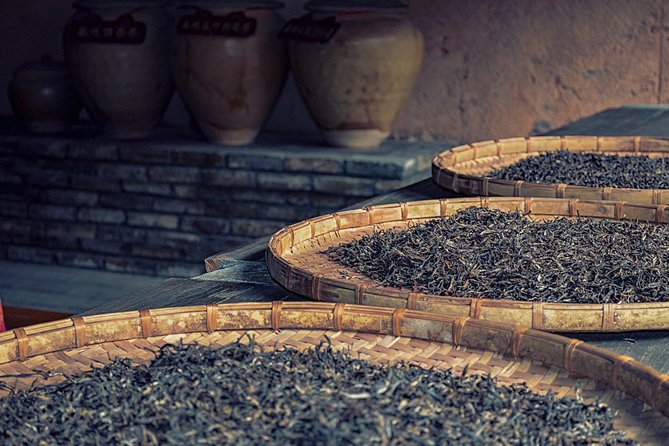
You do not need to be buying in bulk to enjoy it. The sheer range gives you a useful look at how tea is handled as a product, from drying and processing to packaging and sale. You might see loose leaves prepared for different markets, along with tea sets and accessories meant for home use.
That makes this a good choice if you want a look at everyday tea commerce rather than a carefully staged cultural show. The setting is practical. You are there to look, ask questions, taste, and possibly buy.
The market is described as one of the biggest tea markets in China. That is useful context, but it also tells you what to expect: many shops, lots of visual information, and the possibility of sensory overload. An English-speaking leader gives the visit a clear purpose and helps you focus on the differences that matter.
A few more Chengdu trips to weigh up
- Half-Day Chengdu Cooking Class with a Local Market Visit
★ 5.0 · 465 reviews - Chengdu: Cooking Class with Fresh Market Half Day Experience
★ 5.0 · 42 reviews - Half-Day steamed Buns Cooking Class with a Local Market Visit
★ 5.0 · 26 reviews
What happens during the two-hour visit
The tour begins at the Wenshu Yuan Monastery meeting point, at 66 Wen Shu Yuan Jie in Qingyang District. Pickup is also offered from a centrally located Chengdu hotel, so check the exact arrangement when you book. The supplied details name the monastery as the start and end point, while the overview says hotel pickup is available.
Once you meet your guide, you head into the wholesale market. The visit centers on the tea shops and the methods used to dry, process, and package the leaves. This is not presented as a long lecture. Instead, you can learn while looking at the products in front of you.
That hands-on setting is useful. Tea terminology can sound abstract when you read it in a guidebook. Seeing leaves in different forms, then asking how they were handled, gives the information a practical hook.
The guide can also explain how to tell the main tea categories apart:
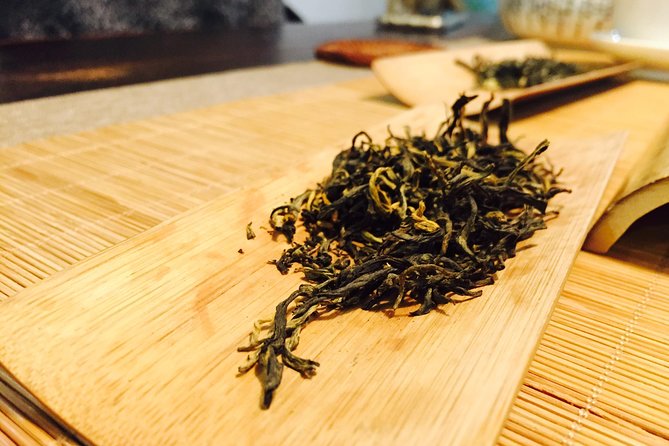
- Green tea: You learn the basic features used to identify green tea and how it differs from more oxidized styles.
- Black tea: The guide can explain its place among the tea types sold in the market.
- White tea: You can compare its leaves and preparation with the other categories.
- Oolong tea: This gives you a chance to see how a partly processed tea fits between broad style groups.
- Pu-er tea: You can ask about this distinctive tea and how it differs from the other four types.
The information provided does not specify a set tasting menu or named tea varieties. You should think of the visit as an introduction to the market and its categories, not a fixed professional certification class.
Tasting before you buy
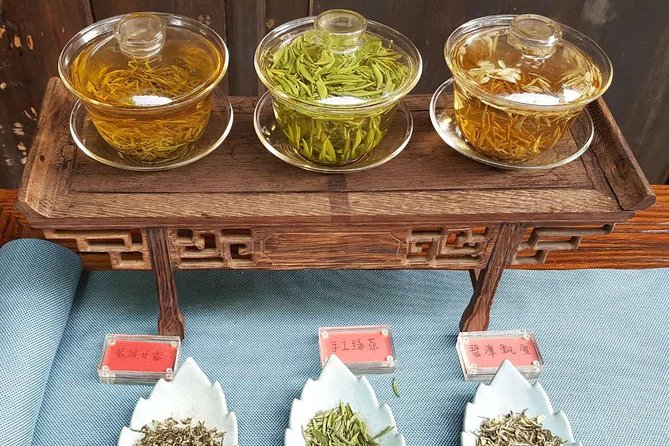
One of the strongest features is the chance to taste tea before making a deal. If you find a shop or tea type that interests you, you can pull up a seat and try it first.
That matters because tea prices can vary for reasons that are not obvious from appearance alone. Taste gives you a better basis for deciding than packaging or a seller’s description. You can compare what you actually enjoy, then decide if a purchase makes sense.
I would use the tasting time to ask short, direct questions. What kind of tea is this? How was it processed? Is it intended for everyday drinking or a special occasion? How much should you use at home? The English-speaking guide can help with communication and explain the general differences between styles.
You should also feel free to buy nothing. The tour is worthwhile as a market visit even if your suitcase has no room for tea. The tasting option is there to help you judge the product, not to make a purchase compulsory.
If you do buy, remember that this is a wholesale market. Some shops may be more accustomed to larger orders, and the selection may be broader than what a casual buyer needs. A private guide is especially helpful here because you can say what you want, set a budget, and avoid wandering through every shop.
Tea sets and accessories at lower prices
The market is not only about loose leaves. It is also described as one of the better and cheaper places to buy tea sets and accessories.
That widens the appeal. You might be looking for a small gift, a simple brewing set, or a useful reminder of your time in Chengdu. The market can give you more choice than a standard souvenir shop, though the exact brands, materials, and prices will depend on the individual seller.
Tea ware is often easier to assess than tea itself. You can look at the size, shape, and finish, then decide if it is practical to carry home. Ask the guide to help explain what an item is used for if its purpose is unclear.
Prices are not guaranteed, and the information does not give a fixed discount or standard price list. Treat the low-cost description as a reason to compare rather than a promise that every item will be a bargain. Taste the tea, inspect the accessory, and make your own call.
Same country, a completely different kind of day:
- Chengdu: Giant Panda Breeding Research Base Ticket
★ 4.5 · 580 reviews - Tuktuk Food Tour Through Chengdu’s Local Eats
★ 5.0 · 435 reviews - Private Half-Day Chengdu Panda Breeding Center Tour with Optional Volunteer
★ 5.0 · 353 reviews - Chengdu: Sichuan Opera Shu Feng Yan Yun Evening Show Ticket
★ 4.7 · 185 reviews
Why a private tour can be useful here
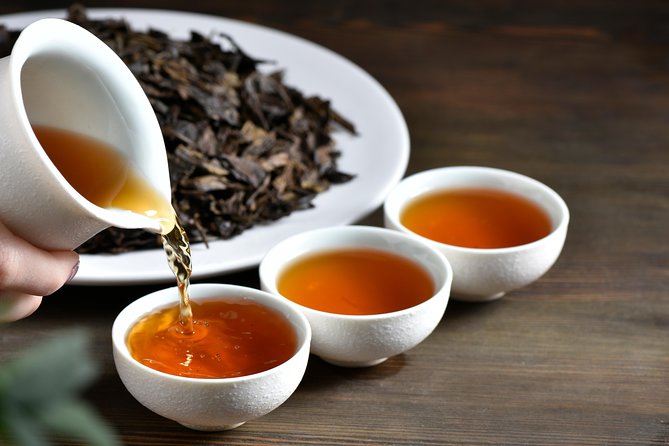
This is a private activity, so only your group takes part. That changes the rhythm of the visit. You can spend more time on Pu-er tea if that is your interest, or move on quickly if your main goal is to find a tea set.
A private format is also useful in a wholesale market because your questions may be specific. One person may want to understand processing, while another may be focused on buying. You can shape the conversation around your group instead of following a fixed pace designed for a large busload.
The tradeoff is price. At $46.16 per person, the cost is higher than simply walking into a market on your own. You are paying for the English-speaking leader, private attention, help with communication, and a more organized visit.
That value makes the most sense for first-time tea buyers, people who want context, and anyone who does not speak enough Chinese to feel comfortable negotiating or asking about products. If you already know tea well and are happy to browse alone, you may find the guided format less necessary.
Group discounts are offered, which may improve the per-person value for a larger private party. The exact discount is not provided, so check the total before booking.
What Jerry’s good feedback tells you
The published feedback gives Jerry specific credit for making the visit informative and enjoyable. One detailed account describes him as a fantastic guide and says the group learned a great deal while walking through the wholesale market.
That is worth noting because the guide is central to the experience. The market itself supplies the sights, smells, and products, but the guide determines how much of it becomes useful information. A good leader can explain tea grading, help you compare categories, and keep the visit from becoming a confusing sequence of sales pitches.
The available rating is five stars from four reviews. That is encouraging, but it is still a small sample. I would treat it as a positive sign rather than proof that every guide and every visit will be identical.
If Jerry is assigned to your group, you may benefit from the qualities described in the feedback. If another guide leads the visit, the core experience remains the same, but the style of explanation can vary. Bring questions and tell the guide what interests you early.
Price, timing, and practical value
The listed price is $46.16 per person. For a two to three-hour private visit, that is a reasonable price if you want help understanding the tea categories and buying in an unfamiliar market.
It is less attractive if you only want to take a quick look. The wholesale market is free to enter, and the market stop itself lists no admission charge. The tour fee is for the guide-led access and structure, not an entrance ticket.
The booking pattern suggests people reserve about 10 days ahead on average. You do not necessarily need to plan that far ahead, but booking earlier gives you more time to sort out pickup and meeting details.
A mobile ticket is provided, and confirmation arrives when you book. The market is near public transportation. The tour is private, and most people can participate, though no detailed accessibility information is provided.
The stated duration is approximate. The overview gives two to three hours, while the market visit is listed as two hours. Leave some flexibility around the start and end rather than scheduling a tight connection immediately afterward.
Who will enjoy this market visit most
I would recommend this experience to you if you fit one of these descriptions:
- You want to buy Chinese tea but do not know how to compare the choices.
- You enjoy markets more when someone explains what you are seeing.
- You would like to taste tea before spending money.
- You want affordable tea ware or accessories as well as tea leaves.
- You prefer a private guide who can adjust the pace to your interests.
- You want a practical look at Chengdu’s tea trade rather than only a formal teahouse visit.
It is also a useful option for a small group with mixed interests. One person can focus on tea processing, another on shopping, and everyone can meet for the tasting portion.
You may want to skip it if your schedule is very tight, you dislike shopping environments, or you already know exactly what tea you want and how to buy it. The market’s size is part of its appeal, but it can also make the stop feel too broad for someone seeking a calm, quiet tasting.
How to get the most from the visit
Before you go, decide what you want from the two hours. Are you mainly curious about tea production, looking for a gift, hoping to bring home a tea set, or trying to find a daily drinking tea? Tell the guide at the start.
Keep your first purchase modest until you know what you like. The chance to taste is the key advantage, so use it. Compare styles rather than buying the first attractive package.
Take notes on names, flavor impressions, and preparation advice. The market offers many choices, and memory becomes unreliable after several tastings.
If you are buying tea ware, think about luggage space and breakage. The information does not state how items are packed or shipped, so ask the seller before committing to anything fragile.
Finally, confirm the meeting arrangement. The stated start and end point is Wenshu Yuan Monastery, while hotel pickup is offered from central Chengdu hotels. That detail is easy to clear up in advance and prevents an avoidable wait.
Should you book the Chengdu tea market tour?
Book it if you want a private, guided introduction to Chinese tea shopping and prefer to taste before buying. The combination of market access, tea education, English-language help, and tea ware gives you more than a simple shopping trip.
I would be most likely to choose it early in a Chengdu visit, before buying tea elsewhere. You can learn the basic categories, see how prices and products are presented, and then decide what belongs in your luggage.
Skip it if you want a polished tea ceremony or a short, independent browse. This is a large wholesale market with many shops, not a quiet salon. For the right visitor, that is exactly the point.
FAQ
How long does the Chengdu tea market tour last?
The experience lasts approximately two to three hours. The market visit itself is listed as about two hours.
Where does the tour start?
The stated meeting point is Wenshu Yuan Monastery, 66 Wen Shu Yuan Jie, Qingyang District, Chengdu, Sichuan, China.
Where does the tour end?
The activity ends back at the meeting point.
Is hotel pickup available?
Pickup is offered from centrally located hotels in Chengdu. The stated meeting point is Wenshu Yuan Monastery, so confirm the pickup arrangement for your hotel when booking.
Is this a private tour?
Yes. Only your own group participates in the activity.
What types of tea can I learn about?
The guide can explain how to differentiate oolong, green, black, white, and Pu-er tea.
Can I taste tea before buying it?
Yes. You can sit at a tea shop and taste the tea you are considering before making a purchase.
Can I cancel for a full refund?
Yes, if you cancel at least 24 hours before the experience start time. Cancellations made less than 24 hours ahead are not refunded, and late changes are not accepted.
More 3-Hour Experiences in Chengdu
- 3-Hour Herbal Wholesale TCM Market and a Local Wet Market Tour
★ 5.0 · 4 reviews - 3-Hour Private Tour to Jewish Ghetto and Shanghai Bund
★ 5.0 · 69 reviews - 3-Hour Private Night Tour: Beijing Foodie Experience
★ 5.0 · 53 reviews - Shanghai: 3-Hour Old Shanghai City Tour
★ 4.9 · 45 reviews
Just added around Chengdu
- Visiting Chengdu Panda Base in a Half Day★ 5.0 · 4 reviews
- Classsic sichuan Opera at sichuan Provincial Theater★ 5.0 · 4 reviews
- Sichuan Opera with face-changing at Sichuan opera theater★ 4.5 · 6 reviews
- Tea Village in lost Town and Buddha 1 day tour★ 5.0 · 32 reviews
- Sichuan Opera Show with Hotel Pickup★ 5.0 · 3 reviews
- Mini Group: Half-Day Chengdu Pandas Guided Tour★ 5.0 · 3 reviews
- Panda, Leshan, and Emei Mountain 2-day tour★ 5.0 · 4 reviews
- Shu Feng Ya Yun Sichuan Opera Ticket★ 5.0 · 13 reviews
Markets, compared.

Mini Group Xian Day Tour to Terracotta Army, City Wall, Pagoda and Muslim Bazaar
Read our review →
Half-Day Chengdu Cooking Class with a Local Market Visit
Read our review →
Shanghai Day Tour to Zhujiajiao Water Town, Yu Garden, Bazaar, Bund
Read our review →
Kowloon Street Market & Food Culture Walking Tour
Read our review →
Organic Chinese Dumpling Class with Market Walk
Read our review →
Terracotta Army, Lunch, City Wall, Pagoda, Bazaar
Read our review →
Organic Xiao Long Bao Soup Dumpling Class & Market Walk
Read our review →
Lijiang Naxi Cuisine Cooking Class & Market Visit
Read our review →Browse the lists this tour appears in