
Reviewed · MUSEUMS
Private Half Day Tour to Unit 731 Museum and Sites in Harbin
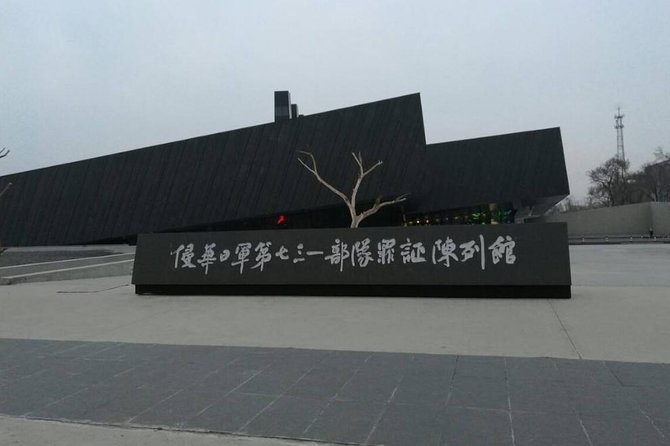
Unit 731 is not a light sightseeing stop. It is a museum about human suffering, built on the site of a former Japanese biological and chemical warfare testing center. Inside, maps, photographs, medical equipment, and detailed records explain what happened here, while the remaining buildings make the story feel tied to a real place rather than a distant chapter in a textbook.
I like two things right away: the private guide can explain the exhibits as you see them, and the four-hour schedule gives you time for both the indoor museum and the grounds. Hotel pickup and return transportation also remove a fair bit of hassle in Harbin.
The main consideration is emotional. This is a grim visit, not a casual museum outing, and the displays describe human and animal experiments in direct detail. The museum is closed on Monday, and entry requires advance planning with your passport number and full name, so this is not the sort of stop to leave until the last morning.
Key points to know before booking
- The subject is serious and unsettling: Expect a factual account of wartime human experimentation and biological warfare.
- The 2015 museum renovation matters: The newer exhibition hall presents the story from Unit 731’s creation through its closure.
- Original site buildings remain: The grounds help connect the indoor records to the place where events occurred.
- Private transportation is included: You are picked up at your Harbin hotel and returned there after the visit.
- The guide adds context: Your guide explains the facts behind the maps, photographs, equipment, and records rather than leaving you to piece the story together alone.
- Advance ticket details are important: Plan at least three days ahead and provide your passport number and full name for entry.
Why Unit 731 is a different kind of Harbin visit
Harbin is often associated with winter scenery, Russian-influenced architecture, and the Ice and Snow Festival. Unit 731 offers a very different view of the city and of twentieth-century history.
The museum occupies the former site of a Japanese biological and chemical warfare research center. Its subject is the treatment of prisoners and the experiments carried out by researchers during wartime. The visit is presented through physical evidence, photographs, maps, written records, medical equipment, and the remains of original structures.
That combination gives the museum unusual weight. A display case can explain what happened, but walking across the grounds and seeing parts of the former complex adds a physical sense of place. You are not simply reading a timeline. You are looking at a site connected to the events being described.
I would set aside any expectation of entertainment or easy sightseeing. The purpose here is remembrance and education. The museum’s material may be distressing, particularly when the displays describe experiments involving people and animals. If you prefer to prepare younger members of your group before visiting, that is sensible. The tour is suitable for most participants, but the subject itself is the key question.
A few more Harbin trips to weigh up
- Beijing: Tianmen Square, Forbidden City & Royal Museum Tours
★ 4.6 · 1,288 reviews - Half-Day Mini Group Xian Tour to Terracotta Warriors Museum
★ 5.0 · 467 reviews - Beijing:Jingshan Park (Palace Museum Garden) Ticket
★ 4.5 · 185 reviews
The four-hour plan from Harbin hotels
The experience lasts about four hours, including transportation to and from the museum. You choose a morning or afternoon departure when booking, then meet your guide in your hotel lobby.
That arrangement is useful in Harbin because you do not need to work out the route to the site yourself. After meeting, you travel to the museum with your guide. The transport setup depends on group size: a taxi is used for groups of fewer than three people, while groups of more than three use a private vehicle.
This is a practical point for couples and solo visitors. You still have private transport, but the ride is handled by taxi rather than by a dedicated vehicle. Larger groups receive private-vehicle transport, which can make the journey more comfortable and easier to coordinate.
On arrival, the visit begins with the indoor exhibits. Your guide explains the history and facts connected with each section, then you have time to explore the grounds. At the end, you are transferred back to your hotel in Harbin.
The schedule is compact without being rushed on paper. The museum is the only sightseeing stop, which is appropriate here. You are not being hurried from one unrelated attraction to another, and the subject deserves a focused visit.
Inside the remodeled exhibition hall
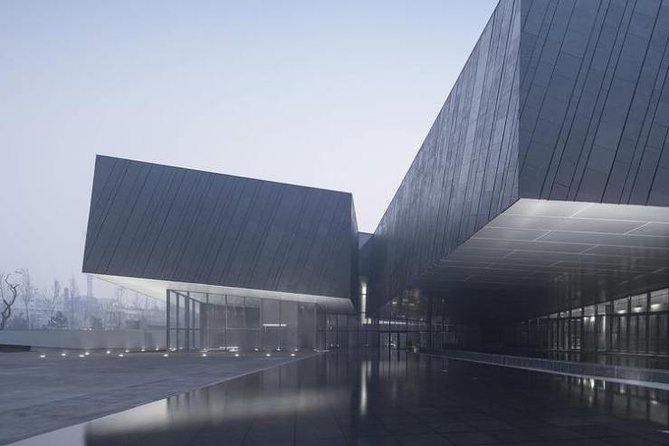
The museum was completely remodeled in 2015, and the newer exhibition hall presents the story of Unit 731 from its beginning to its closure. That broad time frame helps you understand the site as an organized institution, not just as a collection of isolated crimes.
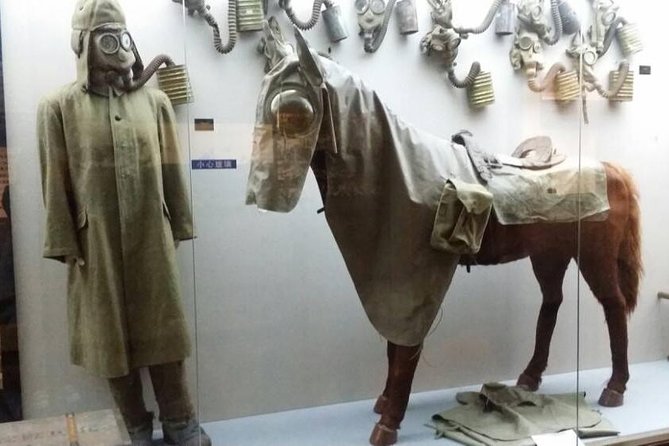
Maps help show where the unit operated and how the complex was arranged. Photographs put faces, buildings, and historical settings alongside the written material. Detailed records describe the human and animal experiments, while medical and testing equipment found on the property gives the displays a direct connection to the work carried out there.
Your guide’s role is especially useful inside the hall. Historical exhibits can be difficult to follow when names, dates, military terms, and technical material appear together. A guide can point out what matters and explain the context behind individual displays as you move through them.
The museum’s evidence-based presentation is also why this visit can feel so powerful. You are not relying only on a general narrative about wartime violence. The maps, photographs, records, and equipment create a documented account. One reviewer described the museum as especially moving because the evidence in the displays makes the atrocities feel more immediate. That is a fair warning about the tone of the visit.
You should allow yourself time to read. The tour is private, so you can ask questions and pause at sections that require more thought. At the same time, a private tour does not make the content easier. The benefit is control over the pace and explanations, not a softer version of the subject.
Walking the grounds and seeing original structures
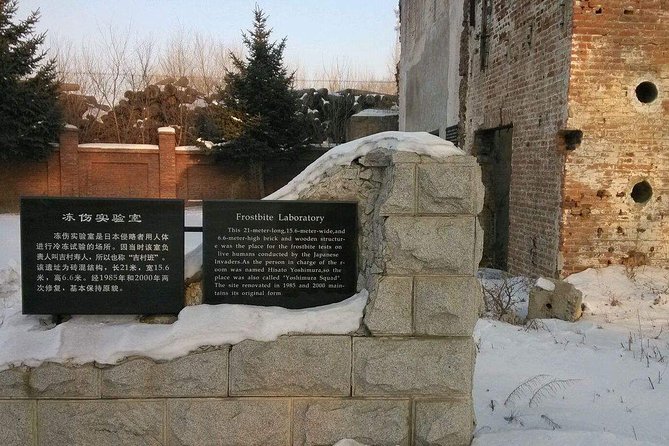
After the indoor exhibits, you can explore the grounds of the former Unit 731 complex. Some original buildings remain, offering a view of the site’s earlier structure.
This part of the visit is important because it changes the experience from a museum visit into a site visit. The buildings and grounds help you picture the scale and arrangement of the former center. You might find that the outdoor portion gives you a quiet moment to process the material from inside.
Do not expect a preserved complex in which every structure remains intact. The information provided confirms that some original buildings still stand, not that the entire former facility survives. The museum and grounds work together, with the exhibition hall supplying the detailed documentation and the remaining structures supplying the physical setting.
Comfortable walking shoes are recommended. The tour operates in all weather, so dress for the conditions on the day you book. This matters particularly because you spend part of the visit outdoors, even though the main exhibits are inside.
Same country, a completely different kind of day:
- 2-Day Harbin City Private Tour in Your Way in Winter Season
★ 5.0 · 26 reviews - 1-Day Harbin Private Tour
★ 5.0 · 22 reviews - Harbin Winter Warm Clothing Rental
★ 5.0 · 15 reviews - 3-Day Harbin City Private Tour in Your Way in Winter Season
★ 5.0 · 14 reviews
What a private guide adds
A private tour changes the rhythm of the visit. You are with your own group rather than joining a larger party, and the guide can explain the displays directly to you. That is helpful at a museum where the subject involves technical research, military history, and personal suffering.
One published account specifically names guide Kelly and describes the visit as emotional and sad, with the museum’s displays making the evidence more powerful. The available information does not promise that Kelly will lead every departure, so you should not book solely on the assumption that this particular guide will be assigned. Still, the comment highlights the kind of guiding that suits the site: clear, respectful, and attentive to the serious material.
I like the private format for another reason. You can ask a question without worrying about holding up a large group, and you can discuss a display with the guide while it is in front of you. If your group needs a slower pace through the records or wants to spend more time outside, a private arrangement gives you more flexibility than a fixed group outing.
The tradeoff is cost. A private tour usually costs more than visiting independently, and this experience is listed at $218 per person. That is a substantial price for a four-hour outing, especially for a solo visitor or couple using taxi transport. You are paying for a private guide, round-trip hotel transportation, and the included admission ticket, not only for museum entry.
Is $218 per person good value?
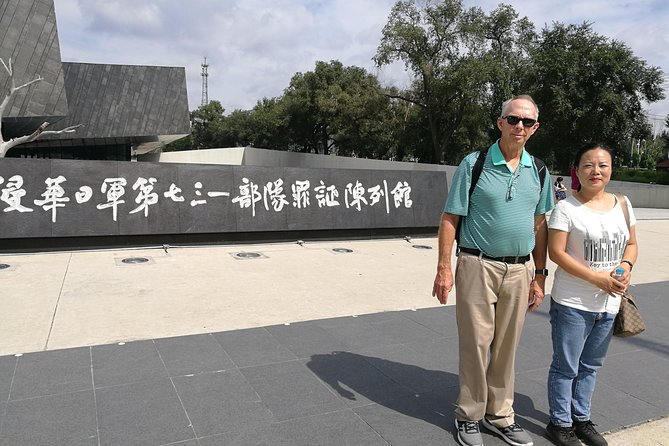
The value depends on what you want from the visit. If you only need admission and can arrange your own transport, $218 per person may feel high. The tour does not include food or drinks, and the museum itself is a single attraction.
The calculation looks better for visitors who value convenience and interpretation. Hotel pickup and drop-off save you from arranging separate transport, and the guide gives meaning to exhibits that could be difficult to understand on your own. For a group of more than three, private-vehicle transport is included, which can make the price easier to justify when divided among several people.
I would also consider the cost of lost time. Harbin is a large city, and a private half-day schedule keeps the logistics simple. You meet in your lobby, visit one important site, and return to the same hotel. That can be worth paying for if you have limited time or do not want to manage the transport yourself.
The strongest value is not luxury. This is a history-focused tour with practical transport and personal explanation. Book it because you want a guided visit to Unit 731, not because you expect a polished sightseeing package with entertainment, meals, or several attractions.
Booking details that can affect your visit

The museum is closed on Monday, so check your Harbin schedule before selecting a departure. Morning and afternoon options are available, giving you some control over where the visit fits in your day.
The most important ticket detail comes from the provider’s instructions: Unit 731 Museum entry needs to be booked at least three days in advance with your passport number and full name. Confirmation is also received at the time of booking, but the passport information requirement means you should not wait until the last minute.
Bring comfortable walking shoes and dress for the weather. The experience runs in all conditions, and the grounds are part of the visit. Food and drinks are not included, so plan those separately around the four-hour schedule.
The tour is private, meaning only your group participates. Most people can take part, but the emotional demands deserve more attention than the physical ones. Think carefully about bringing children or anyone who may find descriptions of human experimentation especially difficult.
Cancellation is flexible enough for normal trip planning: you can cancel up to 24 hours before the experience for a full refund. That does not remove the need to plan ahead for museum entry, so keep the booking deadline and cancellation deadline in mind as separate issues.
Who should book this Harbin tour?
I would recommend it to you if you want to understand a difficult part of Harbin’s wartime past and prefer a guide to explain the material. It suits history students, museum-focused visitors, and anyone who believes a city’s story should include its painful chapters as well as its attractive ones.
It is also a good fit if you value door-to-door transport. The private pickup and return are useful when you are unfamiliar with Harbin, have limited time, or simply want the half-day to run without transport puzzles.
I would be more cautious if your Harbin plans already feel emotionally heavy, or if you want an easy afternoon between sightseeing stops. The museum’s subject is disturbing, and the displays do not turn it into a comfortable outing. The guide can provide context, but the facts remain difficult.
The tour is less attractive if you are focused only on keeping costs down. At $218 per person, independent arrangements could be cheaper if you can manage admission and transportation yourself. The private format earns its price through convenience, personal explanation, and a focused schedule.
Should you book the Unit 731 Museum tour?
Book this experience if you want a serious, guided look at one of Harbin’s most important historical sites. The 2015 exhibition hall, original buildings, documented records, and private guide create a visit with more depth than a quick stop for photographs.
Before booking, make three checks: your date is not Monday, you can provide your passport number and full name at least three days ahead, and everyone in your group is prepared for upsetting material. If those points work for you, the private pickup, clear four-hour plan, and guide-led interpretation make this a practical way to visit Unit 731.
I would not choose it as a casual add-on. I would choose it deliberately, with time afterward to reflect. For the right reader, that seriousness is the reason to go.
FAQ
How long does the Unit 731 Museum tour last?
The tour lasts approximately four hours, including transportation from Harbin to the museum and back to your hotel.
Is hotel pickup and drop-off included?
Yes. The private tour includes pickup and drop-off at your Harbin hotel or port.
Is admission to the museum included?
Yes. The attraction entry ticket is included in the tour price.
What type of transportation is used?
Groups of fewer than three people travel by taxi. Groups of more than three people use a private vehicle.
Is the museum open every day?
No. The museum is closed on Monday. The tour operates in all weather, so dress appropriately and wear comfortable walking shoes.
Do I need to provide passport information when booking?
Yes. The provider advises booking at least three days in advance with your passport number and full name so museum entry can be arranged.
Just added around Harbin
- Private Full Day Transfer Service to Harbin Top Winter Attractions★ 5.0 · 8 reviews
- Private Half Day City Tour including Russian Town and Harbin Ropeway Ride★ 5.0 · 3 reviews
- Private Customized Harbin City Day Tour by Public Transportation★ 5.0 · 3 reviews
- Harbin City Private Day Tour in Your Way in Winter Season★ 4.5 · 7 reviews
- Private Tour to Ice and Snow Festival in Harbin★ 5.0 · 3 reviews
- Private 2 Day Harbin Ice and Snow Festival Tour with Entry ticket★ 5.0 · 3 reviews
- Full Day Private Tour to Harbin Ice and Snow Festival★ 5.0 · 8 reviews
- Harbin Airport (HRB) : Private Arrival Transfer with Meet & Greet Service★ 5.0 · 3 reviews
Museums, compared.

Tianmen Square, Forbidden City & Royal Museum Tours
Read our review →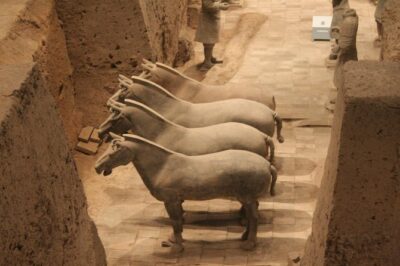
Half-Day Mini Group Xian Tour to Terracotta Warriors Museum
Read our review →
Beijing:Jingshan Park (Palace Museum Garden) Ticket
Read our review →
Private Chengdu Day Tour: Giant Pandas and Jinsha Site Museum
Read our review →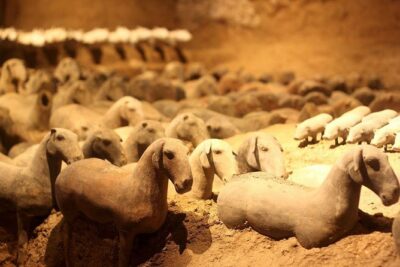
Private Xi’an Tour: Terracotta Warriors, Hanyangling Museum, Cave Homes
Read our review →
Beijing Half Day: National Museum of China In-depth Tour with Subway Transfer
Read our review →
Terracotta Warriors Museum Ticket with Professional English-speaking tour guide
Read our review →Browse the lists this tour appears in