
Reviewed · WALKING TOURS
Pingyao Ancient City Full-Day Walking Tour
Pingyao’s great trick is that it lets you walk through an entire old Chinese city, not just one restored monument. Behind the brick walls, low tiled roofs, courtyards, shops, banks, temples, and government rooms still form a readable picture of Ming and Qing era life. A private guide helps turn those quiet streets into a story.
I like the private format, which lets you stop for photos, ask questions, and adjust the pace. I also like the range of places covered, from the city wall and China’s first exchange bank to the Confucian Temple and the old yamen. The main drawback is that the 125 RMB admission ticket per person, meals, and transfers are extra, so the advertised group price is not your full cost.
Key points to know before you book
- Walk the old wall for rooftop views: Sections of Pingyao’s brick and stone fortifications look down over the city’s low tiled buildings and inner courtyards.
- See the birthplace of Chinese banking: Rishengchang Exchange Bank explains how money moved across China before modern banks.
- Explore a full government compound: The yamen once held more than 300 rooms, including offices, a court, homes, a garden, meeting rooms, and a prison.
- Ask for the security escort company: This private armed escort organization recalls the dangerous work of protecting goods and money on the road.
- Use the private guide to shape the day: Guides have helped with photographs, restaurant choices, show tickets, and extra questions about ordinary life.
- Plan for a long walking day: The main sightseeing period is six hours within an eight-hour experience, and there is no meal or transfer included.
Why Pingyao works so well on foot
Pingyao is a UNESCO World Heritage Site and one of China’s best-preserved ancient cities. Its appeal comes from its scale. You are not simply crossing a square between isolated attractions. You are walking through a connected old town where streets, houses, businesses, temples, and official buildings still make sense together.
That matters because a guide can explain how the parts fit. The narrow lanes and courtyard homes show domestic life. The banks point to commerce. The yamen explains local authority. The temple reveals the values expected of educated officials. The wall gives you the defensive frame around it all.
I would choose this tour for a first day in Pingyao, especially if you want context quickly. Six hours of sightseeing is enough to cover the major sights without turning the day into a rushed checklist, though you should expect to spend much of it on your feet.
The tour is private for up to six people. That makes the $229 group price easier to assess. For one person, it is expensive. Split six ways, the guide cost becomes much more reasonable, particularly for a family or small group that would otherwise need to organize several ticket purchases and navigate the old town without much English support.
A few more China trips to weigh up
- Beijing Hutong Walking Food and Beer Tour at Hidden Restaurants
★ 5.0 · 1,132 reviews - Private Beijing Walking Tour of the Forbidden City with 7 Options
★ 5.0 · 675 reviews - Dark Side of Hong Kong – Kowloon Caged Homes Walking Tour
★ 5.0 · 418 reviews
Meeting your guide in Pingyao
The guide meets you in the lobby of your Pingyao hotel if you are staying inside the ancient city. If your hotel is outside the old town, the meeting point is inside the ancient city instead. The experience is described as pickup included, but do not read that as a private vehicle transfer. Transport is not included, and the tour itself is a walking experience.
Advance communication is useful here. The organizer contacted one group before the tour to arrange the meeting, and that sort of confirmation can prevent a needless wait at the wrong gate or street. Give the guide a clear hotel name and lobby meeting point before the day begins.
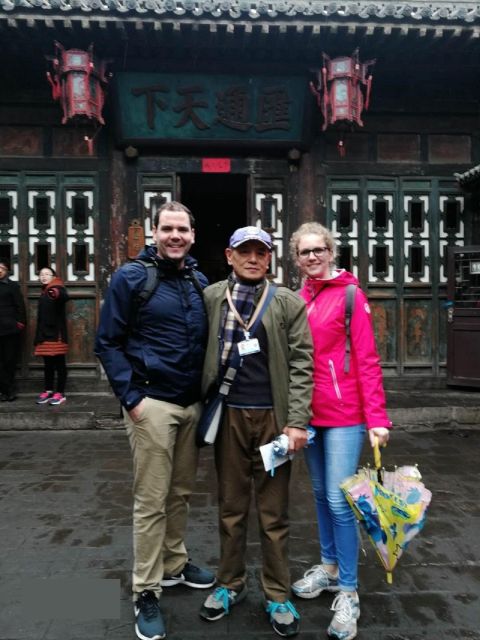
The guide team changes by booking. Lisa has helped with practical matters beyond the main walk, including show tickets. Grace has explained architecture, symbols, historic figures, and buildings in detail. Mike has been praised for arriving on time, adjusting for rest stops, helping with photos, and choosing a good restaurant for lunch.
Other named guides include Leo, Johanna, and Joanna. Leo is described as attentive, kind, and interesting. Johanna has been especially patient with photographs and questions, while Joanna has provided strong English and covered the important parts of the old city. These details suggest a tour style that is personal rather than scripted, though your exact guide will depend on availability.
Walking Pingyao Ancient City Wall
The city wall is the best place to begin understanding Pingyao’s shape. Built from bricks and stones, it circles the historic core and gives you a view that street level cannot provide. From sections of the wall, you can look over rows of tiled roofs and down into domestic courtyards.
Because most historic buildings in Pingyao are low-rise, the view remains open. You can see how compact the old city is and how little the traditional roofline has been interrupted by modern construction. That is a more useful introduction than simply hearing that the city is old.
The wall also helps you understand protection. Pingyao was not designed as a collection of pretty streets. Its walls mark a defended urban center, and the businesses, homes, temples, and government buildings inside them operated within that boundary.
Ask your guide to explain the wall’s layout and how it relates to the city streets. One guide used the structure to explain Pingyao’s planning in a way that made the rest of the walk easier to follow.
This is also one of the best photo stops. The views are broad, while the street-level lanes can be tight and busy with people. If you need regular breaks, say so early. The private format allows the guide to stop and rest when needed, but the wall walk still adds effort to an already lengthy day.
Rishengchang Exchange Bank and the business of old China
Rishengchang Exchange Bank is one of the tour’s most important stops. It is identified as China’s first exchange bank, so it gives you a direct connection to the commercial forces that helped Pingyao prosper.
The value of this visit is not just the preserved rooms. A bank can sound dry until you understand what it represents: money had to move between distant places, and that required trust, records, staff, security, and a system for settling accounts. Your guide can use the buildings to explain that world in human terms.
Look closely at the relationship between the bank and the rest of the city. A prosperous exchange business needed streets, couriers, merchants, officials, and protection. That leads naturally to the next stop, the Ancient Security Guard Company.
The bank is also a good example of why a guided visit helps. Without explanation, old rooms may look like a sequence of courtyards and offices. With context, you can read them as working spaces tied to a large commercial network.
Same country, a completely different kind of day:
- From Beijing: Mutianyu Great Wall Tours with Options
★ 4.9 · 9,216 reviews - Beijing: Forbidden City Tour(Group/Private)-Tickets Included
★ 4.8 · 7,974 reviews - Beijing: T-Square & Forbidden City Group or Private Tour
★ 4.8 · 4,446 reviews - Beijing: Mutianyu Great Wall Daily Tour with Ticket & Lunch
★ 5.0 · 3,056 reviews
The Ancient Security Guard Company
Pingyao’s Ancient Security Guard Company was the only private organization of armed escort in the city’s history. It was also one of the two most famous such organizations during the Ming and Qing dynasties.
This stop adds a practical edge to the banking story. Money and goods moving across long distances needed protection, and private escorts filled that role. You get a clearer sense of the risks behind commerce, rather than viewing old banking as a neat and effortless system.
The security company may be especially interesting if you enjoy social history. It shows how people outside the government responded to the needs of merchants and businesses. It also helps explain why Pingyao’s financial institutions required more than ledgers and locked rooms.
Yamen Pingyao Ancient Government Buildings
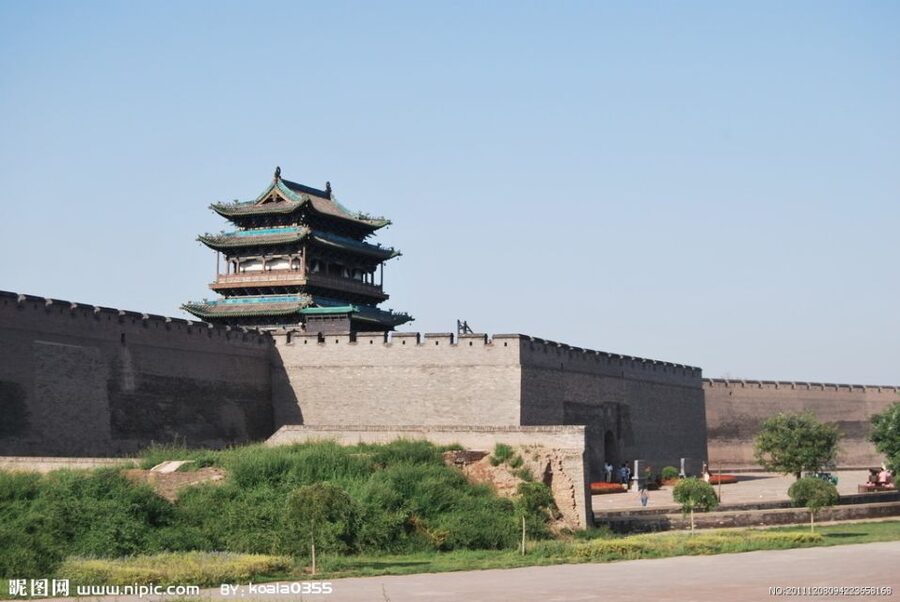
The yamen was the local government office. Pingyao’s dates from 1346, during the Yuan Dynasty, and once served as both workplace and residence for the magistrate. That official acted as mayor, judge, and senior government representative.
The compound is large, with more than 300 rooms. It included offices, courtrooms, meeting rooms, residential areas, a garden, and a prison. You enter through a ceremonial gate, then move through a series of spaces that show how administration, justice, and private life were tied together.
I find this one of the strongest stops because it makes local government tangible. Instead of treating official power as an abstract idea, you can see where cases were heard, meetings held, staff worked, and the magistrate lived.
The yamen also gives you a useful contrast with the ordinary homes and shops outside. The official complex had its own hierarchy and formal approach, while daily life in the lanes was more compact and commercial. Ask your guide about the magistrate’s multiple duties. That single point explains why the compound includes both court and home.
Ming and Qing Street, where the city still feels lived in
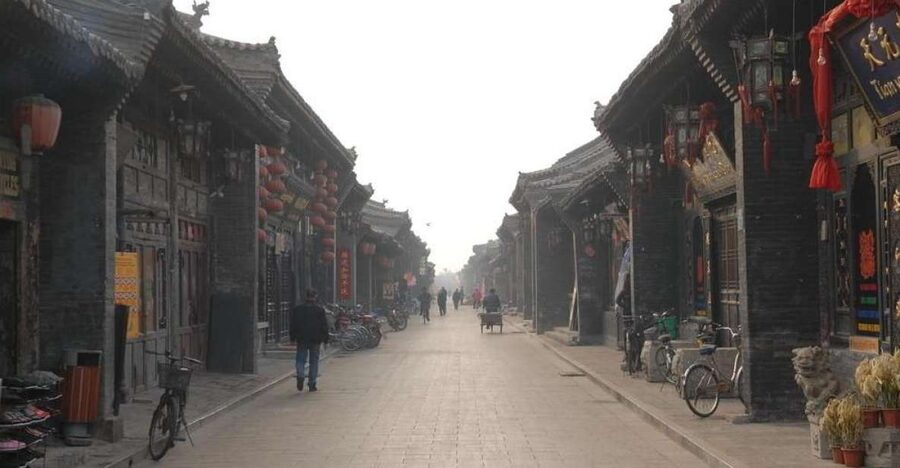
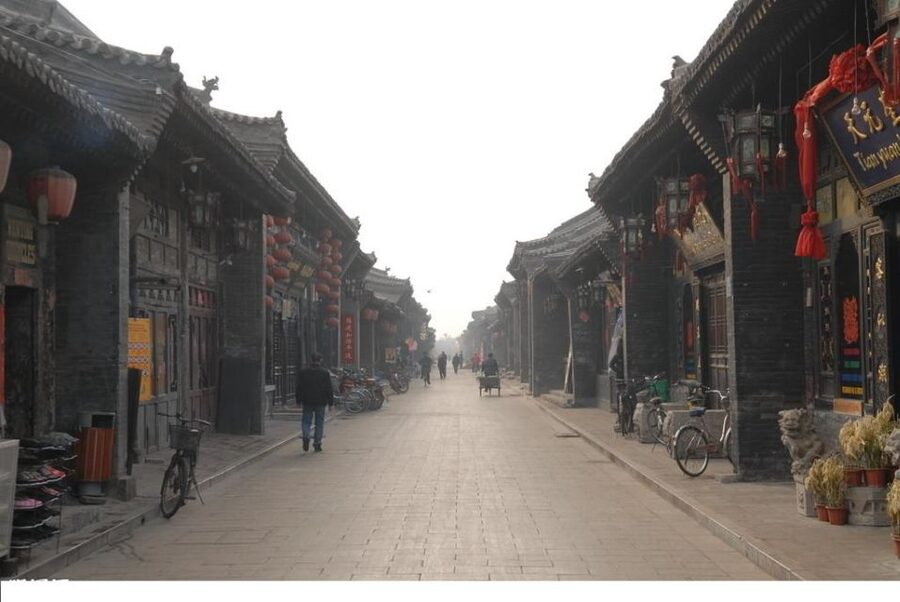
Ming and Qing Street is lined with traditional shops and houses built in the brick and stone style associated with those periods. It offers the clearest sense of Pingyao as a working town rather than a museum collection.
The buildings are important, but the street arrangement matters just as much. Courtyard homes, narrow roads, shopfronts, and old construction methods sit close together. You can imagine how commerce and home life once shared the same urban space.
This is the part of the tour where you should leave room for small observations. Notice the doorways, rooflines, signs, and changes from shop to residence. Your guide can explain details that you might otherwise pass without a second thought.
The drawback is that a preserved commercial street can also be the most visitor-focused part of the walk. If you prefer quieter corners, tell your guide. The private group makes it easier to spend less time browsing shops and more time studying the architecture or moving into side streets.
Pingyao Confucian Temple and the scholar’s route
The Pingyao Confucian Temple has a carefully arranged layout and offers a different view of old Chinese society. Confucian learning shaped the education and ambitions of government officials, and the temple connects those ideas to the people who hoped to pass the annual imperial examinations.
A particularly evocative detail is the path once used by the No. 1 examination scholars, known as Zhuangyuan. Walking along it gives you a physical link to the prestige attached to learning and official success.
This stop balances the commercial and administrative parts of the day. Rishengchang shows money, the security company shows risk, and the yamen shows authority. The Confucian Temple shows the ideals that helped shape the educated official class.
I would ask the guide to explain the temple’s layout rather than simply moving from room to room. Its design is part of the meaning, and a little interpretation makes the visit much more rewarding.
What the six-hour sightseeing period feels like
The overall experience lasts eight hours, with six hours listed for sightseeing in Pingyao. The remaining time gives the day room for meeting up, moving between stops on foot, pauses, and practical needs.
That is a sensible length for the number of sights included, but it is not a light stroll. Wear comfortable shoes and expect to walk through streets, compounds, and sections of the wall. The guide can stop for photos and rests, which is valuable in a private tour.
Lunch is not included. One guide took a group to an excellent restaurant, but the meal remains your own expense. This arrangement gives you flexibility, though you should not assume the food cost is part of the tour price.
The six-hour sightseeing block also means you should decide what matters most. If you want every named attraction plus extra courtyards, shops, and photographs, the day may feel full. If you prefer a slower pace, tell the guide at the start and identify two or three priorities.
Price, tickets, and what you really pay
The listed price is $229 per private group of up to six people. The English-speaking guide is included, but admission is separate at 125 RMB per person. Children pay half price, and the guide enters free.
The guide helps buy the entrance tickets on the day, which removes one small task from your list. Still, remember to budget for those tickets, lunch, and any transport you need to reach the old city if your hotel is outside it.
For a solo visitor, the total may be hard to justify unless having an English-speaking guide is a top priority. For two people, it is still a substantial spend. For four to six people, the cost per person becomes much more attractive, and you gain the benefits of a private pace.
I see the best value in the interpretation. Pingyao’s buildings are visually strong, but the bank, yamen, temple, wall, and security company each need context. The guide also adds practical help, from restaurant advice to photos and show tickets. If you would happily read signs and wander alone, the price may feel high. If you want the city explained in one focused day, it is easier to defend.
The strongest reason to choose a private guide
The most praised part of this experience is not one single building. It is the guide’s ability to make the day personal.
Lisa has helped with wider sightseeing problems, including show tickets. Grace has connected architecture with symbols, history, and important people. Mike has adjusted the pace, selected a restaurant, and explained ordinary life in Pingyao. Johanna has allowed time for photographs and questions, while Joanna has covered the main sights in clear English.
That range tells you what to expect from the format. You can ask why a street is laid out a certain way, how a yamen worked, what a bank did, or how people lived in the courtyard houses. You are not limited to a fixed audio track.
The guide speaks English and Chinese. The private group setup also means your questions do not need to compete with a large crowd. For families, first-time visitors, and people who want help with the practical side of Pingyao, that personal contact is the main reason to book.
Who should book this Pingyao walking tour
I would recommend it to:
- First-time visitors who want the major sights explained in one day
- Small groups of up to six who can share the $229 guide cost
- Visitors who value history, architecture, government, banking, and traditional culture
- Families or older visitors who may need photo and rest stops
- People who want help choosing lunch or arranging related sightseeing details
- Anyone uncomfortable navigating an old Chinese city without an English-speaking guide
I would hesitate if you have only a few hours in Pingyao, dislike long walks, or want a completely self-directed day. The tour is also less attractive if you have already visited the main sights and only want quiet wandering through side streets.
Should you book it?
Book this tour if you want Pingyao explained as a complete city, not just photographed as an old street. The wall, exchange bank, security company, yamen, Confucian Temple, and Ming and Qing Street form a useful sequence, and the private guide can connect them.
The best value comes when six people share the fee and when you care about context. Add the 125 RMB admission ticket per person, lunch, and any transport costs to your budget. If those extras fit and you can handle a full day on foot, this is a strong way to get your bearings in Pingyao.
FAQ
How long does the Pingyao walking tour last?
The experience lasts eight hours. The sightseeing portion in Pingyao is listed as six hours.
What sights are included?
The tour visits Pingyao Ancient City Wall, Rishengchang Exchange Bank, Pingyao Confucian Temple, Ming and Qing Street, Yamen Pingyao Ancient Government Buildings, and the Ancient Security Guard Company.
Is this a private tour?
Yes. It is a private group experience for up to six people.
Is hotel pickup included?
An English-speaking guide meets you in the lobby of your Pingyao hotel if you are staying inside the ancient city. If your hotel is outside the old city, you meet inside the old town instead.
Is transportation included?
No. Transfer is not included. The experience is primarily a walking tour.
Are admission tickets included in the price?
No. Admission costs 125 RMB per person. Children pay half price, and the tour guide enters free. The guide helps you buy the tickets on the tour day.
What languages are available?
The tour offers a live guide in English or Chinese.
Just added around China
- Hong Kong Airport to Hong Kong City Private Arrival Transfer★ 4.5 · 3 reviews
- Hong Kong Observation Wheel Ticket★ 5.0 · 3 reviews
- Hong Kong Palace Museum Ticket★ 5.0 · 3 reviews
- Hong Kong Peak Tram and Sky Terrace 428 Tickets (Optional)★ 3.5 · 22 reviews
- Hong Kong : Must-See Attractions Walking Tour With A Guide★ 5.0 · 7 reviews
- Hong Kong Private Walking Tour with a Local★ 5.0 · 6 reviews
- Hong Kong Market Walking Tour & Chinese Cooking Class★ 5.0 · 24 reviews
- Hong Kong: Lantau Island & Tai O Cruise, Skip The Line Cable Car★ 3.5 · 4 reviews
Walking Tours, compared.

Beijing Hutong Walking Food and Beer Tour at Hidden Restaurants
Read our review →
Private Beijing Walking Tour of the Forbidden City with 7 Options
Read our review →
Dark Side of Hong Kong – Kowloon Caged Homes Walking Tour
Read our review →
Forbidden City Private Walking Tour with Optional Sights
Read our review →
Introduction to Hong Kong: Central Tip Based Walking Tour
Read our review →
Shanghai Highlights Walking Tour With A Real Local
Read our review →Browse the lists this tour appears in