Reviewed · TICKETS
Peking Opera at Liyuan Theater Tickets
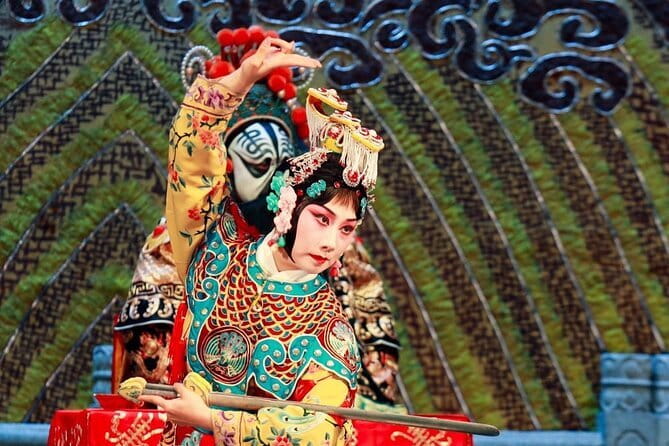
Peking Opera packs singing, dance, music, martial arts, painted faces, and old Chinese tales into one fast-moving hour. At Liyuan Theater, you may first see performers having their elaborate face makeup applied, then take your seat for scenes drawn from stories about emperors, generals, beauties, and famous events.
I like the English subtitles, which give you a useful thread to follow, and the chance to see traditional face painting before the curtain rises. The show also offers a neat way to sample Chinese culture without giving up an entire evening.
The main drawback is value. The listed price is $49 per person, while one visitor found tickets at the theater for about half that amount. I would compare prices before booking, especially since the performance lasts only about an hour.
Key points to know before booking
- One hour of classic Peking Opera: The compact format fits well into an evening in Beijing.
- English subtitles help: You can follow the basic story even if the singing style is unfamiliar.
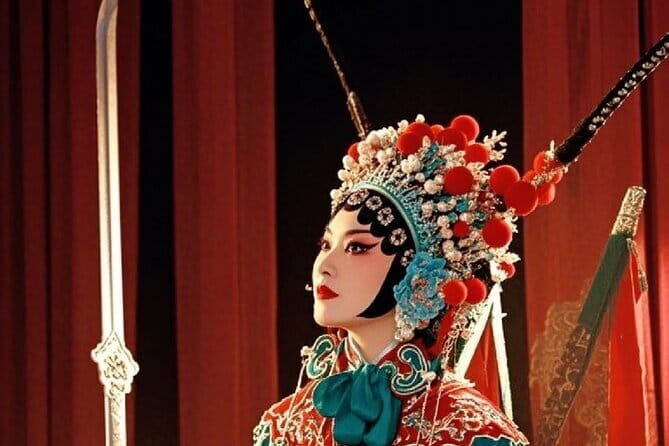
- Face makeup may be part of the pre-show: You might get a close look at the striking painted designs before the performance.
- Upstairs and downstairs tickets are available: Your seat level can affect the feel and value of the evening.
- Meet at 7:30 pm: The ticket redemption point is Qianmen Jianguo Hotel, 175 Yong An Lu.
- Check the direct price: A visitor reported paying about half the online price at the theater, so compare before committing.
Why Peking Opera is worth an hour in Beijing
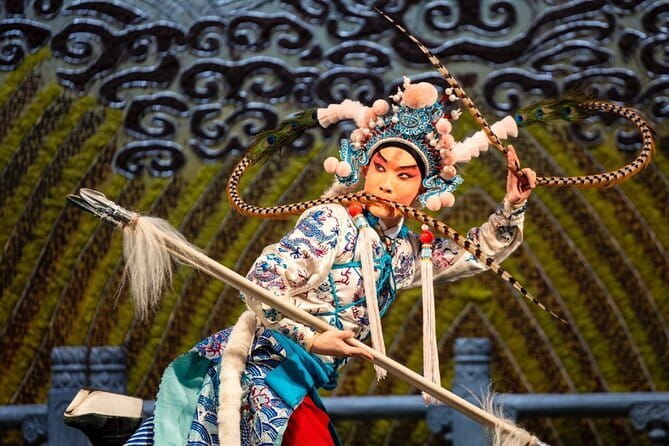
Peking Opera is not simply an opera in the European sense. You get singing, spoken lines, stylized movement, percussion, costumes, symbolic gestures, and martial arts in one performance. The result can feel strange at first, but that is part of the point. This is a highly coded art form, and a raised hand or sweeping sleeve may carry meaning that ordinary acting would explain with a long speech.
The Liyuan Theater format makes this tradition manageable. You are not signing up for a long theatrical production in a language you do not understand. You get about one hour, enough time to see the main ingredients without turning the evening into a cultural endurance test.
The stories usually come from earlier dynasties, major events, rulers, ministers, generals, gifted figures, and legendary beauties. Some newer pieces draw from literature and classic novels. These tales are familiar in Chinese culture, but they should be treated as theater rather than a precise lesson in historical fact.
That distinction matters. If you expect a documentary, the broad gestures and idealized characters may seem exaggerated. If you approach the performance as a traditional art form, the painted faces, stylized movement, and musical rhythm make more sense.
A few more Beijing trips to weigh up
- Beijing: Forbidden City Tour(Group/Private)-Tickets Included
★ 4.8 · 7,974 reviews - Beijing: Mutianyu Great Wall Daily Tour with Ticket & Lunch
★ 5.0 · 3,056 reviews - 4-Hour Small Group Tour to Forbidden City with Entry Tickets
★ 5.0 · 1,863 reviews
At Liyuan Theater, the evening begins with a meeting point
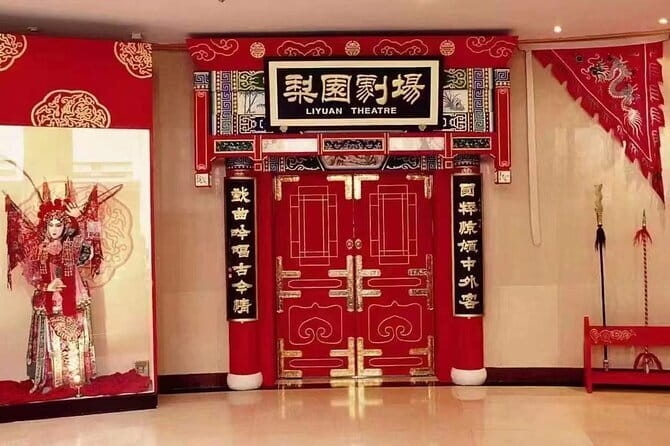
The stated start time is 7:30 pm. You redeem your ticket at Qianmen Jianguo Hotel Liyuan Theater, located at 175 Yong An Lu in Beijing’s Xicheng District. The venue is near public transportation, which helps if you are making your own way across the city.
Give yourself enough time to reach the hotel and find the theater area. The supplied details identify the ticket redemption point clearly, but they do not provide a private hotel pickup or a detailed route from your lodging. You should plan to arrive with the address saved in Chinese and English.
A guide may meet you at the point and help with an issue if one comes up. One Spanish-speaking visitor specifically praised the guide’s attentiveness and help with a problem. No guide name is provided, so do not book this expecting a named specialist or a private lecture.
The evening is simple once you arrive: redeem the ticket, settle into your assigned area, and watch the show. Dinner is not included, so eat beforehand or make a separate plan nearby. The experience itself is built around the performance, not a meal package or a longer sightseeing route.
Face makeup gives you a glimpse behind the performance
One of the most interesting details is the possibility of seeing performers apply their face makeup before the show. Do not treat this as guaranteed, since the information says you may have the chance rather than promising a fixed makeup demonstration.
Still, it is worth arriving ready for it. Peking Opera makeup is not ordinary stage makeup. The bold colors and patterns help signal a character’s role and personality. Even before you know the plot, the painted faces give you visual clues about power, character, and dramatic purpose.
This short pre-show moment can make the performance easier to read. Instead of seeing only bright costumes and loud colors, you begin to notice that the visual design has a job to do. The makeup also gives you one of the clearest photo opportunities connected with the evening, though no photography rules are provided here, so follow the theater’s instructions.
If the makeup viewing does not take place during your visit, the show still includes the painted faces as part of the stage action. I would consider the pre-show viewing a welcome possibility, not the main reason to buy the ticket.
English subtitles make the old stories easier to follow
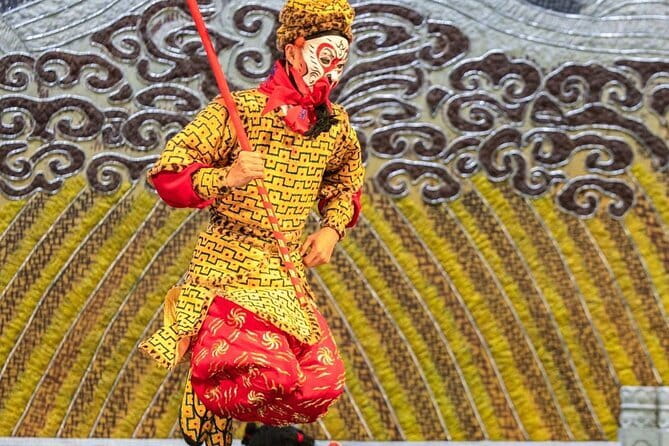
Peking Opera can be difficult to follow by sound alone. The singing style is highly formal, and the stories may use names, settings, and cultural references that are unfamiliar to you. English translations or subtitles are provided, giving you a basic guide to the action.
That support matters most during the three-scene format described by one visitor, who saw three famous scenes from three famous operas. A short selection can introduce several characters and story types, but it may not give you a full plot from beginning to end.
I would use the subtitles as a map, not as a complete theater script. Look for the central conflict, notice which characters seem powerful or vulnerable, and watch how movement and music signal a change in mood. You do not need to catch every line to understand the shape of a scene.
The subtitles also make this a better choice for a first introduction than a performance with no translation. You can focus on the singing, costumes, and martial arts while still knowing why the actors are moving into conflict or celebration.
Same country, a completely different kind of day:
- From Beijing: Mutianyu Great Wall Tours with Options
★ 4.9 · 9,216 reviews - Beijing: T-Square & Forbidden City Group or Private Tour
★ 4.8 · 4,446 reviews - All-Inclusive Tour: Tiananmen Square, Forbidden City, Great Wall
★ 5.0 · 2,873 reviews - MuBus: Mutianyu Great Wall ENG/ESP/RUS Guided Bus Tour
★ 5.0 · 2,361 reviews
Singing, dancing, martial arts, and music share the stage
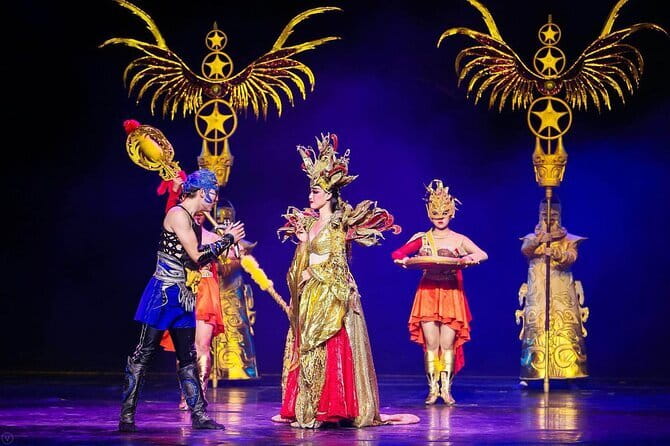
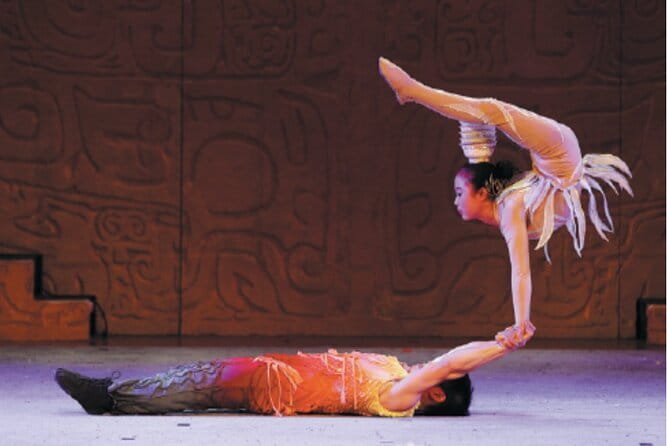
The show brings several performance styles together. Singing is central, but the experience also includes dance, music, acting, and martial arts. One visitor especially praised this blend and found the performance beautiful, while also calling it an easy way to learn about Chinese culture.
The martial arts sequences may be the most immediately accessible part if you are unsure about the singing. They add speed and physical energy, while the dancing and controlled gestures show the precision behind the style. The music helps mark the action and mood rather than functioning as background sound.
I would not compare Peking Opera too closely with a Western opera house production. The voice, movement, costumes, and story conventions work differently. The pleasure comes from seeing a complete stage language in which a few gestures can suggest travel, combat, court life, or emotional tension.
The show can also feel theatrical in a deliberately artificial way. That is not a flaw, but it can surprise you if you expect natural acting. Give yourself a few minutes to adjust to the style, and watch the patterns rather than waiting for a realistic conversation.
Upstairs or downstairs changes the ticket decision
Two ticket types are offered: upstairs and downstairs. The supplied information does not give exact seat maps, legroom details, or a guaranteed view for either level, so I cannot tell you that one category is always better.
The choice comes down to how closely you want to feel connected to the stage and how carefully you watch your budget. A downstairs seat may appeal if you value proximity, while an upstairs seat may be the sensible choice for a short cultural introduction at a lower cost. Confirm the exact seating difference when redeeming your ticket.
This is also where the $49 price deserves a closer look. Admission fees and taxes are included, which keeps the booking straightforward. But the performance is only about an hour, and one visitor reported that buying at the theater cost roughly half as much as booking through the online platform.
That report does not guarantee a lower walk-up price on your date. Seats could vary, availability could change, and direct purchase may not offer the same booking support. Still, I would check Liyuan Theater’s own price before paying $49. If convenience and advance confirmation matter most, the online option may be worth the premium. If price is your main concern, investigate first.
How this fits into a Beijing evening
The 7:30 pm start works well after a day of sightseeing. You can spend the afternoon seeing major sights, have dinner before the show, and then make your way to Yong An Lu. Because the performance lasts about an hour, you are not locked into a late-night schedule.
The short duration is useful for families, first-time visitors, and anyone with a full Beijing itinerary. It also limits the risk of cultural fatigue. You get a focused sample instead of trying to understand several hours of a demanding performance tradition.
At the same time, a one-hour show has limits. You may leave wanting more context about the stories, instruments, costumes, and makeup. No extended lecture, museum visit, meal, or broader city tour is included. I would choose this for a first look, not as a complete study of Peking Opera.
Public transportation is nearby, according to the practical details provided. Most people can participate, and the experience does not list strenuous walking or a special fitness requirement. Since no detailed accessibility information is supplied, you should confirm seating and venue arrangements directly if you have specific mobility needs.
Who will enjoy this performance most
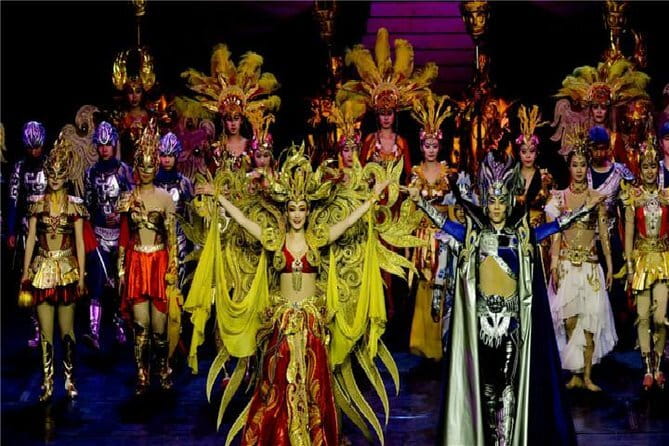
I would recommend the show to you if you want a compact cultural activity with strong visual impact. The painted faces, costumes, music, and martial arts give you plenty to watch even when the language and vocal style are unfamiliar.
It is also a good fit if you prefer structured evening plans. You have a clear meeting time, a named ticket redemption point, and a performance of about one hour. The included English subtitles reduce the guesswork.
Families may appreciate the short running time, although the unusual singing and stylized action will not suit every child. If your children need a fast plot and natural dialogue, the show may feel slow or confusing. The subtitles help, but they do not turn the performance into a standard English-language play.
I would be more cautious if you are buying mainly for a bargain. At $49, the value depends heavily on your seat and how much you want the advance booking convenience. The direct theater price report is too significant to ignore.
The performance may also suit you if you have already seen Beijing’s major monuments and want an evening activity tied to local culture. It does not replace visiting historic sites, but it shows how Chinese stories are presented through theater rather than stone, streets, or palace rooms.
What the stories can and cannot teach you
The subject matter reaches across dynasties and famous figures. You may see characters based on emperors, empresses, generals, ministers, great beauties, or admired geniuses. Some pieces come from classic novels and literature, while newer works were adapted during the rise of communism.
These stories can give you a sense of which characters and moral conflicts have remained important in Chinese popular culture. They can also show how loyalty, bravery, romance, power, and duty are shaped for the stage.
Do not use every scene as a literal account of Chinese history. The supplied information itself warns that the stories may not be historically accurate. That is normal for traditional theater. An opera about a famous ruler can preserve cultural memory without offering a precise record of what happened.
I like this distinction because it lets you enjoy the show without testing every costume or plot point against a history book. Watch for the values and symbols the story presents, then treat the details as part of theatrical tradition.
Booking, cancellation, and practical value
Confirmation is received at the time of booking, which is useful when you are organizing a packed Beijing schedule. The experience is booked about 16 days ahead on average, suggesting that advance planning is common, though the information does not promise that late bookings will sell out.
Free cancellation is available if you cancel at least 24 hours before the local start time. Cancellations made less than 24 hours before the show are not refunded, and changes inside that window are not accepted. Keep Beijing local time in mind when changing plans.
Dinner is not included, so the $49 price covers the show and required fees, not a full evening package. That can be a plus if you want to choose your own meal, but it means you should budget and plan separately.
The experience provider is China Fun Tours. The details do not list a private vehicle, a meal, a long guided introduction, or multiple sightseeing stops. You are paying chiefly for admission and the ease of arranging the evening.
My call: book it if the performance matters more than the bargain
I would book the Liyuan Theater show if you want a short, colorful introduction to Peking Opera and value English subtitles, a fixed evening time, and advance confirmation. The blend of singing, dancing, martial arts, music, and makeup offers plenty to notice in one hour.
I would not book without comparing the price if your budget is tight. A direct theater purchase may cost much less, based on the available account, though that price is not guaranteed. Ask about the upstairs and downstairs difference before paying, and decide if online convenience is worth the extra cost.
For a first taste of Beijing’s traditional stage culture, this is a sensible choice. Just arrive with realistic expectations: it is a stylized art form, the stories may be symbolic rather than factual, and the subtitles provide help but not a full cultural briefing.
FAQ
Where does the Peking Opera experience take place?
The performance takes place at Liyuan Theater in Beijing. The ticket redemption point is Qianmen Jianguo Hotel Liyuan Theater, 175 Yong An Lu, Xicheng District, Beijing, China, 100052.
What time does the experience start?
The stated start time is 7:30 pm.
How long does the performance last?
The performance lasts approximately one hour.
Are English translations provided?
Yes. English translations or subtitles are provided so you can follow the story.
Can I see the performers’ face makeup?
You may have the chance to see performers apply their face makeup before the show. This is described as a possibility, not a guaranteed part of every performance.
Are different ticket types available?
Yes. There are upstairs and downstairs ticket options.
Is dinner included?
No. Dinner is not included in the experience.
Is public transportation available near the theater?
Yes. The theater is near public transportation.
Is the experience suitable for most people?
The provided details state that most people can participate. Specific accessibility arrangements are not given.
Can I cancel for a refund?
Yes, if you cancel at least 24 hours before the local start time. Cancellations made less than 24 hours before the start are not refunded, and changes within that period are not accepted.
Just added around Beijing
- Private Transfer to Mutianyu Great Wall with professional driver★ 5.0 · 19 reviews
- camp on the Great Wall overnight with sunrise and sunset on the wall★ 5.0 · 11 reviews
- One day tour to downtown Tianjin from Beijing by high speed train★ 5.0 · 3 reviews
- BusDa:Ancient Great Wall &Badaling Great Wall Full-day Bus Tour★ 4.5 · 6 reviews
- ZANBUS: Trip to the Jinshanling Great Wall Departing at 7:30 AM★ 5.0 · 5 reviews
- Yuxiandu Chinese Royal Cuisine Museum with Show and Royal Banquet★ 5.0 · 4 reviews
- Private Wild Great Wall Hiking tour at Simatai (Challenging)★ 5.0 · 16 reviews
- Wild Great Wall Huanghuacheng Half Day Tour★ 5.0 · 15 reviews
Tickets, compared.

Forbidden City Tour(Group/Private)-Tickets Included
Read our review →
Mutianyu Great Wall Daily Tour with Ticket & Lunch
Read our review →
4-Hour Small Group Tour to Forbidden City with Entry Tickets
Read our review →
Ngong Ping 360: Cable Car Return Tickets & Combos
Read our review →
The Temple of Heaven or Summer Palace Entry Ticket
Read our review →
Beijing Forbidden City Ticket Booking (Optional: guide service)
Read our review →