
Reviewed · MING TOMBS TOURS
Ming Tombs Entrance Ticket with Optional Guided &Transfer Service
The Ming Tombs offer a quieter, more focused look at imperial China than Beijing’s grand palace sites. Thirteen of the sixteen Ming emperors rest here, and the approach to Changling includes stone arches, guardian figures, gates, and a ceremonial bridge shaped by Chinese feng shui ideas. I like the low ticket price and the choice between exploring alone or adding a guide and private transfer.
I also like the flexibility: you can spend about one to four hours here, depending on how many areas you visit. The catch is distance. The ticket covers entry, but not transportation between the tombs, and reaching the complex by metro can take about an hour and a half. A transfer is worth considering if you want to save time.
Key points to know before booking
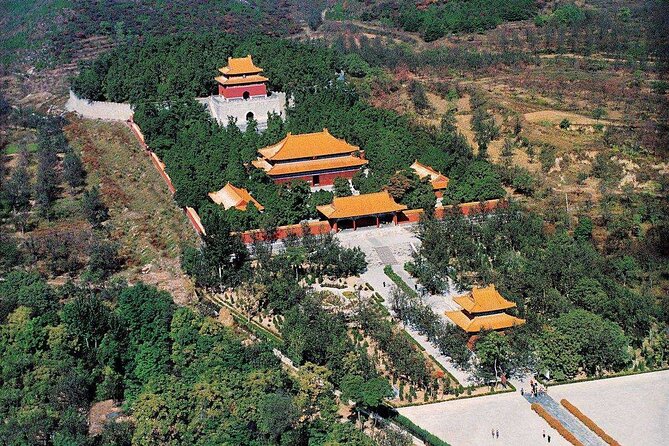
- Thirteen emperors are buried here: The Ming Tombs cover the imperial burial ground of rulers from 1368 to 1644.
- The Sacred Way is the ceremonial entrance: Look for the Great Red Gate, stone memorial archway, Stele Pavilion, Dragon and Phoenix Gate, and Five-Arch Bridge.
- Dingling has an underground palace: This stone burial chamber was found between 1956 and 1958, along with many valuable objects.
- Changling is the largest tomb: It holds the third Ming emperor, Zhu Di, and Empress Xu.
- You can add help or transport: The base option is an entrance ticket. A guide and private round-trip transfer are optional.
- The ticket does not cover movement between tombs: Plan your route carefully, especially if you visit independently.
Why the Ming Tombs are worth your time
The Ming Tombs are not a single building. They are a large imperial burial complex spread across the hills north of Beijing. Thirteen Ming emperors, along with their wives and concubines, were buried here. That fact gives the visit a different mood from Beijing’s central sights. You are not touring a palace where rulers worked and received officials. You are walking through the place chosen for their final rest.
The setting and layout reflect feng shui principles. The placement of the tombs, the approach roads, and the surrounding hills were selected to create a suitable spiritual setting. You do not need a detailed background in Chinese history to appreciate the planning. The long approach, formal gates, and stone monuments make it clear that this was an important imperial site.
The Ming Dynasty ruled China from 1368 to 1644. The tombs help put that long period into physical form. Instead of seeing only dates and names, you can connect the dynasty with burial customs, royal family life, ceremonial design, and the enormous effort required to honor an emperor after death.
The site was added to the UNESCO World Cultural Heritage list in 2003. That recognition does not make every part of the visit equally exciting, but it confirms the importance of the complex and its design.
More Ming Tombs Tours in Beijing:
- Great Wall of China at Badaling and Ming Tombs Day Tour from Beijing
★ 4.5 · 731 reviews - Beijing: Mutianyu Great Wall and Ming Tombs Private Tour
★ 5.0 · 114 reviews - Private Beijing Day Trip: Mutianyu Great Wall and Ming Tombs
★ 5.0 · 114 reviews
Walking the Sacred Way to Changling
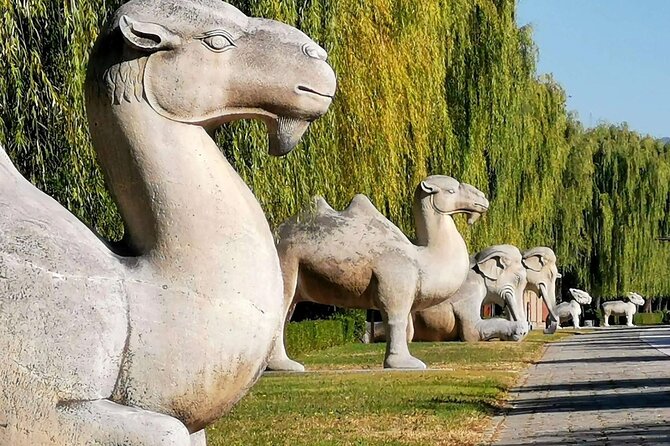
The Sacred Way is the natural starting point for understanding the Ming Tombs. It was built as the ceremonial approach to Changling, the tomb of the third Ming emperor, Zhu Di. The route includes several important structures, so give yourself about an hour if you want to look closely rather than simply pass through.
You begin with the Great Red Gate, then continue toward the Shengde Stone Memorial Archway. The archway and the other formal structures signal that you are entering a carefully controlled imperial space. The Stele Pavilion follows, along with the Dragon and Phoenix Gate and the Five-Arch Bridge.
The Sacred Way is valuable because it shows how the tomb complex was meant to be experienced. The route was not just a practical road to a burial chamber. It was a sequence of thresholds, monuments, and symbolic features leading visitors toward the emperor’s tomb.
I would take this section slowly. Look at the order of the buildings and the change from open approach to more enclosed ceremonial spaces. The details are easier to appreciate with a guide, especially if you want an explanation of what the arches, gates, and steles represented.
The Sacred Way is listed as taking about one hour, with admission included as part of the experience. It can also work well for independent visitors because you can follow the route at your own pace without needing to match a group schedule.
Dingling and its underground palace
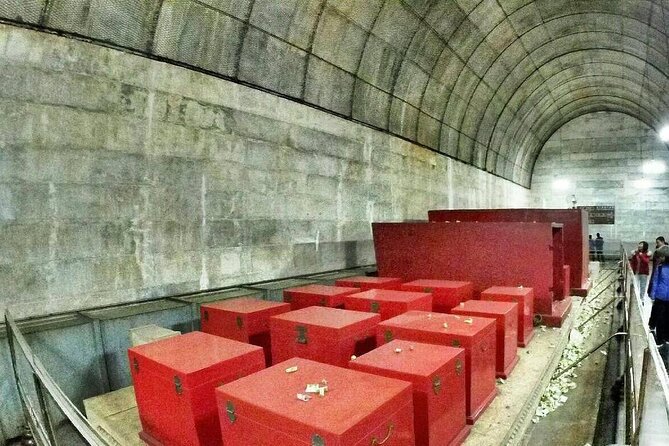
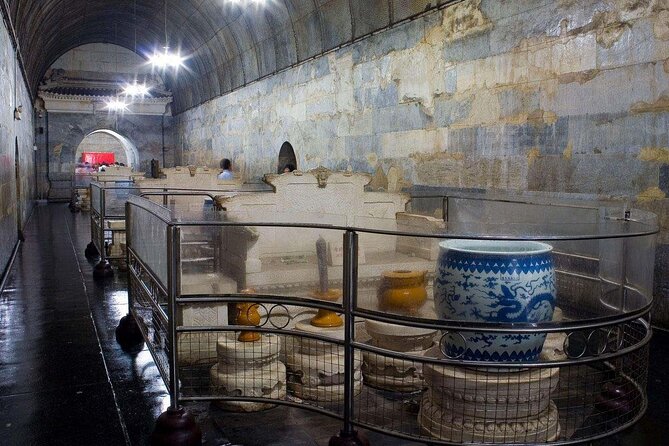
Dingling was built in 1590 for Emperor Shen Zong. He and the empress were buried there in 1620. The main draw is the stone Underground Palace, which was discovered during archaeological work between 1956 and 1958.
This is the part of the visit most likely to feel different from a standard outdoor monument tour. You move from the ceremonial world of gates and memorials into the burial structure itself. The underground chambers show the practical side of imperial funerals: stone construction, controlled access, and a large space built to protect the emperor and empress in death.
The excavation produced many valuable relics. The objects are important, but the chamber itself is the main reason to include Dingling. It gives you a clearer idea of the physical scale of an imperial tomb than a surface monument alone can provide.
Allow roughly an hour for Dingling if you want time to understand the site. The exact pace depends on how much you read and how long you spend in the underground section. A guide can help connect the construction date, Emperor Shen Zong’s reign, and the discovery of the tomb.
There is one practical point to keep in mind. Dingling is not simply an outdoor walk with a few monuments. If you prefer open-air sightseeing and dislike enclosed historical sites, you may find Changling and the Sacred Way more comfortable. If you are curious about how an imperial tomb was built, Dingling is likely to be the most memorable stop.
Changling, the largest Ming Tomb
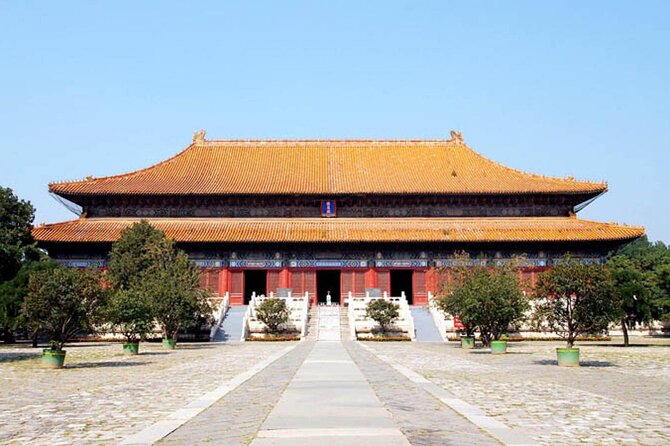
Changling is the largest tomb in the complex and the final resting place of Zhu Di and Empress Xu. Zhu Di ruled from 1402 to 1422, making this tomb an important stop for understanding the early Ming period.
Changling is also linked to more than 3,000 unearthed relics. It is the only tomb in the complex that has been opened for scientific research, which gives it special archaeological importance. The scale of the site reflects the status of the emperor it honors.
I would pair Changling with the Sacred Way because the two stops explain each other. The Sacred Way presents the formal approach, while Changling shows the destination. Seeing both makes the layout feel intentional rather than like a collection of separate monuments.
Plan about an hour here. The large scale can make a short visit feel rushed, especially if you want to compare Changling with Dingling. If your time is limited, the Sacred Way and Changling together provide a strong introduction. Add Dingling if the underground palace interests you or if you want a fuller visit.
A few more Beijing trips to weigh up
- Beijing:Mutianyu Great Wall Private Trip with English Driver
★ 5.0 · 1,263 reviews - Private Mutianyu Great Wall Trip with English-Speaking Driver
★ 5.0 · 927 reviews - Private Mutianyu Great Wall Trip With English-Speaking Driver
★ 5.0 · 899 reviews - Small Group 6km hiking Jinshanling Great Wall EN speaking driver
★ 5.0 · 347 reviews
Independent ticket or guided visit
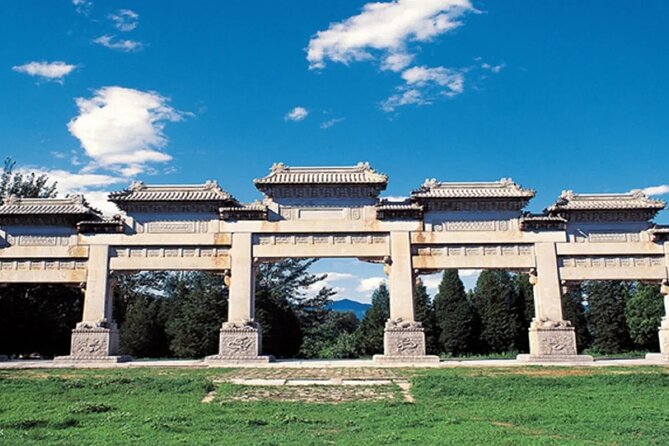
The base product is an entrance ticket, and that may be all you need if you have already studied the Ming period or prefer to explore quietly. You can move at your own pace and decide how long to spend at the Sacred Way, Dingling, and Changling.
The drawback is that the ticket alone does not solve the geography of the complex. Transportation between the different tombs is not included. You need to work out how to move from one area to the next, and the separate sites are not simply lined up beside one another for an effortless walk.
The guided option changes the experience from a monument visit into a history lesson. The strongest reason to add a guide is interpretation. Names such as Zhu Di, Shen Zong, and Empress Xu can blur together without context. A guide can explain who each person was, why the tombs were placed where they were, and how the Sacred Way relates to Changling.
Lucy is specifically associated with an English-language tour and is described as having excellent English, a friendly personality, and strong knowledge of the subject. She also offered practical suggestions during the visit. If you are interested in the stories behind the architecture, the guide upgrade may offer more value than simply purchasing the cheapest admission.
The activity is private, so only your group participates. That matters if you want to ask questions, stop for photographs, or move at a comfortable pace. It also avoids the fixed feel of a large shared group, though the exact guide arrangements depend on the option you select.
Is the private transfer worth paying for?
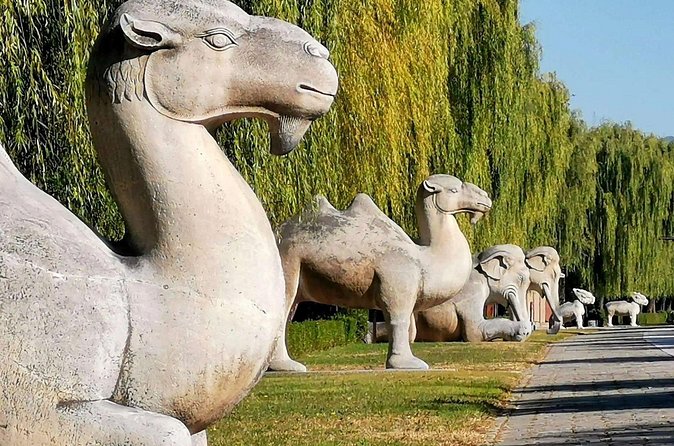
The Ming Tombs are outside central Beijing, so transport deserves as much thought as the ticket. A metro journey can take about an hour and a half, and that is before you deal with movement between the individual tombs.
The private transfer option includes pickup from a Beijing city hotel and a return journey. It is designed for convenience and time savings, not just comfort. If you are traveling with family, carrying luggage, or working with a tight Beijing schedule, the transfer can make the visit much easier.
The base ticket is priced at $7.79 per person. At that price, the admission itself is a good-value way to add an important cultural site to your trip. But the low ticket price does not include every practical cost. You still need to arrange your way to the complex and between the tombs unless you choose the transfer service.
I would compare the total cost, not just the advertised ticket price. Independent travelers who are comfortable with a long metro ride may find the basic option perfectly reasonable. For a first visit, or for anyone who wants to combine the tombs with other Beijing sights on the same day, the private transfer may justify the extra expense.
Group discounts are available, which can improve the value for families or larger parties. Since this is a private activity, the discount may be especially useful when the cost is shared across several people.
How long should you allow?
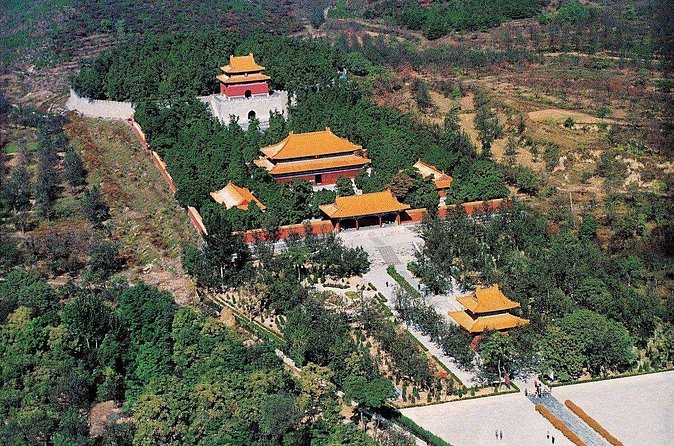
The stated duration is approximately one to four hours. That wide range makes sense because the experience can be as simple as a quick visit to one or two major areas, or a fuller circuit that includes the Sacred Way, Dingling, and Changling.
For a short visit, focus on the Sacred Way and Changling. This combination gives you the ceremonial approach and the largest imperial tomb. You can finish in about two hours if you keep moving, though you will have less time for close inspection.
For a fuller visit, allow time for all three stops:
- Sacred Way: about one hour
- Dingling Underground Palace: about one hour
- Changling: about one hour
The stated stop times are estimates, not a required schedule. A guide may adjust the pace, while an independent visit lets you linger or leave early. Add transport time on top of the sightseeing time, especially if you are traveling without the private transfer.
Because the site is far from Beijing’s central attractions, I would avoid treating it as a quick spare-hour stop unless you are already in the area. The attraction itself can be visited in a few hours, but getting there and returning can take a sizeable part of your day.
What the price includes, and what it does not
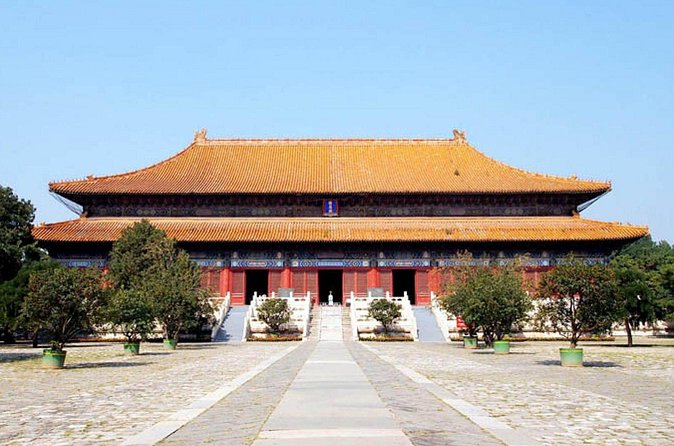
The entrance fee is included. If you select the guided option, the tour guide is included in that version. If you select the transfer option, private transport is included in that version.
The ticket does not include transportation between the different graves. That is the most important limitation to understand before booking. You should decide in advance whether you will use public transport, arrange another way around the complex, or add the private transfer.
At $7.79 per person, the ticket is aimed at visitors who want a straightforward, low-cost entry arrangement. It is not a full sightseeing package by itself. The optional services are what turn it into a more managed day out.
Confirmation is received at booking, and most people can participate. Since the activity is private, you are not sharing the experience with unrelated groups.
Free cancellation is available if you cancel at least 24 hours before the start time. Cancellations made less than 24 hours in advance, and changes made inside that period, are not accepted for a refund. The cut-off uses local Beijing time.
Who should book this Ming Tombs experience?
I would recommend it to anyone who has already seen Beijing’s best-known imperial sites and wants a different side of the Ming Dynasty. It is also a good fit for history fans, architecture enthusiasts, and visitors who prefer ceremonial monuments and archaeological sites to shopping streets.
The guided option suits you if names, dates, and burial customs are likely to feel confusing without explanation. Lucy’s English-language guiding is a useful detail for visitors who want clear historical context and practical help along the way.
The basic ticket suits independent visitors who are comfortable arranging transport and choosing their own pace. It is particularly attractive at $7.79, but you need to accept the extra planning involved.
The private transfer suits you if convenience matters more than keeping the cost at its minimum. The long trip from central Beijing and the need to move between separate tombs can turn a simple ticket into a more involved outing. A driver removes much of that friction.
Should you book it?
Book this experience if you want to see the Ming Tombs without leaving the entrance arrangements until the last minute. The Sacred Way, Dingling’s underground palace, and Changling each offer something different, and together they make the long trip from Beijing worthwhile.
Choose the basic ticket if you are confident with public transport and local navigation. Add the guide if you want the dynastic story explained, and add the private transfer if saving time is your main concern.
I would not book it as a casual one-hour filler between central Beijing sights. The journey is too long for that. But if you can spare several hours and want to understand how Ming emperors were honored in death, this is a useful, reasonably priced addition to a Beijing itinerary.
FAQ
Where are the Ming Tombs located?
The Ming Tombs are located near Beijing, China. The site is outside central Beijing and can take about an hour and a half to reach by metro.
How many Ming emperors are buried at the Ming Tombs?
Thirteen of the sixteen Ming emperors are buried at the complex, along with their wives and concubines.
What is included with the basic ticket?
The basic option includes the entrance fee. Transportation between the individual tombs is not included.
Can I add a tour guide?
Yes. A guided option is available for an additional selection. The guide is included only when you choose the related guided-tour option.
Is private hotel transfer available?
Yes. You can add round-trip private transfer from a Beijing city hotel. The driver picks you up and returns you to the hotel.
What can I see at the Sacred Way?
The Sacred Way includes the Great Red Gate, Shengde Stone Memorial Archway, Stele Pavilion, Dragon and Phoenix Gate, and Five-Arch Bridge. It is the approach to Changling Tomb.
What is special about Dingling?
Dingling was built in 1590 for Emperor Shen Zong and the empress. Its stone Underground Palace was discovered between 1956 and 1958, and valuable relics were unearthed there.
What is special about Changling?
Changling is the largest Ming Tomb. It is the burial place of Emperor Zhu Di and Empress Xu, and more than 3,000 valuable relics were unearthed there during scientific research.
Just added around Beijing
- Private Transfer to Mutianyu Great Wall with professional driver★ 5.0 · 19 reviews
- camp on the Great Wall overnight with sunrise and sunset on the wall★ 5.0 · 11 reviews
- One day tour to downtown Tianjin from Beijing by high speed train★ 5.0 · 3 reviews
- BusDa:Ancient Great Wall &Badaling Great Wall Full-day Bus Tour★ 4.5 · 6 reviews
- ZANBUS: Trip to the Jinshanling Great Wall Departing at 7:30 AM★ 5.0 · 5 reviews
- Yuxiandu Chinese Royal Cuisine Museum with Show and Royal Banquet★ 5.0 · 4 reviews
- Private Wild Great Wall Hiking tour at Simatai (Challenging)★ 5.0 · 16 reviews
- Wild Great Wall Huanghuacheng Half Day Tour★ 5.0 · 15 reviews
Ming Tombs Tours, compared.

Great Wall of China at Badaling and Ming Tombs Day Tour from Beijing
Read our review →
Mutianyu Great Wall and Ming Tombs Private Tour
Read our review →
Private Beijing Day Trip: Mutianyu Great Wall and Ming Tombs
Read our review →Mutianyu Great Wall and Ming Tombs Private Tour
Read our review →
Mutianyu + Ming Tombs or Summer Palace Private Day Tour
Read our review →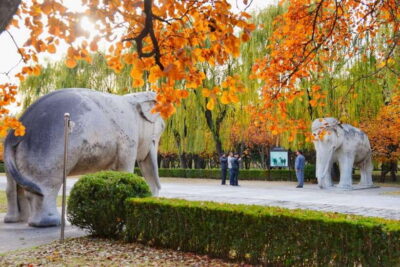
Juyongguan Great Wall, Sacred Way & Ming Tombs Trip
Read our review →
Private Tour: Ming Tombs and Great Wall at Mutianyu from Beijing
Read our review →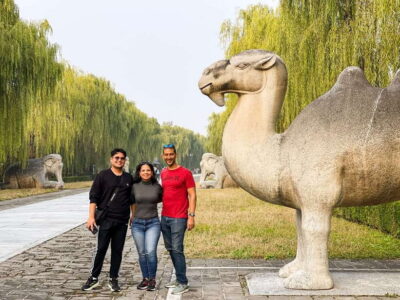
Great Wall and Ming Tomb All-inclusive Private Tour
Read our review →Browse the lists this tour appears in