Reviewed · BEIJING TOURS
Beijing Royal Banquet with Chinese culture prefermance
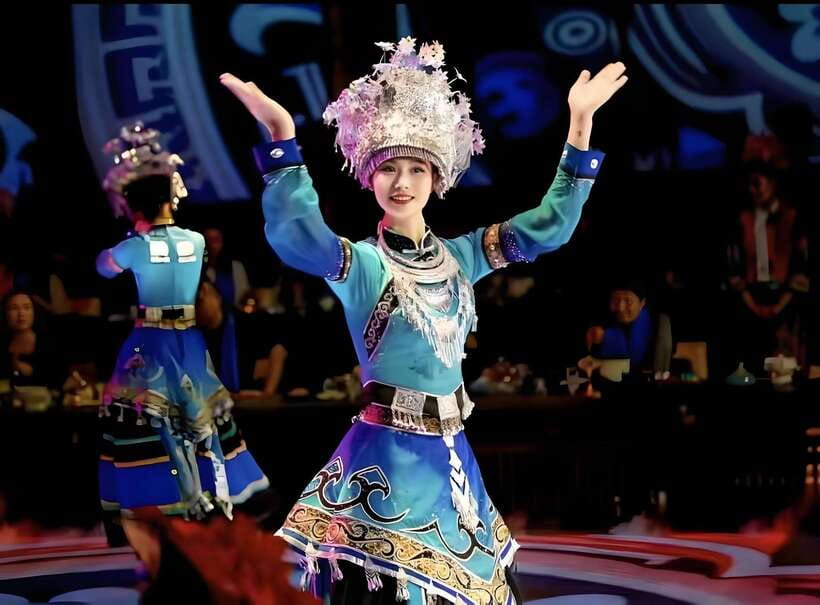
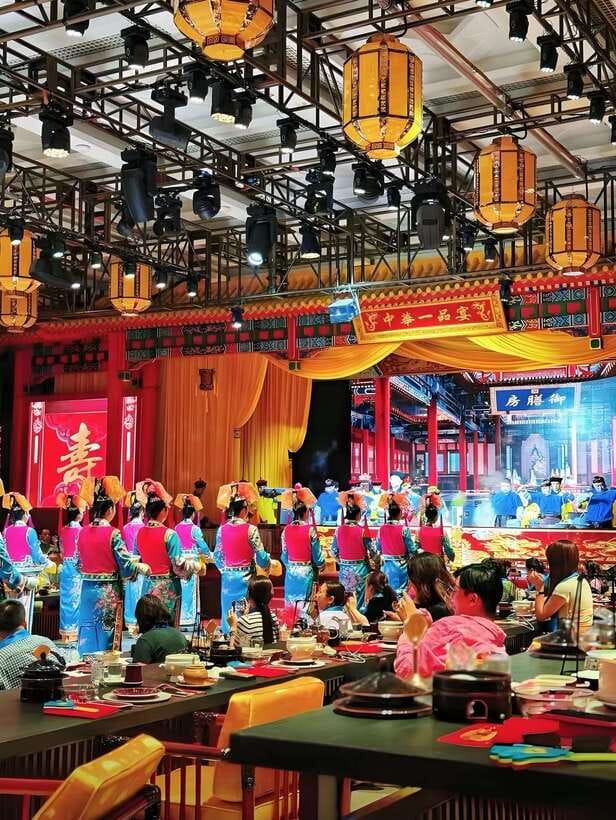
The Beijing Royal Banquet is part cultural show, part formal Chinese meal, and part food museum. At Yuxiandu, you get more than a plate of roast duck: the venue includes a 1,500-square-meter exhibition area devoted to royal cuisine and a dining area covering more than 10,000 square meters. The setting is designed to connect old court traditions with a modern building.
I like the wide range of dishes, which moves from snacks and an appetizer platter to sea cucumber, roast duck, lamb, noodles, and sweet treats. I also like the practical setup: Chinese and English-speaking hosts, wheelchair access, and a separate entrance for this experience.
The main drawback is the price. At $150 per person, this is not a casual meal, and the menu may feel more ceremonial than familiar if you prefer simple local food. You also need to arrive by 11:15 for lunch or 18:15 for dinner, so late arrivals could be a problem.
Key points to know before booking
- A full royal-style menu: Expect snacks, roast duck, sea cucumber with fish maw, roasted lamb, longevity noodles, and several desserts.
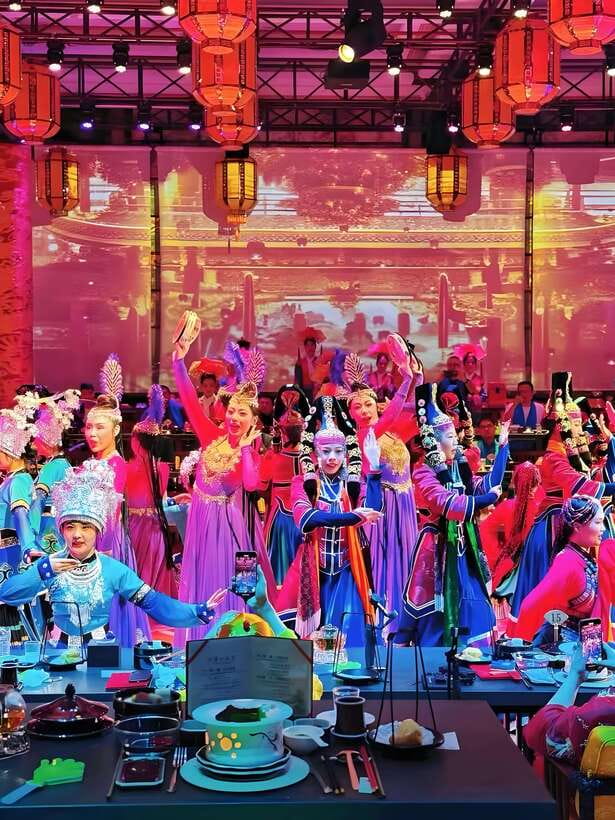
- A cultural performance: The meal comes with Chinese cultural performances, making this more than a standard restaurant booking.
- A large food exhibition: Yuxiandu has about 1,500 square meters devoted to royal-cuisine history and culture.
- A grand modern venue: The dining area covers more than 10,000 square meters and includes a transparent, energy-saving central kitchen.
- Strict arrival times: Get there before 11:15 for lunch or before 18:15 for dinner.
- Flexible booking terms: You can reserve now and pay later, with free cancellation up to 24 hours before the experience.
Entering Yuxiandu for a royal dining experience
Your meeting point is No. 117, West Fourth Ring North Road, in Beijing’s Haidian District. The experience lasts 2.5 hours, and a host or greeter can assist in Chinese or English.
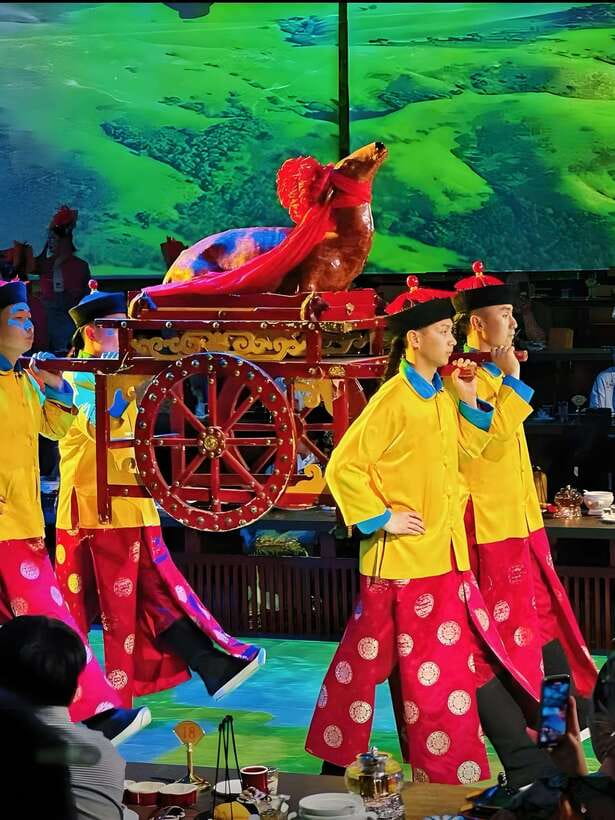
Yuxiandu is built around the idea of royal cuisine, so the venue matters as much as the food. You are not simply sitting down at an ordinary dining room. The site combines traditional decorative elements with modern design, including a transparent central kitchen described as green and energy-saving.
That contrast is useful to keep in mind. The experience is not a recreation of an ancient palace, and you should not expect an untouched historic building. Instead, it presents imperial-style food and cultural traditions in a large, purpose-built setting.
The separate entrance is a small but useful benefit. It can help you get inside without following the regular entry process, although you still need to arrive on time for the meal. A booking confirmation email provides the arrival guidance after you reserve.
The venue has also been visited by celebrities and politicians. That detail adds a sense of occasion, but I would treat it as background rather than the main reason to book. The real value lies in the combination of food, performance, and cultural display.
Other Beijing days worth booking alongside this:
- From Beijing: Mutianyu Great Wall Tours with Options
★ 4.9 · 9,216 reviews - Beijing: Forbidden City Tour(Group/Private)-Tickets Included
★ 4.8 · 7,974 reviews - Beijing: T-Square & Forbidden City Group or Private Tour
★ 4.8 · 4,446 reviews
The royal-cuisine exhibition area
Before or around the meal, you can take in Yuxiandu’s royal-cuisine historical and cultural exhibition area. It covers about 1,500 square meters, which gives the visit more context than a menu alone can provide.
The supplied information does not give a fixed route through the exhibition or list individual displays. You should therefore think of it as a supporting part of the experience, not a separately guided museum tour with a published stop-by-stop schedule.
Still, the exhibition helps explain why the dishes are presented as royal cuisine. Court food was tied to ceremony, status, special ingredients, and careful preparation. A display area devoted to that subject gives you a chance to place the meal within a larger Chinese food tradition.
I like this part because it gives the performance and banquet a frame. Without that context, an expensive meal can feel like a collection of unfamiliar dishes. With it, you can pay closer attention to the ingredients, presentation, and sequence of the meal.
The building’s scale also shapes the visit. A dining area of more than 10,000 square meters is very large, so do not expect the intimate feel of a small family restaurant. This is a formal attraction built to handle a major audience.
Snacks and the opening dishes
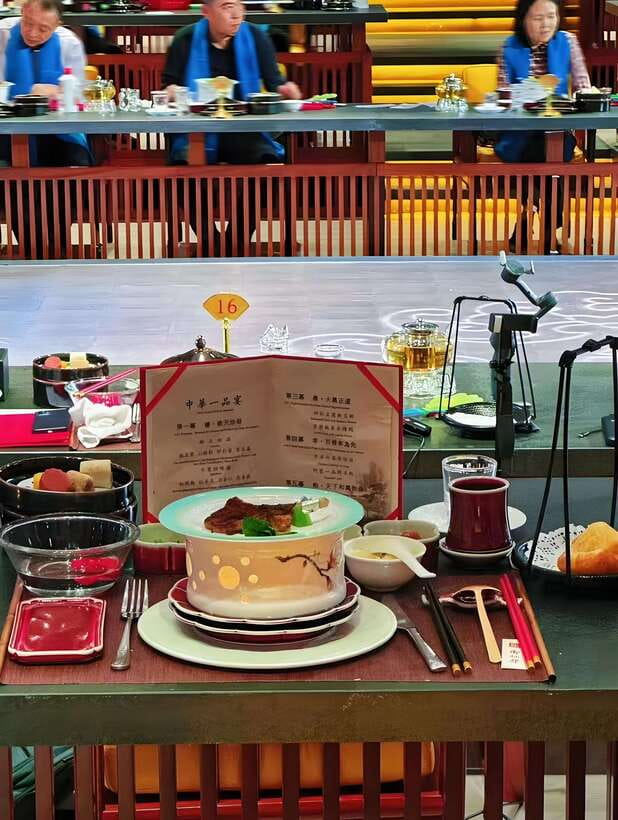
The meal begins with snacks and an appetizer platter. These opening courses should give you an easier introduction to the banquet before the more specialized dishes arrive.
An appetizer platter is useful in a set menu because it lets you sample several flavors at once. You might find that some items are immediately familiar, while others depend on textures or seasonings you do not often encounter at home. I would take small portions at first, especially if you plan to try every later course.
This is also where the banquet begins to feel different from a normal restaurant lunch. The meal is arranged as a sequence, rather than as one main plate. You are meant to notice the progression from lighter starters to more substantial dishes.
The menu includes marinated tofu and bamboo shoots. Both ingredients are common in Chinese cooking, but the preparation can make them feel more formal than everyday versions. Tofu offers a soft, mild base, while bamboo shoots bring a firmer texture and a clean, earthy flavor.
The menu also includes Chinese cabbage in soup. This is likely to be one of the gentler dishes in the meal, and it can provide a welcome pause between heavier courses. You may appreciate that balance, since the banquet later includes rich seafood, duck, lamb, noodles, and fried dough.
Sea cucumber, fish maw, and the main banquet courses
One of the most distinctive dishes is braised sea cucumber with fish maw in a casserole. These are prized ingredients in many formal Chinese meals, and their appeal often comes as much from texture and symbolism as from strong flavor.
If you have never eaten sea cucumber, expect a soft, slightly springy texture rather than a fish-like taste. Fish maw is also valued for its texture. The casserole preparation suggests a slow, sauced dish designed to be served warm and shared.
This course may be the biggest dividing line for diners. I like seeing it included because it makes the meal feel genuinely tied to formal Chinese culinary traditions. At the same time, you may prefer the duck or lamb if you want something more familiar.
The roast duck with jujube wood is likely to be the menu’s most recognizable centerpiece. The use of jujube wood is a specific detail that sets it apart from a generic roast duck meal. Jujube, also called Chinese date, is closely associated with Chinese food traditions, and the wood is used here as part of the roasting process.
You should not assume the duck course will be served in the same way as every famous Beijing duck restaurant. The information provided does not specify carving tableside, pancake service, sauces, or the number of portions. What you can count on is roast duck prepared as part of the royal banquet.
Roasted lamb follows the seafood and poultry courses with a stronger, meatier flavor. It gives the meal a clear change of pace. If you eat meat, this may be one of the more accessible dishes on the menu, though the serving style and seasoning are not specified.
Same country, a completely different kind of day:
- Beijing: Mutianyu Great Wall Daily Tour with Ticket & Lunch
★ 5.0 · 3,056 reviews - All-Inclusive Tour: Tiananmen Square, Forbidden City, Great Wall
★ 5.0 · 2,873 reviews - MuBus: Mutianyu Great Wall ENG/ESP/RUS Guided Bus Tour
★ 5.0 · 2,361 reviews - 4-Hour Small Group Tour to Forbidden City with Entry Tickets
★ 5.0 · 1,863 reviews
Longevity noodles and the final sweets
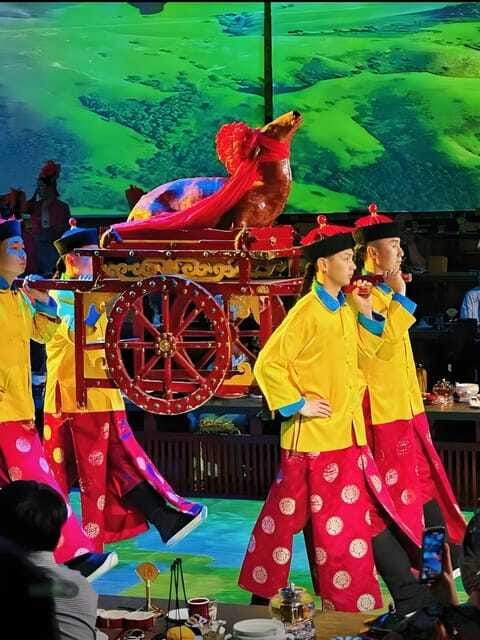
The banquet includes longevity noodles with poached eggs. In Chinese food culture, long noodles are associated with long life, making this course particularly suited to a celebratory or ceremonial meal.
The poached egg adds richness and makes the noodles more filling. I would save room for this course rather than treating it as an afterthought. In a long set meal, noodles often serve as a satisfying final savory dish before dessert.
The sweet section includes deep-fried dough sticks, known as youtiao, served with milk. Youtiao is often associated with breakfast and casual Chinese eating, so its appearance in a royal-style banquet shows how familiar ingredients can be given a more formal place.
You also get yogurt filled with honey. This should offer a cool, mild finish after the roasted and braised courses. Since the menu contains several rich dishes, the yogurt may be especially welcome.
The exact serving sizes are not provided, and the food is served as a banquet rather than described as an individual tasting menu. You should expect the full menu to be substantial, but you may not be able to choose substitutions or adjust the sequence.
The cultural performance during the meal
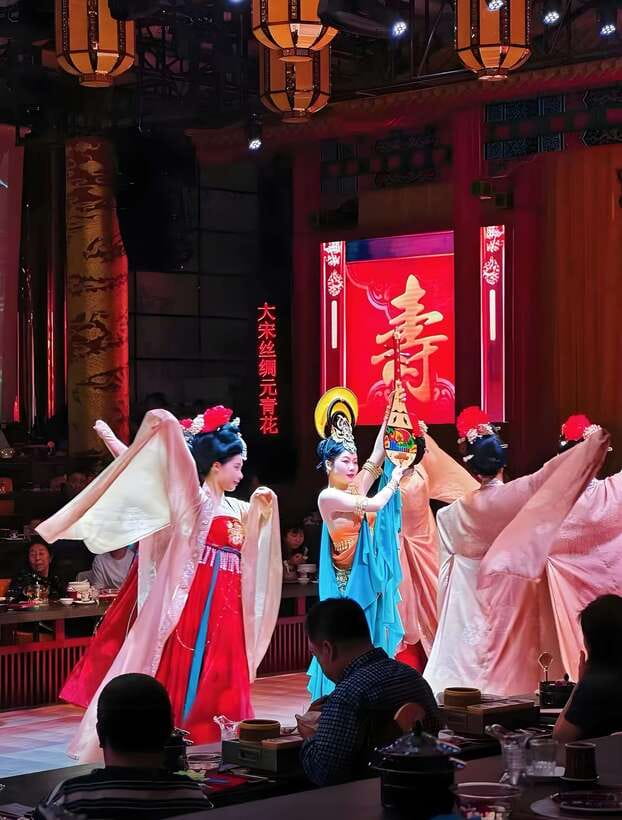
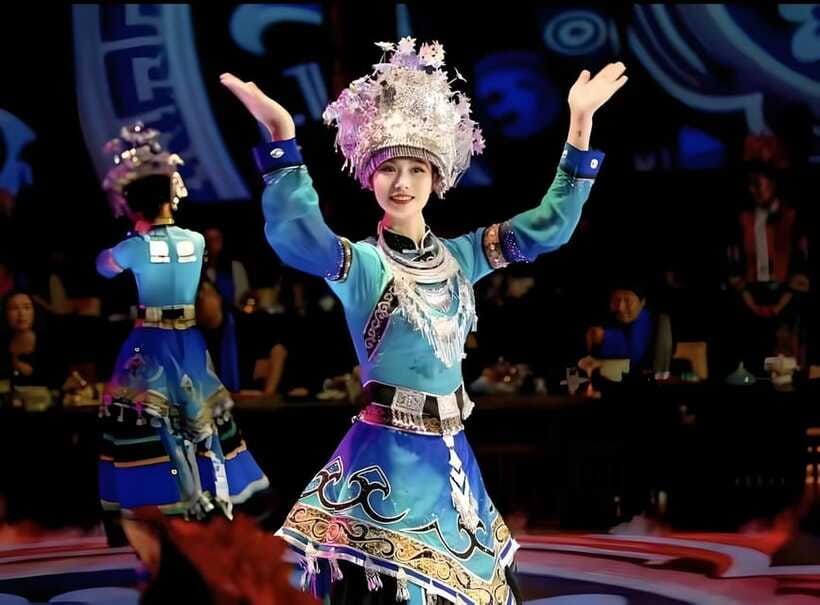
The cultural performance is one of the main reasons to choose this experience over a normal Chinese dinner. The listing does not name the performers or specify the exact art forms, so you should not book expecting one particular show such as opera, acrobatics, or a named dance.
What is clear is the format: Chinese cultural performance paired with a royal-style meal. That combination gives the evening a theatrical element and turns dinner into a planned cultural outing.
I like this arrangement for a first introduction to Chinese food traditions, especially if you have only a short time in Beijing. You can see a performance, learn about royal cuisine through the venue, and sample a broad menu without arranging several separate activities.
The tradeoff is that a staged performance is not the same as attending a local neighborhood event or eating in a small traditional restaurant. The experience is polished and organized. If your priority is quiet dining, close contact with local cooks, or a highly personal meal, this may feel too formal.
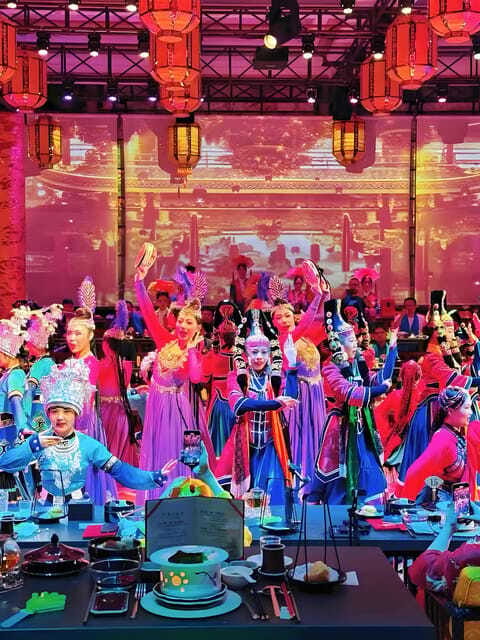
The large venue also means the atmosphere may be grand rather than intimate. That can suit families, groups, and first-time visitors who want a clear program. Solo diners or couples looking for a quiet romantic dinner may want to consider the scale before paying.
Is $150 per person a fair price?
At $150 per person, this is an expensive meal by Beijing standards. The value does not come from food alone. You are paying for a 2.5-hour package that combines a substantial banquet, cultural entertainment, a dedicated exhibition area, and access through a separate entrance.
The menu has several ingredients associated with formal dining, including sea cucumber, fish maw, roast duck, lamb, and longevity noodles. If you would otherwise book a high-end meal and a separate cultural performance, the combined format may make more sense.
Still, I would not call it a bargain. The supplied details do not include transportation, drinks, or a private guide, and only the royal banquet is specifically listed as included. Check the confirmation details carefully so you understand what the $150 covers.
This experience suits you best if you value convenience and presentation. It is also a reasonable choice for families or groups who want one organized activity with food and entertainment in the same place.
You may find better value elsewhere if your main goal is simply to eat excellent roast duck. In that case, a dedicated Beijing duck restaurant could give you more focus for less money. The Royal Banquet makes more sense when you want the full cultural package.
Timing, access, and practical planning
Plan your route to Haidian District carefully. The address is No. 117, West Fourth Ring North Road, and no transportation service is listed as included, so you are responsible for reaching the meeting point.
For lunch, arrive before 11:15. For dinner, arrive before 18:15. These are firm practical details, not vague suggestions. A formal meal and performance usually run on a set schedule, so arriving late could mean missing part of the program.
The experience is wheelchair accessible. That is helpful for anyone who needs step-free access, though the information does not describe restroom design, seating layout, or assistance inside the venue.
Chinese and English are available for the host or greeter. This should make arrival and basic guidance easier, but the food descriptions do not promise a full English explanation of every course. If a particular ingredient matters to you, use the confirmation email or ask the host when you arrive.
You can reserve now and pay later, which is useful when your Beijing plans are still changing. Free cancellation is available up to 24 hours in advance for a full refund. After booking, watch for the confirmation email, since it includes the arrival guidelines.
Should you book the Beijing Royal Banquet?
Book it if you want a large-scale cultural meal that combines a formal menu, Chinese performances, and a royal-cuisine exhibition in one 2.5-hour visit. The broad menu makes it a good fit for curious diners who want to sample several traditional ingredients and preparations.
Think twice if you only want a simple, inexpensive meal or a focused Beijing duck dinner. The $150 price is justified mainly by the complete program, not by one dish.
For families, first-time visitors, and anyone who prefers an organized cultural evening, I can see the appeal. Just arrive early, confirm what is included, and keep your expectations focused on a polished royal-style presentation rather than an intimate local restaurant.
FAQ
Where is the Beijing Royal Banquet held?
The meeting point is No. 117, West Fourth Ring North Road, Haidian District, Beijing, China.
How long does the experience last?
The experience lasts 2.5 hours.
What time should I arrive for lunch?
You should arrive before 11:15 for lunch.
What time should I arrive for dinner?
You should arrive before 18:15 for dinner.
What food is included?
The menu includes snacks, an appetizer platter, braised sea cucumber with fish maw in casserole, marinated tofu and bamboo shoots, roast duck with jujube wood, Chinese cabbage in soup, roasted lamb, longevity noodles with poached eggs, deep-fried dough sticks with milk, and yogurt filled with honey.
Is a cultural performance included?
Yes. The experience includes Chinese cultural performances as part of the royal banquet program.
What languages are available?
The host or greeter can assist in Chinese or English.
Is the experience wheelchair accessible?
Yes, the experience is wheelchair accessible.
Can I cancel for a full refund?
Yes. You can cancel up to 24 hours in advance for a full refund. You can also reserve now and pay later.
Just added around Beijing
- Private Transfer to Mutianyu Great Wall with professional driver★ 5.0 · 19 reviews
- camp on the Great Wall overnight with sunrise and sunset on the wall★ 5.0 · 11 reviews
- One day tour to downtown Tianjin from Beijing by high speed train★ 5.0 · 3 reviews
- BusDa:Ancient Great Wall &Badaling Great Wall Full-day Bus Tour★ 4.5 · 6 reviews
- ZANBUS: Trip to the Jinshanling Great Wall Departing at 7:30 AM★ 5.0 · 5 reviews
- Yuxiandu Chinese Royal Cuisine Museum with Show and Royal Banquet★ 5.0 · 4 reviews
- Private Wild Great Wall Hiking tour at Simatai (Challenging)★ 5.0 · 16 reviews
- Wild Great Wall Huanghuacheng Half Day Tour★ 5.0 · 15 reviews
Beijing Tours, compared.

Forbidden City Tour(Group/Private)-Tickets Included
Read our review →
Mutianyu Great Wall Daily Tour with Ticket & Lunch
Read our review →
All-Inclusive Tour: Tiananmen Square, Forbidden City, Great Wall
Read our review →
4-Hour Small Group Tour to Forbidden City with Entry Tickets
Read our review →

Tianmen Square, Forbidden City & Royal Museum Tours
Read our review →