
Reviewed · TERRACOTTA WARRIORS TOURS
Beijing Private Tour: Xi’an Terracotta Warriors by Bullet Train
Xi’an’s Terracotta Warriors are one of China’s great archaeological sights, and this private day trip lets you see them without arranging train tickets, station transfers, museum admission, or local transport yourself. The trip is built around the 8,000-plus life-sized clay soldiers found in 1974 by four local farmers.
I like the private format, since your own group travels together and your guide can keep the visit focused. I also like having a guide who explains not just the famous discovery, but the soldiers’ craftsmanship and the lesser-known stories tied to Xi’an.
The tradeoff is plain: this is a long day with roughly 4.5 hours by train each way, plus transfers and about two hours at the museum. At $434 per person, you are paying for ease and coordination, not a leisurely stay in Xi’an.
Key points to know before booking
- The Terracotta Warriors are the heart of the day, with time focused on Pits 1, 2, and 3.
- Second-class round-trip train tickets are included, while first-class and business-class seats cost extra if available.
- Private door-to-door transport connects your Beijing hotel, Beijing West Railway Station, and the museum in Xi’an.
- Guide Spring has earned praise for clear explanations, detailed site history, and attention to the group’s experience.
- The schedule is tight, with most of the day spent reaching Xi’an and returning to Beijing.
- A passport copy is required for train-ticket booking, and holiday departures can be difficult to secure.
Why this Xi’an day trip works from Beijing
The Terracotta Warriors are far enough from Beijing that visiting them on your own in a single day takes careful planning. You need a high-speed train ticket, a way to reach Beijing West Railway Station, transport from Xi’an to the museum, admission, and a reliable plan for getting back to the station on time.
This tour puts those moving parts under one booking. Your driver picks you up from your Beijing hotel in the morning, using a sign with your name, and helps you find the correct waiting area at the station. After the train ride, you meet your local guide at the Museum of Qin Terracotta Warriors and Horses.
I see the appeal. Beijing’s railway stations can be large and busy, and a missed connection would ruin a day trip this tight. Having a driver and guide handle the handoffs leaves you free to watch the countryside from the train or rest before the museum visit.
The private setup matters, too. Only your group participates. You do not need to wait for a large coach group or follow a guide who is trying to satisfy several unrelated groups at once. That makes the two-hour museum visit more useful, since the guide can point out the pieces and details most relevant to your interests.
Still, this is not a relaxed side trip. The listed duration is approximately 8 to 12 hours, and the train portion alone accounts for about nine hours round trip. If you want time for Xi’an’s city walls, Muslim Quarter, local food, or other sights, you need a longer visit or an overnight stay.
More Bullet Train Day Trips in Beijing
- Beijing to Xi’an See Terracotta Warriors with Bullet Train Round Trip Transfer
★ 5.0 · 238 reviews - Beijing to Datong See YunGang Cave, Hanging Temple (Bullet Train)
★ 5.0 · 39 reviews - Private Day Trip to Tianjin from Beijing by Bullet Train
★ 5.0 · 22 reviews
From your Beijing hotel to the railway station
The day begins with pickup in your hotel lobby. Your driver holds a sign with your name, which is a small detail but a helpful one when several cars and passengers are moving through the same area.
You are driven to Beijing West Railway Station and assisted in finding the waiting area. The service includes round-trip second-class train tickets. First-class or business-class tickets can be arranged if available, but you pay the difference.
Second class is the standard option and keeps the advertised price lower. For a long train ride, some people may prefer the extra space associated with first class, but the tour gives you a choice rather than forcing a higher fare on every booking.
You should send a copy of the front page of your passport after booking. This is needed to arrange train tickets in China. Train availability can also be difficult around public holidays, so I would not leave this booking until the last minute. The tour is booked, on average, 44 days ahead, which is a useful sign that advance planning matters.
The exact train departure and return details are not provided here, so you should confirm those times before paying. The day depends on keeping every part of the schedule moving, from hotel pickup to the return transfer in Xi’an.
The high-speed train to Xi’an
The listed train journey takes about 4.5 hours each way. That is a significant portion of the experience, but it is also the practical reason the tour can be done from Beijing in one day.
I like high-speed rail for this kind of long-distance connection. You avoid the hassle of airport security and the extra time needed to reach an airport, while the station-to-station route keeps you closer to the city centers. Here, the train also gives you a fixed schedule and a private driver waiting at both ends.
The cost is that you spend much of your day seated. Bring something to read, download entertainment in advance, and consider carrying food for the journey, since meals are not included. The tour includes transportation but not food, and no meal stop is specified.
The train ride can also be useful as a mental break between two demanding parts of the day. After leaving Beijing, you have time to rest before the museum. On the way back, you can sort through what you saw and let the guide’s explanations settle in.
Because the itinerary is so compressed, do not think of this as a broad Xi’an tour. The focus is one major archaeological site. That narrow purpose is a strength if the Terracotta Warriors are high on your list, but a limitation if you want a fuller taste of the city.
Meeting your guide at the Terracotta Warriors Museum
In Xi’an, you meet your English-speaking guide at the museum. The guide’s job is especially important here because the museum can be visually overwhelming. Rows of figures, broken fragments, pits, restoration work, and display cases can blur together without a clear explanation.
Guide Spring is specifically praised for making the visit informative and easy to follow. Spring has more than 10 years of experience with the Terracotta Army and is described as explaining both the 1974 discovery and the individual craftsmanship behind the clay soldiers.
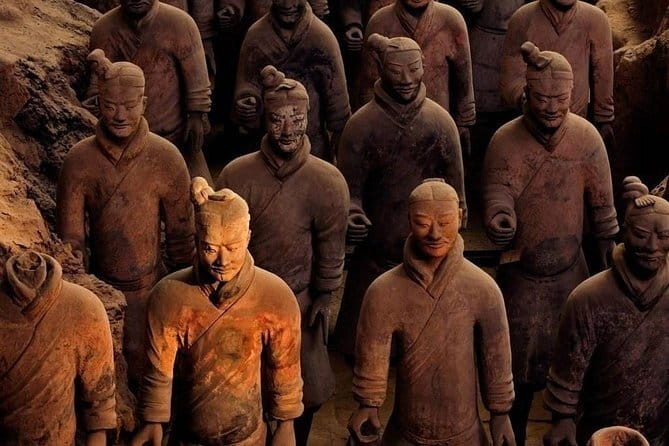
That kind of background changes the visit. Instead of simply looking at a large hall filled with statues, you can begin to notice differences in faces, clothing, rank, posture, and equipment. The point is not only to count the figures, but to understand what the army tells you about the Qin period and the scale of the ruler’s burial project.
One useful feature of a private guide is the ability to ask questions as they occur. If one part of the excavation interests you more than another, you can spend your limited time there rather than waiting for a standard group explanation to finish.
The information provided does not guarantee that Spring will lead every departure, so treat the name as an example of the guiding service rather than a promise. The tour does promise an English-speaking guide, but the individual guide may vary.
More Terracotta Warriors Tours in Beijing
- Beijing: Xi’an Terracotta Tour by Train-All Tickets Included
★ 5.0 · 27 reviews - Beijing to Xi’an Terracotta Tour by Roundtrip Bullet Train
★ 4.8 · 13 reviews - Private Day Trip to Terracotta Army from Beijing by Bullet Train
★ 5.0 · 7 reviews - 1-Day Terracotta Warriors Tour from Beijing/Chengdu/Shanghai
★ 4.9 · 6 reviews
Pit 1, Pit 2, and Pit 3

The museum is divided into three main sections: No. 1 Pit, No. 2 Pit, and No. 3 Pit. Your visit is scheduled for about two hours, so the guide needs to help you use that time well.
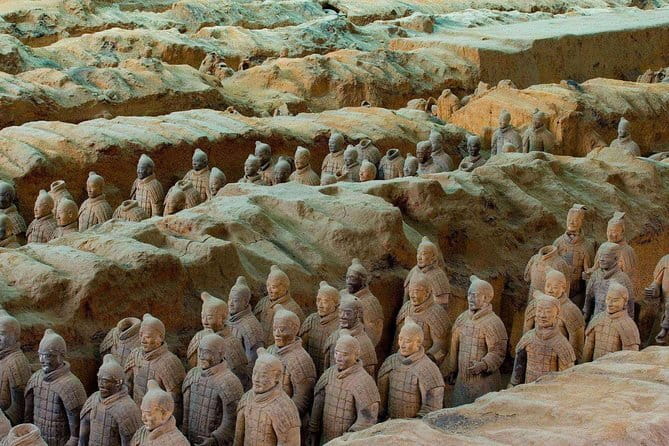
No. 1 Pit is the main visual experience, with long lines of clay soldiers arranged in formation. It is the section most people picture when they think of the Terracotta Warriors, and it gives you the clearest sense of the army’s size.
No. 2 Pit adds another part of the story, showing different types of military figures and excavation areas. No. 3 Pit is smaller but important for understanding how the army may have been organized. A good guide can keep you from treating the three buildings as three versions of the same display.
I would plan to listen closely during the first pass, then take your photographs. Two hours passes quickly, especially when you factor in walking between the sections and pausing at the most impressive views.
The museum visit is also more than a parade of complete statues. Excavation and restoration are part of the story. You can expect to see damaged pieces and figures in various states of repair, which makes the site feel like ongoing archaeology rather than a finished collection placed in a hall.
Discovery, craftsmanship, and the stories behind the army

The site was discovered in 1974 by four local farmers. That simple fact helps ground the visit. This was not a treasure found through a grand expedition, but an accidental discovery made during ordinary local work.
The army includes more than 8,000 life-sized clay soldiers, along with other figures connected to the burial complex. The scale is difficult to understand from a photograph. Your guide’s explanation helps connect the number of figures with the planning, labor, and artistic work required to make them.
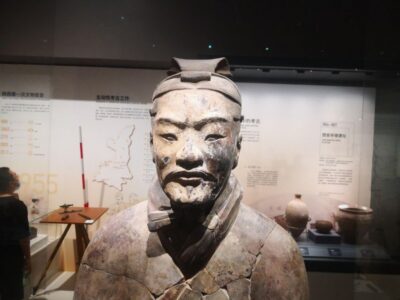
The soldiers were not presented as identical toys. Details such as faces, clothing, rank, and posture give the figures individual character. Your guide can explain why those differences matter and how they fit into the military order represented at the site.
This is where a specialist guide can earn the fee. A short visit needs a clear narrative, and Spring is praised for including lesser-known details and related sites in Xi’an rather than giving only the standard facts.
One review also highlights Pit 3 and a special 50th exhibition that was running at the time, along with tea at a local tea shop where visitors could purchase cups, teapots, and local tea. Treat this as a possible addition rather than a fixed part of the published itinerary. Exhibitions change, and the tea stop is not listed among the included features.
How much value do you get for $434?

At $434 per person, this is not a budget rail outing. The price includes round-trip second-class train tickets, private car transport, an English-speaking guide, and the museum entrance fee. It also buys the convenience of having the connections arranged for you.
That value depends on how much you dislike logistical risk. If you are comfortable arranging China’s train tickets, finding Beijing West Railway Station, reaching the museum from Xi’an, buying admission, and coordinating a return connection, you may prefer to build the day yourself.
I would be more likely to recommend the tour to someone visiting China for the first time, staying in Beijing for a short period, or traveling with family members who need a simple plan. The private car and station assistance can remove a lot of friction.
The price is harder to justify if you have plenty of time in China. An overnight Xi’an visit would let you spread out the train travel, see more of the city, and avoid compressing one of China’s most important sites into a few hours.
Food and accommodation are not included. You should budget separately for meals and understand that the tour does not provide a hotel in Xi’an. First-class or business-class rail seating also costs extra.
Who should book this long day?

I think this tour suits you if the Terracotta Warriors are a priority and Beijing is your base. It is also a good fit if you prefer a private guide, want help at the railway station, and would rather pay for coordination than manage each connection yourself.
Families and small groups may find the private format especially useful. You can move at your own group’s pace within the fixed schedule, ask questions freely, and avoid being split among unrelated participants.
The tour is less suitable for anyone who dislikes long rail journeys or wants a slow cultural day. Nine hours on the train leaves little room for mistakes, long meals, or spontaneous stops.
It may also be a poor match if you want to explore Xi’an beyond the museum. The itinerary is centered on the Terracotta Warriors. The city’s other attractions are not included, and there is no spare time promised for them.
The non-refundable cancellation policy makes careful planning important. Once you pay, the amount is not returned if you cancel or request a change for any reason. Confirm your dates, passport details, hotel pickup information, and train preferences before booking.
The practical verdict
I would book this experience when I had limited time in China and wanted the Terracotta Warriors handled in one organized day from Beijing. The included train, private transfers, admission, and guide make the price easier to understand, especially for a first visit.
I would skip it if I had enough time for an overnight in Xi’an or if I wanted the lowest possible cost. The long train ride and short museum window are real limits.
For the right schedule, this is a focused and useful way to see an extraordinary archaeological site. Go in knowing that the day is mostly transportation, then let the guide make the museum hours count.
FAQ
Are round-trip train tickets included?
Yes. The tour includes round-trip second-class train tickets. First-class and business-class seats can be requested, subject to availability, with the price difference paid separately.
How long is the train journey?
The listed journey takes about 4.5 hours each way between Beijing and Xi’an.
Where does pickup take place?
A driver picks you up from your Beijing hotel lobby in the morning and takes you to Beijing West Railway Station.
Is transportation in a private vehicle included?
Yes. Travel by private car is included, and the activity is private for your group only.
How long do you spend at the Terracotta Warriors Museum?
The museum visit is scheduled for about two hours. The main sections are No. 1 Pit, No. 2 Pit, and No. 3 Pit.
Is food included?
No. Food is not included. Accommodation is also not included.
What documents are needed to book the train tickets?
A copy of the front page of your passport is needed for ticket booking in China. The tour provider contacts you for it after a successful reservation.
More Train Experiences in Beijing
- Beijing:Bullet Train Tour to Hanging Temple&Yungang Grottoes
★ 5.0 · 16 reviews - Private Day Trip: Discover Tianjin by Bullet Train from Beijing
★ 5.0 · 14 reviews - Beijing to Shanghai Bullet Train Ticket with South Railway Station Transfer
★ 5.0 · 11 reviews - 5 Days Beijing and Xian Tour by bullet train
★ 5.0 · 9 reviews
Just added around Beijing
- Private Transfer to Mutianyu Great Wall with professional driver★ 5.0 · 19 reviews
- camp on the Great Wall overnight with sunrise and sunset on the wall★ 5.0 · 11 reviews
- One day tour to downtown Tianjin from Beijing by high speed train★ 5.0 · 3 reviews
- BusDa:Ancient Great Wall &Badaling Great Wall Full-day Bus Tour★ 4.5 · 6 reviews
- ZANBUS: Trip to the Jinshanling Great Wall Departing at 7:30 AM★ 5.0 · 5 reviews
- Yuxiandu Chinese Royal Cuisine Museum with Show and Royal Banquet★ 5.0 · 4 reviews
- Private Wild Great Wall Hiking tour at Simatai (Challenging)★ 5.0 · 16 reviews
- Wild Great Wall Huanghuacheng Half Day Tour★ 5.0 · 15 reviews
Terracotta Warriors Tours, compared.

Mini Group Xian Day Tour to Terracotta Army, City Wall, Pagoda and Muslim Bazaar
Read our review →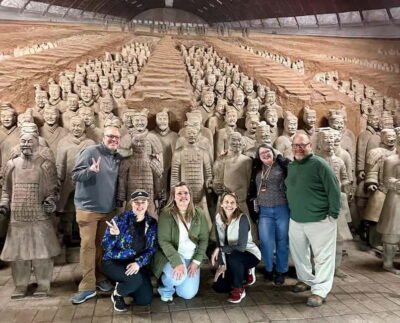
Terracotta Army Ticket & Guided Bus Tour with Options
Read our review →
Customized Private Day Tour of Terracotta Warriors and Xi’an
Read our review →
Exclusive Terracotta Army Tour & Local Family Lunch
Read our review →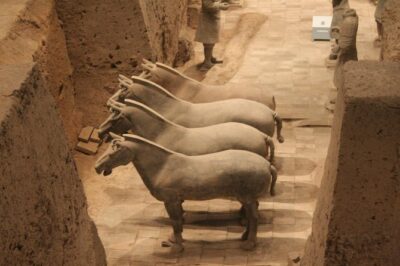
Half-Day Mini Group Xian Tour to Terracotta Warriors Museum
Read our review →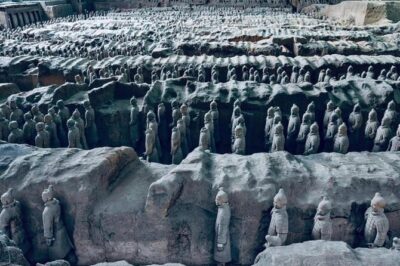

Private Customizable Terracotta Warriors Day Tour with Options
Read our review →Browse the lists this tour appears in