Reviewed · BEIJING TOURS
Beijing liulichang : Learn Calligraphy orCarving from Master
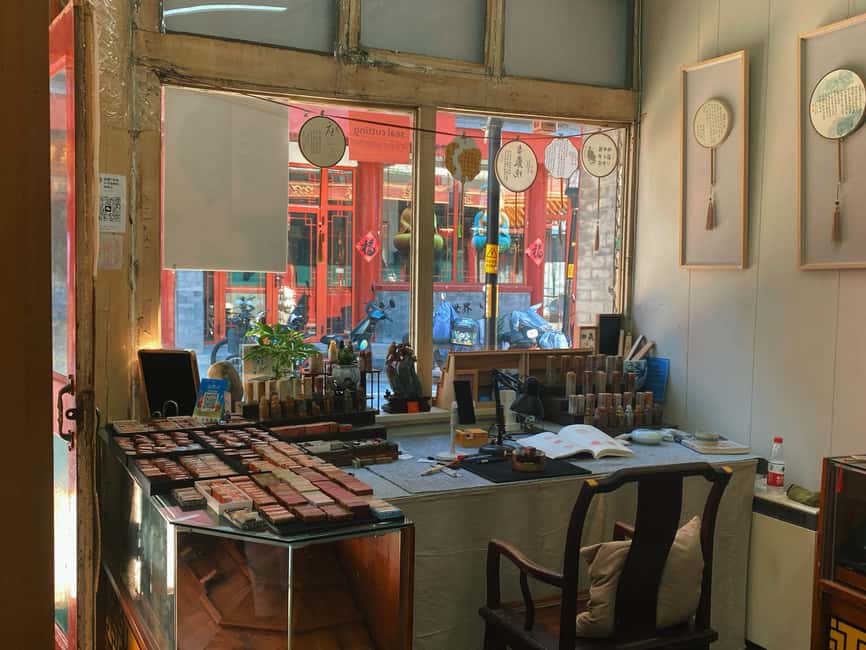
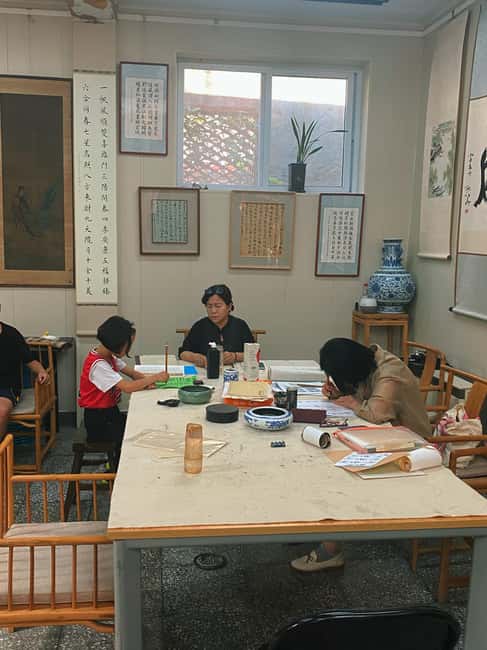
The best part of this Beijing experience is that you do not simply look at traditional art. You make something with your own hands in a quiet studio in Liulichang, the old book and art district. You can practice calligraphy, paint a silk fan, or carve a Chinese name seal.
I like the real souvenir you take home, especially the seal, which becomes a personal stamp rather than another shop-bought trinket. I also like the patient teaching style associated with Bruce Gao and his team, including practice stones and communication help for seal carving. The main drawback is that transportation is not included, so you must reach the Liulichang meeting point yourself.
Key points to know before booking
- Three art choices: Pick calligraphy, silk fan painting, or seal carving.
- Practice comes first: Seal carvers work on spare stones before touching the final stone.
- A short Liulichang walk: The session begins at the east street entrance with local cultural context.
- Small-group attention: Bruce Gao and the teaching team offer hands-on help in English or Chinese.
- A useful keepsake: Leave with your own rice-paper work, painted fan, or Chinese name chop.
- Flexible planning: The class lasts 2 to 2.5 hours, and cancellation is free up to 24 hours ahead.
Starting at Liulichang East Street
Your meeting point is the small square at the entrance to Liulichang East Street. Look for the guide holding a Sino-Voyages sign. This detail matters because Liulichang has plenty of traditional-looking lanes, and a clear meeting point saves you from wandering around with your phone out.
Before the studio work begins, the guide takes you on a brief walk through Liulichang. This is not a major sightseeing tour, but it gives the class a setting. You begin among the old hutongs and cultural shops, then move indoors to work with the art forms that made this district a natural home for Chinese calligraphy, painting, and seal culture.
I like this order. You first get your bearings in the neighborhood, then sit down for a focused activity. It feels more connected to Beijing than arriving at an anonymous classroom. Still, keep your expectations in check. The walk is brief, so book this for the workshop rather than for a full walking tour of the district.
The guide language is English or Chinese. Bruce Gao is named as one of the people connected with the experience, and the teaching team may include a friend and interpreters who help you communicate with the master. That support is especially useful for seal carving, where small instructions about pressure, angle, and character shape matter.
Other Beijing days worth booking alongside this:
- From Beijing: Mutianyu Great Wall Tours with Options
★ 4.9 · 9,216 reviews - Beijing: Forbidden City Tour(Group/Private)-Tickets Included
★ 4.8 · 7,974 reviews - Beijing: T-Square & Forbidden City Group or Private Tour
★ 4.8 · 4,446 reviews
Choosing your art form
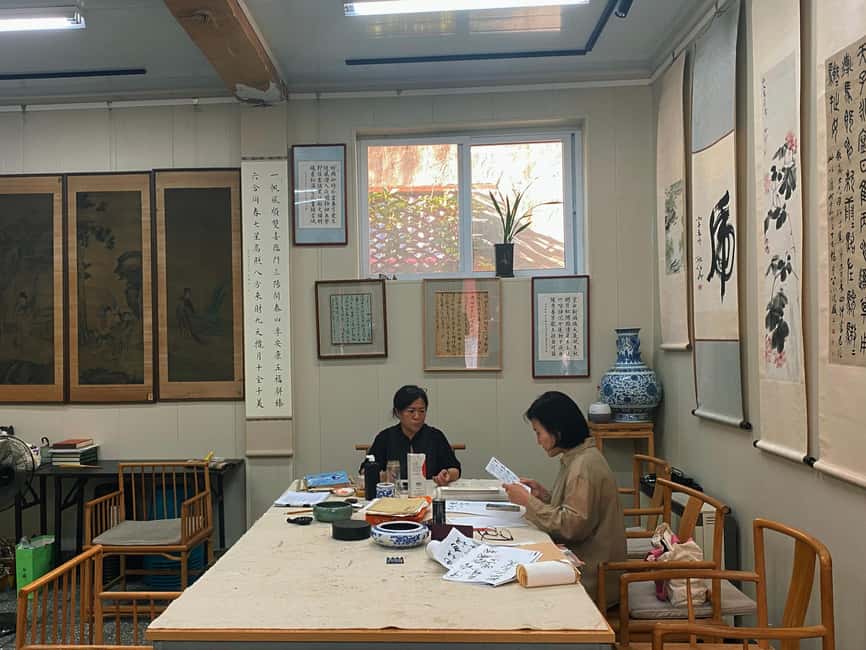
You choose one of three activities. Each gives you a different kind of connection to Chinese culture, so your choice should depend on how you like to work.
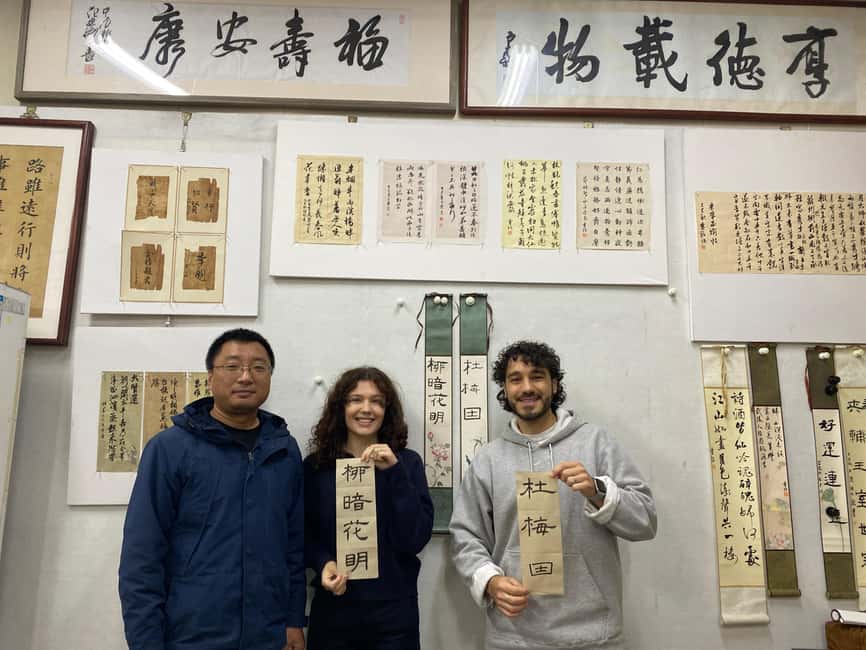
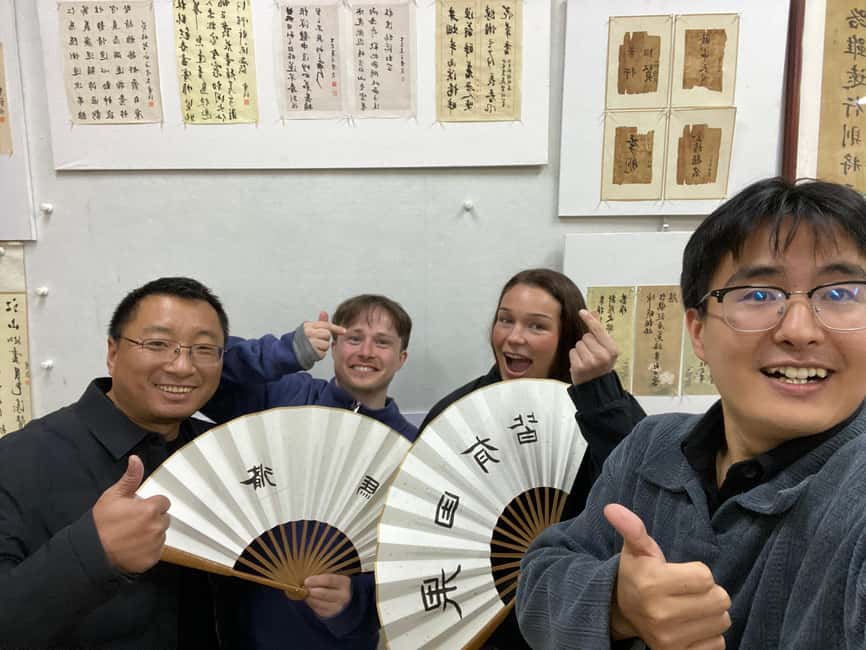
Calligraphy is the calmest option. You learn how to handle the brush and build Chinese characters from controlled strokes. You can write a meaningful Chinese proverb or your own name on rice paper, creating a piece that is easy to carry home.
Fan painting is the most visual and practical choice. You paint on a delicate silk round fan, using a classic subject such as bamboo or orchids. The finished item is both wall-worthy and usable, though the fine surface means you need to accept that your work may look more personal than perfect.
Seal carving is the most hands-on and unusual option. You create a Chinese name chop, a traditional stamp used as a personal signature. The process takes concentration, and you should not expect to produce a museum piece in one sitting. The reward is a small object with a clear personal identity.
The workshop provides materials for your chosen activity. You do not need to bring brushes, ink, paper, stones, carving tools, or paint. No prior experience is required, and curiosity is more useful than artistic confidence.
Calligraphy: learning the discipline of the brush
Calligraphy may look simple from across a room. A few black strokes on white paper can seem effortless. Once you hold the brush, you quickly learn that the work depends on posture, pressure, speed, and control.
The class gives you a chance to practice before making your final piece. You may write a proverb or your name, which gives the finished work a personal meaning. Writing a name can also help you connect with how Chinese characters are formed, rather than treating them as decorative marks.
I would choose calligraphy if you want a peaceful activity with a strong sense of tradition. It is also a good fit if you want something flat and easy to pack. Rice paper takes little suitcase space, although you will want to protect it from creases.
Do not book this expecting instant fluency. The value is in learning the basic movement and understanding why the brushstroke matters. Your final sheet may show a few wobbles. That is part of the charm, and it is still far more personal than a print purchased from a street stall.
Fan painting: a useful piece of art
The silk fan offers a different pace. Instead of concentrating only on individual characters, you work with a classic motif such as bamboo or orchids. The curved fan gives you a functional object, but its delicate surface also makes the piece feel like a small painting.
This is likely the best choice for someone who wants color and a visible design. It can also suit families with older children, couples, or friends who want to compare finished pieces. Children under five are not suitable for the activity, and the materials require care, so young children may find the session difficult even if they are interested.
The fan is more awkward to protect than a sheet of paper. That is not a reason to avoid it, but you should think about how you will carry it for the rest of your trip. The experience does not specify special packaging or shipping, so ask the guide at the class if you have concerns.
Same country, a completely different kind of day:
- Beijing: Mutianyu Great Wall Daily Tour with Ticket & Lunch
★ 5.0 · 3,056 reviews - All-Inclusive Tour: Tiananmen Square, Forbidden City, Great Wall
★ 5.0 · 2,873 reviews - MuBus: Mutianyu Great Wall ENG/ESP/RUS Guided Bus Tour
★ 5.0 · 2,361 reviews - 4-Hour Small Group Tour to Forbidden City with Entry Tickets
★ 5.0 · 1,863 reviews
Seal carving: the most memorable option
Seal carving is the choice I would consider first. A Chinese name chop is compact, personal, and tied to a long tradition of signing artwork and documents. You are not merely copying a picture. You are making a mark that represents your name or chosen Chinese identity.
The preparation is one of the strongest details of the experience. You get to practice on other stones before carving the final piece. That gives you a chance to understand the tool and build confidence before the mistake counts. One participant particularly appreciated this extra practice, along with the chance to work on calligraphy connected to the characters that would appear on the stone.
The carving itself requires patience. Your hand may tire, and the characters may not look perfectly even. That is normal. A master artisan is there to guide you, but the final object remains yours.
Communication can be important here. The workshop uses English and Chinese, and interpreters may help explain the master’s instructions. Bruce Gao and his team are described as patient and encouraging, which is useful when you are learning a craft that depends on small movements.
If you want the most distinctive souvenir, choose seal carving. If you want the least intimidating activity, calligraphy may be the safer pick. Fan painting sits between the two, offering a creative project without the same tool control required for carving.
What the 2 to 2.5 hours feel like
The total time is long enough to make a real object without taking over your day. You begin with the Liulichang introduction, then move into the studio for instruction, practice, and the finished work.
The exact balance depends on your chosen activity. Calligraphy may move more quickly once you understand the strokes. Seal carving needs more time for practice and careful cutting. Fan painting gives you room to develop a design, though the delicate material may slow you down.
A small-group or private format changes the experience in a useful way. You can ask questions, show the artisan your grip, and receive corrections without waiting behind a large crowd. Private groups are available, but the supplied details do not state a fixed maximum group size, so check the booking option if personal attention is your top concern.
This is not a loud, fast-moving attraction. The studio setting is meant to be tranquil, and the activity rewards steady attention. If you want to fit in several major Beijing sights every hour, the pace may feel slow. If you want a break from crowded landmarks, it is a welcome change.
The value of a $75 cultural workshop
At $75 per person, this costs more than buying a calligraphy sheet or souvenir fan in a market. You are paying for the instruction, the materials, the studio setting, the neighborhood introduction, and the time spent making the object yourself.
That price makes the most sense if you value personal guidance. A finished seal or fan bought in a shop may look more polished, but it will not carry the memory of learning the process. The workshop also gives you access to an artisan rather than leaving you to guess how the tools work.
Value depends on your choice. Seal carving uses a small final object but involves more practice and close attention. Calligraphy uses inexpensive materials but teaches a skill and leaves you with a personal written piece. Fan painting provides a larger visual souvenir. None is automatically better, so choose based on what you will actually enjoy doing.
The cost is less attractive if you only want a quick photograph or a polished souvenir with no effort. This is a participation-first experience. You should be willing to make imperfect marks and spend two hours concentrating.
What the teaching is really like
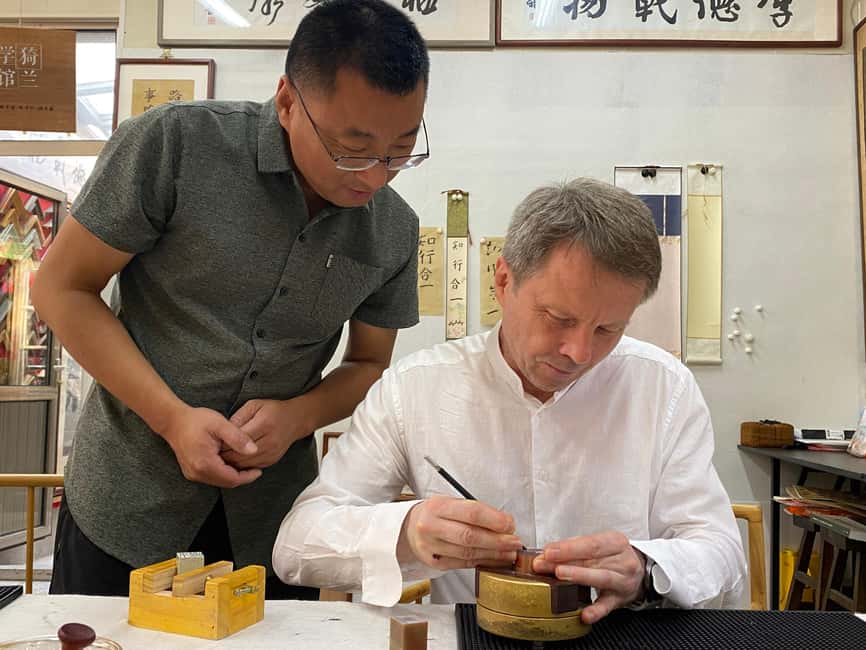
The clearest pattern in the teaching is patience. Bruce Gao and his colleague are described as encouraging, and the instruction includes support for people who do not speak Chinese. The English and Chinese language setup, along with interpreter help when needed, makes the class approachable for beginners.
For seal carving, the practice stones are especially important. They turn the session from a high-pressure one-shot project into a gradual lesson. You can try the motion, see what goes wrong, and adjust before working on the final stone.
Calligraphy practice also has a practical purpose. If you are carving characters into a seal, writing them first helps you understand their form. Even if you select calligraphy as your main activity, practice gives you a better feel for the structure of the characters.
You should still ask questions. No prior skill is needed, but the workshop cannot remove every challenge. If you want a specific Chinese name or proverb, have your preference ready and confirm the characters with the guide before you begin.
Who will enjoy this most
I would recommend this for adults, couples, friends, solo visitors, and families with children over five who enjoy making things. It works well when you have already seen several palaces, temples, or major monuments and want an activity that uses a different part of your attention.
It is also a strong choice for anyone who wants a meaningful souvenir without spending time shopping. The result is handmade, compact, and linked to an experience in an old Beijing cultural district.
People with limited mobility should note that the activity is wheelchair accessible. Transportation is not included, so you must arrange your own way to Liulichang East Street. The meeting point is outside at the small square entrance, followed by the short walk to the studio.
I would skip it if you dislike guided creative work, want a large-scale sightseeing tour, or need a guaranteed professional-looking result. The point is to learn and make, not to produce flawless art.
Practical planning before you go
Check the available starting times before booking because the duration is listed as 2 to 2.5 hours. Leave enough room around it for the short neighborhood tour and the workshop itself.
Wear something comfortable and be ready to use your hands. The materials are supplied, so your main preparation is deciding which art form interests you. If you choose seal carving, patience matters more than strength. If you choose calligraphy, expect to practice before creating the final sheet.
The activity allows free cancellation up to 24 hours before the start, and you can reserve now and pay later. Those terms help if your Beijing schedule is still shifting.
Since the experience is available as a private or small group, check the format carefully. A private session may be worth considering if you want extra help with a name, proverb, or carving technique.
Should you book this Liulichang workshop?
Book it if you want to make something yourself, prefer a small cultural activity to another crowded sight, and like the idea of meeting an artisan in a traditional studio. I would give seal carving first consideration for the most personal souvenir, calligraphy for a calm and simple project, and fan painting for a more decorative result.
Do not book it only because you want a quick stop. The class asks for attention, and your work will show your own learning curve. That is precisely why the $75 can be good value: you leave with an object, a story, and a better sense of how traditional Chinese art is made.
FAQ
Where does the experience meet?
Meet at the small square entrance of Liulichang East Street. Look for a guide holding a Sino-Voyages sign.
How long does the workshop last?
The experience lasts approximately 2 to 2.5 hours, including the brief Liulichang introduction and the studio activity.
Which art activities can I choose from?
You can choose calligraphy, fan painting, or seal carving. The booking includes one hands-on workshop.
Do I need previous artistic experience?
No. Prior experience is not required, and curiosity is encouraged.
What materials are included?
High-quality materials for your selected activity are provided. This may include the materials needed for calligraphy, fan painting, or seal carving.
What language is the instruction in?
Instruction is available in English and Chinese.
Is the experience wheelchair accessible?
Yes, the activity is listed as wheelchair accessible.
Can I cancel my booking?
Yes. You can cancel up to 24 hours in advance for a full refund. You can also reserve now and pay later.
Just added around Beijing
- Private Transfer to Mutianyu Great Wall with professional driver★ 5.0 · 19 reviews
- camp on the Great Wall overnight with sunrise and sunset on the wall★ 5.0 · 11 reviews
- One day tour to downtown Tianjin from Beijing by high speed train★ 5.0 · 3 reviews
- BusDa:Ancient Great Wall &Badaling Great Wall Full-day Bus Tour★ 4.5 · 6 reviews
- ZANBUS: Trip to the Jinshanling Great Wall Departing at 7:30 AM★ 5.0 · 5 reviews
- Yuxiandu Chinese Royal Cuisine Museum with Show and Royal Banquet★ 5.0 · 4 reviews
- Private Wild Great Wall Hiking tour at Simatai (Challenging)★ 5.0 · 16 reviews
- Wild Great Wall Huanghuacheng Half Day Tour★ 5.0 · 15 reviews
Beijing Tours, compared.


Forbidden City Tour(Group/Private)-Tickets Included
Read our review →
Mutianyu Great Wall Daily Tour with Ticket & Lunch
Read our review →
All-Inclusive Tour: Tiananmen Square, Forbidden City, Great Wall
Read our review →
4-Hour Small Group Tour to Forbidden City with Entry Tickets
Read our review →

Tianmen Square, Forbidden City & Royal Museum Tours
Read our review →