
Reviewed · LAMA TEMPLE TOURS
Beijing Lama Temple Entrance Ticket with Optional Guided Service
Beijing’s Lama Temple is not just an old building to photograph. It is a working Tibetan Buddhist temple, where worshippers still burn incense and pray beneath ornate Qing Dynasty roofs. The prepaid ticket can make entry easier, while the optional guide helps explain why a former imperial palace became one of China’s most important Tibetan Buddhist centers.
I like the chance to see the temple with an English-speaking guide, especially because Mina, Mike, Kevin, and Jack have been praised for clear explanations of the buildings, rituals, and enormous sandalwood Maitreya Buddha. I also like the location near public transportation and the nearby Confucius Temple and Chengxian Street.
The main caution is the ticket delivery. Several people had trouble receiving or using the QR code and had to pay again at the temple. You need to check your email carefully, download the ticket before leaving, and keep the operator’s contact details handy.
Key points to know before booking
- A working temple, not just a museum: You may see people praying and taking part in an incense ritual.
- Optional English guidance: Guides named Mina, Mike, Kevin, and Jack have provided explanations of Tibetan Buddhism and the temple buildings.
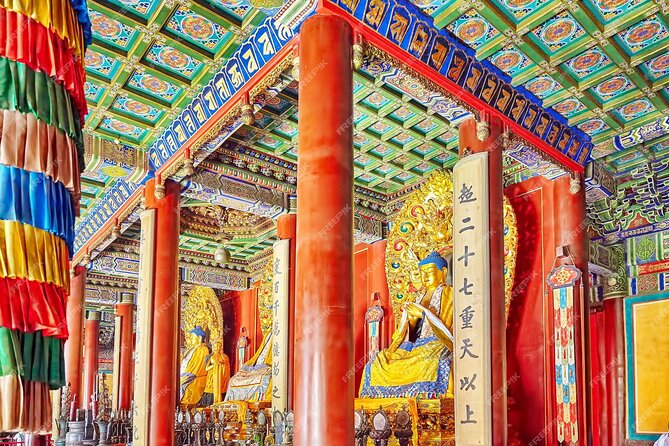
- The 18-meter Maitreya Buddha: The final hall contains the site’s famous sandalwood statue, one of the visit’s major highlights.
- QR code delivery matters: Tickets are generally sent around five to six days before the visit, not immediately as a usable admission code.
- Private group arrangement: Only your own group participates if you choose the guided option.
- Value depends on timing: The $7 starting price may save time in a busy period, but the 25-yuan local ticket price can make it poor value on a quiet day.
Why the Lama Temple feels different from a sightseeing stop
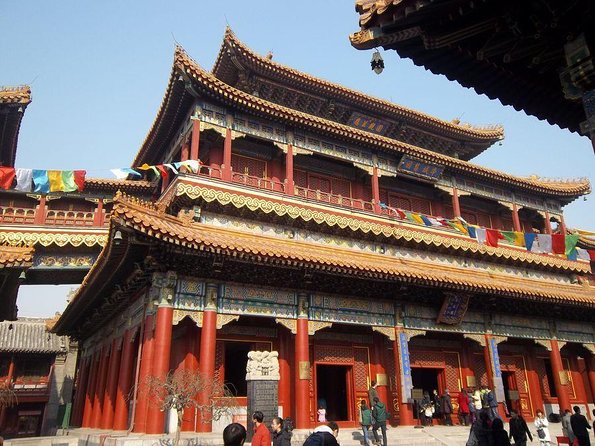
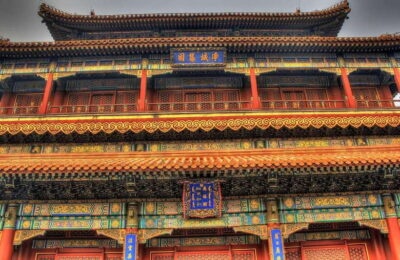
Yonghegong, commonly called the Lama Temple, began life as a royal residence. During the Qing Dynasty, the Qianlong emperor converted it into a Tibetan Buddhist temple. That change gives the complex an unusual character: imperial scale and decoration combined with an active religious purpose.
You walk through a sequence of halls rather than entering one single monument. Each courtyard leads you farther into the complex, with incense smoke, prayer activity, carved details, and brightly decorated Buddhist images shaping the visit. You can look at the architecture, but you should also allow time to notice how people use the space.
That working quality is the reason I would not treat this as a quick photo stop. The incense ritual is part of the experience. Incense sticks are offered after you pass through the entrance, and you may see people carrying them toward the halls. You can take part in the ritual if you wish, but remember that this is a place of worship, not a staged performance.
The temple is also one of the largest and most important Tibetan Buddhist temples in the world. That description matters because the site offers more than a few attractive courtyards. It gives you a compact introduction to a major religious tradition within an imperial Beijing setting.
More Lama Temple Tours in Beijing:
- Temple Heaven, Lama Temple, Summer Palace & Peking Duck Bus Tour
★ 5.0 · 377 reviews - Temple Heaven, Summer Palace, Lama Temple, Hutong Bus Tour
★ 4.7 · 319 reviews - Temple of Heaven, Summer Palace, Lama Temple, Hutong Tours
★ 5.0 · 311 reviews
Following the route through Yonghegong
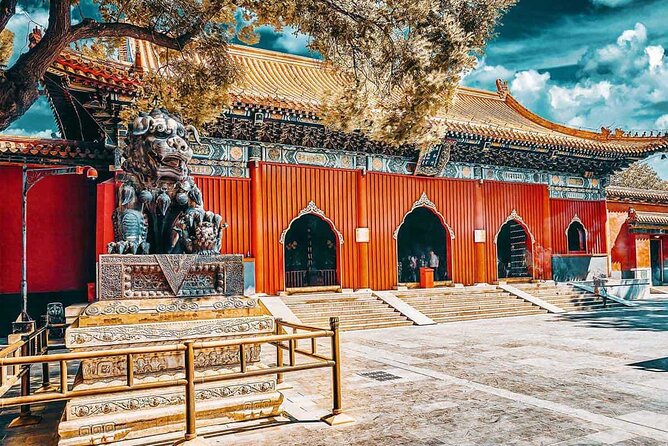
The experience has one main stop, Lama Temple, also called the Palace of Peace and Harmony. Since the visit is listed as approximately one day, you should read that as a flexible admission experience rather than a fixed full-day itinerary with several stops. The ticket gets you into the temple, and the guide option adds interpretation.
At the entrance, you present the QR code supplied for your booking. When the code works, the process can be quick and straightforward. Several people found the entry easy, with one describing the ticket as arriving on time and another reporting that the code worked well at the gates.
Do not assume that a prepaid ticket guarantees an empty entrance. The point is to avoid buying a ticket at the local counter, particularly during a busy period. One person found the queue moved quickly, while another felt advance booking was unnecessary because there was no line and the on-site ticket cost only 25 yuan.
That difference is central to the value question. The ticket is most useful when you care about having admission arranged before you arrive, or when the temple is busy. On a quiet day, buying locally may cost less and may be simple. You are paying for convenience and advance planning, not necessarily for a dramatic skip past crowds.
Once inside, the route takes you through the temple’s halls and courtyards. A guide can point out how the former palace became a Buddhist institution and explain the role of different spaces. Without a guide, you can still enjoy the carvings, roofs, statues, incense, and atmosphere, but you will need to supply more of the context yourself.
The final hall contains the famous 18-meter-high sandalwood Maitreya Buddha. This is the detail I would plan around. The statue is unusually large, and its scale gives the visit a strong finish after the smaller visual details encountered along the route.
What the optional English guide adds
The guided option is the better choice if you want to understand what you are seeing rather than simply walk through the complex. English-speaking guides have included Mina, Mike, Kevin, and Jack. The strongest feedback focused on clear explanations of the temple’s buildings, Tibetan Buddhist practice, and religious details.
Mina, in particular, has been praised for explaining the purpose and history of the individual buildings, along with smaller details connected to the sandalwood Maitreya statue. Mike has been described as giving a useful introduction to Tibetan Buddhism and the temple. Kevin has been noted for being helpful and arriving on time, while Jack has been praised for strong English and thorough explanations.
The tour is private, meaning only your group participates. That can be a real advantage if you want to ask questions or move at a comfortable pace. It also means you should not expect the energy or social feel of a large group tour. You are paying for a more personal explanation of the site.
There is one timing concern. At least one guided visit had less time inside than expected because the temple was closing early. Since opening and closing arrangements can affect the visit, confirm the meeting and entry timing before you go, especially if your schedule is tight.
I would choose the guide if you have limited background in Tibetan Buddhism, if this is your first visit to Beijing, or if you want help reading the site as a religious complex. I would choose the ticket-only option if you already know the subject, prefer to move independently, or mainly want to see the architecture and incense ritual.
The incense ritual and the temple’s active religious life
The temple’s atmosphere comes partly from what people are doing there. Incense is not merely a decorative detail. It is part of prayer, and you may see worshippers carrying incense sticks through the courtyards and toward the halls.
You can accept the incense offered after entering and take part in the ritual. Follow the tone of the place: watch first, keep your voice low near worshippers, and avoid treating religious activity as a photo prop. The temple is open to sightseeing, but it remains a functioning place of prayer.
This is one reason the visit can feel more meaningful than a standard museum admission. You are not only looking at objects behind glass. You are seeing a religious setting still used for its original purpose, even though its origins were tied to the Qing imperial court.
The practical tradeoff is crowds. The temple can be busy, and even a well-managed queue may not mean a quiet visit inside. The good news is that one person found the queue moved quickly without pushing or shoving. Still, you should expect other people in the courtyards, particularly at popular halls and around the large Buddha.
A few more Beijing trips to weigh up
- Beijing: Forbidden City Tour(Group/Private)-Tickets Included
★ 4.8 · 7,974 reviews - Beijing: Mutianyu Great Wall Daily Tour with Ticket & Lunch
★ 5.0 · 3,056 reviews - 4-Hour Small Group Tour to Forbidden City with Entry Tickets
★ 5.0 · 1,863 reviews - Beijing: Tiananmen Square Registration Service(Ticket)
★ 4.5 · 1,704 reviews
Is the $7 ticket good value?
The advertised starting price is $7 per person, with group discounts available. That is a modest cost for an important Beijing sight, but the comparison with the local price matters. One person specifically noted that admission at the temple cost 25 yuan and concluded that advance booking had little value on a quiet day.
At roughly $7, the ticket makes the most sense when:
- You want admission arranged before setting out.
- You are visiting during a busy period.
- You dislike dealing with local ticket counters.
- You value the possibility of avoiding a ticket-buying queue.
- You are adding the private English-speaking guide.
The ticket makes less sense when the temple is quiet and you are comfortable buying admission in person. In that case, the prepaid service may cost more than the local ticket without giving you a major time saving.
The guide changes the calculation. You are no longer paying only for entry. You are paying for interpretation, help with the site, and a private arrangement for your own group. If you want religious and architectural context, that can justify the extra cost. If you simply want to walk through, the basic ticket is the more sensible choice.
Do not book this expecting a guaranteed crowd-free experience. The strongest benefit is advance preparation. In busy conditions, that may be worth more than the price difference. In quiet conditions, it may not.
The QR code problem you should take seriously
The most serious weakness is not the temple itself. It is the admission process when the QR code fails or is not downloaded correctly.
The ticket is generally sent about five days before the travel date, with some instructions referring to five or six days in advance. That means you should not wait until the morning of your visit to check your phone. Search your email, including spam and promotional folders, and download the QR code while you still have reliable internet access.
A booking confirmation or voucher may not be the same thing as the usable admission code. Several people arrived with a document that the ticket office did not accept. Some had to buy a second ticket at the temple, while others were unable to enter at all.
Keep the operator’s phone number with you. The provider says it can resend the code or help if you cannot download it. Do not rely only on WhatsApp, since WhatsApp access can be limited in China and the operator has indicated that email or phone contact is more dependable.
I would also carry a screenshot of the QR code, the original email, and your booking details. This does not fix a bad ticket, but it gives you more ways to show the information if your connection fails. If the code is rejected, contact the provider promptly and keep proof of any replacement ticket you buy.
This is the point where the $7 price can stop being a bargain. Paying twice is frustrating, and a few people reported that their refund requests were not resolved quickly. The provider has stated that refunds should be requested through the booking platform, particularly when weather causes closures. Save receipts and submit any claim through the official platform rather than depending only on informal messages.
Weather and cancellation concerns
The experience has free cancellation if you cancel at least 24 hours before the local start time. Changes or cancellations inside that 24-hour window are not accepted for a refund.
Weather can affect the visit in a less predictable way. The temple and other attractions in Beijing reportedly closed for two days during severe weather in April. Some people learned about the cancellation only after reaching the temple, which created understandable frustration.
If the forecast looks poor, check your email and contact details before leaving for the site. If the attraction closes, ask for the refund through the booking platform and keep all cancellation messages. The provider has stated that a full refund is available in such a closure, but the practical communication can still be uneven.
Getting there and pairing the visit with nearby sights
The temple is near public transportation, so you do not need a private transfer for this activity. The supplied information does not specify a station, route, or meeting point, so confirm the exact entry instructions after booking rather than assuming the QR code alone tells you where to go.
The location works well as part of a northeast Beijing sightseeing day. The Confucius Temple and popular Chengxian Street are nearby, making it possible to pair religious history, traditional streets, and another major cultural site in the same outing.
You should still allow flexibility. The temple may be busy, a guide may have a set meeting time, and early closing can shorten the visit. If you add nearby stops, leave room rather than building a rigid schedule around an exact departure minute.
Who should choose the guided option?
Choose the guided visit if you want the temple explained in plain English, need help understanding Tibetan Buddhist practices, or prefer a private experience for your own group. The guide can draw your attention to details you might otherwise pass without noticing, especially in the halls and around the Maitreya statue.
The ticket-only option is better for independent sightseers who want to set their own pace. It is also the safer choice if your main goal is admission and you do not need interpretation.
Families, couples, and small groups can all use the experience, since most people can participate and the activity is private. The supplied information does not identify special accessibility arrangements, so contact the provider directly if you have mobility or access needs.
Should you book the Lama Temple ticket?
I would book it if you are visiting during a high-demand period, want your admission arranged in advance, or plan to use the English-speaking guide. The temple itself is worth your time, and the incense ritual and 18-meter sandalwood Buddha give the visit real character.
I would pause before booking the ticket-only option during a quiet period. Admission at the temple may cost only 25 yuan, and the local queue may be short. In that situation, you could save money by buying in person.
The deciding factor is preparation. Book only if you can monitor your email, download the QR code five days or so before the visit, and carry the operator’s contact information. Done properly, this is a useful way to see one of Beijing’s most important religious sites. Done carelessly, a small ticket purchase can turn into a second payment and a tense morning.
FAQ
Where is the Lama Temple?
The Lama Temple, also called Yonghegong or the Palace of Peace and Harmony, is in northeastern Beijing.
What does the ticket include?
The booking includes entrance to the Lama Temple. An English-speaking guide is included only when you select the guided option.
Is the guided tour private?
Yes. The activity is private, so only your own group participates.
Which guides may lead the English tour?
English-speaking guides named Mina, Mike, Kevin, and Jack have led visits. The exact guide depends on availability.
When will I receive the QR ticket?
The QR ticket is expected to be sent by email about five days before the travel date. Some instructions specify five to six days in advance.
Can I cancel for a full refund?
Yes. You can cancel at least 24 hours before the experience start time for a full refund. Cancellations or changes made less than 24 hours before the local start time are not refundable.
What should I do if the QR code does not arrive?
Check your email and spam folders, then contact the provider using the supplied phone number or email address. Download the code before going to the temple.
Is the local ticket cheaper?
One booking experience reported an on-site price of 25 yuan. The $7 prepaid ticket may still be useful during busy periods, but it may not offer good value when the temple has no queue.
Just added around Beijing
- Private Transfer to Mutianyu Great Wall with professional driver★ 5.0 · 19 reviews
- camp on the Great Wall overnight with sunrise and sunset on the wall★ 5.0 · 11 reviews
- One day tour to downtown Tianjin from Beijing by high speed train★ 5.0 · 3 reviews
- Yuxiandu Chinese Royal Cuisine Museum with Show and Royal Banquet★ 5.0 · 4 reviews
- BusDa:Ancient Great Wall &Badaling Great Wall Full-day Bus Tour★ 4.5 · 6 reviews
- ZANBUS: Trip to the Jinshanling Great Wall Departing at 7:30 AM★ 5.0 · 5 reviews
- Private Wild Great Wall Hiking tour at Simatai (Challenging)★ 5.0 · 16 reviews
- Wild Great Wall Huanghuacheng Half Day Tour★ 5.0 · 15 reviews
Lama Temple Tours, compared.
Temple Heaven, Lama Temple, Summer Palace & Peking Duck Bus Tour
Read our review →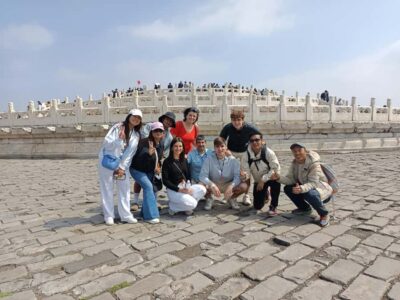
Temple Heaven, Summer Palace, Lama Temple, Hutong Bus Tour
Read our review →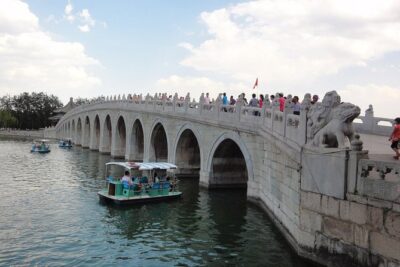
Temple of Heaven, Summer Palace, Lama Temple, Hutong Tours
Read our review →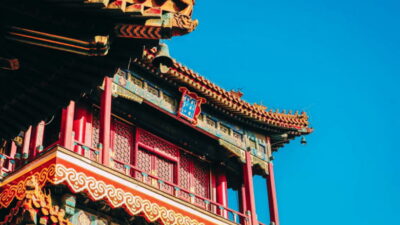
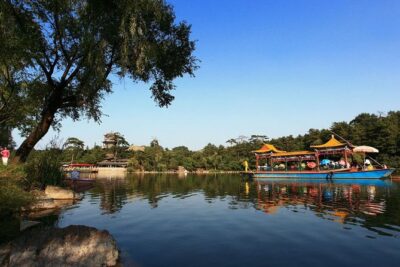
Beijing Historical Tour II including Summer Palace, Lama Temple & Panda Garden
Read our review →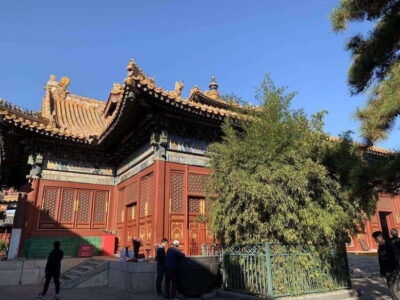
Beijing Lama temple ticket; #1 efficacious; limited Discount
Read our review →
Panda House, Temple of Heaven, Lama Temple, Summer Palace & Lunch
Read our review →Browse the lists this tour appears in