
Reviewed · BEIJING HUTONG TOURS
Beijing Hutongs Walking Tour
Beijing’s hutongs offer a sharp change of pace from the grand imperial sights. On this walk, you trade wide avenues and formal monuments for grey brick lanes, old trees, courtyard homes, and the everyday shape of central Beijing. I like the relaxed pace and the chance to see places such as Mao’er Hutong and the former residence of Empress Wanrong. I also like that guide Roy has been praised for clear English and lively explanations, including stories about Chinese timekeeping and the last emperor.
The main drawback is the tight meeting point and the short running time. One booking went wrong when the guide and group left after a guest arrived late, so you should reach Nanluoguxiang Metro Station, Exit E, early. The tour is also a walking introduction rather than a full historical examination, and admission fees are not included.
Key points at a glance

- Old Beijing begins at Nanluoguxiang: Start among Yuan Dynasty-era lanes and traditional grey courtyard architecture.
- Mao’er Hutong adds personal stories: See the former home of Empress Wanrong, Puyi’s empress, and hear about people linked to the lane.
- A guide brings the lanes to life: Roy Li Tours Beijing provides an English-speaking guide for a small group capped at 15 people.
- The route connects hutongs with the lakes: Walk toward the narrow channel linking Qianhai Lake and Houhai Lake.
- The tour lasts about two hours: It gives you a useful introduction without taking up a full morning.
- The price is modest for a private-feeling walk: At $30 per person, the value depends on how much context you want while exploring on foot.
Why Beijing’s hutongs deserve your morning
Beijing is often presented through the Forbidden City, Tiananmen Square, and the grand ceremonial axis. Those places explain the power of old China, but hutongs explain how ordinary neighborhoods were arranged around them. The lanes are made up of low courtyard homes, narrow passages, old trees, and a much less formal rhythm.
I like this kind of walk early in a Beijing visit because it gives you a sense of place before you tackle the city’s biggest sights. You are not simply checking off a monument. You are learning how the older city was built and how its neighborhoods fit together.
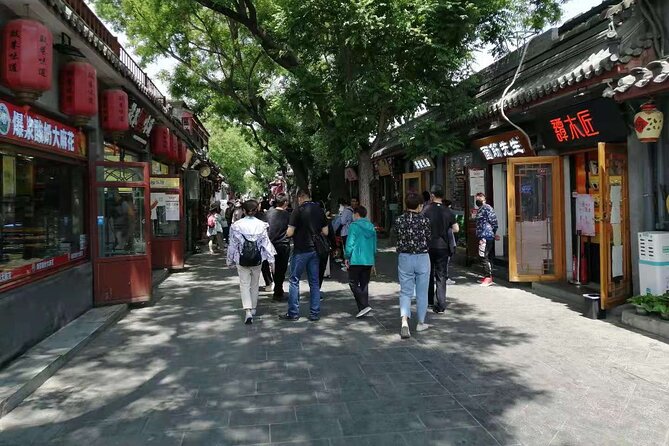
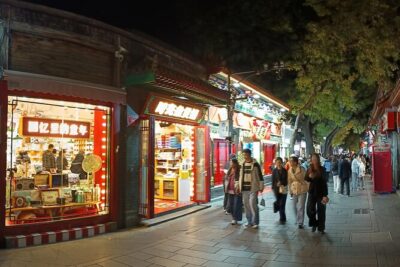
Nanluoguxiang is the starting point. The lane reaches back to the Yuan Dynasty and is known for its traditional courtyard architecture. The setting is useful because you can see the basic form of old Beijing close up: grey-colored buildings, enclosed courtyards, and lanes that do not follow the broad, straight pattern of newer city streets.
The tour description presents Nanluoguxiang as a route that can be difficult to navigate alone. That matters. Hutongs are not laid out like a simple sightseeing circuit, and a guide can point out details you might pass without noticing. You get a route through the district and an explanation of why it looks the way it does.
More Beijing Hutong Tours in Beijing:
- Beijing Hutong Walking Food and Beer Tour at Hidden Restaurants
★ 5.0 · 1,132 reviews - Temple Heaven, Summer Palace, Lama Temple, Hutong Bus Tour
★ 4.7 · 319 reviews - Temple of Heaven, Summer Palace, Lama Temple, Hutong Tours
★ 5.0 · 311 reviews
Meeting at Nanluoguxiang Metro Station
The meeting point is Nanluoguxiang Metro Station, Exit E, served by Line 8 and Line 6. The Chinese names provided for the meeting location are 南锣鼓巷南口 and 南锣鼓巷地铁站E出口.
I would make this one of your first practical tasks: locate the correct exit before 10:00 a.m. Do not rely on a last-second map check while standing in a busy station. The directions identify the south entrance area and Exit E, so check your route and give yourself extra time.
That advice is not just fussiness. One poor experience involved a missed meeting, with the group leaving after waiting about 25 minutes. The guide’s response was that the guest arrived very late, so punctuality is clearly important here. Arriving early also gives you a better chance of spotting the guide and resolving any confusion before the walk begins.
The tour uses a mobile ticket, and confirmation is provided when you book. Keep the ticket easy to access on your phone, especially if you need to show it at the meeting point.
Nanluoguxiang and the shape of old Beijing
The opening section introduces Nanluoguxiang Lane and its traditional courtyard homes. The important point is not only that the lane is old. It is that the buildings show how Beijing’s residential quarters were organized around enclosed courtyards.
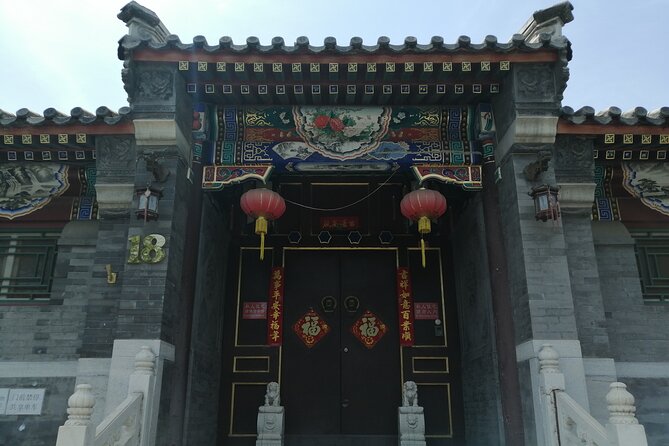
A courtyard house can tell you a great deal about privacy, family life, and social structure, even when you only see its outer walls. The guide can help connect those physical details with the city’s past. This is where an English-speaking guide adds real value, since the architecture does not explain itself in a quick glance.
The walk is designed for conversation rather than a large group lecture. The maximum group size is 15 people, which is small enough for questions without making the outing feel like a private tour. Roy, named in the tour information and praised for his clear English, has been described as prepared and engaged. He has also used questions to draw people into the story instead of simply talking at them.
That teaching style should suit you if you like learning through short exchanges. It may be less appealing if you want to move quickly and take photographs without pauses. A guided walk asks you to give some attention to the explanations, but in return you get more context than a self-guided stroll.
Mao’er Hutong and Empress Wanrong’s former home
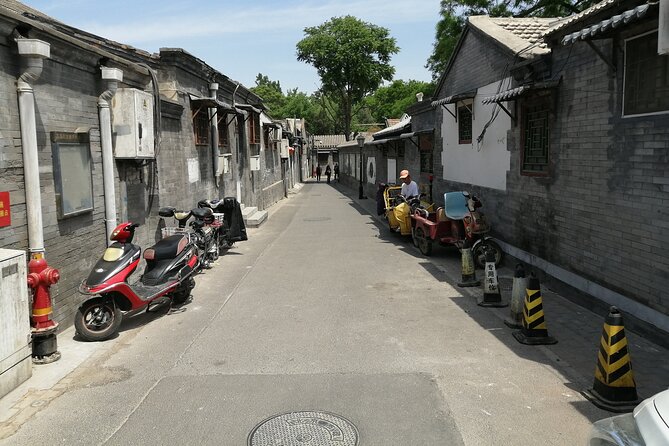
From Nanluoguxiang, the route continues along Mao’er Hutong. This is one of the most interesting parts of the walk because the lane is tied to specific buildings and personal stories.
The stop known as the Empress’s Mansion is the former residence of Wanrong, the empress of China’s last emperor, Puyi. You should expect a photo stop and an explanation of the building’s connection to the final imperial period. The setting gives a human scale to a story often told through palaces, official titles, and political events.
I like this part because it links the humble-looking hutong to a major chapter in Chinese history. A courtyard residence can appear quiet and ordinary, yet the people connected with it were part of the collapse of the imperial system. That contrast is exactly what makes the walk worthwhile.
The available details do not say that the interior of the residence is included, so plan on seeing the site from the route and stopping for pictures rather than assuming an interior visit. Admission tickets are not included in the tour price. If you need to enter any attraction along the way, confirm the fee and access arrangements with the guide.
A few more Beijing trips to weigh up
- Private Beijing Walking Tour of the Forbidden City with 7 Options
★ 5.0 · 675 reviews - Forbidden City Private Walking Tour with Optional Sights
★ 5.0 · 400 reviews - Beijing Private Hutong Food Walking Tour
★ 5.0 · 299 reviews - Beijing: Hutong Culinary Walking Tour with 15+ Tastings
★ 5.0 · 162 reviews
From the hutongs to Qianhai and Houhai
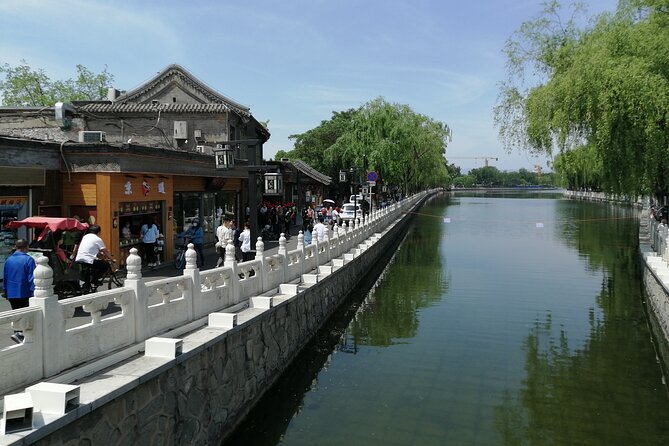
The walk then reaches a narrow channel joining Qianhai Lake and Houhai Lake. This transition changes the feel of the route. You move from enclosed residential lanes toward water and open space, finishing near the Drum Tower according to the tour information.
The lakes help you understand how this part of central Beijing connects. The hutongs are not isolated museum pieces. They sit within a wider network of lanes, waterways, historic buildings, and public spaces.
The end point needs a little attention because the supplied directions describe the route in two ways. The meeting point is South Luogu Lane, the itinerary names Houhai, and the final note says the tour finishes at the Drum Tower. Treat the Drum Tower area as the practical finishing point, but confirm the exact drop-off location with the guide when you meet.
This is useful for planning the rest of your day. From the Drum Tower area, you can continue exploring nearby hutongs, return by public transport, or arrange your next stop. The tour does not return you to the starting station, so avoid leaving an important appointment immediately afterward.
What the guide adds to the walk
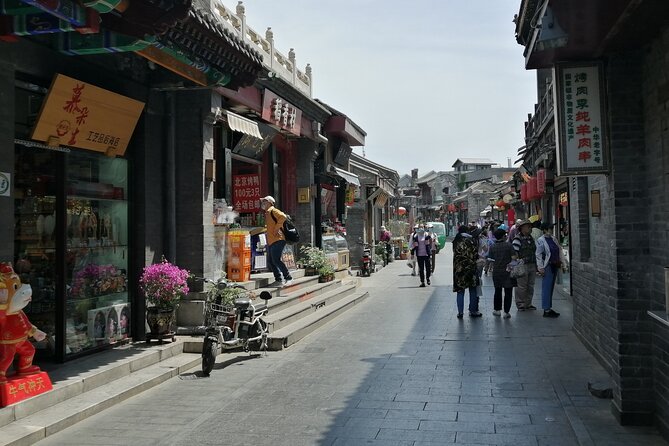
The advertised focus goes beyond basic architectural labels. The guide may cover Chinese timekeeping, the fate of Puyi, and the lives of people connected with the lanes. Those subjects give the walk variety. You are not hearing the same type of explanation at every corner.
A good guide also helps you connect broad events with small details. The last emperor’s story can feel distant when told only through formal buildings. Seeing a residential setting linked to Wanrong gives it a more personal frame.
The available feedback points strongly toward the guide’s English and preparation. Roy is specifically praised for speaking good English and for bringing useful information about the hutongs. Another account describes an engaging style that used questions to involve the group. I would value that on a short walk because 90 minutes to two hours leaves little room for long lectures.
Guide quality can vary from one date to another, so keep your expectations sensible. The experience is sold with an English-speaking guide, not a private historian or specialist museum tour. Its strength is the combination of orientation, local stories, and easy walking.
Is $30 a fair price?
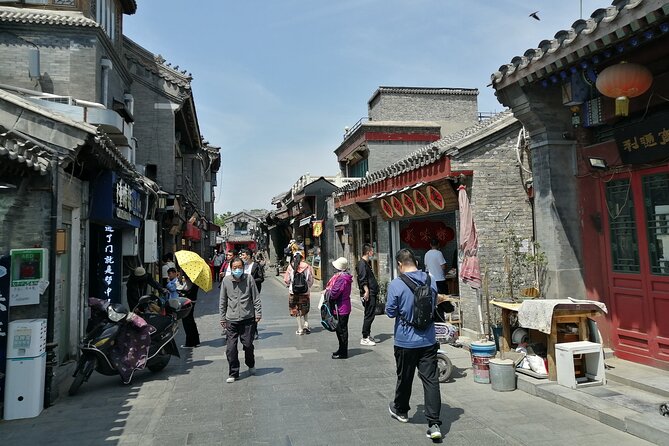
The price is $30 per person. For a 90-minute to two-hour small-group walk in central Beijing, that is a reasonable rate if you want a guide to handle the route and explain the setting.
You are paying for access to local context rather than an expensive entrance attraction. The guide is included, but admission tickets are not. That makes the cost easier to judge: if you would otherwise walk through Nanluoguxiang and Mao’er Hutong without understanding what you were seeing, the fee may be worthwhile.
The maximum group size of 15 is another part of the value. It is not a private tour, but it should feel more manageable than a large coach group. You have a better chance of hearing the guide and asking a question.
The value is lower if you already know Beijing’s hutong layout and have researched the historic homes in detail. In that case, you might prefer to explore at your own pace. For a first introduction, especially at the start of a Beijing stay, the modest price buys a useful framework for later independent walks.
Timing, transport, and practical planning
The walk begins at 10:00 a.m. and lasts approximately 1 hour 30 minutes to two hours. That schedule works well as a morning activity, leaving part of the afternoon for another sight.
Use Line 6 or Line 8 to reach Nanluoguxiang Station, then follow the instructions for Exit E. Since the tour ends near the Drum Tower rather than at the station, plan your next move from that area.
Wear comfortable shoes. The route is on foot through hutong lanes, and the experience depends on walking rather than riding between stops. The provided information says most people can participate, and service animals are allowed. It also notes that the meeting area is near public transportation.
You receive confirmation at booking and can cancel for a full refund up to 24 hours before the start time. Changes or cancellations made within 24 hours are not refunded or accepted. The tour also requires a minimum number of bookings, so a cancellation by the provider for that reason may result in another date or a full refund.
Who will enjoy this hutong walk?
I would recommend it to first-time visitors who want a gentler introduction to Beijing than a full day of imperial sights. It also suits you if you enjoy architecture, neighborhood stories, and learning how a city works at street level.
The small group and English-speaking guide make it a good fit for people who want to ask questions. Roy’s clear English and question-based approach should appeal to curious participants who prefer an interactive explanation.
Families and older visitors may appreciate the short duration, though the route is still a walking tour. The provided information says most people can participate, but it does not give detailed information about step-free access or the exact walking surface. If mobility is a concern, ask the provider before booking.
You may want to skip it if your schedule is extremely tight, if you dislike guided pacing, or if you are looking for major interiors and formal monuments. This is a neighborhood walk with historic stops, not a ticketed palace tour.
Should you book the Beijing Hutongs Walking Tour?
Book it if you want to see Beijing beyond the imperial center and prefer a guide to explain the lanes, courtyard homes, and local stories. The strongest reasons are the relaxed pace, the small group, Mao’er Hutong, Wanrong’s former residence, and the route toward Houhai and the Drum Tower.
I would book it near the beginning of your Beijing visit, when the city’s layout and older neighborhoods are still unfamiliar. Arrive early at Nanluoguxiang Metro Station, keep your phone ticket ready, and confirm the final stop so your next plan fits.
Skip it if you want a completely independent walk or need a tour with guaranteed interior admissions. At $30, it is best viewed as a compact orientation to old Beijing, with the guide’s explanations providing the main value.
FAQ
Where does the Beijing Hutongs Walking Tour begin?
The tour begins at Nanluoguxiang Metro Station, Exit E. The station is served by Beijing Metro Lines 6 and 8.
What time does the tour start?
The start time is 10:00 a.m.
How long does the tour last?
The walk lasts approximately 1 hour 30 minutes to two hours.
Where does the tour finish?
The directions identify Houhai and also state that the tour finishes at the Drum Tower. Confirm the exact final meeting point with the guide when you arrive.
What is included in the price?
An English-speaking guide is included.
Are admission tickets included?
No. Admission tickets are not included in the tour price.
What is the maximum group size?
The tour can have a maximum of 15 participants.
Is the tour confirmed when I book?
Yes. Confirmation is provided at the time of booking.
Is the tour close to public transportation?
Yes. The meeting point is at Nanluoguxiang Metro Station, served by Lines 6 and 8.
Can I cancel for a full refund?
Yes. You can cancel at least 24 hours before the local start time for a full refund. Cancellations or changes made less than 24 hours before the start time are not accepted or refunded.
Just added around Beijing
- Private Transfer to Mutianyu Great Wall with professional driver★ 5.0 · 19 reviews
- camp on the Great Wall overnight with sunrise and sunset on the wall★ 5.0 · 11 reviews
- One day tour to downtown Tianjin from Beijing by high speed train★ 5.0 · 3 reviews
- BusDa:Ancient Great Wall &Badaling Great Wall Full-day Bus Tour★ 4.5 · 6 reviews
- ZANBUS: Trip to the Jinshanling Great Wall Departing at 7:30 AM★ 5.0 · 5 reviews
- Yuxiandu Chinese Royal Cuisine Museum with Show and Royal Banquet★ 5.0 · 4 reviews
- Private Wild Great Wall Hiking tour at Simatai (Challenging)★ 5.0 · 16 reviews
- Wild Great Wall Huanghuacheng Half Day Tour★ 5.0 · 15 reviews
Beijing Hutong Tours, compared.

Beijing Hutong Walking Food and Beer Tour at Hidden Restaurants
Read our review →
Temple Heaven, Summer Palace, Lama Temple, Hutong Bus Tour
Read our review →
Temple of Heaven, Summer Palace, Lama Temple, Hutong Tours
Read our review →



Beijing City Walk: Explore Hutongs Life and Old Beijing
Read our review →Browse the lists this tour appears in