Reviewed · TICKETS
Beijing: Confucius Temple and the Impercial College E-ticket
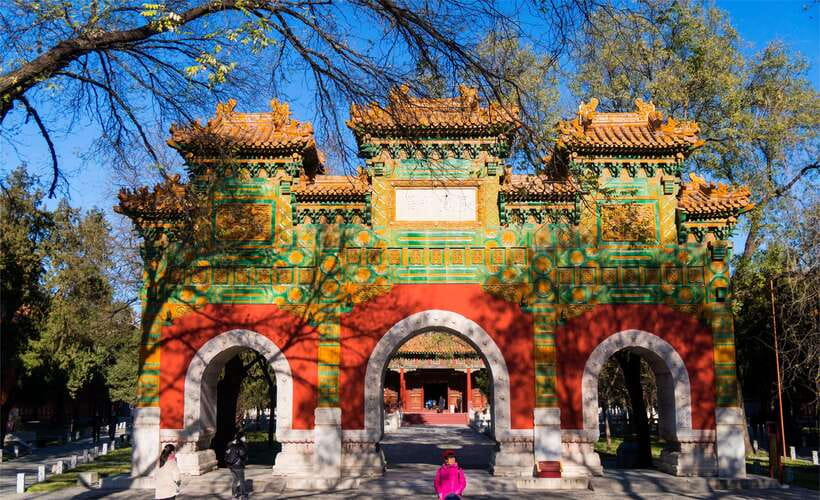
The most revealing part of this visit is the 51,624 names carved on stone tablets at Beijing Confucius Temple. These were successful candidates in China’s imperial examination system, and together they show how education, government, and social ambition were tied together for centuries. Next door, the Imperial College explains where the state trained its future officials.
I like the easy entry, since you need only your QR code and original passport, and I like the chance to see two connected institutions rather than a single ceremonial hall. The $7 price is modest for a full day of access. The main consideration is that this is a self-guided cultural visit, so you should not expect a personal guide to explain every building or tablet.
Key points to know before you go
- Two historic complexes in one visit: Confucius Temple and the Imperial College follow the traditional plan of temple on the left and college on the right.
- 51,624 examination records: Stone tablets preserve the names, birthplaces, and ranks of successful imperial examination candidates.
- Yuan Dynasty foundations: The site dates from the early 14th century and includes buildings from a long period of Chinese imperial rule.
- QR code entry: Bring the original passport used for booking, along with your electronic ticket.
- Several exhibitions: The temple includes displays on the restored Dacheng Hall, Confucius, and the history of Beijing Confucius Temple.
- Audio guide option: An audio guide may be available for purchase at the temple entrance.
Two institutions that explain old Beijing
Beijing Confucius Temple and the Imperial College form one historic complex, built under the Yuan Dynasty in the early 14th century. Together, they present two sides of the same system: Confucius represented the ideals of learning and moral conduct, while the Imperial College prepared students for service under the state.
The layout matters. The temple sits on the left and the college on the right, following a traditional arrangement. You are not simply walking between unrelated buildings. The site shows how education was honored, administered, and used to select government officials.
The two areas cover a large amount of ground, with courtyards, gates, halls, pavilions, and stone inscriptions arranged along central axes. You can visit at your own pace during the one-day validity period, which is useful if you prefer to read displays slowly or pause for photographs.
This is not a performance or a staged attraction. Its appeal comes from the buildings, inscriptions, and ideas they preserve. If you enjoy museums, architecture, or the story of how governments trained officials, you will find plenty to think about. If you want a highly narrated tour with constant commentary, you may find the visit quieter than expected.
A few more Beijing trips to weigh up
- Beijing: Forbidden City Tour(Group/Private)-Tickets Included
★ 4.8 · 7,974 reviews - Beijing: Mutianyu Great Wall Daily Tour with Ticket & Lunch
★ 5.0 · 3,056 reviews - 4-Hour Small Group Tour to Forbidden City with Entry Tickets
★ 5.0 · 1,863 reviews
Starting at Beijing Confucius Temple
Beijing Confucius Temple was built in 1306, during the reign of Emperor Chengzong of the Yuan Dynasty. It later served as the site for ceremonies honoring Confucius throughout the Yuan, Ming, and Qing Dynasties.
The temple covers more than 22,000 square meters, with about 7,400 square meters of building space. Its plan includes three courtyards, arranged from south to north along the main axis. You pass through the Teacher Gate and Dacheng Gate before reaching Dacheng Hall, followed by Chong Sheng Temple farther north.
The names help you understand the purpose of the complex. Dacheng Hall was the central ceremonial building, while the gates marked movement from the outside world into a more formal and scholarly setting. The courtyards give the site a measured rhythm, with each passage offering another view of the axial design.
I recommend taking a few minutes at each gate rather than walking straight to the main hall. The importance of this place is not only in the largest building. It is also in the repeated order of the courtyards and the way every structure guides your attention toward the central axis.
The stone tablets and the imperial examination
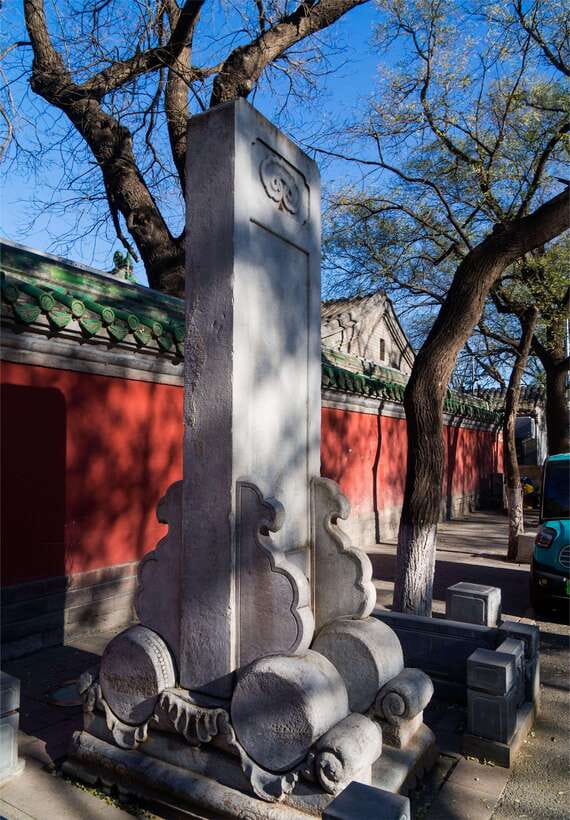
The most unusual sight at the temple is the collection of 198 stone tablets. They are arranged in four groups on both sides of the front courtyard.
Together, the tablets record 51,624 successful candidates, including their names, birthplaces, and ranks. These inscriptions offer a direct link to the imperial examination system, which shaped Chinese government and society for centuries.
The examination was not just a school test in the modern sense. Success could bring a place in the state administration, along with social status for the candidate and the wider family. The tablets make that system personal. Instead of reading only about an abstract bureaucracy, you see thousands of individual names preserved in stone.
Take time to look at the scale of the collection. You may not be able to read every inscription, but the sheer number helps you understand how demanding and competitive the system was. The tablets also give the visit a human side. Each name represents years of preparation, family support, and hope for official service.
For me, this is one of the strongest reasons to choose this attraction over a quick architectural stop. The buildings are handsome, but the tablets explain what the institution meant.
Three exhibitions inside the temple
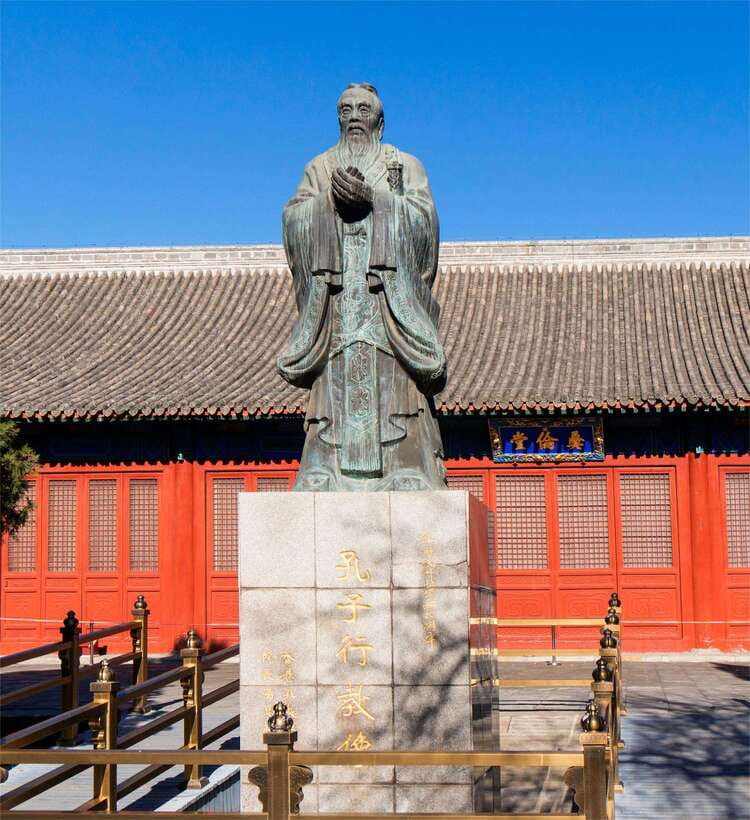
The Confucius Temple currently includes three exhibitions. One focuses on the restored Dacheng Hall, another presents Confucius, and the third covers the history of Beijing Confucius Temple.
These displays add useful context to the courtyards and ceremonial buildings. Without them, you could easily admire the rooflines and gates without understanding how the site functioned. The exhibitions help connect the architecture to the teachings of Confucius and to the ceremonies held here under three dynasties.
The exhibition on the restored Dacheng Hall is especially helpful if you want to understand the main ceremonial space. A display about Confucius gives the intellectual background, while the history exhibition places the Beijing temple within its long institutional story.
An audio guide may be available to buy at the entrance. Since this is a ticketed entry rather than a guided walking tour, that option could help if you want more explanation while moving through the buildings. The supplied information does not identify a guide by name, and no personal guide is included with the ticket.
Same country, a completely different kind of day:
- From Beijing: Mutianyu Great Wall Tours with Options
★ 4.9 · 9,216 reviews - Beijing: T-Square & Forbidden City Group or Private Tour
★ 4.8 · 4,446 reviews - All-Inclusive Tour: Tiananmen Square, Forbidden City, Great Wall
★ 5.0 · 2,873 reviews - MuBus: Mutianyu Great Wall ENG/ESP/RUS Guided Bus Tour
★ 5.0 · 2,361 reviews
Entering the Imperial College
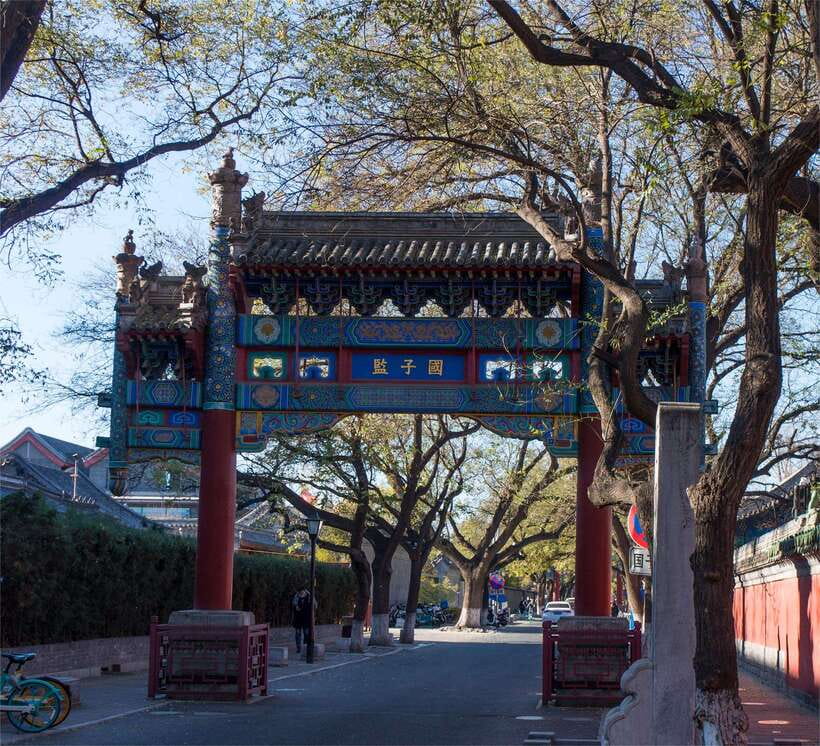
After the temple, continue to the Imperial College, also called Guozijian. It was built in 1308 and served as the highest state educational institution and education administration office during the Yuan, Ming, and Qing Dynasties.
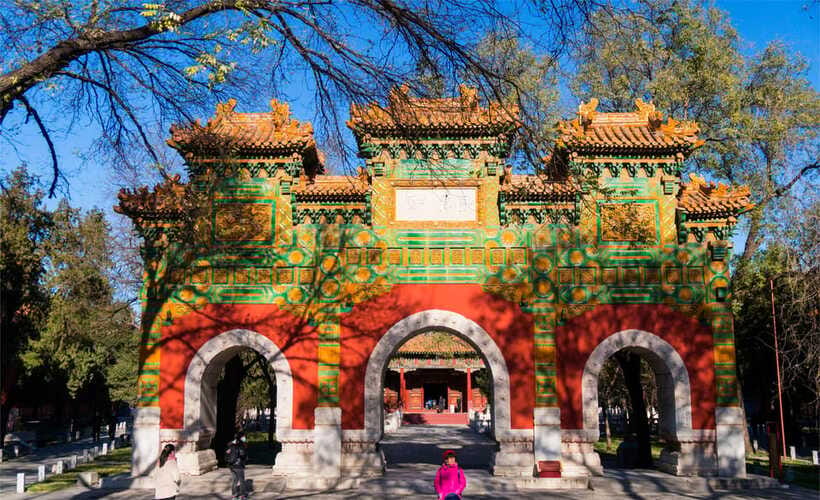
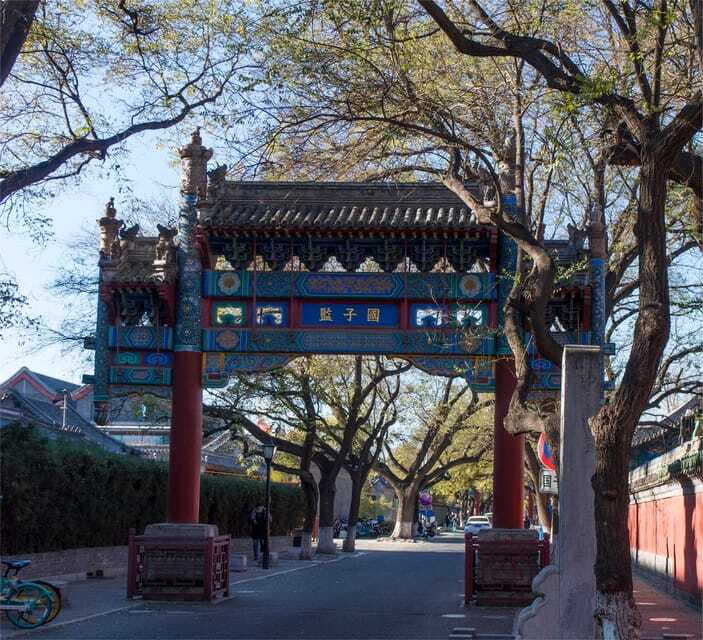
The college covers about 28,000 square meters and also follows a three-courtyard plan. Its central axis includes Jixian Gate, the Taixue Gate, the Glazed Memorial Arch, Biyong Hall, Yilun Hall, and Jingyi Hall.
The Imperial College feels different from the temple because its purpose was administrative and educational. The temple honored Confucius and supported formal ceremonies. The college was connected to teaching, state authority, and the preparation of students for official roles.
The Glazed Memorial Arch is an important visual marker along the route. Biyong Hall is another key stop, placed on the central axis and surrounded by the formal arrangement of the college. The complex also includes an Imperial Tablet Pavilion, Bell Pavilion, and Drum Pavilion, set symmetrically beside the main axis.
That symmetry is part of the experience. You can see how the institution used space to express order and authority. The design is not random, and the arrangement of halls and pavilions gives the college a calm, formal character.
What the architecture tells you
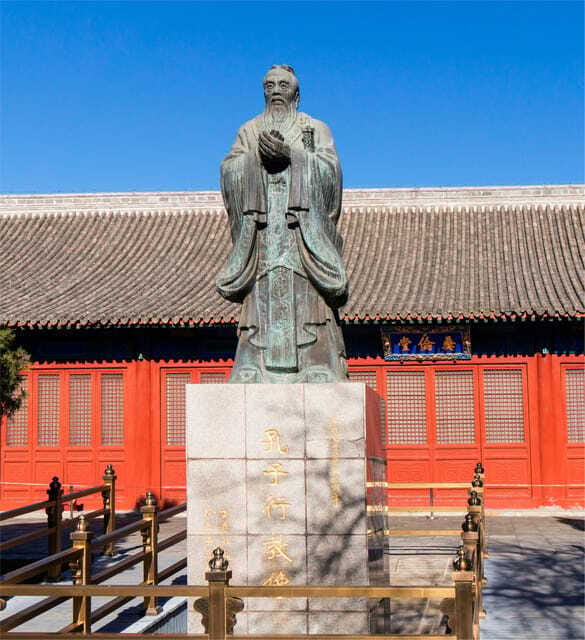
The Yuan Dynasty foundations make this visit especially useful for anyone interested in Beijing’s older architectural layers. The complex is more than 700 years old, though it reflects use and development across the Yuan, Ming, and Qing periods.
You will see a sequence of gates, courtyards, halls, and side buildings rather than one isolated monument. That sequence helps you read the site as an institution. The architecture controlled movement, separated functions, and gave ceremonial importance to learning.
I like that the visit allows you to compare two kinds of authority. The Confucius Temple expresses cultural and moral authority through ritual and remembrance. The Imperial College expresses official authority through education and administration.
The setting also gives you a break from Beijing’s larger palace and museum sights. This is a more focused visit. You are looking at one historical system, not trying to cover an entire dynasty in a few rooms.
Still, the experience depends on your interest. The site may seem restrained if you mainly want grand imperial spectacle or dramatic views. There is no claim here to a large-scale show, interactive entertainment, or a full-day guided program. The value is in close attention to details and historical connections.
How much time should you allow?
The ticket is valid for one day, and the stated duration is one day. That means you have flexibility rather than a fixed timed itinerary.
You can make the visit brief by concentrating on Dacheng Hall, the stone tablets, the exhibitions, and Biyong Hall. You can also spend longer reading the displays, comparing the courtyards, and examining the ceremonial arrangement.
Because no fixed schedule is provided, you should plan the length around your own pace. The one-day validity is useful if you want to combine the complex with other Beijing plans, provided you allow enough time for entry and sightseeing.
The QR code is designed to let you skip the ticket line, but you still need to present your original passport at the attraction. A digital copy or a photograph of your passport is not the stated requirement. Keep the actual document with you.
Is the $7 ticket good value?
At $7 per person, this is an inexpensive way to spend part of a day in central Beijing’s historical core. You receive admission to both the Confucius Temple and the Imperial College, not just one building.
The strongest value comes from the combination. The temple provides ceremonial architecture, exhibitions, and the large examination tablet collection. The college adds a second institution with its own halls, gates, pavilions, and educational purpose.
I would not judge the price by the number of attractions alone. The real question is whether you want a quiet, self-guided cultural visit. If you do, the ticket gives you substantial material for a low cost. If you want transport, meals, a named guide, or a fully explained walking tour, those are not included.
The current rating is 4.4 out of 5 from 92 ratings, which fits the experience as described: a well-priced cultural stop with easy entry and a distinctive subject. The strongest practical advantage is the simple admission process. The main limitation is the lack of a personal guide.
Who should visit this complex?
I would recommend it most strongly to:
- People interested in Confucius and Chinese philosophy
- Visitors who want to understand the imperial examination system
- Architecture fans looking for Yuan-era foundations and formal courtyard plans
- Museum visitors who prefer a calm, self-guided pace
- Families or private groups who want to move at their own speed
- Anyone seeking a low-cost cultural attraction in Beijing
You may want to choose another experience if you need extensive English explanation, a fixed guided itinerary, or entertainment built around demonstrations and performances. An audio guide may help, but the ticket itself does not include a named guide.
The complex is also a good choice for repeat visitors to Beijing. If you have already seen the city’s major imperial sights, this visit gives you a more specific look at the educational machinery behind the old state.
Practical entry advice
Bring the original passport and have your electronic ticket ready on your phone. The QR code is intended for direct entry, and the passport must match the booking information.
The attraction is described as wheelchair accessible. Since the site includes several historic courtyards and buildings, you may still want to confirm the easiest route at the entrance if access needs are important to you.
Free cancellation is available up to 24 hours before the visit, and you can reserve now and pay later. Those terms are useful if your Beijing schedule is still changing, though you should check the available date and starting information when booking.
There is no transportation included in the ticket details, so you are arranging your own way to the attraction. The ticket covers admission only.
Should you book Beijing Confucius Temple and Imperial College?
Book it if you want a low-cost, self-guided visit that connects architecture with the workings of old Chinese government. The 51,624 examination records are the standout feature, and the adjoining Imperial College makes the visit feel complete rather than one-note.
I especially like this experience for visitors who enjoy reading, studying, and noticing how buildings express ideas. The QR code entry and one-day validity keep things simple, while the exhibitions and possible audio guide give you ways to add context.
Skip it if your time in Beijing is extremely tight or if you need a personal guide to explain every stop. For everyone else, $7 buys access to two important historic institutions and one of the city’s clearest reminders that education once offered the main road into official life.
FAQ
How much does the ticket cost?
The ticket costs $7 per person.
How long is the ticket valid?
The ticket is valid for one day.
What should I bring to enter?
Bring your original passport or ID card. The entry instructions specifically require the original passport and electronic ticket.
Can I enter with a QR code?
Yes. You can use the electronic ticket QR code together with your original passport to enter the attraction.
What does the ticket include?
The ticket includes admission to the tourist attraction, covering Beijing Confucius Temple and the Imperial College.
Is a tour guide included?
The ticket information does not include a personal guide. An audio guide may be available to purchase at the temple entrance.
Is the attraction wheelchair accessible?
Yes. The attraction is described as wheelchair accessible.
Can I cancel the booking?
Yes. You can cancel up to 24 hours in advance for a full refund. You can also reserve now and pay later.
Just added around Beijing
- Private Transfer to Mutianyu Great Wall with professional driver★ 5.0 · 19 reviews
- camp on the Great Wall overnight with sunrise and sunset on the wall★ 5.0 · 11 reviews
- One day tour to downtown Tianjin from Beijing by high speed train★ 5.0 · 3 reviews
- BusDa:Ancient Great Wall &Badaling Great Wall Full-day Bus Tour★ 4.5 · 6 reviews
- ZANBUS: Trip to the Jinshanling Great Wall Departing at 7:30 AM★ 5.0 · 5 reviews
- Yuxiandu Chinese Royal Cuisine Museum with Show and Royal Banquet★ 5.0 · 4 reviews
- Wild Great Wall Hikes★ 5.0 · 10 reviews
- Private Wild Great Wall Hiking tour at Simatai (Challenging)★ 5.0 · 16 reviews
Tickets, compared.

Forbidden City Tour(Group/Private)-Tickets Included
Read our review →
Mutianyu Great Wall Daily Tour with Ticket & Lunch
Read our review →
4-Hour Small Group Tour to Forbidden City with Entry Tickets
Read our review →
Ngong Ping 360: Cable Car Return Tickets & Combos
Read our review →
The Temple of Heaven or Summer Palace Entry Ticket
Read our review →
Beijing Forbidden City Ticket Booking (Optional: guide service)
Read our review →