
Reviewed · VEGAN & VEGETARIAN
Make Soup Dumpling: Vegan or Pork in Shanghai Shikumen
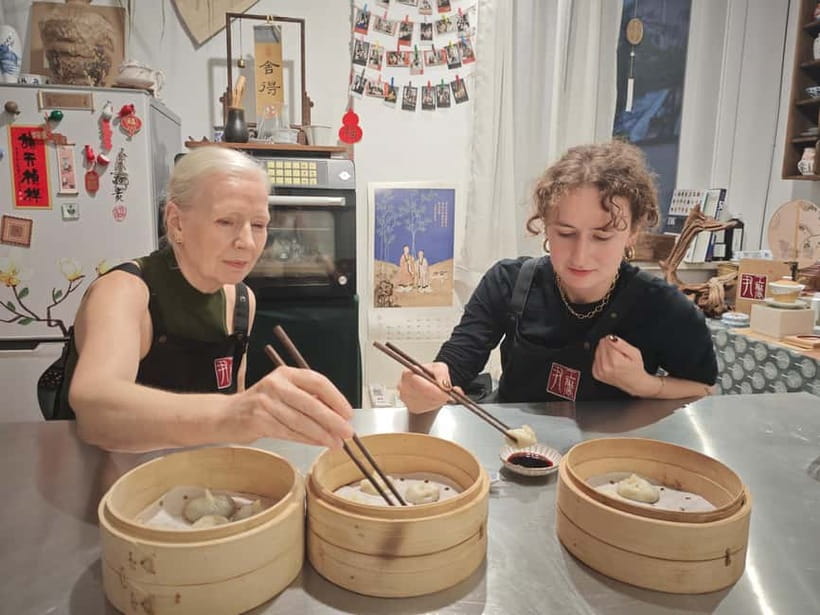
The magic here is learning to make Shanghai soup dumplings in a Shikumen lane-house kitchen, not in a polished cooking school. Chef Yin guides you through the tricky 18-fold pleat, then you steam and eat your own xiaolongbao with tea, ginger, and black vinegar. I like the choice of vegan or pork filling, and I like that you handle every stage, from flour and water to the bamboo steamer. The one catch is that the vegan version can be less soupy and mild if you are expecting the dramatic broth burst of a restaurant dumpling.
I also like the personal touch. Yin explains Shanghai food and tea as you work, and she sends clear directions, including a video, because the central lane-house studio can be hard to spot. Allow time to find the entrance, and consider eating a small snack first. The class lasts 2.5 hours, and the long preparation means your first dumpling may feel like a craft project before it feels like lunch.
Key points to know before booking
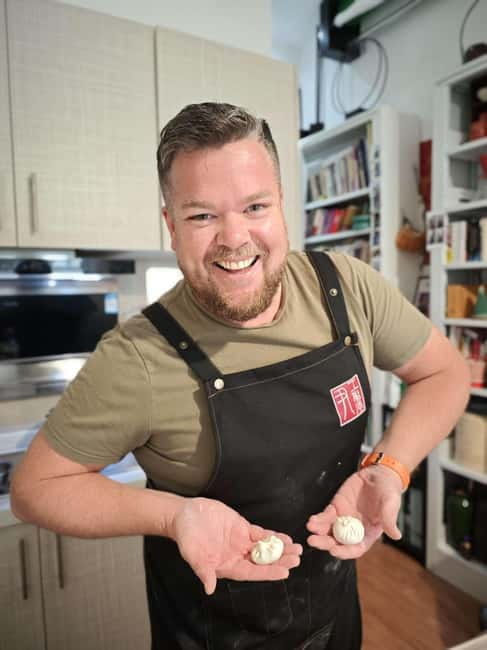
- Choose one filling: Make vegan xiaolongbao with mushrooms and vegetables, or pork dumplings with ginger, scallions, and gelatinized broth.
- Practice the 18-fold pleat: Chef Yin gives hands-on help with twisting, sealing, and forming the little crown.
- Cook in a real Shikumen setting: The workshop takes place in a private home in a traditional Shanghai lane compound.
- Plan for a full hands-on session: You make dough, roll wrappers, prepare filling, shape dumplings, steam them, and eat the results.
- Add both fillings for $20: The dual-filling option adds about 30 minutes to the class.
- Bring your sense of direction: The studio is central and reachable by public transport, but the entrance may not be obvious.
Why making xiaolongbao takes 2.5 hours
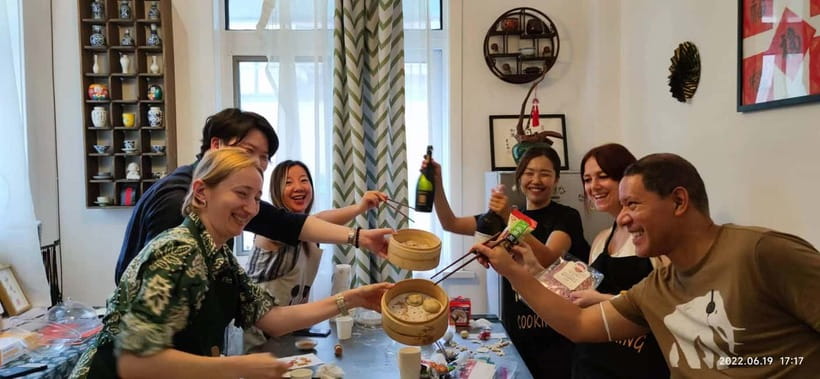
Xiaolongbao look small and simple on a plate. They are not simple to make.
The class begins with dough, and that is the right place to start. Chef Yin shows you the water-to-flour balance needed for an elastic dough that can be rolled thin without tearing. You knead it, let it rest, and learn how the texture changes as the dough relaxes.
That early work matters because the wrapper has two jobs. It must be thin enough to feel delicate, but strong enough to hold hot broth. You roll palm-sized wrappers with a center that is slightly thicker than the edges. The middle supports the filling, while the thinner rim gives you enough dough to fold and seal the top.
I like this part because it changes how you eat the finished dumpling. Once you have struggled with a wrapper that is too thick, too thin, or uneven, you begin to understand why a good xiaolongbao costs more than an ordinary dumpling. The small package requires careful control at every step.
The pace also explains why you should not book this as a quick meal. The cooking and shaping take time, especially if you are new to dumpling making. One useful tip is to eat something light before class rather than arrive very hungry. You will eventually eat the dumplings, but not right away.
A few more Shanghai trips to weigh up
- Shanghai-Cooking Dumpling & Meal in Local Family-w/Vegan
★ 4.9 · 36 reviews - Half-day Private Panda Tour with Vegetarian Lunch in Nunnery
★ 5.0 · 8 reviews - Half-Day Walking Tour with a Vegetarian Lunch at a Nunnery
★ 5.0 · 6 reviews
Inside the Shikumen lane-house kitchen
The setting is part of the experience. Shikumen means stone-gate housing, a style associated with Shanghai’s traditional lane compounds. Here, you cook in an authentic private-home setting rather than a large commercial studio.
That makes the class feel tied to the city. You are not simply learning a recipe in a neutral room. You are working in the kind of compact lane-house environment that gives old Shanghai its character, with the rhythm of a residential compound around you.
The practical tradeoff is finding the place. The workshop room can be difficult to identify from the street, even though the location is central and public transport makes the area easy to reach. Yin provides a detailed written description and a video before the class. In one case, she also met a participant on the street and walked her in.
I would still leave extra time. Do not arrive at the last minute with flour on your mind and no idea which lane entrance to use. Keep your phone ready, follow the directions carefully, and contact the studio if needed. Personal transportation is not included, so you make your own way there.
Choosing between vegan and pork xiaolongbao
The base price includes one filling. This choice affects both the cooking work and the final taste.
The vegan option
For the vegan dumplings, you cook the filling during class. Mushrooms and vegetables are sautéed with an umami-rich broth, giving you a chance to build flavor rather than simply combine prepared ingredients.
This is a good fit if you avoid meat or want to learn how a plant-based filling is developed. It also gives you more direct cooking work, since the filling is prepared from scratch in the session.
There is one point to keep in mind. A plant-based soup dumpling can be technically harder to make taste bold, and one participant found the vegan dumplings mild with very little actual soup inside. That does not make the option a poor choice, but it means you should choose it for the cooking lesson and dietary preference, not only for a guaranteed broth explosion.
Same country, a completely different kind of day:
- Authentic Local Food Tour in Central Shanghai
★ 5.0 · 1,382 reviews - Zhujiajiao Water Town and Shanghai City Private Day Tour
★ 5.0 · 1,016 reviews - Private Shanghai Full Day City Tour with Old and New Highlights
★ 5.0 · 995 reviews - Shanghai: Hop-on Hop-off Bus Ticket and Optional Attractions
★ 3.4 · 692 reviews
The pork option
The pork filling uses raw minced pork, ginger, scallions, and aspic. Aspic is gelatinized broth. It melts during steaming, creating the liquid center that gives a classic xiaolongbao its name and appeal.
The pork is raw when you mix the filling, which is worth knowing before you book. It is then steamed safely in the dumpling later in the process. Chef Yin’s method lets you see how the broth is incorporated into the meat instead of treating the soup as a separate sauce.
If your main goal is the most traditional soup-dumpling effect, pork is likely the safer pick. You still need to shape and seal the dumplings well, since a weak seam can let the soup escape. The class teaches that skill directly.
Making both fillings
For $20 more per person, you can make both vegan and pork dumplings. The dual-filling option adds about 30 minutes, extending the session beyond the standard 2.5 hours.
I see the add-on as worthwhile for couples or small groups with different diets, and for anyone who wants to compare the two methods. It also gives you a fuller lesson in how different ingredients behave inside the same wrapper. If you mainly want a relaxed first attempt, one filling keeps the class simpler.
Rolling wrappers and learning the 18-fold pleat
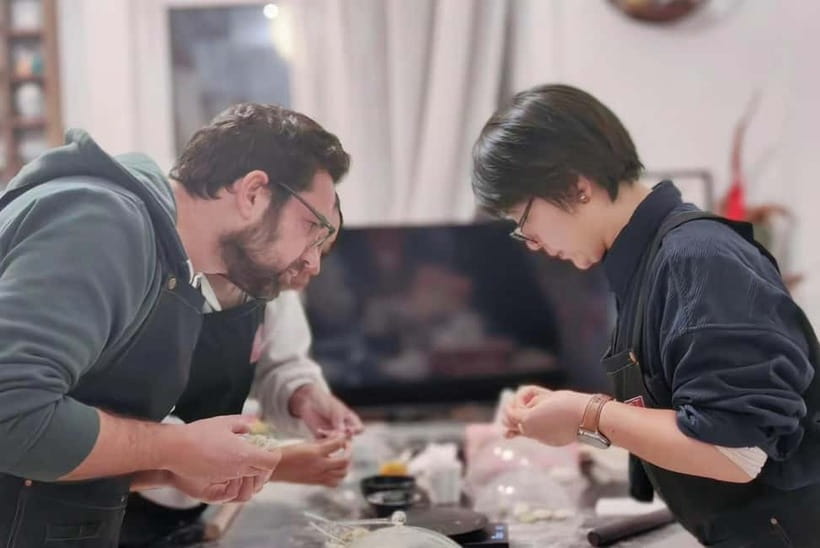
The signature challenge arrives when you shape the dumplings. The goal is an 18-fold pleat, followed by a twist and seal that creates the familiar crown.
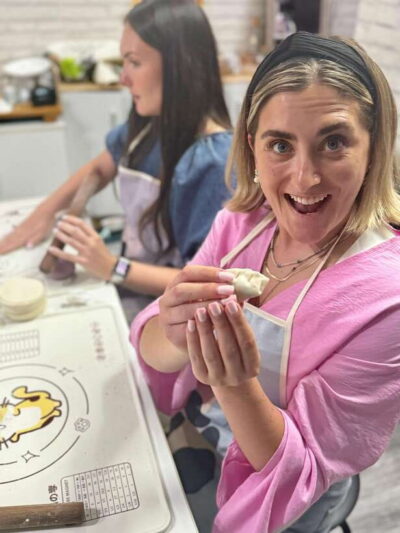
This is not a demonstration where you watch a skilled hand and then receive a plate of finished food. You make the folds yourself. Chef Yin gives real-time corrections, helping you adjust the wrapper, filling position, twist, and seal.
Expect uneven dumplings at first. That is part of the value. One participant noted that it is not easy to make the finished dumplings look beautiful, but the effort makes you appreciate the care behind the dish. I think that is exactly right. Your first few may look more like small purses than restaurant xiaolongbao.
The wrapper gives you little room for error. Use too much filling and the dumpling becomes hard to close. Pull the dough too sharply and it may tear. Pleat too loosely and the soup can leak. Chef Yin’s personal coaching matters here because a printed recipe cannot show you where your fingers should move or how firmly to pinch.
Do not judge the class by how perfect your first dumpling looks. The real reward is learning the method well enough to keep practicing at home.
Steaming, tea, and the first bite
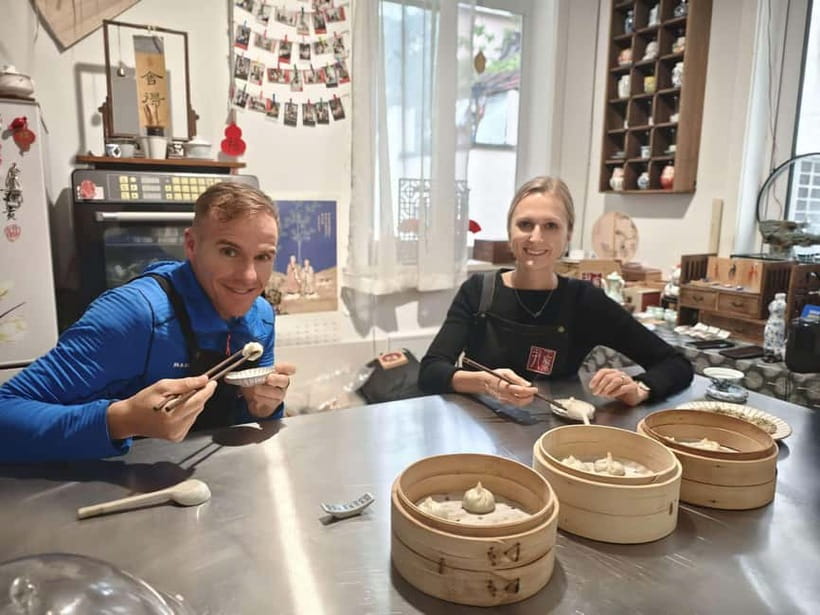
Once the dumplings are shaped, they go into bamboo baskets for steaming. This is the moment when the dough, filling, and pleats face their final test.
You then eat the dumplings with black vinegar and ginger, accompanied by good-quality tea. Those classic additions are not just decoration. Ginger cuts through the richness of pork, while black vinegar gives the dumpling a sharp, savory edge. You will want to handle the hot dumpling carefully, since the soup inside can be very hot.
The feast is made from your own work, so the meal carries a different feeling from ordering xiaolongbao at a restaurant. You know how long each wrapper took and how much effort went into closing the top. Even a slightly crooked dumpling becomes easier to appreciate.
Results can vary, especially with the vegan filling. If your dumplings do not hold much soup on the first try, that is likely a shaping or filling issue rather than a reason to dismiss the whole class. The session is about learning a difficult technique, not producing a professional restaurant plate on attempt one.
You also receive the recipes to take home, along with a studio gift. That gives the $120 price more staying power than a meal that ends when you leave the table.
The food and tea stories between the folds
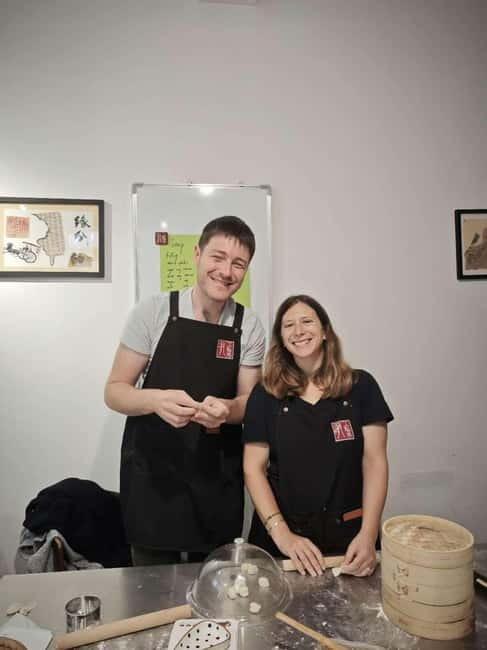
Chef Yin does more than call out the next cooking step. She talks about Chinese food, tea, and Shanghai while you work.
That conversation is one of the strongest reasons to choose this class over a standard dumpling lesson. The setting and food become a way to understand daily life in Shanghai. You learn while your hands are busy, which makes the cultural details easier to remember than facts delivered in a formal lecture.
The language choice is also useful. Instruction is available in English, Japanese, or Chinese. That makes the class accessible to a wider mix of visitors, while the hands-on format reduces the need for long technical explanations.
The tone appears warm and personal. Yin is described as kind, entertaining, well prepared, and generous with her time. She also shares stories about herself and Shanghai. I would expect a friendly class rather than a rushed production line, though the exact group atmosphere may depend on who else books the session.
Is $120 a fair price?
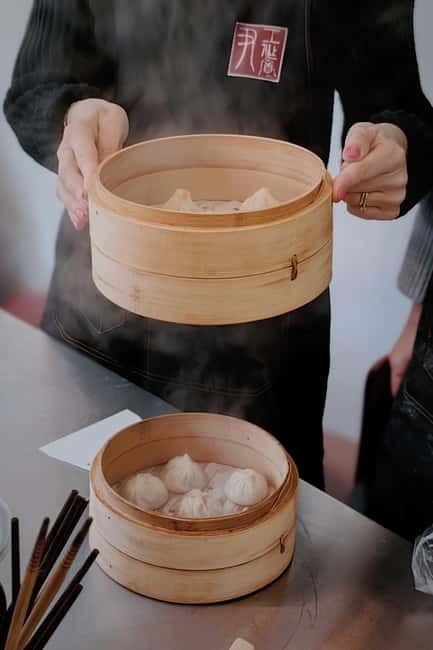
At $120 per person, this is not a cheap way to eat dumplings. You can order xiaolongbao in Shanghai for far less.
But the comparison is not really restaurant meal versus restaurant meal. The fee covers 2.5 hours of instruction, all materials and tools, one filling, tea, a studio gift, and recipes to use later. You are paying for a private cultural activity, a cooking lesson, and the food you make.
I think the value is strongest if you care about process. You get direct help with the dough and the 18-fold technique, which are the parts most likely to frustrate you at home. The Shikumen location adds a sense of place that a generic cooking room would not provide.
The price is less compelling if you only want to eat excellent xiaolongbao. In that case, a good dumpling restaurant will give you more consistent results at a lower cost. The vegan option also deserves a realistic price check in your mind, since the broth and seasoning may not satisfy someone seeking a powerful soup-filled bite.
The $20 dual-filling add-on makes sense if you want the full comparison or need both options for your group. It adds only about 30 minutes, but it also means more shaping work. For most people, that is a useful extension rather than an unwanted extra.
Who will enjoy this class most
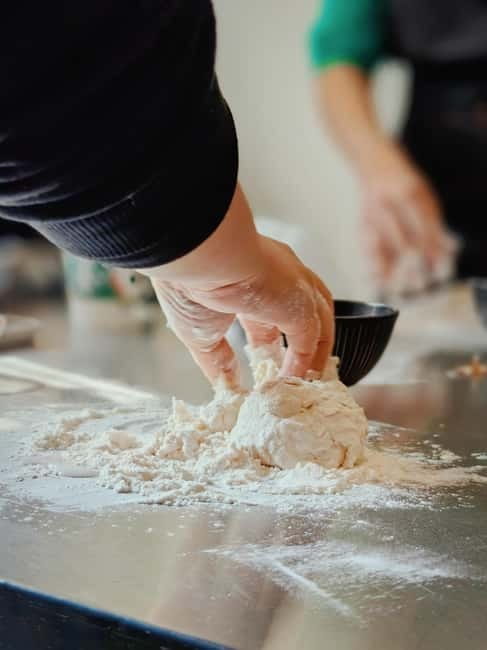
I would recommend it to you if you like food lessons that involve real work. You should be comfortable kneading, rolling, pinching, and repeating the same motion until it improves.
It is a good choice for:
- Couples or friends who want a shared activity
- Vegetarian or vegan diners who want a plant-based xiaolongbao lesson
- Pork eaters who want to understand the soup-dumpling method
- Visitors interested in Shanghai homes, food, and tea
- People who want recipes and a technique to practice after the trip
- Anyone happy to trade a quick meal for a slower, more personal experience
I would be more cautious if you have limited time, dislike raw meat handling, or want an effortless food tasting. The pork filling is mixed while raw, and the class requires patience. It also may not suit someone who needs a guaranteed restaurant-perfect result.
Families and younger participants are not specifically addressed in the available information, so I would confirm suitability directly with Yin before booking for children.
Timing, languages, and cancellation
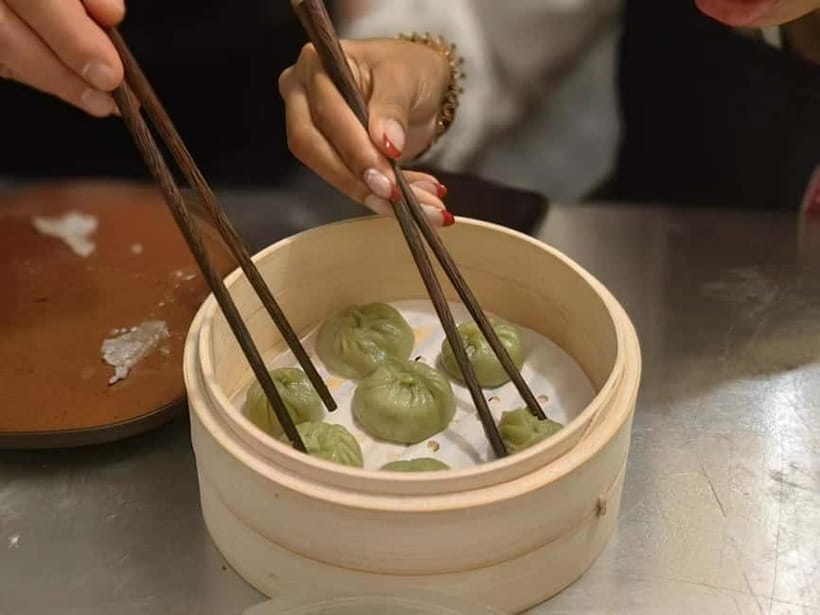
The regular class lasts 2.5 hours. If you make both fillings, plan on roughly 30 additional minutes.
Classes are offered in English, Japanese, and Chinese. Starting times depend on availability, so check the date and time before paying. You can reserve now and pay later, which helps if your Shanghai plans are still shifting.
Free cancellation is available up to 24 hours in advance for a full refund. Transportation is not included, and the central location is reachable by public transport, but you should use the directions and video provided to find the lane-house entrance.
The experience has a 4.9 rating from six reviews, with praise focused on Yin’s kindness, preparation, clear teaching, cultural stories, and willingness to give personal help. The most useful criticism is about the vegan dumplings being somewhat mild and the studio being tricky to locate. Those are manageable concerns, as long as you choose your filling with realistic expectations and allow time to find the door.
Should you book Make Soup Dumpling in Shanghai?
Book it if you want to understand xiaolongbao from the inside out. The best part is not simply eating a hot dumpling with vinegar and ginger. It is learning why the dough needs to rest, why the wrapper has different thicknesses, and how a careful pleat keeps broth where it belongs.
Choose pork for the classic soup-dumpling experience, vegan for the plant-based lesson, or spend $20 more to make both. Follow the arrival directions closely, eat a small snack beforehand, and accept that your first 18-fold dumplings may look homemade. That is the point. You leave with new respect for the dish, a recipe, and a Shanghai food memory that came from your own hands.
FAQ
How long does the soup dumpling class last?
The standard class lasts 2.5 hours. Making both vegan and pork fillings adds about 30 minutes.
How much does the class cost?
The base price is $120 per person. The option to make both fillings costs an additional $20 per person.
Can I choose between vegan and pork xiaolongbao?
Yes. The base price includes your choice of one filling, either vegan or pork.
Can I make both fillings?
Yes. You can add the dual-filling option during booking for $20 per person. This extends the session by about 30 minutes.
Is the pork filling cooked when I prepare it?
No. The pork is mixed raw with ginger, scallions, and aspic, or gelatinized broth. It cooks later when the dumplings are steamed.
What does the vegan filling contain?
The vegan filling is prepared with mushrooms and vegetables cooked in an umami-rich broth.
What languages are available?
Instruction is available in English, Japanese, and Chinese.
Are ingredients and cooking tools included?
Yes. The class includes all materials and tools needed for one filling.
Is tea included?
Yes. Good-quality tea is included, and you drink it with the finished dumplings.
Is transportation included?
No. Personal transportation is not included. The location is central and reachable by public transport, but the workshop entrance may be difficult to find, so use the detailed directions and video provided before class.
Just added around Shanghai
- Suzhou Private Guided Day Trip from Shanghai by Bullet Train★ 5.0 · 46 reviews
- Suzhou and Zhujiajiao Private Guided Day Trip from Shanghai★ 5.0 · 27 reviews
- Shanghai:Old Town, Yu Garden, Zhujiajiao Water Town Bus Tour★ 4.7 · 16 reviews
- Shanghai: Yuyuan, City God Temple Old City Tour-Tip Based★ 5.0 · 10 reviews
- Shanghai: Zhujiajiao Water Town with Calligraphy Experience★ 5.0 · 17 reviews
- Shanghai: Yu Garden with Entry Tickets(optional)★ 4.5 · 28 reviews
- Shanghai: Yu Garden Entry Ticket with PDF Guidebook★ 4.1 · 45 reviews
- Shanghai: Yu/Yuyuan Garden Entry Ticket–E ticket★ 4.4 · 24 reviews
Vegan & Vegetarian, compared.
Half-day Private Panda Tour with Vegetarian Lunch in Nunnery
Read our review →
Half-Day Walking Tour with a Vegetarian Lunch at a Nunnery
Read our review →
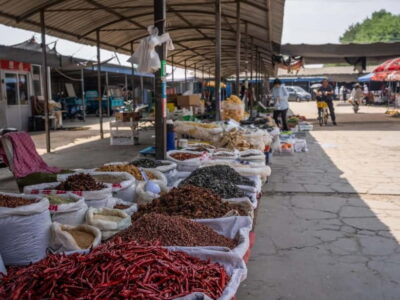
Vegan Home Cooking & Local Market Tour with Sanxia
Read our review →Browse the lists this tour appears in