
Reviewed · BEIJING HUTONG TOURS
Chinese Tea ceremony in Beijing Hutong courtyard
The best part of this experience is the setting: you leave the grand walls of the Forbidden City and sit in a traditional hutong courtyard, just steps from one of Beijing’s most famous sights. Tea is the doorway into the visit, but the real appeal is the conversation with local hosts whose family has lived in the area for generations.
I like the chance to choose from green, black, wulong, and Pu’er tea rather than being handed one standard cup. I also like the small size, limited to four people, which gives you room to ask about brewing, Beijing customs, and daily life. The main drawback is the price for a family of four, and you should confirm the exact meeting point because the directions refer to both sides of the Forbidden City.
Key points
- Four tea styles to choose from: Try green, black, wulong, or Pu’er tea, with one pot served alongside complimentary snacks.
- A hutong courtyard near the Forbidden City: The tea workshop is described as about 150 meters from the Forbidden City’s east gate, with another direction placing it 800 meters west of the exit gate.
- A personal local connection: Hosts including Limeng share tea customs, Beijing traditions, and stories about life in a courtyard neighborhood.
- A practical tea lesson: You learn how to brew tea properly, hold the cup, and match different teas with seasons and traditional ideas about the body.
- A calm one-hour break: This is a useful pause between major sights, with nearby places such as the Imperial Ancestral Temple and Pudusi inheritance area.
- Small-group format: With no more than four participants and English instruction, the visit feels more like a conversation than a formal show.
Tea beside the Forbidden City
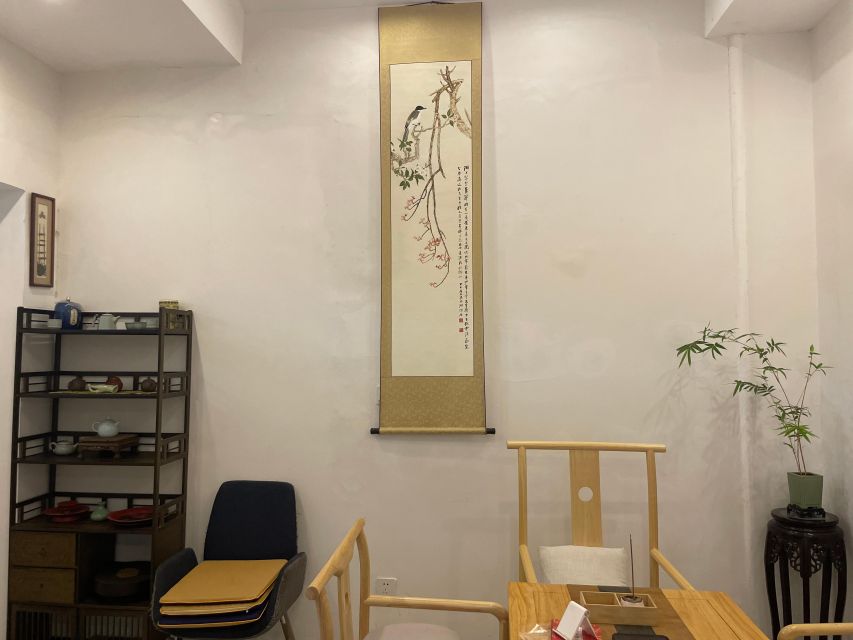
Beijing sightseeing can feel grand and relentless. You walk through imperial gates, cross wide courtyards, and try to absorb centuries of palace life before moving on to the next major stop. This tea ceremony offers a welcome change of scale.
The courtyard sits in the center of Beijing, close to the Forbidden City. The exact directions describe the workshop as 150 meters from the east gate, while the included information places it 800 meters west of the Forbidden City exit gate. Those details may refer to different gates or meeting points, so I would check the confirmation carefully before setting out.
The location matters because you are not spending an hour in a modern hotel lounge or a large commercial teahouse. You are visiting a hutong courtyard, the kind of traditional residential setting that helps you picture how Beijing neighborhoods work beyond the palace walls. The nearby Pudusi inheritance area and Imperial Ancestral Temple add more cultural interest to the walk.
You should allow a little time to find the address, especially if you have just left the Forbidden City. The experience includes pickup, with instructions to wait in your hotel lobby 10 minutes before the scheduled time, but the listed meeting details still deserve attention.
More Beijing Hutong Tours in Beijing:
- Beijing Hutong Walking Food and Beer Tour at Hidden Restaurants
★ 5.0 · 1,132 reviews - Temple Heaven, Summer Palace, Lama Temple, Hutong Bus Tour
★ 4.7 · 319 reviews - Temple of Heaven, Summer Palace, Lama Temple, Hutong Tours
★ 5.0 · 311 reviews
Choosing between green, black, wulong, and Pu’er tea
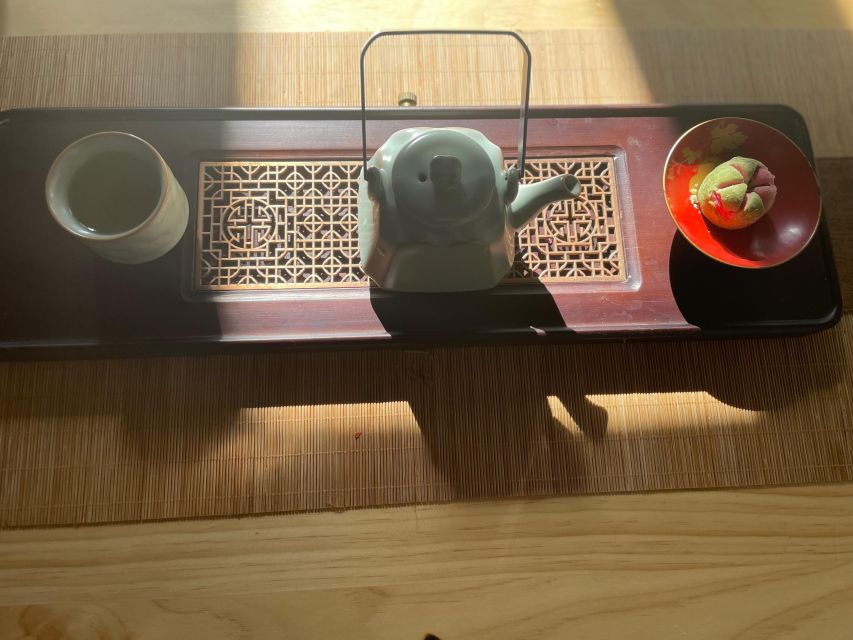
The session includes one pot of Chinese tea, and you can choose from several types. Green, black, wulong, and Pu’er each offer a different taste and a different place in Chinese tea culture.
Green tea is usually the lighter choice. Black tea gives you a fuller cup, while wulong sits between green and black in style. Pu’er is the earthy option and has a particularly strong identity in Chinese tea culture. The point is not simply to consume a drink. You are encouraged to notice how preparation changes the flavor and how different teas are traditionally understood.
The hosts explain how tea is selected for different seasons and how it may relate to the body. This gives the ceremony more substance than a quick tasting. You come away with a better sense of why a particular tea might be served at a particular time, rather than treating every Chinese tea as the same thing.
The choice also makes this activity suitable for people who are not serious tea fans. One visitor who did not consider themselves a tea lover still enjoyed the flavors and found the conversation with the hosts to be the strongest part. You do not need to arrive with a trained palate. Curiosity is enough.
Learning to brew tea instead of pouring boiling water
One of the most useful parts of the session is the brewing lesson. The hosts show you that good tea is not simply a matter of pouring boiling water into a mug and waiting three minutes.
You learn how the water, timing, and handling affect the final taste. The presentation also covers how to hold the teacup with grace and how tea is served during a traditional ceremony. These small skills are easy to take home, and they can improve the way you prepare tea after your trip.
The ceremony has a practical side that many cultural demonstrations lack. You are not only watching somebody else prepare tea. You have the chance to try the process yourself and ask why each step matters. That makes the information easier to remember.
The hosts also explain the meaning behind parts of the ceremony. This helps you understand that the careful motions are not just decoration. The pace, serving style, and shared cups create a social setting built around attention and conversation.
Meeting Limeng and the local hosts
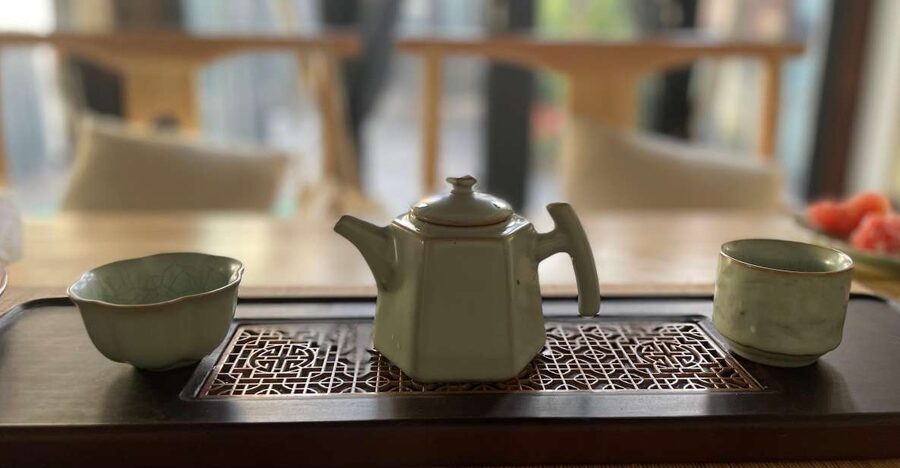
The human contact is central to the experience. Limeng is named as one of the hosts, and the session may include two hosts who welcome you, prepare the tea, and talk with you in English.
Their role is not limited to serving drinks. They explain the tea rituals, discuss Beijing’s hutongs, and answer questions about local customs. The atmosphere is described as warm and friendly, with plenty of room for a cultural exchange rather than a one-way speech.
That personal element is especially useful if you want more than a checklist of Beijing sights. The Forbidden City tells you about emperors and court life. A hutong conversation can give you a different view of the city, focused on residents, family connections, and ordinary neighborhood life.
The family connection adds weight to the setting. The host’s family has lived in the area for generations, so you can ask about the courtyard and the local community from someone with a personal link to it. I would use this opportunity to ask direct questions. What has changed in the neighborhood? How are the courtyards used today? What customs remain part of daily life?
The English instruction is another practical advantage. The activity is designed for English speakers, and the available information describes communication as clear and comfortable. That makes it easier to ask about small details that might be missed in a larger guided tour.
Same country, a completely different kind of day:
- From Beijing: Mutianyu Great Wall Tours with Options
★ 4.9 · 9,216 reviews - Beijing: Forbidden City Tour(Group/Private)-Tickets Included
★ 4.8 · 7,974 reviews - Beijing: T-Square & Forbidden City Group or Private Tour
★ 4.8 · 4,446 reviews - Beijing: Mutianyu Great Wall Daily Tour with Ticket & Lunch
★ 5.0 · 3,056 reviews
Snacks, teacups, and the pace of the ceremony
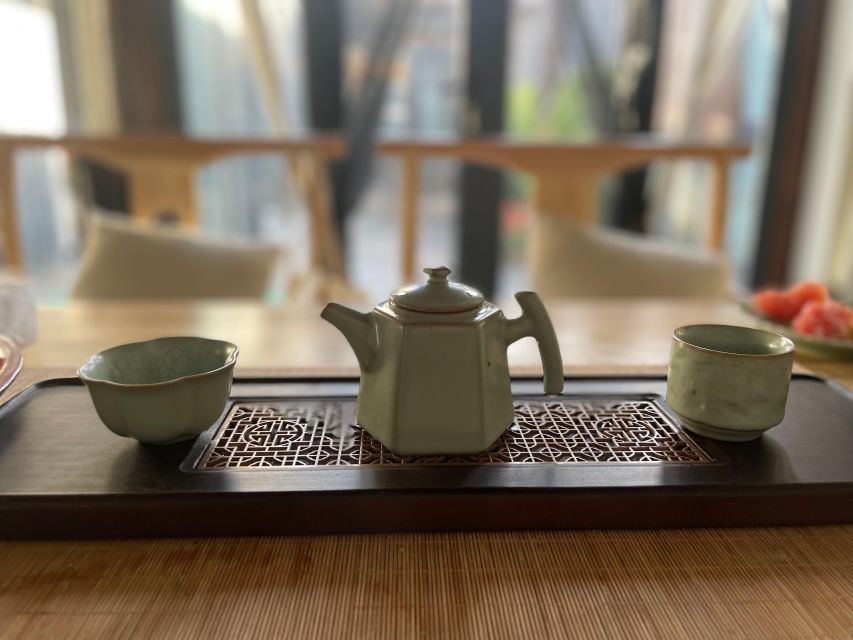
A pot of tea is served with complimentary snacks. These are meant to accompany the tea rather than function as a meal, so you should not book this as a substitute for lunch or dinner.
The snacks add to the rhythm of the visit. You taste the tea, listen to the explanation, try the preparation, and pause for conversation. The experience is only one hour, but it does not need to be longer to make its point.
The pace should suit you if you prefer a quiet cultural activity. It is not built around rushing from one stop to another. You sit, watch, taste, and talk. That makes it a good choice after a morning inside the Forbidden City, when your feet and attention may need a break.
There is also a small etiquette lesson in the way you hold the cup and receive the tea. These details may seem minor, but they help you take part rather than simply observe. You leave with a better sense of how tea functions as a form of welcome and social contact.
A short walk through old Beijing
The tea session is surrounded by historic places, including the Imperial Ancestral Temple and the Pudusi inheritance area. One account also describes ending with a short walk to a less obvious hutong only steps from the Forbidden City.
That walk is a useful addition because it connects the courtyard to the wider neighborhood. You can see how imperial landmarks and residential lanes sit close together in central Beijing. The contrast is part of the appeal: one side presents official power and ceremony, while the other shows the texture of local urban life.
Do not expect a long walking tour or a full survey of Beijing’s hutongs. The activity lasts one hour, and the tea ceremony is the main event. The walk works best as a brief orientation and atmosphere setter.
If you are already planning the Forbidden City, this experience fits neatly into the same part of the city. You might schedule it before entering the palace complex, after leaving it, or between nearby sights. Just keep the gate and pickup directions clear, since the available location information uses more than one reference point.
Is $31 a fair price?
At $31 per person, this is not the cheapest cup of tea in Beijing. You are paying for more than the beverage, though. The price covers a hosted cultural session, a small group of up to four people, English instruction, a courtyard setting, snacks, and local conversation near the Forbidden City.
The value depends on what you want from your visit. If you only want to taste tea, you can find less expensive options. If you want somebody to explain the ceremony, show you how to brew the tea, discuss local life, and give you a personal setting close to major sights, the price is easier to justify.
The small group is important. A four-person limit gives the hosts time to respond to individual questions and lets you try the steps without feeling lost in a crowd. For a solo visitor or couple, that personal attention may make the cost worthwhile.
For a family of four, the total rises quickly. One person described it as a steep price for a family, while still feeling the experience delivered what it promised. I would book it for a family only if everyone is interested in tea, local conversation, or a slower cultural activity. If two family members are likely to sit quietly and wait for it to end, the value is weaker.
The price information also notes an additional charge of 100 RMB per person. Because the supplied details do not clearly explain what that charge covers, confirm the final cost before paying. This is the one financial point I would not leave vague.
Who will get the most from this visit
I would recommend this ceremony to you if you like small-group activities and prefer meeting people over collecting another photograph. It is particularly well suited to:
- Tea drinkers who want to compare several Chinese styles.
- First-time Beijing visitors who want a local setting near the Forbidden City.
- Couples and solo visitors who enjoy conversation.
- Families with older children who can follow a one-hour cultural lesson.
- Anyone who wants a quiet break from large monuments and busy streets.
You do not need prior tea knowledge. The session starts with basic ideas and builds through tasting, preparation, and conversation.
You may want to skip it if your schedule is packed tightly with major sights and you dislike seated demonstrations. It is also less useful if you are looking for a full meal, an extended hutong walk, or a long historical lecture. This is a focused tea and culture visit, not a general Beijing tour.
Planning the hour
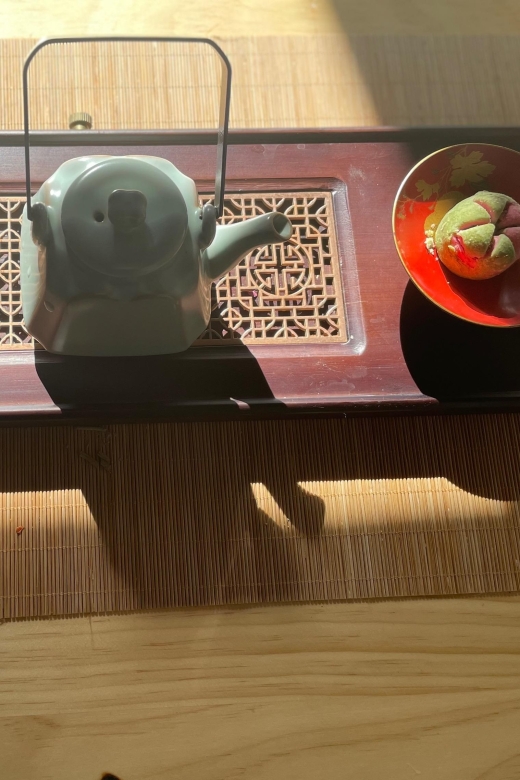
The activity lasts one hour, and starting times depend on availability. That short length makes it easy to fit into a sightseeing day, but you should allow extra time for getting to the courtyard and sorting out the correct gate.
Pickup is included, with instructions to wait in your hotel lobby 10 minutes before the scheduled time. The experience is wheelchair accessible, and the group is limited to four participants. English is the listed language and the instructor speaks English.
The cancellation terms are friendly for changing plans. You can cancel up to 24 hours before the activity for a full refund, and you can reserve now while paying later. Those terms help if your Beijing schedule depends on palace entry times, weather, or transport.
I would avoid placing the ceremony immediately before a timed Forbidden City entry unless you have allowed a generous cushion. The nearby location is convenient, but central Beijing directions can still take longer than expected when you are unfamiliar with the gates.
My recommendation
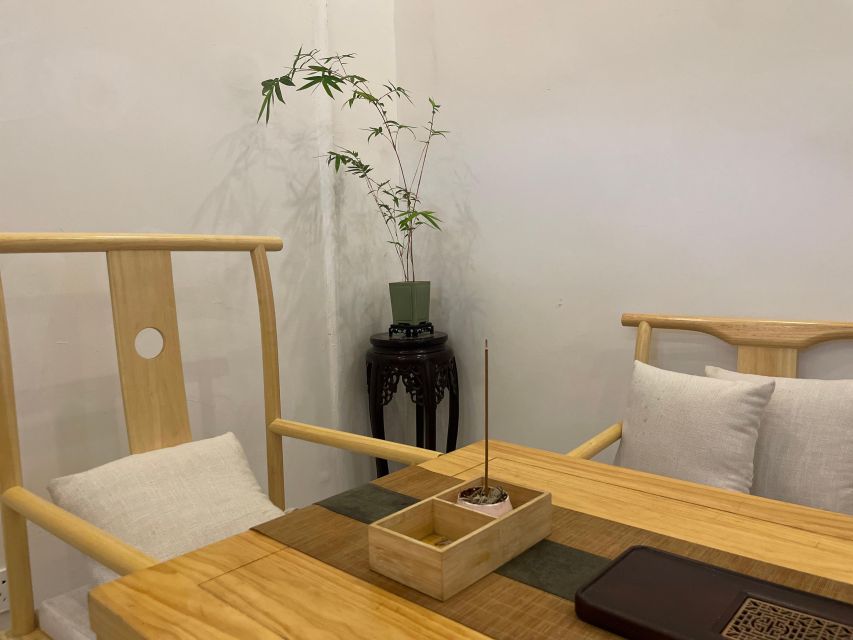
I would book the Bayi Teahouse experience if you want a personal, calm introduction to Chinese tea culture in a genuinely central Beijing setting. The best features are the small group, the chance to choose your tea, the hands-on brewing advice, and the time spent talking with Limeng and the other local hosts.
The main cautions are the price for larger families, the unexplained 100 RMB per-person charge, and the need to confirm the exact meeting point. If those details are clear and you enjoy conversation as much as sightseeing, this is a worthwhile way to connect the Forbidden City with the lived-in Beijing around it.
FAQ
Where does the Chinese tea ceremony take place?
It takes place in a traditional hutong courtyard in central Beijing, near the Forbidden City. The workshop is described as about 150 meters from the Forbidden City’s east gate, while another direction places it 800 meters west of the exit gate.
How long does the tea ceremony last?
The activity lasts one hour.
How much does the experience cost?
The listed price is $31 per person. An additional charge of 100 RMB per person is also noted, so confirm the final amount before booking.
Which teas can I choose from?
You can choose from black tea, green tea, wulong tea, and Pu’er tea.
Is food included?
Complimentary snacks are served with the tea. The activity information does not describe the snacks as a full meal.
Is the experience taught in English?
Yes. English is the listed language for the instructor and hosts.
How many people can join the activity?
It is a small-group experience limited to four participants.
Is pickup included?
Yes. Pickup is included, and you should wait in your hotel lobby 10 minutes before the scheduled pickup time.
Is the experience wheelchair accessible?
Yes, the activity is listed as wheelchair accessible.
Can I cancel for a refund?
You can cancel up to 24 hours in advance for a full refund. You can also reserve now and pay later.
Just added around Beijing
- Private Transfer to Mutianyu Great Wall with professional driver★ 5.0 · 19 reviews
- camp on the Great Wall overnight with sunrise and sunset on the wall★ 5.0 · 11 reviews
- One day tour to downtown Tianjin from Beijing by high speed train★ 5.0 · 3 reviews
- BusDa:Ancient Great Wall &Badaling Great Wall Full-day Bus Tour★ 4.5 · 6 reviews
- ZANBUS: Trip to the Jinshanling Great Wall Departing at 7:30 AM★ 5.0 · 5 reviews
- Yuxiandu Chinese Royal Cuisine Museum with Show and Royal Banquet★ 5.0 · 4 reviews
- Private Wild Great Wall Hiking tour at Simatai (Challenging)★ 5.0 · 16 reviews
- Wild Great Wall Huanghuacheng Half Day Tour★ 5.0 · 15 reviews
Beijing Hutong Tours, compared.

Beijing Hutong Walking Food and Beer Tour at Hidden Restaurants
Read our review →
Temple Heaven, Summer Palace, Lama Temple, Hutong Bus Tour
Read our review →
Temple of Heaven, Summer Palace, Lama Temple, Hutong Tours
Read our review →
Beijing City Walk: Explore Hutongs Life and Old Beijing
Read our review →Browse the lists this tour appears in