Reviewed · TICKETS
Beijing:Drum and Bell Towers Entry Ticket- Cultural Treasure
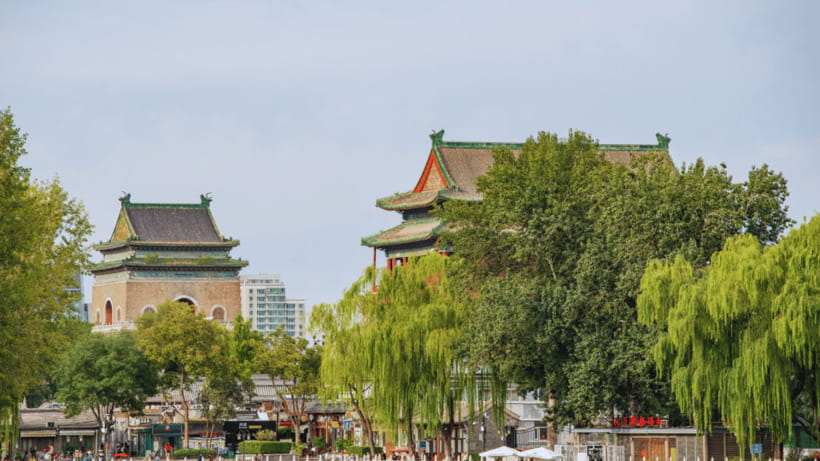
Beijing’s Drum and Bell Towers offer one of the clearest glimpses into how the old imperial city worked. The two grand buildings once set the daily rhythm for Beijing, using an evening drum and a morning bell. The 63-ton Ming bell inside the Bell Tower is the star object, while the Drum Tower gives you a sense of the scale and ceremony behind the city’s old timekeeping system.
I like the pre-booked entry and the English textual and visual guide. You can arrive with your tickets ready instead of sorting out admission at the door, and the guide adds useful context to buildings that might otherwise take only a quick look. I also like the location beside Beijing’s hutongs, where you can continue into older residential streets after your visit.
The main drawback is practical: the stairs are steep, long, and not suitable for people with limited mobility. The $13 price may also be higher than buying directly on site, so you are paying for advance planning and convenience rather than simply the lowest possible admission cost.
Key points to know before you go

- The 63-ton Yongle bell: See the enormous Ming Dynasty bell known as the King of Ancient Bells of China.
- Two towers, one civic clock: The Drum and Bell Towers once told Beijing when day began and ended.
- A useful English guide: Your ticket includes textual and visual information, but not a live guide or audio guide.
- Steep stairways: Expect lengthy, sharply inclined stairs, especially in the Drum Tower.
- Hutongs at the doorstep: Pair the towers with a walk through Beijing’s nearby traditional lanes.
- Advance booking matters: Provide passport details so the ticket can be reserved three days before your visit.
Why Beijing’s Drum and Bell Towers matter

The Drum and Bell Towers sit at the northern end of Beijing’s central axis, a position that reflects their civic importance. These were not simply ornamental buildings. For centuries, they helped regulate the city’s daily routine.
The first towers were built during the Yuan Dynasty, from 1206 to 1368. They continued serving Beijing through the Ming and Qing dynasties. At a time when most people had no personal clock, the sound from these towers carried practical power. The rhythm of the city was announced from above.
The old system is often described as an evening drum and a morning bell. The drum marked dusk, while the bell marked dawn. That simple pattern connected palace officials, merchants, workers, and residents to the same public clock.
I find this context valuable because it changes how you look at the buildings. You are not just seeing two old towers. You are seeing the machinery of an ancient capital, where sound helped organize an entire city.
A few more Beijing trips to weigh up
- Beijing: Forbidden City Tour(Group/Private)-Tickets Included
★ 4.8 · 7,974 reviews - Beijing: Mutianyu Great Wall Daily Tour with Ticket & Lunch
★ 5.0 · 3,056 reviews - 4-Hour Small Group Tour to Forbidden City with Entry Tickets
★ 5.0 · 1,863 reviews
Entering the Drum Tower and seeing its 25 drums
The Drum Tower is the more physically demanding part of the visit. You climb a steep staircase to reach the upper level, so take your time and use the handrails. The stairs are long enough to be a real concern for anyone with limited mobility, and the climb may be tiring even if you are generally fit.
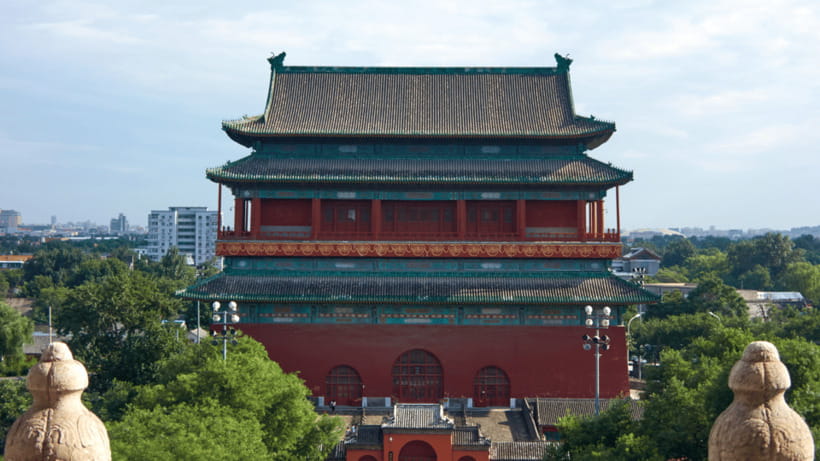
At the top, you can see the drums that once helped mark the hours. There used to be 25 drums in the Drum Tower. Their number and arrangement point to the importance of the building as a formal timekeeping center, not merely a place where musicians performed.
The Drum Tower is also rewarding for its architecture. Its height, timber structure, and broad upper hall give you a better sense of how these buildings dominated the old city. The visit is not built around a long guided presentation, so the included English guide is useful here. Read it before or during your visit, since the displays alone may not explain every detail.
Allow roughly 30 to 45 minutes for the Drum Tower, depending on how long you spend with the drums, the building, and the views. The total activity is listed as two hours, but that includes both towers and the time needed to move between them.
The Bell Tower and China’s King of Ancient Bells

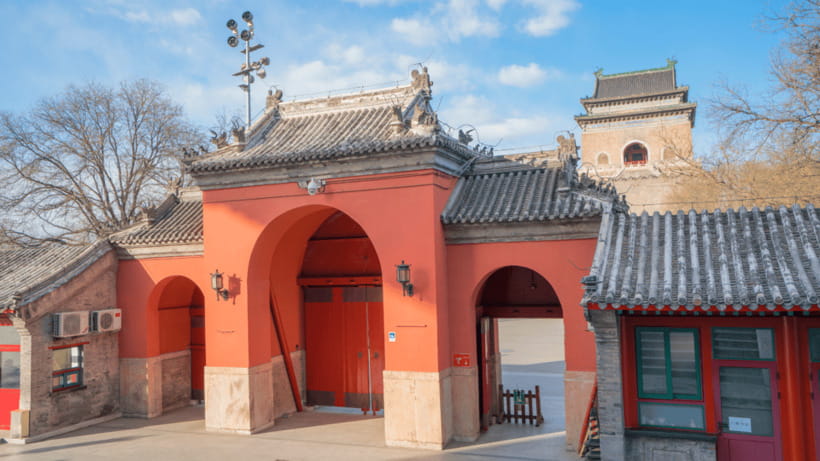
The Bell Tower sits slightly north of the Drum Tower. This unusual placement is one of the details worth noticing as you move through the complex. The two buildings belong together, but they are not arranged as a perfectly symmetrical pair.
The Bell Tower’s main attraction is the great bell cast during the Yongle era of the Ming Dynasty, from 1403 to 1424. It weighs 63 tons and is known as the King of Ancient Bells of China. Its sheer size gives the Bell Tower a different mood from the Drum Tower. The Drum Tower suggests repeated public rhythm, while the Bell Tower centers your attention on one remarkable object.
Again, the stairs are steep and fairly lengthy. Leave extra time if you need a slower climb. The buildings are historic sites under state-level protection, and their importance is partly architectural. Look at the proportions, rooflines, and placement within the old city plan rather than rushing straight to the bell.
I would allow about 30 to 45 minutes for the Bell Tower. The bell itself does not require a long viewing time, but the building deserves a slower look. The English material can help explain why the bell mattered and how it fit into the old timekeeping system.
Using the English guide without a live guide
This is a self-guided visit. Your admission includes an English textual and visual guide, but it does not include a live tour guide or an audio guide.
That arrangement suits me when I want to move at my own speed. You can pause for photographs, read only the sections that interest you, and avoid being tied to a group schedule. It also keeps the experience simple for visitors who already know a little about Beijing’s dynasties and city planning.
The tradeoff is that you need to do some of the work yourself. If you prefer a guide who explains the buildings, answers questions, and brings the stories to life in person, this ticket will feel basic. The guide is there to support your visit, not replace a full walking tour.
The English PDF material can also help you plan what to do afterward. It includes useful information about nearby hutongs and suggestions for local restaurants. That is one of the best reasons to read it before arriving, not just after you enter.
Same country, a completely different kind of day:
- From Beijing: Mutianyu Great Wall Tours with Options
★ 4.9 · 9,216 reviews - Beijing: T-Square & Forbidden City Group or Private Tour
★ 4.8 · 4,446 reviews - All-Inclusive Tour: Tiananmen Square, Forbidden City, Great Wall
★ 5.0 · 2,873 reviews - MuBus: Mutianyu Great Wall ENG/ESP/RUS Guided Bus Tour
★ 5.0 · 2,361 reviews
Connecting the towers with Beijing’s hutongs
The towers sit next to Beijing’s traditional hutong areas, making them easy to pair with a neighborhood walk. This is where the visit gains extra value. The towers explain the public, ceremonial side of old Beijing, while the hutongs offer a closer look at the lanes and residential fabric around them.
You do not need a separate transport plan for this pairing. After seeing both towers, use the English guide to identify nearby streets and food options. The exact length of your hutong walk is up to you, but the two-hour tower visit leaves room for additional exploring if you plan your day carefully.
I would avoid treating the towers as an isolated photo stop. The surrounding hutongs help you understand their place in the city. You can see why the towers were positioned along the central axis and how public monuments once related to ordinary urban life.
Keep in mind that this ticket covers the Bell Tower and Drum Tower only. It does not include a restaurant meal, transport, a live hutong walk, or a separate guide.
Is the $13 ticket good value?
At $13 per person, this is a reasonable purchase if you value advance arrangements and clear English information. You receive entry to both towers, skip-the-ticket-line access, and an English textual and visual guide. You also avoid the uncertainty of arranging admission after arriving.
The price deserves a closer look, though. A visitor has noted that the online cost can be higher than the price paid directly at the site. Since the exact local admission price is not provided here, I cannot call this the cheapest option. Think of the extra cost as payment for convenience, especially if you are visiting during a busy period or do not want to handle ticket arrangements in person.
The service is particularly useful during major travel periods such as China’s Golden Week, when advance planning can save time. You receive the e-tickets by email or WhatsApp after the reservation is confirmed, and you can go directly to the entrances with the supplied codes.
For a short Beijing visit, saving time has real value. If you have a packed schedule, the skip-line feature and ready-to-use tickets may be worth more than a small price difference. If you are watching every dollar and have plenty of flexibility, buying locally may be worth investigating.
How the reservation process works

After placing your order, you need to provide your passport name, passport number, and date of birth. The ticket provider reserves your admission three days before your chosen visit.
Once the reservation succeeds, the e-tickets are sent by email or WhatsApp. Bring your passport or ID card, since it is required information for the booking and may be needed for entry.
Do not leave the reservation details until the last minute. The process depends on successful ticket reservation, so check your email or WhatsApp before setting out. Keep the e-ticket easy to open on your phone, and bring the same identification document used for the booking.
You can cancel up to 24 hours in advance for a full refund. The reserve-now, pay-later option also gives you some flexibility, since you can hold the booking without paying immediately.
A realistic two-hour plan

A sensible visit begins with the Drum Tower, followed by the Bell Tower. This order lets you handle the more demanding stair climb first, though you can reverse it if your schedule or entry instructions suggest otherwise.
Plan around 40 minutes at the Drum Tower. Read about the 25 drums, study the upper hall, and take your time on the stairs. Add another 40 minutes for the Bell Tower, where the 63-ton bell deserves your attention.
Use the remaining time for moving between the buildings, checking the guide, and taking photographs. If you are quick, you may have time to begin a hutong walk afterward. If you enjoy architecture and historical detail, the full two hours will pass quickly.
The towers are not a full-day attraction by themselves. Their strength is that they fit neatly into a larger day around Beijing’s central axis, hutongs, and other historic areas. Pairing them with nearby sights makes the admission feel more worthwhile.
Who will enjoy this visit most?
I would recommend this experience to you if you enjoy architecture, city history, and self-guided sightseeing. It is also a good choice if you want a short cultural stop that does not require committing to a full-day tour.
Families with older children may find the drums, bell, and steep climb memorable. The two buildings provide a clear story that is easier to grasp than a large museum with many rooms and displays.
The visit is less suitable for anyone with limited mobility because of the steep and lengthy stairs. It is also not the best choice if you want a personal guide or an audio explanation at every stop. The experience gives you the access and written material, while you supply the pace and attention.
Photographers should find plenty to appreciate in the towers’ scale and historic design, but the main value is not simply taking a picture. The buildings make more sense when you understand their role in regulating Beijing’s day.
Should you book the Drum and Bell Towers ticket?
Book it if you want a focused look at an important part of Beijing’s old civic life, especially during a busy travel period. The ready e-tickets, skip-line entry, and English guide make the visit easy to organize, and the nearby hutongs give you a natural next stop.
Think twice if your main goal is the lowest admission price, or if stairs are difficult for you. You should also choose another option if you want a live guide or audio commentary.
For most independent visitors, I see this as a useful two-hour addition to a Beijing itinerary. The towers are compact, memorable, and closely tied to the city’s past. Just budget for the stairs and decide if the booking convenience is worth the possible premium over buying at the site.
FAQ
How long does the Drum and Bell Towers visit take?
The stated duration is two hours. This allows time to visit both buildings and use the included English textual and visual guide.
What does the ticket include?
The ticket includes admission to the Bell Tower, admission to the Drum Tower, and an English textual and visual guide for both buildings.
Is a live tour guide included?
No. A live tour guide is not included.
Is an audio guide included?
No. An audio guide is not included. The experience provides written and visual English information instead.
What identification do I need?
Bring your passport or ID card. For the reservation, you must provide your passport name, passport number, and date of birth.
How do I receive the tickets?
After the reservation is successful, the e-tickets are sent by email or WhatsApp. You can enter the towers directly with the supplied e-tickets.
Can I cancel the booking?
Yes. You can cancel up to 24 hours before the visit for a full refund. The reserve-now, pay-later option allows you to book without paying immediately.
Just added around Beijing
- Private Transfer to Mutianyu Great Wall with professional driver★ 5.0 · 19 reviews
- camp on the Great Wall overnight with sunrise and sunset on the wall★ 5.0 · 11 reviews
- One day tour to downtown Tianjin from Beijing by high speed train★ 5.0 · 3 reviews
- BusDa:Ancient Great Wall &Badaling Great Wall Full-day Bus Tour★ 4.5 · 6 reviews
- ZANBUS: Trip to the Jinshanling Great Wall Departing at 7:30 AM★ 5.0 · 5 reviews
- Yuxiandu Chinese Royal Cuisine Museum with Show and Royal Banquet★ 5.0 · 4 reviews
- Private Wild Great Wall Hiking tour at Simatai (Challenging)★ 5.0 · 16 reviews
- Wild Great Wall Huanghuacheng Half Day Tour★ 5.0 · 15 reviews
Tickets, compared.

Forbidden City Tour(Group/Private)-Tickets Included
Read our review →
Mutianyu Great Wall Daily Tour with Ticket & Lunch
Read our review →
4-Hour Small Group Tour to Forbidden City with Entry Tickets
Read our review →
Ngong Ping 360: Cable Car Return Tickets & Combos
Read our review →
The Temple of Heaven or Summer Palace Entry Ticket
Read our review →
Beijing Forbidden City Ticket Booking (Optional: guide service)
Read our review →