
Reviewed · FOOD & DRINK
Small-Group Hong Kong Island Food Tour
Hong Kong’s food story comes together one bite at a time on this four-hour walk from Sheung Wan to Wan Chai. You eat in old local restaurants, ride a double-decker Ding Ding tram, and see the streets where dried seafood, Chinese medicine, wet markets, and family food shops still shape daily life.
I like the small groups of no more than nine, which make cramped eateries easier to manage. I also like the mix of classic Cantonese dishes and British-era foods, especially the milk tea and custard-filled dan tat. The main caution is simple: arrive very hungry, and do not book this if you need vegetarian, gluten-free, or seafood-free food.
Key points at a glance
- Five substantial food stops: Dim sum, wonton noodle soup, milk tea, char siu with rice, and an egg tart form the core tasting menu.
- A real Hong Kong route: Walk from Sheung Wan through Central and Western District, then cross to Wan Chai by historic tram.
- Local restaurants, not tourist dining rooms: The food stops are family-run, long-established places, including Michelin Guide recommended restaurants.
- More than a meal: The walk includes dried seafood shops, a tea and sweets store, Graham Street Market, Chinese medicine, and old neighborhoods.
- Guides make the difference: Andy, Ivy, Mel, Alex, Sinclair, and Jane are among the named guides praised for clear English, food knowledge, and warm hosting.
- Good value for food-focused first-timers: At $115.52 per person, the price is high for a simple meal but reasonable for several tastings, guiding, neighborhood walks, and the tram ride.
Why this Hong Kong food tour works
This is not a restaurant crawl built around trendy addresses. It is a guided look at how Hong Kong eats. You move through old districts, stop at places that can feel hard to enter without Cantonese, and learn why dishes such as wonton noodles, roast pork rice, milk tea, and egg tarts belong to the city’s identity.
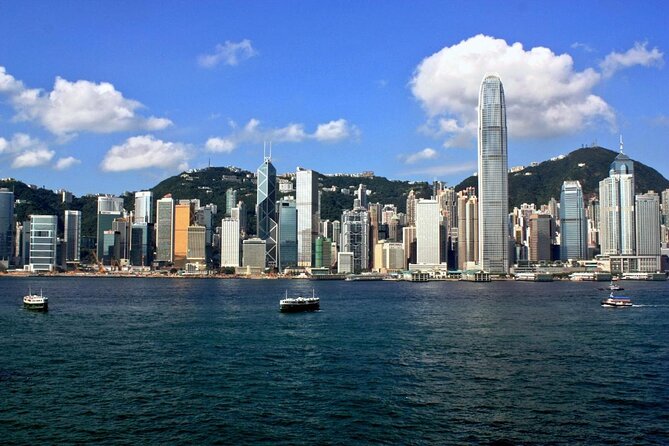
The route also gives you a useful first look at Hong Kong Island. Sheung Wan brings traditional Chinese businesses and food trades. Central adds steep streets, colonial buildings, the Mid-Levels Escalator, and Tai Kwun. Wan Chai supplies the final meal stops and the open feel of Southorn Playground.
The tour earns a top rating of 5 from 343 ratings, with 100 percent recommending it. The strongest pattern is not just approval of the food. It is praise for guides who explain what you are eating, handle the ordering, answer questions, and take you to places you might not try alone.
A few more Hong Kong trips to weigh up
- Hong Kong’s Tin Hau Hidden Eats Food Tour with 7+ Local Tastings
★ 5.0 · 352 reviews - Hong Kong Food Tour: Central and Sheung Wan Districts
★ 5.0 · 333 reviews - Hong Kong Street Food Tour with Locals – Dim Sum, Wonton & more
★ 5.0 · 226 reviews
Starting with trolley dim sum in Sheung Wan
Meet at 9:30 a.m. on Des Voeux Road West in Sheung Wan. You receive directions after booking, and the starting point is near public transportation, but allow time to find it. Hong Kong streets can be confusing, especially when you are trying to arrive before a food tour begins.
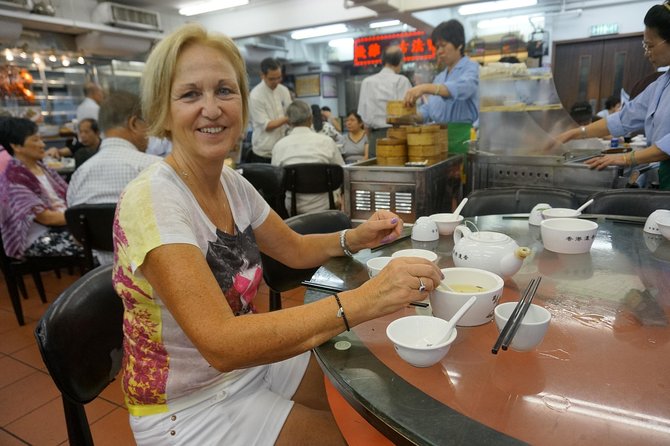
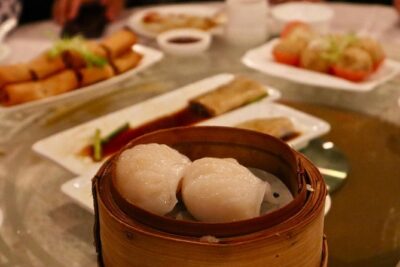
Your first stop is an old tea house for yum cha, or dim sum, served from a trolley. This is a good choice for the opening meal because dim sum is social, varied, and tied to the Cantonese tradition of tea drinking. The restaurant is nearly a century old, and its crowded, lively setting is part of the experience.
I like starting here instead of in a polished modern café. A trolley-service dim sum room shows you how the meal works in practice. You see dishes moving through the room, choose small plates, and get a sense of the pace of a classic Hong Kong breakfast.
The drawback is that a traditional tea house may feel noisy and busy. If you prefer a quiet meal with lots of time for photographs, this will be less comfortable. Still, the guide is there to explain the food and help you manage the ordering.
Sheung Wan’s dried seafood and old trades
After dim sum, the route passes through Sheung Wan and Seafood Street, the section of Des Voeux Road West known for dried seafood. Dried fish, scallops, sea cucumber, and other preserved ingredients are used in Cantonese cooking and traditional tonics.
This stop is useful because it gives context to flavors you may encounter at lunch. It also shows a side of Hong Kong that is easy to miss if you stay around major shopping streets. The shops are practical businesses, not displays arranged for sightseeing.
You also visit a Chinese medicine shop dating from the 1940s. These stops help explain how food, health, and traditional remedies overlap in Cantonese culture. Your guide can make sense of unfamiliar ingredients and customs, which matters when signs and product labels are not in English.
Tea, preserved sweets, and Graham Street Market
Kai Fat Tea is tucked into a narrow Sheung Wan road and has operated for more than 30 years. The shop sells tea, assorted candies, and preserved fruit sweets. Traditional dried fruit can be sweet, sour, salty, or sharply flavored, so this is a small tasting with plenty of personality.
The tea stop breaks up the heavier food. It also connects with Hong Kong’s long tea culture and the habit of keeping preserved snacks at home. You may find the flavors more unusual than the main dishes, which is part of the point.
The route then reaches Graham Street Market, a food market with more than a century of history. Food stalls sell vegetables and live seafood, and the sloping street gives you a glimpse of neighborhood shopping. You do not come here for a formal tasting. You come to watch ordinary food commerce at close range.
The itinerary also includes a family-run soy sauce producer. That detail matters more than it may first appear. Soy sauce is central to Cantonese cooking, and seeing the producer puts familiar restaurant flavors into a more local setting.
Same country, a completely different kind of day:
- Hong Kong: Dolphin Cruise, Big Buddha & Lantau Island Tour
★ 4.2 · 1,512 reviews - Ngong Ping 360: Cable Car Return Tickets & Combos
★ 4.6 · 1,431 reviews - Lantau Island Day Trip – Big Buddha & Tai O
★ 4.5 · 1,328 reviews - Big Bus Hong Kong Open Top Hop-On Hop-Off Sightseeing Tour
★ 4.0 · 1,077 reviews
Wonton noodles at a family restaurant
The next major tasting is wonton noodle soup at a family-run business dating from the 1960s. It is recommended by the Michelin Guide, but the appeal is not simply the guidebook mention. Wonton noodles are a deceptively plain dish, and the quality depends on the broth, noodles, dumplings, and balance of seasoning.
This is one of the foods I would pay close attention to. The dish is light enough to follow dim sum, but it still gives you a clear taste of Cantonese technique. Your guide explains how to approach the bowl and helps with any language barrier.
Several named guides, including Ivy, Mel, Alex, and Sinclair, receive particular praise for explaining ingredients and food customs in clear English. Ivy is also described as fluent in English and Chinese, while Alex is praised for answering questions about Chinese herbal ingredients. The guide you receive can vary, but the format depends on this personal explanation.
The tour is conducted in English. If you want a food experience with no explanation, you could find a cheaper meal on your own. If you want to understand what is in the bowl and why the dish matters, the guide adds real value.
Hong Kong milk tea and the British connection
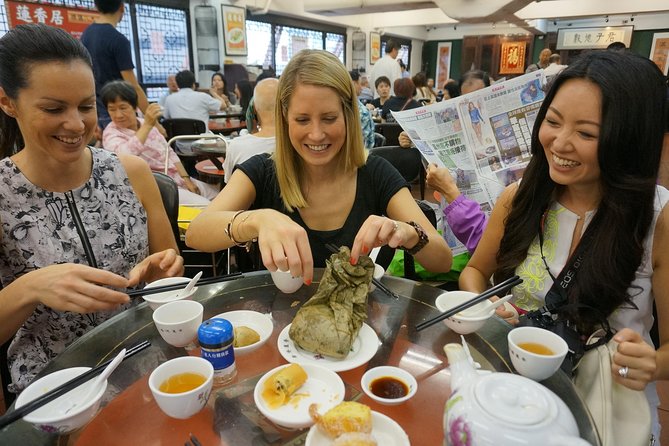
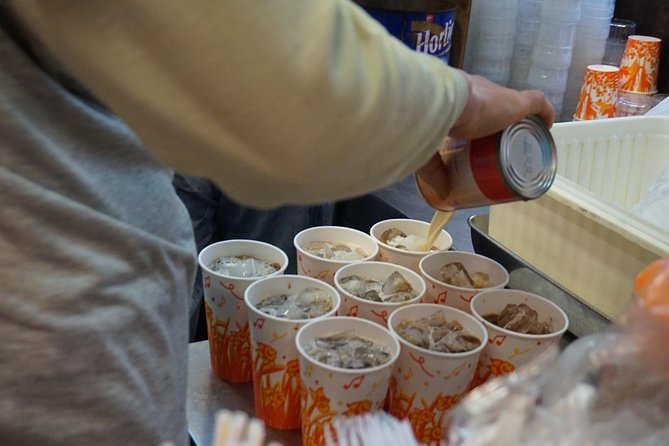
Milk tea is a short stop, but it helps connect Cantonese food with Hong Kong’s British colonial past. The drink became a lasting part of local food culture, and it remains an everyday choice rather than a special-occasion treat.
The tour presents Hong Kong cuisine as a mixture of influences. Cantonese cooking supplies much of the foundation, while British tastes helped shape foods and drinks such as milk tea and custard tarts. The point is not to label dishes as purely Chinese or Western. It is to show how Hong Kong made outside influences its own.
This is also a useful pause between meals. By this stage, you have already eaten dim sum and noodles, so the small cup gives you a change of texture and flavor without adding another full dish.
A Ding Ding ride from Central toward Wan Chai
The route continues through the Central and Western District, with stops that can include Gough Street, the Mid-Levels Escalator, and Tai Kwun. Gough Street brings old neighborhood character, colonial-style buildings, small alleys, boutiques, and restaurants.
The Mid-Levels Escalator covers about 800 meters and climbs 135 meters toward Conduit Road. The tour spends about 15 minutes here, so think of it as a quick orientation point rather than a full visit. Tai Kwun, the restored former Central Police Station compound, adds a heritage and arts setting to the walk.
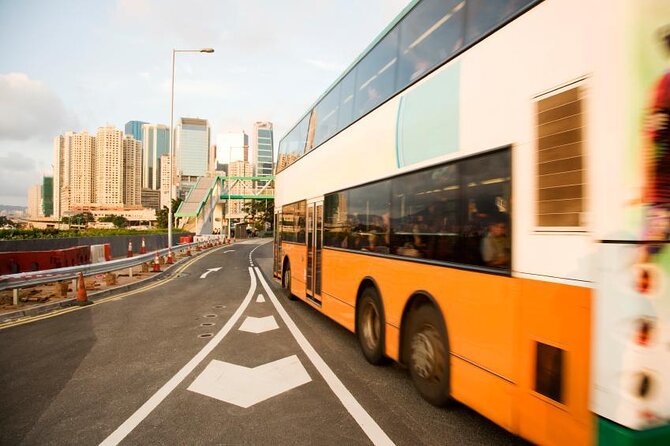
The transport highlight is the Hong Kong tramway, known locally as the Ding Ding. The system began operating in 1904 under British rule and uses double-decker trams. The ride is included, unlike some public transport used on other tours, and it gives you a pleasant change from walking.
The precise route and seating on the tram can vary with city conditions. The ride is about 20 minutes in the itinerary, and it is best viewed as part of the city tour rather than a private scenic journey. You pay nothing extra for the listed tram ride, but bring some flexibility because public transport is not fully controlled by the guide.
Char siu in Wan Chai
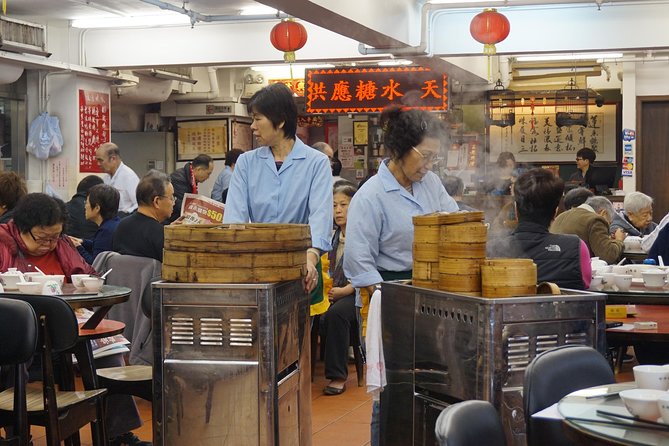
In Wan Chai, you stop at another family-run restaurant with roots reaching back to the Qing dynasty. It is known for English char siu, or Cantonese roast pork, served with rice and homemade sauces. The tasting includes a mixture of traditional roasted meats.
This is the most filling part of the tour, and it is easy to understand why. Sweet, savory roast meat with rice gives you a direct introduction to one of Hong Kong’s most familiar food combinations. If you have eaten roast pork elsewhere in Asia, the guide can help you notice the local style and sauces.
The restaurant’s long family history is part of its appeal, but the meal is not presented as a museum piece. It is a working food business. That makes the experience more useful than simply taking a photograph outside a famous old shop.
Food portions are meant to add up to a full breakfast and lunch. Guides such as Andy and Ivy are praised for making sure the group has enough food and water. Follow the advice to skip breakfast. Even a small meal before the meeting time could leave you uncomfortably full by Wan Chai.
Finishing with a 60-year-old egg tart bakery
The last formal tasting is a dan tat, the Hong Kong version of an English custard tart. The bakery has operated for about 60 years and was a favorite of a former Hong Kong governor.
The egg tart is a smart ending. It is sweet, portable, and not as heavy as another savory plate. It also brings the Cantonese and British threads together in one pastry. The custard is familiar enough for first-time visitors, yet the Hong Kong version has its own place in local food culture.
The food stops finish in Wan Chai, near Southorn Playground. The playground is used by office workers, sportsmen, spectators, and people taking a quick break. It is a relaxed place to end, and you are well positioned to continue exploring Wan Chai afterward.
What $115.52 buys you
At $115.52 per person, this is not a bargain meal. You could spend less by choosing one dim sum breakfast, one noodle bowl, and an egg tart on your own. The price makes more sense when you count the guide, five food tastings, tea and preserved sweets, the tram ride, language help, and the neighborhood route.
You are also paying to avoid guesswork. Some of the restaurants are family-run and old, and the tour takes you to places that can feel intimidating if you cannot read Chinese or do not know local dining customs. A guide orders, explains, keeps the group moving, and answers questions beyond the menu.
I would call it good value for a first Hong Kong visit, especially if food is one of your main reasons for coming. It is less compelling for a repeat visitor who already knows Sheung Wan and Wan Chai or who mainly wants a long, relaxed meal.
The tour is capped at nine people. That is small enough for conversation and practical help in tight restaurants, while still allowing the cost to remain below a private tour. It is also a good format for solo visitors. One review describes a solo participant finding the group welcoming, and the shared tables naturally encourage conversation.
Who should book, and who should skip it
Book this if you want a fast, food-centered introduction to Hong Kong Island. It suits first-time visitors, curious eaters, solo visitors, and anyone who wants local guidance before choosing more restaurants for the rest of the trip.
You should also book it if you enjoy food with a story. The guide talks about Cantonese traditions, British influence since the 1950s, Chinese medicine, food markets, and local life. This gives you more than a checklist of dishes.
Skip it if you are vegetarian, gluten-free, or allergic to seafood. The tour is not suitable for those needs. It is also not suitable for children aged five and under, and a private food tour is recommended for that age group.
Wear comfortable shoes. You walk through sloped streets and small alleys, and the route includes public areas such as markets and the Mid-Levels Escalator. Bring a camera, but keep it secondary to eating and listening. The food comes quickly, and the restaurants may be crowded.
Free cancellation is available if you cancel at least 24 hours before the start time. Changes or cancellations inside that window are not refunded, and the tour requires a minimum number of participants. If that minimum is not reached, you are offered another date or experience, or a full refund.
My call on the four-hour route
I would book this tour early in a Hong Kong stay, ideally on your first or second day. It gives you a working map of Sheung Wan, Central, and Wan Chai, plus a list of foods to seek out later.
The strongest reasons to go are the old eateries, the balanced menu, and the guides. Andy, Ivy, Mel, Alex, Sinclair, and Jane are repeatedly praised for being friendly, clear, funny, and attentive. The tour feels most useful when the guide explains a dish you would otherwise order without understanding.
Book it if $115.52 fits your food budget and you want context with your meal. Skip it only if dietary limits rule out the menu, or if you prefer to choose every restaurant and dish yourself.
FAQ
Where does the Hong Kong Island food tour start?
It starts at 28 Des Voeux Road West in Sheung Wan, Hong Kong. You receive easy-to-follow directions after booking.
What time does the tour begin?
The tour begins at 9:30 a.m.
Where does the tour end?
The tour ends in Wan Chai, Hong Kong.
How long does the food tour last?
The experience lasts approximately four hours.
How many people can join the tour?
Each booking can include a maximum of nine people, and the activity also has a maximum group size of nine.
What food is included?
The included tastings are dim sum or yum cha, wonton noodle soup, Hong Kong milk tea, char siu or roast pork, egg tart, and traditional dried fruit sweets.
Is the Ding Ding tram ride included?
Yes. The traditional Hong Kong tram ride is included in the experience.
Is hotel pickup included?
No. Hotel pickup and drop-off are not included.
Can vegetarians or people with food allergies join?
The tour is not suitable for vegetarians, people who need gluten-free food, or people with seafood allergies. It is also not suitable for children aged five and under.
Just added around Hong Kong
- Hong Kong Airport to Hong Kong City Private Arrival Transfer★ 4.5 · 3 reviews
- Hong Kong Observation Wheel Ticket★ 5.0 · 3 reviews
- Hong Kong Palace Museum Ticket★ 5.0 · 3 reviews
- Hong Kong Peak Tram and Sky Terrace 428 Tickets (Optional)★ 3.5 · 22 reviews
- Hong Kong Private Walking Tour with a Local★ 5.0 · 6 reviews
- Hong Kong Market Walking Tour & Chinese Cooking Class★ 5.0 · 24 reviews
- Hong Kong : Must-See Attractions Walking Tour With A Guide★ 5.0 · 7 reviews
- Hong Kong: Lantau Island & Tai O Cruise, Skip The Line Cable Car★ 3.5 · 4 reviews
Food & Drink, compared.

Authentic Local Food Tour in Central Shanghai
Read our review →
Beijing Hutong Walking Food and Beer Tour at Hidden Restaurants
Read our review →

Hong Kong’s Tin Hau Hidden Eats Food Tour with 7+ Local Tastings
Read our review →
Hong Kong Food Tour: Central and Sheung Wan Districts
Read our review →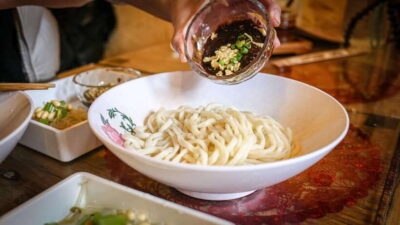
Hidden Gems Guided Food Tour with Beer and Tastings
Read our review →Browse the lists this tour appears in