
Reviewed · FOOD & DRINK
Hong Kong Street Food Tour with Locals – Dim Sum, Wonton & more
Hong Kong’s best food stories are often found between the major sights, in market halls, narrow lanes, tea shops, and small eateries. This three-hour walk takes you through Sheung Wan and Central for dim sum, char siu, egg tarts, wonton noodles, tea, and other local staples, while your guide explains how Hong Kong grew from a port shaped by trade and colonial rule into a financial center.
I like the large range of tastings, which can turn this into a full meal rather than a few token bites. I also like the way the route links food to place, from the dried seafood shops on Wing Lok Street to the old market areas and Central Market. Guides including Summer, Michael, Alice, Stephen, Wind, and Andy are repeatedly praised for making the food and local stories easy to follow.
The main consideration is the menu. Vegetarians and people who avoid seafood or pork will have very few choices, and halal food is not provided. You should also bring water, since one three-hour outing left a guest wishing more had been supplied.
Key points at a glance
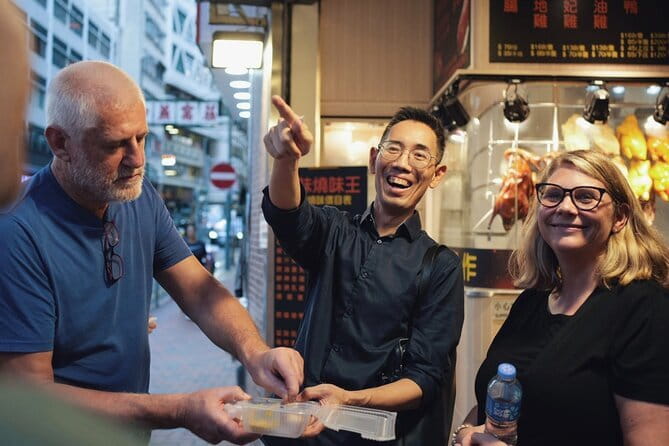
- A meal-sized tasting route: Expect dim sum, roast pork, egg tarts, wonton noodles, teas, milk tea, and egg waffles.
- Food tied to Hong Kong places: The walk passes dried seafood shops, Sheung Wan Market, Bonham Strand West, Possession Street, Gilman’s Bazaar, and Central Market.
- Guides bring different strengths: Summer, Michael, Alice, Stephen, Wind, Andy, Jasmine, Isaac, and others are named in the booking information and feedback.
- A useful first-day activity: The food and neighborhood explanations can help you understand Hong Kong basics early in your stay.
- A moderate walking commitment: The pace includes frequent food stops, but you still need a reasonable level of fitness.
- Good value at $52.51: Tastings and a professional local guide are included, with no hotel transfer.
A food tour that also explains Hong Kong
This is not simply a march from one snack counter to another. The route uses food to explain Hong Kong’s past and present.
At Wing Lok Street, dim sum connects to the old idea of portable food for travelers along the Silk Road, then to modern life around MTR stations. At Bonham Strand West, the guide discusses how the 1953 Korean War trade embargo hurt Hong Kong’s economy and pushed merchants toward new forms of business.
That approach gives the tour more weight than a list of dishes. You get to taste what people eat, then see the streets and markets that help explain why those foods matter.
The route also helps with a common Hong Kong problem: the city has more food choices than you can sort through in a short visit. Instead of relying on a map or spending an afternoon comparing online recommendations, you follow someone who handles the route, ordering, and translation.
The listed start time is 3:00 pm, which works well as a late lunch and early dinner. You should arrive hungry, but perhaps not completely empty. There is enough food that several people found themselves full by the end.
A few more Hong Kong trips to weigh up
- Hong Kong’s Tin Hau Hidden Eats Food Tour with 7+ Local Tastings
★ 5.0 · 352 reviews - Small-Group Hong Kong Island Food Tour
★ 5.0 · 343 reviews - Hong Kong Food Tour: Central and Sheung Wan Districts
★ 5.0 · 333 reviews
Dim sum and dried seafood on Wing Lok Street
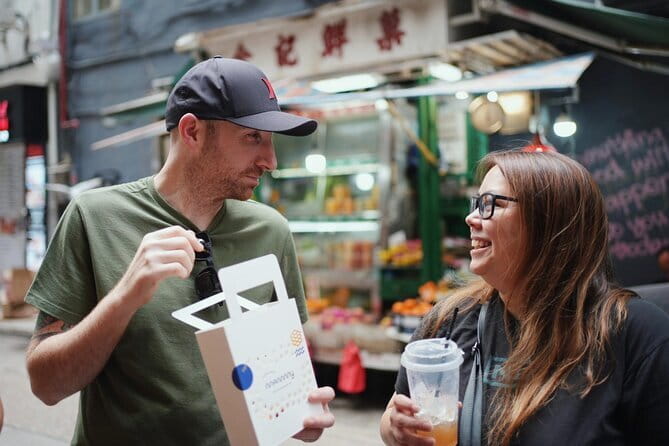
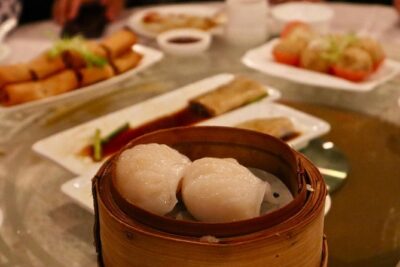
The first stop is Wing Lok Street, where you taste har gow, the translucent shrimp dumplings served in bamboo baskets. This is a smart opening dish: it introduces Cantonese dim sum in a familiar form, while the guide explains how dim sum changed from portable nourishment into a central part of Hong Kong’s snack and tea culture.
The portion size is not specified, so do not assume you will receive a full restaurant order for yourself. Still, the repeated comments about the amount of food suggest that the tasting program is generous overall.
The next stop stays on Wing Lok Street but changes the subject from ready-to-eat food to ingredients. This is Hong Kong’s dried seafood market, with products such as shark fin, bird’s nest, and cordyceps.
You may find this section more interesting than appetizing, depending on your tastes. It is useful because it shows how certain foods became linked with prosperity and Cantonese tradition. The guide can also translate signs and explain products that would be difficult to understand on your own.
Sheung Wan’s milk tea and postwar comfort food
At Sheung Wan Market and Cooked Food Centre, the tour turns to cha chaan teng food. You taste smooth Hong Kong milk tea and crispy peanut butter French toast.
This stop captures Hong Kong’s habit of adapting outside influences into local food. The French toast is not presented as a formal European dish. It is a postwar Hong Kong creation, adjusted into a sweet, filling café favorite.
The combination also adds variety after the shrimp dumplings and dried seafood discussion. The drawback is that the route contains a fair amount of bread, pastry, noodles, and other carbohydrates. One guest felt the sequence included too many sweets and starches and would have preferred a more orderly progression from savory dishes to dessert.
I would treat the meal as a series of separate tastings rather than a traditional menu. The route does not necessarily move from starter to main course to dessert. You might have a sweet item before barbecue pork or noodles, so keep an open mind about the order.
Bonham Strand West and the city’s trading past
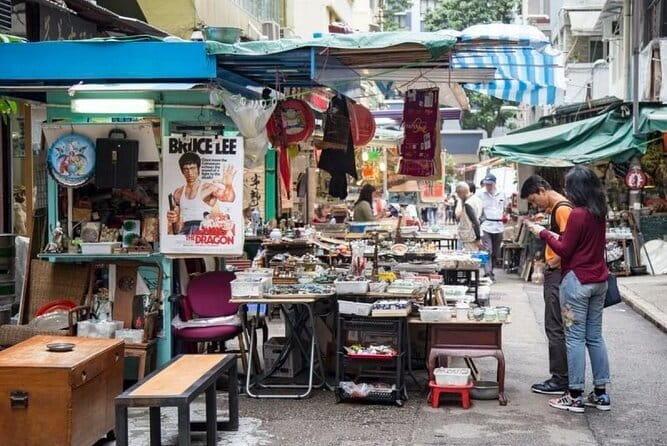
Bonham Strand West is a short history stop rather than a tasting stop. Here, the guide explains how the 1953 trade embargo affected Hong Kong and how local merchants adapted when older trading opportunities collapsed.
The story gives context to the streets around you. Hong Kong’s commercial identity did not appear fully formed. It developed through pressure, trade, immigration, political change, and practical business decisions.
This is also where the guide’s personal style matters. Michael is praised for explaining ingredients, cooking methods, and the wider context around each dish. Others, including Wind and Summer, are praised for connecting food with Hong Kong Island’s past and everyday culture.
Because the tour may have up to 20 people, the experience will not feel like a private walk. A group of that size can make conversation and ordering a little less nimble, but the frequent stops help keep the pace moving.
Same country, a completely different kind of day:
- Hong Kong: Dolphin Cruise, Big Buddha & Lantau Island Tour
★ 4.2 · 1,512 reviews - Ngong Ping 360: Cable Car Return Tickets & Combos
★ 4.6 · 1,431 reviews - Lantau Island Day Trip – Big Buddha & Tai O
★ 4.5 · 1,328 reviews - Big Bus Hong Kong Open Top Hop-On Hop-Off Sightseeing Tour
★ 4.0 · 1,077 reviews
Char siu and egg tarts near Possession Point
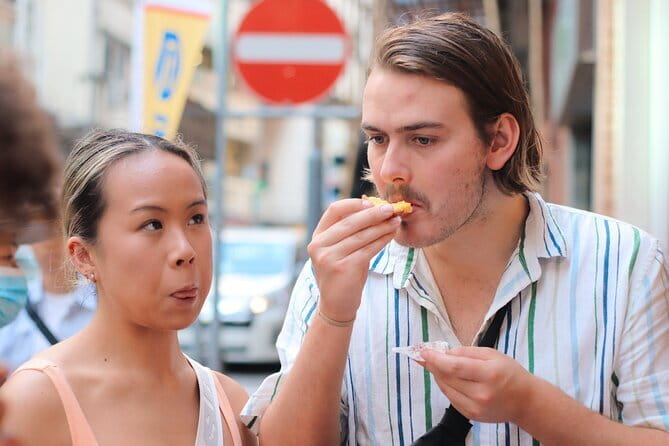
On Queen’s Road West, you watch Cantonese barbecue being prepared, with char siu as the featured dish. The tour focuses on the glossy, crackling surface and the cooking traditions associated with Possession Point, an area tied to the British takeover of Hong Kong in 1842.
Char siu is one of the most useful dishes to try with a guide because its appearance does not tell you much about its flavor. The guide can explain how the meat is seasoned and prepared, while the setting connects it to old neighborhood food shops.
Next comes an egg tart on Possession Street. The tour explains the Cantonese version as a 1920s lard-pastry innovation, distinct from Portuguese custard tarts.
This is a small but worthwhile distinction. Hong Kong’s egg tart is not just a copy of a Portuguese sweet. It reflects the city’s habit of reshaping outside ideas for local tastes and available ingredients.
These stops are especially useful if you want to return later for a fuller meal. You learn which dishes to recognize, how they fit into local food culture, and what kinds of shops to notice as you walk around Hong Kong on your own.
Herbal tea and the Cantonese approach to balance
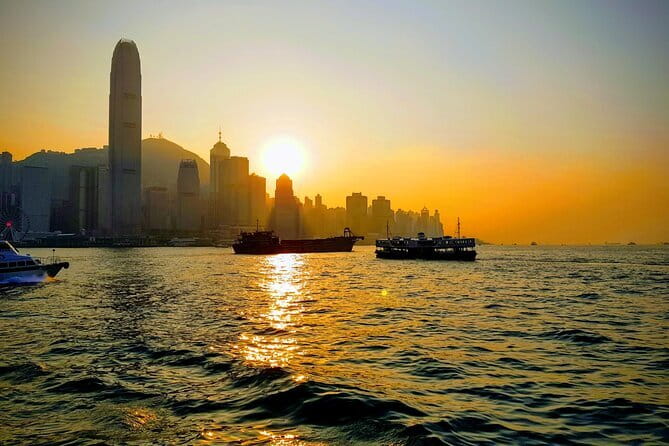
The herbal tea stop offers one of the more unusual tastes on the route. You may try traditional drinks described as toxin-clearing, including Five Flowers tea.
The guide presents these brews through the ideas of Traditional Chinese Medicine, especially balance and adapting to Hong Kong’s climate. You do not need to accept every health claim to appreciate the cultural role of these drinks. They are part of a long tradition of using herbs, bitterness, sweetness, and temperature in everyday food and drink.
For some people, this will be a highlight because it is less familiar than dim sum or egg tarts. For others, herbal tea can be an acquired taste. The included tasting gives you a low-risk way to try it without buying a large packet or guessing what to order.
Wonton noodles in Central
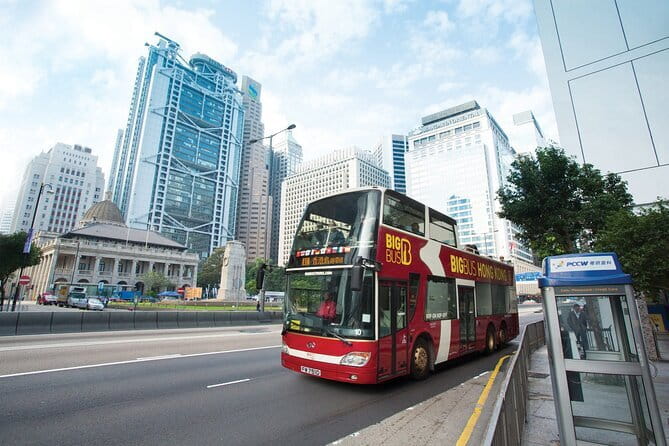
Queen’s Road Central brings one of the tour’s heartier dishes: wonton noodles with shrimp-filled dumplings in an amber monkfish broth.
This is the point where the walk feels most like dinner. The tour explains how wonton noodles developed from small theater snacks into a substantial bowl, and how a refugee chef’s reinvention helped shape the version associated with Hong Kong.
The historical thread is useful here because it keeps the dish from being reduced to a simple bowl of noodles. Food changes when people move, businesses adapt, and ingredients become available in new places.
A bowl of soup and noodles also helps balance the earlier pastries and sweets. Still, if you dislike fish or seafood, this stop will be a serious problem. Seafood is not a minor theme on this route. It appears in the har gow, the dried seafood market, and the wonton broth, while pork features in the char siu and other local dishes.
Pu-erh tea at Gilman’s Bazaar
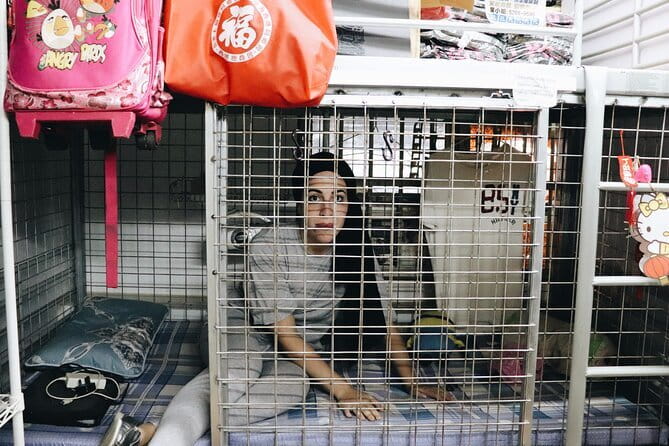
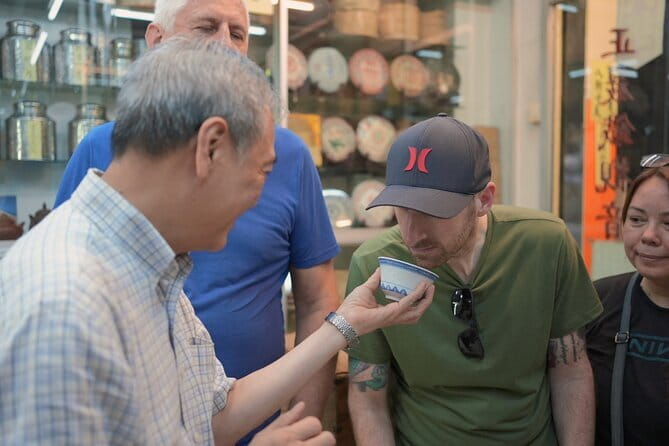
At a Chinese tea house near Gilman’s Bazaar, the group handles aged pu-erh tea cakes, including cakes valued at as much as HK$80,000. The guide explains ritual brewing in unglazed clay pots and how repeated infusions reveal different layers of flavor.
This is one of the route’s strongest cultural stops because it slows things down. You are not simply drinking tea. You are learning why age, storage, brewing method, and repeated infusions matter to tea drinkers.
The expensive cakes also show how tea can be both an everyday drink and a collectible luxury product. You should not expect a full tea ceremony in a private room, since the exact format is not specified, but you will get an introduction to the practice and the products.
If you are buying tea in Hong Kong, this background can help you ask better questions. It also gives you a clearer sense of why some cakes cost ordinary grocery prices while others are treated as valuable goods.
Finishing with the egg waffle at Central Market
The tour ends at Central Market with Hong Kong’s egg waffle. Its crisp, honeycomb-like shell and softer center make it an easy final bite, especially after the savory noodles and tea.
The story here is one of resourcefulness. The egg waffle is linked to 1950s ingenuity and the use of leftover lard and cracked eggs. Like the French toast earlier in the walk, it shows how Hong Kong food often grew from practical cooking rather than grand restaurant planning.
Ending at Central Market is convenient. The meeting point is at Grand Millennium Plaza Garden on Queen’s Road Central in Sheung Wan, and the tour finishes at Central Market, 93 Queen’s Road Central, between Queen’s Road and Cochrane Street.
That location makes it easy to continue exploring Central after the tour. The activity does not include hotel pickup or drop-off, so you handle your own transport at both ends. The start is near public transportation, and one airport layover visitor found the airport train and a short taxi ride practical for reaching the meeting point.
How much food do you receive for $52.51?
At $52.51 per person, the price is strong if you value both food and explanation. Tastings are included, along with a professional local guide, and the route covers ten stops or points of interest over about three hours.
You are paying for more than the raw cost of dumplings and tea. The fee also covers planning, translation, navigation, and access to small food stops that may be hard to identify during a short visit.
The value drops if you eat very little, avoid seafood and pork, or prefer to choose every dish yourself. It is also not the best match for someone looking for a sit-down restaurant meal with a fixed sequence.
The amount of food is a major feature. Several guides are praised for making sure everyone had enough, and multiple comments advise arriving hungry. At the same time, bring your own water. The supplied information does not say that bottled water is included, and one three-hour outing lacked it.
Guide style and group experience
The guide can shape the outing as much as the food. Summer is praised for warmth and clear information. Michael is noted for personal stories and detailed explanations of ingredients and cooking. Alice is described as enthusiastic, and Stephen is praised for making the route easy to follow.
Wind receives particular credit for helping a participant manage a tree-nut and peanut allergy. That does not mean the tour is automatically safe for every allergy. You should still disclose allergies before eating and confirm each dish with the guide.
Jasmine, Andy, Isaac, and other named guides are also associated with friendly, informative walks. Isaac reportedly has the group introduce themselves, which can make a group tour feel more social.
The tour allows up to 20 people. That is small enough for a guide to lead a coherent walk, but large enough that you should expect a shared group setting rather than constant individual attention.
Who should book this Hong Kong food walk?
I would book this early in a Hong Kong stay. The route gives you a working introduction to dim sum, cha chaan teng food, barbecue, egg tarts, wonton noodles, herbal tea, pu-erh, and egg waffles. It also helps you understand how food connects to trade, migration, colonial rule, and local business.
It suits first-time visitors who want someone else to handle the route and ordering. It is also useful for a short stopover, provided your timing allows you to reach Sheung Wan for the 3:00 pm start.
You need moderate physical fitness because there is a fair amount of walking. The pace is broken up by frequent stops, and one account describes it as an easy walk, but it is still a three-hour outing on foot.
I would skip it if you are vegetarian, require halal food, or avoid seafood and pork. The tour provider specifically says vegetarian options are not suitable and halal food will not be provided.
Free cancellation is available up to 24 hours before the local start time. If poor weather cancels the outing, you can choose another date or receive a full refund. Last-minute cancellations and changes are not accepted.
Should you book it?
Book this tour if you want a filling introduction to Hong Kong food with local context, not just a snack crawl. The strongest reasons are the range of tastings, the guide-led navigation through Sheung Wan and Central, and the chance to connect ordinary dishes with the city’s complicated past.
Go prepared: skip a heavy meal, carry water, wear comfortable shoes, and expect seafood, pork, sweets, and noodles in no fixed dining order. For the right eater, $52.51 is a fair price for three hours of food, translation, neighborhood orientation, and stories you might not find on your own.
FAQ
How long does the Hong Kong Street Food Tour last?
The tour lasts approximately three hours.
What time and where does the tour start?
It starts at 3:00 pm at Grand Millennium Plaza Garden, Grand Millennium Plaza, Queen’s Road Central, Sheung Wan, Hong Kong.
Where does the tour finish?
The tour ends at Central Market, 93 Queen’s Road Central, Central, between Queen’s Road and Cochrane Street.
What food is included?
Included tastings may include har gow, milk tea, peanut butter French toast, char siu, egg tarts, herbal tea, wonton noodles, pu-erh tea, and egg waffles.
Is the tour suitable for vegetarians or people seeking halal food?
No. The tour is listed as unsuitable for vegetarians, and halal food will not be provided.
How many people can join the tour?
The maximum group size is 20 people.
Can I cancel for a full refund?
Yes. You can cancel at least 24 hours before the experience start time for a full refund. If bad weather causes the tour to be canceled, you will be offered another date or a full refund.
Just added around Hong Kong
- Hong Kong Airport to Hong Kong City Private Arrival Transfer★ 4.5 · 3 reviews
- Hong Kong Observation Wheel Ticket★ 5.0 · 3 reviews
- Hong Kong Palace Museum Ticket★ 5.0 · 3 reviews
- Hong Kong Peak Tram and Sky Terrace 428 Tickets (Optional)★ 3.5 · 22 reviews
- Hong Kong Market Walking Tour & Chinese Cooking Class★ 5.0 · 24 reviews
- Hong Kong : Must-See Attractions Walking Tour With A Guide★ 5.0 · 7 reviews
- Hong Kong Private Walking Tour with a Local★ 5.0 · 6 reviews
- Hong Kong: Lantau Island & Tai O Cruise, Skip The Line Cable Car★ 3.5 · 4 reviews
Food & Drink, compared.

Authentic Local Food Tour in Central Shanghai
Read our review →
Beijing Hutong Walking Food and Beer Tour at Hidden Restaurants
Read our review →

Hong Kong’s Tin Hau Hidden Eats Food Tour with 7+ Local Tastings
Read our review →

Hong Kong Food Tour: Central and Sheung Wan Districts
Read our review →Browse the lists this tour appears in