
Reviewed · MUSEUMS
Hong Kong Palace Museum Ticket
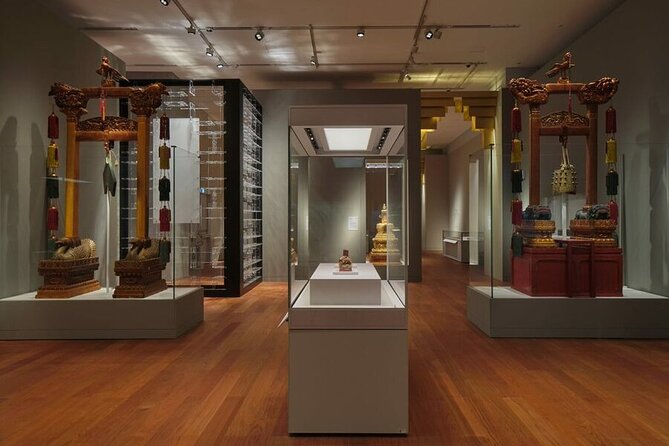
The Hong Kong Palace Museum puts priceless imperial objects in a calm, modern setting at the western end of West Kowloon Cultural District. Inside Galleries 1 through 7, you will see Chinese ceramics, paintings, calligraphy, and court objects covering more than 5,000 years of art and culture. The building also gives you broad views toward Victoria Harbour.
I like the timed entry, which should make it easier to view delicate objects without being pushed along by a large crowd. I also like the range of material: the Clay to Treasure porcelain display and From Dawn to Dusk look at two very different sides of China’s past. The main limitation is that this ticket excludes special exhibitions in Galleries 8 and 9, so check the current exhibition plan before booking.
Key points
- Galleries 1 through 7: General admission covers the museum’s main thematic displays, but not Galleries 8 and 9.
- Imperial treasures: See ceramics, paintings, calligraphy, and objects connected with the Palace Museum in Beijing.
- Clay to Treasure: A strong stop for anyone interested in the technical skill and beauty of Chinese porcelain.
- From Dawn to Dusk: Learn about daily life inside the Forbidden City through objects and exhibition themes.
- West Kowloon setting: The modern building sits at the western tip of the cultural district, with views toward Victoria Harbour.
- Timed, date-specific entry: Bring your passport or other valid photo ID, and have the electronic ticket ready on your phone.
Why the Hong Kong Palace Museum is worth your time
This is not a quick room of old vases. The Hong Kong Palace Museum uses several galleries to show how objects fit into Chinese court life, artistic traditions, and changing ideas about craftsmanship.
You will find hundreds of treasures connected with the Palace Museum. Some are being shown in Hong Kong for the first time, while others have not previously been displayed for the public. That gives the museum real weight, even if you are not an expert in Chinese art.
I like museums that let objects carry the story, and this one gives you plenty to look at. A single ceramic piece can show technical control, court taste, trade links, and social rank. A calligraphy work can tell you as much about style and discipline as it does about the words on the page.
The museum also takes a Hong Kong viewpoint rather than simply copying a Beijing collection. Its displays connect Chinese art with a wider international setting, and the program changes over time. That makes it useful for a first visit to Hong Kong, but also worth considering if you return later.
A few more Hong Kong trips to weigh up
- Beijing: Tianmen Square, Forbidden City & Royal Museum Tours
★ 4.6 · 1,288 reviews - Half-Day Mini Group Xian Tour to Terracotta Warriors Museum
★ 5.0 · 467 reviews - Beijing:Jingshan Park (Palace Museum Garden) Ticket
★ 4.5 · 185 reviews
Starting at West Kowloon’s western tip
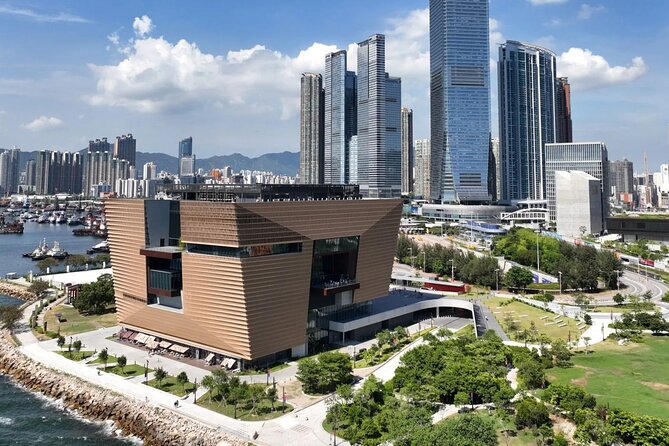
The museum is located at the western end of the West Kowloon Cultural District. You will not be visiting an old palace building. Instead, the collection is presented inside a modern structure inspired by Beijing’s Forbidden City.
That contrast is part of the appeal. The objects are centuries old, while the building is spacious and contemporary. You get a clear sense that the museum is presenting the imperial past for a modern Hong Kong audience, not pretending that you have been transported to the Ming or Qing courts.
The position also adds something outside the galleries. The building offers panoramic views of Victoria Harbour, so it is worth looking outward between exhibitions. Those views provide a welcome change after close study of small objects and fine brushwork.
The museum is near public transportation, but this admission ticket does not include pickup or drop-off. You arrange your own way there and back. The location is easy to pair with other West Kowloon Cultural District plans, although the museum itself can take much of a day if you read labels carefully and pause at the major displays.
What Galleries 1 through 7 cover
General admission gives you access to Galleries 1 through 7. These are the core galleries, arranged around themes rather than one simple march through dates.
That matters because Chinese art covers a very long period. A strict chronological display can become a blur of dynasties and names. The thematic approach gives you different ways to understand the collection, from materials and technique to life inside the imperial court.
You may see:
- Ming and Qing dynasty ceramics
- Chinese calligraphy
- Paintings
- Court artifacts
- Objects connected with imperial life
- Treasures from the Palace Museum
The information provided for each display will guide your visit, but you should give yourself time. The most valuable part of a museum like this is often the second look. On the first pass, you notice color, shape, and size. On the second, you start to see details in a painted landscape, a glaze, or a piece of court decoration.
The ticket is general admission rather than a guided tour. No guide name or guided commentary is included, so you should expect to explore at your own pace. That suits independent visitors who like to stop where they wish, though anyone wanting detailed interpretation from a specialist should know that it is not part of this product.
Clay to Treasure and the skill of porcelain
Clay to Treasure is one of the clearest reasons to choose this museum ticket. The display focuses on porcelain, a material that looks simple until you study the precision behind it.
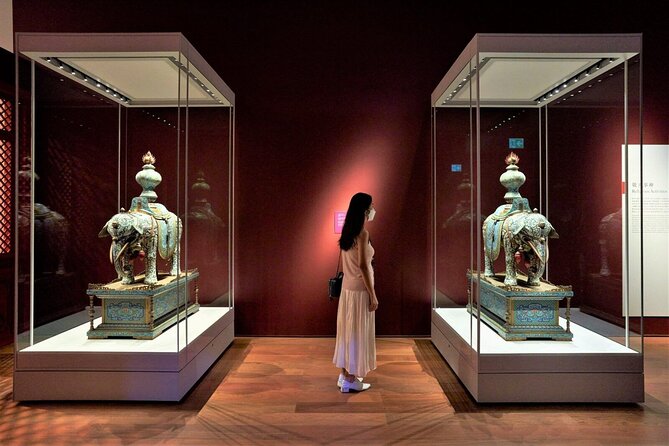
You can expect exquisite pieces associated with Chinese ceramic traditions, including works from the Ming and Qing periods. These objects are not only decorative. Their forms, colors, glazes, and painted details reveal the demands placed on court artisans.
I find porcelain especially good for visitors who think they are not interested in art museums. You can begin with straightforward questions. How thin is the vessel? How even is the color? How detailed is the decoration? How difficult would it have been to fire and finish the piece?
The name Clay to Treasure points to that transformation from raw material to prized object. The display should help you see why ceramics were valuable, not just because they were attractive, but because they required control over materials and an advanced production process.
Take your time here rather than treating the cases as a row of similar bowls. Small differences matter. A formal court object and a more practical vessel can look related while serving very different purposes.
Same country, a completely different kind of day:
- Hong Kong: Dolphin Cruise, Big Buddha & Lantau Island Tour
★ 4.2 · 1,512 reviews - Ngong Ping 360: Cable Car Return Tickets & Combos
★ 4.6 · 1,431 reviews - Lantau Island Day Trip – Big Buddha & Tai O
★ 4.5 · 1,328 reviews - Big Bus Hong Kong Open Top Hop-On Hop-Off Sightseeing Tour
★ 4.0 · 1,077 reviews
From Dawn to Dusk inside the Forbidden City
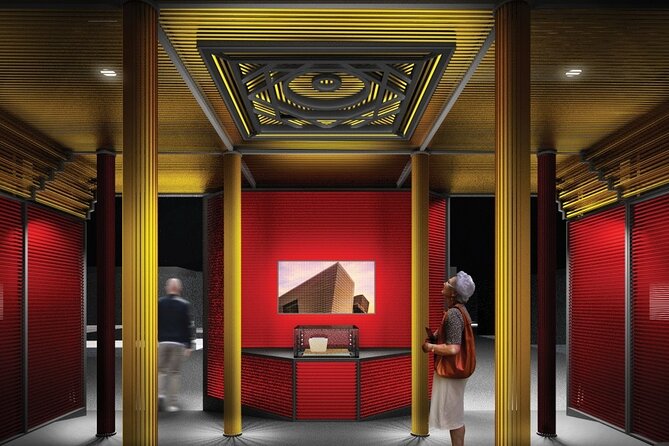
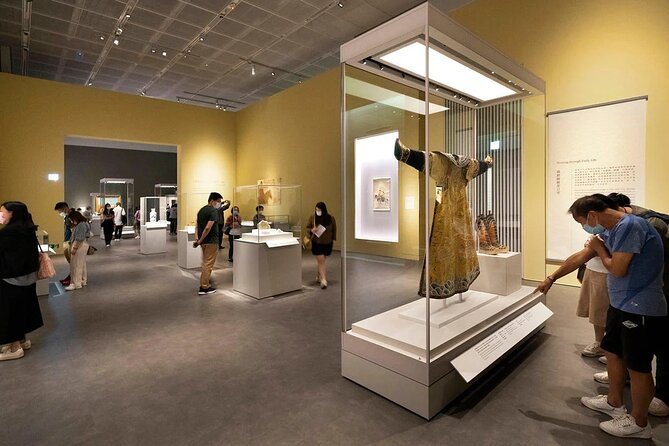
From Dawn to Dusk offers a different kind of visit. Instead of focusing mainly on artistic technique, it gives you a sense of life within the Forbidden City.
The title suggests a day-long rhythm, and the exhibition theme helps turn imperial objects into clues about people and routines. The Forbidden City is often imagined as a grand collection of buildings, but court life depended on schedules, ceremonies, work, and strict rules. This display helps connect those large ideas with the objects used around them.
I would place this gallery high on your list if you are visiting Hong Kong with family or if you want more than a parade of beautiful objects. Daily-life themes give children and first-time museum visitors a clear way in. Ask what an object was for, who handled it, and what its presence says about the court.
The exhibition also balances the grandeur of imperial life with its formality. These were not simply rooms filled with luxury. They were controlled spaces where rank and behavior mattered. That context makes the paintings, ceramics, and artifacts elsewhere in the museum easier to understand.
Ming and Qing treasures beyond the display cases
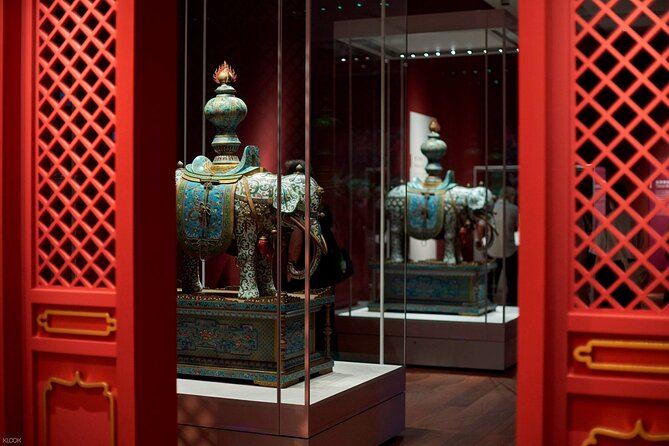
The Ming and Qing collections are a major part of the museum’s appeal. These dynasties produced objects that remain central to the way many people picture Chinese court art: elegant ceramics, careful brushwork, and highly finished decorative objects.
You will see more than attractive surfaces. Calligraphy can show movement and control in the brush. Paintings can reveal how artists handled space, nature, and human presence. Court artifacts can point to ceremony, status, and the daily machinery of imperial life.
I suggest looking for contrasts rather than trying to remember every date. Notice the difference between a forceful brush line and a delicate one. Compare a restrained design with one covered in decoration. Think about what each object may have communicated to the person who owned or used it.
The museum’s approach is also helpful for visitors who do not know Chinese history. You do not need a long list of emperors to appreciate the objects. Start with material, use, and detail, then add the historical setting as you go.
A peaceful visit, with time to look closely
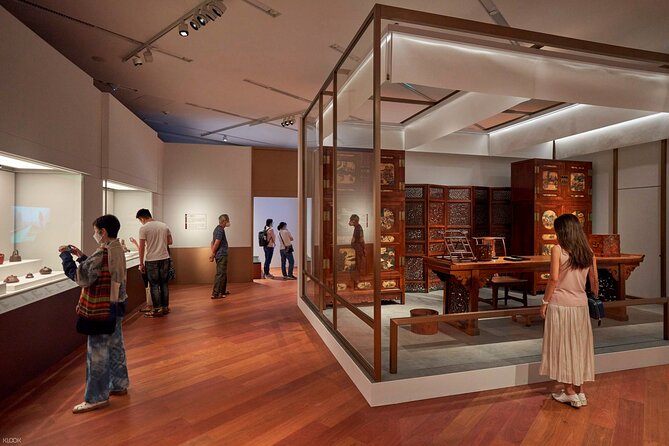
A museum filled with priceless objects can easily become tiring if the rooms are crowded or noisy. The timed entry system is designed to control arrival times, and the experience is known for a peaceful atmosphere. That is important here because many of the best details are small.
You can linger over a porcelain pattern or study a section of calligraphy without feeling that you are blocking a moving line. The calm setting also suits older visitors, families, and anyone who prefers a slower cultural day.
Still, timed entry is not a guarantee that every moment will be quiet. Popular exhibitions and busy dates can affect the atmosphere. The practical advantage is that you have a scheduled arrival rather than an open-ended admission window.
The approximate duration is listed as 7 to 8 hours. That is a long day for one museum, and you do not need to race through it. Some people will see the main galleries in less time, while art lovers may use the full period. Plan your energy accordingly, especially since food, drinks, and shopping are not included in the ticket.
Paying $15.95 for general admission
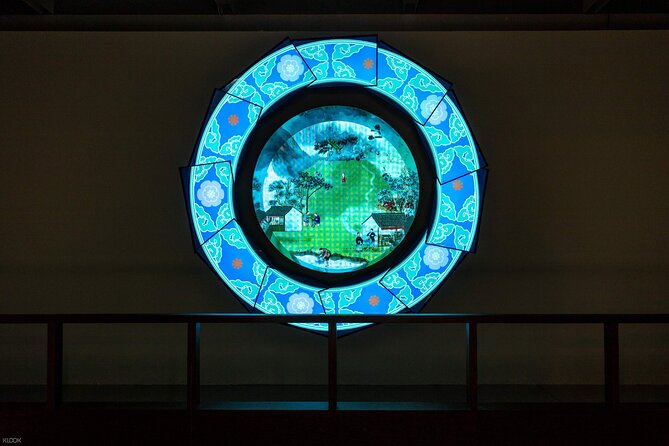
At $15.95 per person, this ticket is priced as a straightforward cultural admission rather than an all-inclusive day tour. You are paying for entry to the main galleries, not transportation, meals, shopping, or personal guiding.
The value depends on how you use the visit. If you spend only an hour looking quickly at the first few rooms, the price may feel less convincing. If you take time with the imperial treasures, porcelain, calligraphy, paintings, and Forbidden City displays, the ticket offers a substantial cultural experience for the cost.
The museum’s scale helps the value. Galleries 1 through 7 give you several themes and a broad period of Chinese art, rather than a single temporary display. The harbor views and modern building add interest, although the collection remains the main reason to come.
Remember that Galleries 8 and 9 are not part of this ticket. If a special exhibition there is your main goal, general admission will not cover it. Check what is showing before you pay, since the included galleries and excluded galleries can make a real difference to your plans.
Practical details before you go
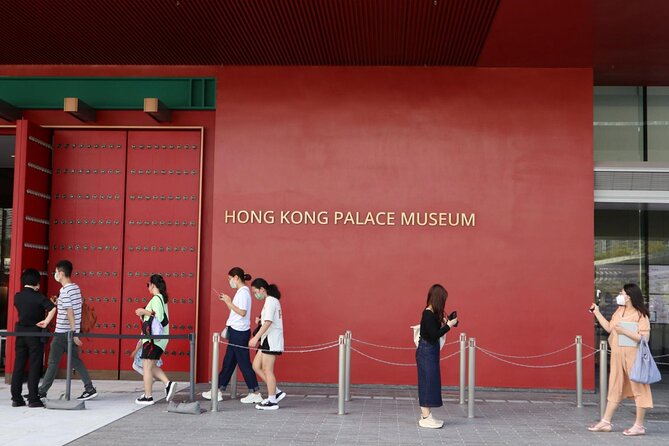
Your ticket is valid only for the date and time you select. Bring a valid passport or other photo ID because identity proof is required at the entrance. Keep the electronic ticket available on your smartphone. It is sent by email by one day before the visit, and you do not need to print it.
Arrive on time. A missed entry is treated as a no-show, with no rescheduling or refund. This is the main practical risk with a timed ticket, so leave enough allowance for getting across Hong Kong and finding the museum entrance.
Children must remain with an adult at all times for safety. Most people can participate, and the museum is near public transportation. Pickup and drop-off from your hotel or other location are not included, so your transport plan is separate.
The booking is non-refundable and cannot be changed for any reason. If poor weather causes the experience to be canceled, you will be offered another date or a full refund. That policy is strict, so choose your date carefully.
Who should book this museum ticket
I would recommend it to first-time Hong Kong visitors who want a serious cultural stop without signing up for a guided group tour. The museum gives you a broad introduction to Chinese art and imperial life, while the timed entry lets you set your own pace.
It is also a good choice for families. From Dawn to Dusk provides a practical way to talk about the Forbidden City, while porcelain and court objects give younger visitors plenty of visual detail to spot. Keep in mind that the possible 7 to 8-hour duration may be too much for some children, so plan a shorter visit if needed.
Art lovers should pay particular attention to the ceramics, calligraphy, and paintings. History fans will get the most from the court-life themes and the objects connected with the Palace Museum.
I would hesitate only if you need transportation, a meal plan, a personal guide, or access to the special exhibitions in Galleries 8 and 9. This is a museum admission ticket, not a full sightseeing package.
Should you book the Hong Kong Palace Museum ticket?
Book it if you want to spend several hours with major Chinese artworks in a quiet, modern setting, and if a self-guided visit suits you. The strongest reasons are the imperial treasures, Clay to Treasure porcelain display, From Dawn to Dusk exhibition, and the Victoria Harbour outlook.
Skip it if your Hong Kong schedule is too tight for a museum of this size, or if the special displays in Galleries 8 and 9 are essential to you. Check the date, entry time, and exhibition details before booking, then bring your ID and arrive promptly. For the right visitor, $15.95 buys a thoughtful look at China’s artistic and imperial past, not just a quick indoor stop.
FAQ
What does the Hong Kong Palace Museum ticket include?
It includes general admission to Galleries 1 through 7 at the Hong Kong Palace Museum.
Does the ticket include Galleries 8 and 9?
No. Special exhibitions in Galleries 8 and 9 are not included with this general admission ticket.
How much does the ticket cost?
The listed price is $15.95 per person.
How long does the experience last?
The approximate duration is 7 to 8 hours.
Do I need to bring identification?
Yes. You must bring a valid passport or other valid photo ID and show it at the entrance.
Can I use a mobile ticket?
Yes. The electronic ticket is sent by email by one day before the tour date, and you can show it on your smartphone without printing it.
What happens if I arrive late or miss my entry time?
Failure to report on time is treated as a no-show. No rescheduling or refund is provided.
Is food or transportation included?
No. Food, drinks, shopping, and pickup or drop-off from your home, hotel, or other location are not included.
Just added around Hong Kong
- Hong Kong Airport to Hong Kong City Private Arrival Transfer★ 4.5 · 3 reviews
- Hong Kong Observation Wheel Ticket★ 5.0 · 3 reviews
- Hong Kong Peak Tram and Sky Terrace 428 Tickets (Optional)★ 3.5 · 22 reviews
- Hong Kong Market Walking Tour & Chinese Cooking Class★ 5.0 · 24 reviews
- Hong Kong : Must-See Attractions Walking Tour With A Guide★ 5.0 · 7 reviews
- Hong Kong Private Walking Tour with a Local★ 5.0 · 6 reviews
- Hong Kong: Lantau Island & Tai O Cruise, Skip The Line Cable Car★ 3.5 · 4 reviews
- Best Seller: VIP Lantau Tai O Tour Priority Cable Car, Big Buddha★ 4.5 · 28 reviews
Museums, compared.

Tianmen Square, Forbidden City & Royal Museum Tours
Read our review →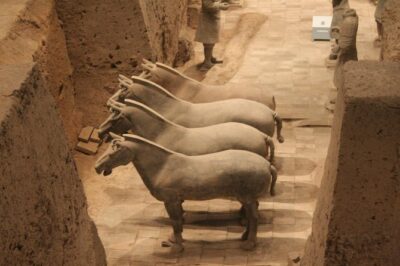
Half-Day Mini Group Xian Tour to Terracotta Warriors Museum
Read our review →
Beijing:Jingshan Park (Palace Museum Garden) Ticket
Read our review →
Private Chengdu Day Tour: Giant Pandas and Jinsha Site Museum
Read our review →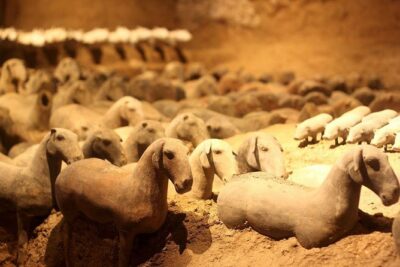
Private Xi’an Tour: Terracotta Warriors, Hanyangling Museum, Cave Homes
Read our review →
Beijing Half Day: National Museum of China In-depth Tour with Subway Transfer
Read our review →
Terracotta Warriors Museum Ticket with Professional English-speaking tour guide
Read our review →Browse the lists this tour appears in