
Reviewed · WORKSHOPS
Photography Workshop and Photowalk (FIND YOUR DIRECTION)
Hong Kong becomes your classroom in this compact workshop, which moves from a coffee-shop discussion to a street photowalk through local markets. Thomas Bertson covers photographic identity, composition, framing, and practical camera use, then gives you a chance to test those ideas in real city scenes.
I like the small maximum group of six, which leaves room for individual help, and I like the balance between ideas and practice. The workshop is not just a photo tour. It asks you to think about why you make an image, then gives you a city full of people, signs, stalls, and changing light to work with.
The main consideration is the price: $196.46 per person for about three hours is a serious outlay. It makes the most sense if you want instruction from an active photographer, not simply a guided walk with a camera in hand.
Key Points at a Glance
- Coffee-shop theory first: Begin with a discussion of photographic aesthetics, identity, composition, and camera technique before heading outside.
- Street practice in local markets: Use Hong Kong’s markets and everyday scenes as your working material instead of relying on staged attractions.
- Thomas Bertson leads the session: He is a Hong Kong-based photographer, educator, and regular VOGUE contributor who published his first book, Hong Kong, in 2020.
- Suitable for beginners and experienced photographers: A willingness to learn matters more than a particular number of years behind a camera.
- Small group, hands-on format: The group is capped at six people, making direct guidance more likely than on a large group tour.
- Bring light gear and good shoes: A camera with manual settings is suggested, along with a comfortable pair of shoes for the walk.
Starting at Pacific Coffee in Mei Foo
You meet Thomas at Pacific Coffee, shops G04 to 05 on the ground floor of Manhattan Mid-Town at 1 Po Lun Street in Mei Foo, Sham Shui Po. The location is near public transportation, but you should allow enough time to find the exact shop inside the building.
The workshop begins at a table rather than on a street corner. That is a useful choice. You can settle in, check your camera, and ask questions before the city starts competing for your attention. The coffee-shop setting also gives the opening discussion a relaxed feel, though the supplied details do not say that a drink is included in the price.
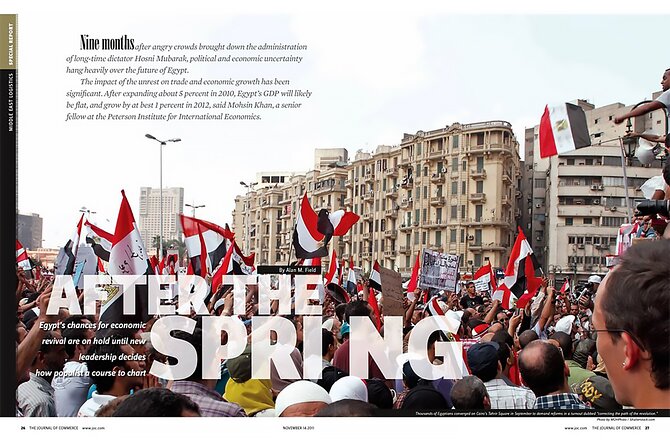
Thomas brings an unusual professional background to the session. He began photographing still life and portraits in 2008, later moved toward documentary projects, and covered the Arab Spring in 2011 and Prison Escape in 2012. Hundreds of his images from the former project were published, and he has contributed regularly to VOGUE since 2013.
That background matters because this is not framed as a camera settings class alone. Thomas has worked with arranged subjects, portraits, and fast-moving documentary situations. You can expect the discussion to connect technical choices with the feeling and purpose of an image.
A few more Hong Kong trips to weigh up
- Victoria Harbour Yacht Night Cruise – DREAMER:Tourguide & Photos
★ 4.0 · 58 reviews - Gran Canaria Full Private Photography Experience
★ 5.0 · 26 reviews - Beijing: Must-Try Chinese Ancient Costume Rental& Photoshoot
★ 4.9 · 26 reviews
Finding Your Photographic Direction
The workshop’s central idea is photographic identity. Instead of treating photography as a list of rules, Thomas asks you to think about what you want your images to communicate and what subjects draw your attention.
For a beginner, that can be more useful than memorizing a long list of camera functions. You may learn how aperture, shutter speed, and other manual controls work, but the larger question is when and why you should use them. A camera is a tool. Your choices need to serve your idea rather than control it.
For an experienced photographer, this discussion can help break habits. You might already know how to expose a scene, but still find that your pictures feel repetitive. Talking about photographic identity can push you to make more deliberate choices about subject, distance, timing, and framing.
The theory also covers basic photographic aesthetics. That means the workshop looks beyond sharpness and correct exposure. You consider what makes an image pleasing, tense, balanced, quiet, or memorable. The available information does not promise a formal classroom presentation or a technical handout, so you should come ready to discuss, listen, and test ideas rather than expect a rigid course.
Composition and Framing Before the Walk
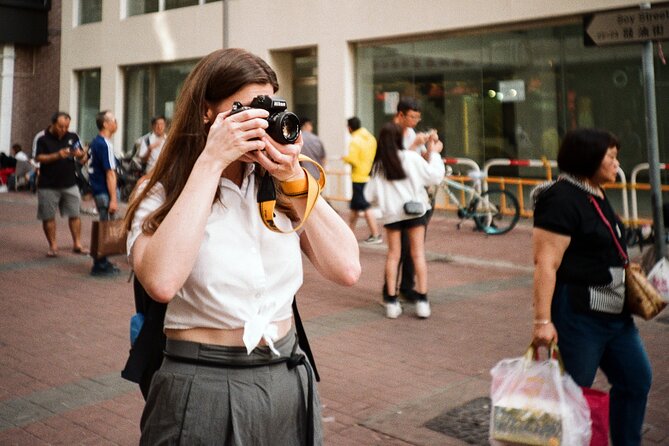
Composition is one of the most useful subjects for a short workshop because you can apply it immediately. Thomas covers compositional techniques and framing that can strengthen an image, then takes you outside to put them to work.
You may look at how lines guide the eye, how much space to leave around a subject, and how a busy scene can be organized within the frame. Markets are especially helpful for this kind of practice because they present layers of signs, merchandise, people, stalls, colors, and movement in a small area.
The goal is not to make every photograph orderly. Sometimes a crowded frame is exactly right. The important lesson is to decide if the clutter supports your idea or simply got in the way.
Framing can also change your relationship with a subject. A wide view may show a person as part of a neighborhood, while a tighter crop may focus on gesture or expression. In a city such as Hong Kong, you have many ways to describe the same place. This session encourages you to choose rather than simply point and shoot.
Making Your Camera Serve the Picture
Thomas also discusses how to use your equipment in service of your vision and how to work around technical limits. That is a practical lesson for anyone who has bought more camera equipment than they know how to use.
A camera with manual settings is suggested, but you do not need a particular brand or model. The advice to bring the lightest combination possible is sensible. A heavy kit can slow you down, make a three-hour walk tiring, and pull your attention away from the street.
You should not read the manual-settings recommendation as a barrier for beginners. The workshop is explicitly open to people who are new to photography. If you are keen to learn, the session is designed to meet you where you are. Still, you should know that a camera with manual controls gives you more room to follow the technical part of the discussion.
The focus on technical limits is particularly useful on a photowalk. Street scenes change quickly. Light may be poor, subjects may move, and there may be no time to arrange the frame. Learning to make a strong picture with the tools you have is often more valuable than waiting for perfect equipment.
Same country, a completely different kind of day:
- Hong Kong: Dolphin Cruise, Big Buddha & Lantau Island Tour
★ 4.2 · 1,512 reviews - Ngong Ping 360: Cable Car Return Tickets & Combos
★ 4.6 · 1,431 reviews - Lantau Island Day Trip – Big Buddha & Tai O
★ 4.5 · 1,328 reviews - Big Bus Hong Kong Open Top Hop-On Hop-Off Sightseeing Tour
★ 4.0 · 1,077 reviews
From Discussion to Hong Kong Street Life
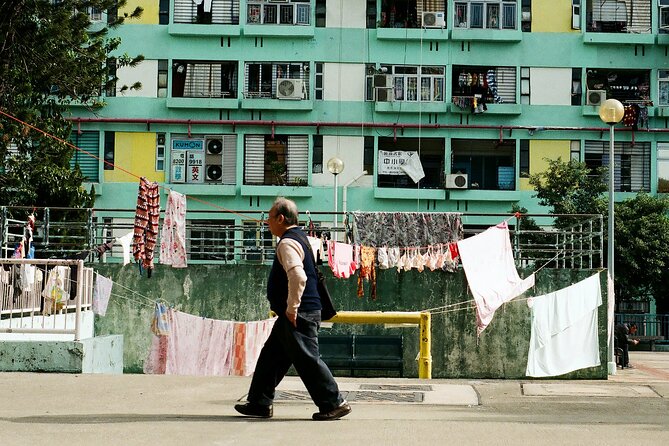
After the coffee-shop conversation, the group heads out for the photowalk. The route explores local areas and markets that convey everyday Hong Kong life. Exact market names and a fixed route are not provided, so the walk appears to depend on the local area and the practical needs of the session.
That flexibility can be a strength. You are not locked into a checklist of famous views. The purpose is to find pictures in ordinary surroundings, where a useful moment may last only a few seconds. Markets provide plenty of material: displays, shopfronts, transactions, textures, gestures, and the small details that make a neighborhood feel lived in.
I like the way the walk connects directly to the opening theory. You are not asked to remember abstract advice until a later day. You can try a framing idea, review what happened, and adjust your approach as the walk continues.
The supplied details do not promise an image review during the walk, so you should not assume a formal critique session. The workshop does, however, describe the practice as constructive, and the small group gives Thomas a better chance to offer individual guidance than a large class would.
A Different Way to See Hong Kong
This is not a sightseeing tour built around major landmarks. Its appeal is the chance to photograph local areas and markets while thinking about how the city presents itself through an image.
That makes it a good match for someone who has already seen the standard Hong Kong sights, but it can also work early in a short visit. One person booked the photowalk during a two-day stay as a way to improve street photography while seeing a part of the city away from the usual tourist path. If your time is limited, the workshop combines a creative activity with a look at everyday surroundings.
The approach also suits photographers who prefer people and place over postcard views. You may find yourself paying closer attention to shop signs, arrangements of goods, passing figures, and the relationship between old and new parts of a neighborhood. The point is not to collect proof that you visited Hong Kong. It is to make photographs with a clearer reason behind them.
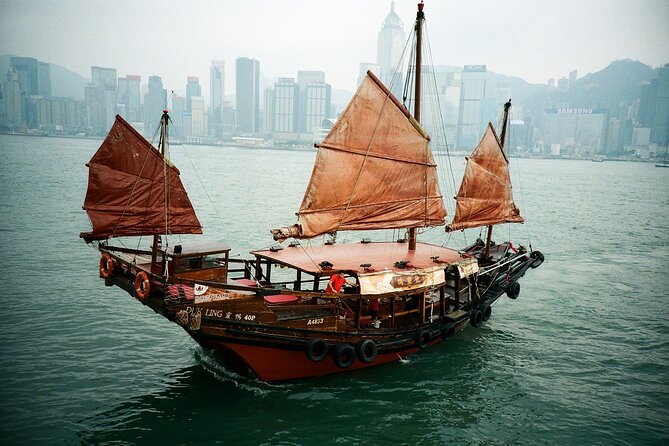
You should keep your expectations grounded. The route is around local areas and markets, but no exact sights are guaranteed. If your main goal is Victoria Harbour or a long list of famous landmarks, this is not the right use of three hours.
What Thomas Bertson Brings to the Session
Thomas works as a photographer and educator in Hong Kong. His experience includes still life, portraits, documentary projects, magazine work, and book publishing. That range can help him speak to different kinds of photographers.
Beginners receive an introduction to basic aesthetics, composition, framing, and equipment choices without needing a long history with cameras. More practiced photographers can use the time to sharpen street work and question their usual habits.
The small group is a major part of the value. With no more than six people, you are less likely to disappear at the back of a crowd. It also creates a better setting for questions, especially when you are unsure why a frame feels weak or how to respond to a difficult scene.
The format is still a group workshop, not a private lesson. Your time with Thomas will be shared with the other participants, and the exact amount of individual direction may depend on the group. Group discounts are available, which may make the booking more attractive if you are coming with friends who also want to photograph.
Is $196.46 a Fair Price?
At $196.46 per person, the cost works out to roughly $65.49 per hour. That is expensive for a simple walk, but the price is easier to justify if you want a focused lesson, an experienced working photographer, and a small group rather than a general city tour.
You are paying for the transition from theory to practice. The opening discussion gives structure to the walk, while the market setting gives you real material to photograph. If you already own a camera and only want to wander through Hong Kong taking pictures, you can do that for far less.
The value improves for a beginner who wants a clear starting point, or for an experienced photographer who wants direct help with street work. It also improves if you take the optional assignment seriously and use the walk to build a small portfolio reflecting different sides of Hong Kong life.
The booking pattern suggests that people often reserve about 24 days ahead. That is not a guarantee of availability, but it is a good reason to plan early if this workshop is important to your schedule. Confirmation is sent within 48 hours, subject to availability.
Gear, Shoes, and Physical Demands
Bring the lightest camera setup that still lets you work comfortably. A camera with manual settings is suggested, but no specific lens, brand, or accessory is required in the provided details.
Comfortable shoes are important. You will walk through local areas and markets, and the activity lasts about three hours. The physical requirement is listed as moderate, so you should be comfortable spending that time on foot.
Keep your equipment simple. A smaller setup makes it easier to move through markets, react to fleeting scenes, and stay engaged with the instruction. Extra gear can be useful, but it can also become a burden when the best picture appears suddenly.
The meeting point and return point are the same Pacific Coffee location. That makes the finish easier to manage, especially if you have another plan afterward. The experience ends back at the starting point rather than leaving you in an unfamiliar part of the city.
Who Should Book This Workshop?
I would choose this for three kinds of people:
- Beginners who want more than button pressing: You get a short introduction to how photographic choices shape an image.
- Photographers improving their street work: The market walk gives you a practical setting for framing, timing, and composition.
- Visitors who want a local view of Hong Kong: You spend time in everyday areas rather than following a landmark-only route.
It may be less suitable if you want a private instructor, a long technical course, or a guaranteed list of famous locations. The three-hour format can introduce useful ideas, but it cannot cover every camera function or create a finished professional portfolio.
The optional portfolio assignment is a nice touch. It gives the walk a purpose beyond the afternoon itself. You can leave with a set of images that reflects different parts of Hong Kong life, then continue the work after the session.
Booking Details That Matter
The experience accepts mobile tickets and offers group discounts. It is capped at six participants and begins and ends at Pacific Coffee in Mei Foo.
Free cancellation is available if you cancel at least 24 hours before the start time. Cancellations or changes made inside that 24-hour window are not accepted for a refund, and the cut-off follows Hong Kong local time.
Plan for confirmation within 48 hours, subject to availability. Since the activity is often booked well ahead, do not leave it until the last day of a short Hong Kong visit.
Should You Book It?
Book this workshop if you want to understand your pictures better, not just take more of them. Thomas Bertson’s mix of documentary, portrait, still-life, magazine, and Hong Kong-based work gives the session a strong practical foundation, while the small group keeps it personal.
The best reason to go is the structure: coffee-shop discussion, then immediate practice in local markets. The main reason to hesitate is the high price for three hours. If you value direct instruction and a thoughtful way to see Hong Kong, it can be worth the cost. If you only want a casual photowalk, save the money and explore on your own.
FAQ
How long does the photography workshop last?
The workshop lasts approximately three hours, including the theory discussion and photowalk.
Where does the activity start?
It starts at Pacific Coffee, Shops G04 to 05, ground floor, Manhattan Mid-Town, 1 Po Lun Street, Mei Foo, Sham Shui Po, Hong Kong.
Where does the activity finish?
The walk ends back at the same meeting point.
Who leads the workshop?
Thomas Bertson leads the workshop. He is a Hong Kong-based photographer and educator, a regular VOGUE contributor since 2013, and the author of the 2020 book Hong Kong.
Is the workshop suitable for beginners?
Yes. The workshop is open to beginners, and interest in learning is more important than a specific level of experience.
What camera should I bring?
A camera with manual settings is suggested. The lightest combination possible is recommended.
What should I wear?
Wear comfortable shoes because the activity includes a walk through local areas and markets.
How many people can join?
The activity has a maximum of six participants.
Is the workshop near public transportation?
Yes. The meeting point is near public transportation.
Can I cancel for a full refund?
Yes, if you cancel at least 24 hours before the experience start time. Cancellations and changes made less than 24 hours before the start time are not accepted for a refund.
Just added around Hong Kong
- Hong Kong Airport to Hong Kong City Private Arrival Transfer★ 4.5 · 3 reviews
- Hong Kong Observation Wheel Ticket★ 5.0 · 3 reviews
- Hong Kong Palace Museum Ticket★ 5.0 · 3 reviews
- Hong Kong Peak Tram and Sky Terrace 428 Tickets (Optional)★ 3.5 · 22 reviews
- Hong Kong Market Walking Tour & Chinese Cooking Class★ 5.0 · 24 reviews
- Hong Kong : Must-See Attractions Walking Tour With A Guide★ 5.0 · 7 reviews
- Hong Kong Private Walking Tour with a Local★ 5.0 · 6 reviews
- Hong Kong: Lantau Island & Tai O Cruise, Skip The Line Cable Car★ 3.5 · 4 reviews
Workshops, compared.

Half-Day Chengdu Cooking Class with a Local Market Visit
Read our review →
Organic Chinese Dumpling Class with Market Walk
Read our review →
Online Cooking Class Beijing Dumplings and Cuisine by Sunflowerli Renowned Chef
Read our review →
Organic Xiao Long Bao Soup Dumpling Class & Market Walk
Read our review →
Beijing Wangfujing Calligraphy Class by Forbidden City
Read our review →Browse the lists this tour appears in