
Reviewed · FOOD & DRINK
Hong Kong’s Tin Hau Hidden Eats Food Tour with 7+ Local Tastings
Tin Hau’s best food is often tucked into ordinary storefronts, not grand dining rooms. This three-hour tour leads you to brisket noodle soup, roast goose, baked dim sum, pineapple buns, local sweets, and more, with neighborhood sights along the way. Come hungry, because seven or more tastings can easily replace a full day of meals.
I like the mix of proper local food and useful orientation, especially for a first day in Hong Kong. I also like the small maximum of 12, which makes it easier to ask questions and get help ordering. The main drawback is the wet market, which includes fresh meat and may feel uncomfortable if you prefer not to see food preparation at its source.
Key points at a glance
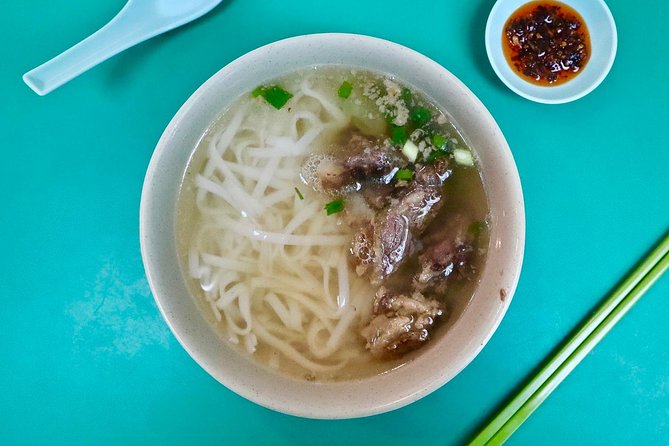
- Seven or more substantial tastings: Expect brisket soup with rice noodles, roast goose with rice and plum sauce, dim sum, fruit, sweets, tea, water, and a secret dish.
- A real Tin Hau neighborhood walk: The route links food stops with Tin Hau Temple, Victoria Park, Lin Fa Kung Temple, Queen’s College, the Central Library, and a wet market.
- A useful first-day choice: Your guide can explain unfamiliar dishes and point out places you might otherwise pass by.
- Small groups capped at 12: This gives the outing a more personal feel than a large coach-style food tour.
- Plan around your appetite: Several food stops are generous. A light breakfast, or no breakfast for a morning departure, is sensible.
- Expect walking and weather exposure: Wear comfortable shoes, and remember that the route and menu can change with weather and local availability.
Why Tin Hau makes a good food-tour base
Tin Hau sits between Causeway Bay and North Point on Hong Kong Island. It is a useful area for this kind of outing because temples, residential streets, traditional food shops, public institutions, and a working market sit within a compact walking route.
That mix matters. You are not only moving from restaurant to restaurant. You get a look at how food fits into daily life, from market produce to roast meats hanging in a shopfront and noodles served quickly at a local eatery.
The tour begins in the Tin Hau and Causeway Bay area and returns to the same meeting point. Since hotel pickup is not included, you need to make your own way there, but the meeting area is near public transportation. That keeps the tour simple and makes it easy to fit into a day on Hong Kong Island.
A local guide is especially useful here. Cantonese menus, crowded counters, and unfamiliar food customs can make independent ordering feel like guesswork. Guides such as Sandy, Sonya, Katie, Roger, Bessy, and Michael have led this outing at different times, so the exact person you meet will vary. The guide’s job is not just to carry you between stops, but to explain what you are eating and how the neighborhood works.
A few more Hong Kong trips to weigh up
- Small-Group Hong Kong Island Food Tour
★ 5.0 · 343 reviews - Hong Kong Food Tour: Central and Sheung Wan Districts
★ 5.0 · 333 reviews - Hong Kong Street Food Tour with Locals – Dim Sum, Wonton & more
★ 5.0 · 226 reviews
The first tastings: brisket noodles and roast goose
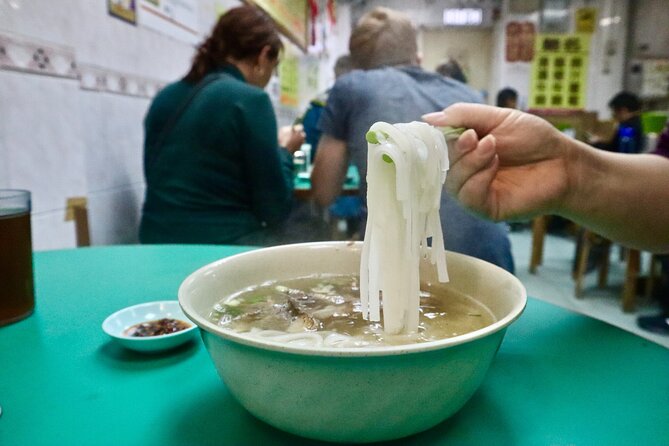
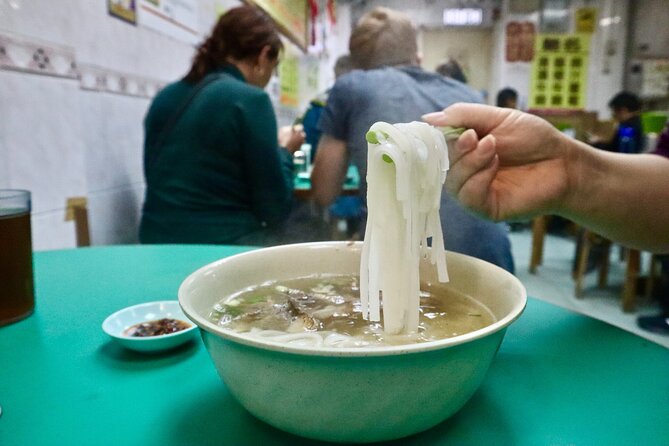
The food begins with a substantial Cantonese favorite: beef brisket soup with rice noodles. The dish combines tender beef, broth, and noodles in a format that feels both filling and practical. It is the kind of meal that helps you understand why noodle shops remain such a central part of Hong Kong’s food culture.
Some departures have included brisket noodle soup from Sister Wah, a Tin Hau stop praised for its Michelin recognition. Restaurant arrangements can change, so treat the named venue as a possibility rather than a guarantee. The important point is the style of food: a focused bowl, served in a local setting, with your guide helping you understand what is on the table.
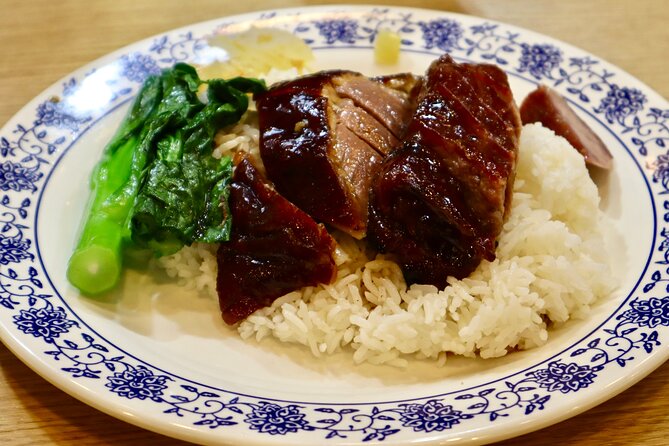
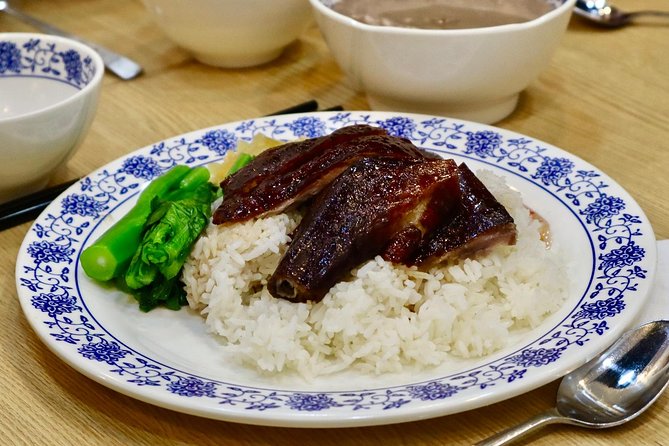
Roast goose with rice and plum sauce follows. This gives you a different side of Cantonese cooking, with crisp skin, rich meat, plain rice, and a sweet-tart sauce to balance the dish. Some groups have visited Ki’s Roasted Goose and even met Mr. Ki, but the route can change based on availability.
I like this pairing because it gives the meal structure. The noodle soup is warm and brothy, while the roast goose is more intense and richly flavored. If you have only eaten dim sum in Hong Kong, these stops broaden the picture quickly.
The portions are not merely sample-sized bites. Several food stops together can leave you very full. For the morning tour, skip breakfast or keep it very light. For an afternoon departure, have a small lunch rather than arriving after a large meal.
Dim sum, baked treats, and the sweeter side of Hong Kong
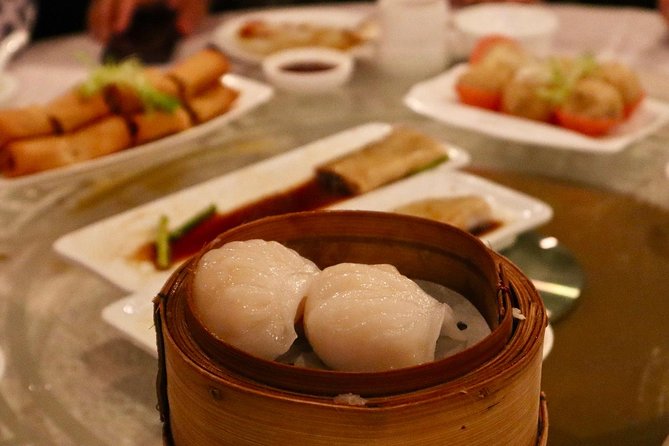
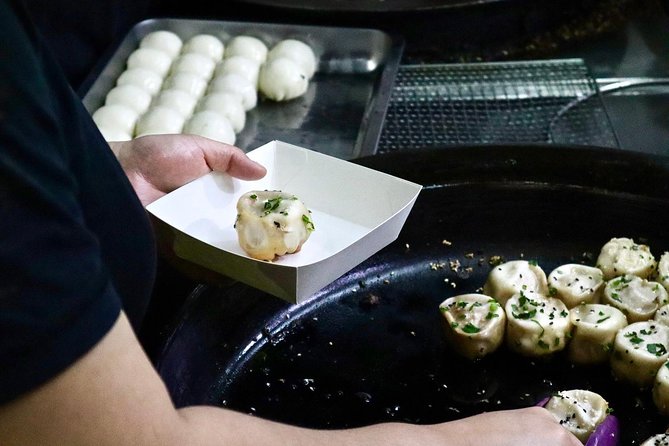
Fresh baked dim sum is another major stop. Dim sum covers a wide range of steamed, baked, and filled foods, so the exact item may depend on the shop and the day. The value here is having someone explain the food as it arrives instead of choosing at random from a counter.
Pineapple buns have become a highlight for many people on this route. Despite the name, the bun does not contain pineapple. The name refers to its crackly, pineapple-like top. A warm version can be a fine introduction to Hong Kong bakery food, especially when paired with milk tea on some departures.
The tour also includes local sweets, seasonal fruit, and a secret dish. The fruit provides a welcome break after the meat and noodles. Seasonal availability means you should not expect one fixed fruit every time, but the stop adds a fresh, simple element to a menu otherwise heavy on cooked food.
One dessert has drawn mixed reactions: a sandwich made with butter. It may be presented as a local-style sweet or snack, and it will not suit every palate. This is a useful reminder that food tours should expose you to local habits, not only serve universally familiar favorites.
Water and Chinese tea are included. Some food accounts also describe milk tea and Hong Kong-style French toast, but the official menu lists Chinese tea, water, local sweets, fruit, and the secret dish. The exact menu can change with shop availability, weather, and other local conditions.
Tin Hau Temple gives the meal a sense of place
Tin Hau Temple is one of the route’s cultural anchors. It is a declared monument, and the temple gave its name to both the MTR station and the surrounding area.
Tin Hau is the sea goddess traditionally associated with protection for people who work on or travel by the water. The temple helps explain the district’s name and gives you a short cultural stop between food tastings. Your guide can add context about local worship and the role temples play in Hong Kong life.
This is not a long temple tour. That is a strength if you want food to remain the focus. You get a clear sense of place without turning the outing into a full architectural lecture.
The route also reaches Lin Fa Kung Temple at the end of Lin Fa Kung Street in Tai Hang. This smaller temple is another reminder that religious sites can sit close to shops, apartments, schools, and food businesses. The walk between stops is part of the point. You see how old traditions and modern city life occupy the same few blocks.
Please dress for walking rather than for a formal dining room. Comfortable shoes matter, and the three-hour route includes outdoor sections. Weather can also affect the path and the menu.
Same country, a completely different kind of day:
- Hong Kong: Dolphin Cruise, Big Buddha & Lantau Island Tour
★ 4.2 · 1,512 reviews - Ngong Ping 360: Cable Car Return Tickets & Combos
★ 4.6 · 1,431 reviews - Lantau Island Day Trip – Big Buddha & Tai O
★ 4.5 · 1,328 reviews - Big Bus Hong Kong Open Top Hop-On Hop-Off Sightseeing Tour
★ 4.0 · 1,077 reviews
Victoria Park, Queen’s College, and the Central Library
Victoria Park offers a change of pace from narrow streets and restaurant interiors. Named after Queen Victoria, the park lies north of Causeway Bay between Causeway Bay and Tin Hau MTR stations.
You should not expect a long park visit or a dedicated botanical tour. Instead, it works as a useful landmark and breathing space. The park helps you understand the relationship between the dense shopping district of Causeway Bay and the more local streets around Tin Hau and Tai Hang.
The route also passes Queen’s College, the first public secondary school founded in Hong Kong by the British colonial government. It received its present name in 1894 and is now in Causeway Bay.
That detail adds a bit of colonial-era context to a food walk otherwise centered on Cantonese traditions. It also shows how the district’s identity was shaped by several layers of Hong Kong life: local worship, public education, British administration, and Chinese food culture.
The Hong Kong Central Library is another notable landmark. It is the largest library in Hong Kong, with about 2.3 million items, roughly one fifth of the holdings in the Hong Kong Public Libraries System. You may not spend much time inside, but seeing it on the route gives the walk a broader civic context.
These sights are not substitute sightseeing stops for the Peak, the harbor, or a museum. They work best as supporting details around the food. If you want a tour that covers major attractions in depth, choose a dedicated city sightseeing outing instead.
The wet market: useful, local, and not for everyone
The wet market is perhaps the most revealing part of the route, and also the part you should consider carefully. It is a local market where fresh produce and meat are sold.
Markets explain more about food culture than a polished restaurant can. You can see the ingredients that feed the neighborhood and get a better sense of how fresh food moves from vendor to kitchen. For someone trying to understand everyday Hong Kong, this is valuable.
The trade-off is sensory. Fresh meat and the working side of food production can be confronting. If you are comfortable eating meat but prefer not to think about the process behind it, this stop may feel uneasy. You can ask your guide what to expect before the tour begins, but the market is part of the planned character of the outing.
This is also why the tour feels more local than a simple restaurant crawl. It does not show only the finished plate. It connects the plate to shops, markets, ingredients, and neighborhood habits.
A small group with room for questions
The maximum group size is 12. That is small enough for the guide to keep people together on busy streets and to answer questions without shouting across a crowd.
The guides have received strong praise for their energy, clear English, local familiarity, and willingness to offer practical advice. Sandy is often cited as an especially engaging guide, while Bessy has been praised for explaining both the food and Hong Kong itself. Other departures have been led by Sonya, Katie, Roger, or Michael.
Do not book on the assumption that you will get a particular guide unless the operator confirms it. The guide assignment can change, but the small-group format remains one of the tour’s better features.
A guide can also make a difference if you do not speak Cantonese. Several stops are the sort of places you might walk past or avoid because ordering looks difficult. Having someone handle the language barrier removes much of that friction and lets you concentrate on tasting.
The pace is active but generally leaves time to eat and ask questions. It is not a slow, sit-down meal with long breaks. You will walk between stops, stand at some food businesses, and keep to a schedule.
Is $107 good value for three hours?
At $107 per person, this is not a cheap way to grab lunch. Hong Kong has plenty of inexpensive food, and an experienced independent eater could spend far less on noodles, roast meat, and dim sum.
The price makes more sense when you count what is bundled in: seven or more tastings, drinks, a local guide, neighborhood orientation, cultural stops, and the confidence to enter places that may be difficult to navigate alone. You are also paying for a small group rather than a large public tour.
I would consider it good value for a first day, especially if you want a fast introduction to Cantonese food and a list of places to revisit. Some people have returned to the restaurants after the tour, which is a sign that the outing can save you trial and error during a short stay.
The value is weaker if you already know Hong Kong’s food scene, dislike group activities, or mainly want a cheap meal. It is also less appealing if you have strict dietary needs and do not contact the provider in advance.
Group discounts are available, and the activity uses a mobile ticket. Confirmation is subject to availability and is stated to arrive within 48 hours of booking.
Who should book this Tin Hau food tour?
I would recommend it most strongly to:
- First-time visitors who want food, culture, and neighborhood orientation in one outing.
- People who are curious about Cantonese dishes but lack the language skills to order confidently.
- Couples, families, and small groups who prefer a capped group size.
- Anyone who wants practical food recommendations for the rest of a Hong Kong stay.
- Eaters who enjoy markets and are comfortable seeing fresh meat and produce.
I would think twice if you have limited mobility or dislike walking, since comfortable shoes are recommended and the route involves a fair amount of walking. Most people can participate, but the description does not promise a step-free route or special accessibility arrangements.
Dietary needs should be raised before the tour. The provider asks for advance notice so the menu can be adjusted as well as possible. Do not assume every dietary restriction can be handled on the day.
Free cancellation is available if you cancel at least 24 hours before the local start time. Cancellations within 24 hours and late changes are not refunded. The tour can also be changed or canceled for poor weather or if the minimum number of participants is not reached, with another date or a full refund offered.
Should you book it?
Book this tour if you want a food-first introduction to Hong Kong that also explains the streets, temples, market, and public landmarks around Tin Hau. The combination of brisket noodles, roast goose, dim sum, baked treats, fruit, sweets, and tea gives you a useful spread of flavors in a short time.
I would schedule it near the start of your visit, then return to the places you liked. Eat lightly beforehand, wear good shoes, and arrive ready for a market that shows the less polished side of local food.
Skip it if you want a private tour, a slow restaurant meal, or a predictable menu. For most first-time visitors who enjoy eating and do not mind walking, the $107 price is justified by the guidance, variety, and access to ordinary Tin Hau food stops that are easy to miss on your own.
FAQ
How long does the Tin Hau food tour last?
The tour lasts approximately three hours.
Where does the tour start and finish?
It starts in the Tin Hau and Causeway Bay area of Hong Kong and ends back at the meeting point.
What food and drinks are included?
The included items are beef brisket soup with rice noodles, roast goose with rice and plum sauce, fresh seasonal fruit, local sweets, fresh baked dim sum, a secret dish, Chinese tea, and water.
Does the tour include hotel pickup?
No. Hotel pickup and drop-off are not included.
How many people can join the tour?
The maximum group size is 12 people.
Can I cancel for a full refund?
Yes, if you cancel at least 24 hours before the experience start time. Cancellations or changes made within 24 hours are not refunded. If poor weather or insufficient participation causes the provider to cancel, you will be offered another date or a full refund.
Just added around Hong Kong
- Hong Kong Airport to Hong Kong City Private Arrival Transfer★ 4.5 · 3 reviews
- Hong Kong Observation Wheel Ticket★ 5.0 · 3 reviews
- Hong Kong Palace Museum Ticket★ 5.0 · 3 reviews
- Hong Kong Peak Tram and Sky Terrace 428 Tickets (Optional)★ 3.5 · 22 reviews
- Hong Kong Market Walking Tour & Chinese Cooking Class★ 5.0 · 24 reviews
- Hong Kong : Must-See Attractions Walking Tour With A Guide★ 5.0 · 7 reviews
- Hong Kong Private Walking Tour with a Local★ 5.0 · 6 reviews
- Hong Kong: Lantau Island & Tai O Cruise, Skip The Line Cable Car★ 3.5 · 4 reviews
Food & Drink, compared.

Authentic Local Food Tour in Central Shanghai
Read our review →
Beijing Hutong Walking Food and Beer Tour at Hidden Restaurants
Read our review →


Hong Kong Food Tour: Central and Sheung Wan Districts
Read our review →
Hidden Gems Guided Food Tour with Beer and Tastings
Read our review →Browse the lists this tour appears in