
Reviewed · FORBIDDEN CITY TOURS
In-depth Forbidden City tour with Royal Icehouse Lunch
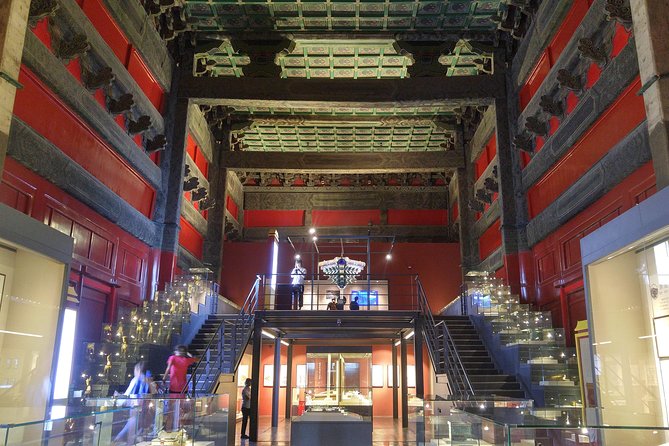
The most unusual part of this six-hour Beijing tour is lunch inside a former Imperial Icehouse, paired with a private walk through areas many visitors miss. You go beyond the main ceremonial halls to the Imperial Library, Treasure Rooms, Nine Dragon Screen, and the Imperial Garden.
I like the generous pace and the chance to ask your own questions instead of following a large group. I also like the practical help from guides such as Selina, Lily, Helen Zhang, Shanshan, and Angie, who have been praised for clear explanations, patience, punctuality, and adjusting the pace for children or an older family member. The main drawback is the early start and the amount of walking, so this is not a light half-day outing.
Key points to know before booking
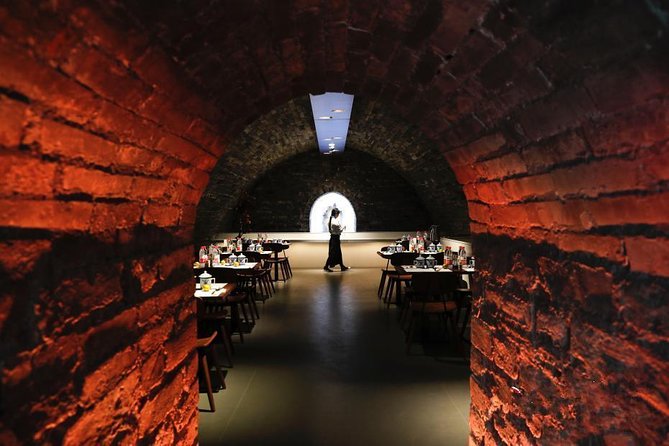
- Lunch in a former Imperial Icehouse: The meal gives the tour a setting you will not get from a standard palace visit.
- Five hours inside the Palace Museum: The route covers major halls as well as the Library, Treasure Rooms, Nine Dragon Screen, and garden.
- Private guiding throughout: Your own guide can answer questions and adjust the pace for your group.
- Guides praised for care: Selina, Lily, Helen Zhang, Shanshan, and Angie are specifically associated with attentive service and strong palace knowledge.
- 7:30 am start: Early pickup helps organize a long visit, but you need to be ready for a full morning and afternoon.
- $150 includes the main extras: Entrance fees, lunch, hotel pickup, and hotel drop-off are included.
Why this Forbidden City tour feels different
The Forbidden City can be visited in a few hours, but a quick route usually gives you only the grand axis and a few famous courtyards. This experience is built for people who want more than the standard postcard view.
You spend about five hours inside the Palace Museum, with a guide explaining how the outer ceremonial spaces differed from the inner living quarters. That distinction matters. The Forbidden City was not one single palace in the everyday sense. It was a tightly ordered world where buildings, gates, courtyards, colors, and movement all reflected imperial rank.
A private guide changes the feel of the visit. You can stop to ask why an area mattered, request more detail about a particular building, or slow down when the group needs a rest. Lily was praised for patiently pacing the route for an older woman, while Helen Zhang and Shanshan were noted for making the subject accessible to children and adults alike.
You also get local help beyond the palace itself. One guide gave useful suggestions about shops and the area near the hotel, which is a small but valuable bonus if you are still finding your feet in Beijing.
More Forbidden City Tours in Beijing:
- Beijing: Forbidden City Tour(Group/Private)-Tickets Included
★ 4.8 · 7,974 reviews - Beijing: T-Square & Forbidden City Group or Private Tour
★ 4.8 · 4,446 reviews - All-Inclusive Tour: Tiananmen Square, Forbidden City, Great Wall
★ 5.0 · 2,873 reviews
Starting at 7:30 am with hotel pickup
The tour begins at 7:30 am, with hotel pickup and drop-off included. That removes one of the day’s minor headaches, especially in a city where getting to the correct palace entrance can take planning.
The early meeting time is worth taking seriously. You need to be ready at the selected pickup point, and all participants must provide passport name and number when booking. Confirmation is provided at booking, so check the pickup details carefully before the day arrives.
The exact tour lasts about six hours, with roughly five hours listed for the Forbidden City itself. That is a substantial visit. You should expect plenty of walking across broad stone courtyards, through halls, and around garden paths. A moderate level of physical fitness is required.
The private format is especially useful if your party includes children, an older family member, or anyone who needs a slower rhythm. It does not remove the walking, but it gives the guide room to manage it sensibly.
Entering through the Meridian Gate
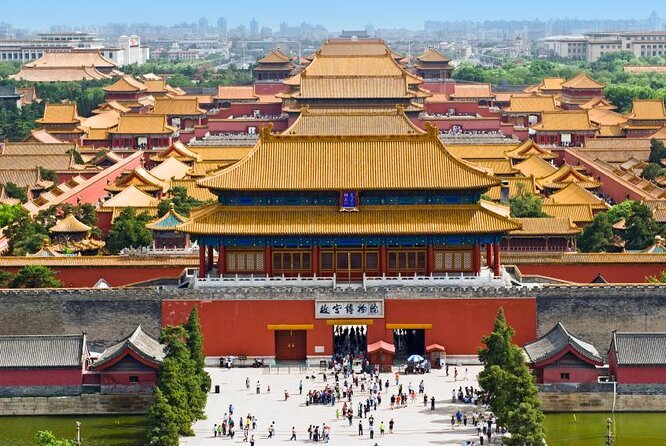
The southern entrance is the Meridian Gate, the main gateway into the Forbidden City. It is more than a place to scan a ticket. The gate introduces the palace’s strict central axis and the symbolic order that controls the entire complex.
The emperor was believed to sit at the center of the world, and the central line through the gate carried that idea into the palace plan. Your guide can help you see the entrance as part of the imperial system rather than just another enormous red wall.
From here, the scale becomes clear. The route leads into a sequence of courtyards and halls, each with a formal purpose. A guide is useful at this point because it is easy to remember only the roofs and red walls while missing why one space was public and another was restricted.
The corner tower and the palace walls
The defensive construction at each corner of the Forbidden City includes a corner tower. You may enter one if it is open on the day of your visit.
That last condition matters. Access is not guaranteed, so treat the tower as a welcome extra rather than a promised feature. From the outside, the corner structures help you understand how the palace was enclosed and protected. Inside, if access is available, the space adds a different view of the palace’s defensive design.
This is one of the stops that separates a careful tour from a simple march between famous halls. You are not only looking at where emperors lived. You are seeing how the entire complex was controlled, guarded, and arranged.
A few more Beijing trips to weigh up
- Beijing: Mutianyu Great Wall Daily Tour with Ticket & Lunch
★ 5.0 · 3,056 reviews - Great Wall of China at Mutianyu Full-Day Tour Including Lunch from Beijing
★ 4.0 · 565 reviews - Mutianyu Great Wall and Summer Palace Small-Group Tour with Lunch
★ 5.0 · 316 reviews - Mutianyu Great Wall and Summer Palace Private Day Trip with Lunch
★ 5.0 · 209 reviews
The great ceremonial halls
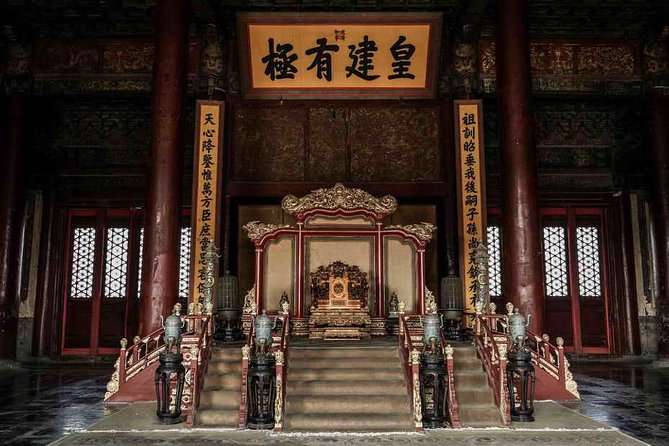
The largest ceremonial buildings form the heart of the outer court. The most important of these is also described as the largest wooden structure in the world. It was used by the emperor for major ceremonies and official work.
The building’s size is impressive, but the better reason to spend time here is to understand its role. This was not the emperor’s private home. It was a stage for power, ritual, and public authority.
The next part of the route includes a hall used for banquets and later for imperial examinations. Those examinations tested candidates on classical and Confucian literature under imperial supervision. Some candidates could go on to official service, so this stop connects palace ceremony with the machinery of government.
I like this part of the route because it gives the Forbidden City more depth. The complex was not simply a residence decorated with impressive roofs. It was also a workplace, an examination center, and the setting for decisions that affected the wider empire.
The Inner Court and imperial daily life
The tour then moves toward the Inner Court, where the emperor dealt with daily affairs and where the emperor, empress, and imperial concubines lived.
The change from ceremonial halls to living quarters helps you picture palace life at a human scale. The emperor’s public role may have seemed remote and almost theatrical, but daily administration still required routine, private meetings, household management, and family life.
The largest building in the Inner Court served as the emperor’s residence. Your guide can explain how this area differed from the outer court and why the palace was divided so carefully between public business and private life.
This portion may be especially useful for families. Helen Zhang was praised for explaining the palace in a way that kept children interested, and Shanshan was similarly noted for making the visit engaging without rushing past important buildings.
The Imperial Library and the value of going beyond the main axis
The Imperial Library is one of the added areas that makes this a more serious palace visit. It shifts attention from imperial ceremony to learning, records, and the written culture that supported the court.
Many first visits focus on architecture because the big halls are impossible to miss. The Library offers a chance to think about the intellectual side of the palace. Ask your guide about its purpose and the kinds of activities connected with the court’s literary tradition.
The route is designed to include more than the most obvious buildings, but the exact order may depend on access and conditions inside the palace. That flexibility is another advantage of a private visit. You can spend more time where an explanation interests you instead of being tied to a fixed large-group rhythm.
Treasure Rooms and the Qianlong collection
The Treasure Rooms, also known as the Treasure Hall or Antiquarium, occupy several buildings connected with the abdicated Emperor Qianlong. They now hold exhibition rooms with different themes, along with the largest imperial theatre in the complex.
This section gives you a break from looking at buildings as buildings. The objects and displays offer a closer look at court taste, ceremony, entertainment, and the material world of the imperial household.
The imperial theatre is a particularly appealing stop for anyone interested in performance and court life. It reminds you that the palace was also a place of staged events and formal entertainment, not only government work.
The Treasure Rooms can add real value to the admission price because they are easy to skip when planning your own route. If you care about decorative arts, palace objects, or the private side of court life, tell your guide early so you can give this area proper attention.
The Nine Dragon Screen
Near the entrance to the Treasure Hall is one of China’s three Nine Dragon Screens. The others are in Beihai Park and Datong.
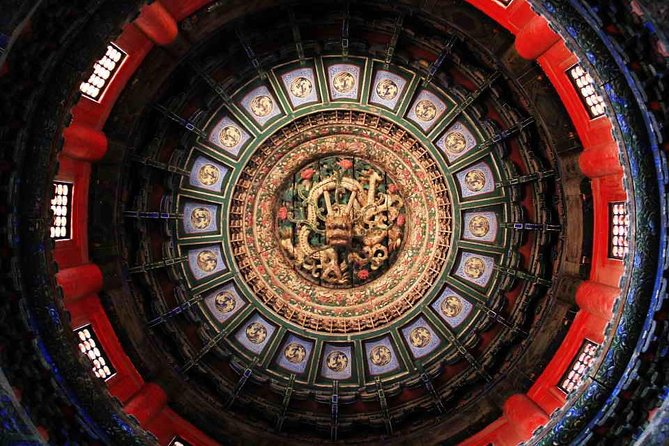
The screen is a compact stop, but it rewards a close look. The nine carved dragons are not all the same color, a detail that is easy to miss while moving through the palace’s much larger spaces.
This is a good example of why a guide helps. The Forbidden City contains so many major buildings that small details can disappear in the rush. A private guide can point out the screen, explain its place in the palace setting, and give you time to look rather than simply walking past it.
The Imperial Garden and four seasons in one space
The final part of the route includes a rectangular garden with more than 20 types of structures, including pavilions, terraces, towers, and rockeries. Four pavilions represent the four seasons.
After hours of formal courtyards and straight lines, the garden provides a change of mood. Its buildings and rockeries create a more varied setting, and the four seasonal pavilions give the space a clear symbolic design.
You may find this area easier to appreciate after seeing the palace’s grand halls. The contrast helps you understand that imperial design was not only about imposing scale. It also included carefully planned garden spaces for rest, reflection, and private enjoyment.
Lunch at the former Royal Icehouse
Lunch at a former Imperial Icehouse is the tour’s most distinctive extra. The setting connects an ordinary travel need, stopping to eat, with a piece of palace life that is easy to overlook.
The icehouse was once tied to the practical running of the imperial court. That gives the meal more character than a standard restaurant stop, even though the quality and menu details are not specified here.
Several positive accounts single out the food as delicious and the meal as a welcome pause, especially during hot weather. That break matters on a six-hour visit. You get time to sit, eat, and recover before continuing or heading back to your hotel.
Do not book this tour solely for a particular dish because no menu is provided. Book it for the setting, the convenience, and the chance to make lunch part of the palace experience rather than losing time arranging a separate meal.
How much value do you get for $150?
At $150 per person, this is not a budget Forbidden City visit. The price makes more sense when you add up what is included: a private guide, entrance fees, lunch at the former Icehouse, hotel pickup, and hotel drop-off.
The private format is the main value. A cheaper group outing may cover the famous halls, but it will not give your party the same control over questions, pace, or time spent in the Treasure Rooms and garden.
It is also a practical choice if you want to avoid arranging transport and lunch yourself. For a family or small group, the convenience can justify the higher cost. Group discounts may also be available, so larger parties should check the final price before deciding.
The booking pattern suggests that people often reserve this experience well ahead, with an average booking lead time of 49 days. That is useful planning information, though it is not a guarantee that every date will sell out. If your Beijing schedule is fixed, booking early is sensible.
Guide quality and how to get the most from the day
The guides are one of the strongest reasons to choose this experience. Angie was praised for contacting the party the day before and keeping the arrangements punctual. Selina was described as attentive from hotel pickup through the palace visit.
Helen Zhang is a strong fit if your group includes children or adults with different interests. Lily is worth requesting if your group needs a gentler pace, although guide requests cannot be assumed unless the provider confirms them.
You will get more from the day if you arrive with a few questions. Ask about the difference between the outer and inner courts, the purpose of the Imperial Library, the role of the examination hall, or the meaning of the Nine Dragon Screen. A private guide is most useful when you treat the day as a conversation, not just a procession.
Who should book this experience?
I would choose this tour if you are visiting Beijing once and want a thorough look at the Forbidden City without handling the details yourself. It suits families, couples, first-time visitors, and small groups that value a flexible pace.
It is also a smart choice for anyone who wants the Treasure Rooms, Imperial Library, and garden included rather than stopping at the main ceremonial halls. The former Icehouse lunch adds a memorable setting and a useful rest in the middle of a long day.
I would think twice if you dislike early starts, cannot manage a moderate amount of walking, or want the cheapest possible palace admission. A six-hour private tour is more time and money than a quick independent visit.
Free cancellation is available up to 24 hours before the local start time for a full refund. Changes or cancellations made less than 24 hours ahead are not accepted, so keep that deadline in mind.
Should you book the Royal Icehouse Forbidden City tour?
Book it if you want the Forbidden City explained in detail, not simply photographed. The private guide, long palace visit, added exhibition areas, and unusual lunch setting make the $150 price easier to justify, especially when hotel transport and admission are included.
Skip it if your priority is speed or low cost. For everyone else, the key question is simple: do you want to see the imperial complex as a collection of famous halls, or as a working palace with ceremonial rooms, residences, libraries, treasures, gardens, and practical spaces? This tour is designed for the second approach.
FAQ
How long does the Forbidden City tour last?
The experience lasts approximately six hours. About five hours are allocated to the Forbidden City and its included stops.
What time does the tour begin?
The stated start time is 7:30 am.
Is hotel pickup included?
Yes. Free hotel pickup and drop-off are included for convenience.
Is this a private tour?
Yes. Only your group participates in the private activity.
Is lunch included?
Yes. Lunch at a former Imperial Icehouse is included.
Which Forbidden City areas are included?
The route includes the main palace areas, the corner tower if it is open, the Meridian Gate, major ceremonial halls, the Inner Court, Imperial Library, Treasure Rooms, Nine Dragon Screen, and Imperial Garden.
Are entrance fees included?
Yes. Entrance fees are included in the tour price.
What cancellation terms apply?
You can cancel up to 24 hours before the local start time for a full refund. Cancellations or changes made less than 24 hours before the start are not accepted.
Just added around Beijing
- Private Transfer to Mutianyu Great Wall with professional driver★ 5.0 · 19 reviews
- camp on the Great Wall overnight with sunrise and sunset on the wall★ 5.0 · 11 reviews
- One day tour to downtown Tianjin from Beijing by high speed train★ 5.0 · 3 reviews
- BusDa:Ancient Great Wall &Badaling Great Wall Full-day Bus Tour★ 4.5 · 6 reviews
- ZANBUS: Trip to the Jinshanling Great Wall Departing at 7:30 AM★ 5.0 · 5 reviews
- Yuxiandu Chinese Royal Cuisine Museum with Show and Royal Banquet★ 5.0 · 4 reviews
- Wild Great Wall Hikes★ 5.0 · 10 reviews
- Private Wild Great Wall Hiking tour at Simatai (Challenging)★ 5.0 · 16 reviews
Forbidden City Tours, compared.

Forbidden City Tour(Group/Private)-Tickets Included
Read our review →
All-Inclusive Tour: Tiananmen Square, Forbidden City, Great Wall
Read our review →
4-Hour Small Group Tour to Forbidden City with Entry Tickets
Read our review →
Tianmen Square, Forbidden City & Royal Museum Tours
Read our review →
Beijing Forbidden City Ticket Booking (Optional: guide service)
Read our review →
Forbidden City and Tian’anmen Square Waking Tour
Read our review →
The Forbidden City or Tiananmen Square Entry Ticket
Read our review →
Beijing 2-Day Tours: Great Wall, Forbidden City & Top Highlights
Read our review →Browse the lists this tour appears in