
Reviewed · LAMA TEMPLE TOURS
Beijing: Lama Temple (Yonghe Temple) Admission Ticket
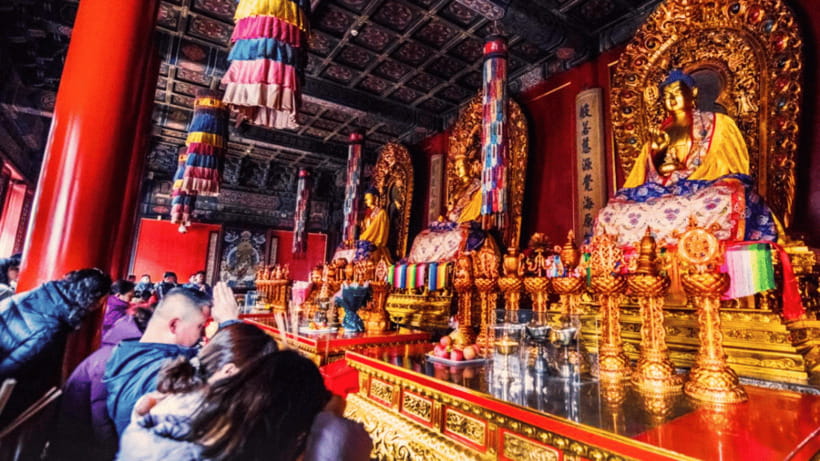
The most striking feature of Beijing’s Lama Temple is its change of identity. Built in 1694 as a residence for Prince Yongzheng, it later became an imperial palace and then a Tibetan Buddhist temple. Today, you walk through former royal courtyards where incense burns, worshippers pray, and halls shelter remarkable Buddhist art.
I like the mix of Han, Manchu, Tibetan, and Mongolian design, and I like that this ticket lets you explore without being tied to a guide or group schedule. The 18-meter sandalwood Buddha carved from one piece of wood is the great finale. The main consideration is that this is admission only, so you need to read the short information sent by PANDA144 or arrange your own guide.
Key points
- Former imperial residence: See a complex first built for the future Emperor Yongzheng in 1694.
- 18-meter sandalwood Buddha: The enormous Maitreya statue is the temple’s most memorable sight.
- Four Learning Halls: Visit spaces linked with medicine, mathematics, Tantric study, and lectures.
- Active place of worship: Incense, prayer, and daily religious use give the site a genuine spiritual atmosphere.
- Advance real-name booking: Your passport name and number are required before the ticket can be confirmed.
- Self-guided freedom: The ticket covers the main buildings and exhibitions, but no guide or audio guide is included.
Why the Lama Temple is more than a quick photo stop
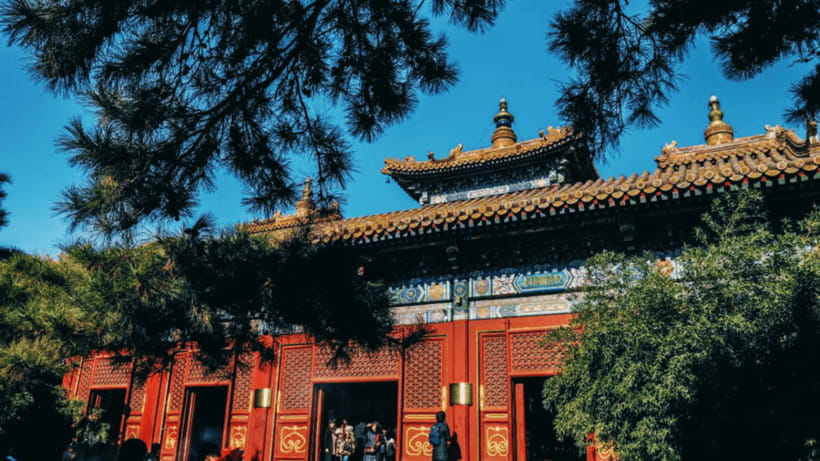
Yonghe Temple, commonly called the Lama Temple, is one of Beijing’s most rewarding historic religious sites. It is not vast, so you can see the main complex in a few hours rather than giving it an entire day. The one-day ticket duration simply gives you flexibility around your Beijing sightseeing plans.
The appeal comes from several layers at once. You get grand imperial architecture, Tibetan Buddhist decoration, important sculpture, and a working place of worship. The temple is also useful for understanding how China’s imperial court connected with Tibetan Buddhism during the Qing period.
I would not treat this as just another ornate temple. People come here to pray, burn incense, and make offerings. That daily use changes the mood. Some areas can feel quiet and reflective, while the approach to the main halls may be crowded, especially around major holidays when many people arrive to worship.
More Lama Temple Tours in Beijing:
- Temple Heaven, Lama Temple, Summer Palace & Peking Duck Bus Tour
★ 5.0 · 377 reviews - Temple Heaven, Summer Palace, Lama Temple, Hutong Bus Tour
★ 4.7 · 319 reviews - Temple of Heaven, Summer Palace, Lama Temple, Hutong Tours
★ 5.0 · 311 reviews
From imperial residence to Tibetan Buddhist temple
The complex was built in 1694, during the 33rd year of Emperor Kangxi’s reign. At first, it served as the residence of Prince Yongzheng before he became emperor. In 1725, the property was converted into an imperial palace.
Its religious role came later. In 1744, during the reign of Emperor Qianlong, the site became a Tibetan Buddhist temple. That sequence is important because the buildings do not feel like a single-purpose religious foundation. They carry the formality of a royal compound while functioning as a Buddhist sanctuary.
As you move through the courtyards, look for how the layout guides you forward from one ceremonial space to another. The progression gives the visit a clear rhythm: entrance arches, gates, halls, study buildings, and exhibition rooms. Even without a guide, the arrangement makes sense if you take your time and avoid rushing straight to the largest statues.
Enter through the three decorated archways
The three intricately designed archways create the first strong impression. They are more than a decorative entrance. They introduce the formal tone of the complex and signal that you are entering a place with both imperial and religious importance.
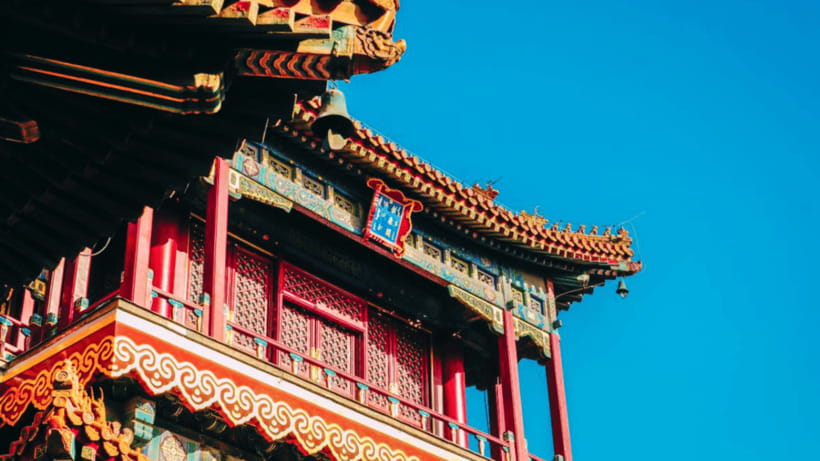
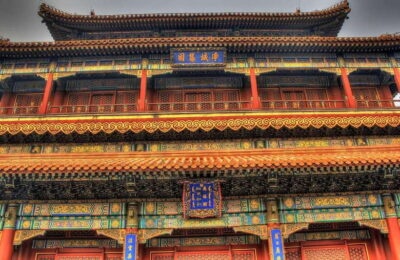
After the archways, you continue toward the Yonghe Gate. The architecture brings together Han Chinese forms with Manchu, Tibetan, and Mongolian influences. You will see this blend in the rooflines, colors, decorative details, and overall arrangement of the buildings.
I recommend pausing here before moving farther inside. The first courtyards can be busy, and it is easy to focus only on taking pictures. Give yourself a moment to look at the scale of the gates and the relationship between the open courtyards and enclosed halls.
The admission process is designed to be straightforward, but the online QR code itself is not the valid entry ticket. PANDA144 sends the confirmed ticket separately, usually by email or WhatsApp. Keep that confirmation available when you reach the designated entrance channel.
Yonghe Palace Hall and the main ceremonial spaces
The Yonghe Palace Hall is one of the central buildings in the complex. Its role and placement give you a sense of the temple’s formal core, while the surrounding courtyards help frame the architecture.
Inside the halls, you can expect Buddhist statues, thangkas, and other precious objects. These interiors are not empty museum rooms. They are religious spaces, so you should move carefully, keep your voice low, and follow any instructions about photography or offerings.
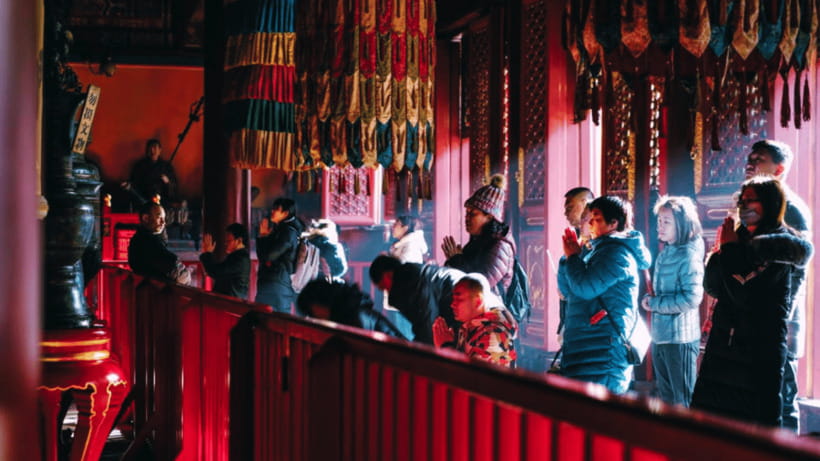
One of the most valuable parts of the visit is seeing people use the temple for worship. Incense smoke, prayer, and quiet personal rituals make the site feel connected to present-day life rather than frozen in the past. If you visit during a busy period, the number of worshippers may reduce the calm, but it also shows why the temple matters beyond its architecture.
The main halls are best appreciated slowly. Look up at the roofs and carved details, then give your attention to the statues and thangkas inside. The ticket includes access to the major temple buildings and cultural exhibitions, so you are not limited to the first courtyard or the most photographed hall.
A few more Beijing trips to weigh up
- Beijing: Forbidden City Tour(Group/Private)-Tickets Included
★ 4.8 · 7,974 reviews - Beijing: Mutianyu Great Wall Daily Tour with Ticket & Lunch
★ 5.0 · 3,056 reviews - 4-Hour Small Group Tour to Forbidden City with Entry Tickets
★ 5.0 · 1,863 reviews - Beijing: Tiananmen Square Registration Service(Ticket)
★ 4.5 · 1,704 reviews
The Four Learning Halls and the exhibition rooms
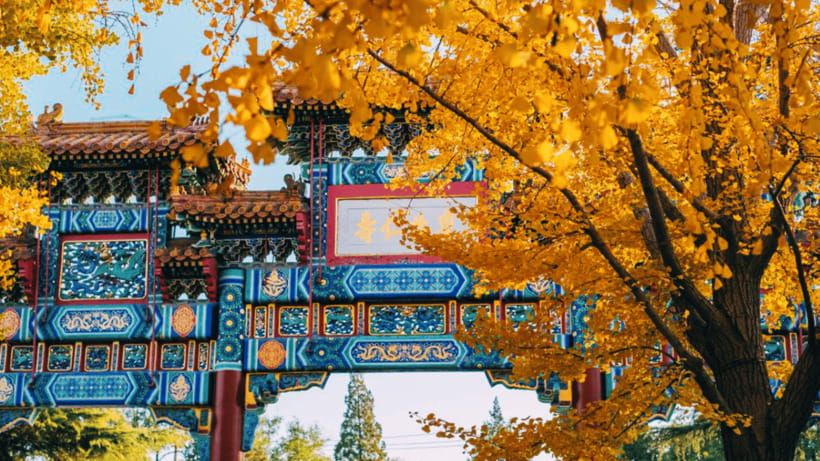
The complex includes four buildings known as the Four Learning Halls: the Hall of Medicine Buddha, Mathematics Hall, Tantric Hall, and Lecture Hall. Their names point to the broader educational side of Tibetan Buddhism.
These spaces add useful context to the visit. The Lama Temple was not only a place for ceremonies and prayer. It also supported study, instruction, and religious practice. You may not find extensive explanations in English at every point, so the short guide sent with your ticket can help you identify what you are seeing.
Three exhibition rooms are also included. The available information does not specify a fixed exhibition schedule or the exact objects on display, so treat these rooms as an added part of the visit rather than the main reason to book. The temple buildings and statues are the dependable highlights.
If you are interested in religious art, allow time for the thangkas and smaller artifacts. The huge Buddha receives most of the attention, but the smaller works help show the care and skill involved in Tibetan Buddhist decoration.
The 18-meter sandalwood Buddha
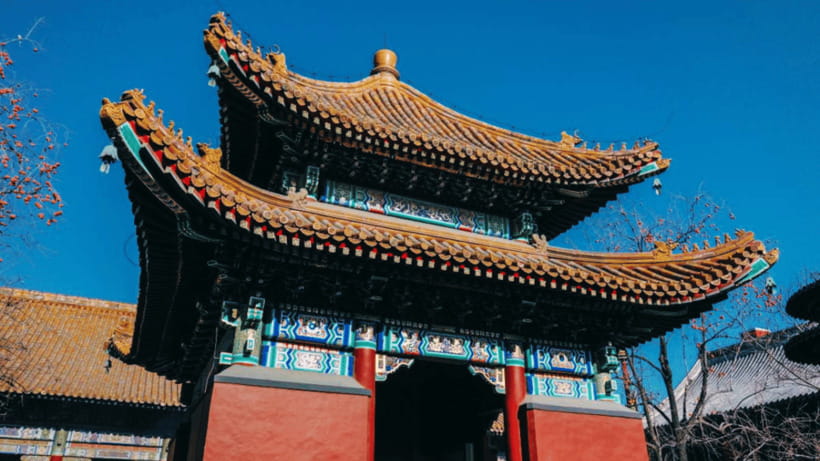
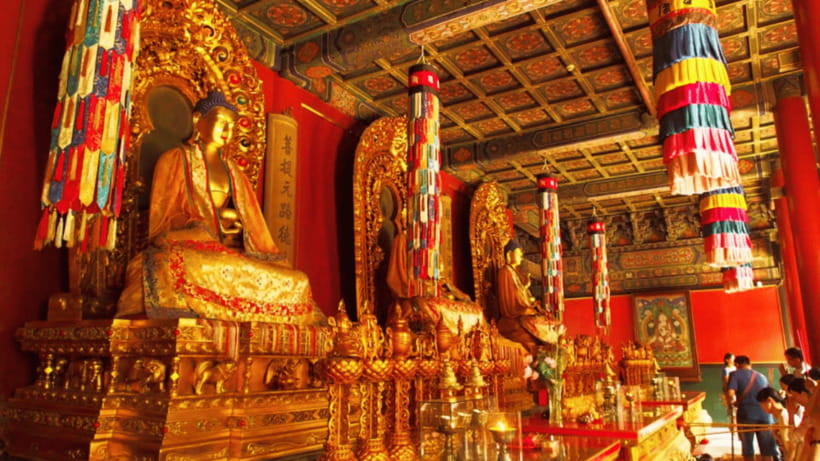
The temple’s headline sight is an 18-meter Maitreya Buddha carved from a single piece of sandalwood. It has held a Guinness World Records distinction since 1990, and the scale is hard to grasp until you see the statue inside its hall.
This is the moment when the temple’s architecture and religious art come together. The Buddha fills the interior vertically, making the surrounding building feel almost like a protective case. You may find the hall crowded, and viewing conditions can depend on how many people are moving through, but the statue remains the clear highlight.
Do not expect to walk around the statue in the same way you would inspect a sculpture in a gallery. Religious halls have their own rules and flow. Stand where permitted, take in the full height, and leave room for people who are praying.
The statue is especially valuable for visitors who want one unforgettable image from the temple. It gives the visit a strong ending, but I suggest seeing it after you have taken time with the earlier halls. Otherwise, the smaller details can seem like a prelude to one large attraction.
What the atmosphere feels like during worship
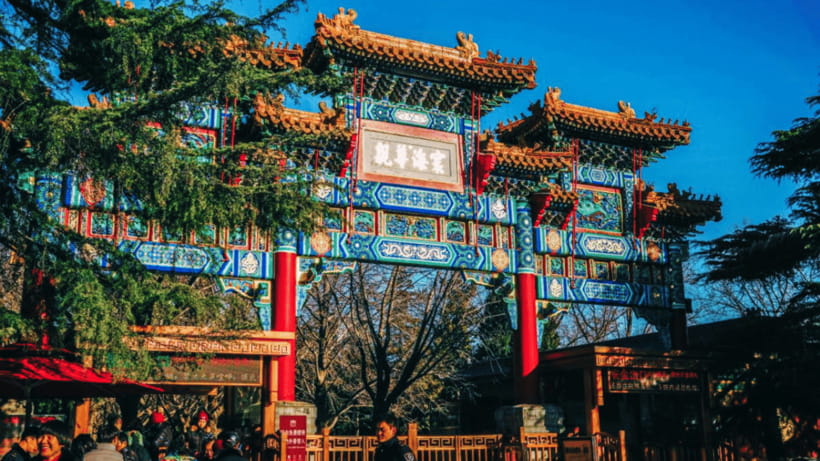
The Lama Temple is an active religious site, not simply a historic attraction. You may see people carrying incense, praying in front of the halls, or taking part in familiar daily acts of worship.
That atmosphere is one of the best reasons to visit. You can admire the architecture while also observing how the buildings are used today. Incense smoke can soften the courtyards and add a quiet, almost dreamlike quality, though it may be uncomfortable for anyone sensitive to smoke.
Major holidays and the first days of the year can be especially crowded. A visit on January 1, for example, may bring large numbers of people who have come to pray. That can make movement slower and reduce the peaceful mood, but it also gives you a more direct view of the temple’s living religious role.
I would choose an ordinary day if your main goal is quiet photography and careful inspection. If you are interested in worship and local religious customs, a busier day may offer more to observe. The supplied details do not provide guaranteed opening hours, so check the current start times and closing information before setting out.
Is the $10 admission good value?
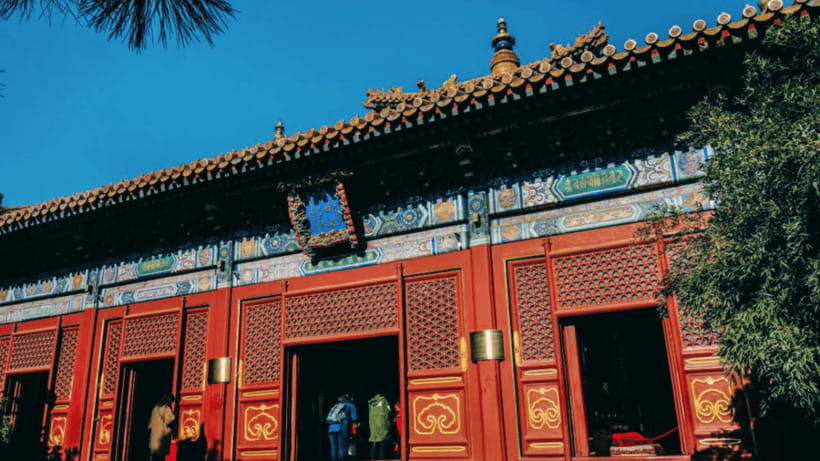
At $10 per person, this ticket is reasonably priced for access to the main temple buildings, cultural exhibitions, and a major Beijing landmark. The value is strongest if you want an independent visit and do not need a guide.
You are paying for more than entry through a gate. The complex gives you several architectural styles, a former imperial residence, active Buddhist halls, historic artifacts, the Four Learning Halls, and one of the world’s notable wooden Buddha statues. That is a good amount for the price.
The ticket is less useful if you expect a full guided lesson or a detailed audio program. Neither a guide nor an audio guide is included. You can still have a satisfying visit, but you need to read the information provided, use your own guidebook, or arrange separate interpretation.
PANDA144 adds convenience by arranging the admission in advance. Several recent bookings were handled through WhatsApp, with the confirmed ticket and a small guide sent on the day of the visit or shortly before it. That service matters most if you are unfamiliar with Beijing’s booking system or want to avoid sorting out temple admission yourself.
Booking rules that matter
Real-name booking is mandatory. You must send your full name exactly as it appears on your passport, along with your passport number. Only genuine identification details are accepted at the entrance.
Do this promptly after booking. If PANDA144 does not receive the required information in time, the reservation can be canceled and a cancellation fee may apply. Bring your passport with you, since it is part of the entry requirement.
The GetYourGuide QR code is not itself the valid ticket. Wait for the confirmation email or communicate through WhatsApp as instructed. This is the single most important practical detail, because arriving with only the original booking QR code may not be enough.
You enter through the designated ticket channel and then pass through security. The ticket does not remove the security check, and prohibited items include pets, weapons, sharp objects, and explosive substances.
Final entry is one hour before closing, and you must leave the temple 30 minutes before closing. Build in enough time to see the farthest halls and the sandalwood Buddha without being hurried.
Who should book this experience?
I would choose this ticket if you want to visit the Lama Temple independently, value a simple advance booking process, and are comfortable exploring at your own pace. It suits first-time visitors to Beijing who want one less admission task to handle.
It is also a good choice for people interested in architecture, Buddhist art, imperial China, or present-day religious practice. Families can use the flexible format to move at their own speed, though the atmosphere requires respectful behavior and careful supervision of children.
You may want a different arrangement if you need detailed explanations in English at every building. Since no guide or audio guide is included, the experience depends on your preparation and curiosity. The small e-guide sent with the ticket can help, but it is not a substitute for a dedicated cultural guide.
Wheelchair access is listed as available. Even so, the site contains multiple halls and courtyards, so confirm the practical route if you need specific access arrangements.
Should you book the Lama Temple ticket?
Yes, I would book it if the Lama Temple is on your Beijing list and you want a low-cost, self-guided visit with the admission handled ahead of time. The architecture is distinctive, the religious setting feels genuine, and the 18-meter sandalwood Buddha gives the experience a memorable centerpiece.
Book with enough time to send your passport details, and do not rely on the initial QR code alone. Choose this option for convenience, not for guided interpretation. If you want to understand every hall in depth, pair the ticket with your own reading or a separate guide.
The best reason to go is the combination of imperial design and living Buddhist practice. You get a historic site, a place of worship, and a manageable visit for about $10. That is a strong deal for a central Beijing cultural stop.
FAQ
How much does the Lama Temple admission ticket cost?
The ticket costs $10 per person. It includes admission to the major temple buildings, cultural exhibitions, and the reservation fee.
Is a guide or audio guide included?
No. The ticket is for self-guided entry. Guided tours and audio guides are not included, though basic visiting information may be sent by PANDA144.
What identification do I need?
Bring your passport. You must provide your full passport name and passport number for the mandatory real-name booking.
Is the GetYourGuide QR code the entry ticket?
No. The initial GetYourGuide QR code is not a valid ticket. Wait for the confirmation email or communicate with PANDA144 through WhatsApp to receive the confirmed admission details.
Can I cancel for a full refund?
Yes. You can cancel up to 24 hours in advance for a full refund.
Is the Lama Temple wheelchair accessible?
Yes, wheelchair accessibility is listed for this activity. The ticket provides access to the temple complex, but no specific route details are provided.
Just added around Beijing
- Private Transfer to Mutianyu Great Wall with professional driver★ 5.0 · 19 reviews
- camp on the Great Wall overnight with sunrise and sunset on the wall★ 5.0 · 11 reviews
- One day tour to downtown Tianjin from Beijing by high speed train★ 5.0 · 3 reviews
- Yuxiandu Chinese Royal Cuisine Museum with Show and Royal Banquet★ 5.0 · 4 reviews
- BusDa:Ancient Great Wall &Badaling Great Wall Full-day Bus Tour★ 4.5 · 6 reviews
- ZANBUS: Trip to the Jinshanling Great Wall Departing at 7:30 AM★ 5.0 · 5 reviews
- Private Wild Great Wall Hiking tour at Simatai (Challenging)★ 5.0 · 16 reviews
- Wild Great Wall Huanghuacheng Half Day Tour★ 5.0 · 15 reviews
Lama Temple Tours, compared.
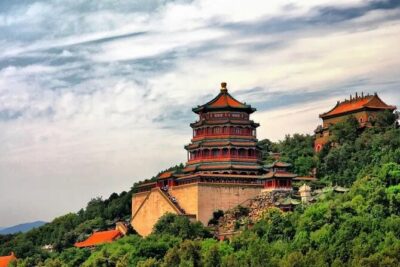
Temple Heaven, Lama Temple, Summer Palace & Peking Duck Bus Tour
Read our review →
Temple Heaven, Summer Palace, Lama Temple, Hutong Bus Tour
Read our review →
Temple of Heaven, Summer Palace, Lama Temple, Hutong Tours
Read our review →
Beijing Historical Tour II including Summer Palace, Lama Temple & Panda Garden
Read our review →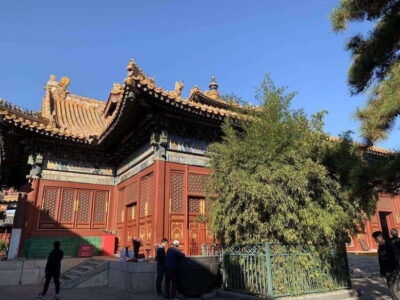
Beijing Lama temple ticket; #1 efficacious; limited Discount
Read our review →
Panda House, Temple of Heaven, Lama Temple, Summer Palace & Lunch
Read our review →
Private Day Tour Forbidden City Lama Temple and Temple of Heaven
Read our review →Browse the lists this tour appears in