Reviewed · BEIJING TOURS
Beijing: Imperial Cuisine Experience & Cultural Performance
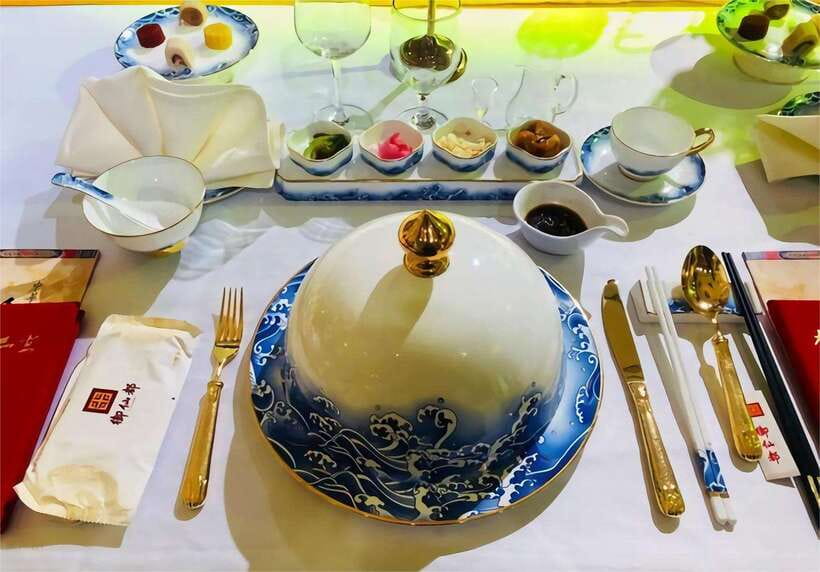
The most unusual part of this Beijing evening is the setting: you eat a royal-style meal inside a museum devoted to Chinese imperial cuisine. I like the link between the displays and the table, and I like that the performance adds music, dance, costumes, and color rather than leaving you with a meal alone. The dinner recreates court dishes, including sea cucumber, roast duck, lamb, longevity noodles, and traditional sweets.
The main drawback is the price. At $137 per person, this is not a casual night out, and one booking note suggests that buying directly may cost less. The meal and show make the price easier to accept, but you should compare rates before paying.
Key points to know before booking
- A museum and restaurant in one: See more than 1,000 historic utensils, documents, and other objects tied to royal food culture.
- A long royal-style menu: Dinner includes seafood, roast duck, lamb, soup, noodles, snacks, and desserts.
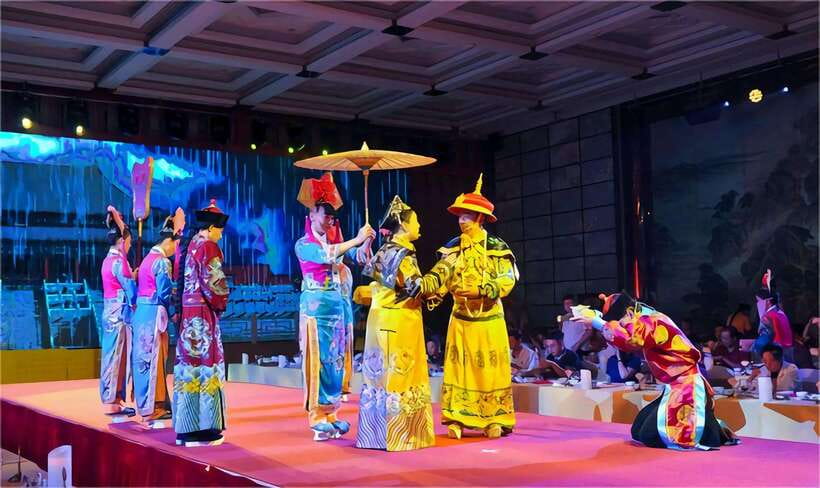
- A traditional stage show: Music, dance, costumes, colors, and historical themes form the entertainment.
- Fixed arrival times matter: Lunch ticket checking is at 11:38 AM, with the show at 12:10 PM. Dinner checking is at 6:28 PM, with the performance at 6:50 PM.
- The ticket covers the core experience: Your meal and the performance are included, while traditional costume and makeup transformation cost extra.
- Useful booking flexibility: You can cancel up to 24 hours before the activity for a full refund and reserve without paying at once.
Why this Beijing dinner feels different
Many cultural dinners give you a meal beside a stage. The Yuxiandu Imperial Cuisine Museum takes a different route by making food the subject of the entire visit. The museum traces Chinese imperial cuisine across roughly five millennia, from early royal traditions through the Qing Dynasty.
That gives the evening a clear theme. You are not simply eating a large Chinese meal and watching a show afterward. You are shown how court food developed, which dishes became famous, and how utensils, documents, chefs, and ceremony shaped dining at the imperial court.
I like this idea because food is one of the easiest ways to understand a culture. A plate of noodles can carry wishes for long life. A carefully prepared roast duck can tell you something about court taste and status. A grand dining room can show how the act of eating once reinforced rank and power.
The museum is in Beijing’s Haidian District, near Sijiqing Bridge. That location matters if you are planning a full day around central sights. You will need to allow time to reach the venue, and the fixed meal schedule means you should not treat this as a drop-in attraction.
Other Beijing days worth booking alongside this:
- From Beijing: Mutianyu Great Wall Tours with Options
★ 4.9 · 9,216 reviews - Beijing: Forbidden City Tour(Group/Private)-Tickets Included
★ 4.8 · 7,974 reviews - Beijing: T-Square & Forbidden City Group or Private Tour
★ 4.8 · 4,446 reviews
Inside the Yuxiandu Imperial Cuisine Museum
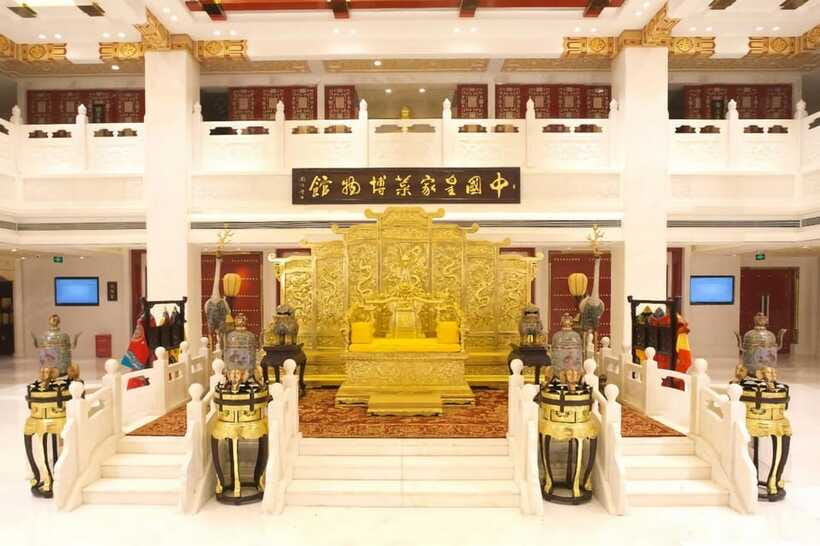
The museum holds more than 1,000 historical objects connected with imperial dining. The collection includes dining utensils and valuable documents, giving you a look at the practical side of palace meals as well as their ceremony.
You might find the displays most useful before eating. They provide context for the menu, even if you are not already familiar with Chinese court cuisine. Instead of seeing unfamiliar dishes arrive with no explanation, you can connect them to the wider story of royal kitchens and the people who worked in them.
The exhibits also introduce notable imperial dishes and chefs from different periods of Chinese history. That focus helps show that palace cuisine was not a single fixed style. It changed over time, and the Qing Dynasty forms the final historical period covered by the museum.
Do not expect an ordinary food museum with simple labels and a quick walk-through. The venue also functions as a restaurant, so the room, meal, and performance are designed to work together. The result is more theatrical than a standard museum visit, but it may feel less suited to anyone seeking a quiet, self-guided look at objects.
The palace-style dining room
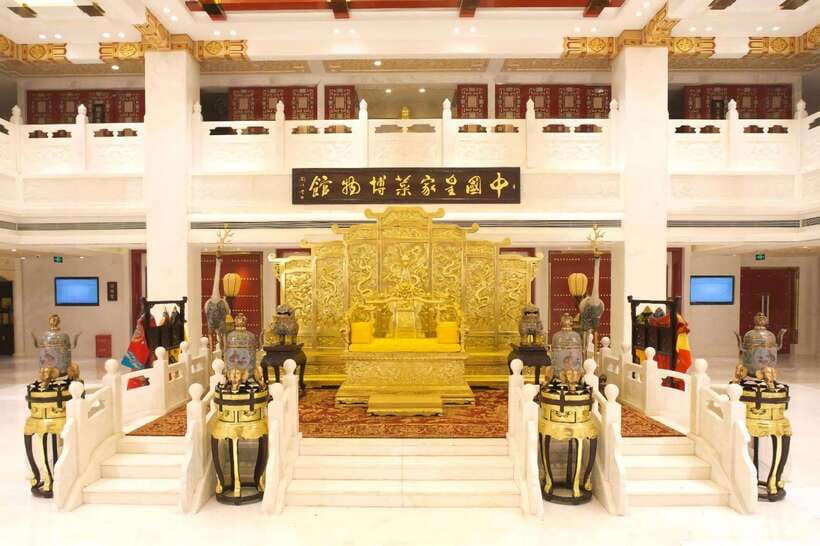
The restaurant is designed to resemble an ancient palace. That setting is a major part of the experience, since the meal is meant to feel like a royal banquet rather than a modern restaurant dinner.
The effect is visual and ceremonial. You sit down in a room built around the idea of imperial dining, then receive a menu inspired by dishes once served to emperors and their courts. The design helps turn a meal into a historical scene.
I would set your expectations correctly. This is a recreation, not a preserved imperial banquet hall, and the menu is presented for modern visitors. Still, the palace-style room gives the food a stronger sense of place than a regular restaurant could provide.
The atmosphere also explains why the activity lasts three to four hours. You need time for arrival, ticket checking, dining, the performance, and the surrounding cultural presentation. Plan it as one major part of your day, not as a quick meal between two Beijing sights.
What arrives at the table
The menu is broad, with small bites, cold and hot dishes, meat, seafood, soup, noodles, and sweet items. It is best viewed as a sampling of dishes and food traditions rather than one ordinary main course.
The listed menu includes:
- Snacks
- Appetizer
- Appetizer platter
- Braised sea cucumber with fish maw in a casserole
- Marinated tofu and bamboo shoots
- Roast duck with jujube wood
- Chinese cabbage in soup
- Roasted lamb
- Longevity noodles with poached eggs
- Deep-fried dough sticks, known as youtiao, with milk
- Yogurt filled with honey
The menu begins with smaller items, then moves into more substantial dishes. The sea cucumber and fish maw casserole is the most obviously luxurious course. These ingredients have long been associated with banquet cooking, and their place on the menu reinforces the royal theme.
Roast duck cooked with jujube wood brings a familiar Beijing association into the meal. It is a useful choice for visitors who want something recognizable alongside less familiar dishes. Roasted lamb adds another hearty course, while the soup with Chinese cabbage provides a simpler counterpoint to the richer plates.
The longevity noodles are a particularly nice cultural touch. Their meaning makes them more than a filler course, especially in a meal built around royal customs and symbolism. The poached eggs add substance and make the dish feel like a full course rather than a small garnish.
The final items shift toward comfort and sweetness. Youtiao with milk is a familiar Chinese breakfast combination, while yogurt with honey provides a light finish. The menu has plenty of variety, but anyone with a very restricted diet should check details before booking because no dietary substitutions are listed.
Same country, a completely different kind of day:
- Beijing: Mutianyu Great Wall Daily Tour with Ticket & Lunch
★ 5.0 · 3,056 reviews - All-Inclusive Tour: Tiananmen Square, Forbidden City, Great Wall
★ 5.0 · 2,873 reviews - MuBus: Mutianyu Great Wall ENG/ESP/RUS Guided Bus Tour
★ 5.0 · 2,361 reviews - 4-Hour Small Group Tour to Forbidden City with Entry Tickets
★ 5.0 · 1,863 reviews
The music, dance, and historical performance
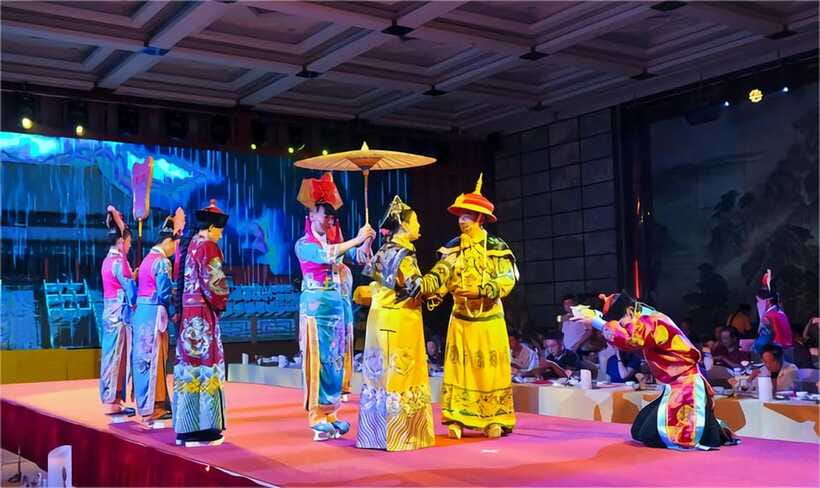
The show is included with the meal and begins at a precise time. For lunch, ticket checking is at 11:38 AM and the performance starts at 12:10 PM. For dinner, ticket checking is at 6:28 PM and the show starts at 6:50 PM.
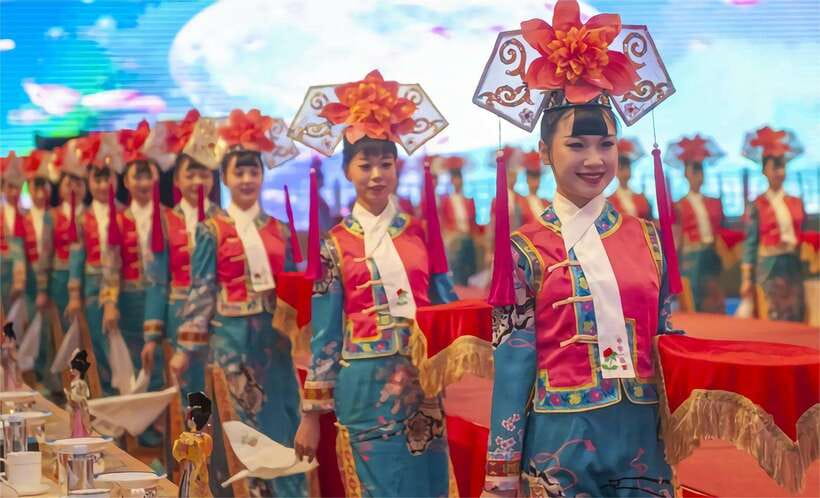
The production uses traditional clothing, music, dance, and strong visual color. It presents Chinese history through performance rather than through spoken museum labels alone. That makes the evening accessible even if you do not know much about imperial eras before arriving.
The costumes are one of the main visual attractions. They help distinguish the presentation from a standard musical or restaurant show, and they reinforce the connection to court life. The performance also gives the meal a sense of occasion, with the room shifting from dining space to cultural stage.
You should not book this expecting an intimate concert or a detailed academic lecture. The show is designed for a broad audience and works as a visual introduction to Chinese traditions. If you prefer food without entertainment, the performance may feel like extra padding. If you want a clear cultural event during your Beijing stay, it adds real value.
The meal and show are planned together, so timing matters. Arriving late could mean missing part of the dining sequence or the opening of the performance. I would arrive a few minutes before the stated ticket-checking time, especially if you still need to find the hall or collect your actual ticket.
Is $137 a fair price?
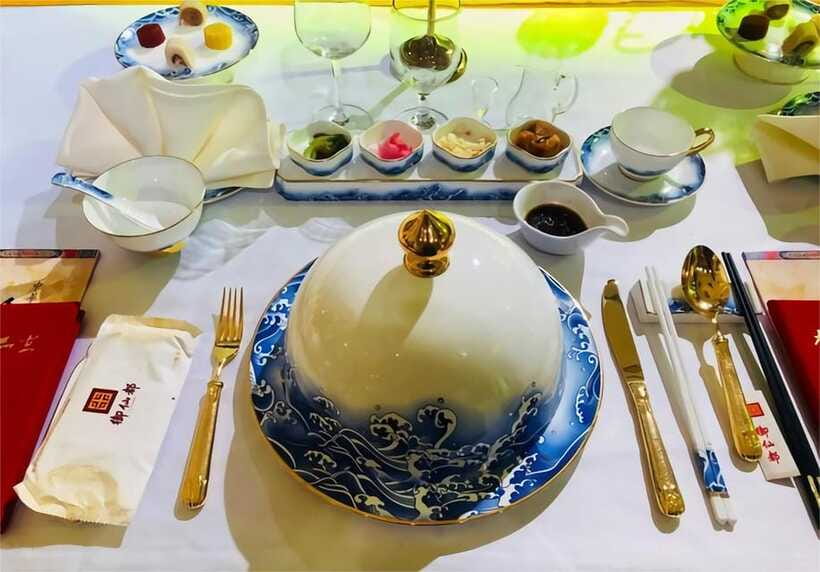
The cost is high for a meal in Beijing, so value depends on what you want from the evening. You are paying for several parts at once: museum access, a large multi-course menu, a palace-style dining room, and a traditional performance.
If you compare the ticket with the cost of dinner alone, it may look expensive. If you compare it with a separate cultural show plus a special-occasion meal, the figure becomes easier to understand. The combination is the key. You do not have to arrange two different outings, and the food has a clear historical theme.
Still, I would not call this a bargain. One Singapore-based customer specifically felt the ticket was expensive through the booking platform and suggested checking other ways to buy. That is practical advice. Compare the final price with the provider or direct purchase options before committing, while checking that the meal, show, and schedule are the same.
The activity has a 4.7 rating from six published ratings, with strong praise for the atmosphere, food variety, and performance. One French customer considered it worth the high price, while a Singapore customer felt the price was the weak point. That split gives you the right picture: the experience is well liked, but the cost deserves a close look.
Who will enjoy this experience most?
I would recommend it to you if you want an easy introduction to several parts of Chinese culture in one evening. It suits first-time visitors who may not yet know which dishes, customs, or performance traditions to seek out.
It is also a good fit for anyone who enjoys themed dining. The menu is not simply presented as Chinese food. The museum, room design, dishes, and stage show all point toward imperial court culture.
Families with older children may find the costumes and performance engaging, but children under two are not allowed. The activity is wheelchair accessible, which removes one concern for many visitors, though you should still arrive early enough to handle seating and ticket checking without a rush.
I would be more cautious if you are mainly interested in an everyday local meal. The setting is designed and theatrical, and the dishes are chosen for their royal associations. For a more ordinary taste of Beijing dining, this is probably not the right evening.
Timing, tickets, and small details that matter
Choose lunch if you want the activity to fit into the middle of your sightseeing day. Choose dinner if you want it to serve as a full evening event. The stated duration is three to four hours, so leave space afterward rather than booking another activity immediately.
Pay attention to the ticket instructions. The QR code created by the booking platform is not the actual ticket. The real ticket is sent by email, so check your inbox for the message and keep it available before you head to the venue.
Arrive a few minutes before ticket checking. The lunch check is at 11:38 AM, and the dinner check is at 6:28 PM. These are unusually exact times, which suggests that the meal and show run on a fixed schedule.
Traditional costume and makeup transformation are not included. If you want photographs in period clothing, treat those as optional extras and budget separately. The standard $137 ticket includes the meal and performance.
Cancellation is generous: you can cancel up to 24 hours in advance for a full refund. You can also reserve now and pay later, which helps if your Beijing plans are still changing.
My verdict: book for the full production, not just the food
I would book the Yuxiandu Imperial Cuisine Museum if you want a polished cultural evening with plenty to look at and taste. The best parts are the connection between the museum and menu, the variety of royal-style dishes, and the traditional performance with music, dance, costumes, and color.
I would skip it if $137 feels steep for dinner, or if you want a small, informal restaurant experience. Before booking, compare the direct price and confirm the exact meal time. If the cost fits your budget, this gives you a convenient way to encounter imperial food culture without arranging a museum visit, banquet, and show separately.
FAQ
Where is the Yuxiandu Imperial Cuisine Museum?
It is in Beijing’s Haidian District near Sijiqing Bridge.
How long does the experience last?
The activity lasts approximately three to four hours.
What does the ticket include?
The ticket includes the meal and the cultural performance.
Are traditional costumes included?
No. Traditional costume and makeup transformation are not included in the standard ticket.
What time should I arrive for lunch?
Lunch ticket checking is at 11:38 AM, and the performance begins at 12:10 PM. Arrive a few minutes before ticket checking.
What time should I arrive for dinner?
Dinner ticket checking is at 6:28 PM, and the performance begins at 6:50 PM. Arrive a few minutes before ticket checking.
Is the experience wheelchair accessible?
Yes, the activity is wheelchair accessible.
Can children attend?
Children under two years old are not permitted to join the activity.
Is cancellation available?
Yes. You can cancel up to 24 hours in advance for a full refund. Reserve now and pay later is also available.
Just added around Beijing
- Private Transfer to Mutianyu Great Wall with professional driver★ 5.0 · 19 reviews
- camp on the Great Wall overnight with sunrise and sunset on the wall★ 5.0 · 11 reviews
- One day tour to downtown Tianjin from Beijing by high speed train★ 5.0 · 3 reviews
- Yuxiandu Chinese Royal Cuisine Museum with Show and Royal Banquet★ 5.0 · 4 reviews
- BusDa:Ancient Great Wall &Badaling Great Wall Full-day Bus Tour★ 4.5 · 6 reviews
- ZANBUS: Trip to the Jinshanling Great Wall Departing at 7:30 AM★ 5.0 · 5 reviews
- Private Wild Great Wall Hiking tour at Simatai (Challenging)★ 5.0 · 16 reviews
- Wild Great Wall Huanghuacheng Half Day Tour★ 5.0 · 15 reviews
Beijing Tours, compared.


Forbidden City Tour(Group/Private)-Tickets Included
Read our review →
Mutianyu Great Wall Daily Tour with Ticket & Lunch
Read our review →
All-Inclusive Tour: Tiananmen Square, Forbidden City, Great Wall
Read our review →
4-Hour Small Group Tour to Forbidden City with Entry Tickets
Read our review →

Tianmen Square, Forbidden City & Royal Museum Tours
Read our review →