
Reviewed · BEIJING HUTONG TOURS
Immerse Yourself:Chinese Calligraphy Experience in Beijing Hutong
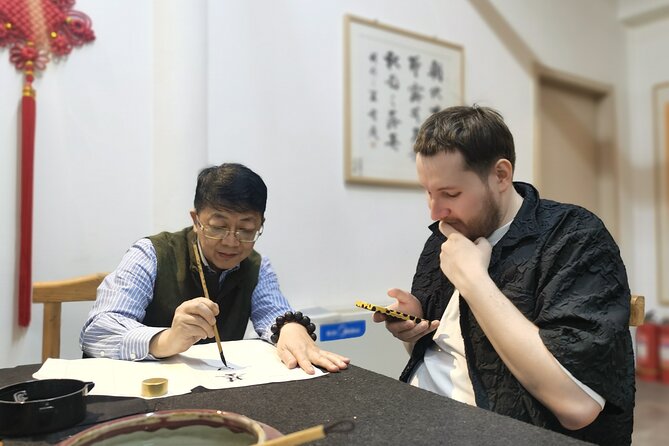
The clever part of this one-hour Beijing calligraphy class is that you do more than copy pretty symbols. With guidance from Master Guo Baoqing, you learn how brush strokes form characters, and even a complete beginner can leave knowing at least 10 Hanzi. That makes Chinese feel less mysterious, especially for children.
I like the hands-on format, with calligraphy supplies provided, and the small maximum of 10 people. I also like that the class takes place in a traditional hutong setting rather than in a large sightseeing venue. The main drawback is time: one hour is enough for an introduction, not a serious study of calligraphy.
Key points to know before booking
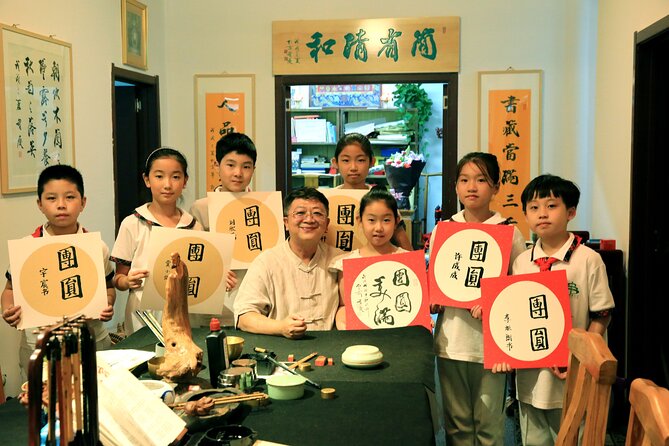
- Master Guo Baoqing leads a supportive, hands-on lesson designed for beginners.
- You learn at least 10 Chinese characters, making the class useful as well as artistic.
- The one-hour session includes brush, ink, and other calligraphy supplies, so you do not need to bring equipment.
- The class meets at 71-3 Ci Qi Kou Da Jie in Beijing’s Dongcheng District and ends at the same place.
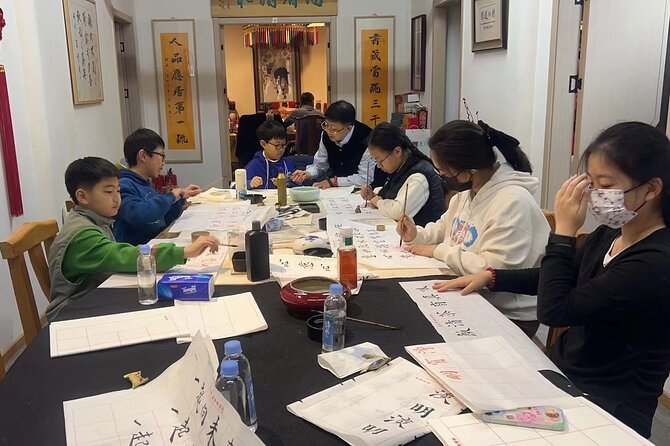
- Groups are capped at 10 people, which should allow more direct instruction than a large workshop.
- The $55 price includes the lesson and supplies, but not taxi, subway costs, or gratuities.
Why this short Beijing class is worth your time
Beijing can fill your day with imperial buildings, broad avenues, museums, and famous gates. Those sights explain a great deal about the city, but they often leave you looking rather than doing. This class gives you a chance to sit down, pick up a brush, and take part in a Chinese art that depends on patience, balance, and control.
I like experiences that give a trip a physical memory. You may forget the exact order of a sightseeing route, but the feel of a brush loaded with ink can stay with you. The finished paper may not be museum quality, but it carries your own effort and gives you something personal to take home.
The lesson is also a gentle introduction to Chinese writing. Hanzi are not built from an alphabet in the way English letters are. Each character has a form, a stroke order, and a visual balance. Learning 10 characters in one hour will not make you fluent in Mandarin, but it can make the writing system feel approachable instead of intimidating.
This is especially useful if you are visiting Beijing with children. The activity turns language study into something visible and tactile. Kids can see how a few simple brush movements become a complete character, then make their own attempt rather than simply watching an adult explain it.
More Beijing Hutong Tours in Beijing:
- Beijing Hutong Walking Food and Beer Tour at Hidden Restaurants
★ 5.0 · 1,132 reviews - Temple Heaven, Summer Palace, Lama Temple, Hutong Bus Tour
★ 4.7 · 319 reviews - Temple of Heaven, Summer Palace, Lama Temple, Hutong Tours
★ 5.0 · 311 reviews
Meeting Master Guo Baoqing at Ci Qi Kou Da Jie
The meeting point is 71-3 Ci Qi Kou Da Jie, Dong Cheng Qu, Beijing, 100051. The activity begins and ends here, so you will not need to arrange a separate drop-off at another part of the city.
The address is near public transportation, but transportation is not included. You will need to pay for your own taxi or subway trip. Build in enough time to find the address, particularly if you are coming from another attraction and are not familiar with Beijing’s street layout.
Master Guo Baoqing is the named instructor for the class. The teaching style is supportive and hands-on, which matters in calligraphy. A short explanation of brush technique is useful, but you learn far more when someone can watch your hand, correct a stroke, and show you how much pressure to use.
The small group limit helps here. With no more than 10 participants, the class should feel more personal than a crowded demonstration. It does not guarantee private instruction, but it gives the teacher a reasonable chance to pay attention to individual attempts.
The first strokes: tools, ink, and Chinese character form
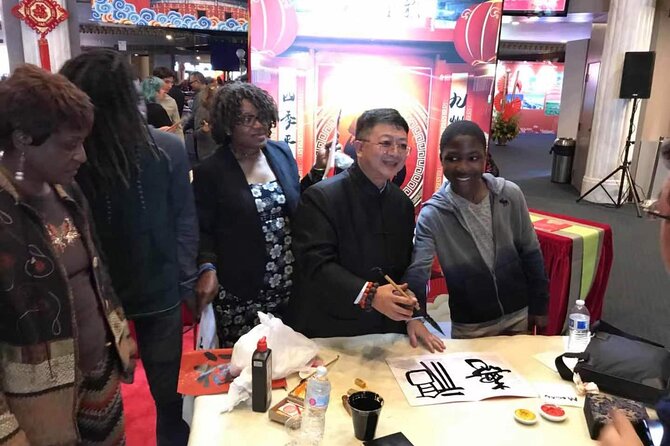
The class introduces the basic tools used for Chinese calligraphy, along with the history and purpose of the art. You learn how the brush works, how strokes are made, and why the shape of a character depends on more than simply putting lines on paper.
Calligraphy has an artistic side, but this is not just freehand decoration. The placement, direction, and weight of each stroke affect the whole character. A line that is too heavy or too light can change the visual balance, even when the character remains recognizable.
For a first-time student, that is part of the appeal. You get an immediate lesson in how Chinese writing combines language and design. The brush becomes both a writing tool and an art tool.
The lesson also introduces aesthetic principles. You may learn to look at spacing, proportion, rhythm, and the relationship between empty paper and ink. These ideas help explain why an apparently simple character can require careful practice.
The supplied materials remove one common problem: you do not need to research which brush, ink, or paper to buy before arriving. The class provides the calligraphy supplies used during the activity, allowing you to concentrate on the instruction.
Learning at least 10 Hanzi in one hour
The most useful promise of the class is that you can learn a minimum of 10 Chinese characters, even if you are just starting with the language. That does not mean you will master Mandarin pronunciation or grammar. It means you will leave with a small set of recognizable written forms and a better sense of how characters are built.
This distinction matters. Chinese calligraphy and spoken Mandarin are related, but they are not the same subject. The class gives you a practical first step into written Chinese, not a complete language course.
I like the way this changes your attitude toward Hanzi. Before a lesson, characters can look like complicated blocks. After practicing brush strokes and seeing repeated patterns, you may notice that they are made from specific parts and movements.
The educational value is strongest when you pay attention to the reason behind each stroke. Try not to rush toward a finished sheet. Watch the brush angle, pressure, and direction, then repeat the movement slowly. The goal is not only to produce a handsome character. It is to understand how the character is put together.
For families, the 10-character target gives the class a clear shape. Children can count their progress, compare early and later attempts, and recognize their new characters during the rest of a Beijing visit. That creates a simple connection between the lesson and the city outside.
Same country, a completely different kind of day:
- From Beijing: Mutianyu Great Wall Tours with Options
★ 4.9 · 9,216 reviews - Beijing: Forbidden City Tour(Group/Private)-Tickets Included
★ 4.8 · 7,974 reviews - Beijing: T-Square & Forbidden City Group or Private Tour
★ 4.8 · 4,446 reviews - Beijing: Mutianyu Great Wall Daily Tour with Ticket & Lunch
★ 5.0 · 3,056 reviews
Creating your own calligraphic pieces
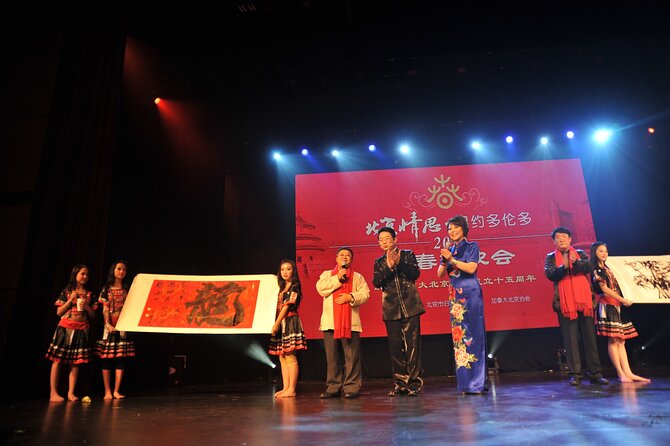
The lesson includes time to create personal calligraphic work. This is where the activity becomes more than a demonstration. You use the tools yourself and produce pieces that reflect what you learned during the session.
Expect the first attempts to be uneven. That is normal with brush calligraphy, where pressure and movement affect the line immediately. The point is not to create perfect work in 60 minutes. The point is to experience the process and understand why skilled calligraphers practice the same forms repeatedly.
The meditative quality of the activity may appeal to you if Beijing sightseeing begins to feel noisy or hurried. Sitting down and repeating controlled movements offers a slower change of pace. It is still an instructional activity, though, so you should not book it expecting a long silent retreat.
Your finished pieces can also become a more meaningful souvenir than a mass-produced item. They show the characters you learned and the progress you made. If you have children with you, their work can become a particularly memorable reminder of the city.
What the $55 price includes
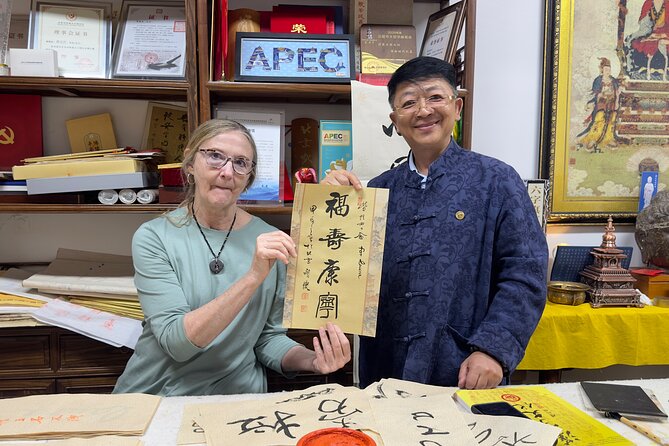
The listed price is $55 per person. That is not the cheapest way to spend an hour in Beijing, but the value depends on what you want from the activity.
You are paying for a guided cultural lesson, the instructor’s time, the use of calligraphy equipment, and a small-group setting. Since supplies are included, there is no need to add the cost of brushes, ink, or paper for the session. The activity also gives you direct participation, which a standard hutong walk or photo stop may not provide.
The price is easier to justify if you value instruction and a take-home result. It is less appealing if you only want a quick demonstration or if your main goal is to cover as many famous sights as possible. At one hour, the class works best as a focused addition to a larger Beijing itinerary.
Remember to budget separately for transportation. Taxi and subway costs are not included, and gratuities for staff are also excluded. The meeting point is near public transportation, which gives you some flexibility in reaching it.
The class is booked, on average, nine days ahead. That suggests you should not leave it until the last morning of your trip, particularly if your schedule is tight or you want a specific time.
Who will get the most from this activity
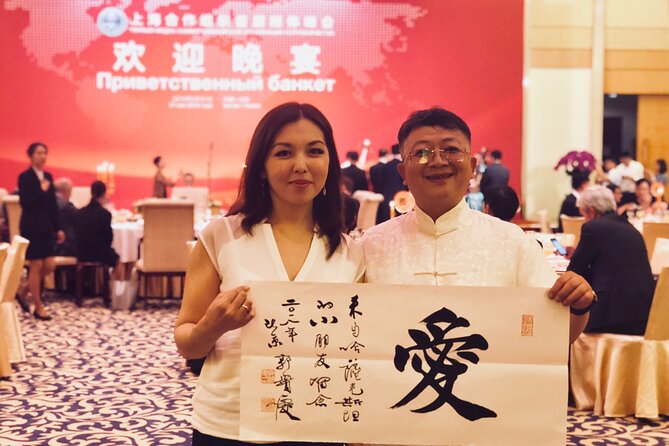
This experience suits first-time students, curious adults, and families. You do not need prior Chinese language experience, and the class is built around basic characters and brush technique rather than advanced ability.
It also works well for someone who has already visited Beijing’s major landmarks. After the Forbidden City, temples, and museums, an hour of calligraphy offers a different way to connect with the country. You are not simply reading about Chinese culture or photographing it. You are practicing one of its traditional art forms.
I would also consider it for a short Beijing stopover if the meeting point fits your route. The one-hour duration is easy to place between other plans, although you should allow extra time for transportation and finding the address.
This may not suit you if you dislike seated lessons, have no interest in making art, or want an extensive calligraphy course. The class provides an introduction, not a multi-day program. Its strength is accessibility and direct participation.
Most participants can take part, and the maximum group size is 10. The available information does not give specific details about wheelchair access or assistance for particular mobility needs, so contact the provider before booking if you require those arrangements.
Timing, transport, and cancellation details
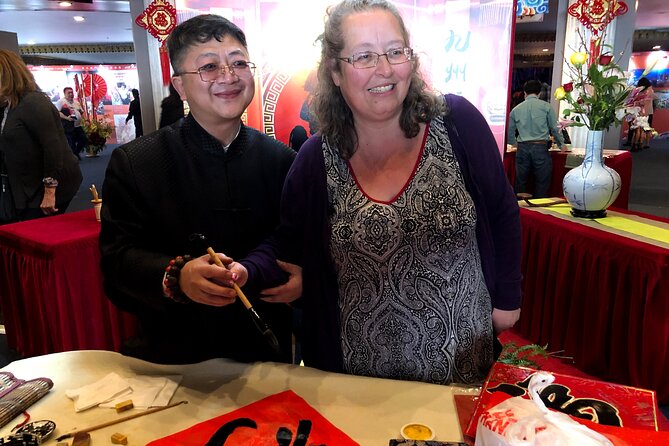
The activity lasts approximately one hour. It begins at the Ci Qi Kou Da Jie meeting point and returns there when finished. Since no transportation is provided, plan your route before leaving your hotel or previous sightseeing stop.
You receive confirmation when booking, and mobile tickets are accepted. The location is near public transportation, but you should still keep the full street address available on your phone.
Free cancellation is available if you cancel at least 24 hours before the local start time. Cancellations made less than 24 hours before the start time are not refunded, and changes within that period are not accepted.
The activity requires good weather. If poor weather causes cancellation, you can choose a different date or receive a full refund. The class also requires a minimum number of participants. If that minimum is not met, you will be offered another date or activity, or a full refund.
Those rules are worth noting because a one-hour class can be easy to move around, but a last-minute change may still affect your day. Book it early enough to keep the 24-hour cancellation window open.
A small class with a personal result
The strongest part of this experience is the combination of instruction and personal practice. Master Guo Baoqing’s supportive approach helps beginners connect with the process quickly, while the group cap keeps the session from becoming a distant demonstration.
You should arrive ready to listen carefully and repeat basic movements. The class may seem simple at first, but brush control takes attention. That is exactly why the activity works as a cultural lesson: you begin to understand the discipline behind the finished works you see in museums, shops, and temples.
The one-hour length keeps the class approachable, though it also limits how far you can go. You will learn tools, techniques, characters, and basic artistic principles, then make your own pieces. You will not leave with professional skill, and the activity does not claim to teach fluent Mandarin.
Should you book this Beijing hutong calligraphy class?
Book it if you want a compact, hands-on cultural activity that adds something personal to a Beijing sightseeing plan. The $55 fee is reasonable for a small class with supplies and direct guidance, particularly if you value the 10-character language lesson and a piece of your own work to take home.
I would choose it for families, first-time visitors who want more than landmark photos, and adults who enjoy learning through practice. I would skip it only if your schedule is too rushed for a fixed meeting point or if you want a longer, more advanced course.
For most people, this is a good one-hour change of pace. You sit down, learn how Chinese characters are formed, and leave with a better understanding of why calligraphy remains such a meaningful part of Chinese culture.
FAQ
How long does the Chinese calligraphy experience last?
The activity lasts approximately one hour.
How much does the experience cost?
The listed price is $55 per person.
Where does the class meet?
The meeting point is 71-3 Ci Qi Kou Da Jie, Dong Cheng Qu, Beijing, China, 100051.
Where does the activity finish?
The class ends back at the meeting point.
Is transportation included?
No. Taxi and subway costs are not included in the price.
Are calligraphy supplies provided?
Yes. Calligraphy supplies are provided for use during the activity.
How many people can join the class?
The maximum group size is 10 participants.
Do I need previous Chinese language experience?
No. Beginners can participate, and the session is designed to help you learn at least 10 Chinese characters.
Is the activity near public transportation?
Yes. The meeting point is near public transportation.
What is the cancellation policy?
You can cancel at least 24 hours before the local start time for a full refund. Cancellations or changes made less than 24 hours before the start time are not accepted for a refund. If poor weather or an unmet minimum number of participants cancels the activity, you will be offered another date or activity, or a full refund.
Just added around Beijing
- Private Transfer to Mutianyu Great Wall with professional driver★ 5.0 · 19 reviews
- camp on the Great Wall overnight with sunrise and sunset on the wall★ 5.0 · 11 reviews
- One day tour to downtown Tianjin from Beijing by high speed train★ 5.0 · 3 reviews
- BusDa:Ancient Great Wall &Badaling Great Wall Full-day Bus Tour★ 4.5 · 6 reviews
- ZANBUS: Trip to the Jinshanling Great Wall Departing at 7:30 AM★ 5.0 · 5 reviews
- Yuxiandu Chinese Royal Cuisine Museum with Show and Royal Banquet★ 5.0 · 4 reviews
- Private Wild Great Wall Hiking tour at Simatai (Challenging)★ 5.0 · 16 reviews
- Wild Great Wall Huanghuacheng Half Day Tour★ 5.0 · 15 reviews
Beijing Hutong Tours, compared.

Beijing Hutong Walking Food and Beer Tour at Hidden Restaurants
Read our review →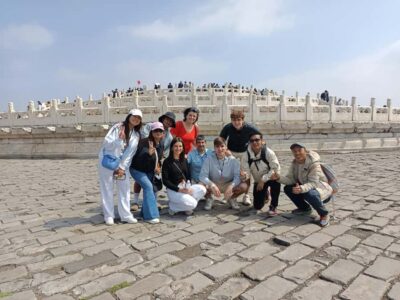
Temple Heaven, Summer Palace, Lama Temple, Hutong Bus Tour
Read our review →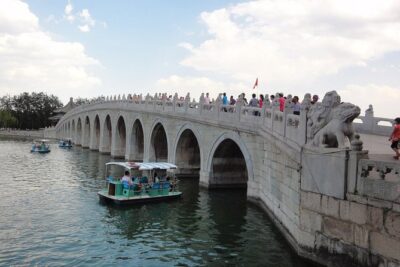
Temple of Heaven, Summer Palace, Lama Temple, Hutong Tours
Read our review →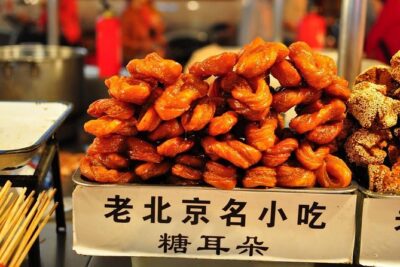
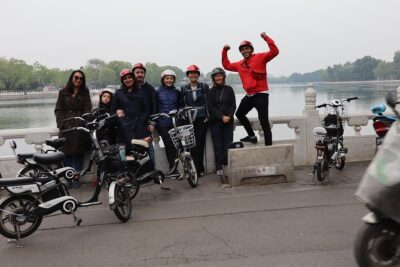

Beijing City Walk: Explore Hutongs Life and Old Beijing
Read our review →Browse the lists this tour appears in