Reviewed · TICKETS
Confucius Temple and Imperial College Entrance Ticket
Beijing’s Temple of Confucius and Guozijian Museum gives you a close look at how education worked in imperial China. This was not simply a place of worship. It was also a center for learning, official ceremonies, and the imperial examination system that shaped government for centuries.
I like the easy pairing with the nearby Lama Temple, and I like that the ticket costs only $8 per person. The museum has plenty of English information, so you can make sense of the main displays without hiring a guide. The main caution is the digital ticket system: one booking for two people had an issue with one QR code, so check both codes before you arrive.
Key points to know
- Second-largest Confucian temple in China: Only the temple in Qufu, Confucius’ hometown, is larger.
- Hundreds of scholar steles: Stone tablets record the names of people who passed the imperial examination.
- Two connected sites: You visit the Temple of Confucius and the former Guozijian imperial college.
- Allow two to three hours: The admission ticket gives you enough time to read displays and examine the halls.
- English guidance is available: Choose the guided option if you want the stories explained as you walk.
- Convenient Lama Temple combination: The site is near public transportation and makes a sensible addition to a north-central Beijing sightseeing day.
Why this small Beijing museum matters
If you have already seen Beijing’s grand palaces and broad imperial avenues, this visit offers a different angle. Here, the focus is education, scholarship, and the people who passed the demanding imperial examinations.
The Temple of Confucius was built in 1302. Officials came here to honor Confucius and offer sacrifices, and the complex contains statues, carvings, scholarly halls, and stone records connected with China’s examination system.
Next door, the Guozijian was built in 1306. It served as the imperial college during the Yuan, Ming, and Qing dynasties. Together, the two sites explain how Confucian learning supported the imperial government.
I find this pairing especially useful because it connects ideas with physical evidence. You are not only reading about Confucian values or civil service examinations. You are standing among the buildings and stone tablets linked to that system.
A few more Beijing trips to weigh up
- Beijing: Forbidden City Tour(Group/Private)-Tickets Included
★ 4.8 · 7,974 reviews - Beijing: Mutianyu Great Wall Daily Tour with Ticket & Lunch
★ 5.0 · 3,056 reviews - 4-Hour Small Group Tour to Forbidden City with Entry Tickets
★ 5.0 · 1,863 reviews
Entering through the Temple of Confucius
The first stop is the Temple of Confucius, Beijing’s second-largest Confucian temple after the one in Qufu. Its original purpose was official rather than personal. Government officials came to honor Confucius, whose teachings shaped education and public life across imperial China.
You can expect a series of halls and courtyards rather than one single attraction. The site includes statues and carvings, so take your time instead of treating it as a quick photo stop.
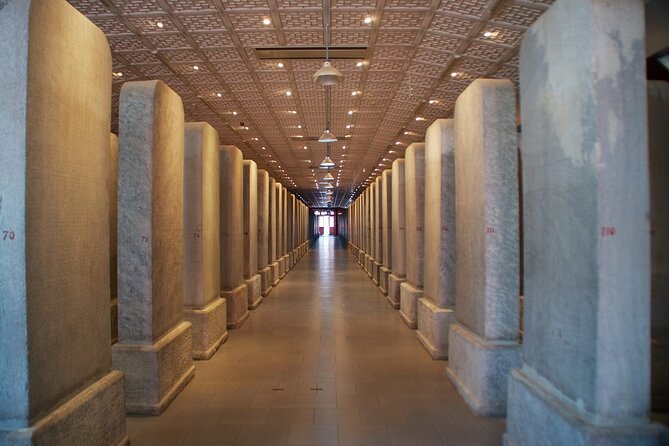
The stone steles are the most distinctive feature. Hundreds record the names of scholars who passed the imperial examination. These are more than decorative tablets. They give the examination system a human scale, preserving the names of successful candidates rather than presenting the system only as an abstract political idea.
I would pause at the steles even if you are not a specialist in Chinese history. The rows of names make clear how much importance the empire placed on formal learning and academic achievement.
The museum also provides English instructions and exhibit information. That makes independent visiting practical, especially for people who prefer to move at their own speed or stop only at displays that catch their attention.
Moving next door to the former imperial college
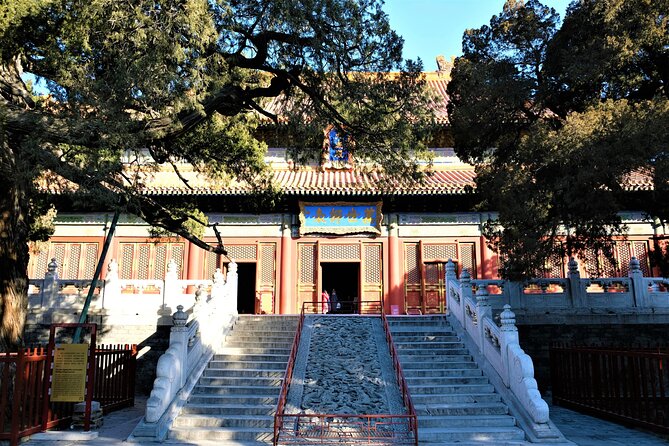
The Guozijian Museum occupies the site of the old imperial college. It was constructed in 1306 and served as an important educational institution under the Yuan, Ming, and Qing dynasties.
This second part of the visit adds context to the temple. The temple shows the ceremonial side of Confucian education, while the college represents the institution that trained and examined scholars connected with imperial administration.
You will see additional scholarly halls and displays about the educational system in imperial China. The value here is the connection between the two sites. A visit to only the temple could feel like a look at an old religious complex. Adding the former college helps explain why the buildings mattered.
I would not rush through the Guozijian section. Read the English panels where available, and use the extra time to compare the mood of the college with the ceremonial spaces of the temple.
Allow two or three hours, not just a quick stop
The admission is valid for the day, and the full visit can take about two to three hours if you read the displays and examine the stone records carefully. The advertised duration is approximately one day, but that should be understood as a flexible admission period rather than a nonstop guided program lasting all day.
Your actual pace will depend on your interest in the subject. You can walk through more quickly, or spend longer with the English explanations and inscriptions.
I like this flexibility. You are not locked into a tightly timed group schedule, and the site works well as part of a larger day in Beijing. Since the Lama Temple is only a short walk away, you can combine the two without adding a long cross-city transfer.
The site is also near public transportation. The supplied information does not specify a particular station or route, so check the current map and transport details before setting out.
Same country, a completely different kind of day:
- From Beijing: Mutianyu Great Wall Tours with Options
★ 4.9 · 9,216 reviews - Beijing: T-Square & Forbidden City Group or Private Tour
★ 4.8 · 4,446 reviews - All-Inclusive Tour: Tiananmen Square, Forbidden City, Great Wall
★ 5.0 · 2,873 reviews - MuBus: Mutianyu Great Wall ENG/ESP/RUS Guided Bus Tour
★ 5.0 · 2,361 reviews
The $8 ticket and what you receive
At $8 per person, the ticket is priced as an affordable cultural stop. You receive entrance to the Temple of Confucius and Guozijian Museum, with the option to add an English-speaking guide.
For a self-guided visit, the value is strong if you enjoy reading and looking closely. One useful feature is the amount of English information throughout the exhibits. You can spend two or three hours here without needing a guide to understand the basic subject matter.
The guided option may be worth the extra cost if you want the larger story explained as you walk. Confucius, the imperial college, and the examination system are connected, but the meaning of the halls and steles may not be obvious at first glance.
I would choose the guide if you have limited time, prefer spoken explanations, or want help connecting details across both sections. I would choose the basic ticket if you enjoy quiet museum visits and are comfortable reading signs on your own.
Group discounts are listed as a feature, though the supplied information does not state the discount amount or the number of people required. Ask for the exact group price before booking if you are visiting with a larger party.
Independent exploring or an English-speaking guide
This experience can work in two distinct ways. With the entrance-only option, you set your own pace and decide how much attention to give each hall, carving, and stele.
The English instructions are an important practical advantage. They allow you to understand the main displays without depending entirely on a guide or translation app.
A guide changes the character of the visit. Instead of piecing together the purpose of each area yourself, you can hear the historical connections as you move through the complex. The available guide is English-speaking, but no guide’s name is provided, so you should not expect to request a particular person.
Because this is a private activity, only your group participates when you select the private guided option. That can be more comfortable than joining a large public group, especially if you want to ask questions or linger at a particular display.
The tradeoff is simple: the ticket-only visit gives you freedom, while the guided choice gives you more interpretation. Neither choice is automatically better.
The QR code detail you should not ignore
The tickets are sent five days before your travel date, so check your email or booking messages before leaving for the site. Keep the QR codes easy to open on your phone.
There was a reported problem in which a booking for two people produced two QR codes, but only one worked at the entrance. Both people were eventually admitted after a guard recognized that the problem was not their fault.
That outcome should not be treated as a reason to avoid the visit, but it is a reason to prepare. Confirm that you have received the correct number of codes, and save the provider’s contact phone number. If a code fails, contact the provider rather than immediately booking another ticket.
The admission process may be simple, but digital tickets are only useful when the codes display properly. A screenshot or saved copy may also help if your connection is unreliable, though the supplied information does not promise that screenshots will be accepted.
Pairing it with the Lama Temple
The location makes this experience easy to add to a Beijing day. The Temple of Confucius and Guozijian Museum is a short walk from the Lama Temple, so you can visit both without treating them as separate long-distance excursions.
The two sites also give you a useful contrast. The Lama Temple is known for its Buddhist setting, while the Temple of Confucius and former imperial college focus on Confucian learning, official ceremony, and education.
I would allow enough time for both rather than trying to squeeze this museum into a rushed morning. The Confucius site alone can occupy two or three hours if you read the English information and study the stone records.
Public transportation is nearby, and most people can participate. The experience is listed as suitable for most travelers, but no detailed accessibility information is provided. If you have specific mobility needs, confirm the route and site conditions before booking.
What the visit does well, and where it falls short
The strongest feature is the chance to see the imperial education system in a real setting. The hundreds of examination steles are memorable because they preserve the names of successful scholars, while the halls and college buildings give the subject a physical setting.
The English information is another clear advantage. You can visit independently and still understand much of what you are seeing. That keeps the $8 admission useful for people who do not want a formal tour.
The price also makes it easy to add this stop to a larger Beijing plan. You are paying for access to two connected historic institutions, not for a full-day program with transport or meals.
The main weaknesses are practical rather than cultural. The QR code problem shows that ticket delivery can require attention. Also, the entrance-only option may feel limited if you want a detailed explanation of Confucian philosophy or the imperial examination process.
There is no transportation, meal, or other major service listed in the included features. Plan to reach the site independently and treat the ticket as admission, not as a complete guided day.
Who should book this experience
I recommend it most strongly for you if you enjoy museums, architecture, inscriptions, and the story of how governments used education. It is also a good choice if you want a quieter cultural stop near the Lama Temple.
Families and mixed-interest groups may find the flexible format useful. People who want to read only a few panels can move along, while history-minded members of the group can spend longer with the steles and scholarly halls.
Choose the guided option if you want the site explained in English or if your Beijing schedule gives you little time to prepare. Choose the basic ticket if you prefer exploring alone and want to keep the cost low.
This may not be the best choice if you are looking only for a grand imperial palace, dramatic gardens, or a major panoramic view. The appeal here is more thoughtful: names carved in stone, educational institutions, and the formal world that supported imperial rule.
Cancellation and booking flexibility
You can cancel free of charge up to 24 hours before the experience start time for a full refund. Cancellations made less than 24 hours before the start time are not refundable, and changes within that period are not accepted.
The cut-off follows Beijing local time. Keep that in mind if you are arranging several activities across different time zones before your trip.
Should you book the $8 Confucius Temple ticket?
Yes, if you want an affordable and informative stop that shows a side of Beijing beyond its best-known imperial sights. I especially like the combination of the Temple of Confucius, the former Guozijian, the examination steles, and the nearby Lama Temple.
Book the basic ticket if you are happy reading English displays and exploring for two or three hours. Pay for the guide if you want the connections explained as you go.
Before arrival, check that both QR codes have been delivered and keep the provider’s phone number available. With that small precaution, this is a useful, low-cost addition to a Beijing sightseeing plan.
FAQ
Where is the Temple of Confucius and Guozijian Museum?
It is in Beijing, a short walk from the Lama Temple and near public transportation.
What does the ticket include?
The ticket includes entrance to the Temple of Confucius and Guozijian Museum.
How much does admission cost?
The listed price is $8 per person.
Is an English-speaking guide included?
An English-speaking guide is included only when you select the related guided option.
Can I visit without a guide?
Yes. English instructions and exhibit information are available throughout the site.
How long should I allow for the visit?
Plan on about two to three hours if you want to read the displays and examine the site carefully. The admission is described as valid for one day.
What is the Temple of Confucius known for?
It was built in 1302 for officials to honor and offer sacrifices to Confucius. It also contains statues, carvings, and stone steles recording scholars who passed the imperial examination.
What is the Guozijian Museum?
It occupies the former imperial college, constructed in 1306 and used during the Yuan, Ming, and Qing dynasties.
When will I receive the tickets?
The tickets are sent five days before the travel date.
Can I cancel for a full refund?
Yes. You can cancel at least 24 hours before the experience start time for a full refund. Later cancellations and changes are not accepted.
Just added around Beijing
- Private Transfer to Mutianyu Great Wall with professional driver★ 5.0 · 19 reviews
- camp on the Great Wall overnight with sunrise and sunset on the wall★ 5.0 · 11 reviews
- One day tour to downtown Tianjin from Beijing by high speed train★ 5.0 · 3 reviews
- BusDa:Ancient Great Wall &Badaling Great Wall Full-day Bus Tour★ 4.5 · 6 reviews
- ZANBUS: Trip to the Jinshanling Great Wall Departing at 7:30 AM★ 5.0 · 5 reviews
- Yuxiandu Chinese Royal Cuisine Museum with Show and Royal Banquet★ 5.0 · 4 reviews
- Private Wild Great Wall Hiking tour at Simatai (Challenging)★ 5.0 · 16 reviews
- Wild Great Wall Huanghuacheng Half Day Tour★ 5.0 · 15 reviews
Tickets, compared.

Forbidden City Tour(Group/Private)-Tickets Included
Read our review →
Mutianyu Great Wall Daily Tour with Ticket & Lunch
Read our review →
4-Hour Small Group Tour to Forbidden City with Entry Tickets
Read our review →
Ngong Ping 360: Cable Car Return Tickets & Combos
Read our review →
The Temple of Heaven or Summer Palace Entry Ticket
Read our review →
Beijing Forbidden City Ticket Booking (Optional: guide service)
Read our review →