
Reviewed · BEIJING HUTONG TOURS
Beijing Hutong Walking Tour History, Architecture and Local Life
Beijing’s old lanes make the city easier to understand, and this tour puts several layers of it together in one compact walk. You move from a Chinese-style church to an active temple, a Yuan Dynasty pagoda, a narrow hutong, imperial buildings, and a view of the White Stupa near the modern financial district. The contrast between old and new Beijing is the real subject here.
I like the small maximum of 10 people, which gives you room to ask about doors, courtyards, religion, and local customs. I also like the practical touch of a traditional Beijing drink, bottled water, and restaurant suggestions from guides such as Lori and Dee. The main drawback is pace: three hours covers a lot, so some stops are brief, and the Temple of Previous Dynasties is visited only if it is open.
Key points to know before you book
- Six very different sights in three hours: Churches, temples, a pagoda, a hutong, imperial architecture, and the White Stupa all make the route.
- A walk through old Beijing life: Zhuanta Lane gives you a look at local homes and daily routines, not just grand monuments.
- A useful small-group format: The group has a maximum of 10 people, with time for questions and personal guidance.
- A strong starting point: The tour begins at Xisi Subway Station, making it practical for visitors already using Beijing’s metro.
- Good city orientation: Guides provide food suggestions, travel advice, water, and a traditional Beijing drink.
- Mostly outdoor and on foot: There is no private transport, and the total time includes walking and movement between sights.
Why this walk works for first-time visitors
I like this route because it does not treat Beijing as a string of isolated monuments. Instead, it shows how faith, government, family life, commerce, and modern business districts sit close together.
You begin at Xisi Subway Station in Xicheng District. From there, the walk moves through an older part of the capital before ending near Fuchengmen Station and Beijing’s Financial Street. That change matters. You get a quick sense of how the city has expanded without losing every trace of its earlier form.
The route also gives you useful context for sights you may see elsewhere in China. You hear about Siheyuan courtyard homes, different Chinese pagoda forms, temple design, palace-style buildings, and the meaning of doors in old neighborhoods. Lori, one of the guides associated with the experience, explains how hutongs were arranged and why their doors matter. Dee is described as personable and willing to answer many questions, with helpful suggestions for lunch and further sightseeing.
This is not a long museum visit or a formal lecture. It is a guided walk with short stops. If you want a clear introduction to Beijing’s built environment and everyday culture, that format works well. If you prefer to spend an hour at each monument, the schedule may feel tight.
More Beijing Hutong Tours in Beijing:
- Beijing Hutong Walking Food and Beer Tour at Hidden Restaurants
★ 5.0 · 1,132 reviews - Temple Heaven, Summer Palace, Lama Temple, Hutong Bus Tour
★ 4.7 · 319 reviews - Temple of Heaven, Summer Palace, Lama Temple, Hutong Tours
★ 5.0 · 311 reviews
Xishiku Church and Beijing’s Chinese Catholic story
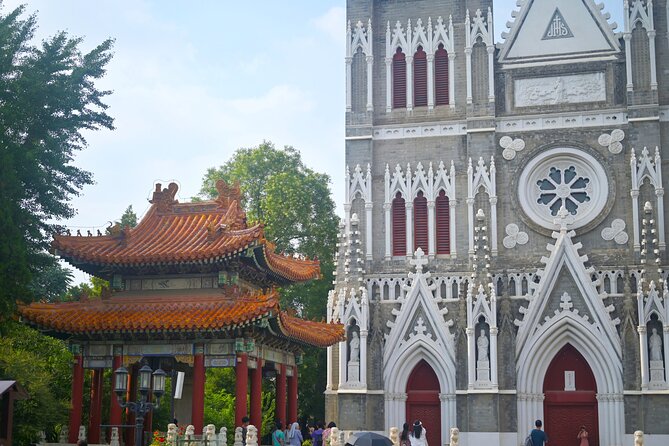
The first stop is Xishiku Church, described as Beijing’s earliest church. You have about 10 minutes here, and admission is free.
The interest is not only the church itself. The guide explains its story and the way Christian architecture was given a Chinese character. That makes this a useful opening stop because it introduces one of Beijing’s recurring themes: outside ideas were brought into the capital, then placed within local traditions and political history.
Ten minutes is enough for an introduction and a look at the exterior or accessible areas, but not enough for an extended visit. Treat it as a scene-setter rather than the main event. The church also gives the tour a welcome change of mood before you continue to Guangji Temple.
Guangji Temple brings religious architecture into focus
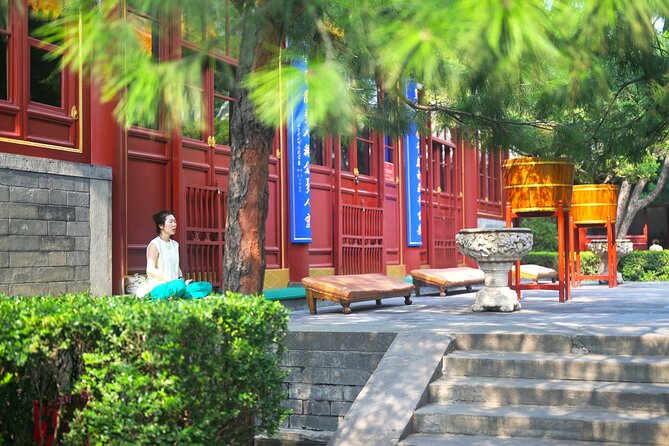
At Beijing Guangji Temple, you spend about 20 minutes. Admission is free, and the stop focuses on traditional Chinese temple architecture and old finger paintings.
This is one of the more useful stops for readers who want help making sense of Chinese religious sites. A temple can seem like a collection of gates, halls, courtyards, rooflines, and incense burners when you first arrive. A guide can help you notice how those parts fit together and explain why the layout matters.
The mention of ancient finger paintings gives the stop an artistic detail beyond the buildings themselves. Still, 20 minutes is a short visit. You should expect an introduction and selected points of interest, not a complete examination of the temple grounds.
Temple access can also vary by conditions on the day. The tour’s general information says most people can take part, but it does not promise that every interior area will be open. Wear comfortable shoes and be ready to keep moving.
A Yuan Dynasty pagoda inside an old courtyard
The third stop, Zhengyang Shuju, combines two very different sights. You see the Wansong Brick Pagoda, dating from the Yuan Dynasty, and a collection of old Beijing images in a Siheyuan courtyard. The visit lasts about 20 minutes.
The pagoda is a particularly good reason to take this route. It offers a chance to see a less familiar type of historic structure and to hear how Chinese pagodas differ in form and purpose. The surrounding courtyard adds another layer. A Siheyuan is organized around an enclosed central space, and that arrangement helps you understand how older Beijing homes supported family life and privacy.
The old images of Beijing should help connect the buildings around you with the city they once served. This is where the tour moves beyond a simple sightseeing checklist. You are looking at both a surviving structure and visual records of a changing city.
Again, the timing is brisk. If you are absorbed by the pagoda or photographs, you may wish for more time. The benefit is that the tour keeps its promise as a compact introduction and still leaves room for several other districts and monuments.
A few more Beijing trips to weigh up
- Beijing Historical Tour II including Summer Palace, Lama Temple & Panda Garden
★ 4.0 · 187 reviews - Beijing Historical Tour I – Forbidden City, Tiananmen Square & Temple of Heaven
★ 4.0 · 120 reviews - Beijing Historic City Guided Walking Tour + Calligraphy Creation
★ 5.0 · 59 reviews - Beijing Culture: Tea Ceremony, Heritage Instrument & Calligraphy
★ 5.0 · 57 reviews
Zhuanta Lane shows the human scale of old Beijing
Beijing Zhuanta Lane is the most direct look at daily life on the route. It is described as one of Beijing’s oldest hutongs, and the walk through it lasts about 15 minutes.
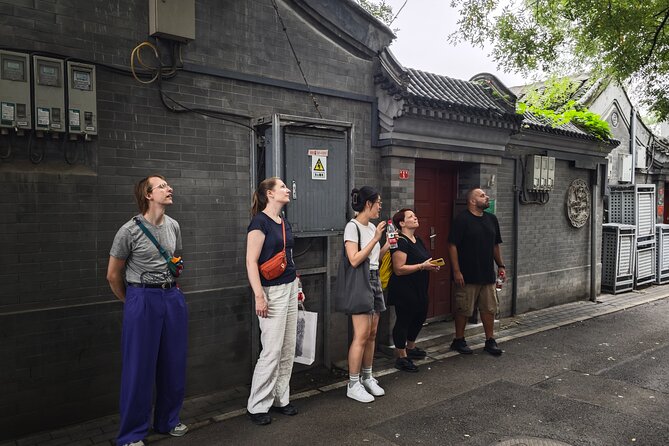
This is the point where the capital’s past becomes less formal. Instead of viewing a church, temple, or imperial building, you pass through a lane where the shape of the neighborhood matters. Your guide can point out how hutongs were laid out, how doors signaled different homes, and how the lanes relate to Siheyuan compounds.
You should keep in mind that this is a living neighborhood, not a preserved set built only for sightseeing. Look, listen, and follow your guide’s advice about where to stand and how to behave. The short time here gives you a taste of the area rather than a full neighborhood study.
I consider this one of the strongest parts of the walk because it helps balance the grand architecture. Beijing’s story is not only about emperors and temples. It is also about narrow lanes, courtyard entrances, and the ordinary routines that continue around them.
The Temple of Previous Dynasties and imperial ceremony
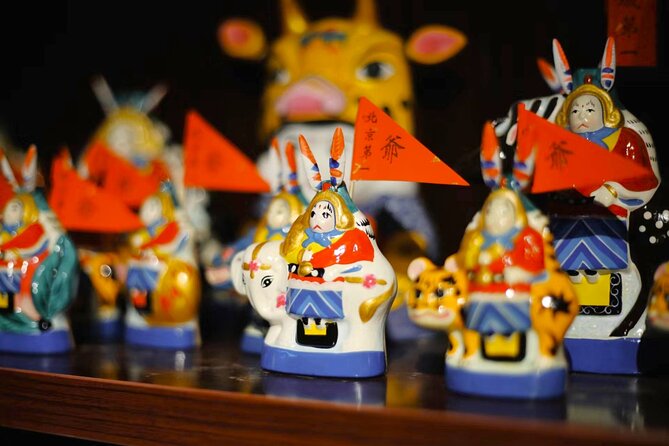
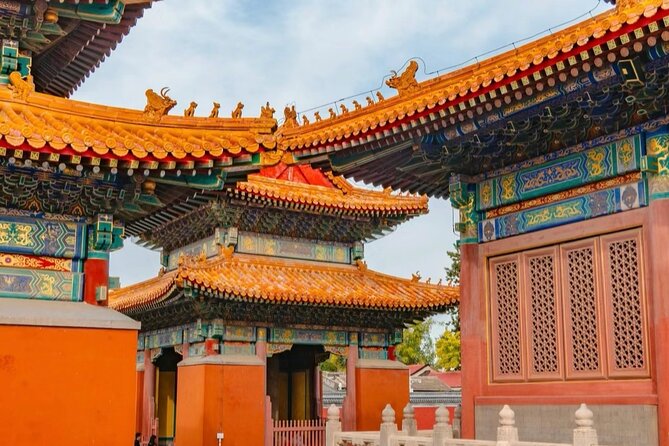
The Temple of Previous Dynasties, also called Lidai Diwang Miao, is scheduled for about 20 minutes. Admission is included, but the visit takes place only if the site is open.
This stop introduces the way Chinese rulers honored earlier emperors and ancestors. The grand palatial structures make the point through scale and design. You get another chance to compare functional religious architecture with buildings connected to imperial ceremony and state memory.
The conditional access is important. Do not book this walk solely for the temple, since opening conditions can change. If it is closed, the tour still includes several other significant sites, but this particular look at ancestor reverence will be missing.
For readers interested in Chinese history, the stop is valuable because it links architecture with public ritual. The buildings were not simply attractive halls. Their arrangement expressed rank, memory, and the government’s relationship with earlier rulers.
Seeing the White Stupa from a local cafe
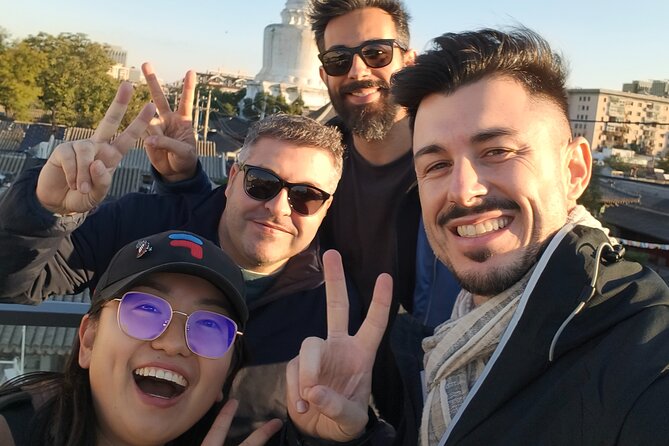
The final major sight is the White Stupa Temple, also known as Miaoying or Baita Si. The guide takes you to a nearby cafe balcony to show you the exterior design of the White Stupa and explain different types of Chinese pagodas. This part lasts about 15 minutes.
The balcony viewpoint is a practical choice. You get a raised look at the stupa without the tour needing to spend a large part of the afternoon inside the complex. It also keeps the walk moving toward its endpoint near Fuchengmen and Financial Street.
Some people may find this less satisfying than entering the temple grounds. The visit focuses on the exterior and the guide’s explanation, so check your expectations before booking. If you mainly want a lesson in pagoda design and a clear view, it works. If you want a full temple visit, this route does not promise that.
The ending near a modern financial center gives the tour a neat final contrast. Within a few hours, you have moved from old lanes and imperial spaces toward one of Beijing’s business districts. That shift helps you see the city as a living capital rather than a museum.
What the $49 price includes
The price is $49 per person. For a three-hour walk, that is a fair value if you want interpretation rather than simply directions between landmarks.
Your fee covers admission where applicable, all listed taxes and fees, bottled water, and a complimentary traditional Beijing drink. It does not include private transportation, but that is not a serious concern for this route. The meeting point is at Xisi Subway Station, and the ending point is near Exit C at Fuchengmen Station on Line 2. You are paying mainly for the guide’s explanations, route planning, and local advice.
The food recommendations add practical value. Dee specifically provides suggestions for lunch, and the tour is designed to help you get oriented quickly. If this is your first time in Beijing, advice on restaurants and getting around can be worth as much as another monument.
The price is less compelling if you want a slow photographic walk or long entry time at every site. It is better suited to someone who wants several different subjects tied together by a local guide.
Timing, group size, and walking demands
The advertised duration is about three hours, including movement between locations. There is no private vehicle, so expect to walk between Xisi, the temples, the hutong, and the final area near Fuchengmen.
The group maximum is 10 people. That is small enough for questions without promising a private tour. The experience is offered with a mobile ticket, and confirmation is provided when you book.
Most people can participate, and service animals are allowed. The tour is near public transportation, which makes both the start and finish manageable. Because the walk depends on good weather, a poor-weather cancellation may lead to a different date or a full refund. The same applies if the minimum number of participants is not reached.
You can cancel for a full refund up to 24 hours before the start time. Changes or cancellations made inside that window are not accepted for a refund, so check the local time and forecast before you commit.
Who will get the most from this Beijing walk
I would choose this tour for a first visit to Beijing, especially if you want a quick orientation before exploring more of the city on your own. It is also useful for repeat visitors who have seen the major imperial sights and want more neighborhood texture.
It suits you if you enjoy:
- Asking questions about architecture and local customs
- Seeing several types of historic buildings in one outing
- Walking through an old residential lane
- Getting restaurant and transport suggestions
- Learning how hutongs, courtyards, temples, and pagodas fit into Beijing’s story
It may not suit you if you need extensive indoor time, private transport, or guaranteed access to every site. The Temple of Previous Dynasties may be closed, and the White Stupa is viewed from a cafe balcony rather than through a full interior visit.
Bring comfortable footwear and plan for a steady pace. Since the tour begins and ends at different subway stations, it also works well as part of a larger day in Xicheng District.
Should you book this hutong tour?
Book it if you want a compact, human-scale introduction to Beijing rather than another large palace complex. The mix is unusually broad: Xishiku Church, Guangji Temple, a Yuan Dynasty brick pagoda, a working hutong, an imperial temple, and the White Stupa. Guides such as Lori and Dee add the personal layer, with explanations about doors, local life, lunch, and getting around.
Skip it if your priority is a slow visit to one major monument or a guaranteed temple interior. At $49, the value comes from the range of stops and the guide’s context, not from long admission time at any single place.
For most first-time visitors with three hours to spare, I think the route is a smart way to get your bearings and see a side of Beijing that a standard monument circuit can miss.
FAQ
How long is the Beijing Hutong Walking Tour?
The tour lasts about three hours, including the time spent moving between locations.
Where does the tour begin?
It begins at Xisi Subway Station in Beijing’s Xicheng District.
Where does the tour end?
The walk ends near Exit C at Fuchengmen Station on Line 2, near Beijing’s Financial Street.
Is transportation included?
Private transportation is not included. The experience is a walking tour, and the total duration includes travel time between stops.
Is admission included?
All fees and taxes are included. Admission is listed as free at most stops, while admission to the Temple of Previous Dynasties is included if that site is open.
What refreshments are provided?
You receive bottled water and a complimentary traditional Beijing drink.
More Walking Tours in Beijing
- Private Beijing Walking Tour of the Forbidden City with 7 Options
★ 5.0 · 675 reviews - Forbidden City Private Walking Tour with Optional Sights
★ 5.0 · 400 reviews - Beijing Private Hutong Food Walking Tour
★ 5.0 · 299 reviews - Beijing: Hutong Culinary Walking Tour with 15+ Tastings
★ 5.0 · 162 reviews
Just added around Beijing
- Private Transfer to Mutianyu Great Wall with professional driver★ 5.0 · 19 reviews
- camp on the Great Wall overnight with sunrise and sunset on the wall★ 5.0 · 11 reviews
- One day tour to downtown Tianjin from Beijing by high speed train★ 5.0 · 3 reviews
- BusDa:Ancient Great Wall &Badaling Great Wall Full-day Bus Tour★ 4.5 · 6 reviews
- ZANBUS: Trip to the Jinshanling Great Wall Departing at 7:30 AM★ 5.0 · 5 reviews
- Yuxiandu Chinese Royal Cuisine Museum with Show and Royal Banquet★ 5.0 · 4 reviews
- Private Wild Great Wall Hiking tour at Simatai (Challenging)★ 5.0 · 16 reviews
- Wild Great Wall Huanghuacheng Half Day Tour★ 5.0 · 15 reviews
Beijing Hutong Tours, compared.

Beijing Hutong Walking Food and Beer Tour at Hidden Restaurants
Read our review →
Temple Heaven, Summer Palace, Lama Temple, Hutong Bus Tour
Read our review →
Temple of Heaven, Summer Palace, Lama Temple, Hutong Tours
Read our review →


Beijing City Walk: Explore Hutongs Life and Old Beijing
Read our review →Browse the lists this tour appears in