
Reviewed · ZHANGJIAJIE GLASS BRIDGE TOURS
Private China Tour to Beijing, Xi’an, Zhangjiajie and Shanghai
China packs a lot into this 11-day private tour, from imperial Beijing and the Terracotta Army to Zhangjiajie’s startling stone pillars and Shanghai’s glowing Bund. The route moves quickly, but it gives you a clear first look at four very different parts of the country.
I like the practical design: guides and drivers meet you at each stage, and domestic transport is arranged for you. I also like the mix of famous sights and everyday places, especially Beijing’s hutongs, Xi’an’s Muslim Quarter, and the old lanes of Tianzifang. The main drawback is the pace. You change cities several times, take a train, catch two flights, and spend some days on your feet for many hours.
Key points at a glance
- Four major destinations in 11 days: Beijing, Xi’an, Zhangjiajie, and Shanghai give you imperial, archaeological, natural, and modern China in one trip.
- Private guides and drivers: Only your own group takes part, with airport pickups, hotel transfers, and local support in each city.
- The biggest sights are covered: The Great Wall, Forbidden City, Terracotta Army, Tianmen Mountain, Yu Garden, and the Bund all appear.
- Zhangjiajie brings the adventure: Ride the Bailong Elevator, see the Southern Sky Column, cross the famous glass bridge, and walk beside Golden Whip Brook.
- Transport is largely bundled: Hotels, domestic flights, the Beijing to Xi’an high-speed train, breakfasts, six lunches, and bottled water are included.
- Plan for full days: The Zhangjiajie visits can last eight hours, while several Beijing and Xi’an days combine three or more major stops.
Why this route works for a first China trip
At $2,999 per person, this is not a cheap independent trip. But the price covers twin-share hotels, professional guides, experienced drivers, air-conditioned vehicles, domestic air travel from Xi’an to Zhangjiajie and Zhangjiajie to Shanghai, the high-speed train from Beijing to Xi’an, ten breakfasts, six lunches, and many admission fees.
That matters in China, where the hard part is often not seeing a famous sight but arranging the transfer, ticket, hotel check-in, and local transport around it. You are paying for a tightly managed route rather than simply paying for sightseeing.
The private format also changes the feel of the trip. You are not attached to a large coach group, and only your party takes part. Pickup is offered, mobile tickets are available, and a guide and driver handle each city connection. The tradeoff is less freedom to change the plan on the fly.
The tour has a 4.9 rating and a 100 percent recommendation rate from 12 posted ratings. One especially useful point comes through clearly in the praise: the arrangements are handled in detail from one destination to the next. That is the central value here. You spend less time sorting out logistics and more time looking at the sights.
More Zhangjiajie Glass Bridge Tours in Beijing:
- Beijing Shilingxia Glass Bridge Tour: Transfer or Guide Service
★ 5.0 · 11 reviews - 2-Day Avatar Mountain, Glass Bridge, and Mt. Tianmen Tour
★ 4.9 · 216 reviews - 2-Day Mini Group to Avatar Mountain, Glass Bridge and Mt. Tianmen
★ 5.0 · 210 reviews
Beijing: imperial power and old neighborhood life
Your first day is deliberately light. A local guide meets you at Beijing Capital Airport after you clear customs and collect your luggage. A driver takes you to the hotel and helps with check-in.
That airport welcome is useful after a long international flight. There is no scheduled sightseeing, so you can recover, eat, and prepare for an early start. The meeting point is Beijing Capital Airport in Shunyi, and the listed start time is 9:00 am.
Day two begins at Tiananmen Square. You get about 30 minutes here, enough to take in the vast open space and its political importance before entering the Forbidden City. The square is broad and formal, while the palace complex feels enclosed and layered by comparison.
The Forbidden City receives three hours, which is a sensible amount of time for a first visit. You move through imperial courtyards, halls, and pavilions while learning how the emperors handled government and court life. The scale can be tiring, but a guide gives the architecture a purpose beyond simply being large and ornate.
Next comes Shichahai and a hutong tour. A rickshaw ride of about 40 minutes takes you through traditional alleyways, followed by time to see an older side of Beijing. This is one of the more human parts of the schedule. The Forbidden City shows official power; the hutongs show how ordinary neighborhood life was organized around narrow lanes and shared spaces.
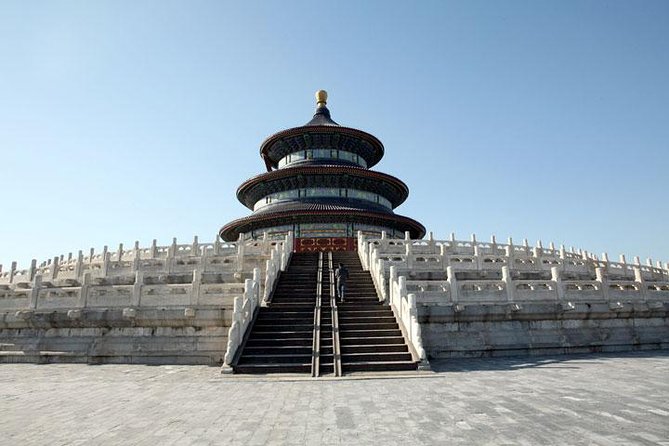
The Temple of Heaven follows, with about 90 minutes on site. Emperors once came here to worship the God of Heaven, and the complex remains one of Beijing’s most graceful historic settings. It is another large imperial site, so you will appreciate having a guide point out what you are seeing instead of trying to identify every hall yourself.
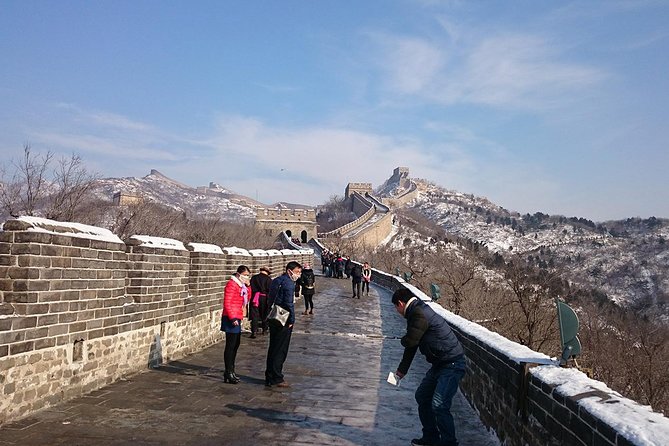
Day three is devoted to the Great Wall at Badaling. You get three hours, which gives you time to walk, stop for photographs, and take in the wall as it rises and falls across the hills. Badaling is the most established and accessible section in this program. That makes it a practical choice, though it can feel busy at popular times.
The wall is not a flat promenade. Even a short walk includes stairs and uneven footing, so good shoes are important. Your vehicle removes the need to work out the long transfer from central Beijing, but you should still treat this as an active morning.
The Ming Tombs come next, with attention to the Sacred Way and Dingling Tomb. This adds royal burial customs to the imperial story. The stop is shorter, about one hour, so expect an introduction rather than an exhaustive visit.
On the return to central Beijing, you stop at the Bird’s Nest National Stadium for about 20 minutes of photographs. Admission is not included, and the schedule presents this mainly as an exterior photo stop. Do not expect a long stadium visit unless you arrange and pay for it separately.
Day four starts at the Summer Palace, where two hours lets you see the imperial garden’s waterways, buildings, and broad scenic setting. Then the Beijing chapter ends with a transfer to the railway station and a high-speed train to Xi’an. The train portion is listed at about five hours, including the transition from sightseeing to rail travel.
Xi’an: warriors, walls, and a Muslim food quarter
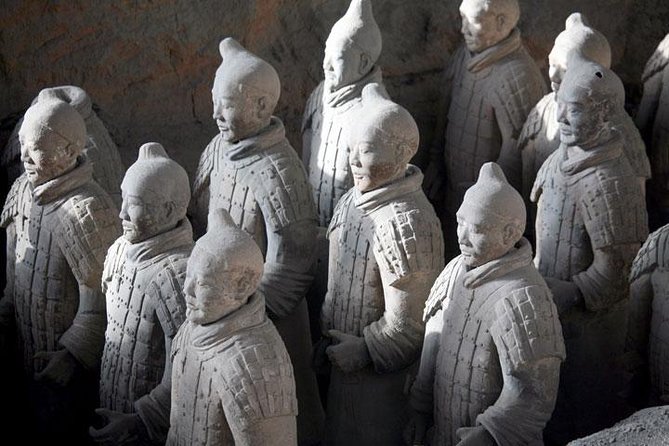
Xi’an begins with the Terracotta Army, the strongest single historical stop outside Beijing. Allow about four hours. The museum presents three excavated pits filled with life-size warrior figures and ancient weapons, and the size of the main pit gives the visit its force.
Your included lunch falls during this day. That is helpful because the museum lies away from central Xi’an, and a planned meal keeps the schedule moving. Six lunches are included across the full trip, but other meals are not, so you should budget for dinners and some lunches.
Back in town, you visit the Small Wild Goose Pagoda and the neighboring Xi’an Museum for about an hour. The brick pagoda has survived several earthquakes, and the stop gives you a quieter counterpoint to the crowded Terracotta Army halls.
The next morning begins at Xi’an City Wall Park. You first watch local daily life in the park, then visit the wall itself for about two hours. This is one of the best places on the route to understand Xi’an as a living city rather than only an ancient capital. The fortification is remarkably complete, and its broad upper surface gives you a sense of the city’s old defensive design.
The Great Mosque follows. Its Islamic architectural features are a reminder that Xi’an was connected to trade routes and cultures far beyond the Chinese interior. The visit is scheduled for one hour, then you have time in the nearby Muslim Quarter.
The food stop is not just a quick photograph. A snack tour at a popular restaurant is arranged, with a range of local dishes to try. Since the program does not specify the exact menu, tell the operator in advance if you need vegetarian food. A vegetarian option is available when requested at booking.
In the afternoon, you visit the Tomb of Emperor Jingdi, also called the Han Yang Ling Museum, on the way to the airport. Its excavation areas offer a different style of archaeological visit from the Terracotta Army. The stop lasts about an hour, then you continue to the airport for your flight to Zhangjiajie.
This is a packed day. City Wall, mosque, food quarter, museum, airport, and flight make for a long sequence. The advantage is that you see more of Xi’an before leaving. The cost is a slower, more relaxed morning.
Zhangjiajie: pillars, elevators, and the glass bridge
Zhangjiajie is the physical change of pace, though not necessarily a slower one. Day seven gives you a full eight hours in Zhangjiajie National Forest Park.
You ride the Bailong Elevator to Yuanjiajie Scenic Area, known for the Southern Sky Column, the stone formation associated with the floating-mountain imagery used in the film Avatar. The elevator is part of the attraction, not just transportation. It takes you rapidly from the lower area to the high viewpoints, saving a long climb.
Expect dramatic stone pillars and viewpoints rather than one single landmark. The experience depends on weather and visibility, which can affect how much detail you see across the peaks. The program includes the major admission fees and local transport within the park, while your guide helps organize the route.
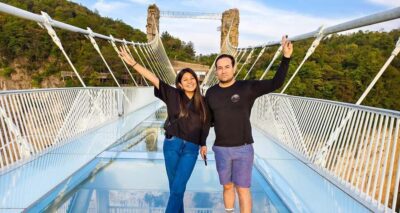
Day eight begins at Zhangjiajie Grand Canyon for about four hours. The area combines mountains, caves, and water, and it is also home to the famous glass bridge experience. If standing above the canyon on a transparent walkway makes your knees weak, this is the moment to prepare yourself. The schedule includes the No. 1 glass bridge experience as part of the Zhangjiajie portion.
After a short energy break, you enter the park from the East Gate and take a scenic vehicle to Shuirao Simen. From there, the walk along the most attractive section of Golden Whip Brook lasts about three hours. The full stream route is described as 7.5 kilometers, though the planned walk focuses on a particularly scenic portion.
This day is active but varied. The glass bridge brings height and drama; Golden Whip Brook brings a more grounded walk beside water and rock. Wear shoes suitable for a long walk and keep your day bag light. The provided schedule does not promise a leisurely pace.
Day nine takes you to Tianmen Mountain National Forest Park for about five hours. The mountain is the highest in Zhangjiajie, and Tianmen Cave gives it its name. If your legs and confidence are up to it, you can try the famous 999 stairs.
The stairs are optional, but the visit is still physically demanding. Afterward, you catch an evening flight to Shanghai. A Zhangjiajie guide and driver transfer you to the Shanghai hotel when you arrive. This is another late travel day, so do not plan an important independent activity for that evening.
A few more Beijing trips to weigh up
- Beijing: Forbidden City Tour(Group/Private)-Tickets Included
★ 4.8 · 7,974 reviews - Beijing: T-Square & Forbidden City Group or Private Tour
★ 4.8 · 4,446 reviews - Beijing:Mutianyu Great Wall Private Trip with English Driver
★ 5.0 · 1,263 reviews - Private Mutianyu Great Wall Trip with English-Speaking Driver
★ 5.0 · 927 reviews
Shanghai: gardens, river views, and old lanes
Shanghai begins with the Urban Planning Exhibition Hall, where models, photographs, and displays explain the city’s change from a small fishing village into a huge modern metropolis. Two hours here helps frame what you see later from the Huangpu River and the Bund.
Yu Garden comes next. This 400-year-old private garden is built around carefully designed halls and peaceful details, a welcome contrast to Shanghai’s towers and traffic. You also walk through the Yuyuan Bazaar outside the garden, where you can browse shops and see how the old quarter has been adapted for modern visitors.
After an a la carte lunch, you take a Huangpu River cruise for about two hours. From the water, you see the contrasting sides of Shanghai: historic Chinese and European-style buildings along the Bund and modern skyscrapers across the river. This is one of the most efficient ways to understand the city’s visual drama.
You then have about an hour of free time at the Bund. Use it for photographs and for looking closely at the older buildings rather than only turning toward the skyline. The free time also gives your private group a small break from guided sightseeing.
The final stop is Tianzifang, a cultural street in older lanes. The visit lasts about 40 minutes, so it is brief, but it adds a neighborhood feel after the formal exhibition hall, garden, and river cruise. You return to the hotel afterward.
On day eleven, your guide and driver take you to the airport for the flight home. The morning is not a sightseeing day, so keep your bags ready and allow enough time for checkout.
What the private setup is worth
A private tour is especially useful on this route because every city has a different transport problem. Beijing requires airport and rail transfers, Xi’an adds a long-distance train and flight, Zhangjiajie involves large scenic parks, and Shanghai ends with a flight home.
Your guide and driver are not simply there to narrate monuments. They also move you through stations, airports, hotels, and park entrances. That support is the reason the $2,999 price can make sense for people who value ease and structure.
The package includes two bottled waters per person per day, air-conditioned vehicles, and professional guides. Hotel accommodation is based on twin sharing, so solo pricing or room arrangements should be checked before payment. International airfare, China visa fees, gratuities, extra meals, and the Bird’s Nest admission are not included.
The experience is confirmed at booking, and passport name, number, expiration date, and country are required for every participant. At least two people must book together. Most people can take part, but the operator says it is not suitable for anyone over 80.
The cancellation rule is strict: the booking is non-refundable and cannot be changed for any reason. That makes travel insurance worth considering, especially for a trip involving several flights and fixed hotel arrangements.
Who should book this China tour?
I would choose this for a first visit to China if you want the headline sights without handling every train, flight, ticket, and transfer yourself. It suits couples, families, and small private groups that value a personal vehicle and city-by-city assistance.
I would not choose it if you prefer slow mornings, spontaneous detours, or several free days in each city. Beijing and Xi’an receive strong cultural coverage, but the schedule still moves quickly. Zhangjiajie adds demanding walks and stairs, while the evening flights make some travel days long.
The strongest reasons to book are the private format, the broad range of places, and the number of major admissions and domestic transfers already handled. The strongest reasons to hesitate are the fixed non-refundable terms, twin-share hotel basis, and full physical schedule.
FAQ
How long is the tour?
The tour lasts approximately 11 days, beginning with airport pickup in Beijing and ending with a transfer to the airport in Shanghai.
Which cities does the tour visit?
The route includes Beijing, Xi’an, Zhangjiajie, and Shanghai.
Is transportation between the cities included?
Yes. The package includes a high-speed train from Beijing to Xi’an and one-way economy-class domestic airfare from Xi’an to Zhangjiajie and from Zhangjiajie to Shanghai.
Are hotels and meals included?
Twin-share hotel accommodation, ten breakfasts, and six lunches are included. Other meals are not listed as included.
Is this a private tour?
Yes. Only your own group participates. Professional guides, experienced drivers, air-conditioned vehicles, airport transfers, and hotel transfers are provided.
Is the tour suitable for everyone?
Most people can participate, but the operator says it is not suitable for people over 80. The schedule also includes long sightseeing days, walking, stairs, the Great Wall, Zhangjiajie trails, and optional 999 stairs at Tianmen Mountain.
Just added around Beijing
- Private Transfer to Mutianyu Great Wall with professional driver★ 5.0 · 19 reviews
- One day tour to downtown Tianjin from Beijing by high speed train★ 5.0 · 3 reviews
- camp on the Great Wall overnight with sunrise and sunset on the wall★ 5.0 · 11 reviews
- BusDa:Ancient Great Wall &Badaling Great Wall Full-day Bus Tour★ 4.5 · 6 reviews
- ZANBUS: Trip to the Jinshanling Great Wall Departing at 7:30 AM★ 5.0 · 5 reviews
- Yuxiandu Chinese Royal Cuisine Museum with Show and Royal Banquet★ 5.0 · 4 reviews
- Private Wild Great Wall Hiking tour at Simatai (Challenging)★ 5.0 · 16 reviews
- Wild Great Wall Huanghuacheng Half Day Tour★ 5.0 · 15 reviews
Zhangjiajie Glass Bridge Tours, compared.
2-Day Avatar Mountain, Glass Bridge, and Mt. Tianmen Tour
Read our review →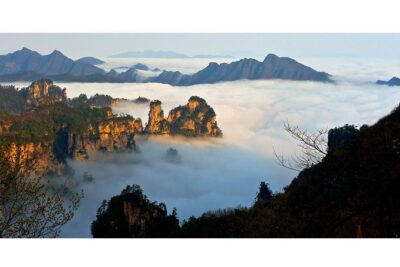
2-Day Mini Group to Avatar Mountain, Glass Bridge and Mt. Tianmen
Read our review →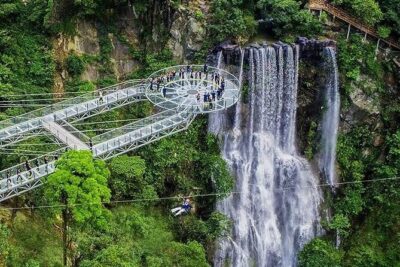
Gulong Gorge Skywalk Glass Bridge and Waterfall View Private Tour
Read our review →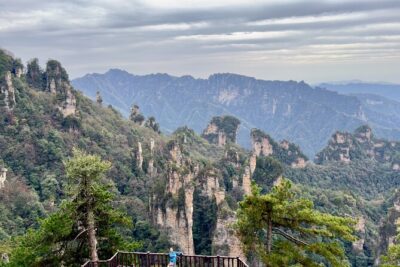
1-Day Private Zhangjiajie Tour to Avatar Mountain & Glass Bridge
Read our review →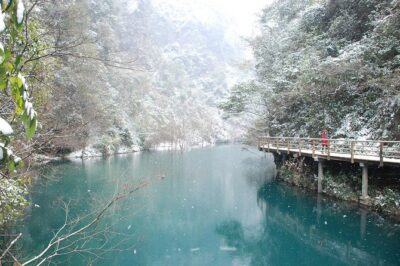
Best Mini Group to Zhangjiajie Forest Park & Avatar Mountains
Read our review →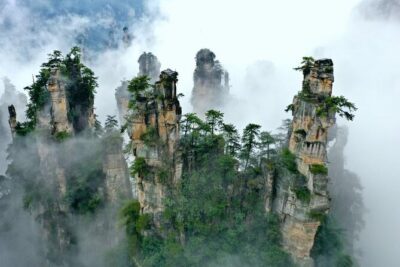
2-Day Private Tour to Mt.AVATAR & Glass Bridge & Mt.Tianmen
Read our review →
4-Day Zhangjiajie Tour to All Highlight Attractions with VIP Lift
Read our review →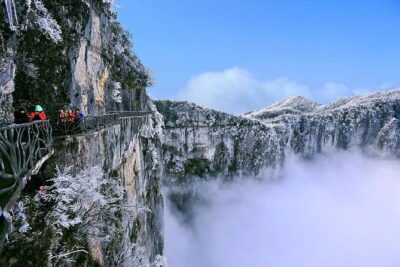
Top Zhangjiajie Mini Group Tour: Glass Bridge & Tianmen Mountain
Read our review →Browse the lists this tour appears in