
Reviewed · SHANGHAI TOURS
Shanghai: Dragon Beard Candy Making with a Chef
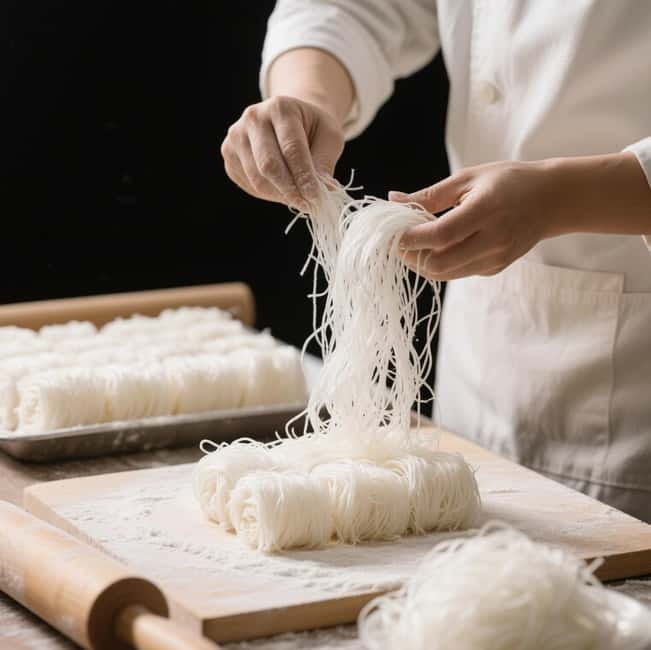
Shanghai’s Dragon Beard Candy workshop turns a little-known Chinese sweet into a hands-on lesson. A pastry chef trained in both traditional Chinese baking and French patisserie shows you how hot sugar becomes thousands of delicate threads, then helps you make your own.
I like the mix of local Shanghai insight and serious pastry technique. I also like that the $38 fee covers ingredients, equipment, extra pastries, a recipe, and optional photos. The main consideration is that this is a focused two-hour class, not a broad Shanghai food tour, and the sugar work may require patience.
Key points
- Stretch sugar into hair-thin strands: You repeatedly fold and pull the sugar dough until it forms the fine threads that give the candy its name.
- Learn from Luc in English: Shanghai-born pastry chef Luc explains each step clearly and can add local suggestions for your time in the city.
- Combine Chinese and French pastry skills: The class joins traditional confectionery with methods shaped by Luc’s Le Cordon Bleu training.
- Hear the story behind the sweet: You learn how Dragon Beard Candy was once linked with Chinese royalty and has a history of about 2,000 years.
- Take home more than a memory: Your handmade candy, additional pastries, and a recipe are included.
- Plan around a compact workshop: The class lasts two hours and meets at Makerhub on the fourth floor.
Why Dragon Beard Candy Makes a Good Shanghai Activity
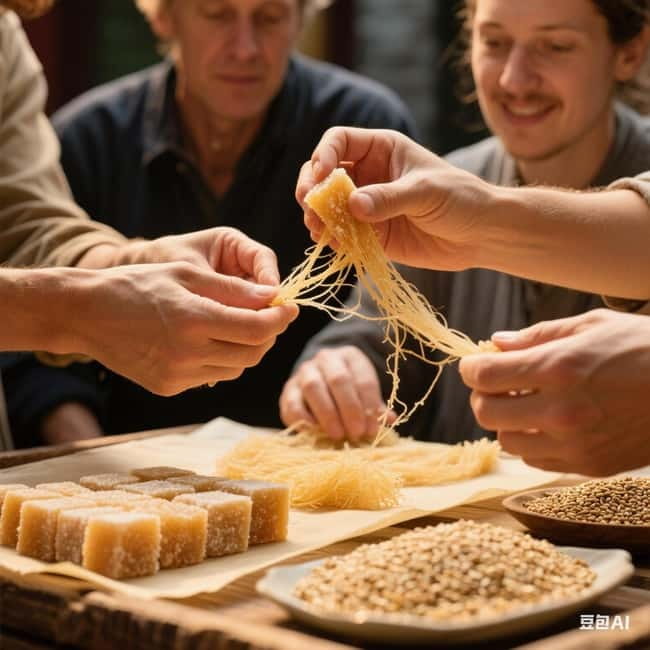
Many Shanghai food experiences take place at a table, with someone else doing the skilled work. This one puts the key technique in your hands. You see the sugar at its most workable stage, learn how to handle it, and repeat the stretch-and-fold motion until the mass changes into fine strands.
That process gives the candy real meaning. Dragon Beard Candy is not simply a sweet filled with nuts. Its defining feature is the threadlike coating, and the workshop lets you understand why it takes care and repetition to make it.
I also like the cultural angle. The class begins with a story about the candy’s roughly 2,000-year past and its connection with Chinese royalty. That short introduction helps you see the pastry as part of Chinese food culture, rather than as a novelty selected at random.
The format suits a two-hour gap in a Shanghai itinerary. You do not need to give up a full day of sightseeing, yet you still get a proper activity with instruction, context, and something edible to bring away.
Other Shanghai days worth booking alongside this:
- Authentic Local Food Tour in Central Shanghai
★ 5.0 · 1,382 reviews - Zhujiajiao Water Town and Shanghai City Private Day Tour
★ 5.0 · 1,016 reviews - Private Shanghai Full Day City Tour with Old and New Highlights
★ 5.0 · 995 reviews
Meeting Shanghai Chef Luc at Makerhub
The host is Luc, a Shanghai-born and raised pastry chef who teaches in English. His background is unusually useful for this class: he has training in traditional Chinese pastry as well as classical French patisserie from Le Cordon Bleu.
That combination shapes the workshop. You are not only copying a local recipe. You are learning from someone who can explain the precision behind the technique and connect it with wider pastry practice.
The meeting point is Makerhub, on the fourth floor. The supplied information does not give a street address, neighborhood, or directions from a metro station, so check the exact location details when you reserve and allow time to find the building.
Luc’s local background adds value beyond the candy itself. He has recommended places to visit in Shanghai during the class, according to the experience details, so you can ask him for ideas while you work. That can be especially useful early in a trip, when you are still deciding how to spend your remaining days.
The class is taught in English. This matters because the sugar handling has several small steps, and clear spoken guidance is more useful than simply watching a demonstration.
The First Lesson: A Royal Sweet With a 2,000-Year Past
The class starts with a brief storytelling session about Dragon Beard Candy. You learn about its long history and its former connection with Chinese royalty before moving into the practical work.
This opening is short by design. You are not signing up for a lecture on Chinese food history. Instead, the story gives you a reason to pay attention to the shape, method, and ingredients that follow.
That context also helps explain why the candy feels different from an ordinary filled pastry. The outer strands are the main event. Their fragile appearance comes from a method that requires the sugar to reach the right condition, then be stretched and folded again and again.
If you enjoy food activities with cultural background, this part makes the class more satisfying. If you prefer to start baking immediately, the introduction should not take up much of the two-hour session, but it does mean the workshop is not nonstop production from the first minute.
Watching Molten Sugar Become Dragon’s Beard
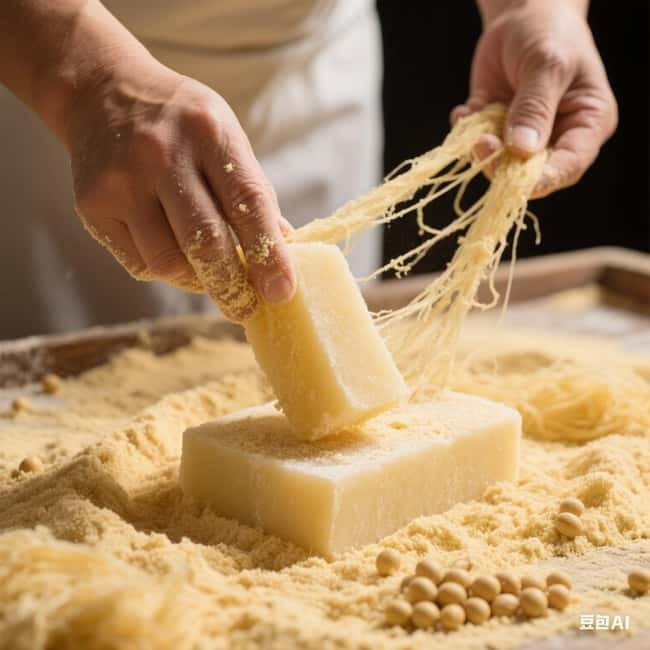
After the introduction, Luc gives a live demonstration. Molten sugar is shaped and worked into fine, silky strands that resemble a dragon’s beard.
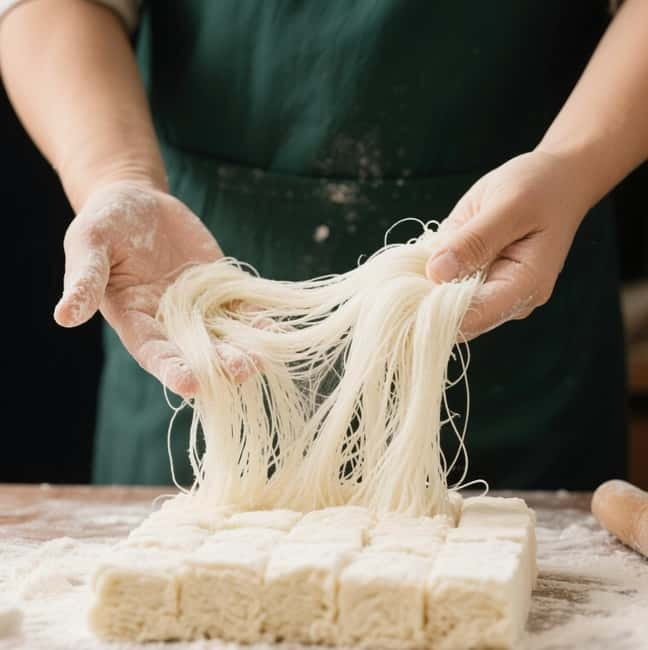
This is the moment when the technique becomes clear. A block of sugar does not look like a delicate pastry at first. The transformation comes from controlled stretching and folding, with each repetition multiplying the number of threads.
The demonstration is important because timing and handling are hard to understand from a recipe alone. You can watch how the sugar is manipulated before trying it yourself, then use Luc’s step-by-step guidance when it is your turn.
The experience description says you will stretch and fold the sugar dough more than 10,000 times. That figure communicates the scale of the process, rather than asking you to count each motion. Expect repetition, focus, and a little work with your hands.
The candy’s fine texture is also why this is more than a standard cooking class. You are learning a technique that changes the structure of the sugar. The finished pastry looks light and almost feathery, yet it begins with a dense, heated mixture.
Same country, a completely different kind of day:
- Shanghai: Hop-on Hop-off Bus Ticket and Optional Attractions
★ 3.4 · 692 reviews - Shanghai Private Tour: Zhujiajiao Water Town and Boat Ride
★ 5.0 · 661 reviews - Eat Like A Local: Shanghai Night Food Tour
★ 5.0 · 616 reviews - Huangpu Night Cruise: Cozy Vibe & Modern Shanghai Glow
★ 4.3 · 520 reviews
Your Turn to Pull and Fold the Sugar
The hands-on section is the heart of the activity. Under Luc’s direction, you stretch and fold the sugar dough repeatedly until it forms threads as thin as hair.
I would approach this part with patience. The class promises guidance, but the technique still depends on repetition. The first attempt may not look perfect, and that is part of the point. You are learning a traditional confectionery method, not assembling a ready-made dessert.
Luc’s teaching style is one of the strongest reasons to book. The available comments describe him as kind, encouraging, clear in his explanations, and willing to answer questions. One participant specifically praised how well he explained the steps. Another noted that he spoke English very well and knew what he was doing.
Those details matter in a class built around delicate sugar. You want an instructor who can correct your handling without taking over the whole process. You also want explanations that make sense when the dough starts to behave differently than it did during the demonstration.
The workshop includes high-end ingredients and baking equipment. You do not need to arrive with specialist tools, and the class provides free drinking water while you work.
Peanut, Sesame, and Coconut Fill the Center
Once the sugar has been turned into fine strands, you wrap them around a filling of crushed peanuts, sesame, and coconut.
This combination gives the candy texture as well as flavor. The outer sugar threads are delicate, while the filling brings nutty and toasted notes with the added sweetness of coconut. Because you prepare the candy yourself, you see how the filling sits inside the strands rather than simply receiving a finished piece.
The ingredient list is useful for anyone checking dietary preferences in advance. The supplied details identify peanuts, sesame, and coconut, so anyone with allergies should treat that information seriously and ask the provider for current ingredient guidance before booking.
The class description does not promise substitutions, vegan certification, or allergen-free preparation. Do not assume those options are available. The safest choice is to contact the provider before reserving if any ingredient could cause a problem.
Chinese Tradition With French Pastry Precision
The unusual feature here is not only the candy. It is the meeting of two pastry traditions.
Luc’s Chinese pastry background connects him with the confection’s cultural roots. His Le Cordon Bleu training in classical French patisserie brings another approach, one that emphasizes precision, technique, and controlled results.
You should not expect to make a French dessert during this class. The focus remains Dragon Beard Candy. The French connection explains the instructor’s professional preparation and the way he presents the technique.
For you, that blend can make the workshop easier to follow. Traditional methods are preserved, but the instruction is shaped by formal pastry training. You get the local story and the practical discipline of a professional kitchen lesson.
This is also why the class works for people who already bake. You may recognize the value of careful temperature control, repeated motions, and texture. At the same time, beginners receive a clear introduction to a sweet they may never have encountered before.
What You Take Home After Two Hours
The class includes the Dragon Beard Candy you make, as well as additional pastries to take home. You also receive a recipe so you can try to recreate the candy after returning home.
That take-home element improves the value of the experience. A food tour often ends when the last bite is gone. Here, you leave with a reminder of the class and a method you can revisit.
The recipe is particularly useful because the class teaches a technique rather than only presenting a finished product. You can use it to remember the ingredients and basic process, though the supplied information does not specify the recipe format or whether it includes every detail needed for home equipment.
Optional photos are also included. If you want a record of the sugar pulling and finished pastries, ask about the photo option during the class. It is not presented as a required part of the experience.
You may also receive practical Shanghai suggestions from Luc during the session. The activity is not designed as a city tour, but that local conversation can add a useful personal touch.
Is $38 a Fair Price?
At $38 per person, this costs more than buying Dragon Beard Candy from a shop. That comparison is not quite fair, since the fee pays for instruction, ingredients, equipment, additional pastries, water, a recipe, and a two-hour cultural activity.
I consider it a reasonable price if you value participation. The key question is not how much candy you could buy for $38. It is whether you want to learn how the candy is made and spend time with a professionally trained local pastry chef.
The value is strongest for couples, families, friends, and solo visitors who enjoy food-based activities. It also works well for people who have already seen Shanghai’s major sights and want something more focused.
The price may feel less attractive if you only want to taste traditional sweets or if your schedule is packed with markets and restaurants. You will spend much of the session repeating a single technique, so this is not the right choice for anyone looking for a broad survey of Chinese cuisine.
The extra pastries and recipe help tip the balance toward good value. You can continue enjoying the results after the class, and the method gives the experience a longer life than a simple tasting.
Who Should Book This Workshop?
I would recommend this class to anyone curious about Chinese food traditions and willing to work with their hands. Beginners should feel comfortable because Luc provides step-by-step instruction and answers questions.
It is also a good choice for experienced bakers who enjoy learning unusual techniques. Dragon Beard Candy is different from standard cake, bread, or pastry work, and the sugar transformation gives you a fresh technical challenge.
Families may like the visual change from molten sugar to fine threads, though the provided information does not set a minimum age or describe child-specific instruction. Check those details if you are booking with young children.
The class suits English-speaking visitors because English is the teaching language. It is also wheelchair accessible, which makes it available to more visitors, though you should still confirm the building access details at the time of booking.
I would be less likely to recommend it to someone who dislikes sweets, peanuts, sesame, or coconut. I would also pause if you want a large group social event or a full meal. This is a concentrated pastry workshop, not a restaurant visit or citywide food crawl.
Timing, Flexibility, and Practical Details
The activity lasts two hours, with starting times based on availability. That makes it easy to fit around sightseeing, but you should choose a time that leaves room for reaching Makerhub on the fourth floor.
Free cancellation is available up to 24 hours before the activity for a full refund. You can also reserve and pay later, which helps if your Shanghai schedule is still changing.
The provider supplies the baking equipment and ingredients. You do not need professional pastry shoes, and the experience itself jokes that you will bake like a professional without them. Wear clothing that lets you work comfortably, although no specific dress code is provided.
Drinking water is included. The class information does not mention transportation, hotel pickup, group size, or a full meal, so plan to reach Makerhub independently and do not count on this workshop as lunch.
My Verdict on the Dragon Beard Candy Class
Book this if you want a small cultural food lesson with a real technique at its center. The Shanghai setting, Luc’s local knowledge, English instruction, and French pastry training give the class more substance than a quick candy demonstration.
The strongest point is the chance to make a sweet that many visitors may only encounter as a finished product. You learn its story, watch the sugar change, repeat the difficult stretching process, add the peanut, sesame, and coconut filling, and leave with your own work.
Skip it if you want a broad introduction to Shanghai cuisine, a relaxed tasting, or a short activity with little hands-on effort. The sugar work takes patience, and the two-hour format stays tightly focused.
For $38, I see this as a worthwhile choice for food-focused visitors who want an original Shanghai memory they can eat and try to recreate at home.
FAQ
How long does the Dragon Beard Candy workshop last?
The workshop lasts two hours.
How much does the experience cost?
The listed price is $38 per person.
Who teaches the class?
The class is led by Luc, a Shanghai-born and raised pastry chef with training in traditional Chinese pastry and classical French patisserie from Le Cordon Bleu.
What language is the workshop taught in?
The instructor teaches in English.
What will I make during the class?
You will make Dragon Beard Candy by stretching and folding sugar dough into fine strands, then wrapping the strands around crushed peanuts, sesame, and coconut.
Are ingredients and equipment provided?
Yes. High-end ingredients and baking equipment are included.
Do I receive anything to take home?
Yes. You take home your handmade treats, additional pastries, and a recipe for making Dragon Beard Candy at home.
Where does the activity meet?
The meeting point is Makerhub on the fourth floor.
Can I cancel the booking for a refund?
Yes. You can cancel up to 24 hours in advance for a full refund.
Just added around Shanghai
- Suzhou Private Guided Day Trip from Shanghai by Bullet Train★ 5.0 · 46 reviews
- Suzhou and Zhujiajiao Private Guided Day Trip from Shanghai★ 5.0 · 27 reviews
- Shanghai:Old Town, Yu Garden, Zhujiajiao Water Town Bus Tour★ 4.7 · 16 reviews
- Shanghai: Yuyuan, City God Temple Old City Tour-Tip Based★ 5.0 · 10 reviews
- Shanghai: Zhujiajiao Water Town with Calligraphy Experience★ 5.0 · 17 reviews
- Shanghai: Yu Garden with Entry Tickets(optional)★ 4.5 · 28 reviews
- Shanghai: Wild Animal Park Ticket★ 4.9 · 43 reviews
- Shanghai: Yu Garden Entry Ticket with PDF Guidebook★ 4.1 · 45 reviews
Shanghai Tours, compared.

Authentic Local Food Tour in Central Shanghai
Read our review →
Zhujiajiao Water Town and Shanghai City Private Day Tour
Read our review →
Private Shanghai Full Day City Tour with Old and New Highlights
Read our review →
Hop-on Hop-off Bus Ticket and Optional Attractions
Read our review →
Shanghai Private Tour: Zhujiajiao Water Town and Boat Ride
Read our review →

Suzhou and Zhouzhuang Water Village Day Trip from Shanghai
Read our review →Browse the lists this tour appears in