
Reviewed · TIBET TOURS
7 Days Lhasa to Kathmandu Overland Small Group Tibet Tour via EBC
The big draw here is the overland route from Lhasa to Everest Base Camp, ending at the Gyirong border rather than sending you back the way you came. You get Tibet’s great religious sights, high mountain roads, and a close look at Everest in one tightly packed week. I like the included permits and transport, and I like that the group is capped at 12 people.
I also like the human touch. Guides such as Lobsang, Lhakpa, and Lhakdon are praised for making the long drives comfortable, explaining Tibetan Buddhism clearly, and helping with the practical details. The catch is simple: this is a demanding high-altitude schedule, and the $989 price does not include lunches, dinners, a single room, or the final jeep to Kathmandu.
Key points to know before booking
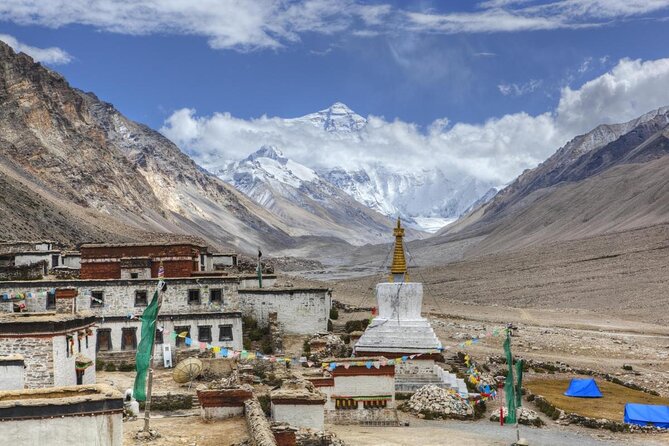
- Everest Base Camp is reached on day five, with Rongbuk Monastery and an optional sunrise view on day six if the weather cooperates.
- Lhasa’s essential sights come first, including Potala Palace, Jokhang Temple, Barkhor Street, Drepung Monastery, and Sera Monastery.
- The route crosses very high passes, including Gyatso La at 5,248 meters and Gawula Pass at 5,198 meters.
- Permits, local transport, oxygen, breakfasts, and listed entrance fees are arranged, which removes much of the paperwork from a complicated Tibet trip.
- The group can include up to 12 people, small enough for guide access but not a private tour.
- The journey ends at the Gyirong border, with a separate $60 jeep transfer available to Kathmandu.
Why this seven-day route works
This tour is designed for people who want Tibet as a journey, not just a Lhasa city break. You begin with temples and palaces, then move through high-altitude towns and mountain passes before reaching Everest. Each day changes the scenery and the pace.
The route also solves a major practical problem. Independent travel in Tibet involves permits, restricted transport arrangements, and border planning. Here, the operator handles the Tibet Travel Permit, other required permits, transportation, a local English-speaking guide, and the airport or train-station pickup in Lhasa.
That convenience has real value. You can spend your time learning how to walk the Barkhor kora, watching monks debate at Sera, and looking for Everest through the mountain air instead of chasing paperwork.
Still, seven days is not generous. You will spend long stretches in a van or minibus, and the schedule leaves little spare time for rest or weather delays. I would treat this as a focused introduction to Tibet, not a slow, unhurried tour.
A few more China trips to weigh up
- 7 Days Private Tour of Beijing, Xian, Shanghai by Bullet Train
★ 5.0 · 4 reviews - 7Day Sanjiang+ZhaoXing+Huangguoshu Waterfall private Tour
★ 3.5 · 3 reviews
Day one: arriving in Lhasa
Your guide meets you at the airport or train station and takes you to a downtown Lhasa hotel. The transfer includes views of the Yarlung Tsangpo River and the approach to the Tibetan capital.
The first day is intentionally light. That matters because Lhasa sits at high altitude, and your body needs time to adjust. Do not plan to fill arrival day with extra sightseeing. Drink water, walk slowly, and let the guide know if you feel unwell.
Accommodation is generally in three-star hotels on a twin-sharing basis. Some nights may use guesthouse dorm beds, so check the room plan before paying if privacy matters to you. A single supplement is extra.
The package includes six breakfasts and drinking water during the trip. It also includes one welcome dinner, although the general inclusions list emphasizes breakfast rather than daily evening meals. I would confirm exactly when that dinner is scheduled.
Day two: Potala Palace, Jokhang Temple, and Barkhor Street
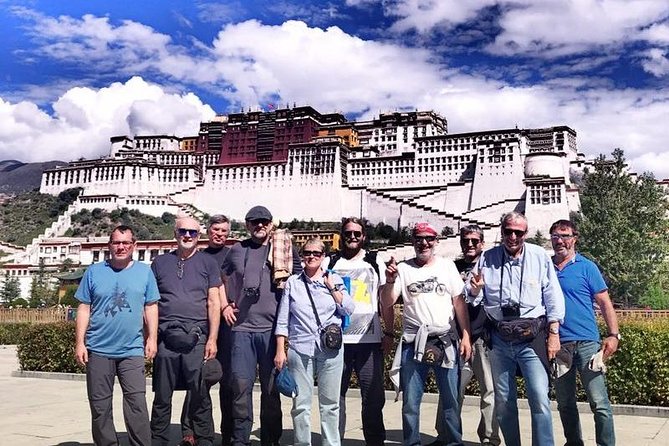
Potala Palace is the morning centerpiece. This was the winter palace of the Dalai Lama and has been in use since the seventh century. You get about 90 minutes inside, enough to see major rooms and collections, but not enough to absorb every detail in a building of this scale.
The visit involves a set route and a fair amount of walking. Your guide can help connect the palace’s art, religious objects, and political role to the wider story of Tibet. Admission is listed as included in the package, though individual stop details say admission is not included, so confirm this point before booking.
After lunch, you visit Jokhang Temple, the spiritual heart of Lhasa. Its central image is a statue of the Buddha Sakyamuni shown at age 12. That object gives the temple unusual importance for Tibetan pilgrims, and you may see people circling the temple in prayer.
Barkhor Street surrounds Jokhang. This is where the tour feels less like a monument checklist and more like daily religious life. You can walk the kora with pilgrims and local worshippers, browse the old market, and possibly sit for Tibetan tea in a local teahouse.
The Barkhor visit is scheduled for about an hour. That is enough for a first circuit and a quick look around, but you may wish for more time. If you care about shopping, tea, or people-watching, ask your guide how much flexibility the group has.
Day three: Drepung and Sera monasteries
Drepung Monastery comes first. It lies about 25 kilometers southwest of central Lhasa and is described as an old Tibetan village surrounded by valleys. The planned visit lasts around three hours, making it the day’s most substantial cultural stop.
Drepung gives you a different sense of Tibetan religious life than Potala or Jokhang. Instead of a palace or a central city temple, you see a monastery complex with space, courtyards, and a more removed setting. Wear shoes with a good grip and expect uneven walking in places.
In the afternoon, you visit Sera Monastery, one of the three great Gelug monasteries of Tibet. Its best-known feature is the monk debate, usually held from about 3 to 5 p.m. Monks argue points of Buddhist philosophy through gestures, clapping, and quick exchanges. It is lively to watch, but the purpose is serious training in logic and debate.
The timing is one of the smartest parts of this day. You are not simply taken to Sera and shown an empty courtyard. The schedule aims to place you there when the debates are happening.
Guide quality matters greatly at these monasteries. Lhakpa is praised for clear explanations and a good sense of humor, while Lhakdon is described as especially strong on Tibetan Buddhism and trip organization. Assignments can change, but the operation’s guides are an important part of what makes these visits meaningful rather than merely visual.
Same country, a completely different kind of day:
- From Beijing: Mutianyu Great Wall Tours with Options
★ 4.9 · 9,216 reviews - Beijing: Forbidden City Tour(Group/Private)-Tickets Included
★ 4.8 · 7,974 reviews - Beijing: T-Square & Forbidden City Group or Private Tour
★ 4.8 · 4,446 reviews - Beijing: Mutianyu Great Wall Daily Tour with Ticket & Lunch
★ 5.0 · 3,056 reviews
Day four: Yamdrok Lake, high passes, and Gyantse
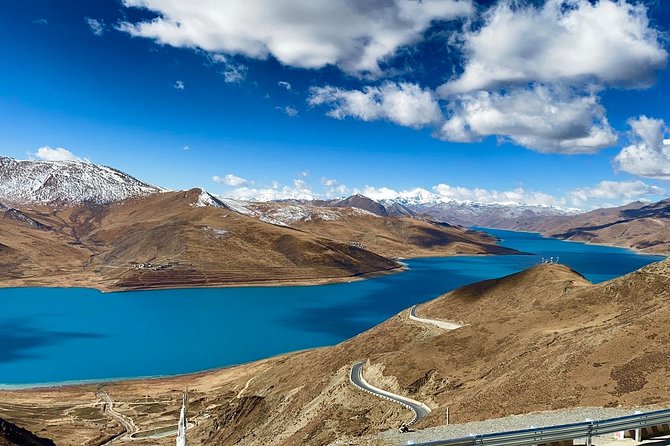
The road from Lhasa toward Shigatse takes you over Gampala Pass at about 4,790 meters. From there, you get a view of Yamdrok-tso, also called Yamdrok Yumtso, at roughly 4,400 meters.
The lake is one of the route’s great visual stops. Snow-covered peaks surround the water, and the short 30-minute stop gives you time for photographs and a quick look. At this elevation, do not rush. The air is thin, and even climbing a short slope can leave you breathless.
The road later passes Karola Glacier, visible from the roadside. You also stop near Manak Dam Lake and Simila Mountain Pass, where you can hang prayer flags. These pauses are brief, but they break up the drive and give you a chance to see how Tibetan religious practice appears outside the major monasteries.
Gyantse is historically described as Tibet’s third-largest city after Lhasa and Shigatse. The itinerary uses it as a stop on the road rather than offering a long independent stay. That means you get a taste of the town, but not the time to explore it at length.
This is one of the tour’s longest driving days. The reward is the change from city streets to high mountain roads, glaciers, lakes, and wide open mountain country. The cost is less personal time at each stop.
Day five: Shigatse and the road to Everest
In Shigatse, you visit Tashilhunpo Monastery, the traditional home of the Panchen Lama. The visit lasts about 90 minutes. It is a major religious site and an important counterpoint to the Lhasa sights, showing you another center of Tibetan Buddhist authority.
After leaving Shigatse, the group handles the Alien’s travel permit before continuing toward Lhatse for lunch. This is an example of why an organized trip is useful here. The paperwork is not something you want to discover at the last minute while trying to cross a controlled region.
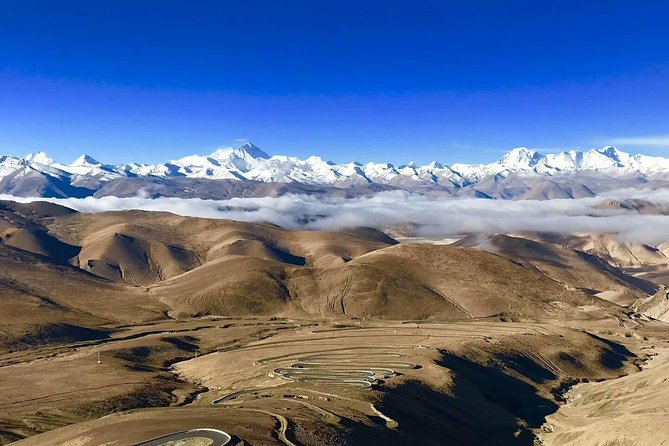
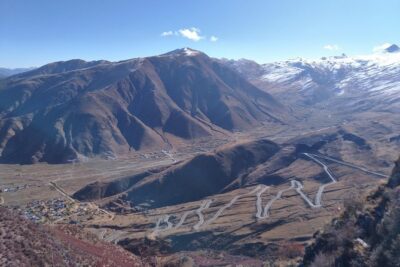
The road then climbs through Tsola Pass at about 4,600 meters and Gyatso La at 5,248 meters. At Gawula Pass, around 5,198 meters, you may get a broad view toward the Himalaya. Clear weather is crucial. Even a carefully planned trip cannot guarantee a view of Everest.
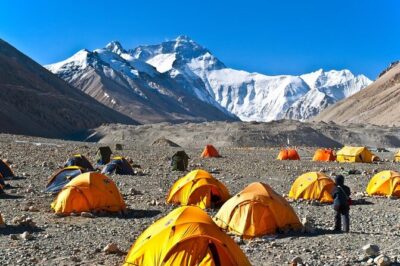
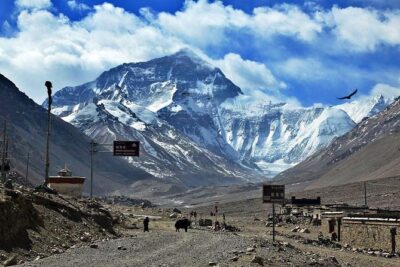
Everest Base Camp follows, with the group using the designated echo bus and platform service. The stop is planned for about an hour. That may sound short, but at this altitude and after a full day on the road, it is enough time to take in the setting without pretending you are spending the night on an expedition.
Bring warm layers, water, and patience. The tour supplies oxygen in the vehicle, which is a useful safety measure, but it does not remove the effects of altitude. Oxygen equipment is a backup, not a license to ignore symptoms.
Day six: Rongbuk Monastery and the descent to Gyirong
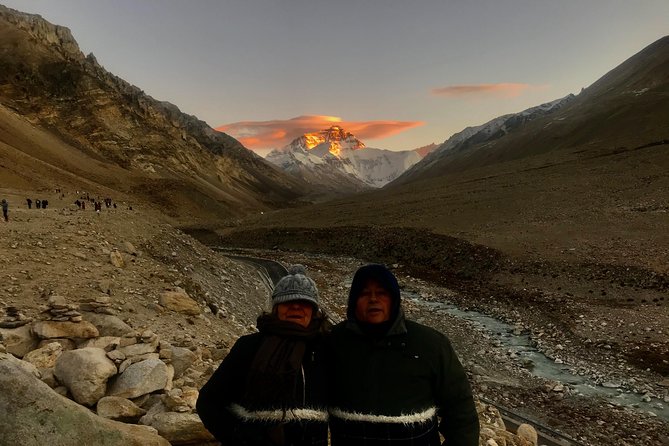
If the weather allows, you can see sunrise over Everest from the lodging area. This is one of the most weather-sensitive moments of the trip. Clouds, wind, and visibility can change quickly, so keep expectations flexible.
You then visit Rongbuk Monastery, described as the highest monastery in the world, where nuns and monks live together. The planned visit lasts about 30 minutes. It is a short stop, but its setting near Everest gives it a powerful sense of place.
The drive to Gyirong brings a major change. You pass views of Mount Shishapangma and Pekutso Lake, then cross Ghungtang Lhamo at about 5,236 meters. Later, the road drops from the high Tibetan plateau toward Gyirong County.
Watch the scenery change from snow country to forests and waterfalls. That descent is one of the most satisfying parts of the route because it shows how quickly the terrain shifts with altitude.
You arrive in Gyirong in the late afternoon. This is not the same as arriving in Kathmandu. The tour ends at the China Nepal border on day seven, so you need to arrange the onward crossing and transport carefully.
Day seven: crossing the border and reaching Kathmandu
Your guide assists you as you exit China and sees you off at the Gyirong border. The tour itself ends there.
A jeep transfer to Kathmandu can be arranged for an additional $60. The distance is listed as about 130 kilometers. Since that transfer is not included, confirm the vehicle, timing, border procedure, and payment arrangements before departure.
This final detail is easy to overlook. The title suggests a Lhasa to Kathmandu journey, but the included service ends at the border. You still need the jeep transfer to complete the trip into Nepal.
What the $989 price really covers
At $989 per person, the package offers solid value for a seven-day Tibet route with Everest Base Camp. The price includes:
- Tibet Travel Permit and other required permits
- A Chinese visa invitation letter when needed
- Airport or train-station pickup and drop-off in Lhasa at the arranged time
- Van or minibus transport with fuel
- An English-speaking Tibetan guide and experienced local driver
- Three-star twin-share accommodation, with some guesthouse dorm arrangements
- Six breakfasts and one welcome dinner
- Drinking water during the journey
- Oxygen in the tourist vehicle
- Tourist accident and casualty insurance
- Listed entrance fees and the Everest Base Camp echo bus
- Government taxes and service charges
The main extra costs are meals beyond the included breakfast and welcome dinner, a single room, your flight or train to Lhasa, and the $60 jeep from Gyirong to Kathmandu.
There is a confusing detail in the supplied information: the general inclusion list says entrance fees for all listed sites are included, while several daily stop descriptions say admission is not included. Ask for a written confirmation of entrance fees before you pay. That small check can prevent an awkward argument at the gate.
Group size, vehicles, and guide support
The maximum group size is 12. That is not private, but it is small enough for a guide to answer questions and for the group to gather without wasting too much time.
Transport is by van or minibus. On a route with high passes and long road days, vehicle comfort matters. The inclusion of an experienced driver, fuel, drinking water, and oxygen makes the package more practical than a bare sightseeing deal.
The guides are repeatedly praised for care, humor, and organization. Lobsang is noted for showing people local bars and performing magic tricks. Lhakpa is described as polite, funny, and reassuring on the road. Lhakdon is praised for her Buddhist knowledge and close attention to the group. Drivers such as Sangye and Ihakpa are singled out for careful, calm driving.
Do not assume you will receive a particular guide or driver. But these details tell you what to look for: clear explanations, steady driving, and a guide who notices when someone needs help.
Permits, visas, and timing
Book at least 12 working days ahead so the operator can obtain your Tibet Permit. You must provide passport and visa copies, with the information requested at least 20 days before departure in the supplied instructions. Confirmation is issued within 48 hours, subject to availability.
Visa arrangements depend on how you enter Tibet. If you fly from Kathmandu to Lhasa, do not apply for a China L Visa in advance. You need a Tibet Group Visa through the Chinese Embassy in Kathmandu, using an invitation letter from the tour operator and a local travel agency.
If you fly or take a train to Lhasa from another Chinese city, you need to apply for the China L Visa through the Chinese Embassy in your home country. Keep your valid passport and the China L Visa used for the Tibet Permit with you during the trip.
These rules can change, so treat the operator’s current instructions as essential. This is not a last-minute booking. The tour is booked, on average, about 83 days ahead, which reflects the paperwork and limited departure availability.
Who should book this tour?
I would choose this trip if you want to see the main sights of Lhasa, reach Everest Base Camp, and continue toward Nepal without arranging every permit and transfer yourself.
It suits people who can handle long drives, basic schedule flexibility, shared rooms, and very high passes. It also suits first-time visitors to Tibet who want a guide to explain Buddhist sites and manage the route.
I would think twice if you need a slow pace, guaranteed Everest views, private rooms, or a fully inclusive meal plan. The tour is also not ideal if you want to spend several days exploring each town. Its strength is the complete route, not extended stays.
The cancellation terms are fairly strict close to departure: a full refund requires cancellation at least six full days ahead, with a 50 percent refund possible two to six days before the start. Bad weather or failure to reach the minimum group size may lead to a new date or a full refund.
Should you book it?
Book this tour if the idea of crossing Tibet by road appeals more than a quick flight between Lhasa and Nepal. For $989, you get an unusually large amount of planning, transport, permits, and mountain sightseeing in one package.
Before paying, confirm three things in writing: the exact hotel and room plan, whether every listed entrance fee is included, and how the Gyirong to Kathmandu jeep will operate. If you are comfortable with altitude and a busy seven-day schedule, this is a strong, practical way to connect Lhasa, Everest, and the Nepal border.
FAQ
How long is the Lhasa to Gyirong overland tour?
The tour lasts approximately seven days. It begins with pickup at the Lhasa airport or train station and ends at the Gyirong border after the guide assists you with exiting China.
Is the transfer from Gyirong to Kathmandu included?
No. A jeep transfer from the Gyirong border to Kathmandu can be arranged for an additional $60. The distance is listed as about 130 kilometers.
What is the maximum group size?
The maximum group size is 12 people. Transportation is by van or minibus.
Does the tour include Tibet travel permits?
Yes. The package includes the Tibet Travel Permit and other necessary Tibet permits. A Chinese visa invitation letter is also included when needed.
What meals are included?
Six breakfasts and one welcome dinner are included. Lunches and other dinners are not included.
Is accommodation based on a private room?
No. Hotels are based on twin-sharing rooms by default. A single supplement is required for a single room or when room sharing is not possible. Some accommodation may be in guesthouse dorm beds.
What should I know about the visa process?
If you fly from Kathmandu to Lhasa, you should not apply for a China L Visa in advance. You need to arrange a Tibet Group Visa through the Chinese Embassy in Kathmandu with help from a local travel agency and an invitation letter. If you enter Tibet from another Chinese city, you need a China L Visa obtained through the Chinese Embassy in your country.
Just added around China
- Hong Kong Airport to Hong Kong City Private Arrival Transfer★ 4.5 · 3 reviews
- Hong Kong Observation Wheel Ticket★ 5.0 · 3 reviews
- Hong Kong Palace Museum Ticket★ 5.0 · 3 reviews
- Hong Kong Peak Tram and Sky Terrace 428 Tickets (Optional)★ 3.5 · 22 reviews
- Hong Kong Private Walking Tour with a Local★ 5.0 · 6 reviews
- Hong Kong Market Walking Tour & Chinese Cooking Class★ 5.0 · 24 reviews
- Hong Kong : Must-See Attractions Walking Tour With A Guide★ 5.0 · 7 reviews
- Hong Kong: Lantau Island & Tai O Cruise, Skip The Line Cable Car★ 3.5 · 4 reviews
Tibet Tours, compared.
Tibet Tour 8 Days Lhasa to Everest Base Camp Small Group Tour
Read our review →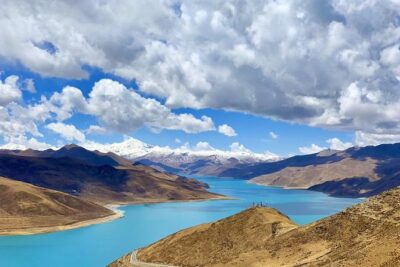
10 Days Tibet Everest Base Camp and Namtso Small Group Tour
Read our review →
8 Days Lhasa Gyantse Shigatse Mt Everest Group Tour
Read our review →Browse the lists this tour appears in