
Reviewed · TIBET TOURS
10 Days Tibet Everest Base Camp and Namtso Small Group Tour
Mount Everest is the headline, but the real strength of this trip is the way it links Tibetan culture and mountain scenery in one carefully arranged route. You move from Lhasa’s pilgrim circuits and monastery courtyards to high passes, glacier views, Rongbuk Monastery, and the shores of Namtso Lake.
I like the small group, with a maximum of 12 people, and the fact that the operator handles Tibet permits, local transport, accommodation, entrance fees, and airport or train-station pickup. The long drive to Everest and the very high altitudes are the main drawbacks. This is not a quick sightseeing holiday. It is a demanding road trip with some 12-hour days.
Key points at a glance
- Everest from Rongbuk Monastery: Sunrise views of the mountain’s pyramid-shaped north face are the emotional high point of the trip.
- Lhasa’s sacred core: Potala Palace, Jokhang Temple, and Barkhor Street give you three different ways to understand Tibetan religion and daily life.
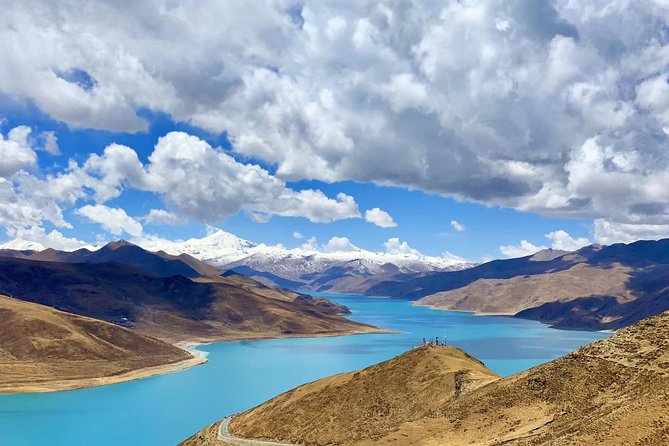
- Two holy lakes: Yamdrok Lake appears from the Gampala Pass, while Namtso offers a slower, wilder finish among the Nyenchen Thanglha mountains.
- Small-group minibus travel: A group of no more than 12 keeps the trip more personal than a large coach tour, though road days remain long.
- Permits and altitude support included: The tour supplies the Tibet Travel Permit, other necessary permits, bottled water, and an oxygen cylinder in the vehicle.
- A practical warning: The published details conflict on some entrance fees and even refer to a 15-day journey on Day 10, so confirm the final schedule before paying.
Why this route works for a first Tibet visit
If you want a broad first look at Tibet, this route covers the major bases. Lhasa supplies the temples, palaces, markets, and monastery life. The road west brings high passes, blue lakes, glaciers, and Tibetan villages. Everest adds the big visual reward, and Namtso gives you another striking high-altitude setting before departure.
I like the balance between time in town and time on the road. The first three days let you walk and look around at a manageable pace. After that, the tour becomes a scenic expedition by minibus, with long transfers broken up by viewpoints and religious sites.
The price is listed at $1,329 per person, based on two people sharing a room. That is a useful value if you are comparing the cost of arranging permits, a local guide, a driver, hotels, airport transfers, entrance tickets, and the Everest shuttle on your own. Lunches, dinners, international or domestic transport to Lhasa, tips, and a single-room supplement are extra.
This is best for someone who wants logistics taken care of. Independent planning in Tibet involves permit rules and specific arrangements, so the package removes a lot of paperwork. The tradeoff is a fixed timetable, shared transport, and less freedom to linger when a mountain view is especially good.
Other China days worth booking alongside this:
- From Beijing: Mutianyu Great Wall Tours with Options
★ 4.9 · 9,216 reviews - Beijing: Forbidden City Tour(Group/Private)-Tickets Included
★ 4.8 · 7,974 reviews - Beijing: T-Square & Forbidden City Group or Private Tour
★ 4.8 · 4,446 reviews
Arriving in Lhasa and adjusting to altitude
On Day 1, your Tibetan guide meets you at the airport or train station and takes you into central Lhasa. The transfer includes views along the Yarlung Tsangpo River and the route toward the capital.
The first day is deliberately light. That matters. Lhasa sits at roughly 3,650 meters, and the rest of the itinerary climbs much higher. You should treat arrival day as a rest and adjustment period, not as a missed sightseeing opportunity.
A welcome dinner in a local restaurant is included when the group meets in Lhasa. Breakfast is included on all nine mornings, while lunches and dinners are generally your responsibility apart from that welcome meal.
The operator supplies an oxygen cylinder in the vehicle, either four or seven liters. That is useful backup, but it does not replace taking altitude seriously. You should bring a moderate level of fitness, move slowly during walks and stair climbs, and tell your guide promptly if you feel unwell.
Potala Palace, Jokhang Temple, and Barkhor Street
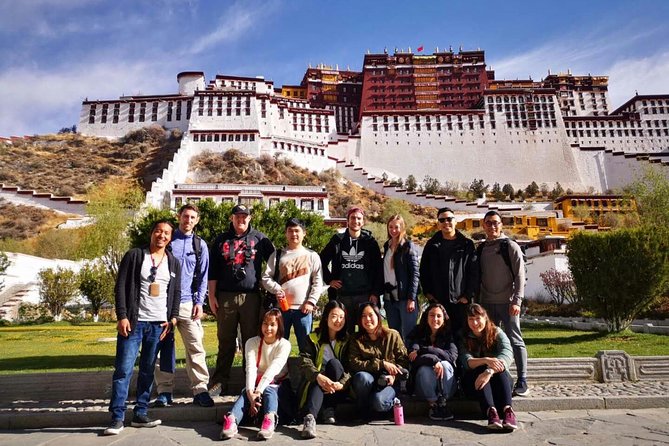
Day 2 begins at Potala Palace, the former winter residence of the Dalai Lama. The visit is scheduled for about 90 minutes, which gives you time to see the major interiors and collections, but not to inspect every room at leisure.
Potala is physically demanding. Its stairways and high position can make even a short visit feel strenuous at altitude. Wear shoes with a good grip, carry water, and avoid rushing upward simply because the group is moving.
After lunch, you visit Jokhang Temple for another 90 minutes. This is the spiritual center of Lhasa, and the experience is less about grand scale than about the religious activity around it. Inside, the statue of Sakyamuni Buddha is a major focus of the visit.
Barkhor Street circles Jokhang Temple and adds a more everyday dimension. You can walk the kora with pilgrims and local worshippers, browse the old market, and try Tibetan tea in a local tea house. I especially like this part of the route because it gives you time to observe how the sacred and ordinary share the same streets.
The stop at Barkhor lasts about an hour. That is enough for a circuit and a first look at the market, though shoppers may want more time than the schedule allows.
Villages and the debating monks at Sera
Day 3 starts with Dadong Village, described as an old Tibetan village about 25 kilometers southwest of central Lhasa. The visit lasts around four hours, making it the longest cultural stop before the tour turns toward the high passes.
This is a useful contrast with the monuments in central Lhasa. Rather than seeing Tibetan culture only through famous religious buildings, you get a look at a traditional village setting. The exact pace can vary, but you should expect this part to involve walking and uneven ground.
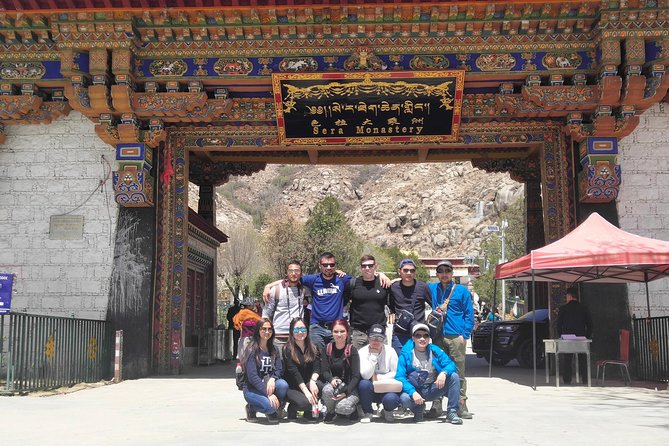
In the afternoon, Sera Monastery brings you back into the world of Tibetan Buddhist scholarship. It is one of the three major Gelug monasteries, and the scheduled visit lasts about two hours.
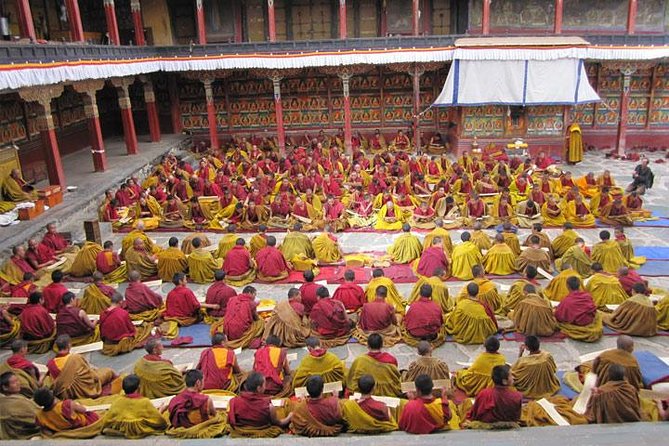
The main attraction is the monks’ debate, usually held between 3 and 5 p.m. Animated gestures, fast exchanges, and clapping make this easier to follow as a live event than as a lecture. Ask your guide to explain what is happening, since the exchange can otherwise seem like a performance without context.
Guides are central to the quality of this section. Names associated with this tour include Lobsang, Tseyang, Ga Rong, Tenzin, and Bai. The exact guide depends on the departure, but the strongest guide reports describe patient help on temple steps, clear explanations of Tibetan Buddhism, and a friendly presence during long drives.
Same country, a completely different kind of day:
- Beijing: Mutianyu Great Wall Daily Tour with Ticket & Lunch
★ 5.0 · 3,056 reviews - All-Inclusive Tour: Tiananmen Square, Forbidden City, Great Wall
★ 5.0 · 2,873 reviews - MuBus: Mutianyu Great Wall ENG/ESP/RUS Guided Bus Tour
★ 5.0 · 2,361 reviews - 4-Hour Small Group Tour to Forbidden City with Entry Tickets
★ 5.0 · 1,863 reviews
Yamdrok Lake, Gyantse, and the road west
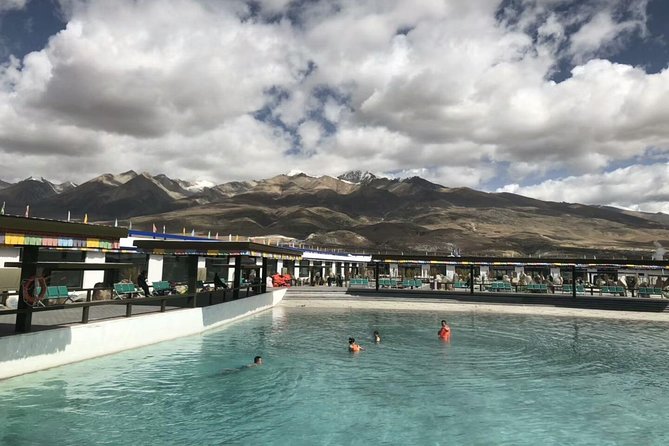
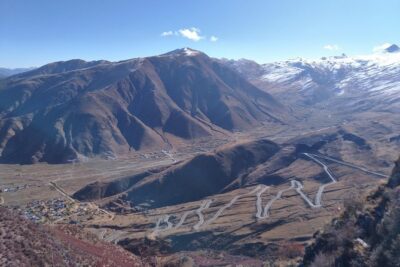
Day 4 marks the change from city touring to high-country travel. You drive from Lhasa toward Shigatse, crossing Gampala Pass at about 4,790 meters.
From the pass, Yamdrok Lake appears at roughly 4,400 meters. The lake is surrounded by snow-capped mountains, and the planned viewing stop lasts about 30 minutes. That may sound brief, but at this altitude a short stop can be sensible. Keep your jacket close, since wind at a pass can be sharp even when Lhasa feels mild.
The road continues past Karola Glacier, visible from the roadside, and Manak Dam Lake. At Simila Mountain Pass, you may have the chance to tie a prayer flag. The itinerary then continues to Gyantse, historically one of Tibet’s major cities.
This is a scenic driving day, not a series of long walks. The minibus makes the route possible without asking you to manage local transport, but you should be comfortable spending several hours seated and making frequent stops for photographs.
The long push to Everest Base Camp
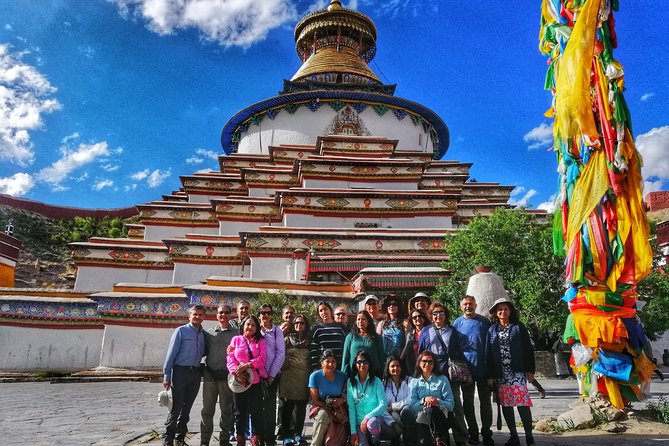
Day 5 is the hardest road day. After the required Alien’s Travel Permit, the route passes through Lhatse for lunch, then crosses Tsola Pass at about 4,600 meters and Gyatsola Pass at about 5,248 meters before entering the Qomolangma National Nature Preserve.
The schedule gives this day about 12 hours. That is a serious commitment. You will cover a great deal of ground, but the reward is entry into the Everest region and the chance to see the mountain from the north side.
Do not judge this day by normal holiday standards. You will have little control over the exact stopping time, and weather or road conditions can change the rhythm. Bring snacks, water, warm layers, sun protection, medication you normally use, and something to occupy you during the quieter stretches.
The tour includes an oxygen cylinder in the minibus, but the altitude remains the main physical challenge. This route suits you if you can handle long transfers and moderate walking without needing a relaxed pace every day.
Sunrise at Rongbuk and the Everest view
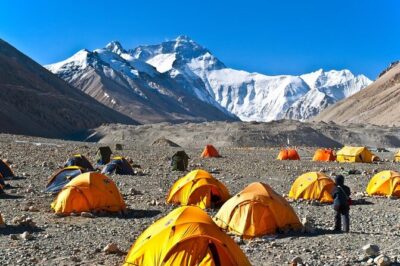
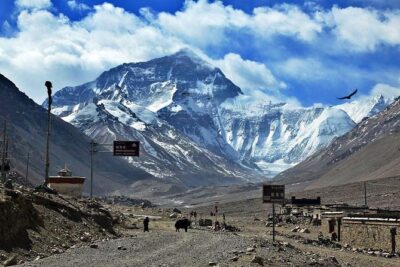
Day 6 begins at Rongbuk Monastery, near the highest monastery in the world according to the supplied tour description. The visit is built around a sunrise view of Mount Everest, which appears across the valley as a snow-capped pyramid.
This is the trip’s clearest reason to accept the long road journey. At Rongbuk, the mountain is not a distant shape on the horizon. It dominates the view, and the setting joins a Buddhist monastery with one of the world’s most famous peaks.
The stop lasts about an hour. Sunrise times and visibility depend on the season and weather, so you should approach this as a strong opportunity rather than a guaranteed clear photograph. Cloud can hide Everest, and the cold at that hour can be intense.
Accommodation at Rongbuk is a dormitory bed in the guest house rather than a private twin room. That is an important comfort note. If you need a private bathroom, quiet sleep, or hotel-style facilities every night, this tour may feel too basic at Everest.
Tashilhunpo and the return to Lhasa
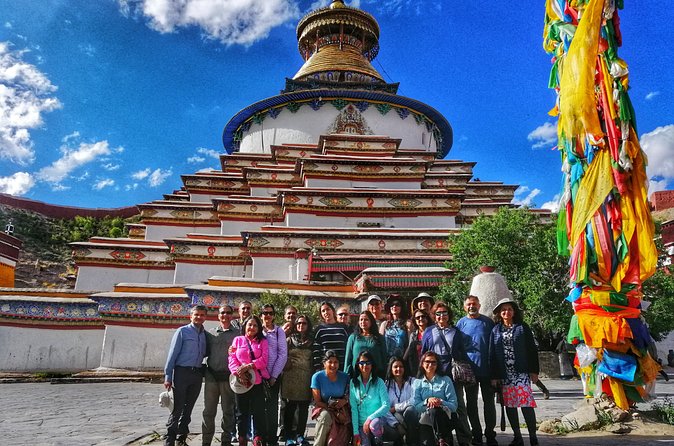
Day 7 takes you to Tashilhunpo Monastery, the seat of the Panchen Lama, Tibet’s second-highest incarnation in the tour description. The visit lasts around two hours.
Tashilhunpo gives the route another major monastic setting after Sera and Rongbuk, but each stop has a different role. Sera is known for debate, Rongbuk for its Everest setting, and Tashilhunpo for its importance in Tibetan Buddhist leadership.
Afterward, you drive about 280 kilometers back to Lhasa. This is another transfer-heavy day, though it is shorter than the push to Everest. The long return also helps explain why the tour works better for someone who values coverage over an unhurried schedule.
Namtso Lake and the northern shore
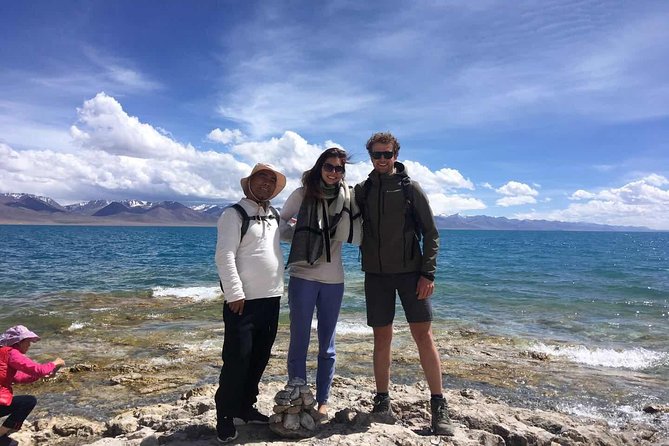
Day 8 heads north from Lhasa to Namtso, one of Tibet’s four holy lakes and the highest saline lake in the world according to the tour information. The drive includes views of the snow-capped Nyenchen Thanglha range.
At Zhaxi Peninsula, you spend about two hours looking over the lake. Five holy islets are associated with the Five Buddhas, and Tashi Island is described as the largest, with broad views across Namtso.
Namtso is a different experience from Yamdrok. Yamdrok is a pass-side viewpoint on a travel day. Namtso receives more time, allowing you to walk, look across the water, and take in the scale of the setting.
Day 9 continues at Namtso after breakfast. An off-road vehicle and tourist shuttle bus take you to Stone Elephant Gate on the northern shore, described as one of the lake’s most dramatic viewpoints.
The published schedule lists only one minute for this stop, which is clearly a timing oddity rather than a meaningful visit length. Confirm how much time you will actually have at Stone Elephant Gate before departure.
What the $1,329 price really covers
At $1,329 per person, the package is not an all-inclusive holiday, but it includes the costly and complicated parts of a Tibet itinerary. You receive:
- Tibet Travel Permit and other necessary permits, excluding the Chinese L visa
- An invitation letter for the Chinese L visa if needed
- English-speaking Tibetan guide
- Experienced local driver and minibus transport
- Airport or train-station pickup and drop-off in Lhasa
- Twin-share accommodation and nine breakfasts
- Dormitory accommodation at Rongbuk Guest House
- Entrance fees for listed attractions and the Everest Base Camp shuttle
- Welcome dinner, bottled drinking water, map, and vehicle oxygen
- Liability travel insurance
Lunches and most dinners are not included. Your flight or train to Lhasa is also separate, and tips for the guide and driver are expected but not priced in.
One detail needs clarification. Individual itinerary entries mark several admission tickets as not included, while the inclusions section says entrance fees for all listed sites are covered. Ask the operator for a written list of what is included before booking. That simple check can prevent an unpleasant surprise.
The tour is priced for double occupancy. A single room costs extra and depends on availability. The Rongbuk dormitory is a separate accommodation standard, so ask whether a private option exists if that matters to you.
Permits, visas, and booking timing
You should book at least 20 days ahead so the operator can obtain the Tibet Permit. You also need to provide passport and China L visa copies at least 20 days before departure.
The visa process depends on how you enter Tibet. If you fly from Kathmandu, do not apply for a China L visa in advance. The operator says you need a Tibet Group Visa through the Chinese Embassy in Kathmandu, arranged with a local travel agency and supported by an invitation letter.
If you fly or take a train to Lhasa from a city in China, you need a China L visa from the Chinese Embassy in your home country. The operator delivers the Tibet Permit to an address or hotel in one Chinese city, so you need to plan where you will receive it.
The average booking lead time is 112 days. That makes sense for a permit-heavy journey with limited group departures, but confirmation is still subject to availability.
Who should book this Tibet journey
I would choose this tour if you want the major Tibetan sights in one trip and prefer not to manage permits, drivers, hotels, and regional transport yourself. It also suits you if you enjoy scenic road travel and can accept basic accommodation for one night.
You should think twice if you dislike long minibus rides, need a flexible schedule, or are uncomfortable at high altitude. The route includes several passes above 4,500 meters and a 12-hour transfer toward Everest.
The group limit of 12 is a real advantage. It is small enough for a more personal guide relationship and easier movement than a large coach, while still keeping the price below what a private trip would usually cost. The guide makes a big difference, especially when explaining religious customs and helping with difficult temple steps.
Should you book it?
Book this tour if Everest, Lhasa’s sacred center, and Namtso are all on your wish list, and you want the major arrangements bundled into one price. The strongest parts are the guide-led cultural visits, the sunrise setting at Rongbuk, and the mix of famous sights with Dadong Village and monastery life.
Before paying, get three points confirmed in writing: the exact 10-day schedule, the entrance fees included, and the accommodation details at Rongbuk. Also plan for the altitude, long drives, extra meals, tips, and the cost of reaching Lhasa.
With those details settled, this is a strong value for a first Tibet trip, provided you measure comfort by access to extraordinary places rather than by relaxed pacing.
FAQ
How long is the tour?
The experience is advertised as a 10-day tour, beginning with pickup in Lhasa and ending with drop-off arrangements on Day 10.
What is the maximum group size?
The group can include a maximum of 12 travelers.
Is airport or train-station pickup included?
Yes. Pickup and drop-off between the airport or train station and Lhasa city are included, but the supplier must arrange the service.
Is the Tibet Travel Permit included?
Yes. The Tibet Travel Permit and other necessary Tibet permits are included. The Chinese L visa is excluded, though an invitation letter can be provided if needed.
Are meals included?
Nine breakfasts and a welcome dinner are included. Lunches and other dinners are not included.
What accommodation is provided?
Accommodation is based on two people sharing a room, subject to availability. At Rongbuk, the accommodation is a dormitory bed at the guest house. A single-room supplement is available if space permits.
What should I know about the visa process?
If you fly to Lhasa from Kathmandu, the supplier says you should not apply for a China L visa in advance. You need to arrange a Tibet Group Visa through the Chinese Embassy in Kathmandu with a travel agency. If you enter Tibet from another Chinese city, you need a China L visa obtained through the Chinese Embassy in your country.
Just added around China
- Hong Kong Airport to Hong Kong City Private Arrival Transfer★ 4.5 · 3 reviews
- Hong Kong Observation Wheel Ticket★ 5.0 · 3 reviews
- Hong Kong Palace Museum Ticket★ 5.0 · 3 reviews
- Hong Kong Peak Tram and Sky Terrace 428 Tickets (Optional)★ 3.5 · 22 reviews
- Hong Kong Private Walking Tour with a Local★ 5.0 · 6 reviews
- Hong Kong Market Walking Tour & Chinese Cooking Class★ 5.0 · 24 reviews
- Hong Kong : Must-See Attractions Walking Tour With A Guide★ 5.0 · 7 reviews
- Hong Kong: Lantau Island & Tai O Cruise, Skip The Line Cable Car★ 3.5 · 4 reviews
Tibet Tours, compared.
Tibet Tour 8 Days Lhasa to Everest Base Camp Small Group Tour
Read our review →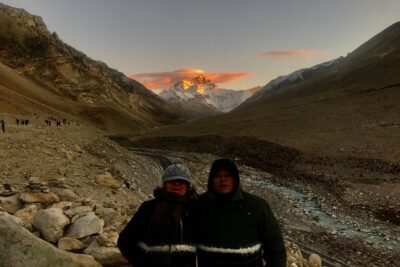
7 Days Lhasa to Kathmandu Overland Small Group Tibet Tour via EBC
Read our review →
8 Days Lhasa Gyantse Shigatse Mt Everest Group Tour
Read our review →Browse the lists this tour appears in