Reviewed · BEIJING TOURS
10-Day China Tour to Beijing, Xian, Chengdu and Shanghai
The Great Wall, Terracotta Army, and giant pandas make this a powerful first look at China. In ten days, you move from imperial Beijing to ancient Xi’an, panda country in Chengdu, and modern Shanghai, with private transfers smoothing out a complicated route.
I like two things right away. The major transport is arranged, including high-speed trains from Beijing to Xi’an and Xi’an to Chengdu, plus a flight to Shanghai. I also like the range of experiences: palace courtyards, a hutong rickshaw ride, Muslim food stalls, a panda research base, and a water town.
The tradeoff is pace. This is a sightseeing-heavy trip with several long travel days, early starts, and multiple hotel changes. It is best for someone who wants to see China’s headline sights in one organized trip, not someone seeking a slow, single-city holiday.
Key points to know before booking
- Mutianyu Great Wall: A round-trip cable car is arranged, making this section easier than a full climb from the valley.
- Private touring: Only your group participates, with a professional guide, driver, and air-conditioned vehicle in each destination.
- Two major train journeys: Beijing to Xi’an takes about 4.5 hours, while Xi’an to Chengdu takes about four hours.
- Panda timing matters: The Chengdu pickup is early because pandas are more active in the morning.
- Shanghai has two very different faces: You see both the colonial-era Bund and the futuristic skyline along the Huangpu River.
- The price includes major essentials: At $2,979 per person, twin-share hotels, nine breakfasts, three lunches, transport between cities, guides, drivers, and listed entrance fees are covered.
Four cities, one brisk route through China
This tour is built around contrast. Beijing gives you imperial power and monumental public spaces. Xi’an brings ancient military history and old city walls. Chengdu adds a lighter wildlife stop and time among local residential streets. Shanghai closes the trip with grand riverfront buildings, skyscrapers, gardens, and canals.
The route also makes sensible use of China’s transport network. You avoid an exhausting overland journey between every city, using high-speed rail for Beijing to Xi’an and Xi’an to Chengdu, then flying from Chengdu to Shanghai. Your guide and driver handle the airport and rail transfers, which matters when station names, entrances, and luggage procedures are unfamiliar.
The tour is private, but the minimum booking is two people. That gives you more control than a large coach trip, though the schedule itself remains fixed and full.
Other Beijing days worth booking alongside this:
- From Beijing: Mutianyu Great Wall Tours with Options
★ 4.9 · 9,216 reviews - Beijing: Forbidden City Tour(Group/Private)-Tickets Included
★ 4.8 · 7,974 reviews - Beijing: T-Square & Forbidden City Group or Private Tour
★ 4.8 · 4,446 reviews
Beijing’s imperial core: Tiananmen Square and the Forbidden City
Your first touring day begins at Tiananmen Square, where you get a sense of Beijing’s scale before entering the Forbidden City. The square visit is short, about 30 minutes, but its size and political importance make it a useful opening scene.
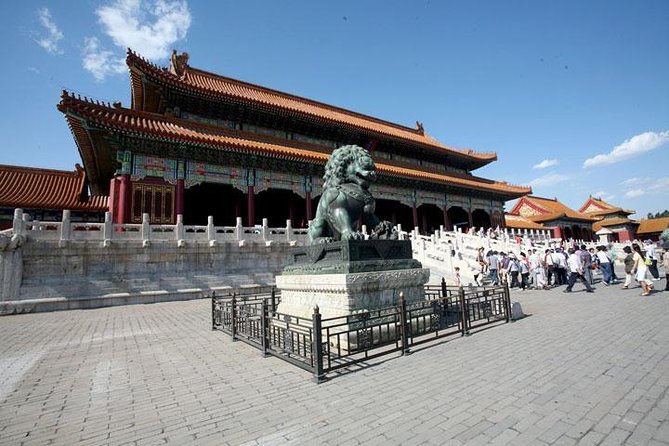
Then comes the main event: the Palace Museum, better known as the Forbidden City. You have about three hours to pass through imperial halls and courtyards and learn how emperors handled state affairs. The admission fee is included, and a guide gives the buildings a purpose beyond their elaborate roofs and painted details.
I like this pairing because the square and palace explain two sides of Beijing. Tiananmen is a huge civic space, while the Forbidden City is a contained world of gates, courtyards, ceremonial halls, and private imperial quarters. You can expect plenty of walking, so comfortable shoes are a practical choice.
After lunch, the tour changes tone at Yonghe Temple, also called the Lama Temple. This is described as the best-preserved lamasery in Beijing, with Han, Manchu, Mongolian, and Tibetan design influences. Allow about 90 minutes here. It is a more intimate stop than the Forbidden City, with a distinct religious atmosphere and architectural variety.
The day ends at the Temple of Heaven. Emperors came here to worship the heavens and ask for good harvests. The visit lasts about 90 minutes, giving you time to look at the unusual ceremonial buildings and understand the connection between imperial authority, ritual, and agriculture.
Mutianyu, the Bird’s Nest, and Beijing’s old lanes
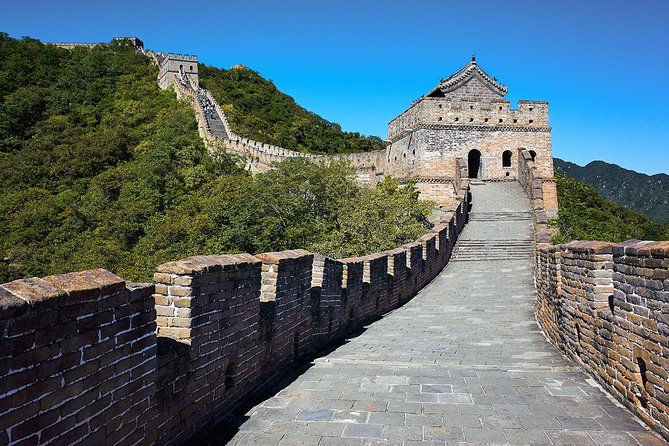
Day three puts the Great Wall first, which is exactly right. You leave for Mutianyu in the morning and spend about three hours at one of China’s most famous sights. A round-trip cable car is arranged, so you do not have to make the entire approach on foot.
The cable car helps preserve your energy for the wall itself. You will still walk on uneven surfaces and deal with stairs in places, but the arrangement is more manageable than treating the visit as a long mountain hike. From the wall, you can look across the surrounding hills and see the fortification stretching over the ridges.
The afternoon stop at the Bird’s Nest National Stadium is brief, about 20 minutes, and the admission ticket is not included. The plan is to view and photograph the outside rather than spend time inside. That makes it a reasonable photo stop, but it is not a full Olympic venue visit.
The hutong tour gives the day more local character. A rickshaw carries you through narrow lanes lined with older courtyard homes. After the scale of the Forbidden City and Great Wall, these alleys offer a quieter look at traditional Beijing residential life.
You should know that the hutong portion is still a short scheduled visit, about 90 minutes. It gives you an introduction rather than a long neighborhood wander. Still, it is one of the more distinctive parts of the Beijing program because it shifts attention from monuments to everyday urban space.
Summer Palace and the first high-speed train
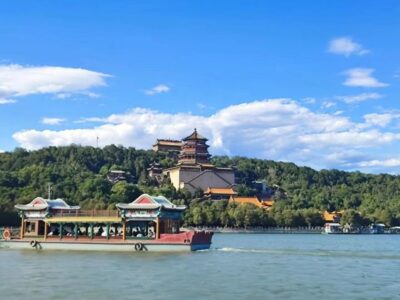
On day four, you visit the Summer Palace for about two hours. This vast imperial garden combines water, pavilions, bridges, and grand constructions. Compared with the formal geometry of the Forbidden City, it feels more relaxed and scenic.
The Summer Palace is also the final Beijing sight before the trip changes cities. In the afternoon, you take a high-speed train to Xi’an, with the journey lasting about 4.5 hours. Snacks, fruit, a book, or a device with a movie are sensible additions because this is a substantial block of travel time.
The train is included, and your local arrangements continue after arrival. That is a major convenience. You do not have to work out Beijing station procedures, find the correct platform alone, or arrange a taxi at the other end.
Still, day four is not a light day. A two-hour garden visit followed by a long train ride can feel tiring, particularly after three busy days in Beijing. I would treat the train as part of the travel experience rather than expect a free afternoon.
Same country, a completely different kind of day:
- Beijing: Mutianyu Great Wall Daily Tour with Ticket & Lunch
★ 5.0 · 3,056 reviews - All-Inclusive Tour: Tiananmen Square, Forbidden City, Great Wall
★ 5.0 · 2,873 reviews - MuBus: Mutianyu Great Wall ENG/ESP/RUS Guided Bus Tour
★ 5.0 · 2,361 reviews - 4-Hour Small Group Tour to Forbidden City with Entry Tickets
★ 5.0 · 1,863 reviews
Xi’an and the Terracotta Army
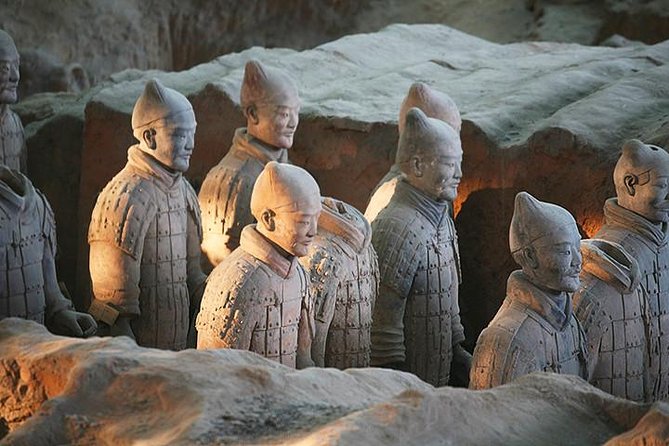
Xi’an’s main attraction arrives on day five: the Museum of Qin Terracotta Warriors and Horses. You have about four hours here, including the excavated pits displaying thousands of life-sized figures, weapons, and military formations.
The time allowance is useful. This is not a quick photo stop. The scale of the pits becomes clearer as you move through the exhibition buildings, and a guide can explain how the figures relate to the first emperor and his enormous burial complex.
Afterward, you visit the Giant Wild Goose Pagoda for about an hour. This square brick pagoda is more than 1,300 years old and remains one of Xi’an’s key landmarks. It gives the day a religious and architectural counterpoint to the military focus of the Terracotta Army.
The evening moves to Grand Tang Dynasty Ever Bright City, a popular pedestrian area south of the pagoda. People dress in traditional clothing, and the street has a strong performance and entertainment focus. It can feel more modern and staged than the older sites, but it offers an easy way to see how Tang-era imagery is presented in contemporary Xi’an.
City walls, the Great Mosque, and Muslim food
Day six begins with Xi’an’s City Wall Park and the city wall itself. The wall is described as the most complete existing urban fortification in China, and the visit lasts about 2.5 hours. That gives you time to appreciate both the structure and the city life around it.
The park portion is especially useful because it shifts your attention to daily routines rather than only historic objects. The wall then provides a broad view of Xi’an from above. You may find the scale easier to understand from the top, where the old fortified center and newer city sit side by side.
Next comes the Great Mosque, one of China’s oldest, largest, and best-preserved Islamic mosques. The visit is short, about 30 minutes, but the site is important because it reflects Xi’an’s place on historic trade routes and its long connection with Muslim communities.
You then have an hour in the Muslim Quarter. This is your chance to try halal foods and local snacks at your own cost, as well as browse handicraft souvenirs. Since no meal is included here, carry some spending money and use this stop for a food break rather than treating it as another formal monument visit.
Later, you take a high-speed train from Xi’an to Chengdu, a journey of about four hours. With the station transfer and arrival arrangements, this becomes another roughly five-hour travel block. The Chengdu guide meets you at the railway station, which keeps the transition simple.
Chengdu pandas and a slower neighborhood afternoon
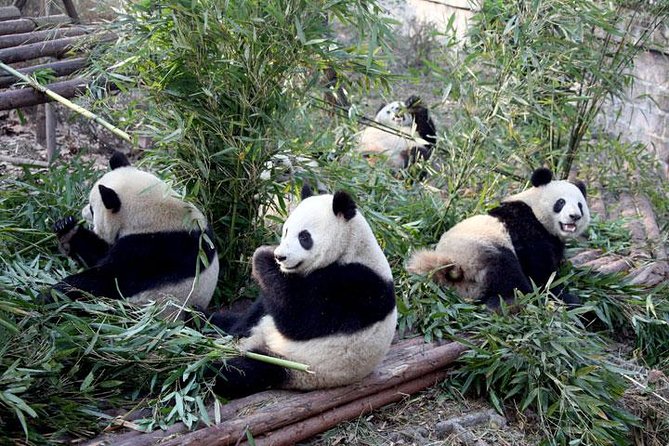
The Giant Panda Breeding Research Base is the reason many people add Chengdu to the route. The visit lasts about two hours, and the pickup is early because the pandas are more active in the morning.
That early start is worth taking seriously. You should not expect this to be a late breakfast day. The schedule is designed around animal activity, so the morning visit gives you a better chance to see the pandas during their livelier period.
Afterward, the itinerary heads to Xiaojiahe Residential District. You spend about three hours there, including lunch at your own cost at Yongle Restaurant. This is a welcome change from the ticketed sights. Instead of moving straight from one famous attraction to another, you get time to observe how local residents spend part of the day.
The lunch is not included, so budget separately for it. The neighborhood stop also depends more on your curiosity than on a set monument. Look around, eat like a local, and enjoy the slower pace before the next flight.
Shanghai by air, then the Bund at night
On day eight, you fly from Chengdu to Shanghai in economy class. The airfare is included, as is the airport transfer and hotel escort after you arrive. Even so, this is a long transition day, with about three hours allocated to the airport and arrival process before sightseeing begins.
The first Shanghai stop is the Bund, on the west bank of the Huangpu River. The area preserves many early 20th-century Western-style buildings and shows Shanghai’s former commercial power. It is a very different architectural scene from Beijing’s imperial courtyards or Xi’an’s brick defenses.
You then take a one-hour Huangpu River cruise. From the water, you look back at the older buildings on one bank and Shanghai’s modern skyscrapers on the other. This is one of the tour’s most efficient city introductions because it lets you see the contrast without spending the whole evening crossing town.
The Bund visit is free, while the cruise admission is included. The combination works well, though the day may feel tiring after air travel. Keep your expectations realistic: this is an orientation to Shanghai, not a long, unstructured night in the city.
Shanghai Museum, Yu Garden, and Zhujiajiao
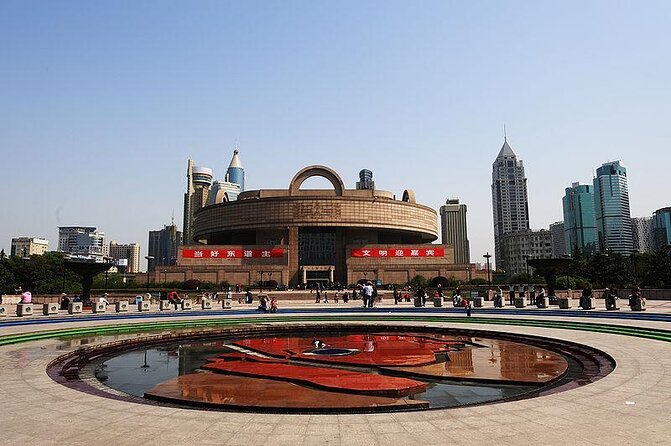
Day nine is the final full sightseeing day. The Shanghai Museum occupies the morning for about two hours. It specializes in ancient artworks and is considered one of China’s four largest museums. This stop adds objects and craftsmanship to a trip otherwise dominated by buildings, walls, gardens, and animals.
Next, you visit Yu Garden for about two hours. The Nine Zigzag Bridge and mid-lake pavilion are among the garden’s best-known features. The winding paths and carefully framed views show a different style of Chinese design from the imperial spaces in Beijing.
An à la carte farewell lunch is included around noon. Because the details of the meal are not specified, check the final menu and any drink arrangements with your guide.
In the afternoon, you travel to Zhujiajiao Ancient Town for about two hours. The town is known for residences built along waterways and is often called Oriental Venice. It preserves older traces of life that contrast with Shanghai’s high-rise core.
This is another full day, and the water town may be busy. Still, it gives the trip a useful closing note. You see Shanghai not only as a modern financial center, but also as part of a region shaped by canals, older homes, and traditional town planning.
What the $2,979 price really covers
At $2,979 per person, the tour is not a budget independent trip. But the price includes many costly pieces: twin-share hotel accommodation, nine breakfasts, three lunches, major entrance tickets, two high-speed train journeys, an economy flight from Chengdu to Shanghai, private vehicle transport, guides, drivers, and two bottled waters per person per day.
That package can offer solid value if you want one company to coordinate a complicated multi-city route. Buying each transfer, hotel, train ticket, domestic flight, and guide separately would require time and careful scheduling.
The value is weaker if you prefer to choose inexpensive hotels, eat independently, or spend several extra days in each city. You are paying for structure and support as much as for admission tickets.
International airfare, visa fees, gratuities, and several meals are not included. Plan for those extras before comparing the price with a self-guided trip. Gratuities for guides and drivers are recommended.
Who should book this China itinerary?
I would choose this tour if you have ten days, want China’s best-known sights, and prefer private support at airports and railway stations. It also suits couples, families, or small groups who value their own vehicle and guide rather than joining a large bus.
It is less suitable if you dislike early mornings, frequent packing, or long transport days. The tour is also not suitable for people over 80, according to the stated conditions. Most other participants can take part, but the Great Wall, city walls, gardens, and old streets still require regular walking.
The tour is commonly booked about 220 days ahead, so planning early makes sense. Confirmation is provided at booking, and passport name, number, expiry date, and country are required for every participant.
Final verdict: a strong first visit, at a brisk pace
Book this trip if you want a carefully connected introduction to China with the Great Wall, Forbidden City, Terracotta Army, pandas, and Shanghai all on one route. The private format, included intercity transport, and airport and station assistance remove much of the stress.
Skip it if your ideal trip means lingering over meals, returning to favorite neighborhoods, or staying several nights in each city. This itinerary gives you breadth rather than leisure.
One small human detail is worth noting: Emily is named as a Beijing guide connected with the experience, though guide assignments can vary by departure. The strongest praise attached to the trip centers on attentive guide support and smooth movement between cities. That is exactly where this tour earns its keep.
FAQ
How long does the China tour last?
The tour lasts approximately 10 days, beginning with arrival in Beijing and ending with an airport transfer from Shanghai.
Which cities does the tour visit?
The itinerary covers Beijing, Xi’an, Chengdu, and Shanghai.
Is airport pickup included?
Yes. Pickup is offered, including arrival transfer in Beijing, the Chengdu airport transfer, and the final transfer from your Shanghai hotel to the airport.
Are hotels included?
Yes. Hotel accommodation based on twin-sharing is included.
Are meals included?
Nine breakfasts and three lunches are included. Lunch in the Muslim Quarter and lunch in the Xiaojiahe Residential District are at your own cost. An à la carte farewell lunch in Shanghai is included.
Is transportation between cities included?
Yes. The tour includes one high-speed train from Beijing to Xi’an, one high-speed train from Xi’an to Chengdu, and one economy-class flight from Chengdu to Shanghai.
Is the Great Wall cable car included?
Yes. A round-trip cable car at Mutianyu is arranged, and the Great Wall admission ticket is included.
Is this a private tour?
Yes. Only your group participates, and a minimum of two people per booking is required.
What is not included in the price?
International airfare, China visa fees, and recommended gratuities for guides and drivers are not included.
Just added around Beijing
- Private Transfer to Mutianyu Great Wall with professional driver★ 5.0 · 19 reviews
- camp on the Great Wall overnight with sunrise and sunset on the wall★ 5.0 · 11 reviews
- One day tour to downtown Tianjin from Beijing by high speed train★ 5.0 · 3 reviews
- BusDa:Ancient Great Wall &Badaling Great Wall Full-day Bus Tour★ 4.5 · 6 reviews
- ZANBUS: Trip to the Jinshanling Great Wall Departing at 7:30 AM★ 5.0 · 5 reviews
- Yuxiandu Chinese Royal Cuisine Museum with Show and Royal Banquet★ 5.0 · 4 reviews
- Private Wild Great Wall Hiking tour at Simatai (Challenging)★ 5.0 · 16 reviews
- Wild Great Wall Huanghuacheng Half Day Tour★ 5.0 · 15 reviews
Beijing Tours, compared.

Forbidden City Tour(Group/Private)-Tickets Included
Read our review →
Mutianyu Great Wall Daily Tour with Ticket & Lunch
Read our review →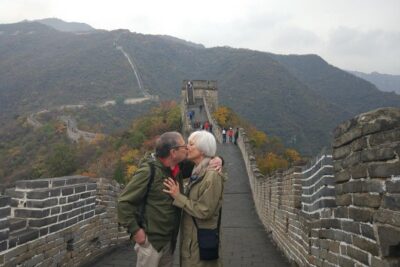
All-Inclusive Tour: Tiananmen Square, Forbidden City, Great Wall
Read our review →
4-Hour Small Group Tour to Forbidden City with Entry Tickets
Read our review →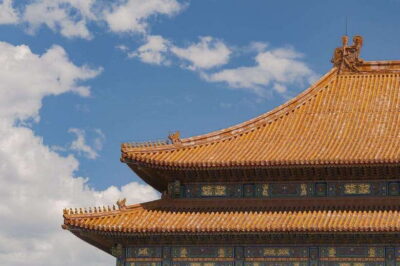

Tianmen Square, Forbidden City & Royal Museum Tours
Read our review →